This is Where I leave You

Ministry has always been a part of our story. A big part. For the last 33 years it has been the ministry of Cedarbrook. As this chapter comes to a close, there are two stories that should be told.

We met Johnnie Benton the day we walked into a Classical Rhetoric class at Southern Colorado State College in 1969. We were both speech majors and this was a required course.

Dr. Benton was sarcastic, cynical, outspoken and disapproving of most things – particularly anything religious. He mocked, challenged, scoffed at and belittled anything having to do with faith. He was a self-proclaimed apostate and had renounced not just the fundamentalism of his youth but all things associated with the church, declaring that all preachers were hypocrites, charlatans, or just too stupid to realize that what they were preaching could not possibly be true. But in his eyes, their most egregious sin was that he found them to be terrible communicators. So you can imagine his disgust and his dismay when he discovered that one of his favorite students iin the speech department was planning on going into ministry.

“You’re too smart for this,” he told Paul. “You’re an analytical thinker with a good mind and the ability to see both sides of an argument. What the hell are you thinking?”

But the student could not be dissuaded. So finally Dr. Benton said, “Okay, then. If you’re going to do this, then you’re going to be good at it.” And he set out to make this student not just a passable public speaker, but a really good one. And while the professor would not have been anybody’s choice to mentor a future pastor when it came to theology or building strong character, I would argue that there was no one better to mentor him in writing and delivering a sermon. He gave him the toughest of assignments and graded him mercilessly. When he detected even a hint of BS or trump-ta-tra, he called it out. His first response in critiquing a speech was to ask with a smirk, “”So what?” Meaning – why should I, the listener, care about what you just said? How does this relate to me? He taught that it is the listener, not the speaker, who is the most important person in communication and it’s the job of the speaker to find and make the connection. I sometimes think of Johnnie Benton when people say to Paul on any given Sunday morning, “I felt like you were talking just to me.” And I know of course, that it’s the work of the Holy Spirit, but I also think maybe that mean ole’ cuss of a professor played a part in it as well.

And then there was Mr. Chmel, the high school drama director. I did theatre in high school – it was one of my things. I even started out as a theatre major in college. I liked being somebody else – creating a character that was nothing like me and living inside that person for a while and bringing her to life. Paul did NOT do theatre. For a good reason. He could not act. Not even a little. But in our senior year, Mr. Chmel was short of males for the play he had selected and he asked Paul to take a role. Paul told him, ” I can’t act.” But you’d only have like three lines.” Nope. He was not interested. So Mr. Chmel told me to ask him. “If you ask him, he’ll do it.” I don’t think so, I said. He can’t act. But I asked. “It could be fun to be in one play together before we graduate – we could go to rehearsals together and the cast party. It’ll be fun. ” He grudgingly agreed. Poor Mr. Chmel. He probably spent more time with Paul working on those few lines than he did with the rest of the cast put together. At the cast party he said to me, “You were right. He can’t act.”

I say all that to say this: with Paul, what you saw is what you got. It wasn’t a show. It wasn’t an act. He wasn’t playing the role. He never pretended to be someone he’s not to build a bigger church. He doesn’t even know how to do that – it just isn’t in him. He is the same person at home that he was when he stood before the church. He treats the servers at McDonalds the same way he treated you when you talked to him in the lobby after the service. In this day of “The Celebrity Pastor” and all the heartache and grief and shame that has brought to the Church, Paul was simply who he was. You may not like who he was and you may have wanted a pastor who was more extroverted, more charismatic, or just more. But he didn’t know how to play that role. God knows he isn’t perfect and there are a myriad of things he would do differently if he could go back. But he wasn’t acting – he brought his true and authentic self – for better or worse.

Paul, thank you for bringing me with you on this adventure of a lifetime. For all of our starts and stops, all the things that we got wrong and those times we succeeded in spite of ourselves and only by the grace of God, we have been partners through it all. I am forever grateful. And for the record, I think over the years you have preached a handful of sermons that would have made Johnnie Benton proud.

“There is a difference between curing and healing, and I believe the church is called to the slow and difficult work of healing. We are called to enter into one another’s pain, anoint it as holy, and stick around no matter the outcome.” Rachel Held Evans

This is the work we are here for.

From Family Room to Zoom Room and the 30 Years In Between

I graduated from college in the spring of 1972 with a degree in Speech Communication and a teaching certificate that qualified me to teach grades 9-12.  I chose this route largely because of the impact my high school speech teacher and coach, Mr. Ham, had on me.

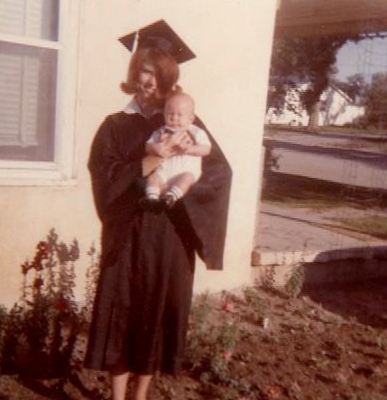
 I also graduated college with a four month old son on my hip. 

So because I wanted to be at home with him, my teaching was limited to substituting in the high schools around town now and then. In 1979, now with three littles in our home, we decided to try out homeschooling – an educational option not widely recognized or accepted at that time. And so, from then until my youngest graduated in 2006, I was a full time teacher – teaching everything from pre-k to high school algebra – admittedly I was better at some subjects than others. 

But then in the fall of 1991, I was asked to teach a Speech Class for some homeschooling kids ages 12 and up. The only thing I really remember about it is that it was in somebody’s family room in their basement and we did a Reader’s Theatre unit. I think there might have been four kids in the class – when they all came. Maybe somebody else taught a Biology Class and someone else a Spanish Class, but no two at the same time because we were using the same room. We met on Thursday afternoons. And that was the beginning.

But what began as a fledgling little experiment grew and we needed more space. So we found a church willing to rent to us, other gifted and committed teachers joined the staff – teaching everything from Watercolor to Chemistry to Yearbook to Physics – and at its peak we were offering dozens of courses (both Academic and Elective) and hundreds of kids traipsed through First Alliance Church every Thursday. It became a place of learning, of character building, of community. And I began to anchor my week for nine months of the year around Thursday. Because “Thursday Classes”.

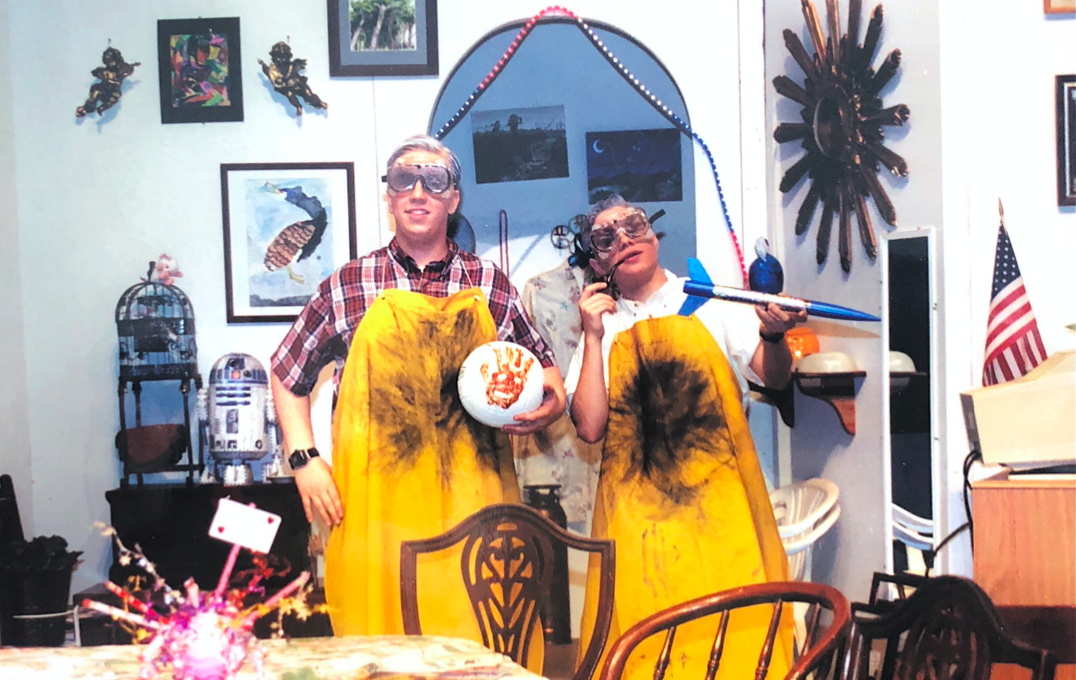
 Over the years my course load rotated and shifted:  I taught junior high and senior high Speech, two different Improv Classes, Drama, Composition, Storytelling, Jr. High Language Arts. I remember the days of Dessert Theatre and Improv Hour in the gym at First Alliance which eventually gave way to Occassion For the Arts  in the auditorium with the Improv, Storytelling and Choir all performing. The red ink of Composition Class which I understand still causes nightmares for some who have gone on to write their Masters Thesis. The nervous and jittery attempts at the first speech of  the year which grew into confident and convincing persuasive speeches by the end of the year. The “Mr. Tumnus Tea” – always the highlight for the 7th and 8th graders who read The, Lion, the Witch and the Wardrobe with me in Language Arts. And the awkwardness of the first day of Improv which gave way to hilarity and true entertainment as the year progressed.

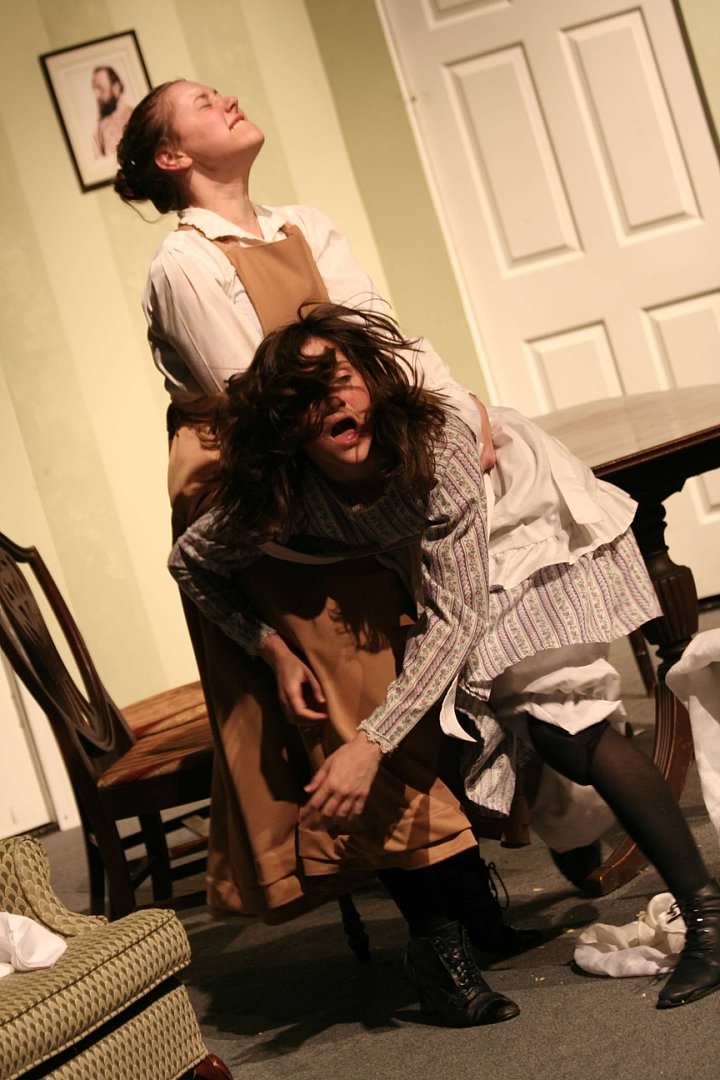
And then of course there was the MainStage Play. For twenty years we met for two hours on Thursday mornings and then hundreds of hours after classes ended in April. Tech week at Smith Theatre at Howard Community College and Olney Theatre, and then finally some pretty spectacular performances starring some very talented and committed students. It was magical. Watching a high school boy transform into an old man so convincing that even I forgot he was acting. Or a sighted girl covered with bruises from her head to her toes as she thrashed about the set – falling, and getting up and falling again – as she so believably told the story of a blind and deaf girl named Helen Keller and her teacher Annie Sullivan. The con man who was so convincing that the five year old boy in the cast really believed he could play the trumpet in a boys’ band. Working through the emotions and backgrounds of twelve jurors confronting their own prejudice and biases. The grueling hours we spent exploring these characters together and bringing them to life. It’s where my mind went during the week when I wasn’t in class:  what if we tried this?  what if she said that line more like this? what if we changed the blocking in that scene? what can I do to make that character more three dimensional? – and sometimes all the what ifs kept me awake late into the night. But in the end it was always the kids who made it work – they always found the way.  And on opening night I sat in the audience and wept (even if it was a comedy) for the sheer beauty of it all.

What I loved most about Thursday Classes though was the community. Sometimes I would duck into the Study Hall between classes ostensibly to grab a Diet Coke from the snack bar or give a quick hug to Bonnie the Study Hall monitor who became my confidant and my friend, but really I loved listening to the hum of it: the chatter from the senior table where they laughed easily at the inside jokes and counted down the days until they were done. I loved watching the group playing chess at another table, quietly studying the board and anticipating their next move; the groups of two or three huddled on the floor, notebooks opened, cramming for their biology exam later in the day, I loved it all. I loved watching students walking down the hall, arms around each other, making plans for the weekend not realizing that their older selves would look back on these days as some of the best of their lives. I loved watching them execute their “senior prank” even when I was the brunt of it – which was often. I loved seeing a group huddled around one of their own, hands on his shoulders as they prayed over him for a sick parent or some other sorrow. And it will be this, more than anything else, that I will miss.

Because today it ends.  

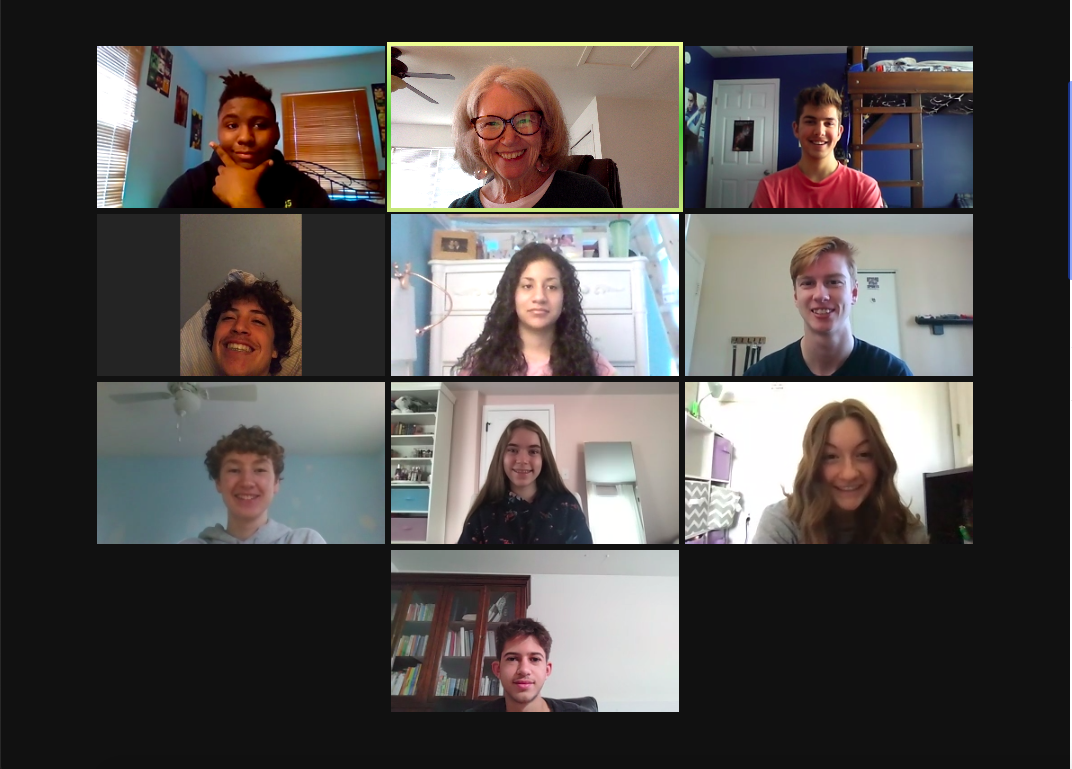
I have known for four years that this week would be the last day for CBA Thursday Classes. We made that call early so that we could work towards ending the Academy well. So I had time to think about what we might do on the last day. Maybe we would decorate the building with pictures of years past, maybe we would hang banners outside, maybe we would bring in donuts, maybe we would cancel classes and have a big party, maybe we would bring in alumni to share in the day and to say good-bye.  Never in my mind’s eye did I imagine that it would end in a Zoom Room with each one isolated in their own little box on their computer screen with no hugs, no real contact, and nobody in the room with me to share this landmark. Who could have imagined this ending? But Covid.

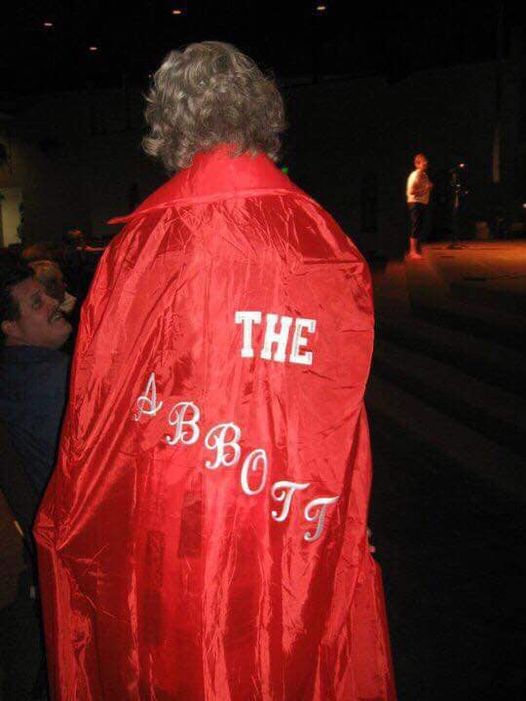
To any VBA/CBA students who might one day read this, I want you to know that you are a part of the some of the best days of my life (okay – maybe some of the “not so best” days as well but we’ll save that for another day ). Thank you for being a part of the experiment that was Thursday Classes and for making them work. Thank you for your patience and your good will when I was trying to figure it out and especially for the times I got it wrong. Thank you for your generosity of spirit when I didn’t get what you were trying to say – or you felt not seen. Perhaps the most well quoted line about my tenure at CBA came from a student in her Yearbook Senior Quote – “Mrs. Abbott is sort of like God. You really love her. But you don’t want to make her mad.” JM

I remember one day years ago when I said in perhaps a too loud voice to the students who were milling about in the gym. “I don’t know where you people are supposed to be but it isn’t here. You should either be in class or in study hall. So leave!” As they were scurrying off I heard one of my daughter’s friends say to her, “I’m sure glad she’s not my mother.” My daughter replied not so much to defend me but more in a yeah, she’s weird way, “Yeah, she’s not really like that so much at home.” So yes, I know there were days, but I would not trade one of them.

There were other things that made CBA what it was, but Thursday Classes helped to make it a thing. There are many who think, and I count myself among them, that those hours between 9:00 a.m. – 5:00 p.m. on any given Thursday were the best hours of the week.

But on this last day of CBA Thursday Classes here’s what I want to say:  thank you to the students who stuck it out to the end – even on Zoom!!  You amaze me! 

Thank you to the ones who came before who taught me how to be a better teacher and a better human being and have provided enough memories and stories to last me a lifetime. Thank you to all the other teachers and the staff who helped to build this amazing community. Thank you to the parents who supported and encouraged us over the years. Thank you to my own kids who got drug along every Thursday before they were even old enough to be in classes and thanks be to God for an incredible 30 years. 

It was quite a ride.