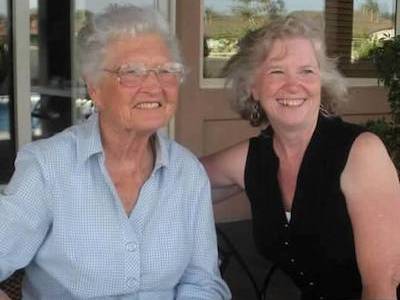
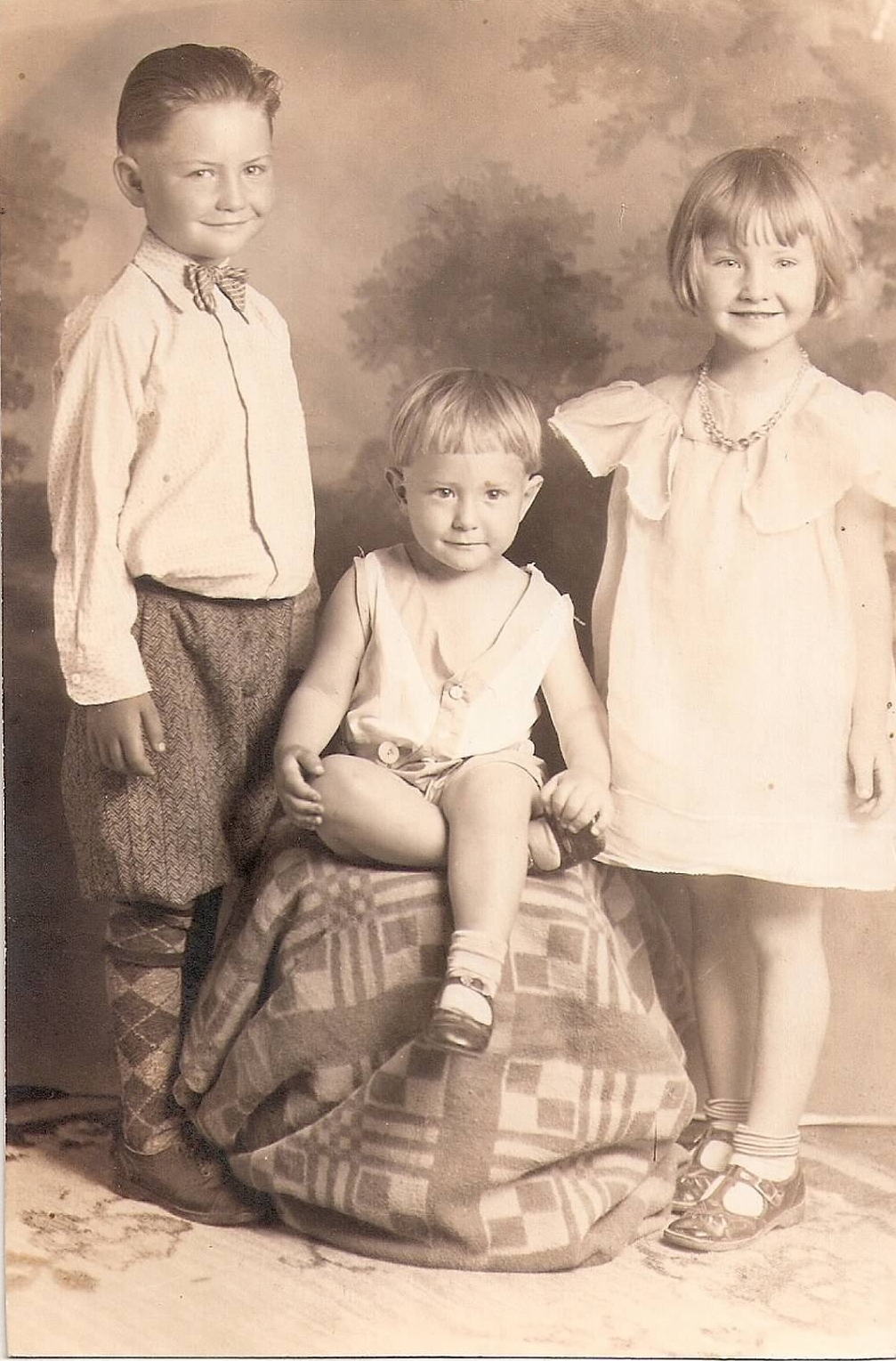
“I, Lila Rae Fletcher Gradisar, was born Nov. 21, 1926, on a farm in Hayes County Nebraska about 6 miles east of Wauneta. I was the first daughter and second child of six children of Hazel Barnes Fletcher and Ray Fletcher. I was born at home . . . in a very small house having a room which was used for kitchen, dining room and living room and two bedrooms. My earliest memories are of taking our Sat. night bath in a wash tub in front of the kitchen stove. The water of course had to be pumped by hand and carried inside and heated on the stove.”
Thus begins one of my sister Lila’s accounts of her childhood and our family history. When she died in 2013 at the age of 86, we discovered pages and pages of her writings in a trunk in her house. Many were handwritten in Big Chief tablets, some were typed on a typewriter, all contained details of a life and a family that would otherwise have been lost. It was after I returned home from that trip that I started to record and preserve these and other stories that might some day be of interest to my children and grandchildren.
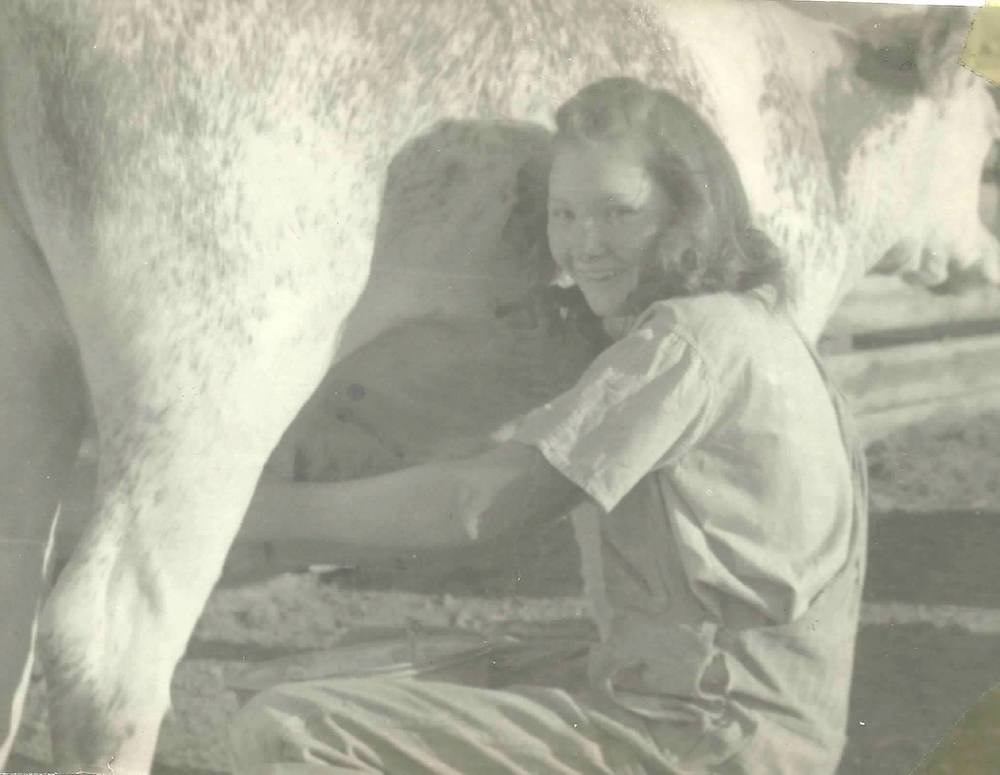
She wrote of what it was like to be a child, growing up during the Great Depression. Of the struggles my parents had when they lost the farm and struggled to feed their family. Of her first day of school in the one room school house and how she cried when the school burned down over Christmas vacation because now how would she ever learn to read? Of what it did to my family when my brother Don was missing in action in World War II. Of the fear and uncertainty they lived with during the Polio Epidemic. And she wrote of my father’s last days and words before his death in 1954 after a car accident left him paralyzed and lying in a hospital for sixteen days while she and my sister and mother sat by his side. All of this gives me insight into where I come from. And I am in her debt.
My memories of her come much later than any of these stories.

After my father’s death, my mother and sister Lola and I moved to Pueblo, Colorado, where Lila lived with her husband and family and worked as a nurse. Lila’s original plan had been to move to Denver after her high school graduation to attend nursing school, but she delayed this by a year to support her parents as they waited on news about my brother. However, when Don returned home from the War, she was off to live her dream. By the time we arrived, she was well established in her career.
The day after she finished nursing school, she married Tony – the tall, good looking guy she had met on a blind date the year before. The tall part was important to her since she was tall herself. And even after age had put a few pounds on him and grayed her once auburn hair, she always called him Slim and he called her Red. They were married 52 years.


Tony’s parents were first generation Americans who immigrated from Yugoslavia, whose first language was not English, who ate foods the Fletcher clan had never heard of (It was from her mother-in-law that Lila learned to make the Potica that has been a part of every holiday gathering I can remember) and they were Catholic. But whatever conversations came before, by the time Lila decided to marry her tall, good looking guy, my parents had made their peace with it.
In a letter to my mother explaining her engagement she wrote:
“I was just thinking the other day how disappointing kids must be to their folks. You work like heck for years to get your kids through school, then instead of getting a job and supporting themselves for awhile they get some crazy idea like going to school for three more years.You think now after this is over they can really make something of themselves etc. so as a last straw they get married the day after they finish. Gee this all could be so much different. You could refuse to speak to me and make a big fuss about it. I want you to know how much I appreciate you being so swell about it …“
Much later Mom told her, “I’m glad you and Tony are of the same religion and are raising your kids in the church. I wish we could have done that.” My mother was a Methodist and Dad was Church of Christ, but apparently “church” was not something they did together as a family. By embracing her husband’s rich Eastern European culture and faith, she brought together their two backgrounds and her children were better for it, as were we all.
In Lila’s writings I see the woman I came to know much later in her story: tenacious yet gracious; determined yet flexible; deeply committed to family and also to her career and her community; selfless yet understanding of the need to take care of herself; and a life-long learner.
Like the little girl who cried when her school burned down, she never lost her love of learning.
In her retirement, she traveled with senior groups to places all over the world, staying in “elder hostels”. She joined a women’s investment group and learned the stock market. When her aging joints complained about her continued participation in the Senior Running Club, she contacted the local Agency on Aging to ask why Pueblo didn’t have a program for Senior Walkers. “Because no one has started it.” And so of course the Senior Challenge Walkers was born. She believed that the camaraderie and friendships were as important as the exercise “and of course, the nice breakfasts”. When she was no longer able to be a part of the walking part, she still met club members for breakfast after their walks.
My sister never learned to swim – if I remember correctly she had a terrible fear of the water, perhaps stemming back to being thrown into the lake by our brothers to “teach her to swim”. But in her 40’s she was determined to learn, so she signed up for the beginners adult swimming class at the local pool. After one four week session she had made very little progress. The end of the second session found her no further along. She registered for the third session. When the instructor saw her walk in he sighed. “Lady, you don’t need a swimming instructor, you need a psychiatrist!” But learn to swim she did – at least enough to feel comfortable in the pool with her grandkids.
She started attending her first Bible study in her 70’s.
When her son moved to Washington state and started having children, she researched how to stay connected to grandchildren who live far away. How do you even do that kind of research before the internet?! But she was the most connected grandmother I ever knew.
She took a course through the county (one of many she did over the years) about recording your memories and this is when she began writing the papers that we later found in the trunk.
I remember one year showing up at her house for a Thanksgiving or Christmas dinner. Up to this point holidays had always meant that the women spent the day in the kitchen cooking and cleaning up, the men spent the day in the family room watching sports or napping, and the kids did whatever they chose. This year Lila was standing at the door with a bowl of folded up papers, with a task written on each one : set the table, bring the chairs up from the basement, clear the table, wash the pots and pans, load the dishwasher, put away the leftovers, sweep the floor. . . and so it went. And nobody got by her without taking a paper. She just woke up one day and decided – this is crazy! Things have got to change. And so she changed them.
Like I said – a life long learner.
Lila had five kids, one a year older than me. We grew up together and though we lived on opposite sides of town and attended different schools, we spent a lot of time together. All my childhood Christmases and Thanksgiving were spent at their house. She would often stop on her way home from work on a Friday and take me to her house for the weekend where I would have playmates. Any “vacations” I took as a child were with them – usually to Nebraska to visit family but once we went to a cabin up in the mountains for a week. One summer the boys worked really hard selling magazine subscriptions to earn their way to a summer camp. But when it came time to go, they backed out so my niece Kay and I got a free week at sleep away camp. I’m not sure we really liked it all that much but when we got home we were quick to tell the boys how great it was!
She got me my first job the year before I started ninth grade – nannying for a friend of hers with five kids under the age of six. She helped me make craft kits and games to play with the kids to keep them entertained. I would stay at Lila’s during the week and she would take me to my job and pick me up and then take me home on the weekend. I don’t know if I ever worked harder at a job in my life. But with my earnings I bought myself a new dress that my mother would never have bought for me because it was so expensive and wore it to my first day of Junior High and I could not have been more proud.
When my nineteen year old, newly engaged self announced that I was getting married, my sister Minnie came from Nebraska and she and Lila jumped into the wedding planning – I’m sure to spare my my mother. “Where is the wedding going to be?” they asked. I explained we would be married at the church Paul and I were attending. “How big is it?” Plenty big. “How many guests? Hmmmm, maybe 100. 150 tops. (I think 200 showed up) “Where will the reception be?” The church basement. And this is where the sisters exchanged worried glances and suggested we go take a look. The church basement had a few small Sunday School rooms around the perimeter of a small “Fellowship Hall” that fit maybe 50 people. Minnie said, “Oh, Sherry, this won’t work. Let’s look for a reception venue somewhere nearby.” No. We’ll do it here. There were other suggestions made and I vetoed them all. Then Lila said, “Sharon, we cannot have the reception here. This is not an option.” To which I said, “Fine. We can have it at your house.” And that’s how it came to pass that Lila spent the summer of 1969 repainting, re-carpeting, and redecorating her house. A house, by the way that was NO where big enough to accommodate the guests. If it had not been a beautiful September evening where all the people congregated and mingled outside, I have no idea what would have happened. God bless her. And I’m sorry.

I asked one of her daughters what she thought her mom would name as her greatest accomplishment. “I think she’d say it was raising kids who all like each other and became friends. And her bond with her grandchildren. ” I would agree. I love that every Sunday her kids, even to this day, get together for breakfast. I could wish for no better legacy.
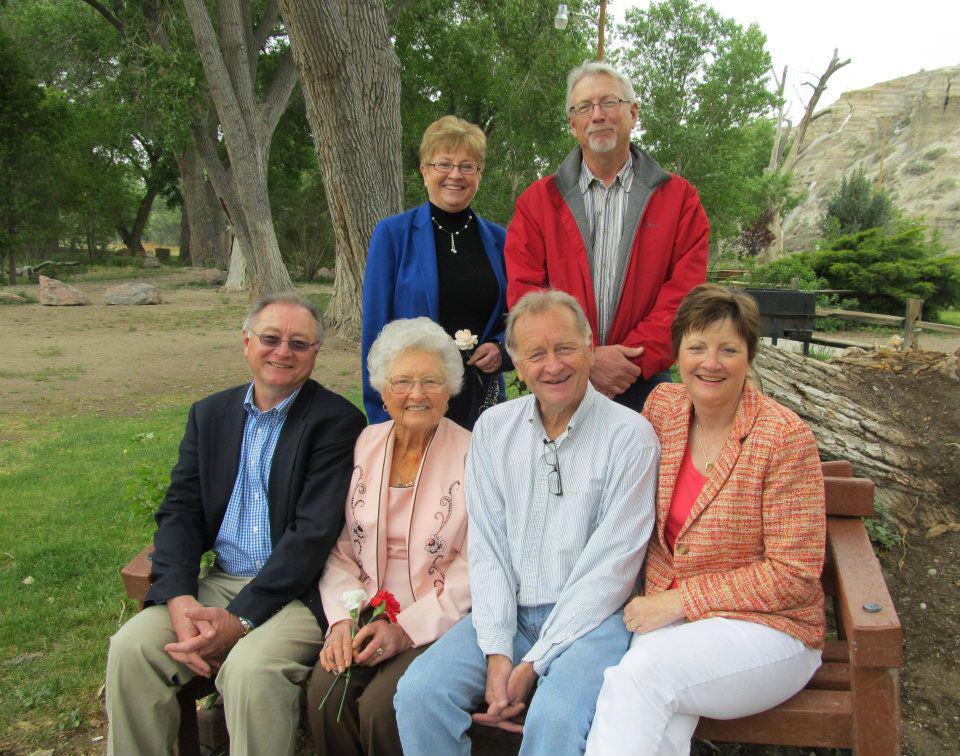
Someone once said to me, “When I watched her with Nick. I was sure he was her favorite. But then I watched her with Ray, and I thought – no he’s the favorite. Until I saw her with Kay or Greg or Mary Jean. And finally I realized – they were ALL her favorite.” I hope somebody will say that about me someday.
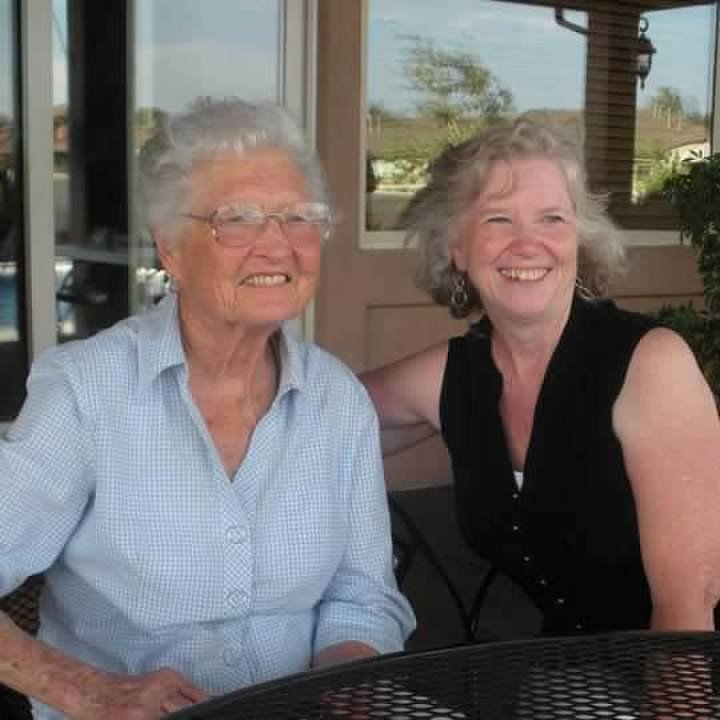
She was the keeper (and the maker) of my memories. She told me stories of our family before I was a part of it: the events that shaped my parents into the people they became and who my father was before he died and my mother before she grew old. She told me stories so that I would know who my siblings were as children and she included me in her own tribe of five, making a place for me and trying to help me find an identity in a family where my siblings were the age of my friend’s parents and my nieces and nephews were more like cousins.
By watching her I learned that it’s not okay to settle. That you have to fight for the life that you want whether it means leaving your small town and striking out for the big city to become a nurse, being a working mom before it was in vogue, or learning to swim and ski after you retire. She taught me that you do the right thing – even when it’s hard or inconvenient: caring for an aging mother, a handicapped sister, a grandchild in need of a fresh start. She taught me to embrace tradition and welcome new adventures.
She was the nurse who helped my mother birth me into this world and one who knew my story from the beginning. And now it is left to finish the story without her.
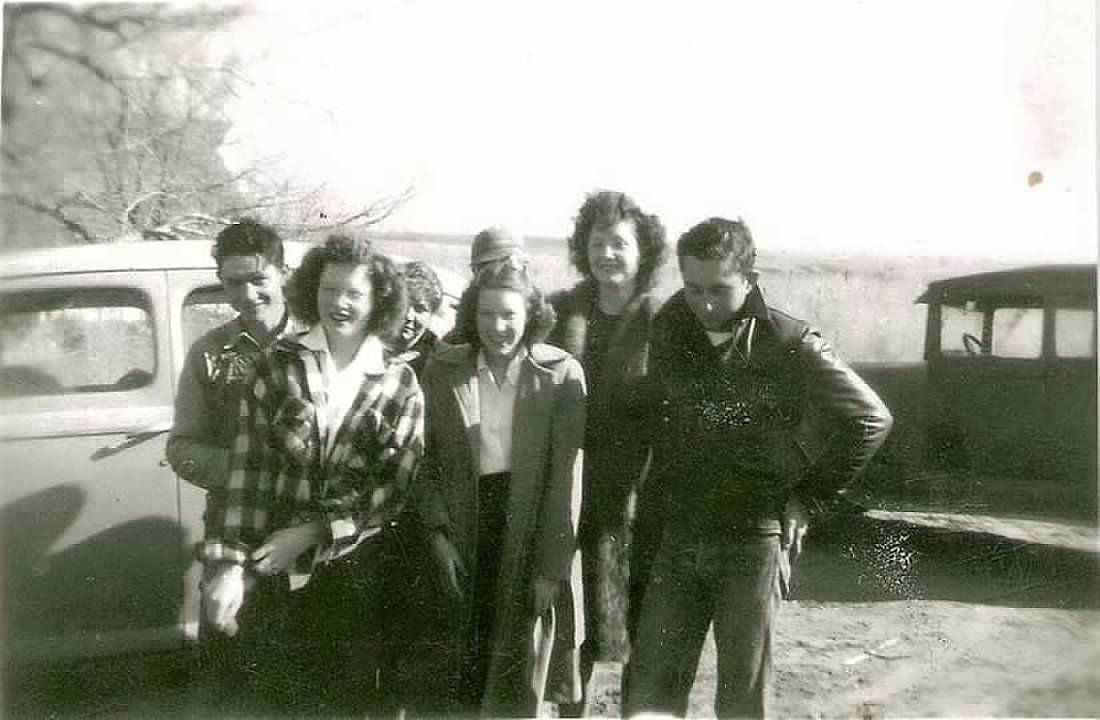


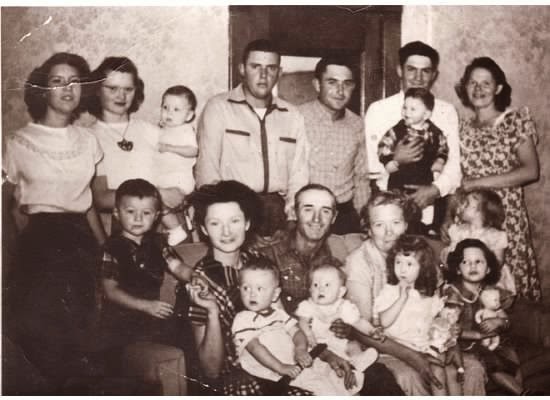

 because our stories matter