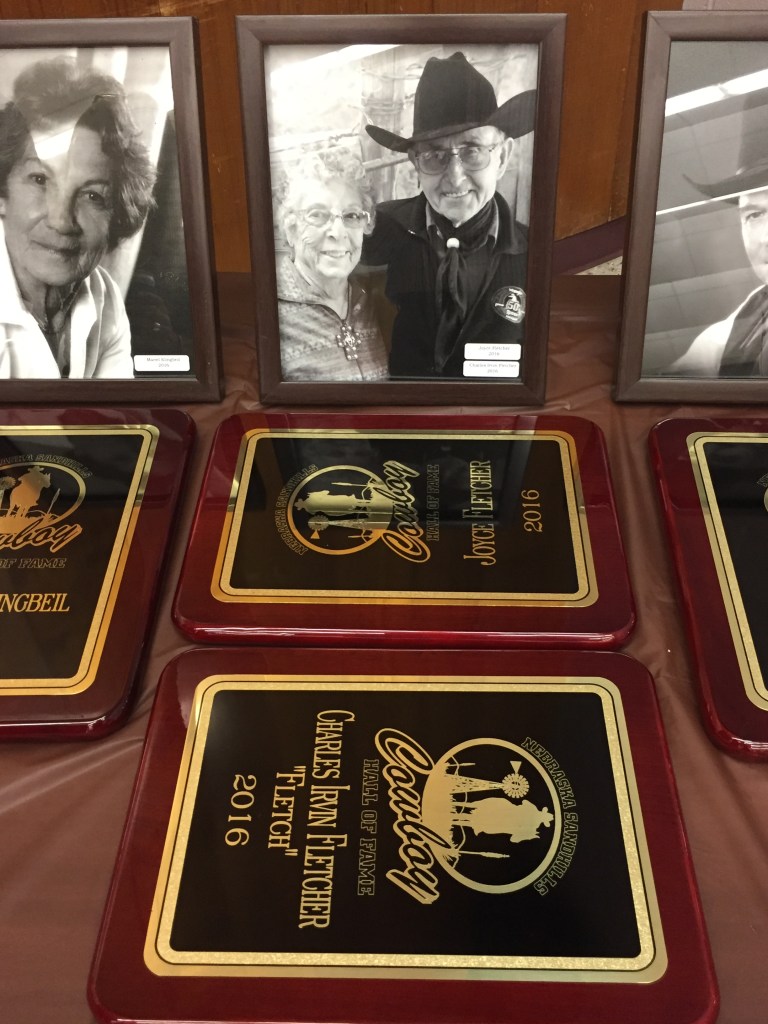
We gathered from several states and varied walks of life. We came by car and by plane and by the grace of God. For one magical and memorable weekend, we left behind jobs and kids and grandkids and the lives we had built apart from this place. We came to bear witness, to congratulate, and to be a part of it. But mostly we came to celebrate. My brother Irvin and his wife Joyce were being inducted into the Nebraska Sandhills Cowboy Hall of Fame and so we came.
His daughters rented the community center for the day in the little town of Taylor: a place where family could gather before the craziness of the main event that evening. A place where we could eat the lunch they provided, take pictures, catch up and “visit” – which really means “to tell stories.”
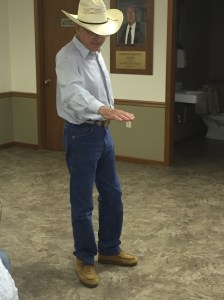
He stood up and announced “I have a story I want to tell.” The room went silent.
And he began to spin the tale which went something like this:
And they were lined up down the sidewalk – all of them about this high.
When my buddy and I were on the rodeo circuit, one of our favorite places to rodeo was Pueblo, (Colorado) because we could always count on the accommodations at the Bed & Breakfast there – better known as my sister Lila’s basement. We rolled in there after a rodeo one night in the wee hours of the morning, kicked off our boots, threw down our hats, and collapsed on the bed. Later that morning we saw these little faces peering in the basement window, staring at us with eyes opened wide. And then we heard the voice: “Just step on over here and take a look at two real cowboys. You can see them, their boots, their spurs and their hats. And it will only cost you a nickel.” Nick and Ray (Lila’s sons who were about 4 and 5) were selling tickets to see “a real cowboy” and the line went down the block.
And then he finished with this: So when I heard Nick was coming to town this weekend, I made sure my blinds were closed.
I learned three things from that moment: (1) My nephew Nick’s entrepreneurial bent began much, much younger than I realized. (2) I come from a long line of storytellers. (3) Even a quiet man, when given a chance and a good story, will stand in front of a group of people and talk.
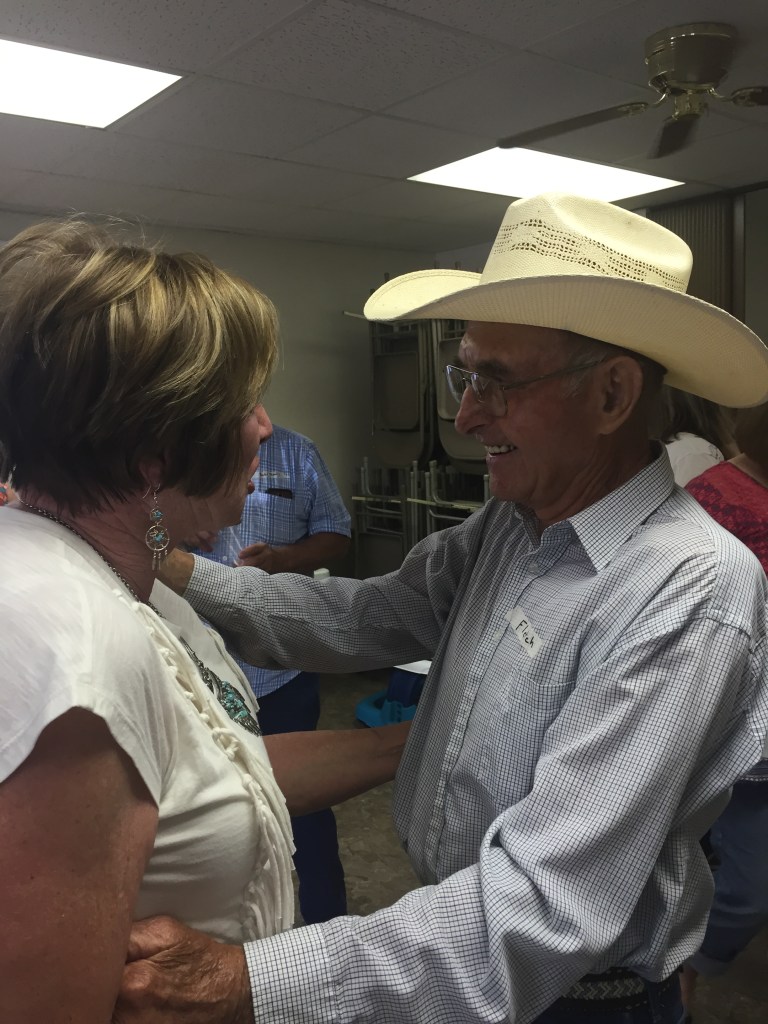
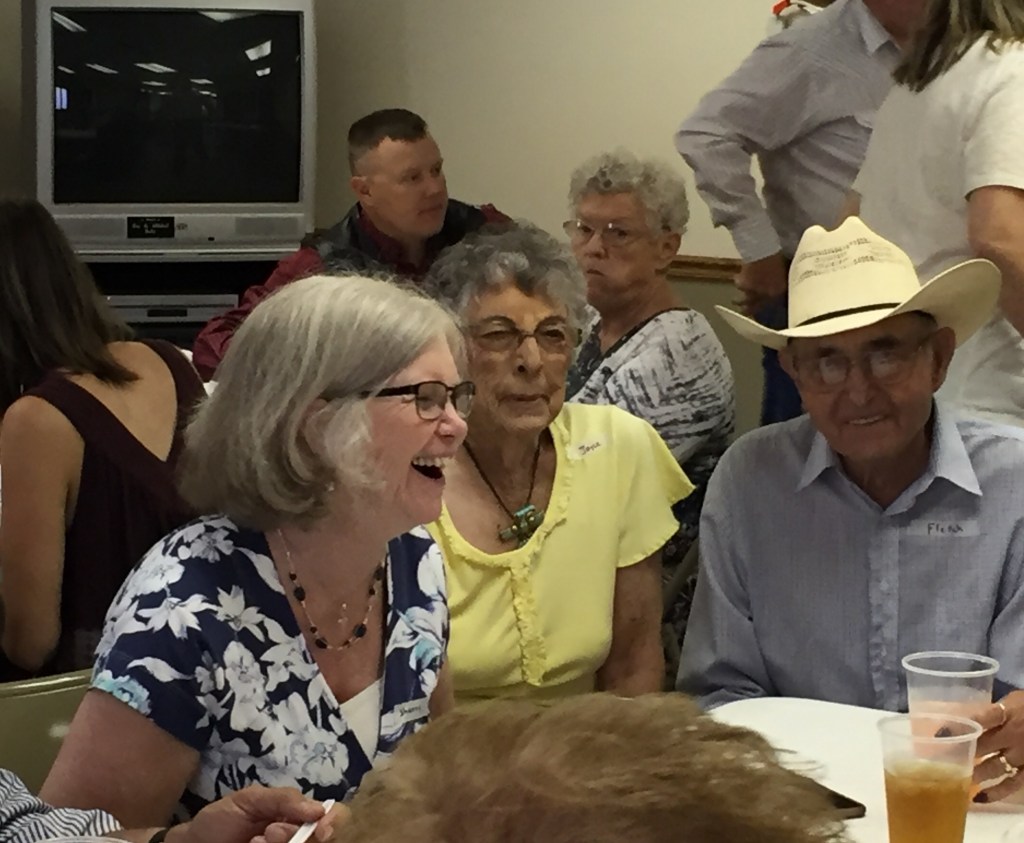
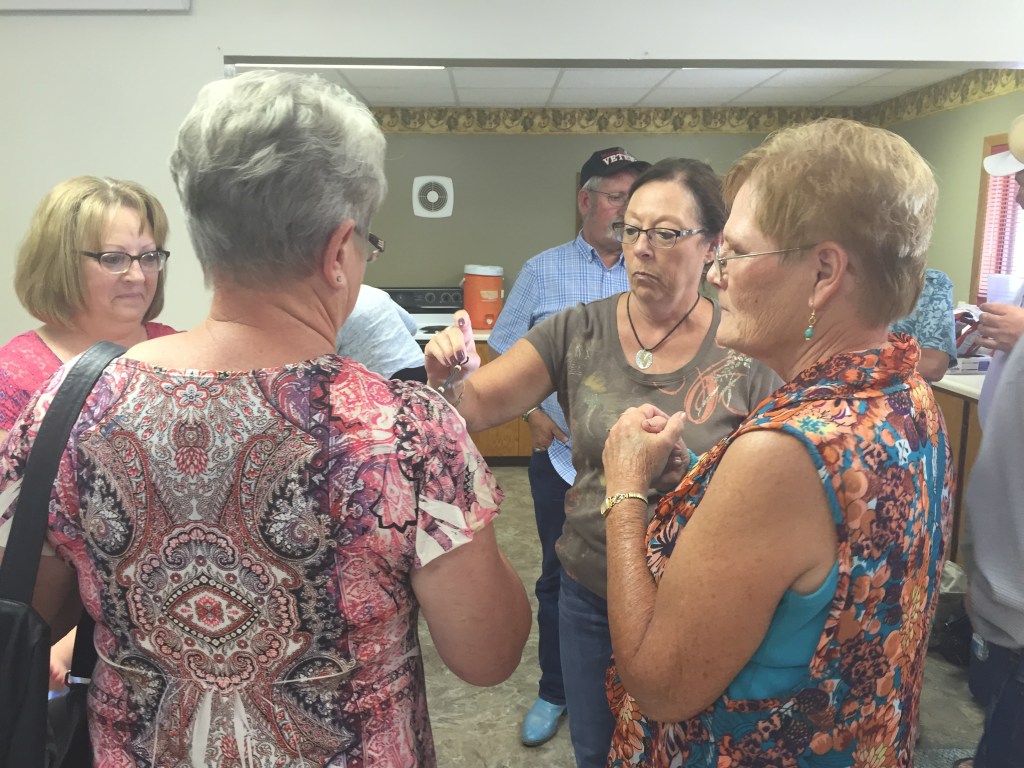
The meet and greet for family at the Community CenterFrom several states and many walks of life – but all familyIrvin and his girlsfamiiy through love if not through blood
And through the day and into the evening we watched and we listened and we learned about their lives and their contributions which earned them this honor. The Nebraska Sandhills Cowboy Hall of Fame recognizes those who have made extraordinary contributions to the Western Lifestyle or horse culture in the Nebraska Sandhills in the areas of competition, business, rodeo, ranching, western arts, and western entertainment. My brother was a rancher and bull rider, an artist who braids leather into everything from bullwhips to jewelry and a mentor to young rodeo competitors. He is a lover of the Sandhills and its way of life. And his wife was there with him in every one of his endeavors. She tells us, “I’m not a cowboy. I just found one.” But he couldn’t have done any of it without her.
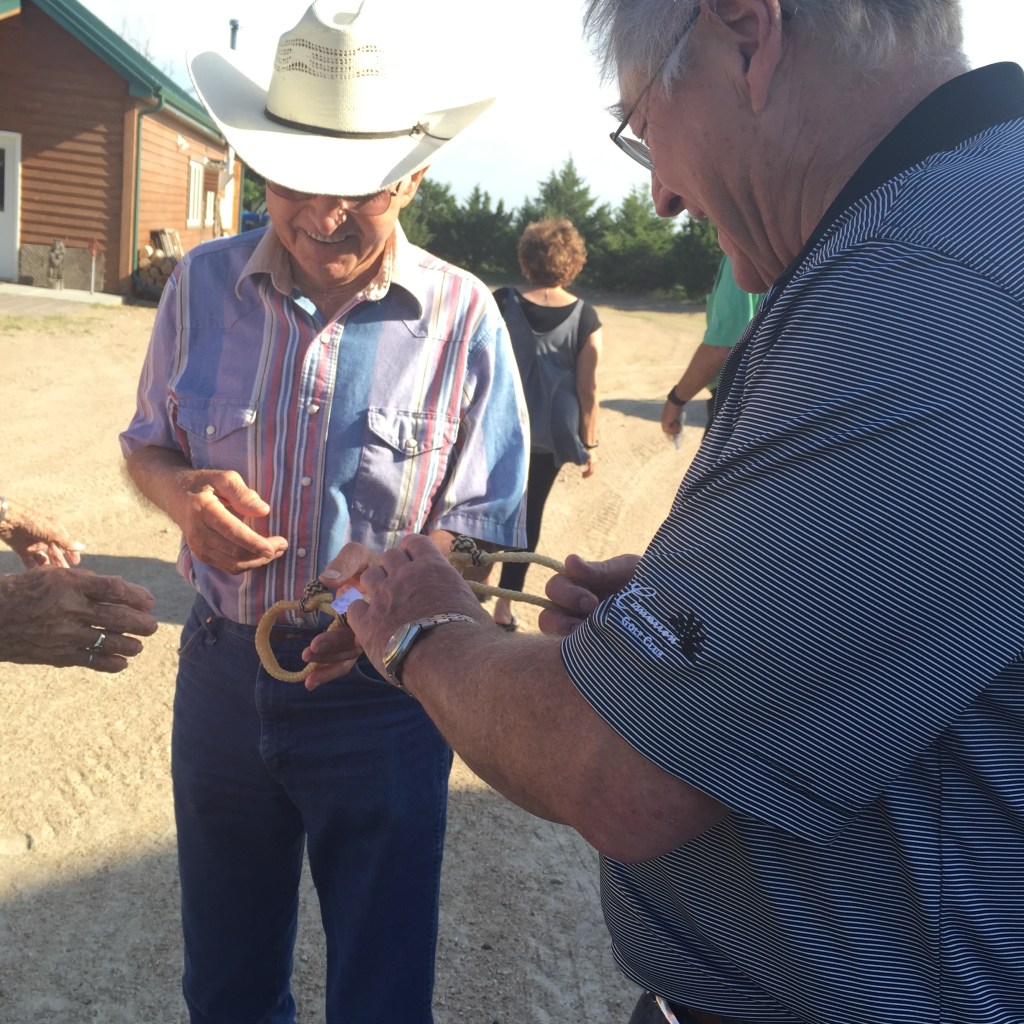
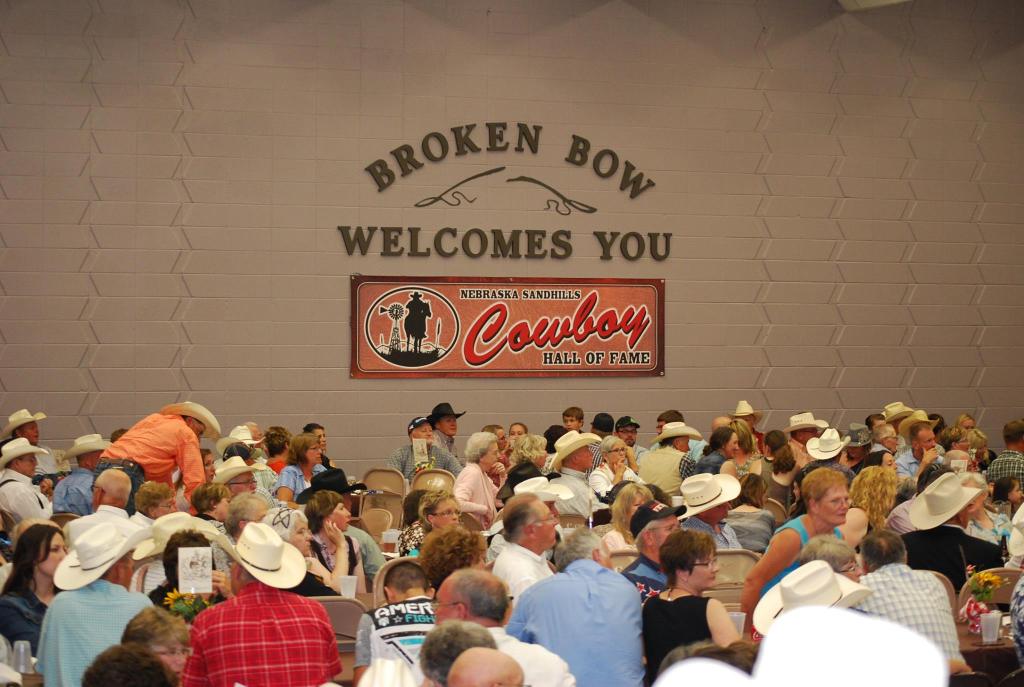
We go to the dinner and the auction and the induction. We complain about the heat but notice that we are the “city folks” and none of the cowboys in their wranglers and their boots and long-sleeved shirts and hats seem to be the least bothered by it – they never worked in air-conditioned offices where you have to wrap yourself in blankets to stay warm in the middle of the summer. (Maybe I should have been a rancher after all). Nick bids on the rawhide braided hobbles Irvin has made and donated to the fund-raiser auction but they go for over $1300 and he decides it’s too rich for his blood so he lets them go. Besides, he can always just buy another pair from his uncle and pay the $100 asking price. (sidebar: the next morning several of the family gathered for breakfast before we go our separate ways. Irvin arrived with a pair of the hobbles for Nick. He had crossed out the $100 on the price tag and replaced it with this: “One day only: $1300”)
SOLD! to the little lady down front!Should have bought ’em before he became famous.
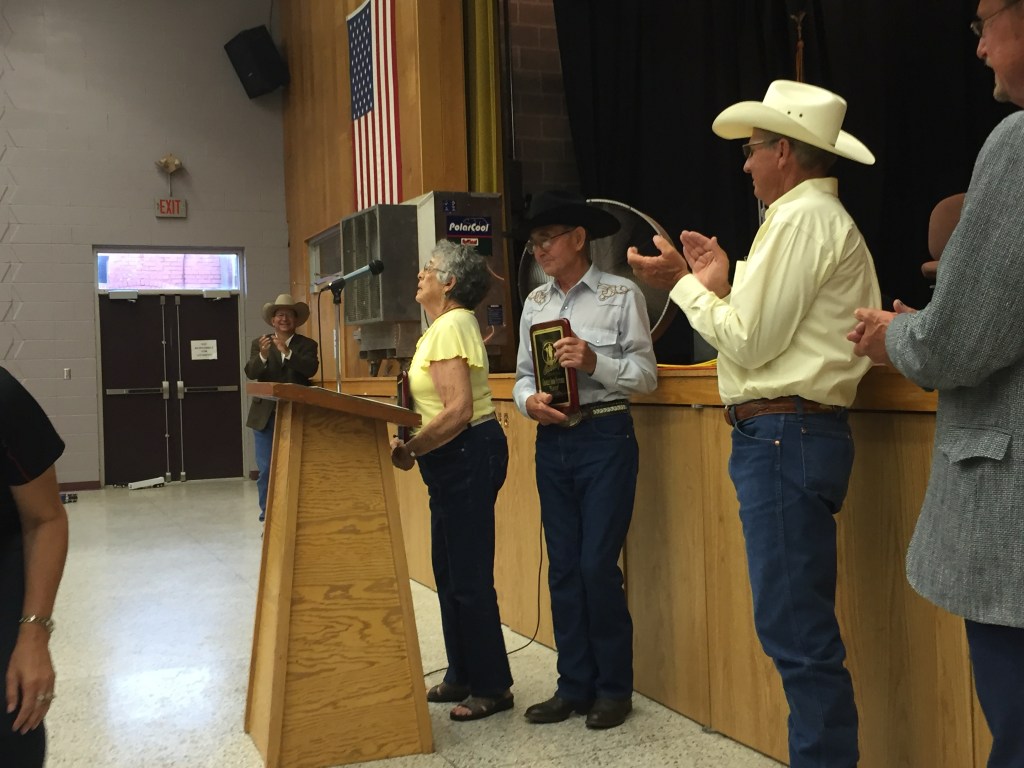
When they call Irvin and Joyce’s name we all stand to clap and cheer and whistle and the rest of the room stands with us. When you live and work and serve in the same community for 88 years, people know you. Together this couple is well known and well loved and tonight they are well-honored.
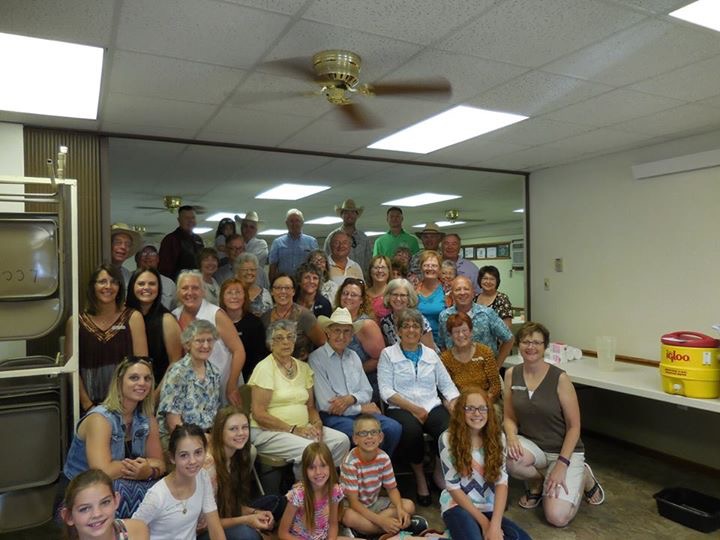
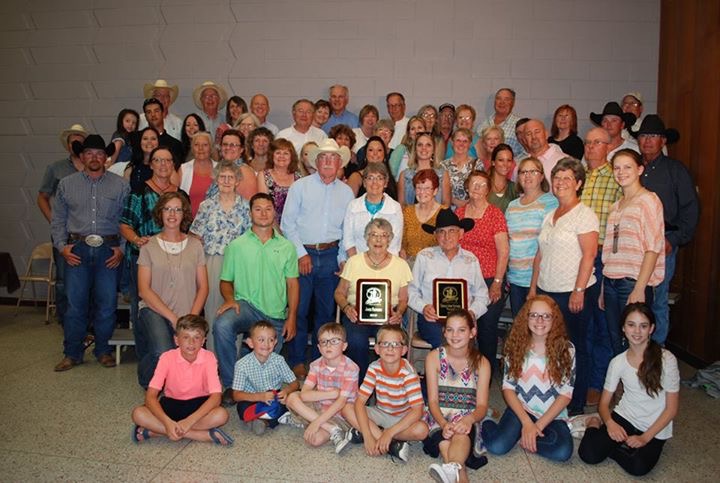
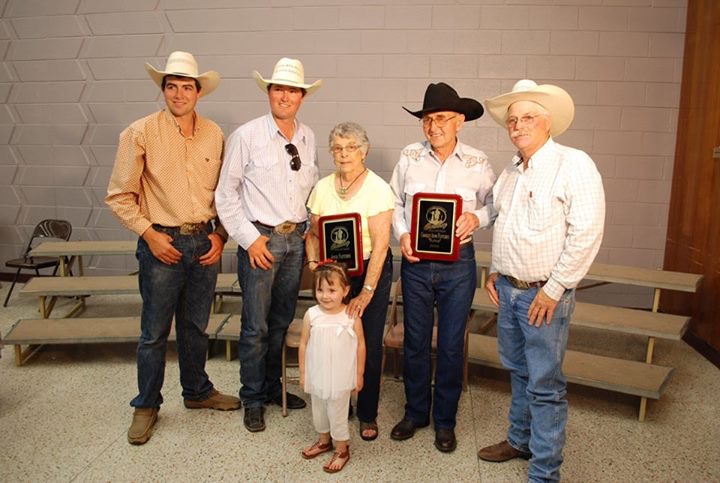
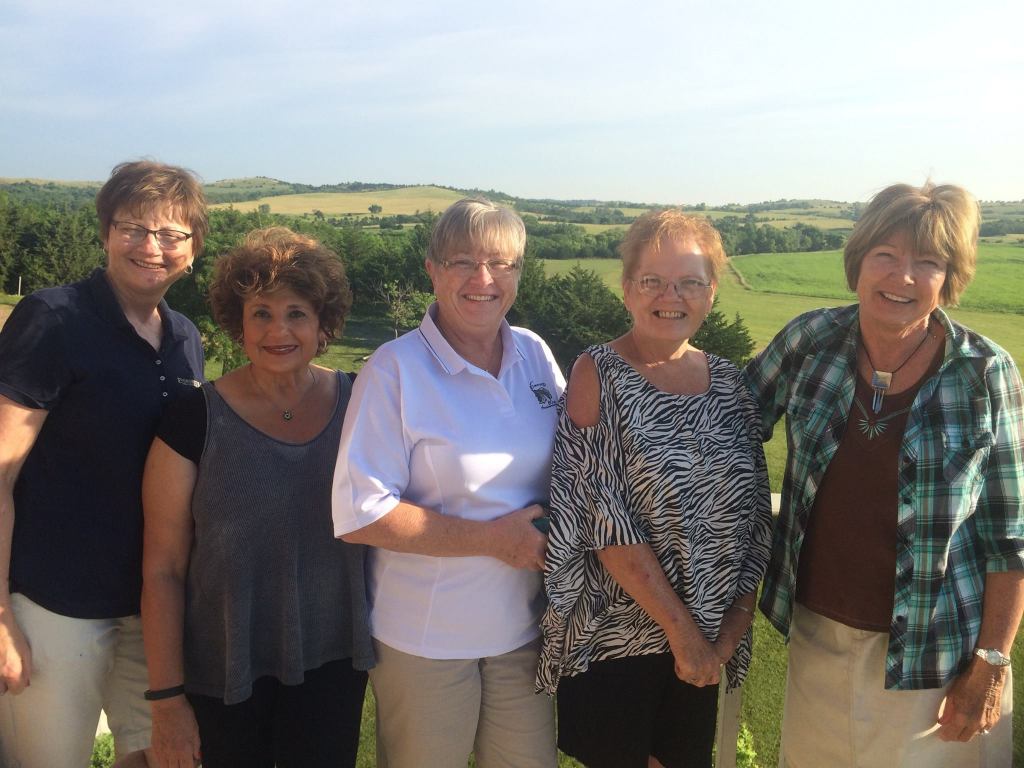
Of all the inductees, they definitely had the most people assembled for their group photo This is some of the Fletchers and Lindermans (Joyce’s family) who cheered and whistled and celebrate their accomplishment.
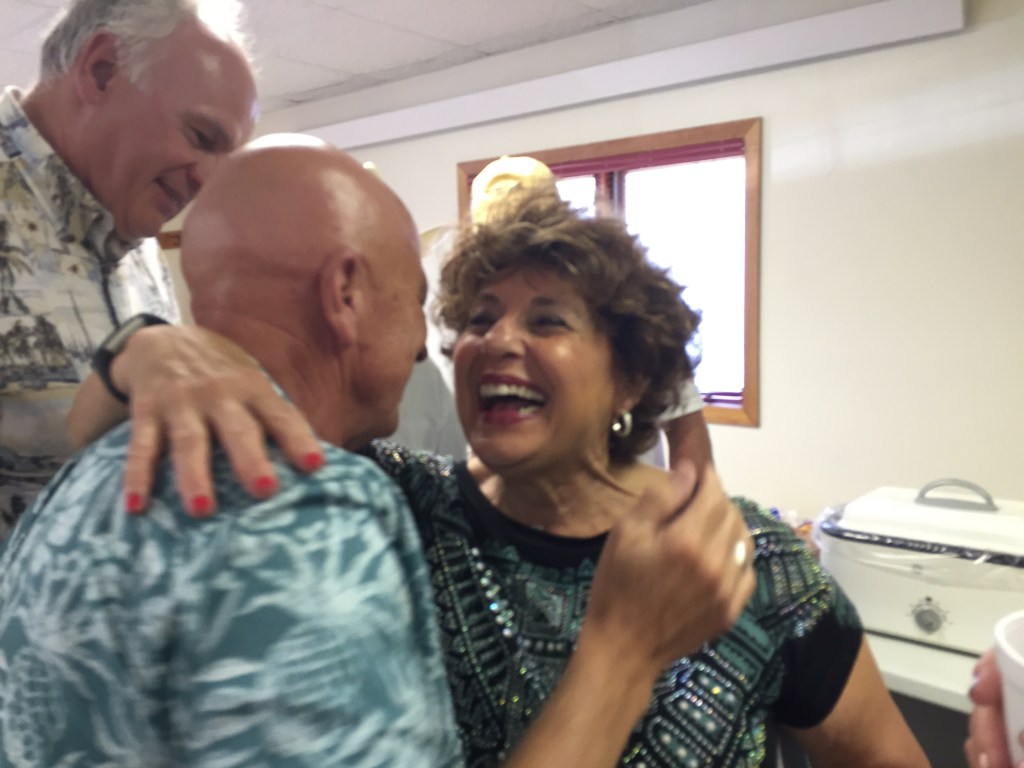
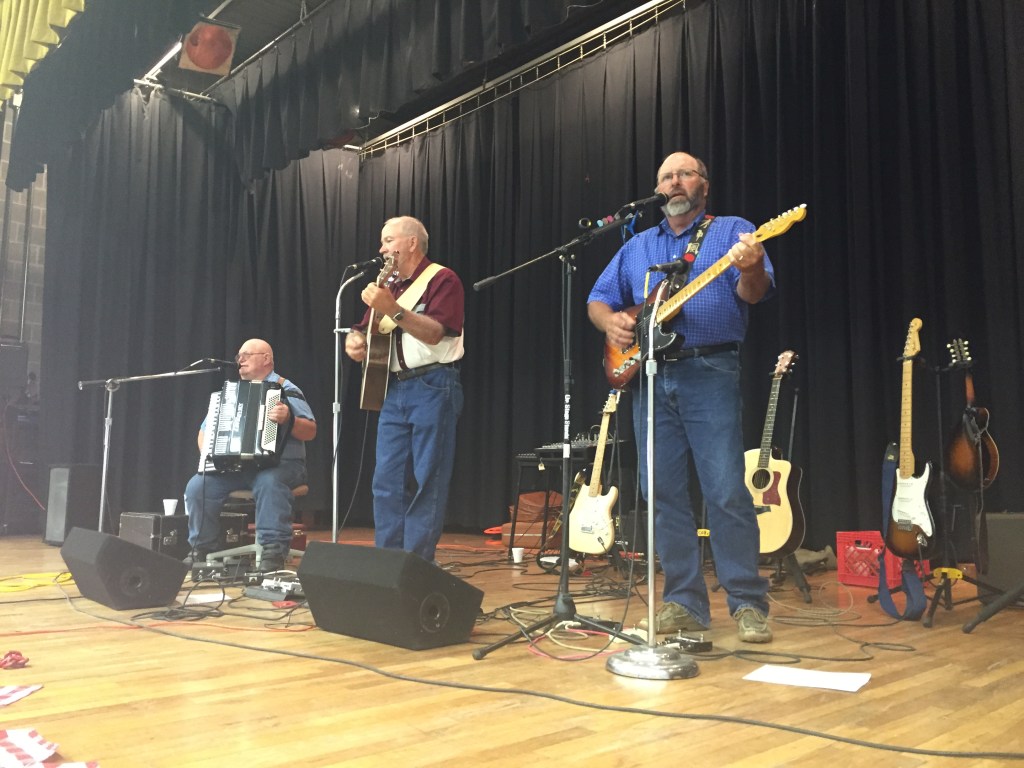
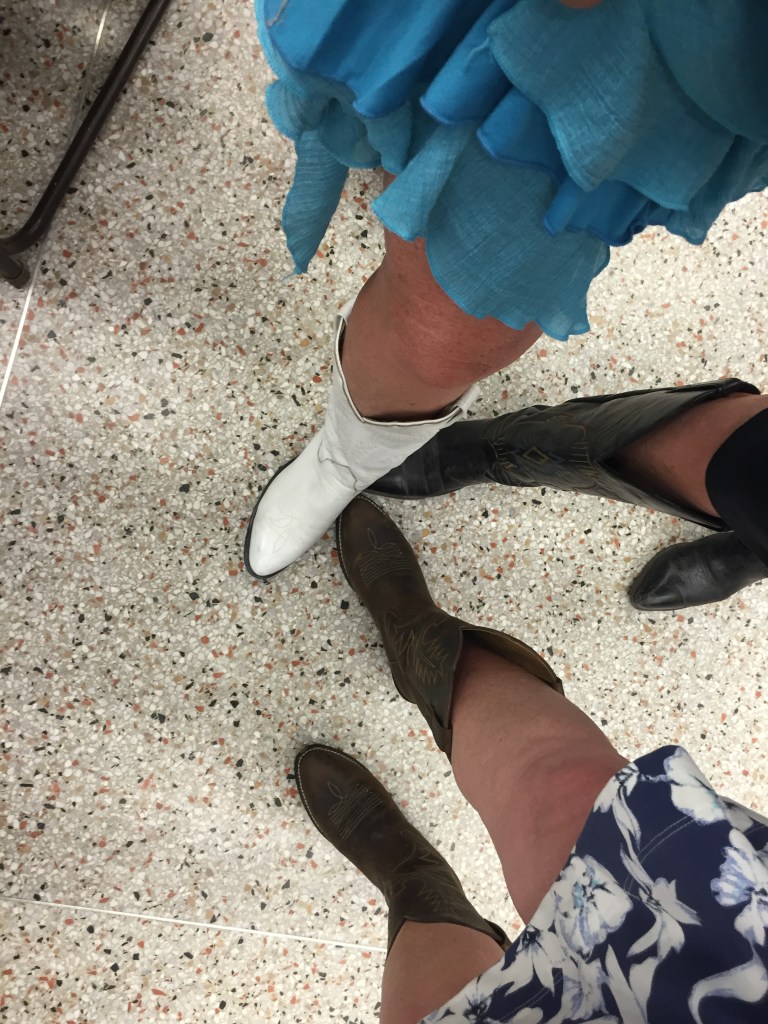
And what’s a cowboy gathering without some Country Western Music?What else would one wear to this occasion?A young cowboy with his mentor.
Of my parents’ six children, only Irvin and I are left. He was the third born and I am the youngest – a whole two decades younger than he. The siblings who shared his childhood, his stories, and his memories – they are gone. But if you knew what to look for, you could find them gathered around the tables: in the face of the one who looks exactly like her mother, and the one who laughs, just like her mother, and in the voice of the one who could say, “I remember my dad telling me about the time you and he. . .” And I was there. I do not share his memories, but I do share his stories, as did we all. Because in one way or another, all of us who gathered for him: me (his sibling); Nick and Kay and Mary Jean and Jolene and Shirley (the children of his siblings); Raeleen, Bobbie, Pat, and Cindy (his daughters ; his grandchildren and his great-grandchildren – we all come from this place and these people. And it was so good to be there. . . together.
In 1954 it only cost a nickel to see a real cowboy; our tickets for this event cost us $20 a piece. For that twenty dollars we got to see a whole room full of cowboys. And more. We heard a lifetime of stories. We laughed and we cried, we talked and we listened, and we remembered again that this collection of people from so many different places and so many different ways of life – we remembered again that we are family. And at the end of it all, we knew that there would never again be a time together quite like this one.
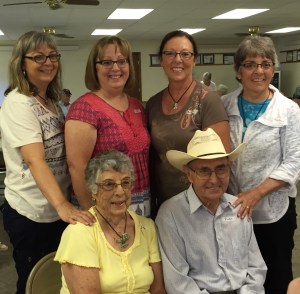
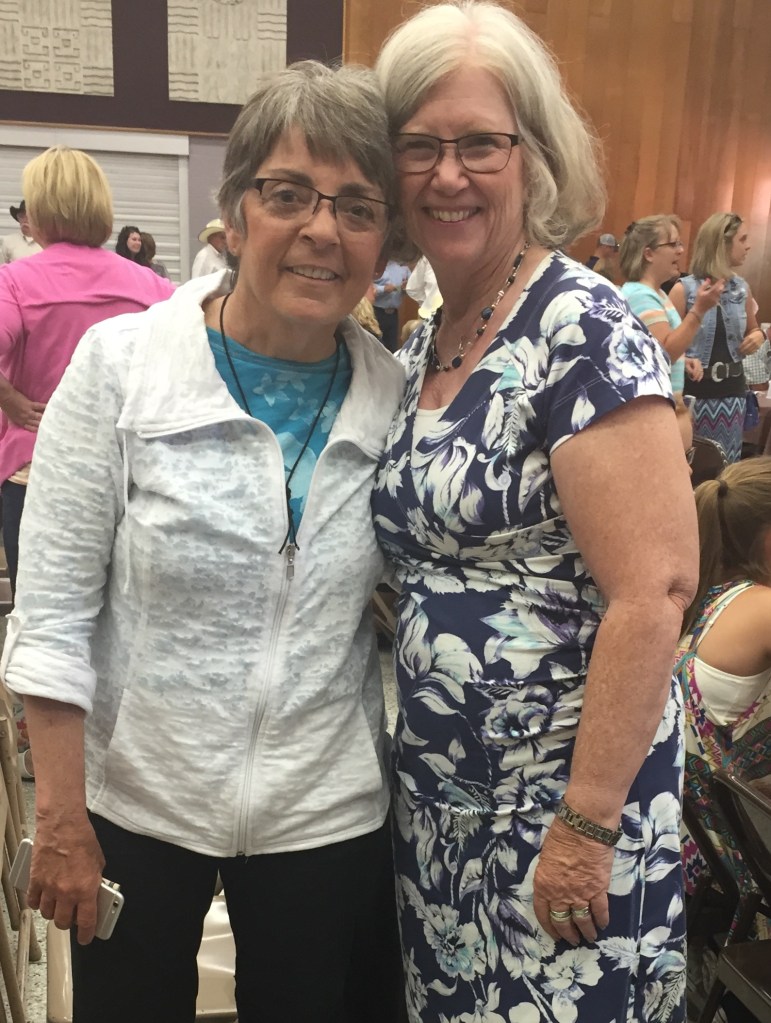
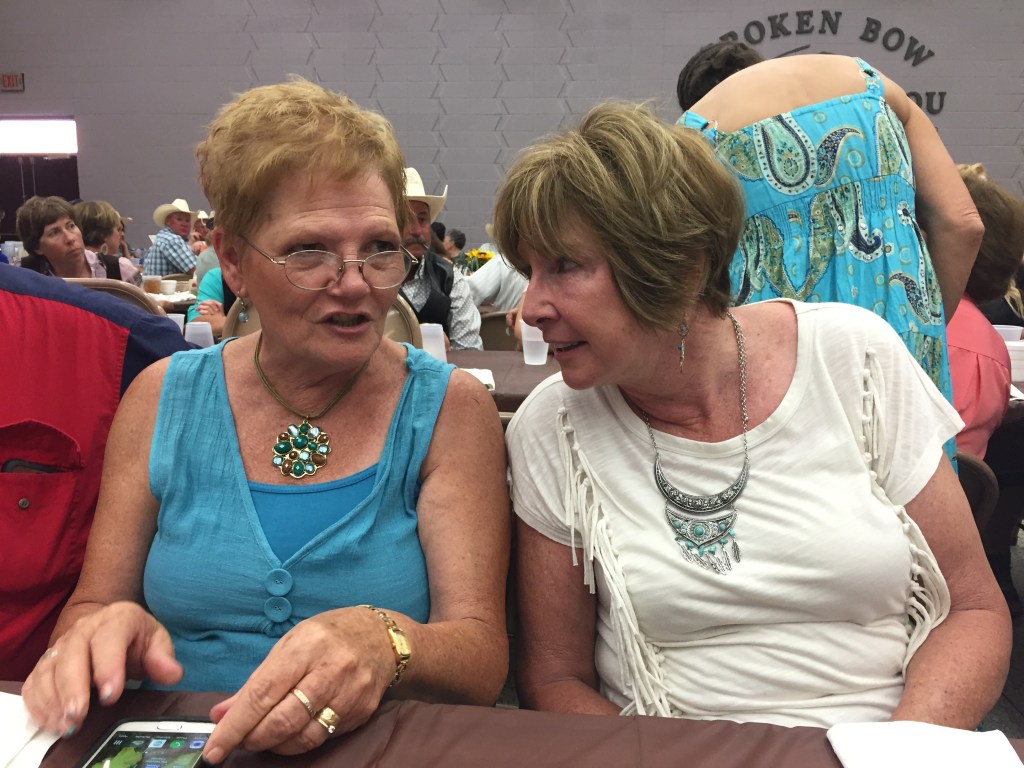
Raeleen and Tom. . . she was his first ranch hand. Cousins plus one (the one being the aunt in the middle)Who let the open toes in?
Once a cowboy – always a cowboy. Here he is, riding in the “Old Timer’s Rodeo” at 45+ years of age. Who does that??!!
He was a mystery to me when I was growing up. My mother and I traveled to Nebraska every couple of years and we would stay a few days on his ranch in the Sandhills, but ranchers are very busy people and he was a grown up and I was a kid. Besides, I didn’t know him and I would rather hang out with the other kids. He and his wife and four daughters came for Christmas every few years, but he visited with the adults and I was one of the children and that would not change for many, many years.
Many of the stories I know about him came from my mother. In the last few years, as I have gotten to know him, I have pulled some of them out of the man himself and learned about a life, a family, and a brother who was gone by the time I arrived on the scene.
My parents named him Charles Irvin. Charles for his two grandfathers and I don’t know where the Irvin came from, nor does he. I never knew anyone who called him Charles. The family called him Irvin. Everyone else called him Fletch. My mother always said he looked a lot like my dad and also had his temperament: both quiet, hard-working men.
Our Grandfather Barnes was a trapper. Irvin and his older brother Don thought they would give it a try. They set traps along the river, trapped muskrats and sold them (who buys a muskrat and for what?). When the winter came and the weather grew cold, they moved their traps away from the river and set them for other game. My mother used to tell the story about the day that Irvin was sent home from school because he reeked of skunk. They had checked their traps on the way to school and found one trying to escape. “What were you thinking??!” she asked the twelve year old boy. “Why couldn’t you have left it for later?” “Because, Mom, he might have gotten away.” He might have been quiet, but cautious he was not and he loved taking risks.
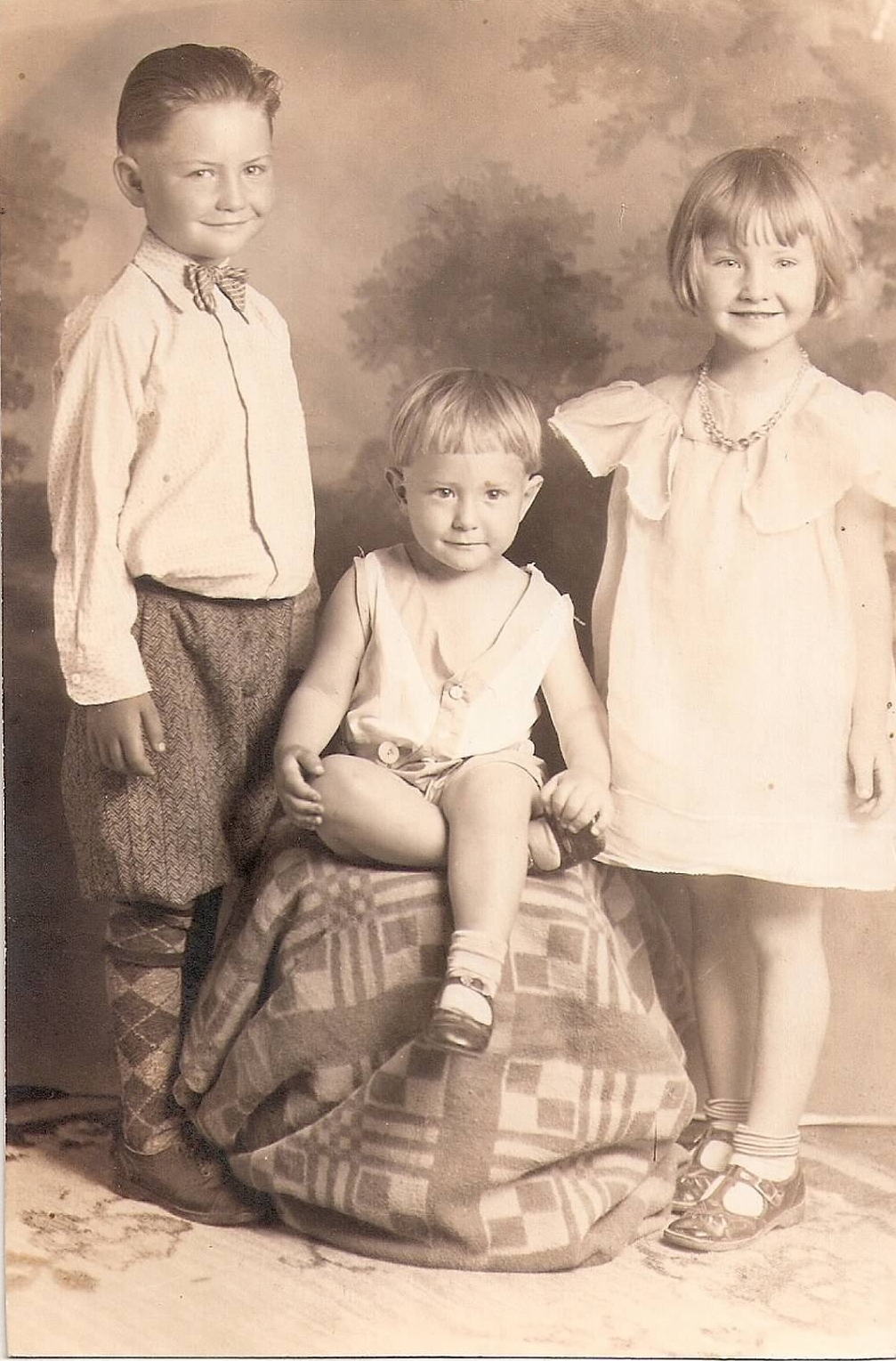
Don, Irvin, and Lila
I think they must have been in grade school when the two brothers decided to spend the summer down by the water building a raft and making plans to float it down the river. Our sister Lila, who fell in age between the two boys, begged them to let her help. But they would have none of it – this was a boys’ adventure, pure and simple, and she was not invited. Yet she continued to accompany them down to the river every day and as the craft got closer and closer to completion and the moment of launch was approaching, Lila ran to the house. “Mom!!! Those boys are down at the water and they built a raft and they are getting ready to take it down the river!!” She had turned informant. My mother put a stop to the Huck Finn and Tom Sawyer adventure and my brothers learned a valuable lesson – never make an enemy of a potential ally – even if she is a girl.
almost 50 and still going strong
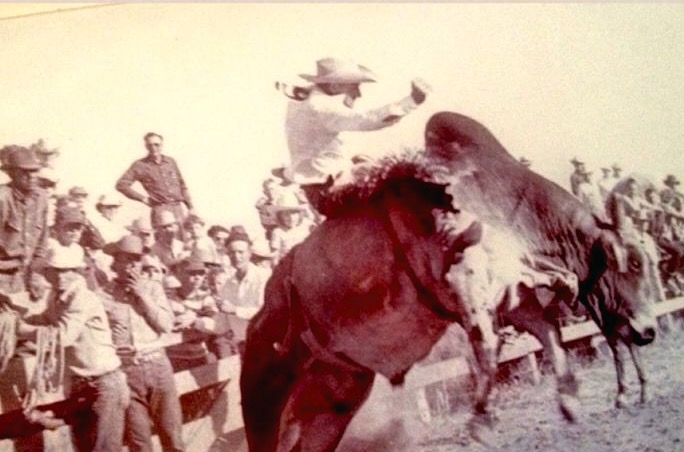
After high school graduation he stayed on the farm to help my dad, but every chance he got he hit the rodeo circuit – riding bulls and bare backs and livin’ the good life. Nebraska, Kansas, Colorado: wherever he could find a rodeo, that was his real home. And though eventually, as the responsibilities of family and running a ranch kept him out of the arena himself, the rodeo life was in his blood and he made it part of his life’s work to preserve this sport and way of life for other, younger cowboys. Whether it’s introducing toddlers to the Pee Wee Pen or judging, sponsoring, and supporting the high school rodeo clubs, he still loves it all. When they organized the first Old Timer’s Rodeo in 1974, he was back – and he won first or second prize (he would never say which).
He was 22 years old when I was born in March of 1950. By the next October he had been drafted and shipped off to fight the war in Korea. He returned home in 1952 with a Bronze Star and a Purple Heart. I know little to nothing of those years or his experiences of that war. I have read the citation that was given to him when they presented him with the medals, but I’ve never heard him speak with any detail about that frozen tundra and the battles he fought there nor did my mother seem to know much about it. A quiet man in the best of times, about the war years he is particularly silent. He was in high school when our oldest brother Don was sent to Germany to fight against the Nazis. One day Irvin was called to the principal’s office – his brother was missing in action they told him. You should go home and be with your folks. And though Don eventually did return home, I don’t think my family was ever the same after that. So I don’t know if it was against this background that he kept these stories to himself, or if it was simply that he was such a quiet man. I do know that it had to have marked him. How could it not?
By the time Irvin returned to Nebraska, my dad had bought his own farm and his son helped him to work the land and care for the animals; he also returned to the rodeo life. In 1953, he married a rodeo queen and worked as a hired hand on a ranch – living the good life. By the time I was five, our father was dead, my mother had sold the farm and moved me and my handicapped sister to Colorado where she could find work to support us. So I have no memories of my brother from my childhood other than the visits we made back to see family every few years and the Christmas visits where he would sit in my sister’s dining room and drink coffee with the adults.
the city slickers on horseback
The summer before Paul and I were married, we went with my mother to Nebraska. Paul had never met most of the family so this was his chance. To say that the city boy was intimidated by the country life would not be misrepresenting the situation. Irvin said, “The girls will take you out and show you around.” By this he meant that we would ride the pasture land on horseback to get the lay of the land. It wasn’t so bad when Raeleen took us (she was 14 and we were 19), but the day he sent us out with the five year old might have been just to get a reaction. And then came dinner. Irvin handed Paul a plate with a steak on it. Just a steak – nothing else. The meat hung over the sides of the plate. I could see the look of panic in his eyes. Paul had always said he didn’t like steak – that it was hard to chew and had no flavor. It didn’t help that his mother, God love her, tended to cook red meat until it was unrecognizable or that any beef he had ever eaten had come from Safeway. But he couldn’t afford to offend his new in-laws even though he whispered to me, “I’ll be here all night getting this down.” I was grateful that he didn’t ask for a bottle of ketchup. With the first bite, he became a believer. To this day he measures every other steak by that one and few, if any, come close.
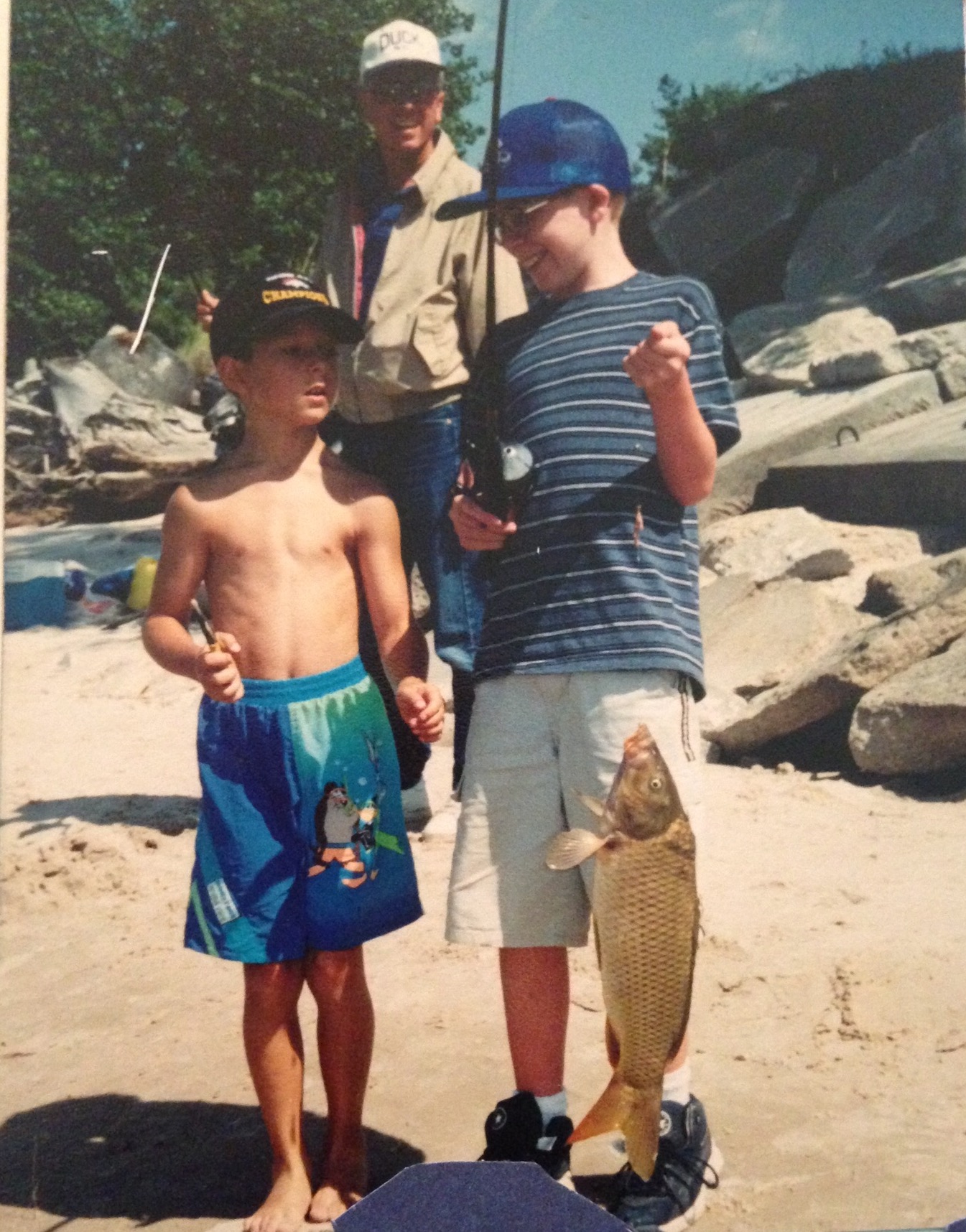
After we were married, we didn’t make many trips back to Nebraska. We were busy raising a family and holding body and soul together. But as the kids grew up and moved away, I had a longing to connect with these roots and the stories of my family. In 1999, when Fletcher was 11 and Joy was 15, we made a trip west and stopped for a few days at the ranch. Irvin was retired by then but still had some cattle, some horses and some wild barn cats. He took our Fletch fishing for the first time. He baited his hook, stood him next to the water, put the pole in his hands and the line in the water and said, “If you feel a tug on the line, just reel him in.” Before long he had a bite. He hollered for his uncle. Irvin yelled, “Just bring him in! Bring him in!!”” Fletch yelled back, “But he don’t wanna come in!” One evening his daughter Raleene came for dinner with her two kids who were about the same age as Joy and Fletcher. Eventually someone mentioned that the kids were missing in action. A search turned them up out in the corral – blowing up cow pies with firecrackers – with the uncle/grandfather leading the charge.
Years later Paul and I would return to the ranch on our way to Colorado. We sat under the stars which were brilliant in the dark, Nebraska sky with no city lights to dim their light and listened to the quiet. And we went tanking on the Calamus River – meaning we sat in the tank which is used to water cattle in the field and floated down the river. It’s sort of like white water rafting – without the white water and without the rafts. We meandered down the river, we talked to cows, and we ate our cooler full of snacks, and Irvin fished. And of course, before the trip was over, we ate steaks.
And then one day a couple of years ago, Raeleen called me. “I have to be in Washington D.C. and I was thinking of bringing my Dad to visit you. I don’t know if he’ll do it. I doubt he’ll do it. But what would you think of the idea?” To get on a plane and fly to the city? Where there would be crowds, and noise, and concrete? Would he really do this? I wanted so badly for it to happen. She called back to say he would come. And then she called back to say he had changed his mind. “Why?” I wanted to know. “Well, he says he doesn’t have anything to wear.” Are you kidding me?? Put him on the phone, I told her. I assured him his boots and his hat would be perfect, we would meet him at the airport and that we would promise not to let the city eat him.
It was one of the best weeks of my life.
Sean asked him to bring his uniform. I wanted a picture. But who can fit into something they wore 60 years ago?? This guy. Seriously?
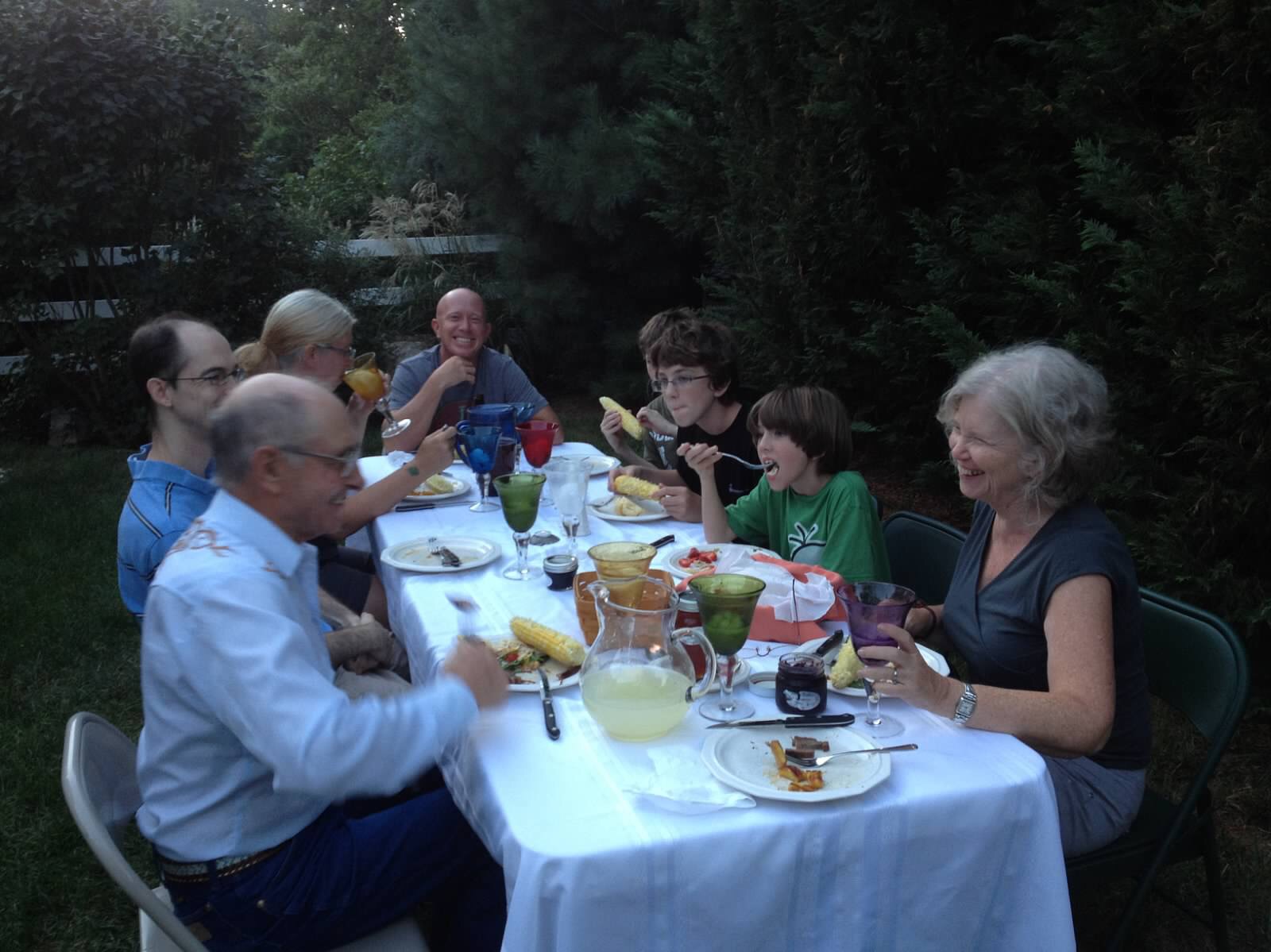
We sat on the deck and visited. We showed him our life here in suburban Maryland and the church we had built and Sean and his family came from North Carolina to visit with his uncle, a war hero from a different generation but one who understood and appreciated his nephew’s military life as only one who has served can do. We ate cinnamon rolls and pie and talked of our parents. He came to church with us and people wore their cowboy boots to show their solidarity and wanted their pictures taken with a real life cowboy.
Cedarbrook shows up in boots for this cowboy.
We took him to visit the Korean War Memorial. We wanted him to have time there. Time to just be there. To take it in in the daylight hours but also to see it lit up at night. But it was July and I was afraid that the infamous Washington heat and humidity would be miserable and unbearable and take its toll on this 85 year old man. I worried about how far we might have to walk. I worried that the city would be crowded and claustrophobic to a rancher from the Nebraska Sandhills who upon landing at the airport declared, “This place is so different you oughta have to have a passport to visit.” But all my worries were for nothing. Paul dropped us off as close as he could get us and went to find a parking place. As we walked along, I pointed things out to him and when we came to the foot of the Lincoln Memorial he stopped and stared up at the monument. “If the stairs don’t bother you, we could go up a little ways and get a closer look,” I offered. “We have time?” he asked. We had all the time in the world. He was off. I called to him to wait for us and though he claims sometimes that he doesn’t hear well, I think he hears everything he wants to hear and “slow down” doesn’t fall into that category.
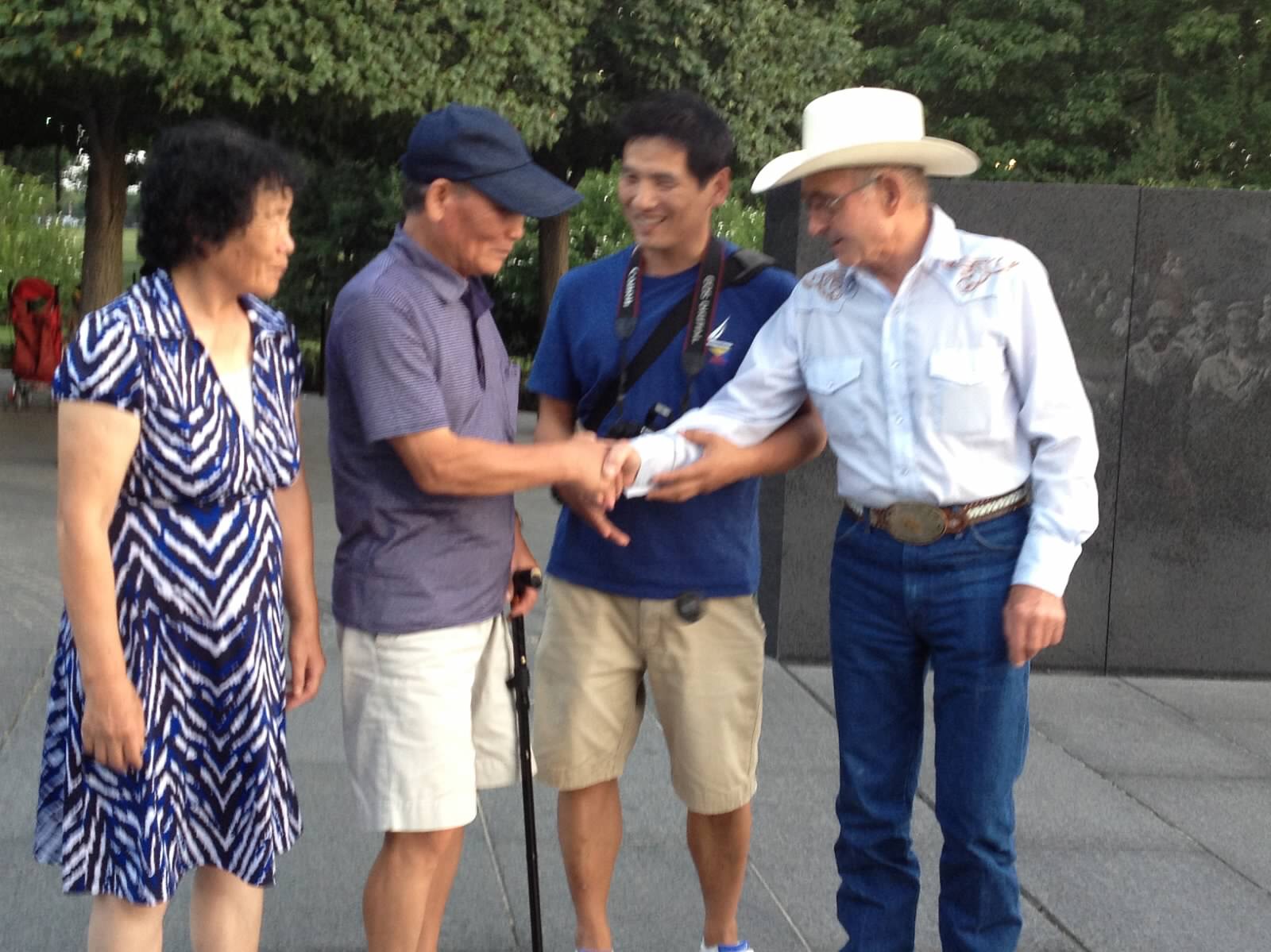
When we walked down into the spot where the Korean War Memorial sits, it became a thin place for him and for all us who were with him. We walked slowly with him, stopping to just see or to read or to pray and I’m sure for him, to remember. To be there with him, haunted by his ghosts and memories, was to be in a holy place. As the afternoon wore on some of us went to find a place to sit and to wait, but he stayed, almost like a sentry standing watch. From our bench we saw a Korean family approaching him, a man with his elderly parents. “Excuse me sir, my parents do not speak English but they wish to know how old you are?” My brother told him, and he translated. “My father asks if you fought in Korea.” My brother nodded. “My father asks if he may shake your hand.” And the old woman bowed from the waist and spoke in Korean. “My mother says thank you for saving her country’.” The war veteran, in his boots and his cowboy hat, walked past us, not wanting conversation or company in what was understandably an emotional moment. But what a gift it was to bear witness to this act of gratitude, of humility, and of grace.
On the morning he left for home, he came into the kitchen. This man of so few words stood next to me and told me that he was proud of me and of what I had done with my life. “And Mom and Dad would be so proud too. I wish they could see it all.” Have I ever thanked him for that act of generosity? For speaking on behalf of a father I never knew and a mother who has been gone for over 25 years. To tell me, on their behalf, “Well done.” For reaching across the generation that separates us and saying, you belong.
Our sister Lila died the following January, leaving us the last of the siblings.
First there were five.
Don, Minnie, Lola, Lila, Irvin
Now there are two.
And then I was born and there were six.
And now there are only two.
I sat beside him at the funeral. This brother who shared my genes and my story, who was shaped by bull riding and ranching and war and the Nebraska Sandhills, and I offered a prayer of thanks for this quiet, true grit of a man with his courage and resolve and strength of character.
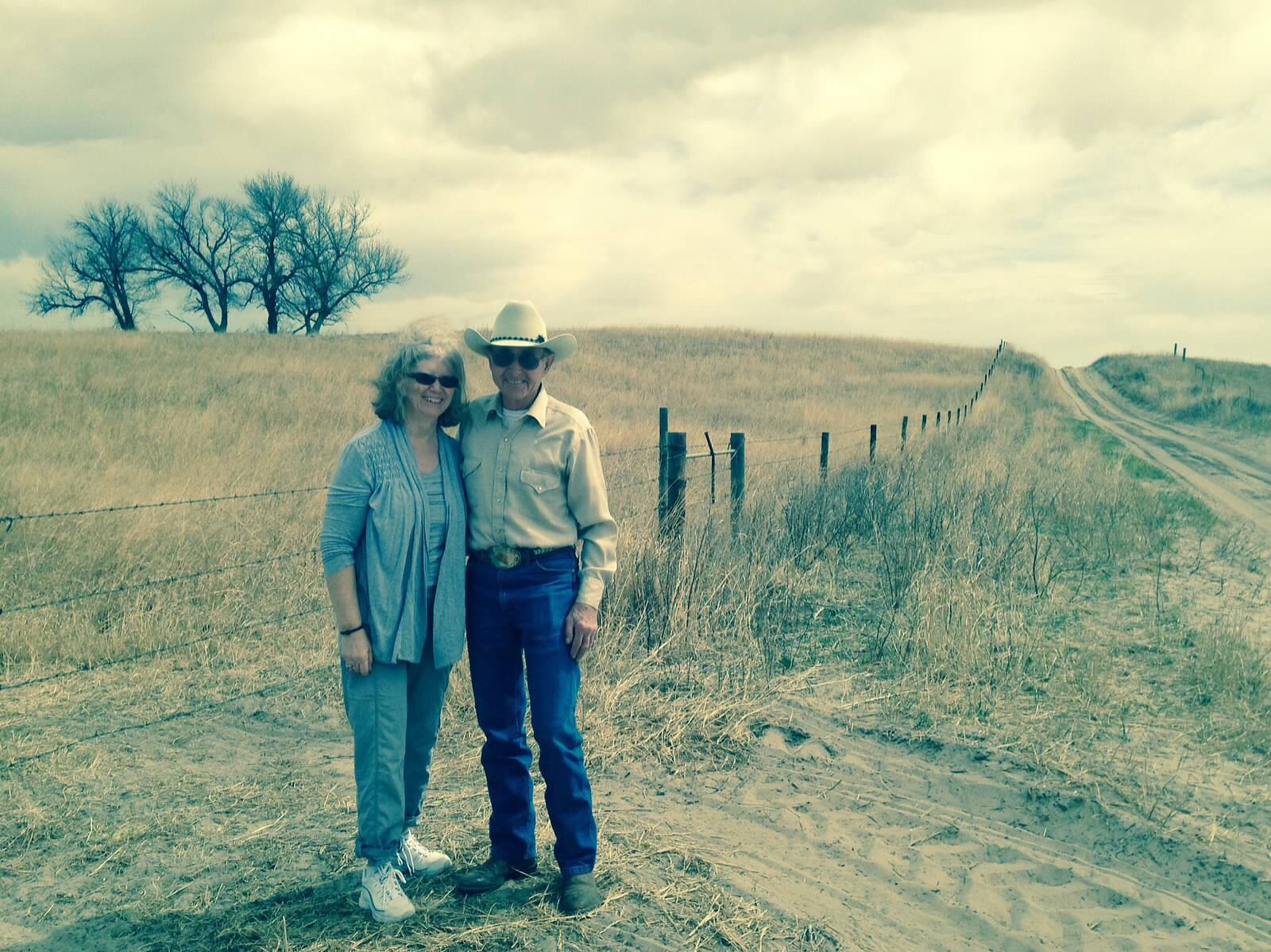
A year ago I went to Nebraska and stayed three weeks with him. We watched bull riding on television, worshiped together at the Easter sunrise service, went fishin’, ate steak, and even trapped us some varmints. And sometimes he would talk, and I would listen and those were the best times of all.
But next time I’m in Nebraska, could we build a raft and take it down the river?




















 because our stories matter