Lemon Meringue Pie, Coughing Cows, and More

What you have to understand first is that though Raeleen and I are related by blood (I am her aunt but only five years older than she), we really knew each other hardly at all. She was a country girl from Nebraska and I grew up in a city in Colorado. The oldest daughter of a brother 21 years older than I, we had spent a few Christmases together in our childhood though she was designated as one of the “little kids” and I was part of the “older crowd” – those nieces and nephews that were a little older or maybe a year or two younger. Other than that – our paths had not crossed at all. I knew about her, of course; when my mother was alive she kept me updated on the comings and goings of all the family but that was about it. As we grew to adulthood we bumped into each other  from time to time – at my mother’s funeral, my sister’s funeral and a few other times when family circumstances brought us together. . . but the truth is, we really only knew about each other.

How then, you might ask, did I, as a woman in my 60’s, end up sneaking out of the house in the middle of the night to stand on a country road in central Nebraska under a start-studded sky waiting for my accomplice in  an adventure which would lead us deep into a pasture with no-trespassing signs posted all over? This story is the answer to that question.

Raeleen is a physical therapist – and a very good one I might add.  She has a thriving practice in a small town in Nebraska. People come to her from neighboring towns and even from out of state to experience her healing touch. My sister credited her with keeping her out of surgery and a wheelchair when everyone else had pretty much given up hope. And so, as the arthritis in my hip got worse and the pain from it began to impact my ability to function, I reached out to her.  “Give me four weeks and I can help,” she promised.  Of course, since I didn’t have four weeks to give, I wrote it off. My hip got worse. “Three weeks,” I said in my best negotiator voice. “I’ll see what I can do,” she promised. But as the time got closer, I began to get cold feet.  I had too much to do, I couldn’t be gone from home for three weeks, and of course the real issue was “what in the world would I do THERE for all that time?”  No WiFi, I wasn’t even sure I would have good cell phone coverage, no place to go and nothing to do. “I’m not going,” I told Paul. “It’s a bad idea.”  But he was convinced that I should go.  For no other reason, he said, than to spend the time with my 85 year old brother. When would I get a chance to do that again? “ It will be restful,” he said.  “Take some good books, listen to music, spend time with God, and who knows?  You might even have some adventures.”  Plus – maybe she could help my hip.

And so I packed two suitcases one of which was overweight and cost me $75  (one would have been more than enough because as it turns out, you don’t really need that much in Nebraska) said good-bye to my home and to  civilization and headed off to the hinter land.
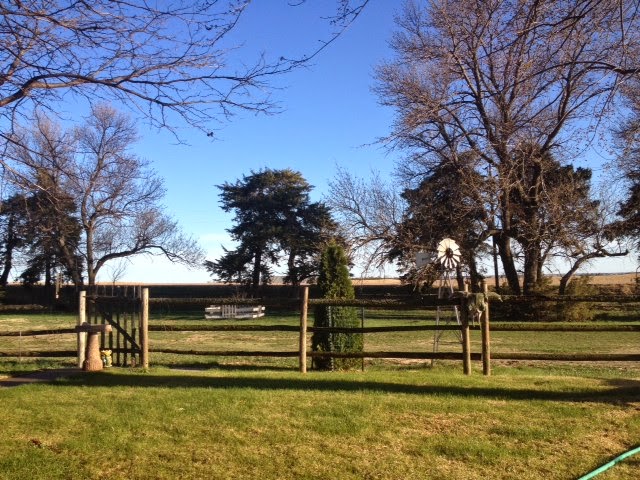
 I stayed with my brother and sister-in-law at their place outside the town of Taylor (population 190). We quickly established a routine. Every morning, either my brother Irvin or his wife Joyce would drive me the 20+ miles from their house outside of Taylor to Raeleen’s office in Burwell (population 2,210). My hosts had been forewarned that I would need to be driven to and from treatment because, as my husband told my brother “there is no way on God’s green earth that you want to turn her lose in one of your vehicles if you ever want to see it again. She can’t find her way around the block when she has street signs.”  So off we would go every morning after breakfast. Raleen had an empty office in her building in which I set up shop and I was able to work (the office had Wi-Fi after all and lucky for me somebody knew the password) so I could actually communicate with my office back home via email.

Then, twice a day my niece would come to get me and put me on her table and work me over. And for an hour as she pushed and pulled, evaluated and stretched, rotated and chiseled, we would talk. We learned each other’s stories and how our lives had intersected the other’s in ways we had not known. We shared family history and filled in gaps in one another’s memory. She told me things about my mother that I had never known and I saw her through the eyes of a granddaughter rather than a daughter and I envied Raeleen the years that she had spent with my mother after I moved away and she moved closer to her. We talked about God and how we had each come to faith. We talked about our kids. We talked about being kids. We talked about books and movies and life. We talked about the joys and trials of small town life and what it was like to be a pastor’s wife in suburban Maryland. Daily I grew in my respect and admiration for this woman who was both salt and light in her community like no one I had ever seen. We talked about our failures and our journeys and in the telling and in the hearing we discovered in the other a kindred spirit and our “other best friend” – because we each already had best friends and of course would not want to replace them – we were just adding on. And then, at the end of the day, Cindy, (Raeleen’s sister and “office manager”) would give me a ride back to the Corner Stop (a gas station with a table in one corner where my brother often met his buddies for coffee in the afternoon) and I would ride the rest of the way home with Irvin and sometimes we would talk and sometimes we would just be and it was one of the best times of all. Joyce would have dinner ready for us and we would eat at 6:00 and then watch some kind of sports or bull riding competitions on TV until 9:00 when they would go to bed and I would go to my room and read.  And the next day, we would do it over again.

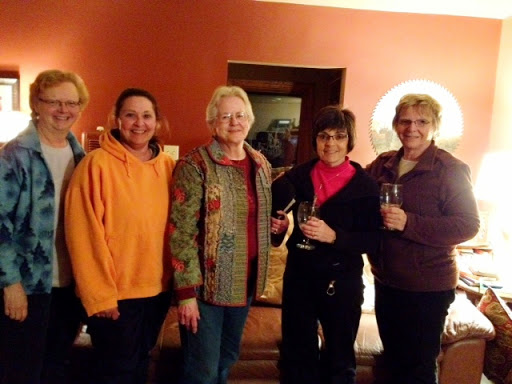
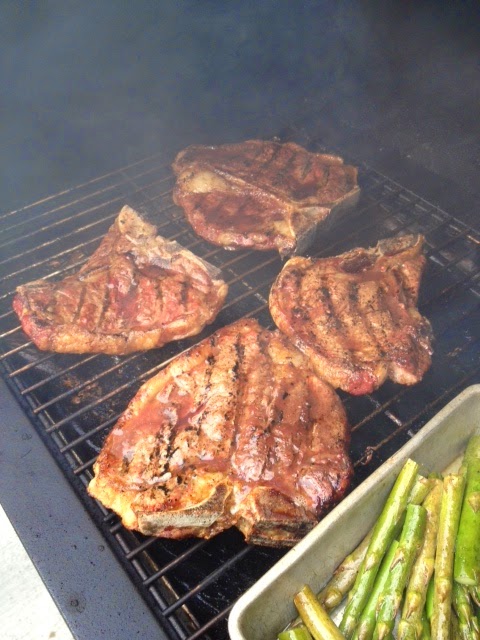
But on Wednesday nights I would go home with Raeleen so that I could go to her Wednesday night “Bible study” with her.  This consists of a group of ladies who get together, drink ginger tea which is how they came to be known as “the ginger ladies”, share their week and their lives with one another and sometimes study the Bible. And on those nights her husband Tom would cook for us. He is a rancher who raises his own cattle, raises the crops he feeds them, fattens them and then sells them. And so their freezer is filled with little bites of heaven – the best beef you will ever taste any time anywhere and the best argument I know not to be a vegetarian.  I’m not sure I will ever buy another super-market steak again – I would rather just do without.
The Ginger Ladies

 And then sometimes we would wake up before the sun, get in the car, and drive out into the pasture and sit in the dark and wait for the sunrise. Sitting in the dark, I learned to recognize the “night sounds” – the sound that insects make in the dark before the dawn. “Listen!” Raeleen instructed.  And then it grew absolutely quiet. No sound at all. Then one bird. And another. And another.  And soon the air was filled with their song – as if it were they who were waking the sun. And then came the first shafts of light and color, the sun would peek over the horizon and the day had begun.  It was magical.

 I was there for three Sundays:  Palm Sunday, Easter Sunday, and the one after. The first two I went to the little Methodist Church in Taylor with Irvin and Joyce. We went to the “before service coffee time” and sat at the table and I learned where the best fishing had been the week before and we talked of the drought and how desperate they were for rain and whether it would snow again this season. It did. On Palm Sunday we marched around the sanctuary waving our palm branches as we sang a hymn and the children and the old men and young mothers all joined in the hosannas. On Easter we went to a sunrise service out on somebody’s ranch at sunrise and sang some hymns and a boy played the cello and we watched the sunrise and drank coffee and ate coffee cake and I loved knowing that all over the world on this day Christians would be celebrating the resurrection in one way or another and that we were a part of that.

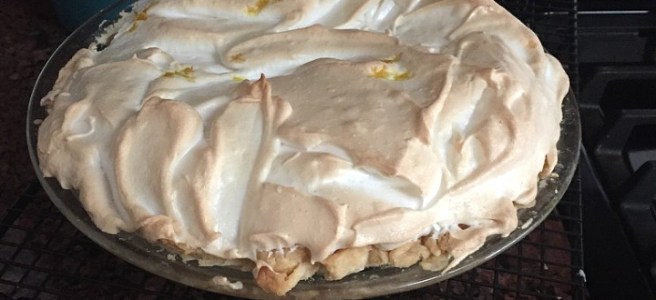
I met other characters in the story. Cody: the son of my brother’s neighbor who was an award winning bull rider and now works on a local ranch. One day Raeleen and I found my mother’s recipe for lemon meringue pie in an old recipe box she had given to her granddaughter before she died.  Raeleen loves lemon meringue pie and so I said I would make one for her.

Before leaving town, we stopped at the grocery store to buy the ingredients. When I went to bake the pies I realized I had neglected to buy cornstarch. At home this would have been no problem – just run back to the Food Lion and pick it up. Out here in the back country – not so easy.  Joyce and I were debating what to do.  Irvin said – call the neighbor and I can get in the pickup and drive over and get it (next-door has a different meaning where they come from). And so we did. And they did. And Cody was heading out to go do some branding and would drop it off. Which is how I came to have my forgotten grocery item delivered to me by a cowboy in his hat and boots who came in and sat down and had a piece of banana bread with us before being on his way.

 Food Lion is sooooo overrated.

I met Carol:  one of Raleen’s best friends who is the post-master in a little town where she ministers to and prays for everyone who comes in to collect their mail. Who has an amazing gift of hospitality and opens her home to the ginger-ladies each week and her stable to some city slicker who wants a photo-op on a horse.  And who loves her community to Jesus each and every day

I met Dennis: a retired teacher who went into ministry in his retirement and now pastors my brother’s little church as well as another church in the next town over and goes between them every Sunday, making a long day for him and a blessing for those whom he serves.
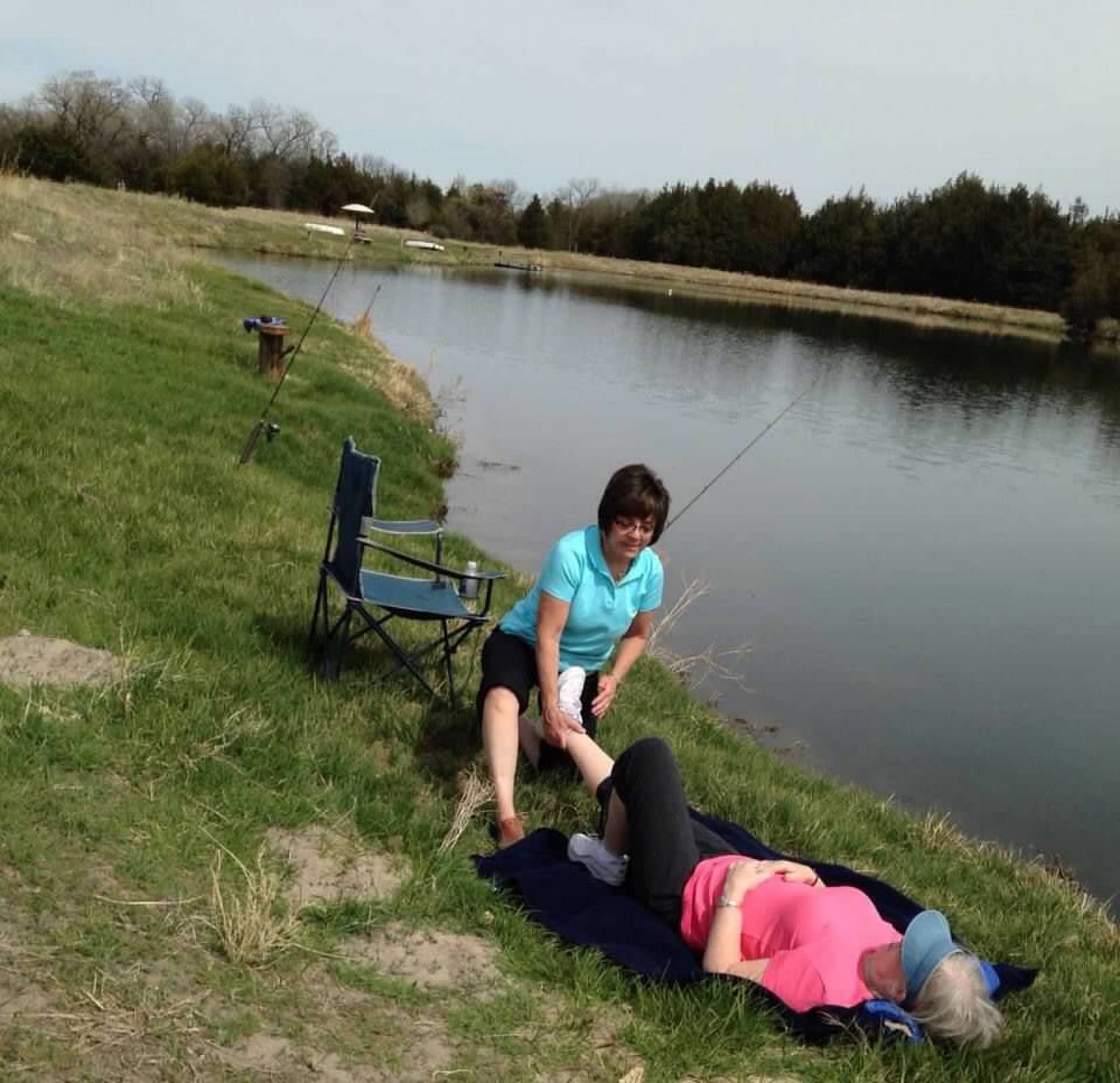
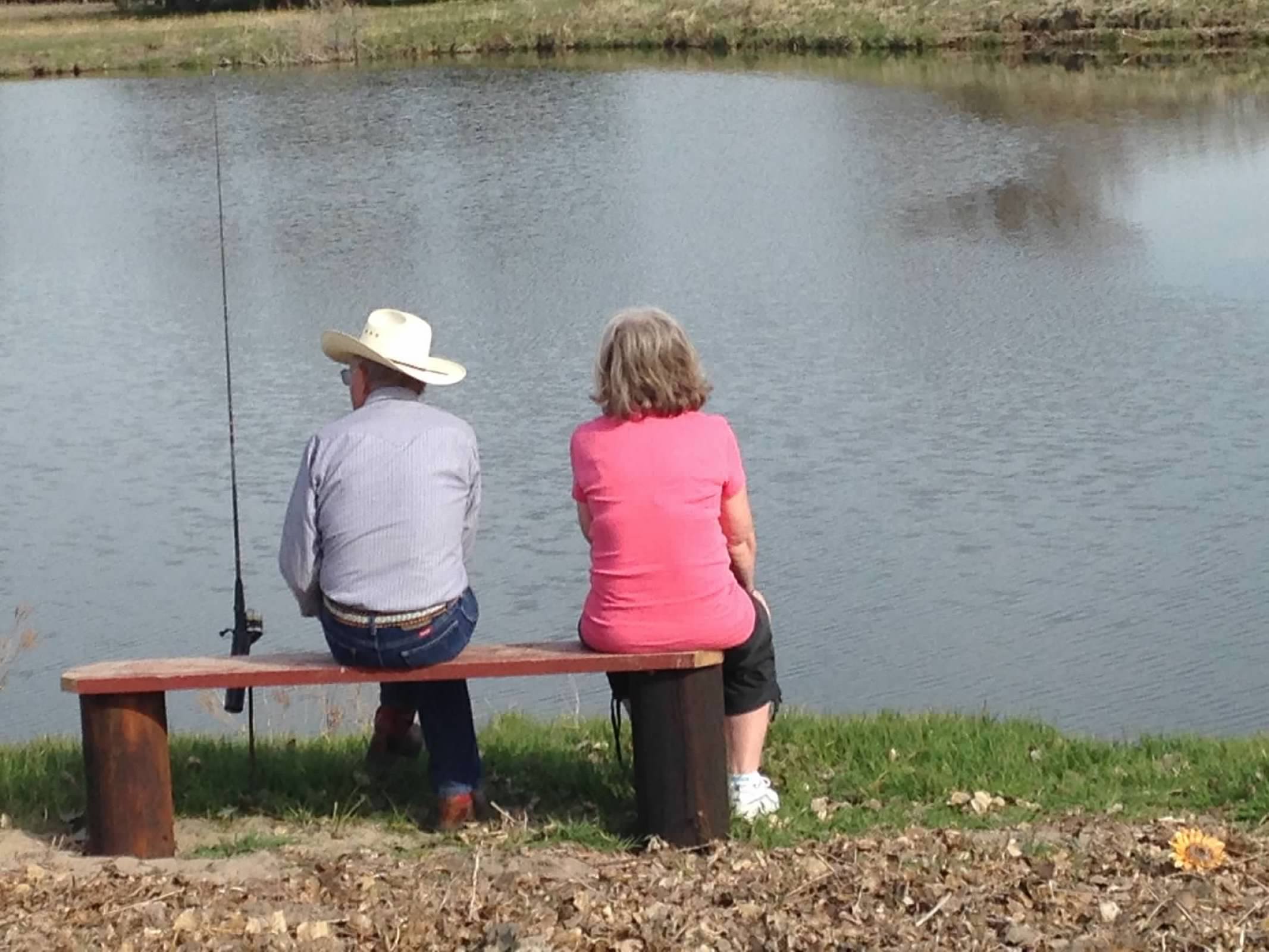
I met Dan, a friend of Irvin’s who opened his private fishing pond to us one afternoon and evening so that I could go fishing with Irvin without a license – and stayed and had a picnic dinner with us down by the pond and how we didn’t catch any fish but I got to have physical therapy by the lake and really – how often does that happen where I come from?

And then there was the time my cell phone rang in the middle of the night. The sound that actually woke me was the pounding of my heart against the wall of my chest because my body had already registered what my mind was struggling to hear as I swam toward consciousness – this could not be good news. But it was Raeleen:  HAVE YOU SEEN THE STARS??!!!!!  I had mentioned to her a few days before that you could never really see the stars at home because of all the lights. “What time is it?” was the only answer I could muster. But I did as I was instructed and went out into the yard and gazed at the heavens. And then I cried for the sheer beauty of it. My phone rang again, “Get dressed!  I’m on my way. We’re going star-gazing!!!” I knew it would take her 40 minutes to get there so I went in the house, got dressed and left a note explaining my whereabouts. Then I locked the door behind me and tiptoed out into the night. I walked out to the road so that the headlights wouldn’t wake my brother and his wife. Was I concerned about their sleep or about getting busted sneaking out?  Hmmmmm….

.She arrived with two travel mugs – coffee for her and tea for me, blankets, and away we went. We drove through a gate into a pasture off the beaten path – the headlights shown on a no trespassing sign but she didn’t seem too worried. I assumed she knew the property owner so I wasn’t worried either. And there we sat and watched the stars, tried to pick out constellations, and marveled at the beauty and mystery of it all. Shortly before dawn, one bird began to sing. And then another and another. Raeleen named them for me by their songs and there was not one she didn’t know. Then came one from the darkness that was deep and low. I heard it over and over again. What bird is that? I wanted to know. “That” she laughed, “is a coughing cow”.  I still had so much to learn! As the stars faded and the sky colored with the coming dawn, we basked in the beauty and sat surrounded by cows and birds and windmills and grasses and flowers. And more “No trespassing” signs. Whose property is this? I asked her.  “I have no idea,” came her reply.
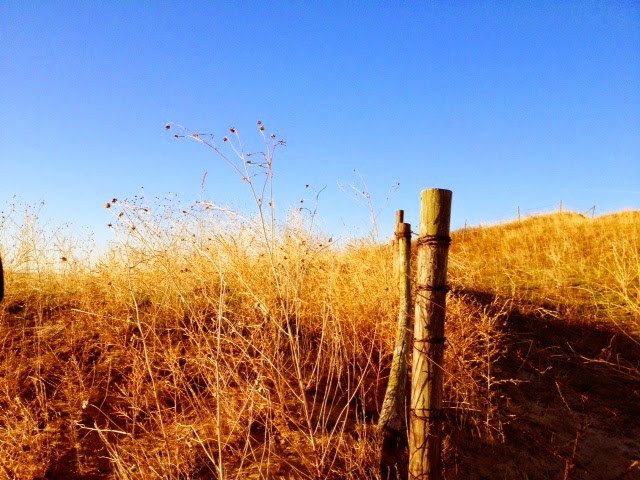
Those three weeks changed my life.  They gave me time.  Time to move slowly with the rhythm of the season and the land. Time to visit with characters in the story and learn from them a different way of life than my own. Time to sit in a rocking chair and watch my brother braid the leather harnesses and headstalls that are nothing if not a work of art. Time to plot how to catch the varmint that was digging up the garden and set the traps and marvel every morning how the trap was sprung, the bait was gone but so was the varmint. To bake lemon pies and go fishing and eat homemade biscuits and gravy at the fundraiser for the high school. Time to read and to talk and to listen. To watch the sun come up and go down and star-gaze and enjoy conversation over a good steak. Time to fall in love with the land where I was born. To hear the stories of my family and my heritage and to learn what it looks like to love and to serve God in ways I never knew and to learn from this truly amazing and remarkable woman who is related to me by blood and now by love.  Oh, and my hip is better, too. Thanks for asking.
When All You Have Are the Stories…

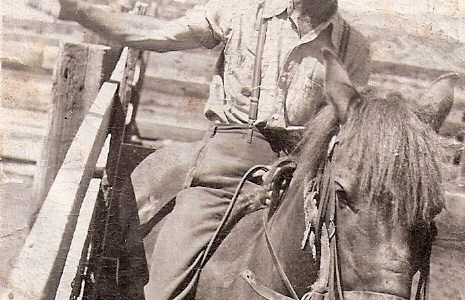
Father’s Day wasn’t celebrated at our house when I was growing up. My father died when I was four. If I could go back in time I would ask my mother if we could celebrate the day by telling stories about my dad. Tell me what he said the first time he saw me. Tell me what was his favorite meal. Tell me what you thought the first time you met him and then why you wanted to marry him. Tell me how I am like him and how I am different from him. I know so little about him and I have no memories of him. My siblings were all grown by the time I was born so they had memories. I only
know what others have told me – I only know the stories.

He met my mother at a box supper. She was the school teacher in town and he was traveling through as a corn shucker -“The fastest one the county had ever seen” my mother once bragged. When it came time to bid on the boxes, someone sitting next to my dad said, “Get that one no matter how much it costs. She’s the best cook you’ll ever meet.”  He outbid all the others, ended up with my mother’s box and of course, as was the custom, ate its contents with the one who had prepared it. And that’s how Ray Fletcher met Hazel Barnes.

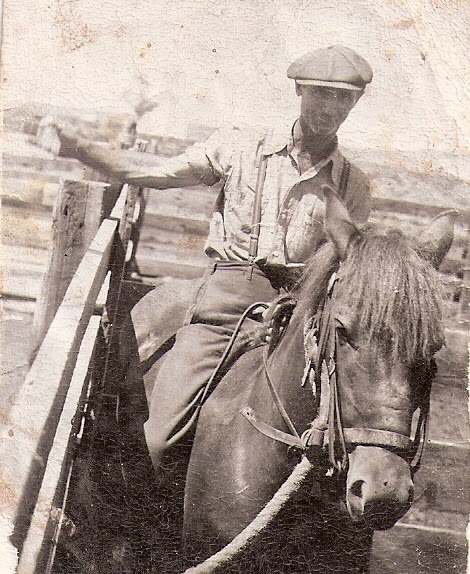
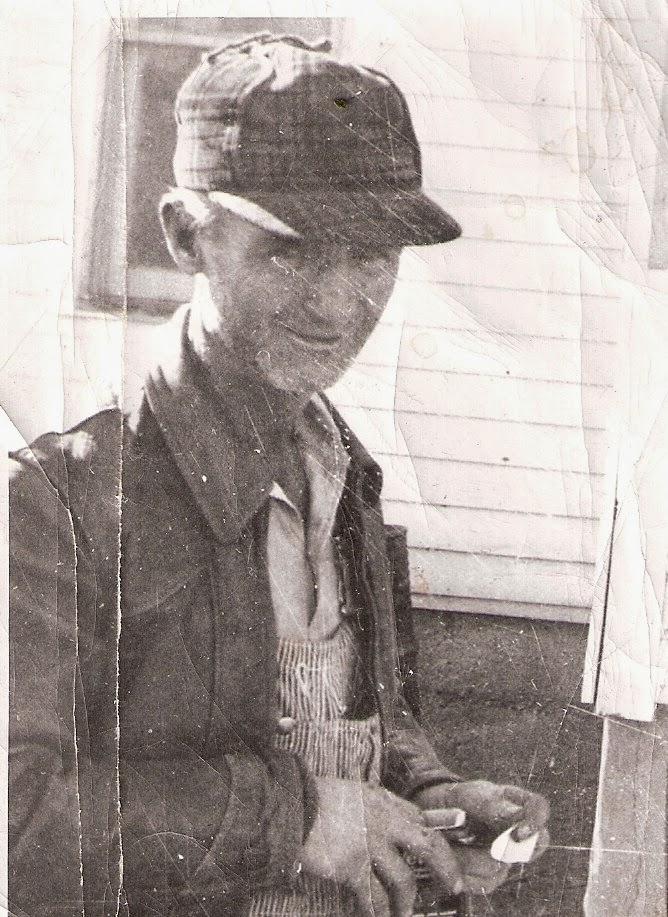
He was a quiet man. Today we would call him an introvert. He liked solitude and being outside which worked out well for him since he was a farmer and spent  most of his time with his cows and his crops. He rolled his own cigarettes and never drank. He suffered all his life with “sick headaches” which of course today we call migraines. He had a hard time showing or expressing emotion. Was that the times he lived in or his temperament?  

He was an extremely hard worker. When his own farm work was done he would help a neighbor with theirs. He was the first to help those in need and the last to ask for help for himself. He was intense and had a hard time relaxing or being idle, though he did like to rock the babies. On winter nights when he couldn’t be outside, he played checkers and cards with his kids and while they all looked forward to  the day they could beat him, that day never seemed to come.

He only graduated eighth grade, but by everyone’s telling, he was smarter than most. Determined that all of his children would get an education, he forbade my brother to quit high school when WWII came and insisted he stay in school until graduation. While other farmers would keep their sons home from school to help with the farm, he never allowed his children to skip. Though probably none needed the help more than he.

When the dust bowl came and the depression with it, he struggled to provide for his family: a dark and bleak time for him. Determined to care for them, he got day jobs in town when he could and worked for the WPA; but the bank foreclosed on the farm he was leasing, he had to sell all his equipment, and the family  moved to town. My mother cleaned houses to buy food. He was a proud man and unwilling to take help or assistance. Eventually my grandfather asked him to come and work on his farm and live there. He was back on the farm, working hard. doing what he loved to do. And then came the flood. My sister remembers standing on the front porch of the house which was up on a hill and watching a wall of water come down the Frenchman River wiping out crops and drowning farm animals. Dad just picked up the pieces and started over.

Three years before he died, he finally was able to buy his own farm. Yet his troubles were not yet behind him. He sent his second son off to fight in Korea and his daughter contracted polio and was very, very ill.  He worried about me getting it and how they would pay the mounting medical bills.  Everyone agrees he worried a lot, though never talked about any of it.

By 1952 things were turning around. Both his sons were home from the war, all his children would be home for Christmas, my sister was on her way to recovery  and they were celebrating in their very own place! They took a family picture – the only one ever taken of my parents with all six of their children.  I don’t have many pictures of him,  but this is the only one where he is smiling and seems relaxed.


 In July of 1954, he was working construction in town to bring home some needed extra cash. On the way home, the tire blew out, the truck hit a telephone pole and he suffered a spinal cord injury. Every day he asked the same question:  Doc,  how long before I’m walking? Then finally on the 14th day the doctor explained that he would never walk again. Two days later he died.

My sister once wrote this to me in response to my questions about our father: “Dad got along well with all his children but then he was an easy man to get along with. He was not one to let his emotions show and didn’t give hugs or kisses or show outward signs of affection. However, from his actions you knew there was a lot of love there and you were his life. His entire  life seemed to be focused on providing food, shelter and clothes for his family and most of it seemed to be a struggle for him. Nothing came easy for him, but he just kept trying.”So today, on this Father’s Day, thanks to all of the dads who just keep trying. Because, in the end, that’s really all anybody can do. And it is left to us to pass along their stories.


The Dog Days of Summer

I love summer.

I even love the “Dog Days of Summer”. You know – those hot, sticky, muggy, days that hit Maryland around July. Don’t hate me.  I just love them. I love drinking gallons of iced tea, sitting under  the ceiling fan, going barefoot, pulling my hair up in a not-so-neat pile to get it off my neck, eating cucumber salad for breakfast, lunch and dinner. I love going outside at  10 o’clock at night and being
hit with a blast of hot air. I love all of it. And I don’t know why. Being a red head, I was never one of those girls who could “lay out” as a summer activity. You know – spread your towel out in the back yard or on the  concrete beside the swimming pool, slather on the baby oil, put on the shades and bake your way to beautiful, golden skin. Oh, not that I didn’t try.  I would go through all the steps – only to end up with a  hideous looking sunburn that left me in so much pain and misery that I wanted to die (that’s the teen drama speaking). And when the pain subsided I was left with peeling skin and freckles – the bane of my life. I remember once reading in a beauty magazine that you could bleach them out with lemon juice. Not true.  Anyway, as a kid and teenager, summer was fraught with peril and danger and I never considered it my friend.

But somewhere along the way, that changed. Now I sit in the shade and read my book and listen to the insects and the birds and it feeds my soul. I don’t like air conditioning. I almost refuse to eat at a restaurant in the summer that doesn’t have outdoor seating because I hate to bundle up in a sweater and  hurry through my meal because I’m freezing. I like the heat. (In the interest of full disclosure, we do cool the house down at night to sleep. But the first thing I do in the morning is warm it up.)

This week has been unusually hot. And though the evenings are the way I like them, hot and humid, the day after day of near 100 degree temps with high humidity can wear a little thin – even for me.  And they take me back to the summer of 1976.

It was August and we lived in Kansas in an apartment that was on the second and third floor of an old house. I was nine months pregnant and had a four year old and two year old. Our apartment had no air conditioning. None. I stripped the kids down to their underwear, put on a tent that I called a sundress, and wondered to myself if I had really died and gone to hell because surely this is what hell must feel like. Did I mention I was nine months pregnant?  And we had no air conditioning?  We did find an ancient window unit in the basement that the last tenant had discarded and we (and by we I mean Paul) hauled it upstairs and installed it in the living room window. We plugged it in, prayed, held our breath, and hit the on switch. The sound that came from that machine sounded like a tribe of banshees each using a jack -hammer to break up concrete. The kids – who had been playing out in the yard (in their underwear)- came running up the stairs “Daddy, Daddy, make it stop!” We only knew that’s what they were saying by the look of terror in their eyes and reading their lips – we certainly couldn’t hear them over the racket. The best relief to be found was to stand in front of the open refrigerator. Which I did. Often. Everyday the weatherman talked about the record breaking heat and I prayed that relief would come soon. Paul went to work every day, drove by the bank with the thermometer that confirmed what he already knew – he would return home that evening to a bowl of cereal; sweaty, cranky kids; and a wife who had seen better days. But the baby came in the middle of August (we named her Faith, maybe because of the faith it took to believe we would both survive those days), finally the heat broke, and life went on. I’m sure it was sometime after the memories of that summer had faded a little (a lot) that my love affair with summer began.

I have been reminded of that summer because now, in the heat of these days and nights, as I wait for the birth of my granddaughter who is due the first of August. I understand how miserable the wait is for my daughter Joy and how if feels like it will never end. But it does.

As for me, I will pour myself another glass of tea or buy a 5 cent glass of lemonade from a budding young entrepreneur,  turn the ceiling fan on high (okay – and maybe I’ll turn on the air conditioning just a little) and soak up these dog days of summer.

And many thanks to my second “August baby” (yes, I did it again) Sarah  for the use of her photos which always tell a story.

It’s Not the Years….

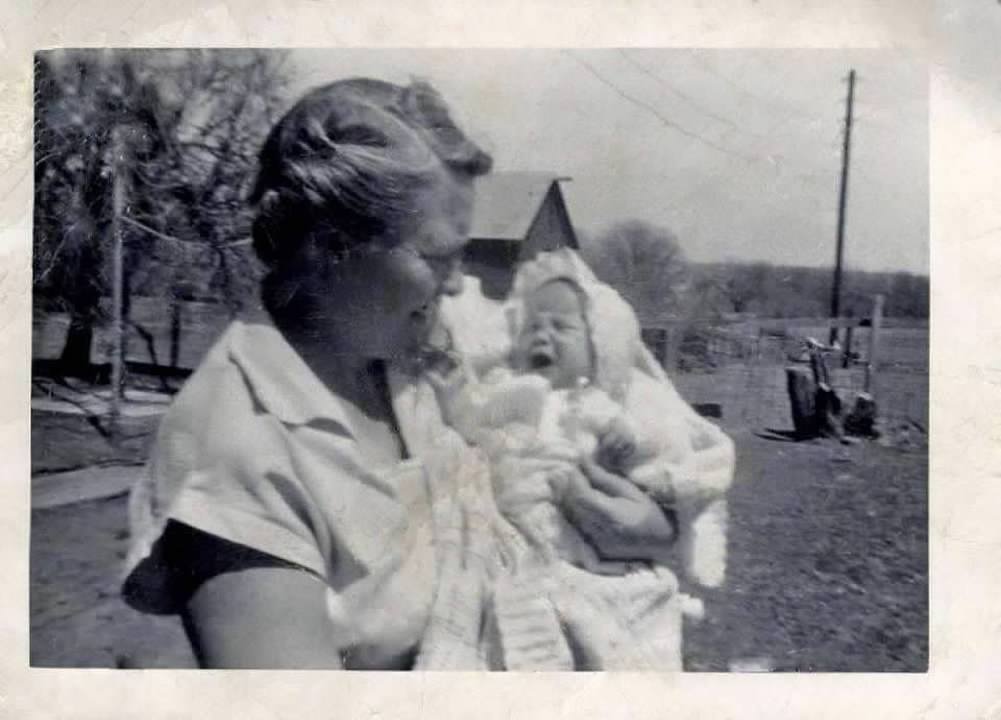
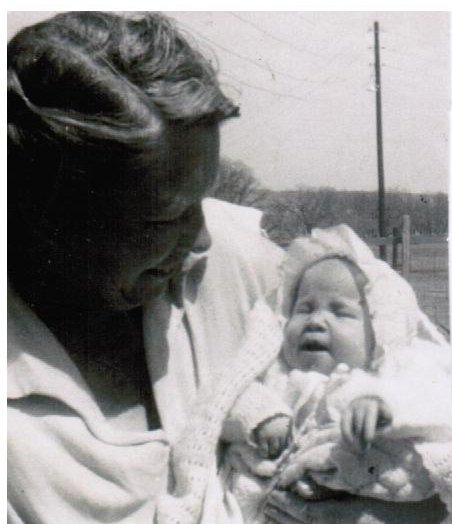
It was a Monday. I only know this because I looked it up on the internet. The date was March 26, 1950, and a 47 year old woman labored away in a hospital in McCook, Nebraska, to bring her sixth child into the world. The doctor told her husband that he thought the baby was dead. They couldn’t get a heartbeat and they needed now to turn their attention to saving the mother. She had delivered five other children:  all at home in her own bed with the country doctor attending. She was convinced the problems were with the hospital and insisted if they would just let her go home, she could have this baby by herself. The doctors were not convinced. The husband was adamant – they would do nothing until his daughter, the nurse, arrived.  She was on her way from Pueblo, Colorado, and she would know what to do.

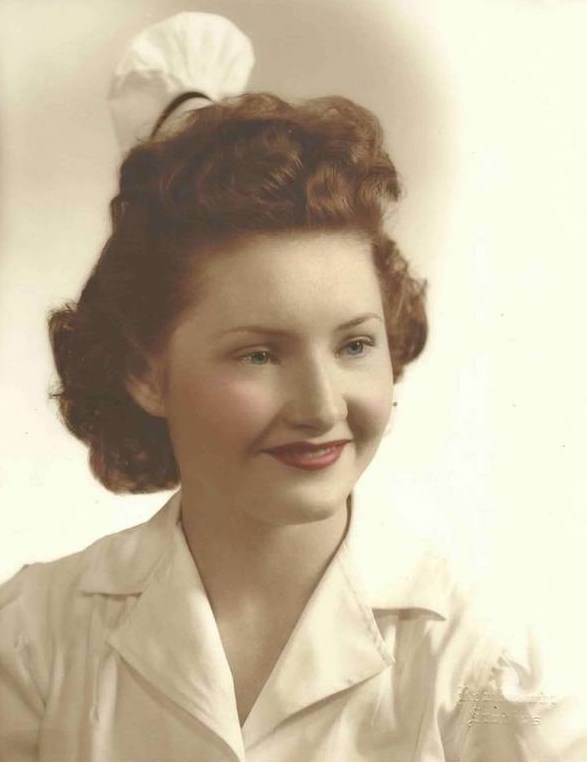
My sister arrived from the big city with her “modern technology” –  a stethoscope designed to detect a baby’s heartbeat. “This baby is alive and well,” she told my mother – we just need to get it here!”  My mother was worried about my dad, pacing the hall outside her room. My sister assured her he had been tended to. “It’s okay,” she told her.  “He fainted a while ago and they have him in bed in a room down the hall.”  And so it was that my sister, Lila Rae, attended our mother as she brought me into the world. And the “new” parents, who were also grandparents twice over, began again this journey of caring for and raising a child.

By this time in her life my mother had already survived some hard times:  her fifth child Lola had contracted whooping cough when she was five days old and the raging high fever had left her with some brain damage and physical disabilities. Surely she was concerned with the health of this child now born to her 17 years later.  She had sent a son off to fight a World War and lived through the hell of the 118 days he was missing in action. She and my father had lost their farm in the Great Depression and she knew the despair of trying to feed five children with a husband out of work and no way to pay the bills or provide the necessities. But by 1950 things were looking up and though this red headed baby girl was not in the plan – they made  a new plan, welcomed her enthusiastically and maybe thought that the hard times were behind them. 

In four short years, my mother would find herself a widow with a handicapped daughter and a four year old daughter and no way to provide for them. She transitioned from a Nebraska farm wife to a single working mother and did it all with grace and with determination and it is to her credit that I never once felt like I had made her life harder instead of richer.

I was 16 the year my mother turned 63 – the age I am now. And 63 seemed so old to me.  My mother seemed old. Am I that old?  Surely not. Sixty three is the new fifty, right? But I am really only beginning to learn what by now my mother knew so well . . .  it’s not the years, it’s the mileage.

I always think of my mother on my birthday.  And of my sister.  Two  strong and beautiful women. I owe my very life to them. And I miss them.


It’s All About the Snacks.

In our family, Super Bowl Sunday was never about the football… unless the Bears or later the Skins were playing… and really, how often does that happen in one’s lifetime?? 

No. Super Bowl Sunday was always about the food. The snacks. All the stuff you got to eat on that day on any other day would have been considered indulgent and gluttonous. On this day, everything was allowable.

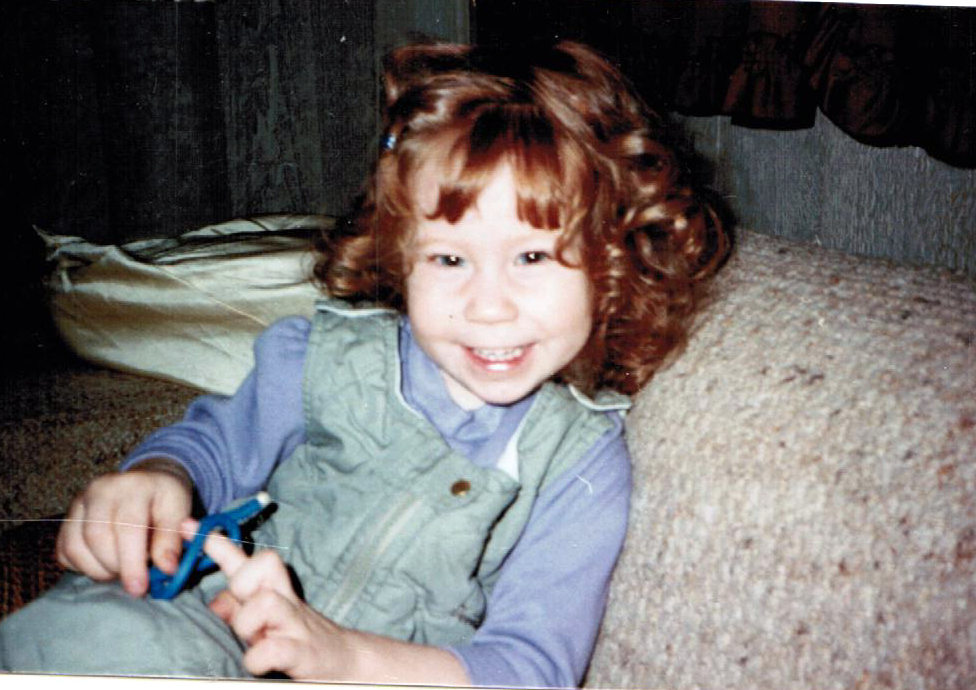
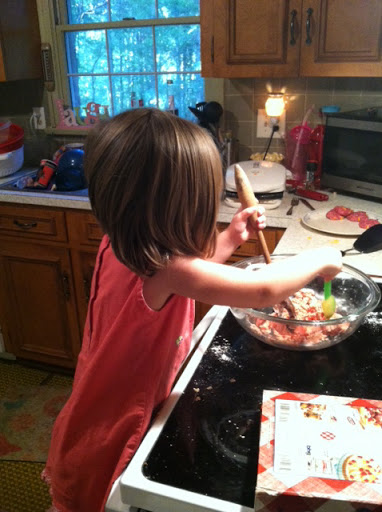
I think it must have been about 1987. I can’t remember if we had friends coming or it was just family – either way it would be a party and I had been cooking (junk) food for days. That afternoon I was finishing up the Chex Party Mix (this was before you bought it in a bag and actually made it from scratch).  Joy was “helping” me. We mixed the three different kinds of Chex cereals, the peanuts and then poured the buttery mixture over it and put it in the oven.  The M&M’s would be added later. So messy, so fun!! She was at the “helping” stage most children go through at about three or four and she was relishing the role. I remember Fletcher one Thanksgiving when he was about the same age wanting to help. He pulled a chair over to the kitchen sink where I was preparing the turkey to put in the oven. He watched for a while before he put voice to the question, “What is that?”  “THIS,” I proclaimed proudly of the 20 pound foul sprawled in my sink, “is the turkey!!”  “It looks like some kind of dead animal,” he said with mild alarm in his three year old voice. Well, when you put it that way. . .  but I digress.

Joy was helping me with the Chex Mix for the Super Bowl party and carrying on a running dialogue – mostly with herself.“I just love the Super Bowl. I have always loved the Super Bowl. I think Super Bowl parties are the best parties ever. Don’t you love the Super Bowl? When can we have the snacks? What time will the Super Bowl start?  How much longer is that? Is this YOUR  favorite party? Don’t you just love Chex Mix? Can I have some Chex Mix now? Well, how much longer till the Super Bowl starts? Shall I ask the kids if they are ready for the Super Bowl?  Can I fix my bowl of Chex Mix now and just hold it till it’s time for the Super Bowl to start? What shall I wear to the Super Bowl? What are you going to wear to the Super Bowl? How much longer, now?” And so it went…. for most of the afternoon. She was so excited for it all to begin. The other kids begged me to make her stop, but she was not to be shushed  “She doesn’t even LIKE to watch football!” they complained.  “She hates Sunday afternoons when that’s all we do. Why is this so different?”  Who knew? 

Finally it was time. She spread out her blanket on the floor. She brought pillows from her bed. She put on her “special party pajamas”.  She brought in her favorite doll to enjoy the festivities. She straightened her blanket. She fluffed her pillows. And she oh-so-carefully carried her bowl of Chex Mix into the living room and sat on her blanket. We turned on the television. The announcers were talking, the fans were screaming, aaaand the kick-off.  Joy was shocked – almost beyond words. She jumped to her little feet, whipped around with her hands on her hips and in  the most accusing and disparaging tone I have ever heard in a three year old she  said to me, “THIS LOOKS JUST LIKE FOOTBALL!!” 

Whatever she had thought a Super Bowl party meant, never in her wildest dreams did she imagine that it was about football. 

I just looooove Super Bowl parties!!
Is it time for the Super Bowl Party Yet?

And now Joy has helpers of her own.

Groundhog Day and Other Important Holidays

It’s an odd holiday, really. No one takes the day off work; there are no special foods associated with the day; though a movie was made in its honor and the news media usually covers it to some degree, it doesn’t really rank up there as one of our favorite celebrations. No gifts are exchanged to mark the occasion and when all is said and done, it’s just sort of lame. Except in my family.

February 2 was always a big day in the Fletcher family. My parents were married on Groundhog Day. At the time, no one really made a big to-do of the wedding. They simply got in a car and drove to the next county to a justice of the peace and said their vows. My mother’s sister Violet went with them as did my dad’s brother Buck. Buck and Vie later married each other, but that’s another story and one which I do not know much about. I don’t think my parents “eloped” . . .  they just didn’t make much of a fuss about the wedding part of it. As Anna from Downton Abbey says, “I’d rather have the right man than the right wedding.” I can so imagine those words coming from my mother’s mouth. So on February 2, 1924, they were married. 

wedding announcement
I wonder about the story behind this wedding announcement sent by mother’s parents to their friends and family. Were they disappointed not to have been included in their daughter’s wedding or had they agreed with her “no-nonsense” approach to such things?
Ray & Hazel Fletcher – married Feb. 2, 1924. We know this picture was taken in 1924 because that year was written on the back. We assume it was taken on their wedding day because Dad is wearing a suit and no one remembers ever seeing him in a suit – ever.

However, an anniversary, though important to the couple, does not usually become a “family holiday”. But wait. . . there’s more. The winter of 1925 was a very stormy one with several big blizzards. The young couple were 30 miles from the nearest doctor and had only a wagon and horses for transportation. When a break in the weather came, Dad loaded his pregnant wife in the wagon and took her to her parents who lived near the doctor, and she stayed with them until Don was born. And  on their first wedding anniversary, Feb. 2, 1925,  my mother gave birth to their first child: it was Groundhog Day.

 The next 25 years would bring the Great Depression, a World War, and many other hardships to this farm family. They would lose their farm and livelihood and struggle to feed their five children and, along with their neighbors and friends, fight to keep body and soul together. They would send that first born son off to fight in Germany and agonize through the days and months when he was listed as Missing in Action and then finally begin to put their lives back together again when he was liberated from a German POW camp and eventually sent home. Life began to return to “normal” and they dared to once again believe in a future. Don married a local girl, their oldest daughter Lila Rae completed nursing school in the big city, married a “foreigner” as my father labeled him (a Democrat and a Catholic), but all in all, things were looking up!  They were even expecting their first grandchild.

Jolene was born on a bleak winter’s day and became the first of the next generation of Fletchers. She was born on her grandparent’s Silver Wedding Anniversary and her father’s 24th birthday. The date was February 2, 1949:  Groundhog Day.

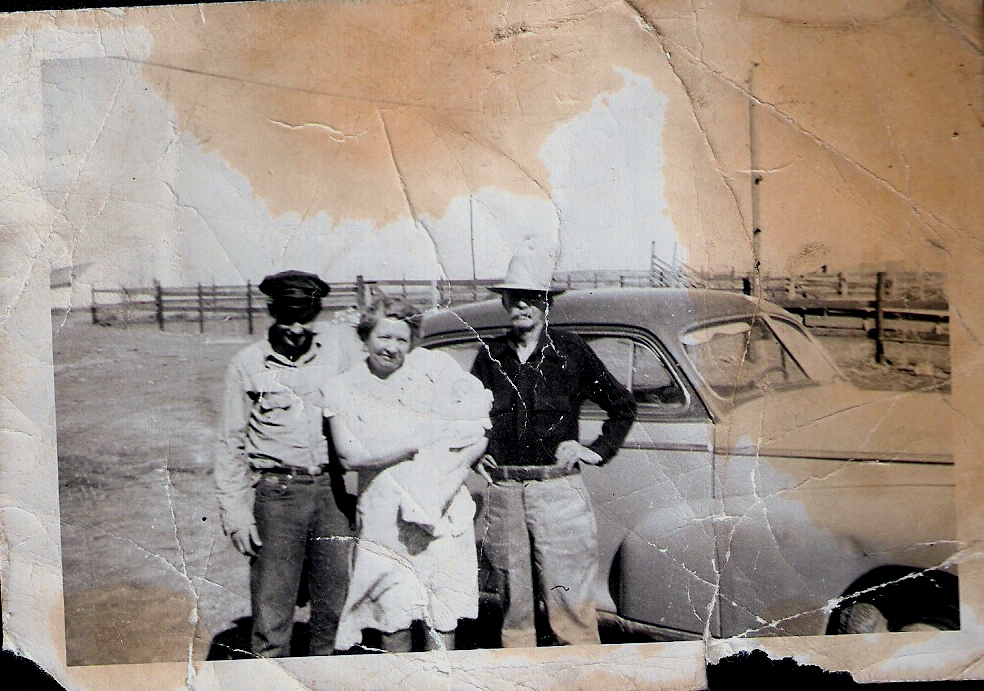
53665-dadmomandgrandpabarns
Hazel Fletcher with her son Don, granddaughter Jolene and father, Charles Barnes

And that’s how Groundhog day became a holiday in the Fletcher family: with special foods, special traditions, and special significance. And if anyone outside the family ever wondered why the Fletchers made so much of a non-holiday that centered around a rodent named Punxsutawney  Phil, they never said. 

Epilogue:
After I wrote this piece I learned that this Groundhog celebration has continued in the Fletcher family into succeeding generations.  Jolene’s granddaughter was also born on Feb.  2 … in 2007.  Long live Punxsutawney Phil.


The Taste of Memories

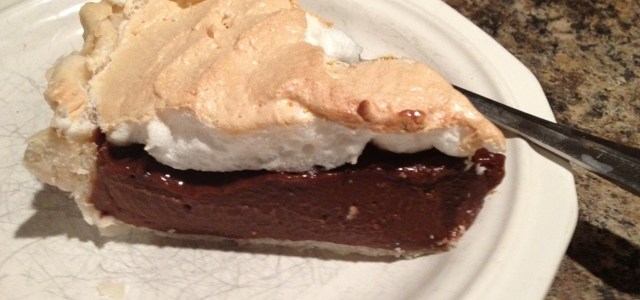
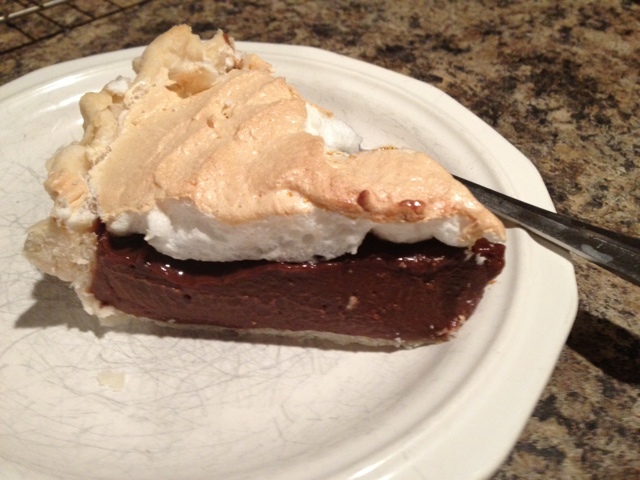
When Paul and I traveled home to see my mother it didn’t matter if we were to be there overnight or a week. Sitting on her kitchen counter we would always find three chocolate cream pies. “If these are not gone by the time you leave,” she would threaten “I’m never making you another one.” Not to worry. All of us, but especially Paul, loved Hazel’s chocolate pie.

My mother was an extraordinary cook and she made the best cream pie in the world. As a child my favorite was Banana Cream and I always requested it for my birthday. I remember she made a peanut butter pie that was so good and so rich that I made myself sick on it one time and could never stand the thought of it again. But as I grew up, I too preferred the chocolate. For some reason that I cannot fathom I never got her recipe. I learned to make a pretty good pie from the Better Homes and Garden cookbook with the plaid cover, but it never matched Hazel’s.

When we were home for my sister Lila’s memorial service a few weeks ago, the conversation
turned, as it inevitably does, to food and our memories of it. My niece Shirely happened to mention that she had her grandmother Fletcher’s recipe for chocolate pie. Seriously??!! How had I not known this? And so she sent the recipe and I vowed to try it and see if it was as perfect as I remembered it or as it had grown in my memory to mythical proportions of goodness.

Today is as close to a snow day as we have come here in Maryland for a couple of years. Not much snow is expected, but the ground is so cold that whatever falls will stick to the roads and make driving hazardous and so they are closing schools early and people are settling in to pretend that we are snowed in. When the kids were little, snow days consisted of cooking and baking and movies and hanging out in front of the fireplace. They were like a holiday. I miss those days. Now there is no one here to eat the the goodies, but I have decided to use it as an excuse to cook something yummy, to watch episode after episode of Downton Abbey, sit by the fire and bake my mother’s chocolate pie.

From the Big Chief Tablet

When they were going through her papers, Lila’s kids found Big Chief tablets, spiral notebooks, and loose pages of paper containing  notes and stories about her childhood. What a treasure!  Many of these read like a chapter of Little House on the Prairie and though they are stories about a time and place of which I have no memory, when I read them I feel connected – this is where I come from.  One of the stories is called “My Happiest Memory.”

MY HAPPIEST MEMORY – by Lila Gradisar

Sadness and deprivation precede my happiest memory.

At the age of 10, I understood very little of what it meant to be in the midst of the great depression. I did understand however that whatever this “thing” was, it had changed our family’s life tremendously.

The draught with the accompanying dark dust bowl days had forced my Dad to have a farm sale and move the family to town. We lived in a rented house at the edge of Palisade, Nebraska. The house had three bedrooms, a kitchen and a living room.

“No luck today”,  my dad would say as he returned from looking for work all day in early December.

Unemployment was not acceptable to this energetic farmer. As jobs were available, he worked on WPA some, but even that hadn’t been available lately.  Most of his unemployed time was spent with his brother, my Uncle Bill, in finding trees to cut down and saw up to keep our wood pile high.

My mother spent most of her days working for the only Dr. in town and his wife:  She cleaned their house and in return brought home a little cash and medical treatment for our family.

Christmas was approaching and naïve as we were, we children were making our wish lists and the younger ones were getting ready for Santa’s arrival. The more excited we became the quieter and more worried our parents became.  “Can we get our Christmas tree tomorrow?” I asked one evening as we were all gathered in the kitchen. A silence followed which was so long I thought both parents had gone deaf and hadn’t heard me. Finally with tears in her eyes and a trembling voice my mother replied, “Things are different this year. Dad doesn’t have a job. We have no money and we won’t be getting a tree. There also is no money for presents.”  We all sat quietly trying to understand what this meant.  My dad said, “Next year will be better.”  I went to bed thinking, “Next year is a long way off.”

Two days before Christmas, I was sitting at the window watching for my mother to walk up the road from work as I did each evening. To my surprise a car drove up. Few people we knew had a car.  All five kids ran out the door to greet whoever it might be. My mother got out the passenger side and Mrs. Kauer out the driver side. In the back seat with its branches sticking out through the window was a Christmas tree. The car was piled full of presents and boxes of groceries.  Mrs. Kauer said, “Come help us unload the car.”  I couldn’t believe it. All this was for us. We children jumped with glee, shrieked and chattered as we carried all the things into the middle of the kitchen floor. Mrs. Kauer was gone in a flash as soon as the car was empty, leaving my Mother to explain. Mrs. Kauer had begun to quiz my Mother about our family’s Christmas plans and finally my mother had confessed that due to the circumstances, we didn’t have many plans. Much to Mother’s surprise, the kind lady she worked for had taken it upon herself to change the plan. And change it she did. Mother was all smiles.

Finally it was time to put up the tree! The excitement was electrifying. We began to rapidly open up all the boxes. “Real electric Christmas lights” I yelled and I opened a box. This was indeed a first. There were balls and tinsel to put on the tree. The tree was decorated and Dad plugged in the lights. We stood in awe – mouths agape. It was the most beautiful Christmas tree I had ever seen. Everyone had a brightly wrapped package which was placed under the tree before Mother scooted us off to bed way past our bed time. When I awakened on Christmas Eve morning the house was already filled with the wonderful aroma of my mother’s baking. She had been up before daybreak preparing our favorite holiday foods. In the boxes of groceries she had found everything to make a feast.  We helped her bake sugar cookies; she made a batch of fudge and divinity and pumpkin pies. Again the excitement lasted all day. On Christmas Eve, Dad again started the fire in the living room. We turned the tree lights on and sat around the fire before finally going to bed.

On Christmas morning at 4:00 a.m. the fist child was awake asking “When can we get up?”  Dad said, “Not until I build a fire and it gets warm. Go back to sleep for awhile.”  My sisters and I giggled and squirmed and there was no more sleep. Dad gave the signal and all five of us were up. Such a clatter.  As I held my present trying to guess what was in it, my heart was pounding.  I received the most wonderful brown wool pants which gave me Christmas warmth every day as I walked to school.  After the excitement of opening the presents, Mother fixed breakfast. We played in the living room all day.  Mother made Christmas dinner with turkey and all the trimmings. As we gathered around that Christmas dinner table, we thanked God for those who were willing to share with us.

In my memory I can still feel the warmth of the fire and the glow of the Christmas tree lights as we sat in the living room that Christmas night dozing off in our childhood contentment – making it my happiest memory.

Fellowship of the Ring

“But what happened to the diamond? “ I asked my mother. I was ten years old and in her treasure box I  had discovered a ring with a missing stone, and she was explaining that it was the ring my dad had given to her as an engagement ring. She had lost the stone from the setting many years before . . . before I was even born . . . but had kept the setting because…. well, because my dad had given it to her.

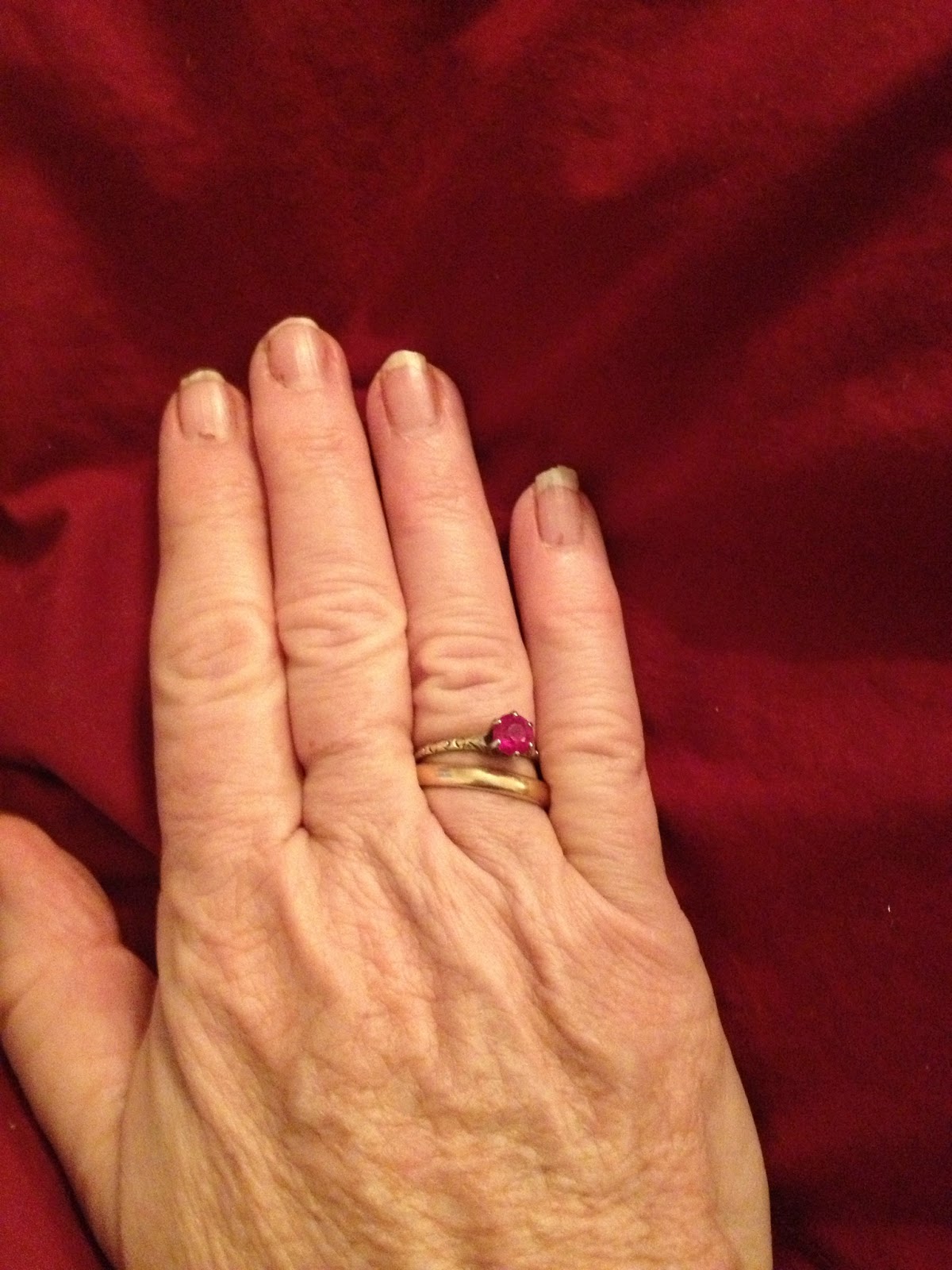
When he had asked about a ring she had scoffed, “I don’t want a ring – I want a new cookstove.”  And so my father had purchased a cookstove for his new bride and whether he couldn’t afford a diamond or he preferred rubies, I never knew. But, she explained, it was a ruby that she had worn in the beautiful gold setting that he had also given to her as an engagement ring. Over the years of rolling biscuit dough and washing clothes in a wash tub, she had lost the ruby but held on to the setting. And after my father died it was one of the few things she had that he had given to her and it was that setting that I loved to look as a little girl and hoped that I, too, might someday have such a beautiful ring.

Many, many years later my sister Minnie asked her if she could have the setting. I was grown by then and my mother explained that while she had not really wanted to part with the ring, she had given it to her because she did not foresee a time when she would have the money to replace the stone and someone might as well enjoy it. Minnie took the ring, replaced the stone and returned it to my mother who treasured it as though it were a 12 carat diamond.

 Before she died Mom asked each of us if there was something special of hers that we wanted. I responded immediately, “Your ruby ring,” Her response was just as  quick: “ No you can’t have that. It belongs to Minnie.”  Fair  enough. I don’t remember what I chose in its place.

Many, many years pass and my older sister Lila and I travel to Texas to see Minnie. We all know the purpose of this visit is to say goodbye to her. She is dying of cancer. We are there fewer than 10 minutes when Minnie takes us to her room:  “Come in here, girls, I have something to give you. “ She opened a jewelry box where she kept my mother’s solid gold wedding band and her ruby engagement ring. “Lila, you take the wedding band. And Sherry, you should have the ruby.”

 I have worn that ruby ring every day since, and every day it reminds me of my mother, my father who gave it to her, and their love for one another.

Last week I sat in an upstairs room going through a chest of Lila’s things with her daughters.

“We think you should have Grandma’s wedding, band, Sherry”. And so I took this very generous gift and placed it on my finger next to the ruby our father had chosen for her ….. and we all agreed that that was the how the set should be worn.

And now on my right hand I wear the ruby engagement ring purchased by my father for his young bride of 20 and the band with which he sealed his vow to her till death parted them. And I think of my parents, but also of my two amazing sisters who held these treasures in protective custody for awhile and of my generous nieces who left them with me. And I am reminded that a love story does not end with the passing of the loved one – it is just passed on.