Who Killed Santa Claus?

The intersection of story and memory and perception is a funny thing.  It isn’t just the details of the narrative but how we perceived it at the time – in other words it’s not just what happened but how did our five year old self understand what was happening  – that’s where the story lives.
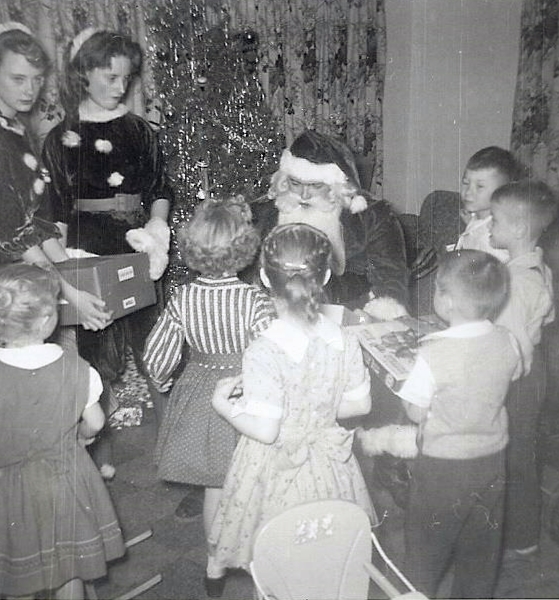
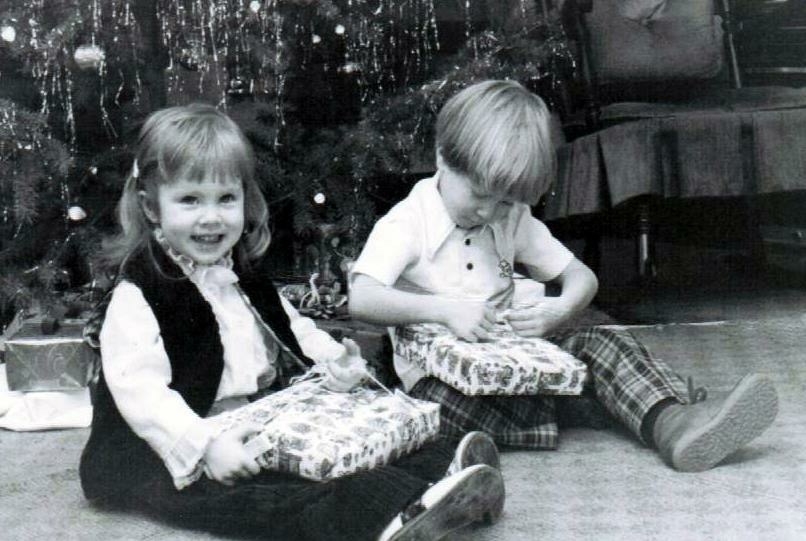
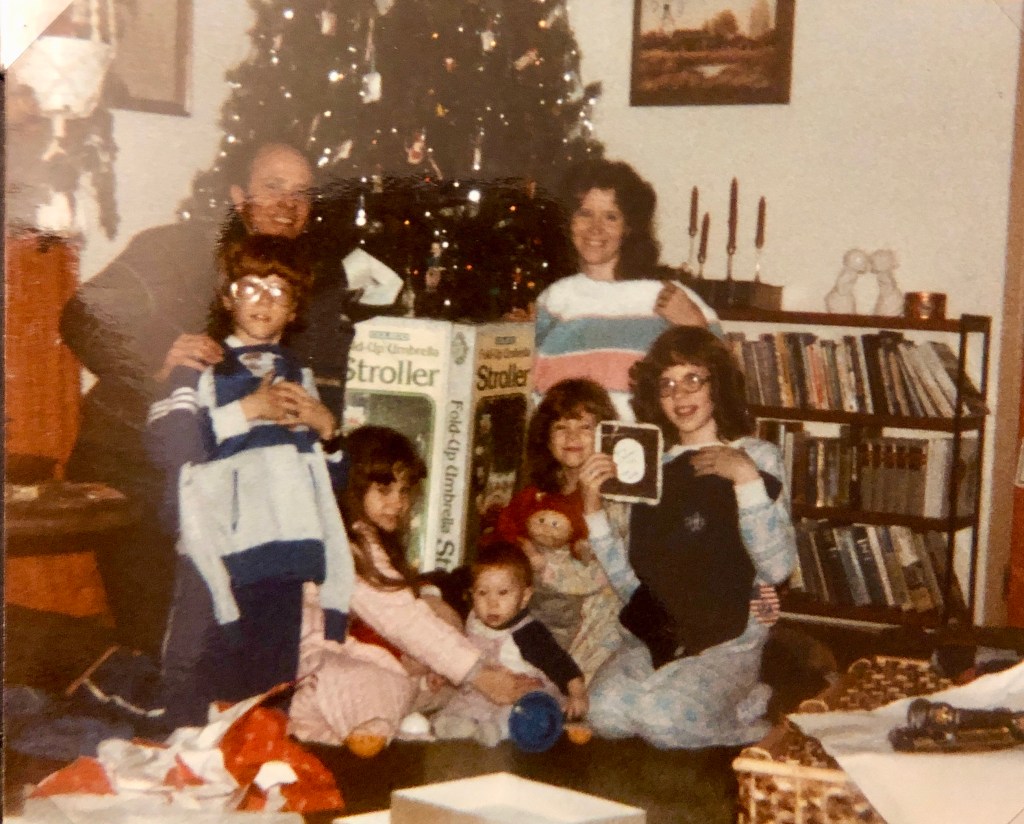
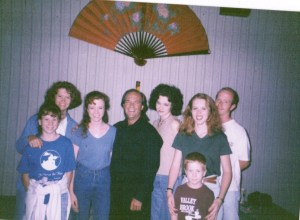
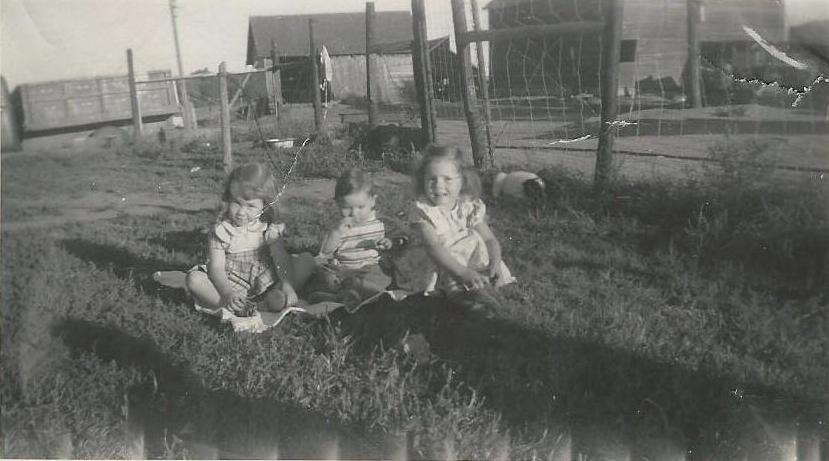
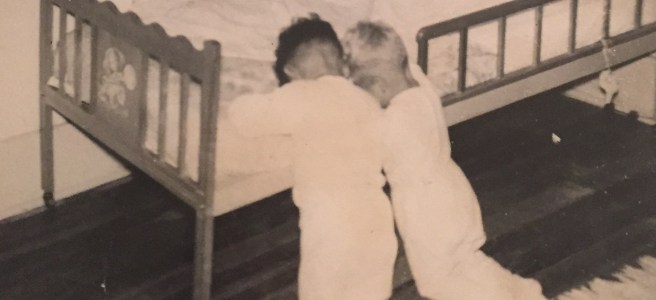
Santa  visited our house every Christmas Eve with his elves and pack of presents. That’s me in the pony tail with my back to the camera.

Our kids will tell you that we didn’t “do Santa Claus” for religious reasons. In fact, the truth is nothing so noble. Paul and I were both raised on the fat man in the red suit who brought toys to good boys and girls. As parents, we didn’t do Santa Claus because we couldn’t afford many presents and I wanted the credit for giving them the cool gift. There, I’ve said it out loud and now you know what a truly selfish and awful person I really am. I wasn’t going to let Santa swoop in at the last minute to give them that thing I had scrimped and saved and stood in the blocks-long line to get the day it went on sale. The jolly old man had made not one sacrifice to obtain this year’s must-have toy, and he certainly was not going to get to play the hero in my stead. 

Our kids each got three gifts from us – I think because that’s the way it was in Paul’s family. We tried to get them one thing they really wanted, and then the other two were something small:  a book, a craft, something to go with their toy (an outfit for the new doll, etc.) or maybe new pajamas or slippers (One year I sewed nightgowns and robes for all the girls.  Don’t ask – I have no idea why I thought that was a good idea. This is the same year that Sean found the scraps of fabric on my bedroom floor and was convinced I was making them a Punch & Judy puppet show. Who knows where that came from ??!!)   These gifts were purchased, wrapped and hidden away until Christmas morning. 

The little gifts they made or bought for one another and for us were carefully selected and fussed over (was this really what she would like or maybe it was that or maybe something else all together??), then wrapped with care and lots of tape and placed under the tree to be poked and prodded and arranged and rearranged all through the weeks leading up to Christmas (and sometimes re-wrapped). 

Until Christmas morning.

After they are asleep – or all in bed with a promise of physical harm should they exit their bedroom before morning – Paul and I bring out our oh-so-carefully-chosen and hopefully something-they-will-love offerings.  Gifts are always arranged in piles according to the giver so that the emphasis will be on “what you are giving” instead of “what you are getting”. Everything you are giving to someone else is placed in a stack at your spot with your stocking – hand crocheted  by Grandma Fletch – and then we wait for the morning. 
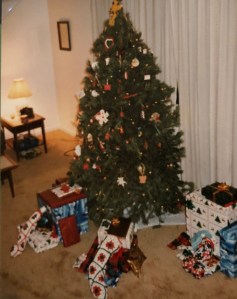
fullsizeoutput_552b

No one is allowed to leave their bedroom until you hear the music – Manheim Steamroller’s Deck the Halls – blasting loudly enough to wake the dead.  Of course, they are all awake, or maybe had never gone to sleep, but they dutifully wait for their cue. The music calls to them and here they come, scrambling down the stairs or up the stairs depending on where their bedroom is, running to find their stocking and their pile of gifts to give and eyeing the stack in front of Mom & Dad.  Those will be the last ones distributed.  

67d390aa3636d7dbee1952c5f1a1593c

We start with the youngest who gets to choose in which order he or she wishes to bestow what everyone already knows will be a Life Saver Storybook. I no longer remember how this tradition began, but early on it was the mandated gift that the youngest among them gives to the older siblings. With much fan-fare, everyone oooohs and awwwwwws over it as though it is the biggest surprise of the season and one which they cannot possibly live without. 

Gifts are opened one at a time since this allows for time to admire and exclaim over each one and we all compliment the giver on his or her good taste. One by one, we ceremoniously present our gifts  to one another and everyone watches as each one is opened. This takes awhile and has the added benefit of alleviating the frenzied ripping of paper that inevitably leads to mass confusion and chaos and cuts down on the number of times we will need to dig through the trash looking for a lost doll shoe, Lego piece or other sundry tiny items. Plus it stretches out the festivities and makes more of a party, which in our family is always a good thing.  

And that was Christmas morning.   

I don’t know if our kids missed not “doing Santa”.  The truth is I never asked them.  I realized pretty early on though that we needed to have “the talk” if we didn’t  want our friends and neighbors to hate us and our kids. “Some people like to pretend that Santa Clause is real,” we explained, “and that he is the one who brings their children presents and so you can help them by not saying anything that would make them out to be a liar.” I mean, we didn’t say it exactly like that, but we had to coach them up a little to keep the peace.

And then there was the year that one of our Sunday School teachers at church killed Santa Claus. He wanted to teach a lesson about the real Saint Nicholas and how the “Santa Claus” of today grew out of the myths and legends (danger Will Robinson!!) around this real man who lived in the third century.  And while I’m sure he meant well (you can probably see already how fraught with peril this plan was), he somehow failed to see the landmine he was about to trip over. So somewhere in his lesson about this kind and generous patron saint of children, he comes to the place in the story where Saint Nichols  dies. Now to a small child, who only vaguely understands anything you have said up to this point but who thinks you are telling him that Santa Clause and Saint Nicholas are one and the same, this is, of course, alarming.  “Santa Claus died?” asks a small voice in the front row.

At this point, any thinking person would have abandoned his ill-conceived lesson and just gone straight to the craft tables, but he soldiers on. Another little voice, with a hint of a quiver, asks “How did he die?” And then the mother of all landmines: “He was martyred,” says the teacher.  KABOOM!!  While most sources say Saint Nicholas was persecuted for this faith, I can’t find anybody who says he was martyred, but given this was before the internet, maybe this teacher didn’t have access to good research or maybe he just thought it made for a better story.

At any rate, that’s what the teacher said. Now there is a full-blown panic rising from the masses as one child jumps to his feet and yells  SANTA CLAUS WAS MURDERED??!!  (martyred or murdered – what’s the difference, really?) And it was at this moment that all hell broke loose and became known in the history of our church as “The Day Cedarbrook Killed Santa Claus.” Our son, who was about 10 and one of the older kids in the class, was standing in the back of the room with a friend who says to him, “Do you still believe in Santa Claus?”  Nope.  “Me neither. But I sure feel sorry for these kids.”

We fielded a deluge of calls from irate parents that week, letting us know how traumatized their children were as a result of the Sunday School lesson and that when it came time to explain the “Santa situation”, they had expected to be the ones to do it and they certainly would have handled it much differently, thank you very much.  

And though I didn’t say it, because I thought it might be too soon, I thought about telling them, “Yes, but just think, now you’ll get to take credit for all that stuff under the tree.”  

murdoch
No one was taking credit for this one but me!

Story telling vs “Visiting” – One in the Same.

When I was young, my mother and I visited Nebraska every couple of years. I no longer remember how we got there (my mother didn’t drive) but she would save up her vacation days and we would leave behind the mountains of Colorado for the farmlands of Nebraska and go to see my sister and two brothers and their families.  

I liked it because I got to play with my nieces and nephews – all around my age.  It was on one of these trips that I learned to ride a two-wheeler on Jolene’s brand new bike which she had won by selling the most subscriptions to the local small-town newspaper. I also drove a truck here for the first time (right into the ditch) – I think I was twelve and the only one among us who had not already spent a couple of years behind the wheel during harvest time. And of course I got to ride horses.  Such adventures for a girl from the city.

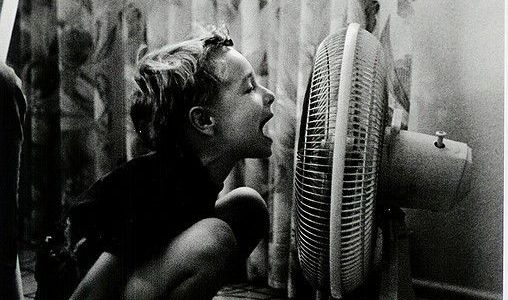
All in all it was a grand way to spend a summer vacation. Except on the day we would go “visiting”.  On this day I would accompany my mother to visit my aunts and uncles – the siblings of my parents – who were older than God and had no children who were not also old,  and in my “I am the center of the universe” way of thinking led very dull and uninteresting lives. We would go from house to house – small town to small town – and at each stop along the way the old people sat at the kitchen table or sometimes on the living room sofa drinking coffee or iced tea and I would sprawl on the floor in front the fan turned to high to move the hot summer air.  The whirring of the blades all but drowned out the hum of their voices, but I picked up little bits here and there.

“Where is Sonny now and what’s he doing?  And what about Margaret?”

“That hail storm really tore up Dean’s place. He ended up havin’ to reroof the barn.  Remember that storm out at Dad’s place that year and the Frenchman River rose and flooded everything out?”

“Did I tell you Lila Rae got a promotion at the hospital?  She’s doin’ real good.”

“How many head of cattle does Charles have out in the feed lot now? Hope cattle prices hold steady this year.”

“Myrtle was in the hospital last month.  They can’t seem to figure out what’s wrong.”

“Have you been out by the old Wise place?  It got resold again a couple years ago.  Remember when you and Ray moved out there?  What year was that?

And so it went. . .  

I dreaded these “visiting days”.  But now I understand. These days  gave life to my mother.  They were her stories and these were her people.  They connected her to her past – to a shared origin and a way of being.  I just didn’t appreciate it.  How could I?

But now I get it.  

This summer my nieces and nephews will gather together back in the heartland and we will spend a great deal of time “visiting”.  We will connect to our shared stories, our common heritage, and our past.  We are now the grandparents, the “old people” and our stories will call to mind the days of our childhood and our parents and the generations past.  And I will want to tell the younger generation – pay attention – these stories matter.  But I won’t. Because they are building their own stories – and maybe this gathering will be one of them.  And someday, though they won’t remember the particulars, they might remember the sound of the voices and the whir of the air conditioner.  One can hope.  

Daily Bread

“There are things you do because they feel right & they may make no sense & they may make no money & it may be the real reason we are here: to love each other & to eat each other’s cooking & say it was good.”

It is one of my favorite Story People stories. We have it framed and hanging on our “family wall” in our living room. I think it belongs there because food is a part of every family’s story whether we recognize it or not – or at least it is a part of our story.

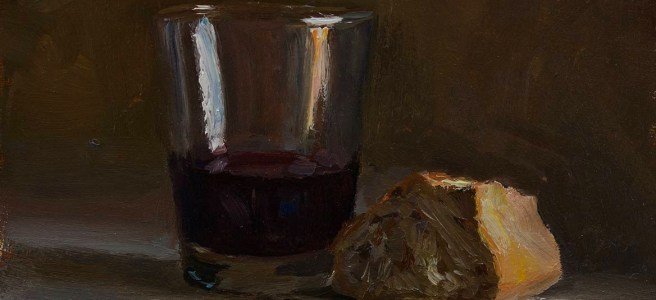
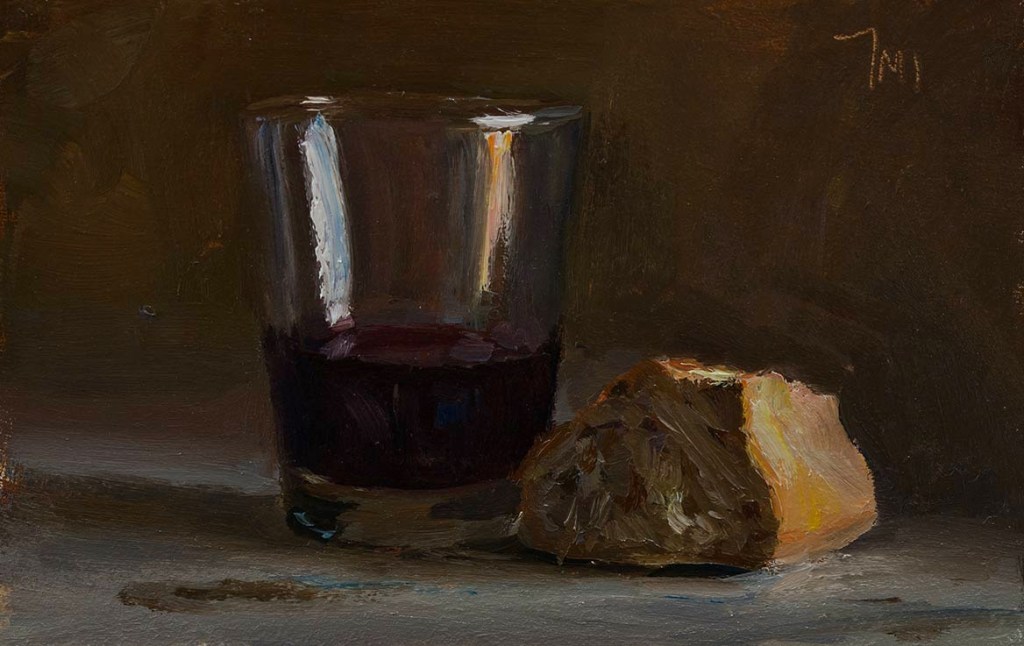
It’s the story behind Crescent Rolls and Chicken & Noodles. Canned Jellied Cranberry Sauce and Donuts. Chili and Cinnamon Rolls. Tuna Noodle Casserole and Vegetable Soup. Coconut Pie and Apple Pie made from orchard apples. Bread and Wine.

My mother was the best cook of anyone I have ever known. I, on the other hand, got married barely knowing how to boil water. Paul always thought it was a bait-and-switch:  he came to my house, ate my mother’s cooking and just assumed it was a genetic thing and this is what he could expect when we were eating out of our own kitchen. It was a hard adjustment for him – we ate out a lot and went to my mom’s house once a week for dinner. But slowly I began to take an interest and figured some things out.

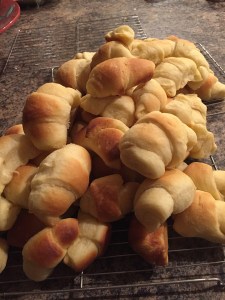
Crescent Rolls: On our first son’s first birthday, I wanted to do something special. So I opened my Better Homes and Gardens Cookbook  I had received from my niece as a wedding gift with the inscription that read:  “Dear Paul, good luck.  You’re going to need it.”  I found a recipe for Crescent Rolls. Perfect! How hard could this be. Turns out . . .  pretty hard.  It was a time-consuming recipe which took most of the day, but so worth it! Over the years I tweaked the recipe to my liking and they became a “must have” for holiday meals. The story is still told about the year that “one of us” set his alarm and rose at 5:00 a.m. on the day after Thanksgiving to eat all the leftover rolls before anyone else could get to them – in a big family one must learn to out-wit, out-play and out-last the competition. We’ve had some glitches along the way. There was the year I forgot to set the timer and burned the bottoms to a blackened charcoal on the Wednesday before Thanksgiving. So we cut the bottoms off, slathered them with butter and called it dinner that evening. Then I set to work on the next batch which took me late into the night. There were years the yeast didn’t rise because the milk was too hot or not hot enough and I had to start over. But if you come to our house on Thanksgiving or Christmas, you will get Crescent Rolls.

crescent rolls

Chicken-and-Noodles:  In those early years as I was expanding my repertoire I asked Paul, “What did your mother cook that you really loved.”  He fired back, “Home-made Chicken and Noodles!!”  So I made the long distance call to his mother to get the recipe and set out to wow him. I followed exactly the recipe my mother-in-law had copied from a newspaper column decades before. When it said, “Roll the dough very thin and cut into strips,” I labored with my rolling pin, stretching and rolling and pulling and rolling until the dough was indeed paper-thin. It was a labor of love, if a frustrating exercise, but I was determined to replicate his mother’s dish. I sat down to dinner ready to bask in his awe and admiration and gratitude.  “What is it?” He stared into his bowl of paper-thin, perfectly cut noodles swimming in broth. Are you kidding me?  It’s Chicken and Noodles!  “No”  NO??!!   “Well, it’s not my mother’s chicken and noodles.” So I got up from the table to make another call. “I followed the recipe exactly and he says I didn’t get it right?  What happened.?”  I could hear the commotion in the background as she was rushing to get dinner on the table for the six kids still at home. “Read the recipe back to me,” she said over the din of two kids arguing over whose turn it was to the set the table. When I came to the part about rolling the dough paper thin, she interrupted me. “Oh good grief, Sherry!  I never had time to mess with that nonsense. Just give it a few swipes of the rolling pin and call it good!” Okay then.  And so now my own family thinks if the the noodles are not thick and almost chewy with a thick broth and huge chunks of chicken – then it’s not really Chicken and Noodles. Following a recipe can be so over-rated.

Jellied Cranberry Sauce:  As I honed my skills in the kitchen I developed an attitude that “made- from-scratch-is-always-better” and so cranberry sauce should be made with fresh cranberries and a zested orange. Truth be told, nobody ever ate it but me, but that’s how I did it. Then our son-in-law joined the family and when we sat down to Thanksgiving dinner his first year he asked for the cranberry sauce.  It was passed around the table to him. Nope. He was looking for the jellied cranberry sauce that comes out of a can. Now, every year, he gets a whole can of it to himself, and I eat the other.  And everybody goes home happy.

dd 2

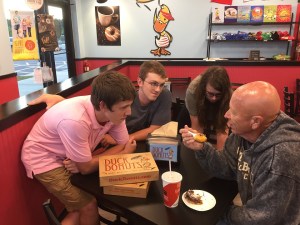
Donuts:  We were at the beach and Paul and I were headed out to the grocery store.  I called out “Does anybody need or want anything from the store?”  The four year old grandson never looked up from his Lego’s. “How ‘bout donuts!?” he yelled. And now, twelve years and eight grand-kids later, you haven’t been to Nana & Colonel’s until you’ve gone for donuts. The littles always love to hear how, when we were first married, Colonel was the guy who made the donuts at Dunkin’ Donuts and could eat all the donuts he wanted every night. I know, it’s not hard to impress them when they’re young.

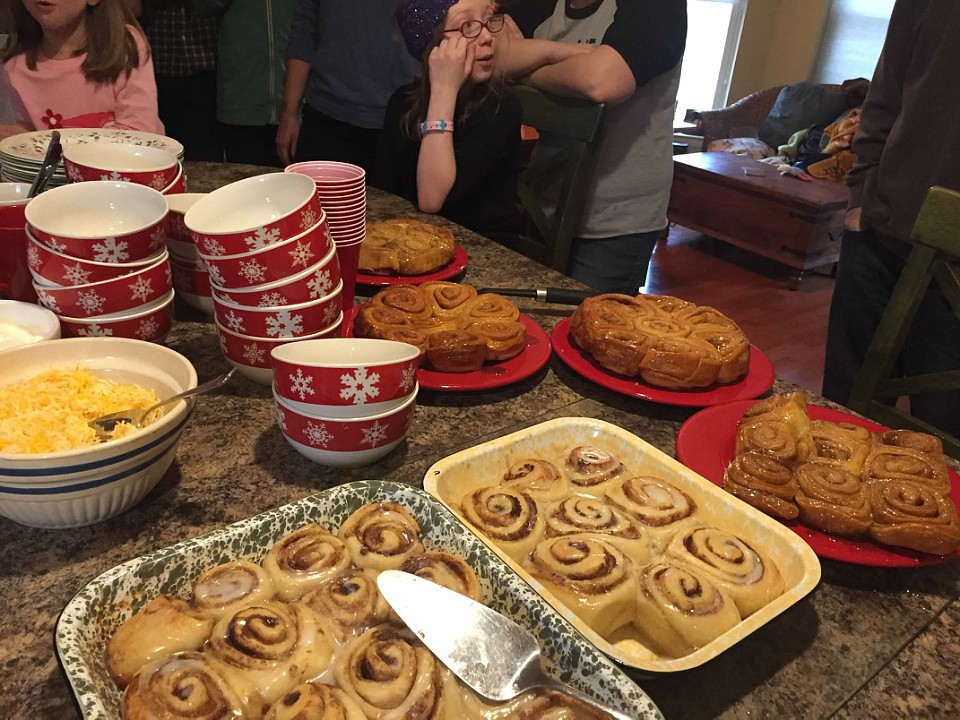
Chili and Cinnamon Rolls:  In both our families, the traditional Christmas Eve dinner was soup. At the Abbotts it was Chili.  At the Fletchers it was Chile and Potato Soup and Oyster Stew. At the Fletcher’s it was Cinnamon Rolls and Potica (a wonderful Slavic Sweet Bread introduced to our food culture by my brother-in-law’s family).  At the Abbotts it was Cinnamon Rolls and since I never mastered the art of Potica making, we stick to the Cinnamon Rolls. There was the year that I got distracted in the making and instead of dividing the dough into halves to make out the rolls I divided it into thirds and ended up making more, but much smaller rolls. I didn’t realize my mistake until one of the kids who was home for the holidays said, “It’s funny, when I was a kid these rolls seemed to be so big they filled your whole plate and now it seems like I could eat three of them,”  Yup, pretty much. The year our son was in Iraq we sent a can of Hormel Chili and a box of Honey Buns in his Christmas package.  In some way or another, I think most of the kids have carried on the tradition and live out the story.

234b6f7b-22c5-438e-862c-0de8c07e81d9_1.c0abf0f4a9caf497046c36c2be377847

Tuna Noodle Casserole and Vegetable Soup:  Like most families, in ours you got to pick the dinner menu on your birthday. When our youngest was little, his favorite meal was Tuna Noodle Casserole. Nobody else really liked it so we rarely had it, but on his birthday he got to choose. One year he was spending his birthday with some family friends because Paul and I had to be out of town. Peggy asked him what he wanted for dinner. Tuna Noodle Casserole – of course!  “Does your mom have a special recipe she uses?” Having five kids of her own she understood the risk of making something that was not like Mom’s.  “Yes, she does. It’s on the back of the box.”  And though her own kids gagged on it, she made Tuna Helper straight from the box and Fletcher was delighted.  Clearly by the sixth one I had abandoned the “made-from-scratch-is-always-better” ideology.  

Tabithas’s request was always Vegetable Beef Soup – preferably without the beef.  The other kids groaned – what kid really LIKES soup?  But that was what we had every March 4th. Even on the years that spring came early and we were eating soup with the air conditioning on. The one thing that redeemed her choice is that she always asked for Boston Cream Pie, and who doesn’t like that?

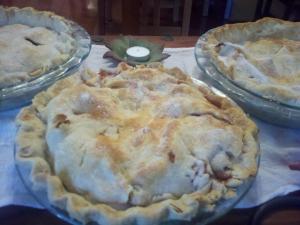
Pie:  We are a family of pie lovers. Favorites may vary from individual to individual but somewhere in our DNA is a “pie-lover” gene. My mother taught me to make pie crust. To her,  pie-making was an art form. I learned from her to treat the crust gently and carefully – don’t overwork it or the crust will be tough; use only as much water as you need to make the dough hold together and make sure the water is ice cold. She was a master craftsman.

When Fletcher wanted to bring a girl home from college to meet us I told him to find out what her favorite dessert was and I would make it for her. “It’s Coconut Pie”,  he told me. “Wow!  What are the odds?” I asked him. “You really do have a a lot in common!!”  And so every time she came for a visit we had Coconut Pie. It wasn’t until many years later at their rehearsal dinner I learned the truth. Emily’s mom wanted to know what the deal was with Coconut Pie. I explained I made it every time she came since it was her favorite dessert. “Actually, I don’t think she had ever had it before she came to your house.”  As I said – it’s in his genes.  He may also be a little manipulative.
pie 4

Paul’s mother made three chocolate cream pies every report card day.  That way if you got good grades you could celebrate. If you got bad grades, you had a way to drown your troubles. My mother made him chocolate pies every time we came for a visit and threatened if there was any left, she threatened never make another one for him. He always rose to the challenge.

312690_10150418300256311_870590329_n

And then there were the Apple Pie Baking Marathons. When the older kids were little, every fall Grandma Fletch would come for a month-long visit. She cooked and baked and told stories and loved us well. One of our days we spent at a nearby orchard. We picked apples – bushels of apples – and returned home to roll up our sleeves and get ready for the days long process of pie baking. She set up an assembly line. Everybody had a job to do:  washing the apples, peeling and coring and slicing, combining  the sugar and cinnamon and then mixing it all together in a big bowl with the fruit. Grandma was always in charge of the pie crust. After several days we would have dozens of pies: baked, wrapped and ready for the freezer. All year long, anytime we wanted a special dessert, we could go to the ancient chest freezer in the garage and pull out a pie to stick in the oven and soon the house would be filled with the buttery, cinnamony, apple aroma that took us back to the way the house smelled on those days we worked side-by-side next to the Master Pie Baker herself and created all that deliciousness. For years after she was gone, we kept the ritual.  We went to the orchard on a crisp fall day, picked the apples, and formed our assembly line just as she had taught us to do. The year we stopped was the day it was time to go apple picking and there were still pies in the freezer. The family was shrinking and we no longer had the mouths to feed or the laborers.  But anytime I smell apple pie, I can still see us all in the kitchen with Hazel, each doing our job.  

Bread and Wine: I have begun to feel that gathering at the table, sharing food and drink and sharing stories is a sacred experience.

When his followers asked him, “Teach us to pray”, Jesus included this:  Give us today our daily bread. Maybe this is about more than just nourishment for our physical bodies; maybe it is also about the table where we gather to tell our stories, nourish our souls and remember who we are.

I am struck by how many stories about Jesus are about the table. He goes to dinner parties with outsiders and undesirables, he performs his first miracle at a wedding feast, he provides a picnic for 5,000 people on a hillside, he cooks dinner for his friends on a beach, and 2,000 years later we are still telling those stories.

And then there is this: knowing he was going to die, he sat down around a table to share a meal with those who had shared his journey and would continue on without him. Because that’s what the family does in such a time. He washes their feet and cares for them with such love and affection. Around that table of special foods filled with such rich meaning, they remember and retell the story of the Jews miraculous exodus from Egypt and God’s faithfulness. But before the meal is over,  he will take the bread and the wine from that same table and use it to explain to them the hard truth of what is to come:  the bread is his body which will be broken for them and the wine is his blood which will be poured out to forgive the sins of many. They had no idea what it meant. Or what was to come.

But we do know. He left us this gift of symbol and remembrance and ritual. And time after time, we gather and remember and retell the story.  “As often as you  do this,” he said, “do it in remembrance of me.”  Jesus, too, knew the power of story, of remembering and of gathering around a table.
Perhaps, in the end, that is the real reason we are here.

FullSizeRender 34

You Have a Great Past Just Ahead of You

If you were part of the “second family”,  summer vacation to you meant the beach:  sand and sea and the smell and taste of salt on your skin. It’s boogie boards and sunscreen and the sound of seagulls and the sting of jelly fish and buying the tee shirt with a beagle in the hammock and  going for ice cream on the sound. But if you were one of “the four” and you grew up in the land-locked midwest and it was 1980 something, summer vacation was a whole other thing. It was camping in the rain, little cereal boxes of your favorite cereals (except for the Raisin Bran which nobody wanted), trips to the ER for stitches and ear infections, and Silver Dollar City.
The first family vacation we ever took that was not to visit grandparents came about from a conversation with Paul’s brother David who insisted that the perfect vacation spot was hidden away deep in the Ozarks in an out-of-the-way spot known as Branson, Missouri. Today, of course, Branson is a destination in and of itself which draws thousands upon thousands of visitors each year to its music shows. But this was before all that. This was about a little theme park where you rode the trolley from the parking lot to the gate not because it was too far too walk but because it was one of the few “rides” the park offered and you listened to the patter of the “tour guide” who explained that you were about to step back in time – 100 years to be exact. “Welcome to Silver Dollar City – where you’ll find  a great past just ahead of you!” he promised as we stepped off the trolley and into some of the best memories we would make as a family.

386232ef4962e4a940ab744ff4ce3ac1

The first time we went was sometime in the early 80s; there is some disagreement among us as to the exact year so we’ll just call it 1980something. We sent away for the brochures and when they arrived in the mail (Seriously. That’s how we did things before the internet.), we sat down on family nights and poured over them:  planning our itinerary, studying the maps and highlighting the best route from Illinois to Missouri, making a budget, writing the lists of all the things to do and take and ready before our big adventure. How many weeks (months) did we do this?

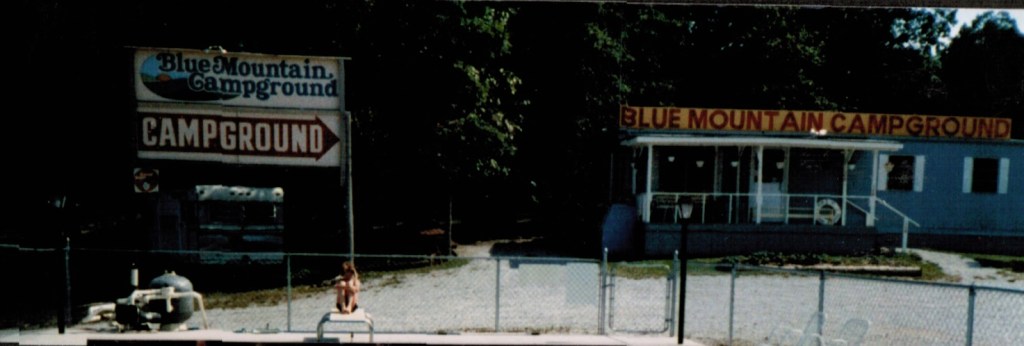
Because we had no money, we knew hotel rooms and restaurant meals were out of the question. But not to worry – for a fraction of the cost we could buy a brand new tent (I think we already had some sleeping bags we had collected along the way) and thanks to our trusty brochures we found the Blue Mountain Campground nearby (with a swimming pool and laundry facilities!) where we could pitch our tent. We could afford tickets to Silver Dollar City for a day and half and the rest of the time we would vacation at the campground:  swimming and collecting wood for the fire we would build to cook our meals and toast marshmallows for the s’mores. What could possibly go wrong you ask. Let me count the ways.

1.   Before using a tent for the first time it would behoove. . .  (okay – cross that off my bucket list – I have always wanted to use that word in a sentence). . . it would behoove you to set it up at home to make sure (a) all the necessary pieces are present and accounted for and (b) you actually know how said pieces fit together.

2.  It rains in the Ozarks. A lot. Not all tents are waterproof.  Soaking wet sleeping bags require a heavy duty dryer which can only be found at a laundromat. Also, a strong storm can blow down a tent altogether.

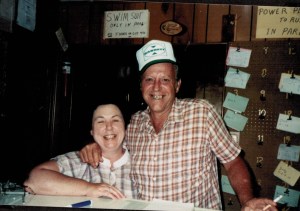
Early one morning, after a night where no one had slept due to the soaking wet tent, the soaking wet sleeping bags, and the all round soaking wet, miserable conditions, the owners of the campground took pity on us. Chad was outside our tent – yelling.  “Faye says for y’all to come on up to the house for pancakes and get those babies in outa’ this rain!!”  Thank God for Chad and Faye and  Ozark hospitality!

3.  Camp playgrounds are all fun and games until someone parachutes out of a swing, lands in the gravel, and slices open her hand which will require a trip to the emergency room for stitches, taking up an entire afternoon of vacation. In years to come we would battle strep throat, ear infections and stomach flu – so much so that it seemed it wasn’t vacation if somebody didn’t get hurt or sick.

4.  It is best not to allow a three year old to jump into the deep end of the swimming pool holding a beach ball as a flotation device. This can go south pretty quickly.

5.  It turns out young children are more enamored with playing in the fire and cooking over the fire than they are with eating the food cooked in said fire. They’re not so much about the char the fire leaves on the hotdogs or the crunch of aluminum-foil-wrapped- potatoes cooked in the coals which never seemed to get done. But they did absolutely love the little individual boxes of cereal that they could open up, pour in the milk and eat right out of the box.

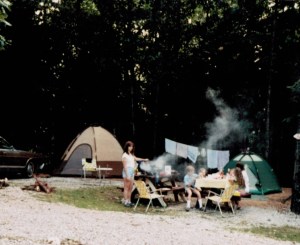
The tent – before it blew down in the rainstorm
Chad and Faye – God bless ’em
Ozark hospitality

And yet, for all of that, we returned to the Blue Mountain Campground again and again, year after year.

Blue Mountain Campground
The campsite
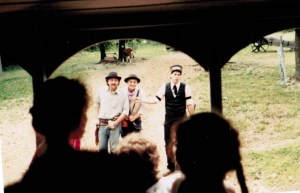
Train robbers
The train robbery

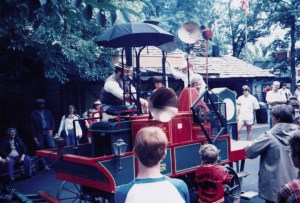
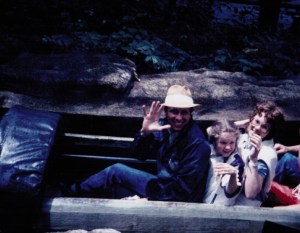
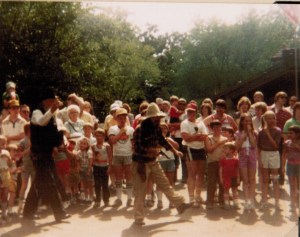
And to Silver Dollar City.  After the first year we figured out that for not too much more money, we could buy a season pass and then go to the park every day for our five days of vacation. We rode the train with its steam powered engine and never grew tired of the train robbers who entertained the passengers with their scripted and improvised lines.

55
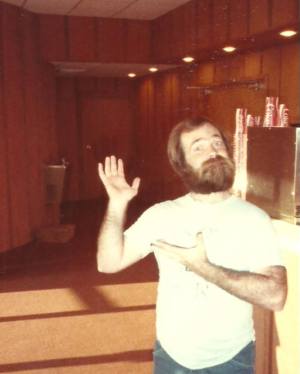
Paul in the saloon show

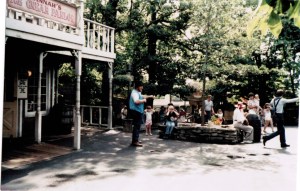
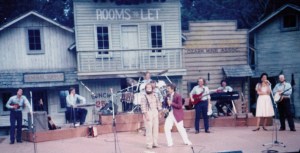
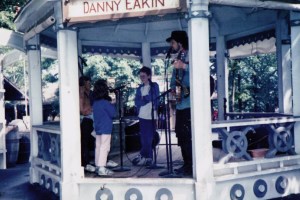
We were regulars at the Silver Dollar Saloon where the singing bartenders served rootbeer in frosty mugs and peanuts in the shell. The saloon girls put on their show and hauled a sucker up from the audience to mock and ridicule him and so of course the kids figured out which chair they always chose to pull their victim from and convinced Dad to sit in the chair at least once a season. In the middle of the show Carrie Nation and her Suffragettes marched in to break up the riffraff and it took the Sheriff to restore order. The girls bought garters and when they got home they practiced the Can-Can and sang “Why do they call us wild women, wild women, wild women?  Why do they call us wild women when we’re just as tame as can be“.  Rosie was the main saloon girl and one day on our way to the park from the campground we stopped at a convenience store to pick something up and there was Rosie – buying a loaf of bread!  Day made!

Scan 28
Singing bartenders
Scan 18
Good times at the Silver Dollar City Saloon.

The street theatre actors recognized the kids from year to year and incorporated them into their acts. They were on a first name basis with the Sheriff and the Deputy, with the Hatfields and McCoys. With the Rainmaker and the Undertaker who wandered the streets with his measuring tape. They loved the Story Teller and knew what time she would be at her spot to tell stories and choose them to be a part of them. They knew the musicians and where they performed and what time to catch them during the day. They knew the lady who ran the general store and the basket maker and the blacksmith.

rainmaker
The Rainmaker
scan-30-copy.jpg
The Storyteller
street theatre
More street theatre
Performing with Danny Eakin

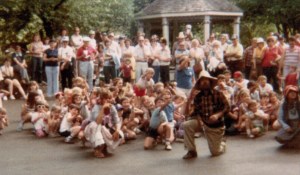
And then there was Mercy.  He was the star of Silver Dollar City.  He seemed to be everywhere:  interacting with the guests, heckling and teasing and aggravating and everyone loved him. He knew our kids by name and if we missed a year he would ask them where they had been. Eventually they got to know the actor behind the character. His name was Jack McDowell and they invited him to lunch and he told them about Silver Dollar City behind the scenes. We exchanged Christmas cards and kept up with him and his career for many years.

12642961_1121398154561726_7387714377258334224_n
Mercy
Mercy on the street.
Scan 33 copy
He was the star

There were a only a  few rides:  the American Plunge which was a log flume ride and left your stomach at the top of the summit before plunging you down the to the bottom and the Lost River of the Ozarks inner tube ride that guaranteed a good dousing under the waterfall. There was a ball pit and a playground  and a carousel, but mostly it was about the community:  the musicians around every corner and the street theatre which was both predictable and spontaneous, the craftsman and the artisans. It was about the funnel cakes and the frozen lemonade and the penny candy at the general store. As the kids got a little older we would let them roam the park on their own and meet back periodically to check in at a designated spot (it was a different time and a different place). One day I was walking through the park alone and I turned a corner to find the baritone from the barbershop quartet all alone in an isolated spot singing “How Great Thou Art”.   His eyes were closed, his arms lifted to the sky and it struck me that he was not performing, he was worshiping.  This was  a private moment, not a public one.  I tried to slip away unnoticed so as to not interrupt him when he opened his eyes and saw me. He blushed a little.  “I’m on my break,” he said.  “I just needed to recharge.”  For years I would recall that scene when I needed to recharge.

american plunge
The American Plunge
Scan 10
Lost River of the Ozarks

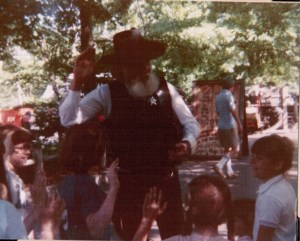
Every day at the park started with the sheriff deputizing all the kids with sheriff badges and then lining them up to stand at attention as the flag was raised. The day ended with the lowering and the folding of the flag.

Scan 33 copy 2
The Sheriff deputizes the kids every morning. . . with a badge.
Scan 31 copy 2

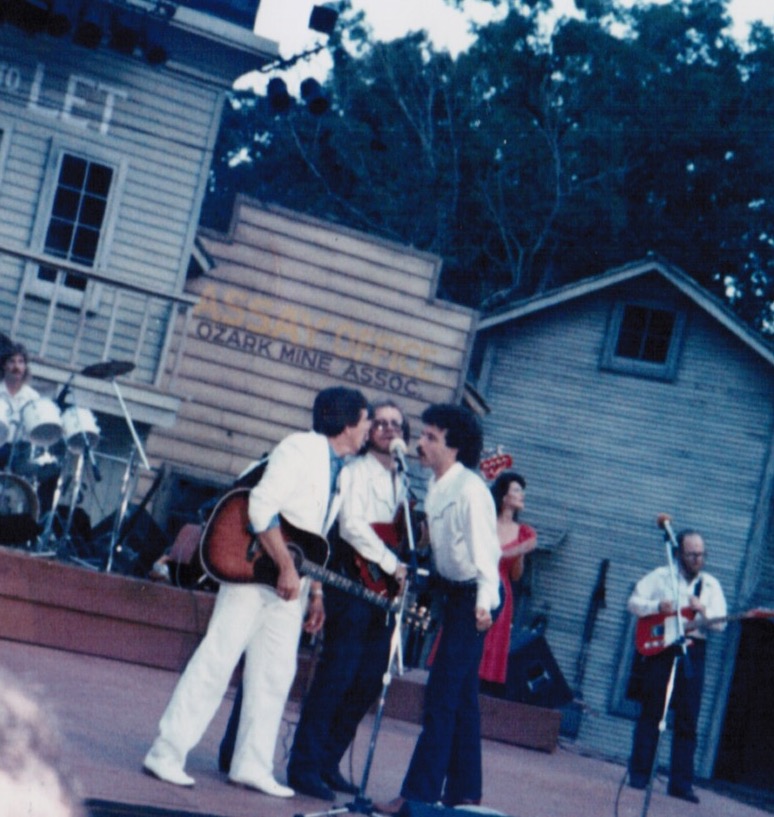
In the evening we headed to Echo Hollow, the big amphitheater, for the Silver Dollar City Jubilee: an evening of Bluegrass music and comedy with Mercy as the warm up act. They might  change the show from year to year but the performers were always the same – and once again they recognized us and greeted us like old friends. And then it was back to the campground where, if we were lucky, the tent and sleeping bags would be dry and we could light a fire and Dad would pull out his harmonica and we would unwind from the the day so we could  get up in the morning, eat little boxes of cereal and head back to do it all over again.

Scan 31
Silver Dollar City Jubileee
Scan 31 copy
Echo Hollow

Scan 10 copy 2

I don’t know how many times we went on this vacation. Five maybe?  Six? I know we went back a couple of times after Joy was born. She danced in the streets to the music, she plummeted down the American Plunge tucked in between us and rode the Lost River of the Ozarks, squealing with delight as the water fall dumped water over our heads. She rode the carousel and ate the funnel cakes and slept in the tent. But I think it was after that that we moved east and the story shifted.

Joy dancing
Joy dancing to the music

We made one trip with all of eight of us. In was in 1989. Fletcher was a year old, Joy was five and the others were . . .  older. But it wasn’t the same. Some of the old, familiar faces were gone, others had taken their place who didn’t know us from the next guy and there some new, added  “attractions”.  Still, it was enough the same that we could say, “Oh!  And remember this?!” But you could tell that change was afoot.

The last trip – 1995. And that’s Jack McDowell in the middle.

In the summer of 1995 we were making a trip to Colorado for Paul’s parent’s 50th wedding anniversary. Somehow somebody suggested, “What if we went through Branson and spent a day at Silver Dollar City?  But maybe we sleep in a cabin.”  And so we did. We wanted Fletcher to see it, to experience it, but afterwards we all sort of wished we hadn’t done it. The magic was gone.  It was more like a conventional theme park – more about the plethora of  rides which had been added  over the years and less about the craftsmen and the music and the street theatre. Less personal somehow and more crowded. We did look up Jack McDowell. who was working someplace else by then and had lunch with him.  But he had moved on too, and we all mourned the loss of the place where we had met and spent so many happy hours. We stopped by the Blue Mountain Camp Ground just to see if it was still there.  It was.  Chad had died some time ago and Faye was away when we stopped, but when we went in the office, there on the bulletin board was a picture of two year old Joy.
Joy reminds me that in 1999, Paul and I and she and Fletch stopped again when we were traveling west to see family. Oddly enough, I have absolutely no memories of it.  Maybe it was just too different and I didn’t want to remember it that way.

One of the kids said once, “Don’t you wish you could go back to Silver Dollar City for the first time?”  And that sort of captures it. It was magical. Pure and utter magic. But it’s sort of like Camelot or Brigadoon. It’s been almost 40 years since that first time and now it’s gone and there’s no way to get back to what it was no matter how much you might wish otherwise. And maybe that’s where the magic lies. The place – as we knew it –  is gone.  The children – as we knew them – are gone.  But the stories.  They are alive and well and welcome us back again and again.
Scan 33 copy 3

Where I Come From

Over the course of my lifetime, I have lived in six states and twenty two houses (not counting various summer lodgings and a brief stint in a ‘59 Ford panel truck), and I  expect that I have at least one more move in me before I land at my final resting place. Sometimes I sort of feel unanchored by my lack of roots or the fact that there is no one place that I think of as “home”.

There is the first house we lived in together as newlyweds and college sophomores. The one with the slanting living room ceiling that went from seven feet at one end to five feet at the other end and where we wore out our Simon and Garfunkle albums on our new hi-fi. Where we fought and forgave and learned to be married.

There is the house where we hung a giant crystal chandelier in the entry way of our our upstairs apartment and drug the table out of the kitchen when we had guests so we could dine under its brilliance.

There is the house with the pine cone wallpaper that shows up in the kids earliest memories. . .  except they all put the room in different houses. But it keeps showing up which makes me think it was ugly enough to leave an indelible impression.

There is the house we rented because it had a living room big enough that we could hold church services there and we shared it with three single women who lived in the basement. It had a little room upstairs lined with windows which is where our first “school room” was and I taught several of my children to read. It’s where I cross stitched the dozens of Christmas tree ornaments with the names for Jesus that still hang on our tree.

There is the house that had an indoor swimming pool where we taught the two year old to swim.  A sauna that she called “the warmer” and a fireplace that didn’t draw so that all of our clothes smelled like  Eckridge Farm smoked sausage.

There is the first house that we bought instead of rented. We were forty years old with six kids and a dog. And now we were homeowners. We lived there for fourteen years, longer than anyplace else we had ever lived. It was a palace to us with a big yard and a deck and a strawberry patch. The walls of the living room were painted a country-blue which was in vogue at the time and I loved it. It had a fireplace and three full baths and five bedrooms. It was in the family room of that house where a little team of people gathered to pray about starting a new church. Before long we turned one of those bedrooms into the “church office” and it  was in that living room with the blue walls that we folded church bulletins every Saturday night and had Women’s Breakfasts every month.  It was in that house that Cedarbrook Community Church was born.

There is the two bedroom house where I grew up – the home of my childhood memories.  There was a rocking chair in the corner of the living room where I did my homework, watched the black and white television with rabbit ears, talked to my friends on the phone, and dreamed the daydreams that young girls dream.

There is the house where we live now – just the two of us.  The one where we asked the builder to take out any walls in the downstairs living area that were not load bearing so as to accommodate the table made to order by Amish furniture makers. The table that would stretch across the whole length of the room and where we could sit with friends and family over a meal and recount the stories that bind us together. The house where we added bay windows and skylights because the more light the better and where, though we had no idea what we were doing, we somehow managed to create this magical secret garden of a backyard.

And yet . . .

Last summer we made a trip to Nebraska to see my family.  It’s where I’m from: this land of wheat fields and sand hills. Of windmills and wildflowers. Of farmland and cattle ranches. It’s where I was born, but I feel no real kinship to this land. I have no memories of it as a child and no real  understanding of this way of life or how it matters to the rest of my family. But as I grow older there is a longing to connect with this past and this place.

I have heard the stories – mostly from my mother when she was living. The stories of how my parents were farmers who had a dream of owning their own place, but it never seemed to work out for them.  Just when they thought they had  saved enough to make it happen the drought would come, or the flood, or the depression, or the war, or . . .  But then when their family was grown (all but the late-comer who was only two and named Sharon) they saw a way. Outside a little town called Wolbach, they bought a farm. This Nebraska farmland had been home to them all their lives, and now they owned a piece of it. My oldest brother Don and his family moved in with us and together, he and my dad worked the farm and when my brother Irvin returned from Korea, he joined them.  It was the family business, this love and care of the land.

When my father died two years later and my mother had to sell the farm, we moved to southern Colorado where I had a sister who thought she could get Mom work to support us. I have no memories of a life before the dessert of southern Colorado and the wild, rugged beauty of the Rocky Mountains that surrounded us. I couldn’t relate when my mother talked about the wheat that looked like copper pennies when it was ripe for harvest.  How the fields were green as far as the eye could see when the crops came up in the spring. How the corn fields marked the passage of the growing season with their changing tassels waving in the summer breezes. And how she could see it all from her kitchen window of that farm house.

She told me once that when she visited my sister in Colorado for the first time (it might have been her first trip out of state) as the bus pulled into Pueblo with its steel mill and monochromatic landscape she said out loud to herself, “Why would anybody want to live in this God-forsaken land?”  By the time I can remember, my mother had made her peace with living in the place that God had forsaken,  though I don’t think she ever stopped missing “home”.

There is no place for me that is like that. I liked some of the places we lived. . .  others not so much.  I have fond memories of some of them, but truth be told sometimes I get mixed up whether such-and-such happened in Kansas or in Illinois or if it was the house on First Street or the one on Columbia Street. It sort of all runs together.

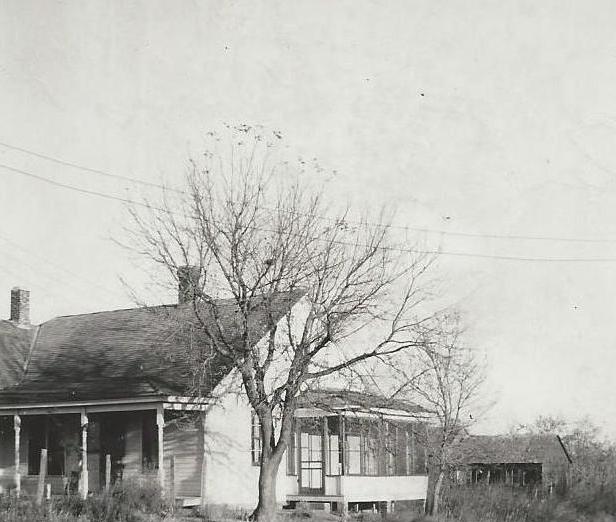
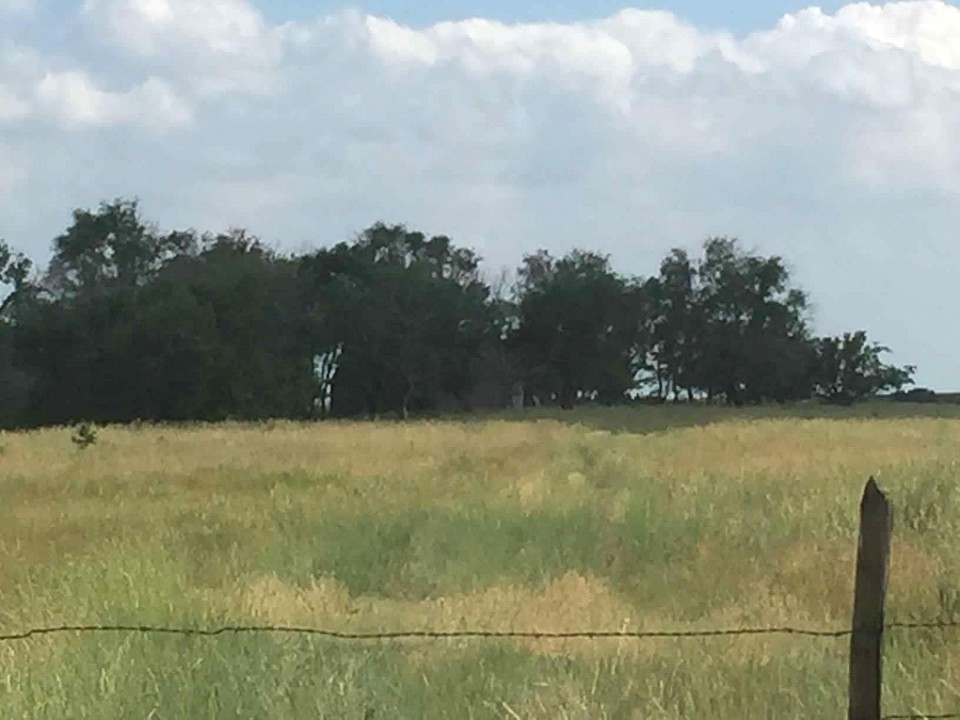
So last summer when we were in Nebraska I asked my brother if he could take me to Wolbach and find the farmhouse. The house was gone, he told me. Had been for a long while.  And he didn’t know if he could remember exactly where the land was . . .  but he would try.  And so we set off on our quest. Getting to Wolbach was easy. . .  it is a booming metropolis of 283 people. But now what?  We started down one road, but it had been washed out by the spring rains and anyway, he thought maybe we should have turned the other direction back up the way. We rode a while longer and came to a farm where a man in overalls stood out in the yard next to the fence, wondering at the strangers in his neck of the woods. We stopped and Irvin explained our mission – “We’re lookin’ for the place that was Ray Fletcher’s back in the early 50’s. I think it was bought by . . . .  and then by. . . .  and then I’m not sure who they sold it to. “Well, what you’re gonna wanna do is go back out this road and go about two miles and then. . . “ and so we made our way down some “roads” that were more like gullies until my brother said, “This. This is it. The house sat back there in that grove of trees.  It’s been torn down now,  but there’s still some of the barn standing. It was right  back there.”

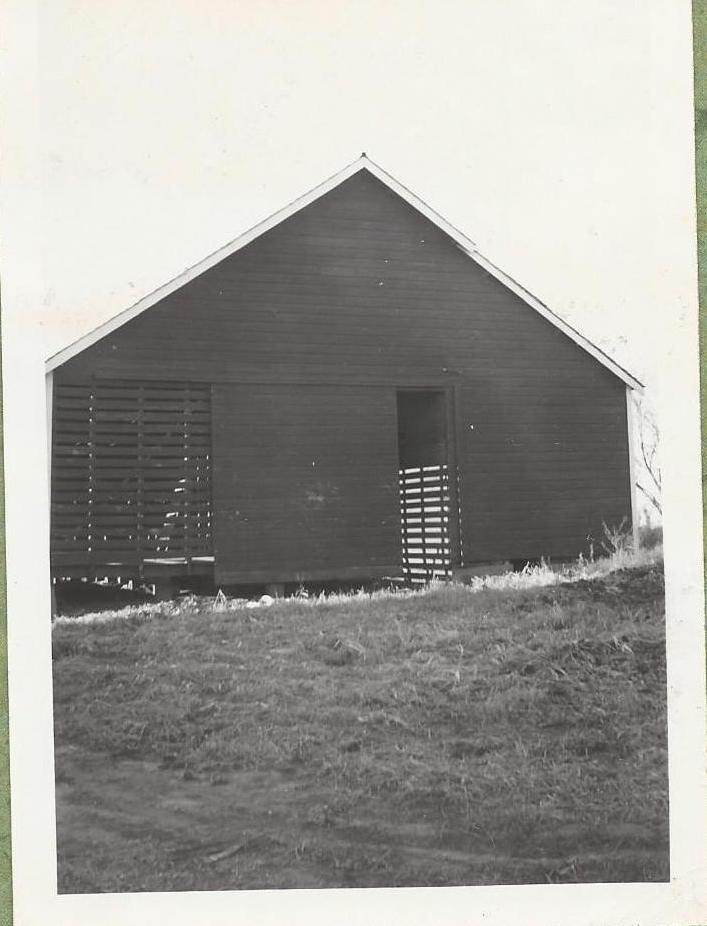
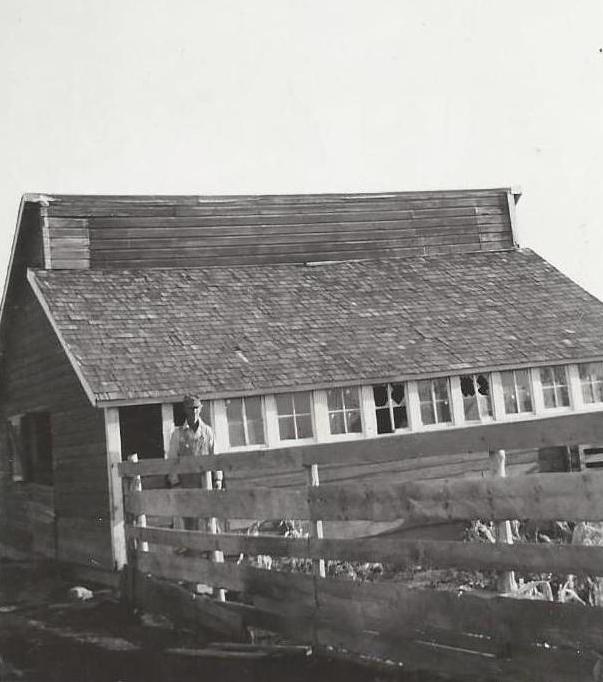
I stood there a long time. Remembering the stories from my mother. . .  like the one about how the goose chased me and I caught my leg in the fence gate which left a good sized scar that I carry with me to this day. Or how my dad would go into town every Saturday and bring back a little brown paper bag with candy in it and would sit at the table in that kitchen and divide it between me and Jolene. And I called back Jolene’s stories about our time in that house. Almost exactly a year older than me, she is Don’s oldest daughter, the one who moved into the farmhouse with us and the keeper of the memories of the adventures she and I shared there. Like the time we escaped from a charging bull by climbing into the corn crib and throwing ears of corn out to him to scare him away, holding him at bay until we were rescued. Okay, so maybe the bull wasn’t raging but rather ambling and maybe he was ambivalent about our efforts to engage him and maybe we were in no real danger. But what a story! This was the corncrib where we had our “playhouse” – where we made mud pies and played away the hours which is what childhood is for. No matter how hard I try, I have no memories of these children or of this place.

In the Celtic tradition, a “thin pace” is the place where the veil that separates heaven and earth is nearly transparent. A place where, for a moment, the spiritual world and the natural world intersect. That day last summer, as I stood on a road, looking over the fence into a grove of trees where you could just barely make out the the ruins of a barn, this was a thin place for me, and if I listened hard I could almost hear the echoes of their voices –  those two little girls in the corncrib, trying to shoo away a bull who had meandered into their story. I can see through that veil the ghost of a woman, staring back at me from her kitchen window. She has the hint of a smile and I recognize my own face in hers . . . the features startling in their similarity.  It is my mother, welcoming me home.

farm 2
       A THIN PLACE

Because Every One of These is a Story

things I am done with:
1. rudeness in the guise of “speaking the truth”
2. apologizing for my kids
3. crying over real or perceived slights
4. thinking that it’s all my fault
5. trying to find the lesson in the hard thing
6. saving stuff because “I might need it someday”
7. rehearsing conversations in my head that I’m never really going to have

things i will hold on to for a little while longer:
1. the hope that some things can be restored
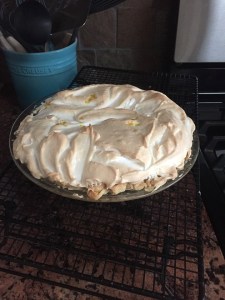
2. the recipe card for lemon meringue pie in my mother’s handwriting
3. the longing to make a difference
4. iced tea and ceiling fans on a hot summer’s night
5. faith
6. memories of the good times
7. the hand I have held for 50 years

10933854_10152912805531311_7419932013669994440_n

Traditions: Where the Stories Live

I am seven. Or ten. Or thirteen. And all of the years in between and the ones that will come after. There she sits in a chair in the middle of the kitchen with the yellow bowl in her lap and a fork in her hand and she is beating the egg whites. She whips them until they are stiff and stand up in peaks. I asked her once if I could help and she let me try it, but I quickly tired of the task and gave it back to her. Did we not have an electric mixer? Or even a hand cranked egg beater?  I think maybe we did.But this task she chooses to do by hand. Because that is the way she has always done it and for reasons only God (and she) know, it is the way it should be done. When they are stiff enough to suit her she will mix them with the cooked sugar and syrup mixture and beat it some more and after a long and arduous process, the end result will be a Christmas candy that was a tradition in my family. Divinity. Too sweet for my taste,  I didn’t like it then and I don’t like it now. But I loved sitting in that warm kitchen on a winter night, hypnotized by the rhythmic beating of the eggs and my mother’s voice telling me stories of my family and my history.

I learned about the year that she and my sisters spent a whole day making this time-consuming, labor-intensive treat only to have my brothers come in from their farm chores and devour the whole day’s worth of work. Now they would be required to spend  another entire Saturday with a fork and bowl of eggs. And so, as they sat there on their kitchen chairs, taking out their frustration on the egg whites in front of them, my sisters hatched a plan. They would hide the fruit of their labor someplace where the boys couldn’t find it and bring it out only on Christmas Day. They knew the perfect hiding place – the elephant cookie jar that sat atop the pie cupboard. As the story goes, the boys looked high and low for that divinity but apparently never thought to look for candy in a cookie jar. Which I always thought didn’t speak too highly of my brothers’ intelligence or scouting abilities . . . but what do I know? At any rate my sisters were delighted with themselves and so every year after they made the divinity under my mother’s careful supervision, sneaked it into the cookie jar, and there it lived until they produced the treat for the family on Christmas Day. When my mother died and we were dividing up her things, my sister Minnie said the only thing she really wanted was that cookie jar – to remind her.

I learned about the war years when sugar was rationed and so there was no candy-making and really no Christmas once word came of my brother: missing in action. Her voice grows quieter and she seems further away and finally there is only the sound of the whirring fork against the sides of the glass bowl, turning the egg whites into divinity.

Some traditions I took with me from my childhood and incorporated them into  our own family’s celebrations.  Divinity was not one of them.

Some of our holiday traditions came from Paul’s family: chili and cinnamon rolls on Christmas Eve. Long after the rest of his family had moved on to other menus, we held fast.  And now most,  if not all,  of our children celebrate Christmas Eve with chili and cinnamon rolls.

img_8908
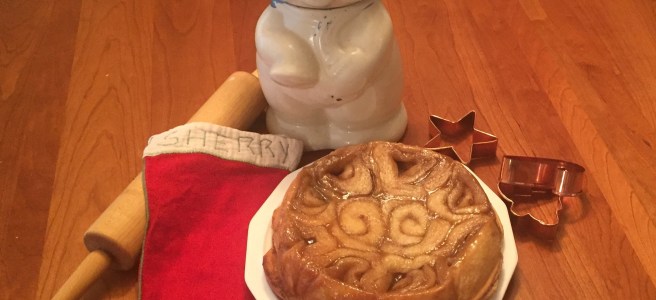
I inherited my mother’s rolling pin and her secret for cutting cinnamon rolls – use thread instead of a knife.

Some traditions we stumbled upon ourselves. The movie on Christmas Eve afternoon was birthed from a need to keep little people distracted and occupied through the long day before Christmas. Taking four little ones to see Cinderella in a real movie theatre and sitting in the front row and watching the three year old talk back to the characters and interact with the story on the screen is one of my  favorite Christmas memories. As the step sister assures the prince that it is indeed her slipper, the heroine’s young  advocate in the front row jumps to her feet: “She’s lying!!! She’s lying!!! It’s Cinderbrella’s”  and the whole audience cheered.

The Advent Calendar grew out of the need to bring structure to the growing list of all the Advent activities as we counted down the days. Who knew what secret delight one would find on the piece of paper with a 20 written on it or a 12 or a 15?  Maybe it will say “today we decorate the tree” and it turns the whole day into an event. Or maybe it is “go Christmas shopping” and you load up in the car and go to the discount store and find some awesome treasure for every member of the family – if you are the youngest you will be directed to the rolls of  Lifesavers that come in a box that looks like a book because that’s what the youngest always gives to the siblings. When you find “wrap Christmas presents” on the slip of paper, you head off to your own corner with your bag of treasures, a roll of paper, some scissors and a whole roll of tape all to yourself. Of course not every day was something big – sometimes it was the “filler” – the standby for when Mom & Dad hadn’t had time or foresight to plan an activity or come up with something creative: “get a candy cane off the tree”. Oooohhhhhh nooooooooo. And yet. As one of them explained many years later as an adult – “You do know, right, that NONE of the six of us liked peppermint?”  But because it was in the Advent Calendar that made it special enough that you took your candy cane, ate it, pretended it was a good thing, and hoped tomorrow would bring something better. And sometimes it did.  Like the little Snoopy notepads with little pencils in a little bag.  Jackpot!

1017171_10151949126111311_2088027134_n

It’s a little sad the day you realize that some of the traditions you initiated for your young family when you were doing campus ministry no longer work. In those days, all the busyness and craziness came to a screeching halt the week before Christmas as students finished their last exam and  left for home and you were left with that most precious of all commodities: time. But then those days give way to a healthy and thriving community church with three Christmas Eve Services and there is no time for Christmas Eve movies or chili and cinnamon rolls. But you adapt. You replace a movie with a breakfast at Waffle House and leave a $100 tip for your waitress who one year is a single mom and hasn’t been able to buy a Christmas present yet for her daughter and you offer a little prayer of gratitude for the opportunity to be a part of this. One year your waiter is named Jack and you learn that he is working on Christmas Eve because he wants to make as much as he can so that he can really party it up on New Year’s Eve and with a sinking feeling you realize where your tip money is going to go, but it leads to a new tradition of toasting Jack at every family gathering. You move the chili and cinnamon rolls to Christmas Day (and alleviate the need to fix a big Christmas dinner that nobody wants to eat anyway – a win/win) and you pass along your Advent Calendar to a young family who is glad for the excitement and anticipation it brings to their home. And life goes on. New traditions are born as old ones die off. . .  but the stories. The stories live forever – if they are told – and they bind us both to those who came before and those who will come after

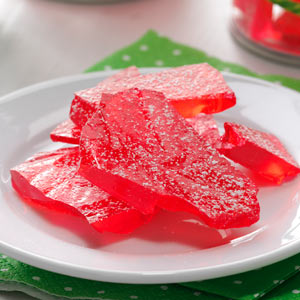
Because here’s the thing. I don’t make divinity. I make (or more accurately made) cinnamon hard candy – the hotter the better. This, too, came from my childhood.  And now my daughter makes it and when she brings it we all eat it and say to each other – “it tastes like Christmas”.  She makes “Skyline Chili” for her family on Christmas Eve because that is her husband’s tradition. . .  and so it goes.

exps13214_ck133085b06_18_1b
I remember that we bought the cinnamon oil at Potter’s Drug Store. They kept it behind the counter and you had to ask the pharmacist to get it for you which gave the whole process some level of intrigue  – like we were using some sort of contraband ingredient.

But the stories live on and are passed on and they matter. The traditions can change and  adapt and evolve. It’s the stories that ground us and remind us who we are, where we come from, and why we’re here. That’s why I keep the elephant cookie jar  (which eventually found its way to my kitchen) on top of my cabinet.  I don’t hide divinity in it. . . actually I don’t use it all.  But as the keeper of its story, I feel a responsibility to care for it and the memories that live there.

img_8915

He Was the First . . .

This image has an empty alt attribute; its file name is img_7740.jpg

by Paul Abbott

“Not only had my brother disappeared, but–and bear with me here–a part of my very being had gone with him. Stories about us could, from them on, be told from only one perspective. Memories could be told but not shared.”
John Corey Whaley – Where Things Come Back

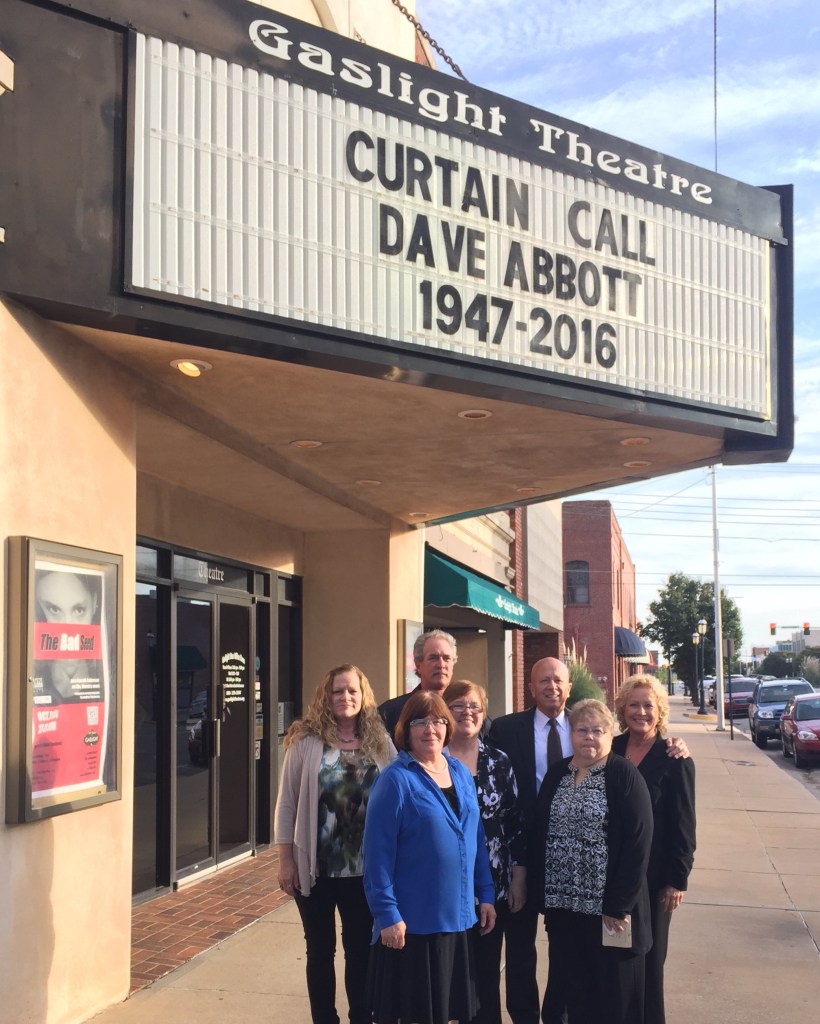
On Monday, October 3, 2016, we lost Paul’s older brother David in his short, but hard fought battle with cancer. The following is the eulogy Paul delivered at his memorial service. Now the stories about them can only be told – not shared.  And we are coming to grips with that loss.

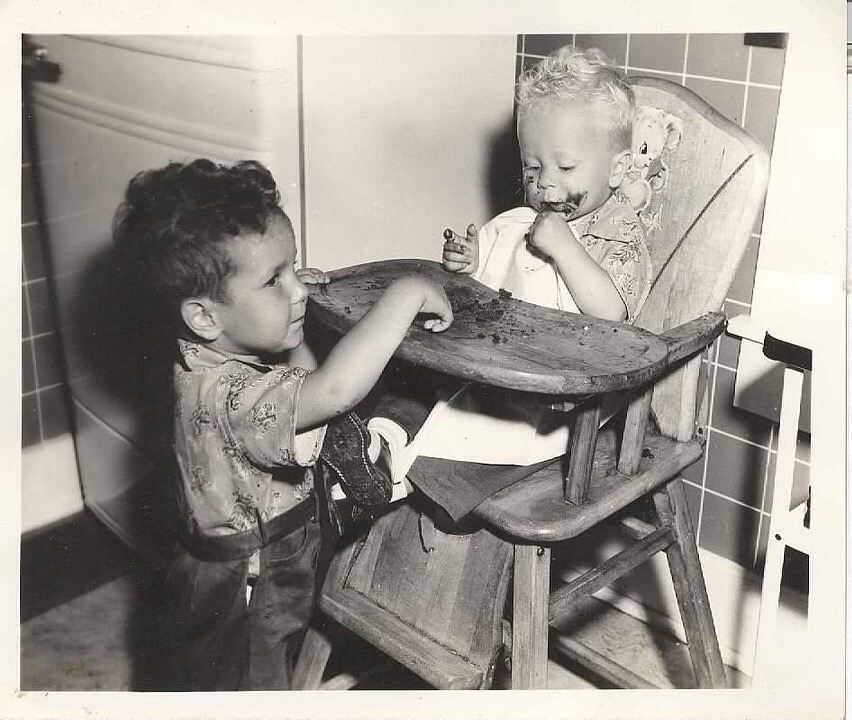
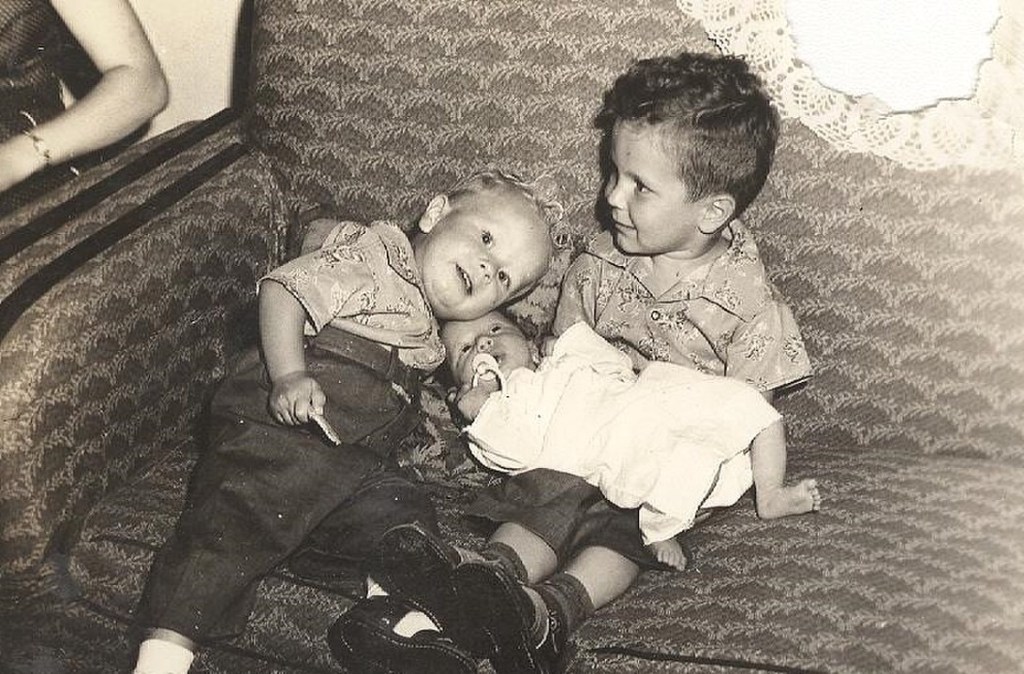
All the world really was a stage for my brother and, at least in our backyard, neither Errol Flynn’s Captain Blood nor Fess Parker’s Davy Crockett could hold a candle to David Abbott. I know. I was there. I was his first audience and, for a time, his best supporting actor.

David was the firstborn in a cast of siblings that eventually grew to nine. Our little clan grew up in the fifties and early sixties, doing all the kid things every kid did back then. Through it all, David was the producer, director and always the star of the show. If he didn’t want to play,  then no one wanted to play. It just wasn’t the same without him.

Our dad was a pastor as was our grandfather before him, so life revolved around church. It was sort of the family business. The first stage David ever performed on was at a small, country church. As much as anything in his childhood, it was the church that molded and marked him and made him who he was.

The life of the theatre that was David’s passion as a man may seem far removed from the church-centered life of his childhood, but church and theatre share a common thread. Both are about the power of story. Done well, both tell stories that remind us why we are here, that tell us our lives have meaning and purpose, stories that anticipate days like this day.

David was really smart, so smart he taught himself to read. Before he spent a day in school, he could read the Sunday funnies or the minutiae on the back of a can of string beans. He was always the smartest guy in the room. He always knew the answer, knew the right way to do things, and never hesitated to share this with his siblings. He was, after all, the director and he didn’t just run the show, he ran our lives.

His direction for me often employed the word idiot. He may not have always actually said it, but even when he didn’t you could hear it in his voice. When I was delighted at the prospect of a trip to see Santa, he enlightened me, how could the guy possibly get to every house in one night?  He’s a fake . . . you idiot. Around maybe eleven or so, I was trying to sort out the mysteries of sex, but just couldn’t imagine: mom and dad?  Doing the dishes one night – we two always did the supper dishes, he washed, I dried, always – I tentatively expressed my dismay at the thought of mom and dad and sex to the one guy I knew I could trust to set me straight. Where do you think this house full of kids came from? You idiot. At sixteen, David gave me my first driving lesson in our faded green ’53 Chevy.  As I swerved perilously close to a neighbor’s mailbox, Left! Left! You idiot! Watch where you’re going.

As the firstborn, the leader of our troupe, David was always first: first to lose a tooth or learn to ride a bike, first to get a driver’s license and go on a date, first to kiss a girl, first to go to college, get married, have a child. And now the first to leave the stage. It won’t be the same without him. We who share his name and his blood won’t be the same without him.  Our grief is the price we pay for love, and make no mistake, we did love.

If he were here to direct me now, I think he’d say, Enough. You’ve said enough, little brother.  You can sit down now.

enhance
img_7755
img_7981

It Was 1970. . .

It was the summer of 1970. A crazy and turbulent time to be twenty years old in America. The Viet Nam War was escalating and the returning body bags were on public display every evening during the 6:00 news. April brought the death of four Kent State students and nine others were wounded during a protest against that war. The Beatles broke up and  Richard Nixon was in the White House and so what was to became of us we wondered. Throw into the mix the Jesus Movement which began in the late 60s in California  and swept  across the continent. And for all of us who were young and idealistic and wanting to make a difference,  we wondered – what does that look like?

Paul and I had just finished our sophomore year in college. In one of our classes we had connected with a couple of Christians who told us about an “evangelistic tour” they were planning through the southwest over the summer where they were going to share the gospel on various university campuses and would we like to come? They were radical, passionate and fiercely committed to following Jesus. So we signed on, if somewhat skeptically.

“We’re gonna all travel on a bus, stay in churches who have opened their doors and spread the love of Jesus,” they said. “We’ve got it all planned out.”

Sort of.

One guy said, “We’re all meeting up to get on the bus in Colorado Springs (which was about 30 minutes from where we lived) so we can swing by and pick you up on our way south.”  Great!  Except eight hours later, still no bus – which should have been a clue. Eventually the guy drove down to Pueblo, picked us up in his car, and took us back to Colorado Springs where the rest were still waiting.

We got to the designated meeting spot (somebody’s parents’ house our ride explained) and there were people mingling about:  some sitting on the floor singing while a guy played a guitar, some reading their Bibles. Some laying out snacks on a table. We saw a rather large group huddled in a group behind a grand piano. We asked what they were doing. “Praying.”  Oh.  What are they praying for? “A bus.”

A BUS!!. Really?? We don’t have a bus??!!!?  Granted no one had ever SAID we would be met by a uniformed driver standing next to a chartered bus, but still. . . .

It was the first of many wrong  assumptions we had made.

After many more hours an old yellow school bus with Ignatius Loyola School District No. 11 written on the side pulled up in front of the house. You will understand when I say that I did not join in the chorus of “Hallelujah-praise-the-Lord”s when I saw that the inside of the bus was completely empty save for the exhaust system which lay in pieces on its floor.

“Okay – everybody spread out your sleeping bag and we’ll pack the luggage (we were each allowed one small bag) in the back against the door and as soon as it’s dark we’ll head out.”

As soon as it’s dark?

“Well, the bus overheats during the day so we’ll travel at night when its cooler.”

Gotcha. So when the temperature dropped and the sun went behind the mountains, all fifty of us hopped on (except for the guys who had to push it to get it started). The starter didn’t work which proved to be a bit problematic every time we stalled at a red light and a designated team would jump off, wait for the light to turn green, push us till the engine turned over and re-board. We loaded up the one car that we were bringing, and we were off.

Our first stop was to be Las Cruces, New Mexico. And eventually we got there – after a six hour breakdown in the desert. But one of the guys who knew something about cars – sort of – patched us up and got us going again. That morning somebody passed around a bag of peanut butter sandwiches and one of donut holes with the instructions:  “Take one half a sandwich and one donut hole.” The other half, we would find out later, was for lunch.

When we got to Las Cruces we went to a park and a couple of people left in the “follow car”.  Where are they going? we asked.  “To go find a church for us to stay in.”

Gotcha. Another part of the “plan” we had misunderstood.  We didn’t actually have churches lined up – we would just show up and see what turned up.

But here’s the thing:  we went to five different cities that summer and though we spent some long days in parks, we never slept in one. By nightfall a church would open its doors and let us sleep in their Sunday School rooms and gymnasiums, cook in their kitchens, eat in their fellowship halls. I have no recollection  where we took showers. Maybe we didn’t. I do remember once washing my hair in a gas station bathroom.

We talked to people about Jesus on campuses, in the parks, on the streets, and then, if they were interested in talking more, we invited them back to the church where we ate hamburger gravy over toast (it was like hitting the lottery if you found a piece of hamburger in your gravy) and sometimes they just hopped on the bus with us and went to the next town. We slept on floors and took turns taking each other’s clothes to the laundromat or grocery shopping or cooking or cleaning. We held all night prayer vigils and opened our hearts to a broken world. It was 1970.

In the same way that the country was in a time of upheaval – so was the church. We were  learning to throw off our old ways and take the message to the people and to love them where they were. We were learning to welcome the stranger and see what unites us instead of what divides us. We were learning what it means to live in community and what Jesus meant when he said, “If anyone wishes to come after me, he must deny himself, and take up his cross daily and follow me.”  Or maybe it wasn’t the church who needed to learn those things – maybe it was just us.  And that summer was where it started.

In hindsight, that summer was ill-conceived, ineffective and unorganized. We suffered from a lack of leadership and maturity and understanding and training. We wanted so desperately to make a difference to a broken world that we were unteachable and over-confident and sometimes did more harm than good.  But for Paul and me, it was a turning point and maybe God just protected us from the bad stuff – knowing we would grow up and grow out of the worst of it.

As the summer drew to a close, we prepared to go back to our real lives – back to school and jobs and we pondered how it would all look in light of the summer.

But the truth was we were spent. We were the only married couple who had traveled this adventure and we had been married less than a year. A little frayed around the edges, we went for a walk to get some alone time (community is great and all that but still. . .).

At the beginning of the summer we were told that everybody was just pooling all their money into one big pot and we would have all things in common. Those who had more money would give more and those who had less would give less and everybody would have what they needed. Communal living in the truest sense of the word. We put some money in but, because we weren’t as spiritual as the rest, we also kept some in reserve so we could slip away once in a while – to go get ice cream and regroup.  (I always had a sneaking suspicion that everybody else did the same thing). Maybe that’s where our conviction came from that there always needs to “ice cream money” in the family budget.

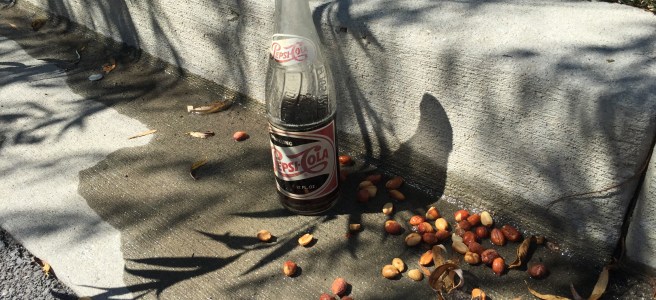
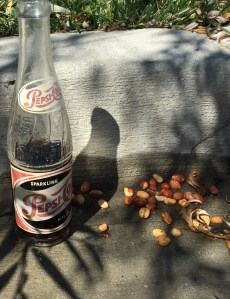
But on this night we were down to a $1.38 – literally. We bought a bottle of Pepsi and a bag of Beer Nuts at a gas station and there was no change. We had no money. None. It felt a little vulnerable and a little scary and very sacrificial. And then I dropped the bag of Beer Nuts in the gutter and they spilled out and I just stood there and cried. I had sacrificed everything for Jesus and now this!  Okay – maybe a bit of an overreaction.

We did return home – back to our “real” lives where we now had to learn how to grow into our passion, our zeal, our desire to make the world better. And we had a lot of growing up to do. We made a lot of mistakes, figured out how much we still didn’t know and how far we still had to go. And we learned what real sacrifice looks like – as opposed to sleeping on the floor and beer nuts in the gutter.

Over the next forty six years, (with a lot of help and love from a host of others, but that’s another story for another day) we would start three churches and open our home and our lives to hundreds upon hundreds of people. We would raise our children in the student slums of university towns so that we could be a part of the community we were reaching.  We would welcome strangers who turned into family – some of whom “hopped on the bus” with us and went to the next town – and together we would work to build His kingdom.

I sometimes wonder if we would have gotten to the same place we are now if it were not for the summer of 1970. If this is where God was leading us all along and that was only one of many roads that would have brought us here. I think maybe that’s true, but I don’t know. I do know the world had gone crazy and we wanted to make a difference. But maybe, in the end, it was us that needed to be different.img_7358

A Real Cowboy

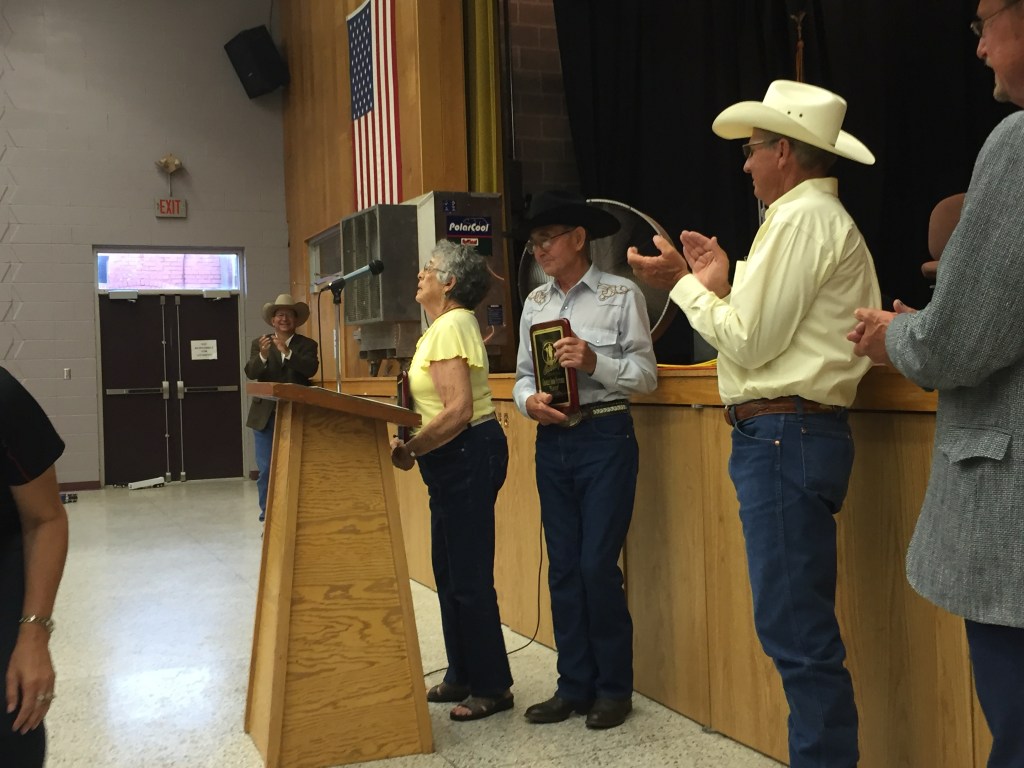
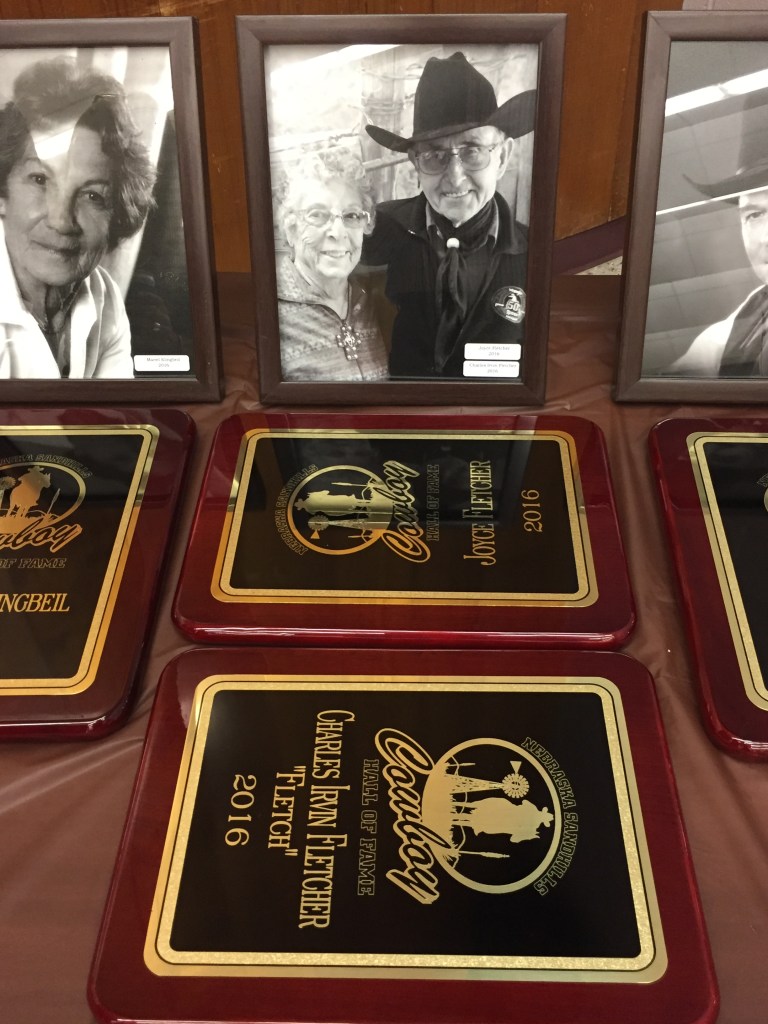
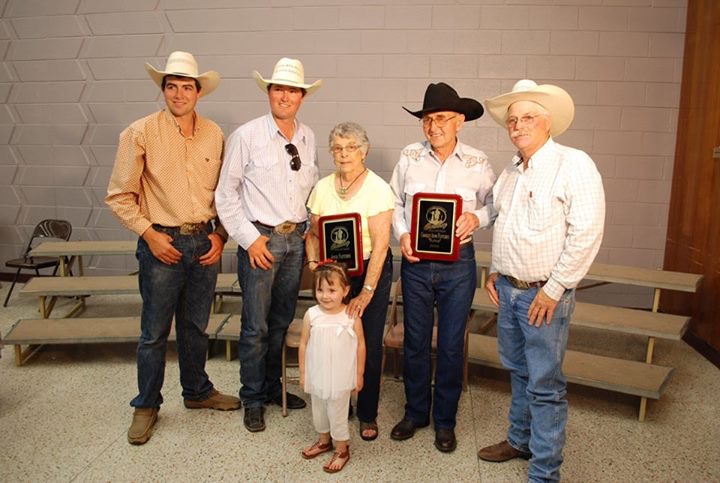
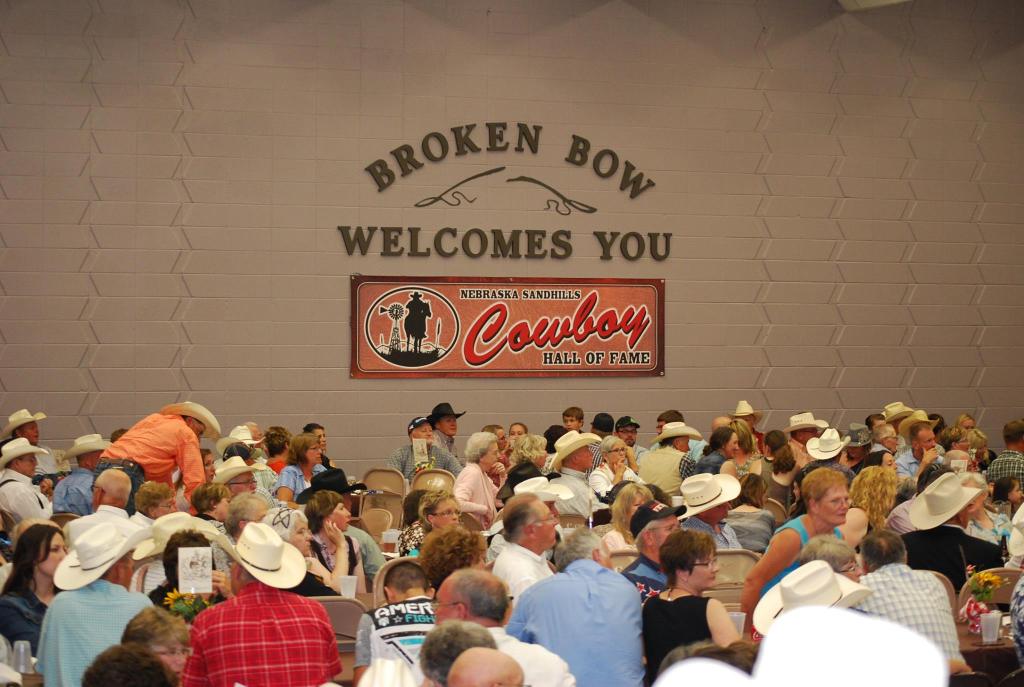
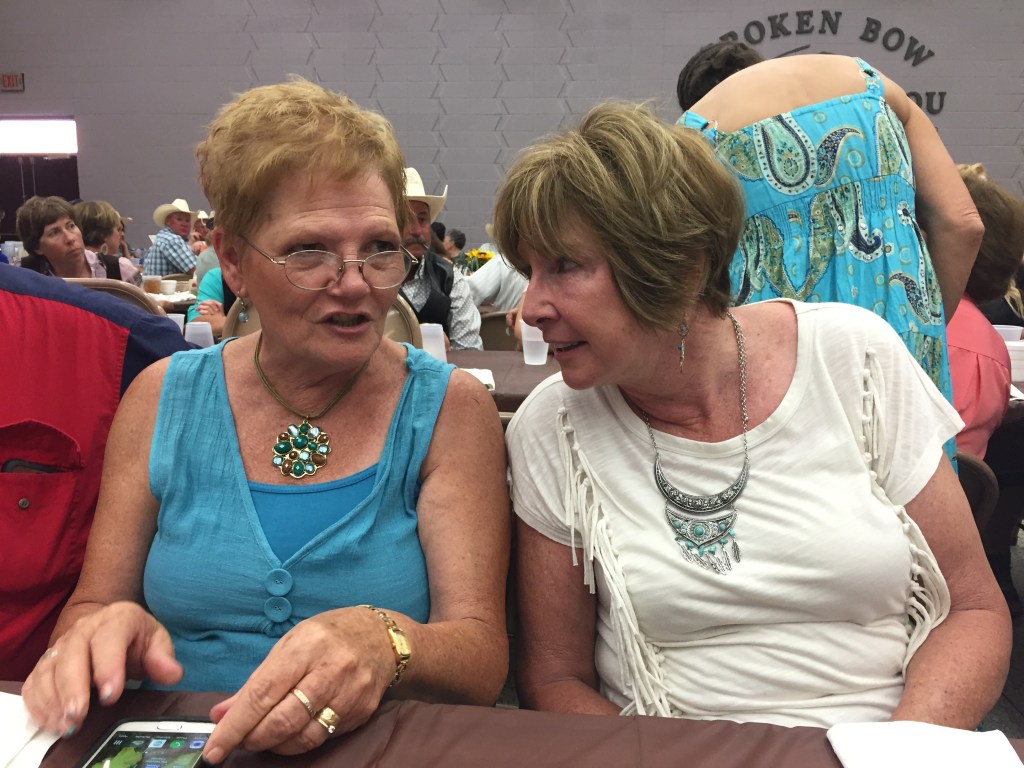
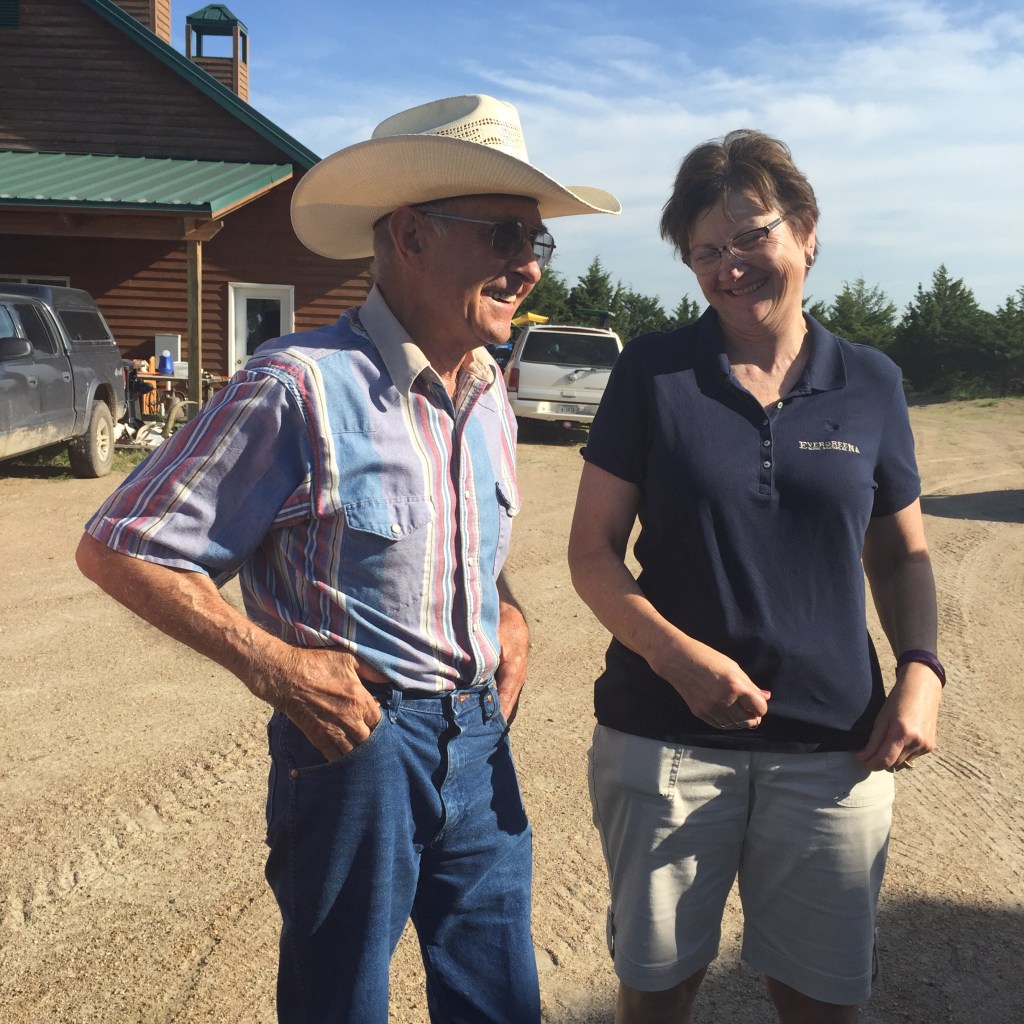
We gathered from several states and varied walks of life. We came by car and by plane and by the grace of God. For one magical and memorable weekend, we left behind jobs and kids and grandkids and the lives we had built apart from this place.  We came to bear witness, to congratulate, and to be a part of it. But mostly we came to celebrate.  My brother Irvin and his wife Joyce were being inducted into the Nebraska Sandhills Cowboy Hall of Fame and so we came.

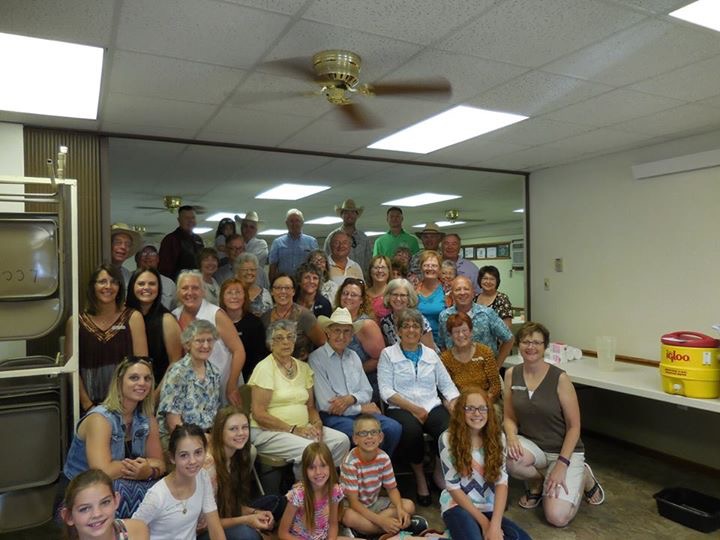
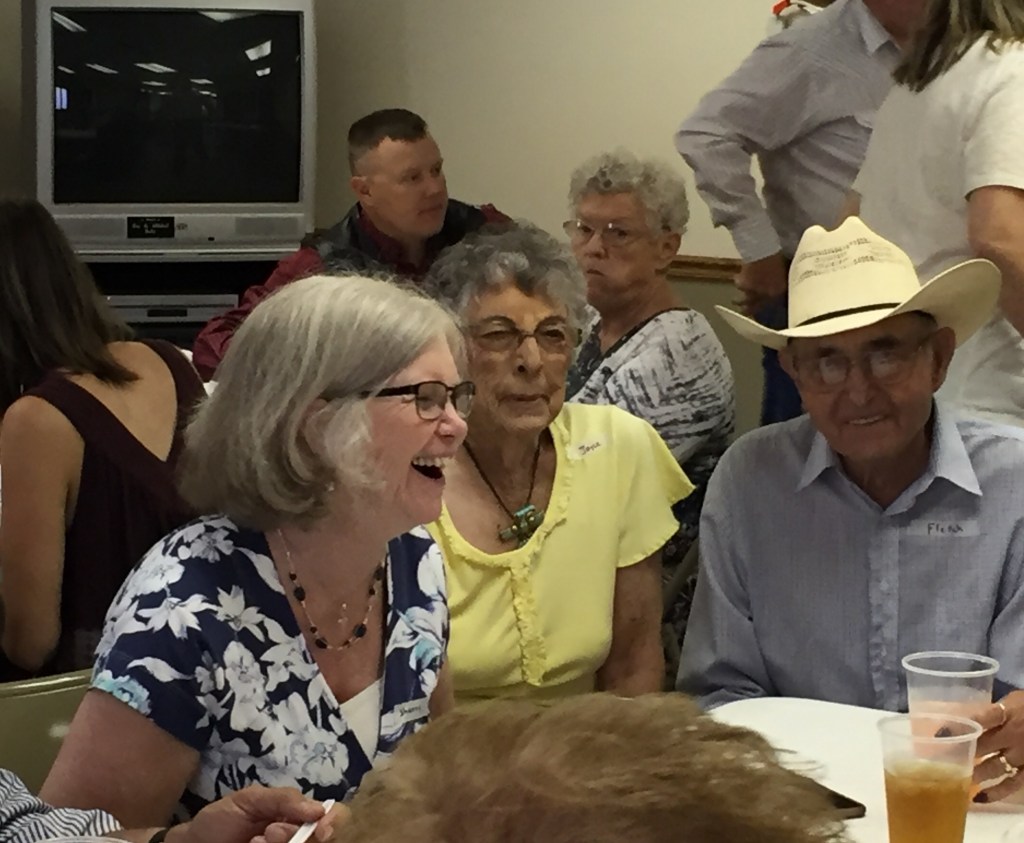
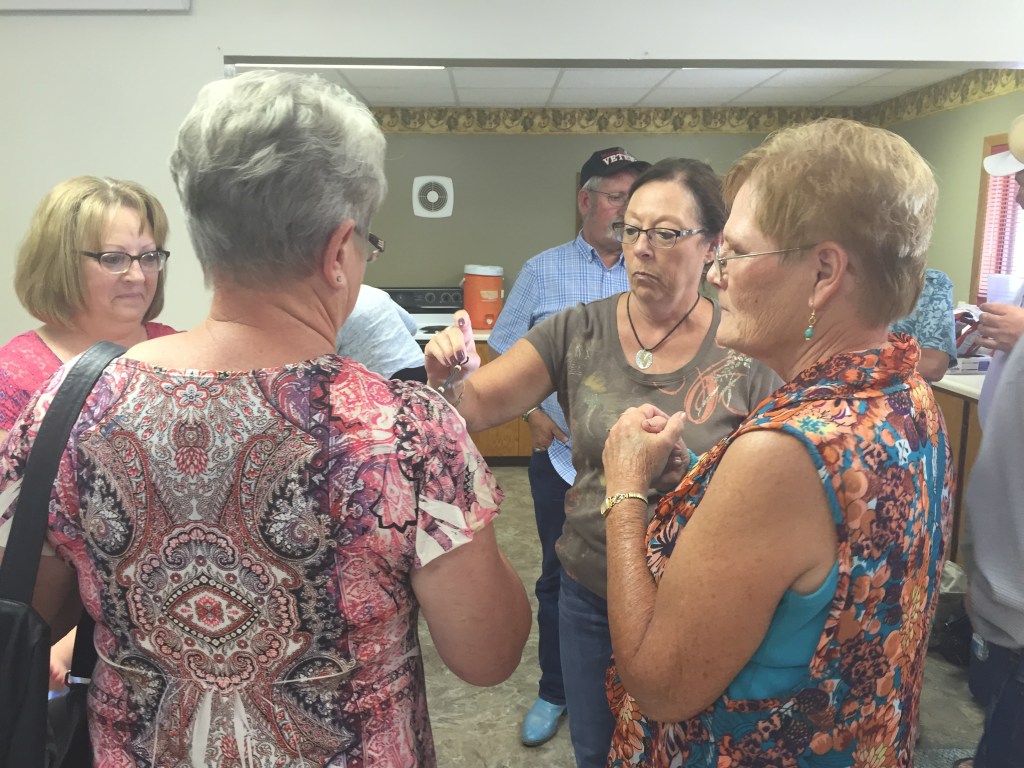
His daughters rented the community center for the day  in the little town of Taylor: a place where family could gather before the craziness of the main event that evening. A place where we could eat the lunch they provided, take pictures, catch up and “visit” – which really means “to tell stories.”

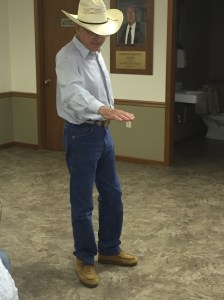
He stood up and announced “I have a story I want to tell.”  The room went silent.

And he began to spin the tale which went something like this:

IMG_2597
And they were lined up down the sidewalk – all of them about this high.

When my buddy and I were on the rodeo circuit, one of our favorite places to rodeo was Pueblo, (Colorado) because we could always count on the accommodations at the Bed & Breakfast there – better known as my sister Lila’s basement. We  rolled in there after a rodeo one night in the wee hours of the morning, kicked off our boots, threw down our hats, and collapsed on the bed. Later that morning we saw these little faces peering in the basement window, staring at us with eyes opened wide. And then we heard the voice:  “Just step on over here and take a look at two real cowboys. You can see them, their boots, their spurs and their hats.  And it will only cost you a nickel.” Nick and Ray (Lila’s sons who were about 4 and 5) were selling tickets to see “a real cowboy” and the line went down the block.

And then he finished with this:  So when I heard Nick was coming to town this weekend, I made sure my blinds were closed.

I learned three things from that moment:  (1) My nephew Nick’s entrepreneurial  bent began much, much younger than I realized. (2) I come from a long line of storytellers. (3) Even a quiet man, when given a chance and a good story, will stand in front of a group of people and talk.

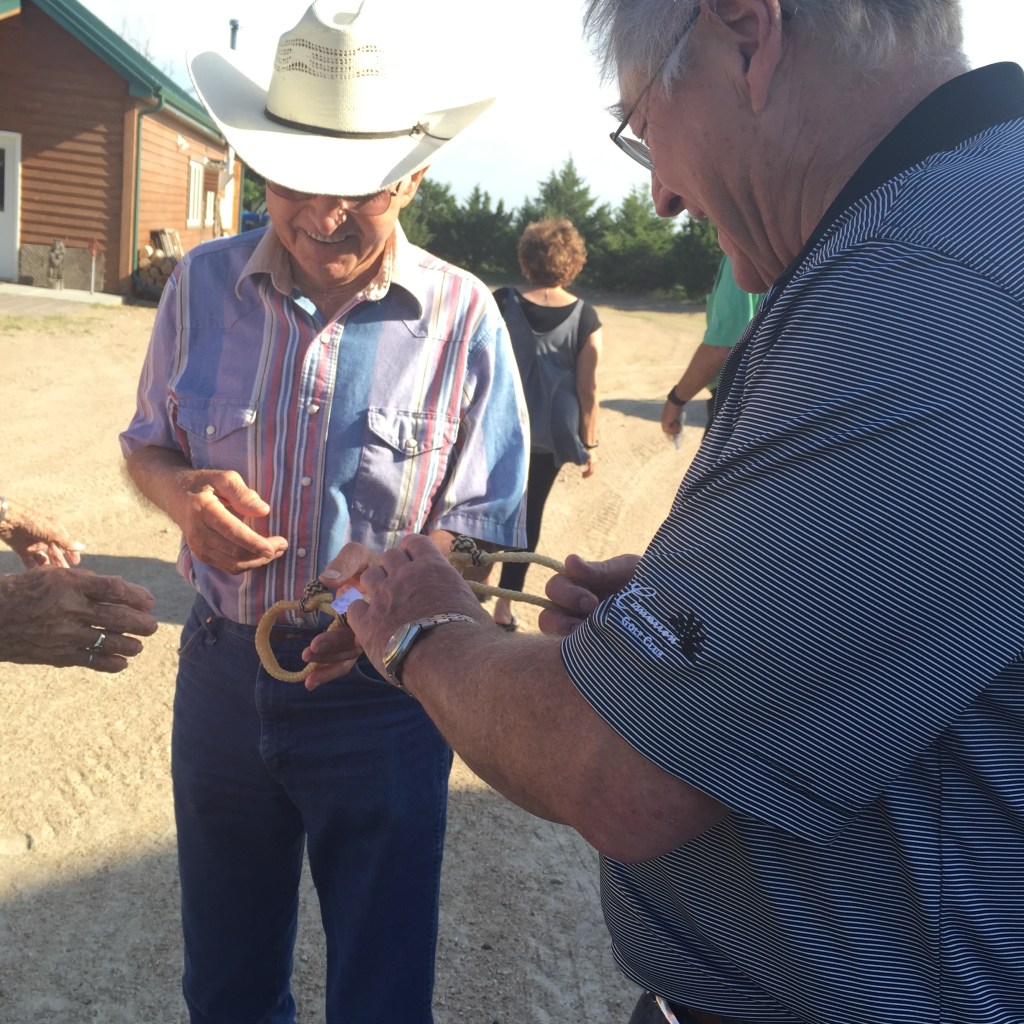
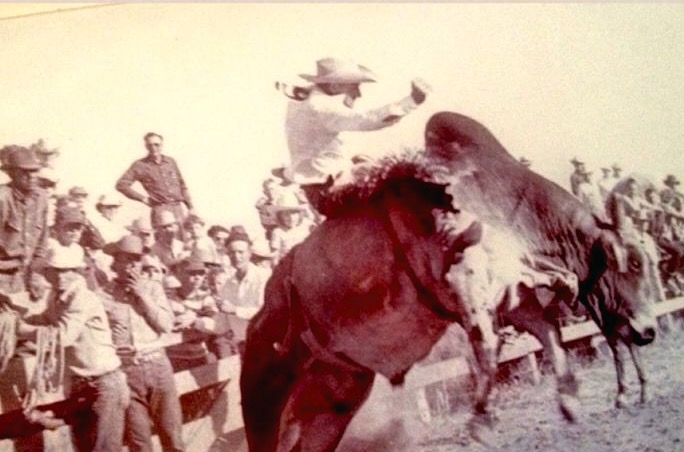
And through the day and into the evening we watched and we listened and we learned about their lives and their contributions which earned them this honor. The Nebraska Sandhills Cowboy Hall of Fame recognizes those who have made extraordinary contributions to the Western Lifestyle or horse culture in the Nebraska Sandhills in the areas of competition, business, rodeo, ranching, western arts, and western entertainment.  My brother was a rancher and bull rider, an artist who braids leather into everything from bullwhips to jewelry and a mentor to young rodeo competitors. He is a lover of the Sandhills and its way of life. And his wife was there with him in every one of his endeavors. She tells us, “I’m not a cowboy.  I just found one.”  But he couldn’t have done any of it without her.

We go to the dinner and the auction and the induction. We complain about the heat but notice that we are the “city folks” and none of the cowboys  in their wranglers and their boots and long-sleeved shirts and hats seem to be the least bothered by it – they never worked in air-conditioned offices where you have to wrap yourself in blankets to stay warm in the middle of the summer. (Maybe I should have been a rancher after all).  Nick bids on the  rawhide braided hobbles Irvin has made and donated to the fund-raiser auction but they go for over $1300 and he decides it’s too rich for his blood so he lets them go. Besides, he can always just buy another pair from his uncle and pay the $100 asking price. (sidebar:  the next morning several of  the family gathered for breakfast before we go our separate ways. Irvin arrived with a pair of the hobbles for Nick.  He had crossed out the $100 on the price tag and replaced it with this: “One day only: $1300”)

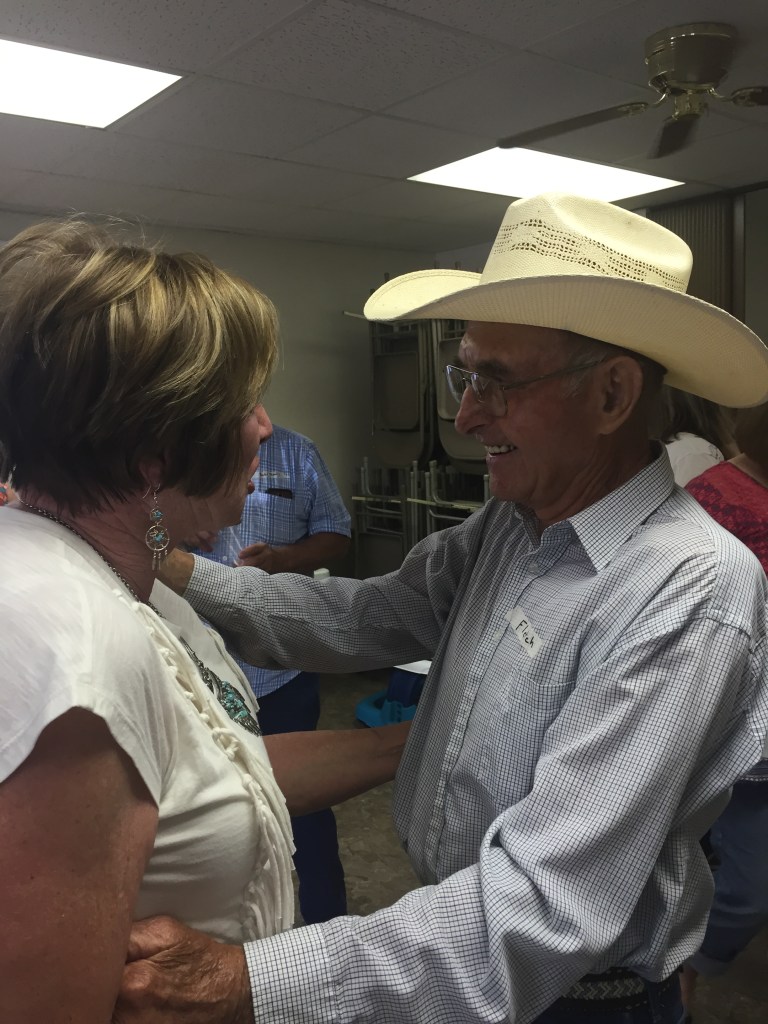
When they call Irvin and Joyce’s name we all stand to clap and cheer and whistle and the rest of the room stands with us. When you live and work and serve in the same community for 88 years, people know you.  Together this couple is well known and well loved and tonight they are well-honored.

IMG_2745
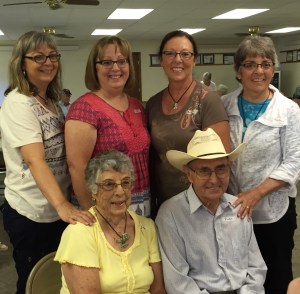
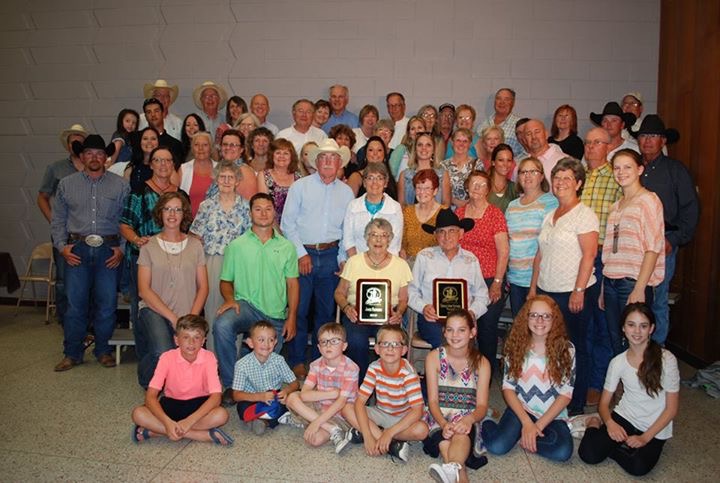
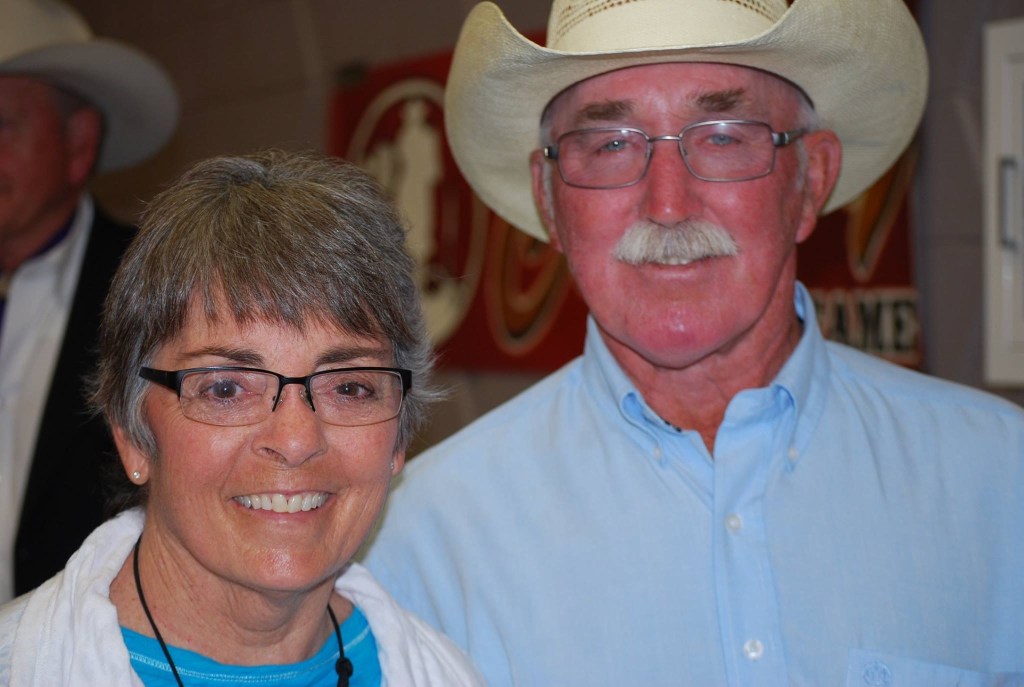
Of all the inductees, they definitely had the most people assembled for their group photo  This is some of the Fletchers and Lindermans (Joyce’s family) who cheered and whistled and celebrate their accomplishment.

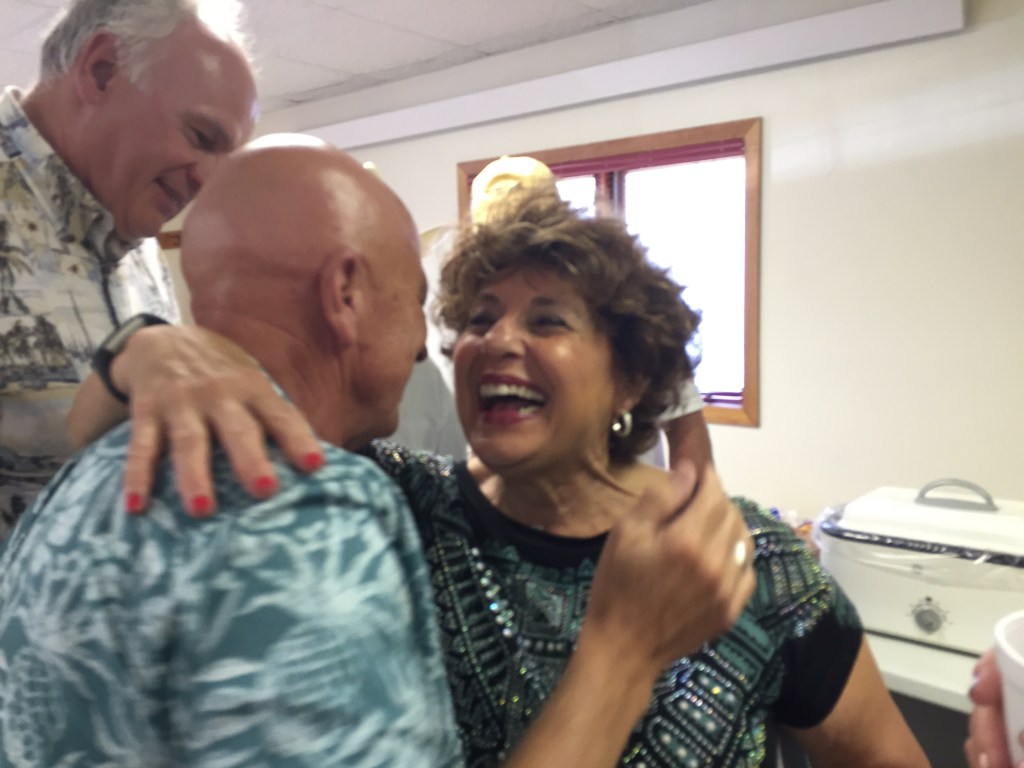
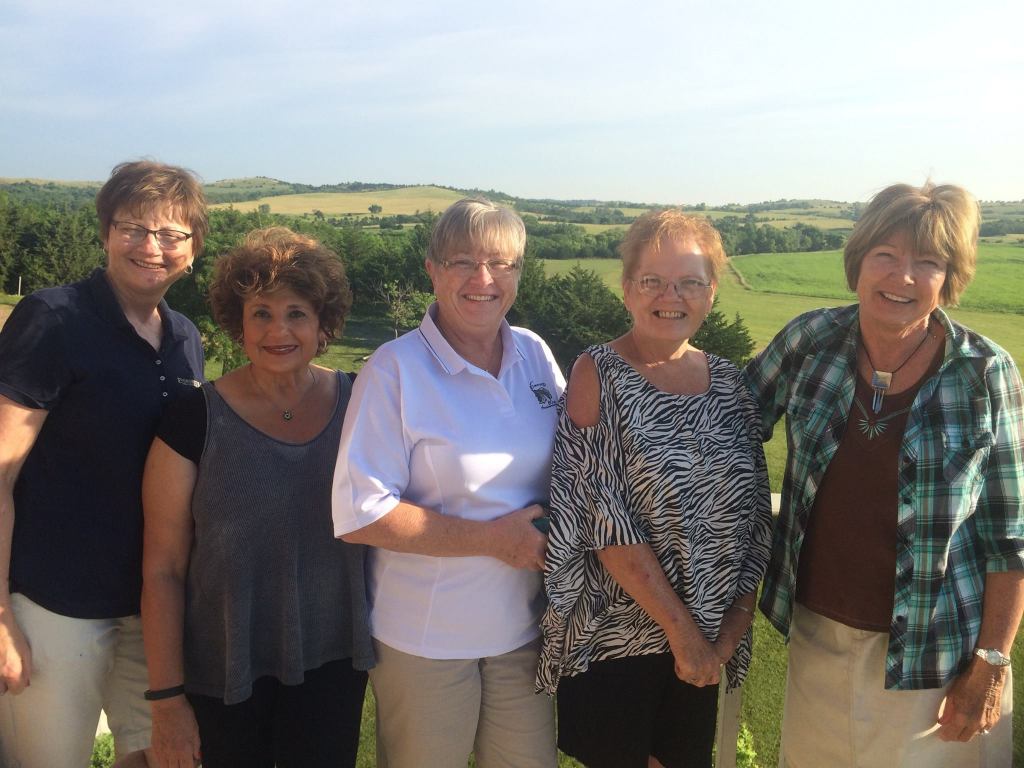
Of my parents’ six children, only Irvin and I are left.  He was the third born and I am the youngest – a whole two decades younger than he. The siblings who shared his childhood, his stories, and his memories – they are gone. But if you knew what to look for, you could find them gathered around the tables: in the face of the one who looks exactly like her mother, and the one who laughs, just like her mother, and in the voice of  the one who could say, “I remember my dad telling me about the time you and he. . .”  And I was there. I do not share his memories, but I do share his stories, as did we all.  Because in one way or another, all of us who gathered for him:  me (his sibling);  Nick and Kay and Mary Jean and Jolene and Shirley (the children of his siblings); Raeleen, Bobbie, Pat, and Cindy (his daughters ; his grandchildren and his great-grandchildren – we all come from this place and these people. And it was so good to be there. . .  together.

In 1954 it only cost a nickel to see a real cowboy; our tickets  for this event cost us $20 a piece. For that twenty dollars  we got to see a whole room full of cowboys. And more. We heard a lifetime of stories. We laughed and we cried, we talked and we listened, and we remembered again that this collection of people from so many different places and so many different ways of life – we remembered again that we are family. And at the end of it all, we knew that there would never again be a time together quite like this one.

IMG_0829
Once a cowboy – always a cowboy. Here he is, riding in the “Old Timer’s Rodeo” at 45+ years of age. Who does that??!!