Minnie Alice 

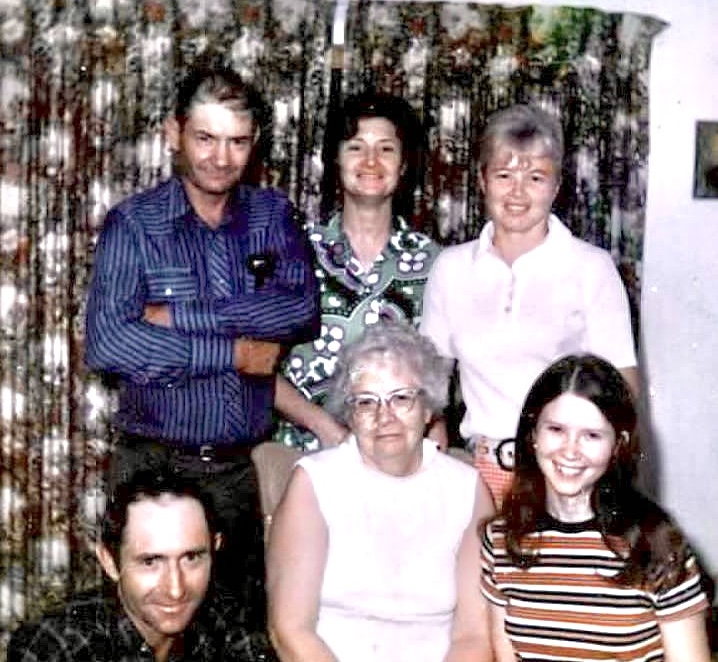
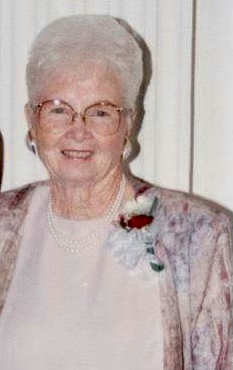
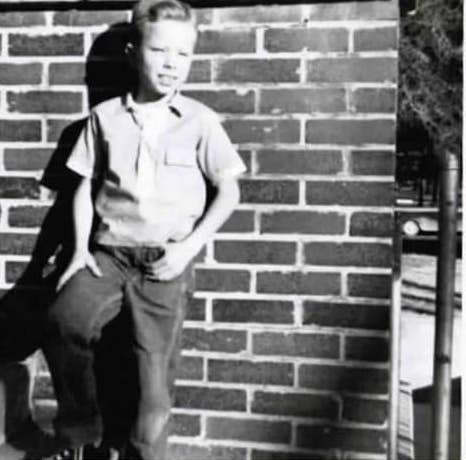
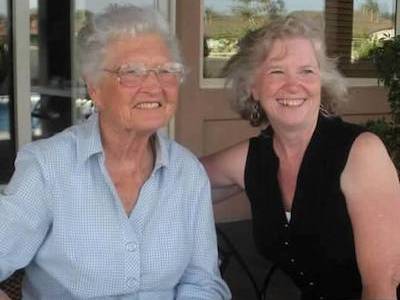
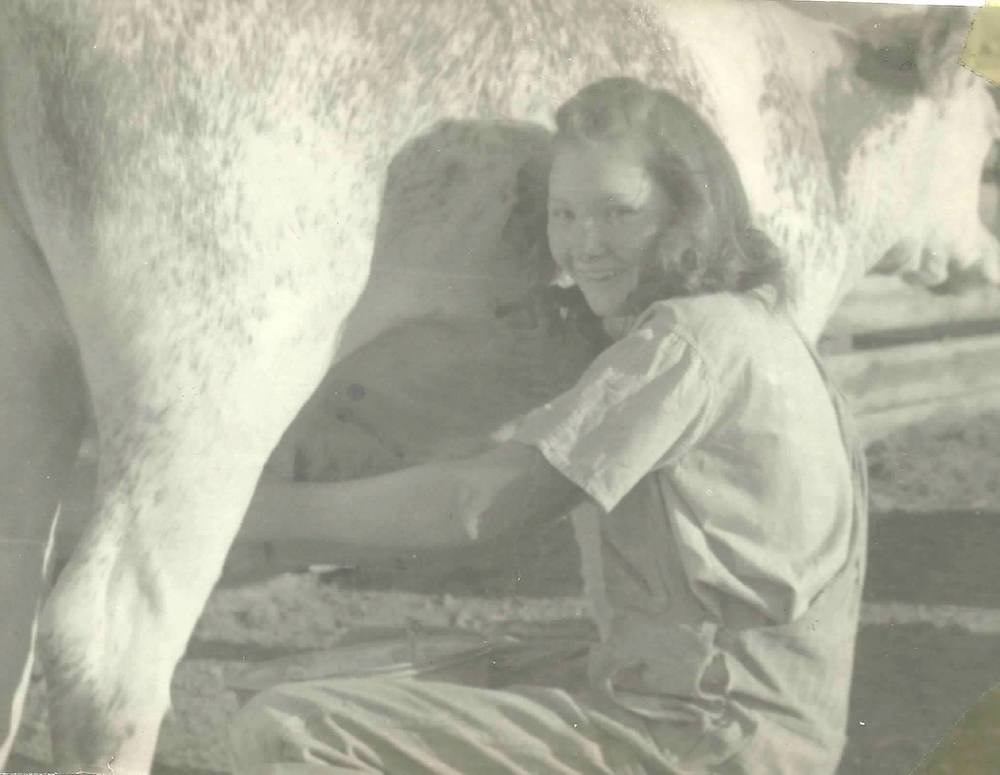
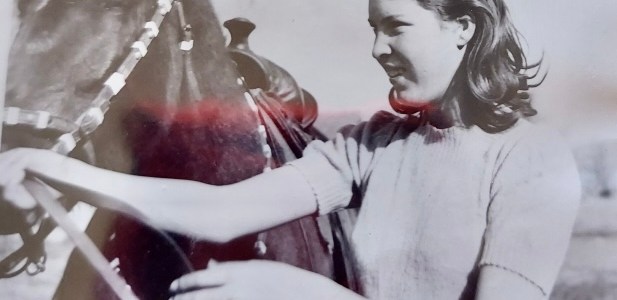
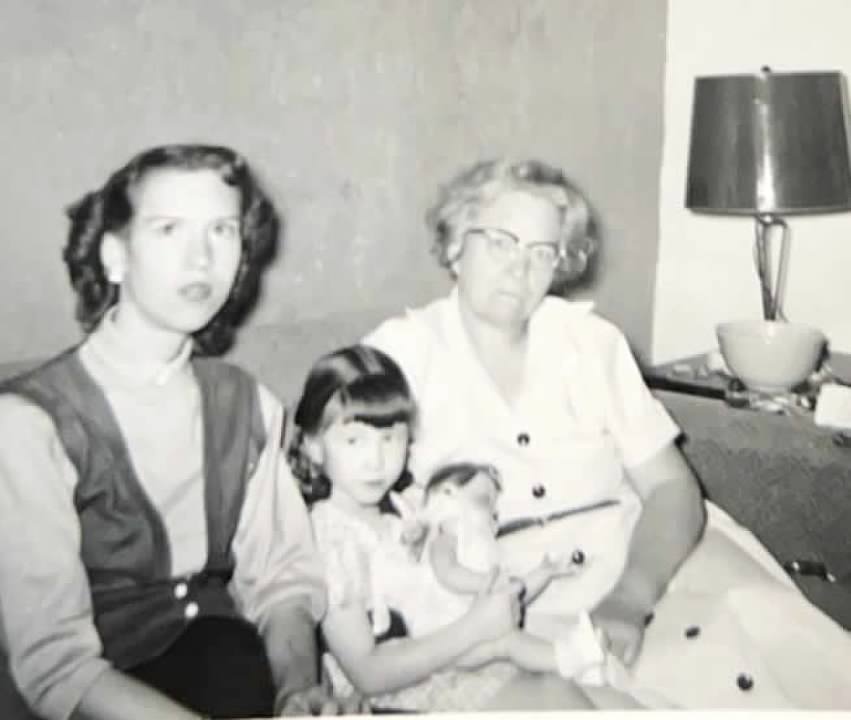
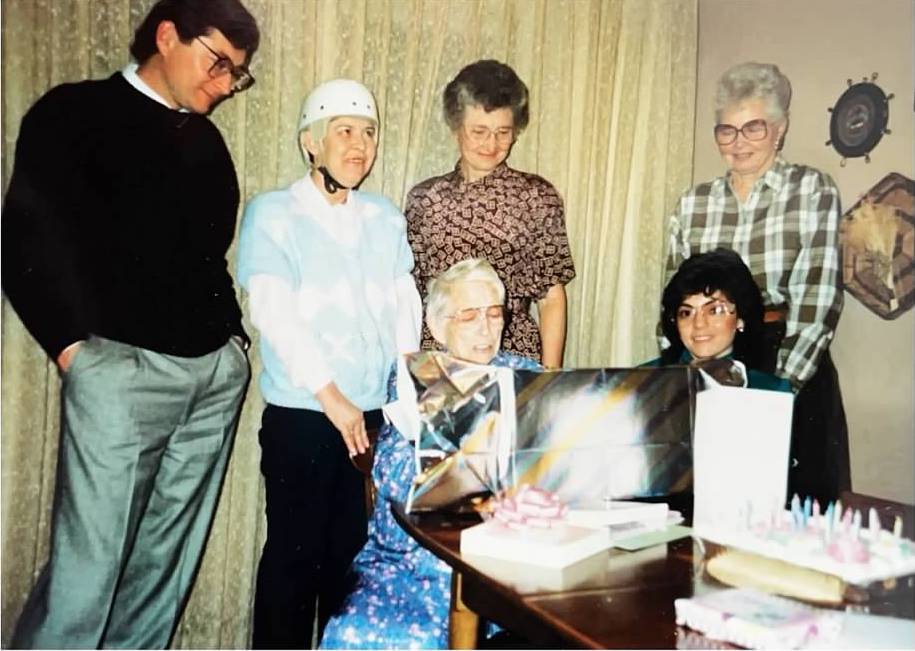
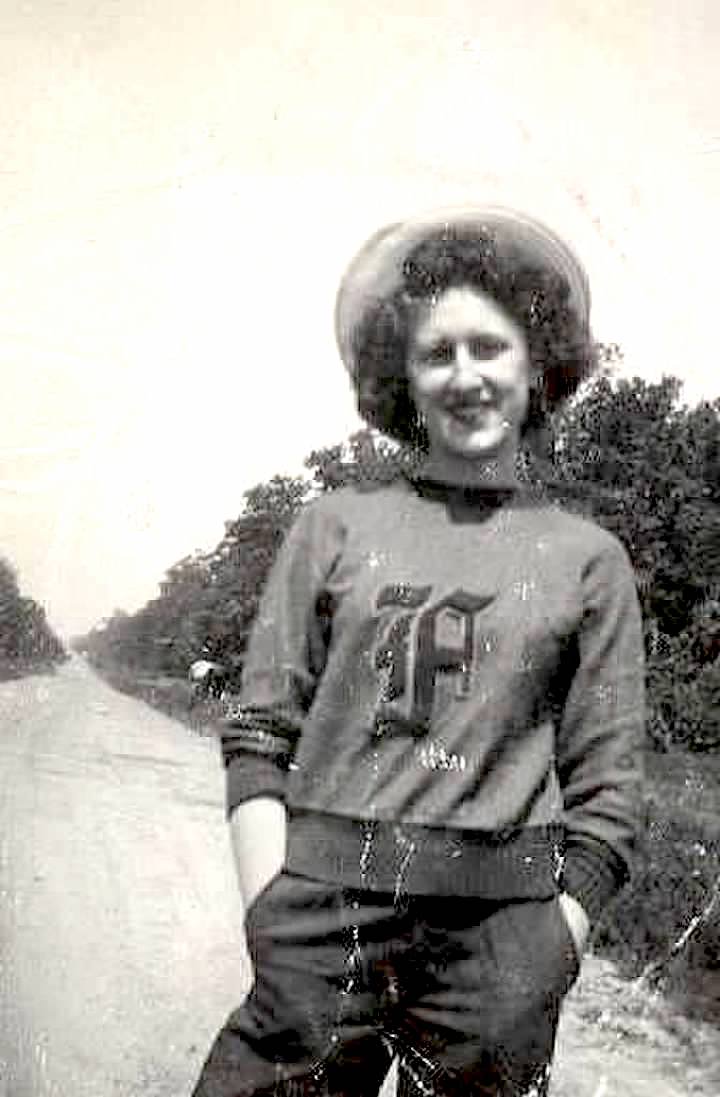
When I was little I thought my sister Minnie was a queen. She was beautiful and tall and regal and comported herself with the air of someone who should rule over a kingdom – not a farm or a feedlot. By the time I knew her, she wore her strawberry blonde hair in a french twist and dressed with the style and class of someone born to royalty. Nothing made me happier than when someone in the family would say, “You look like your sister Minnie.”  But of course, I didn’t.  I was short, had an unruly mass of dark auburn hair, and was lucky if my socks matched on any given day.  But still . . .  it was something to which I aspired.

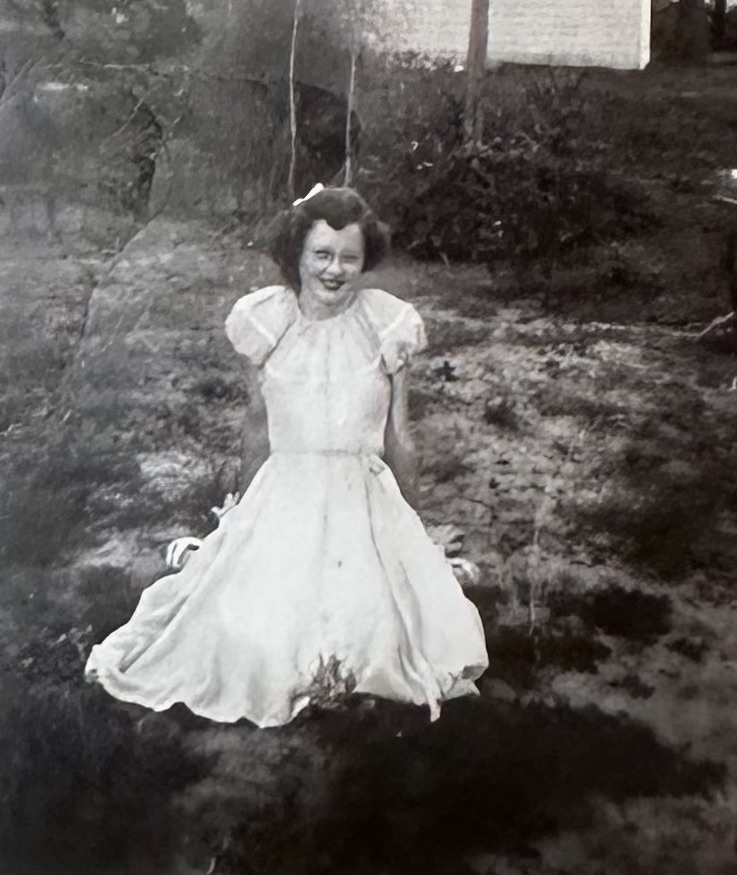
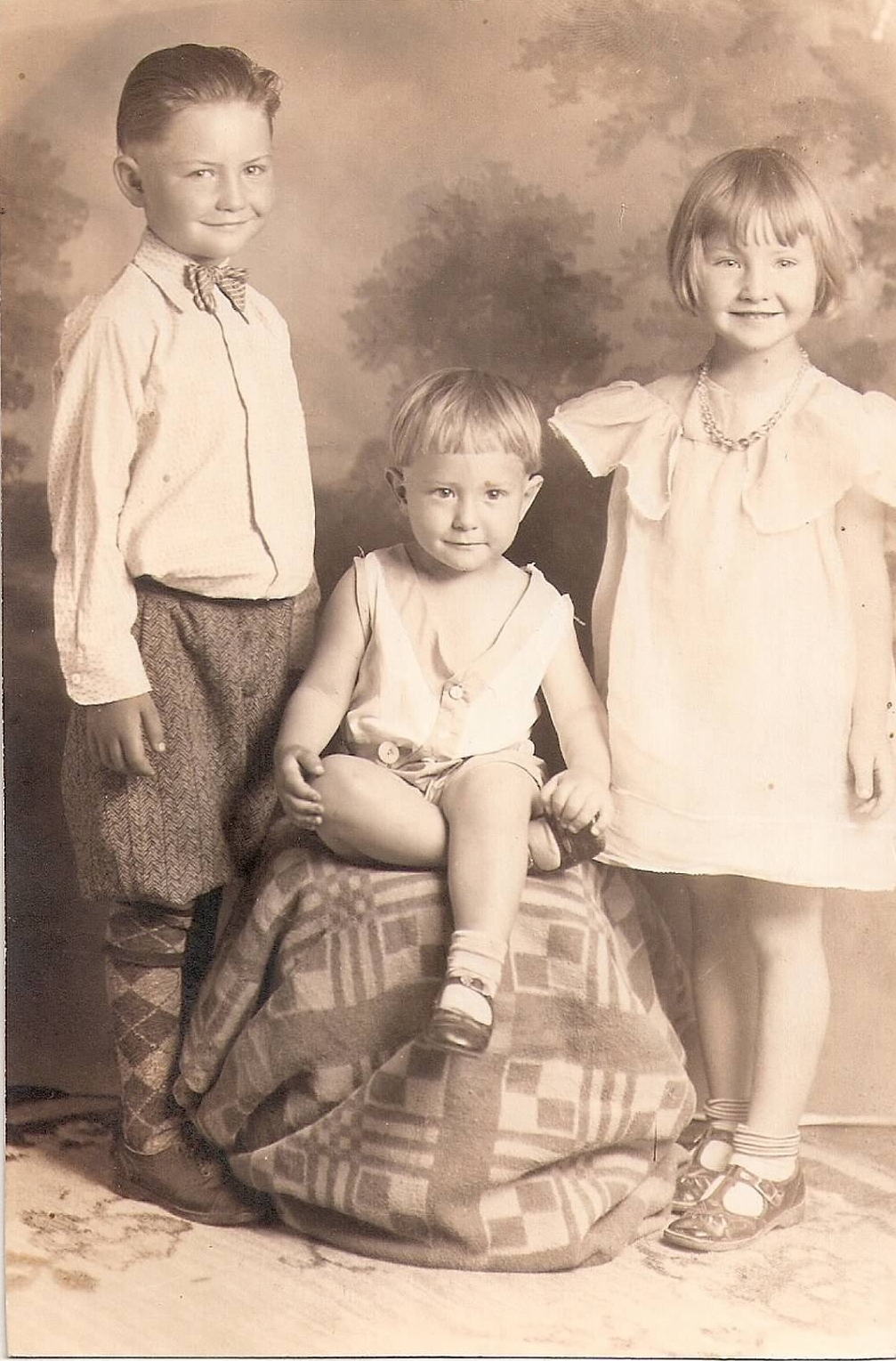
This queen-like woman who dressed and carried herself with such class was a child of the Great Depression. Born in 1931, she was the fourth of the five children my parents were struggling to feed and clothe with no job and no money. When I was in grade school I mentioned to my mother that Minnie always had such beautiful clothes. “It wasn’t always the case,” she said. “When she was your age she had two dresses to her name. I would wash one out at night so she always had one clean to wear to school.”

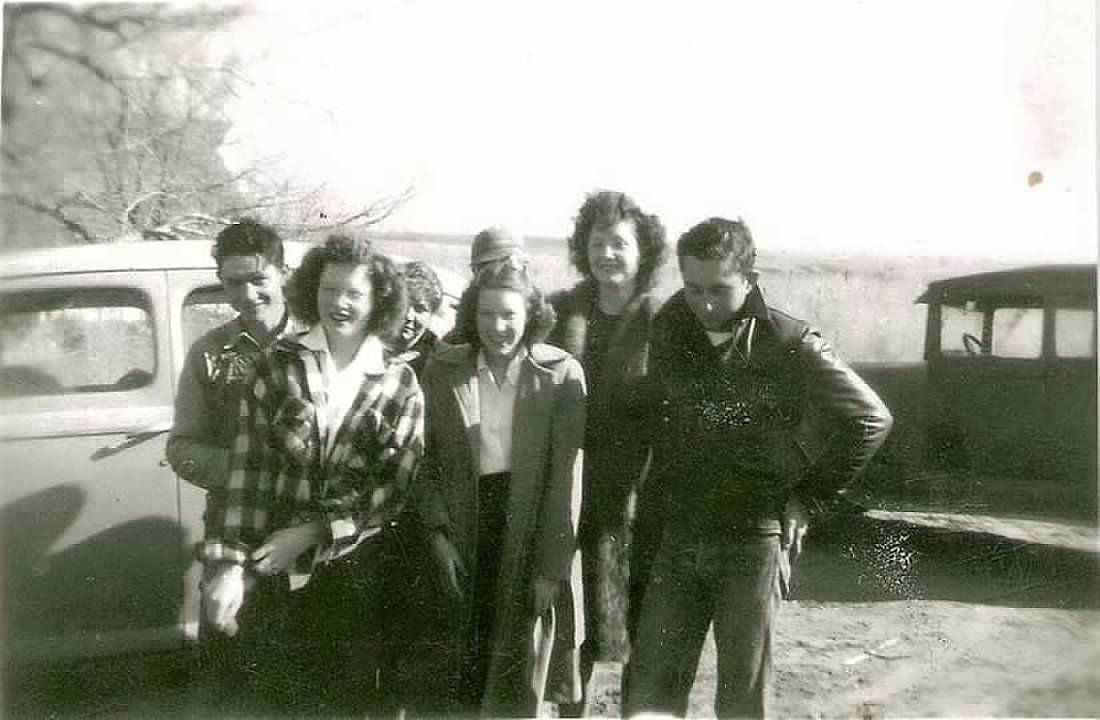
I learned from watching my sister what it meant to care for people, how to make them feel special and noticed. She did this so well. Maybe it started for her in high school when her boyfriend, an athletic young man and star of the football team came down with a virus. Before it was over, the entire team would be diagnosed with Polio. . .  a terrible disease which left  many of them with life-long paralysis and disabilities. Minnie married that high school football star and with the aid of crutches, braces, and then a cane, Charles was able to lead a normal life. She was a big part of that “normal life” part. She remained steadfast and strong throughout, as well as later in his life when he lost mobility of his legs and feet due to post polio syndrome. She was his rock for 58 years.

 What I remember about Charles from my childhood is that he was witty and smart and his sarcasm was often lost on me. He tended to scare me a little and to hurt my feelings. But Minnie was always attuned to the moment and knew when maybe he had pushed it too far and she cleverly and carefully diverted the conversation to something safer. She was like that.
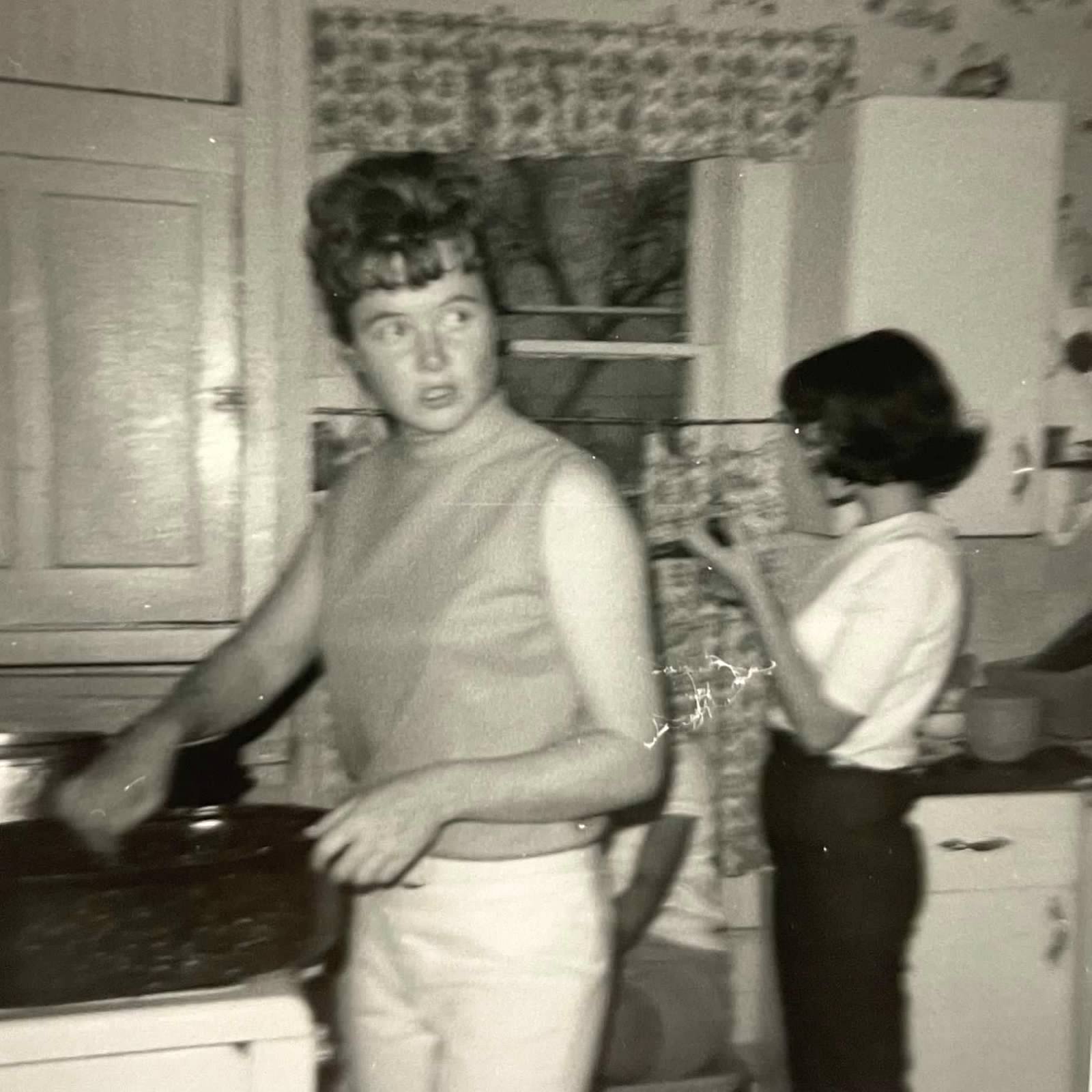
Minnie was one of the most generous people I have ever known. With her time, with her money, and with her attention. I don’t think many months went by that she didn’t drive the eight hours from her farm in Nebraska to our house in Colorado to visit my mother, my sister Lola, and me. She took us out to eat, a rare treat in those days, took my mother to run errands, and took me to buy a new dress for the first day of school or whatever the need was. One Christmas she bought me a HUGE pink stuffed poodle for my bed (something I would never have asked for because of the expense I imagined it would incur).  She asked my mother for her engagement ring setting which had been long been missing its ruby stone and for years had sat naked in Mom’s jewelry box because she could not bear to part with it. Minnie retuned it to her with a new ruby on the next Mother’s Day. She took me shopping for a rocking chair for my high school graduation because she knew I would always need a rocking chair. And the list goes on.

Sometimes her generosity combined with the age gap could create an awkward moment. Paul remembers the time we made a trip to Nebraska for a visit after we were married. We had accompanied Minnie to the grocery store. As we were waking through the aisles, Minnie reached in her purse and pulled out a quarter which she gave to Paul, “Do you want a soda out of the machine?”  “How old does she think I am? Ten?” Maybe twelve, I told him.  

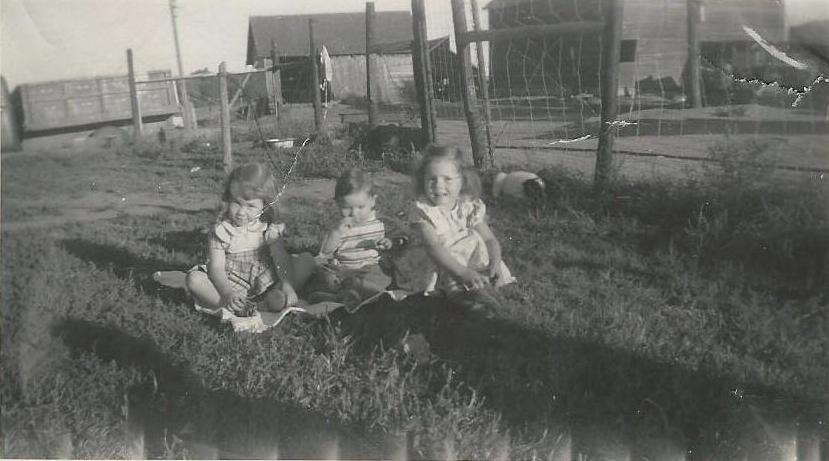
But perhaps the best gift she gave me was her daughter Shirley – one year younger than I. Our worlds were vastly different, yet we were fast friends. Shirley lived on a farm and loved all things outdoorsy, animals, and non-domestic. When Minnie and Charles moved from a house in town to the farm, Shirley was delighted – the farm came with a 30 year old horse named Sugar. Minnie became a 4-H leader and immediately signed her daughter up for” Let’s Cook,”  “Let’s Sew” and “Let’s Groom Your Room” in an attempt to get her off the horse and out of the corrals. Shirley told me once, “I can still picture the old kitchen curtains she gave me to make my quick-trick skirt. I immediately saved my allowance money and paid a fellow member to do my sewing so I could pursue my trick riding.”

When Shirley came to visit me, her mother took us shopping and to Baskin Robbins. Without fail. We rode our bikes to the little store and got Cokes and Dreamcicles and Archie and Veronica comic books and came home to lie on my bed with the big pink poodle and read our newly purchased comic books. And my mother made her peach cobbler because it was her favorite and we pretended we were sisters instead of aunt and niece. 

Shirley had a brother thirteen months younger than her. When he was in first grade his teacher told him he couldn’t come back to school until he had learned to write his first and last name. So Minnie sat him down at the kitchen table one Saturday afternoon and told him he wasn’t leaving that table until he could write Phil Smith on the paper in front of him. After a long and trying session he had mastered the assignment. But as he got up to leave she heard him say under his breath, “I’m just glad my name isn’t Marjorie Spikelmier”.  I’m sure my sister was just as glad. This was the same Phil Smith who climbed the water tower of their small town the week before his high school graduation and spray painted his name on it in huge black letters. When called to the principal’s office and asked to explain himself, his defense was, “Do you think I would be dumb enough to paint my OWN name up there?” Apparently the principal thought exactly that because  Phil was expelled and not allowed to graduate with his class. Instead he could attend graduation at a school in another small town a few miles away.  “Okay,” his mother told him, “but YOU will be the one to call your grandmother who put in for vacation for this date a year ago and tell her you will be graduating next weekend instead.” It would seem Minnie was as afraid of my mother as I was.
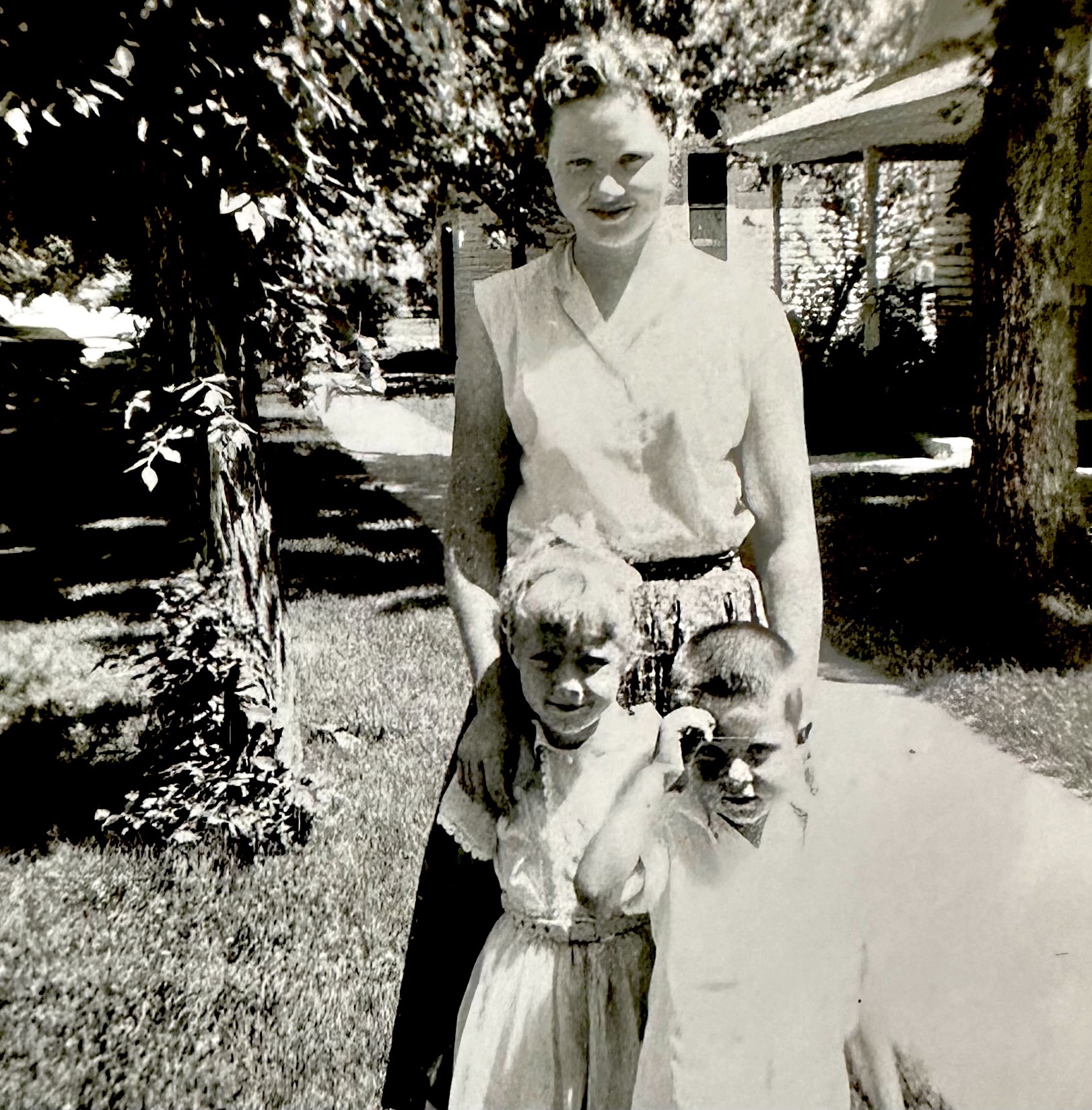
Minne, Shirley, and Phil

Eventually Charles and Minnie left Nebraska for Texas. where the weather was warmer and it was easier on Charles. They owned and operated a feed lot there until they retired, moved to an apartment building for seniors and purchased a camper which they used to  to visit the coastal areas of Padre Island, Corpus Christi, Brownsville, and many other places in Texas and Florida.  Minnie was nothing if not flexible. 

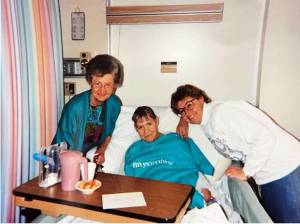
That apartment is where I went to visit her before she died. Our sister Lila and I flew to Texas to see her when Shirley had called to say, “If you’re coming, you might want to come now:” No sooner had we stepped through the door than she led us into her bedroom. “Come in here, girls. There’s something I need to show you.”  She pulled out the ruby ring which my mother had left to her when she died.  “Sherry, you should have this.” She put my mother’s gold wedding band in my sister’s hand. “And Lila, you take this.” 

It was during that visit as I listened to Minnie and Lila and Charles reminisce about growing up together and the pranks my brothers played on them and the stories they told about a time and a place and people who were not a part of my story, that I learned more about her than I had ever known in all the years before. 

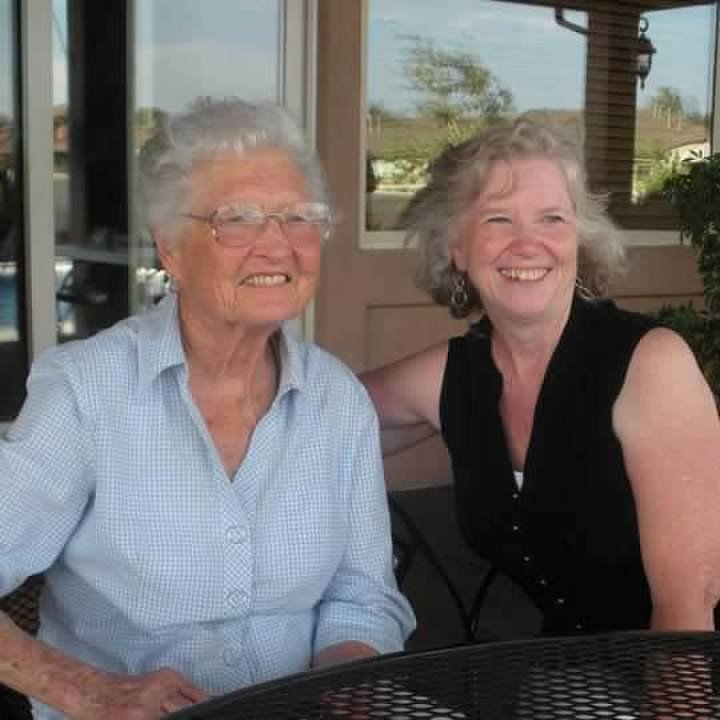
my last visit with her

I loved my sister. But what I discovered as i grew to adulthood is that I didn’t really know her. I had not grown up with her as had my brothers and sisters – had not shared their stories of poverty, of hardship, of war and life on a Nebraska farm. And she was not quick to share any of that. What I came to realize is that Minnie was a very private person. She simply did not talk much about her life or herself. When she was diagnosed with breast cancer, she did not share that information with her daughter, her sisters, or as far as I know anyone but her husband. No one knew when she had a mastectomy or reconstructive surgery. It was not until her doctor told her, “You really have to tell your daughter and sisters; they need that information”, that she shared it with us. When the cancer later returned as bone and then brain cancer, I learned it from our older sister. I called Minnie. “I’m so sorry,” I told her. There was a long pause. “Sherry, I’m so scared.” It was the most vulnerable I had ever known her to be and it broke my heart. 

When Shirley was in fifth grade, her P.E. teacher once had this woman –  the one with the perfect posture, the perfect way of walking through the world, the perfect sense of elegance – to  come to class to teach the girls to walk with style and grace. “Like Minnie.”  She was as close as our family got to royalty.  

She loved being a grandmother.
my mother and five of us
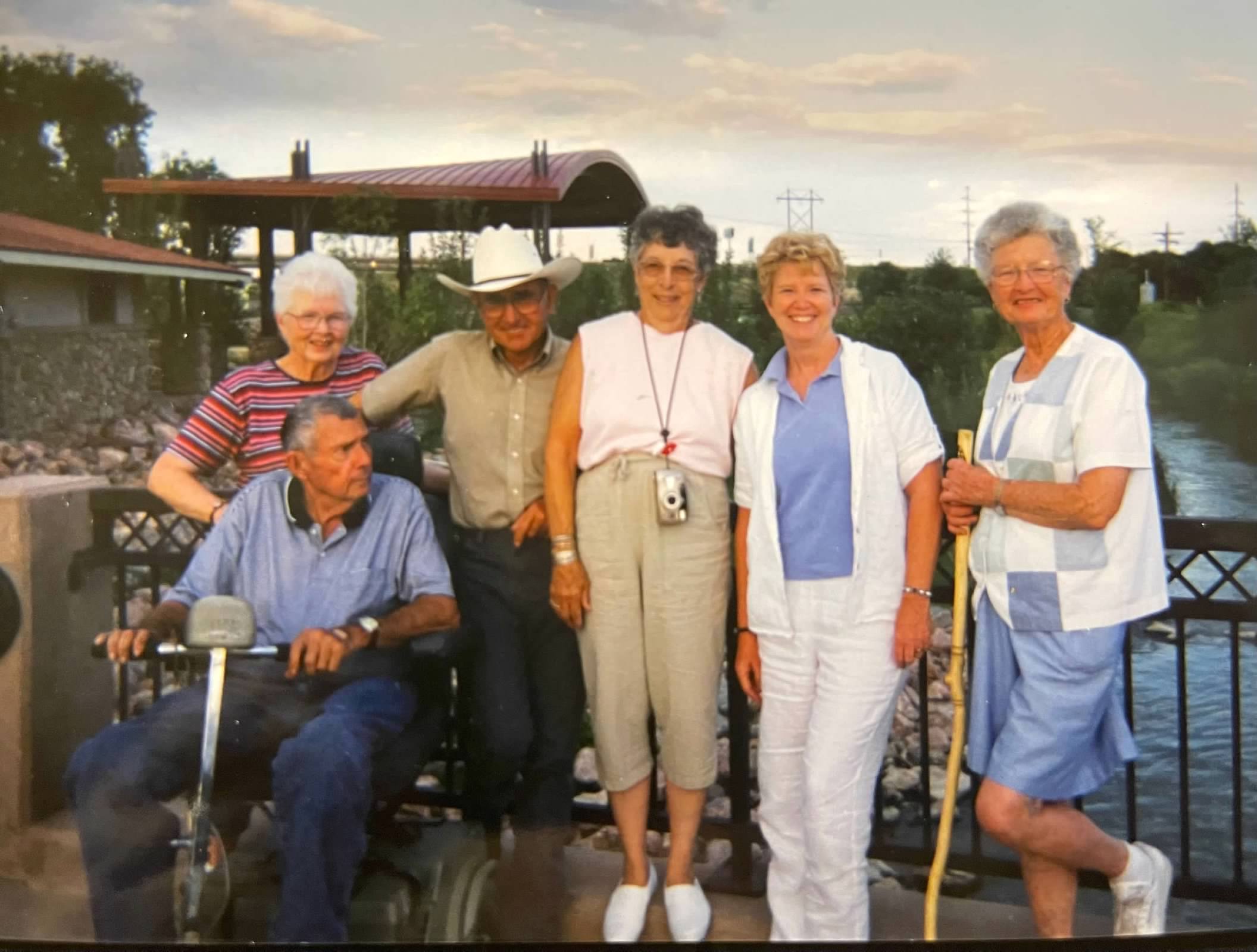
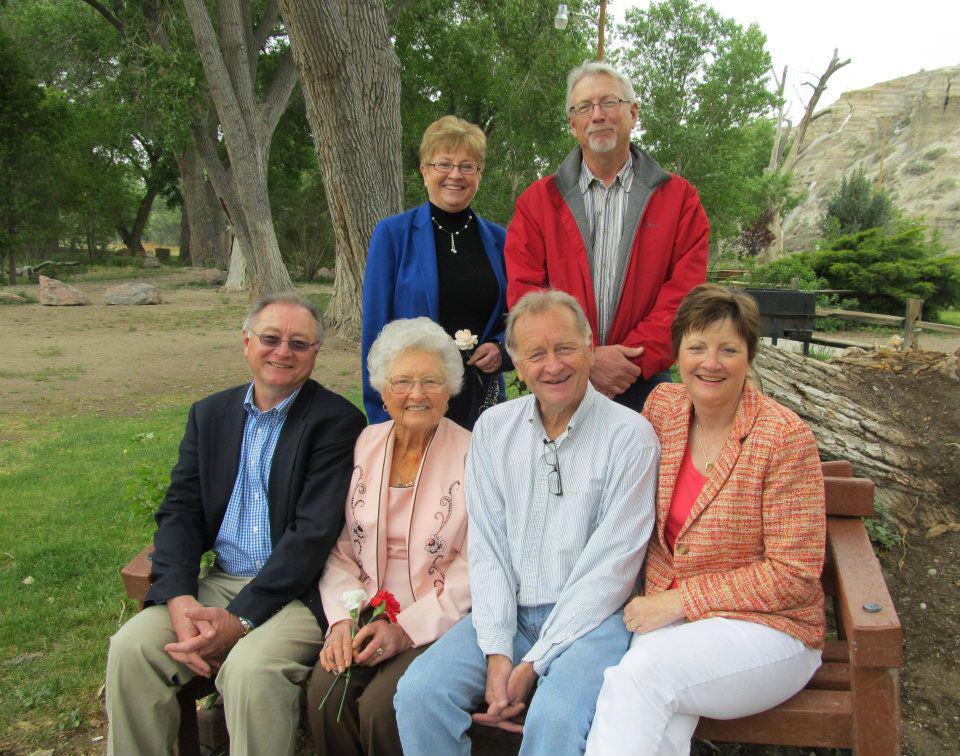
Minnie & Charles, Irvin & Joyce, Lila & me

“You look just like your sister.”
I could do worse.

Thank you to my niece Shirley for sharing stories and details about her mother’s life which helped in the writing of this piece. It helped me to know my sister better and I hope to do justice to her story. 
Where Were the Adults?

We came of age in the chaos of the 60s, lived through the incredibly bad fashion of the 70s,  and spent our childhood smack dab in the middle of the 50s. The decade of poodle skirts, roller skates you wore over your shoes and tightened with a key, of drinking Kool-aide out of brightly colored aluminum  cups on hot summer afternoons and playing kick-the-can with the neighbor kids till the street lights came on, telling us it was time to go home.  

Paul’s childhood is filled with stories that could have come right out of Sandlot or The Christmas Story. The cast of characters may change from story to story depending on who their neighbors were at the time, how many of his siblings had entered the picture by then, or whether they lived in the small town of Boone, Colorado, or had moved into the big city of Pueblo. But the starring roles, at least in the early years, are always reserved for him and his brother David, three years his senior. 

As a consumer and a recorder of the stories, rather than a participant in them, I am always struck with the same question. Where were the adults? At least in his telling of them and I think in his memory of them – they were simply non-players. Charles Schulz, commenting on the lack of adults in his Peanut’s comic strip once said, “Adults have been left out because they would intrude in a world where they could only be uncomfortable.” He believed they would ruin the magic of the strip and were simply not needed. “Adults bring everything back to reality. And it just spoils it.” And that about sums it up.

So here are some of their stories. Keep in mind it was a different time, a different life and a different world. 

The One About Starting a Business

All it would take, they decided, was a good idea, a little hard work, and a business plan. And so they collected gourds, dug up small cactus from the prairie and planted them in the hollowed out gourds. They put the finished products in a wagon and pulled it around the tiny town of Boone, knocking on doors and selling them for a dime a piece. After putting in a hard day’s work, they counted up their spoils and divided up the money. What to do when you are six years old and you have money burning a hole in your pocket? Well, you strike out for the hardware store (which happened to be the only store in town) to spend your profits. “What did you buy?”  I ask him.  “A ball of twine and a roll of electrical tape.” Oh, the possibilities. . . 

The One About the Bow and Arrow

It was Christmas of 1959. Excitement had reached a fever pitch as the four siblings dreamed about what they might find under the tree for them on Christmas morning. Maybe, he hoped, it would be a telescope – one that would let him see into the heavens and discover what lay beyond.  

A few years earlier he had hoped and prayed for a shiny red bicycle that would carry him to new, unexplored places he could only dream of. But as Christmas drew nearer his parents had explained that Dad had been out of work, money was tight, and Christmas would be smaller than usual. “IF there is a bike, it would only be one. To share.” Still, he had dared to hope. Maybe there would be a bike and maybe David would actually share it. But on that Christmas morning, under the tree, there had been not one but TWO brand new red bicycles (put on layaway months before and paid off little by little through the month of December.)  And in that moment he knew, beyond a shadow of a doubt, that there was a God in heaven. It would not be until many years later, as a young father himself with a limited budget and four young children of his own, that he would come to understand and appreciate his parents for their sacrifice.  

So this year, as the anticipation became almost unbearable, he knew that whatever was under the tree for him would surely be grand, and he went to bed with visions of the Sears’s and Roebuck Christmas Catalogue dancing in his head.

When thirteen year old David opened his Single Shot 22 Caliber Rifle the next morning, the younger brother could scarcely breathe. This surpassed all of his grandest expectations! What a  score!! And what a grown up present. This proved that they weren’t just little kids anymore. Then it was his turn. “I should have known,” he has told me.  “It didn’t have the right feel or weight to it.” But he refused to believe that whatever David got, he would not also get. However when the wrapping was undone, what he held in his hands was a toy bow and arrow. The kind with the suction cups on the arrows. It wasn’t a 22 Rifle, it wasn’t a real bow and arrow, it wasn’t a grown up present. It was a TOY. He could not hide his disappointment. “Did you try?”  I’ve asked him. “I doubt it.” “But seriously, do you think it would have been a good idea to give a rifle to a nine year old kid?”  It seems that wasn’t the point.

Later that afternoon he trudged up the stairs to his room to practice his archery skills – by then determined to make the most of a bad situation. And that’s when he shot the arrow (with the suction cup on its tip) and broke his bedroom window, missing the target on the tripod completely. With a TOY! Could Christmas get any worse? Every time he tells this story I remind him that the broken window is proof that his parents made the right choice. 

The One About Shooting Your Eye Out  

Perhaps in an effort to salvage his reputation, the next Christmas Santa left a Red Ryder BB gun under the tree. All was forgiven as the two brothers and neighbor boys set out for an afternoon of target shooting. The target was the metal numbers on a telephone pole and they paced off a respectable distance and drew a line in the dirt. “Stand here,” they told him. He missed the first shot and the second and the third. So they moved him closer to the target. He missed again. And again. They moved him closer to the target. Same result. They moved him a fourth time. This time he hit the target . . .  right on the metal identification plate. The BB ricocheted off the plate and came back to hit the shooter right above his eyebrow. Blood streamed down his face, but he had hit the target! He still wears the scar proudly to this day.  

And in the “You Can’t Make This Stuff Up” category.

By 1960 David was a teenager and had outgrown the shenanigans of younger boys. But not to worry. The family had moved to a house on the edge of the prairie where two boys lived down the street. The adventures were just beginning!

The One About Building a Raft

On a hot summer afternoon, the boys (ages, 9,10, and 11) began brainstorming about a way to cool off. “Hey, let’s build a raft and float down the river!” one of them said. And so that is what the wannabe Huck Finns set out to do. They scrounged some scrap lumber, some nails, a couple of hammers and for all I know some gray tape and Elmer’s glue. But in the end they settled for a single piece of ply wood, having run short of supplies and resources. And so Terry and Tommy and Paul drug the “raft” two miles from the building site to the river – a half a mile of that being along Interstate 25. . .  walking along the right side of the highway . . . with the traffic. When they reached the river and found a place to launch the raft, they put it in the water and climbed on. It sunk. They tried again. And again. Finally they abandoned the raft, watched it float  down the river without them and settled for skinny dipping in the Fountain River. 

They were now faced with the two mile hike home. But as luck would have it, they were trudging along the side of the highway when they noticed something being tossed out the window of a big Cadillac as it sped by them. When they went to investigate, they could not believe their good luck. The treasure was a half smoked cigar, still lit. And so the boys sauntered along, taking turns puffing on their stogie, returning home a little green and only only a bit worse for wear. 

The One About Riding the Rails:   

Train tacks ran across the prairie and it was’t unusual to see men sitting in a boxcar with their legs dangling over the edge. They would ride from town to town this way as a means of getting from one place to another without buying a ticket. And so one fine summer day, the boys hopped a freight train, sat with their legs dangling over the edge of the box car and fancied themselves living the life of a hobo. And maybe they thought to themselves, “This is the life!” at least for their two-block train ride.  

The One About Building a Bomb:

Before the days of the internet, learning something new was was more a “trial and error” kind of thing. It must have been sometime around the 4th of July because they had found some firecrackers. From someplace else they found some shot gun shells. (Again, one might ask, where were the adults??)  All they needed now was some gasoline and “hey. . .  we could make a bomb!!” So they took the supplies, headed out to the prairie with an empty coffee can and found a little cave dug into the sand where they could “safely” create the explosion. One of them had matches (of course) so they lit the gasoline and then ran for cover to watch it blow up. But for whatever reason – the gasoline had soaked the firecrackers and they never ignited, the shotgun shells were duds, or God in heaven took pity on three stupid boys – the gasoline burned itself out, there was no explosion, and they lived to go on to other adventures and grew to be old men with great stories.

So where were the adults? God only knows. Paul’s just glad that his parents aren’t around to read this. It could only make them uncomfortable .

No girls allowed (That would be their sister Beth under the box).

The Maker and the Keeper of My Memories

Lila and the boys

I, Lila Rae Fletcher Gradisar, was born Nov. 21, 1926, on a farm in Hayes County Nebraska about 6 miles east of Wauneta. I was the first daughter and second child of six children of Hazel Barnes Fletcher and Ray Fletcher. I was born at home . . .  in a very small house having a room which was used for kitchen, dining room and living room and two bedrooms. My earliest memories are of taking our Sat. night bath in a wash tub in front of the kitchen stove. The water of course had to be pumped by hand and carried inside and heated on the stove.”

Thus begins one of my sister Lila’s accounts of her childhood and our family history. When she died in 2013 at the age of 86, we discovered pages and pages of her writings in a trunk in her house. Many were handwritten in Big Chief tablets, some were typed on a typewriter, all contained details of a life and a family that would otherwise have been lost. It was after I returned home from that trip that I started to record and preserve these and other stories that might some day be of interest to my children and grandchildren. 

She wrote of what it was like to be a child, growing up during the Great Depression. Of the struggles my parents had when they lost the farm and struggled to feed their family. Of her first day of school in the one room school house and how she cried when the school burned down over Christmas vacation because now how would she ever learn to read? Of what it did to my family when my brother Don was missing in action in World War II. Of the fear and uncertainty they lived with during the Polio Epidemic. And she wrote of my father’s last days and words before his death in 1954 after a car accident left him paralyzed and lying in a hospital for sixteen days while she and my sister and mother sat by his side. All of this gives me insight into where I come from. And I am in her debt.

My memories of her come much later than any of these stories.

After my father’s death, my mother and sister Lola and I moved to Pueblo, Colorado, where Lila lived with her husband and family and worked as a nurse. Lila’s original plan had been to move to Denver after her high school graduation to attend nursing school, but she delayed this by a year to support her parents as they waited on news about my brother. However, when Don returned home from the War, she was off to live her dream. By the time we arrived, she was well established in her career.

The day after she finished nursing school, she married Tony – the tall, good looking guy she had met on a blind date the year before. The tall part was important to her since she was tall herself. And even after age had put a few pounds on him and grayed her once auburn hair, she always called him Slim and he called her Red. They were married 52 years.

Tony’s parents were first generation Americans who immigrated from Yugoslavia, whose first language was not English, who ate foods the Fletcher clan had never heard of (It was from her mother-in-law that Lila learned to make the Potica that has been a part of every holiday gathering I can remember) and they were Catholic. But whatever conversations came before, by the time Lila decided to marry her tall, good looking guy, my parents had made their peace with it.  

In a letter to my mother explaining her engagement she wrote:

“I was just thinking the other day how disappointing kids must be to their folks. You work like heck for years to get your kids through school, then instead of getting a job and supporting themselves for awhile they get some crazy idea like going to school for three more years.You think now after this is over they can really make something of themselves etc. so as a last straw they get married the day after they finish. Gee this all could be so much different. You could refuse to speak to me and make a big fuss about it. I want you to know how much I appreciate you being so swell about it …

Much later Mom told her, “I’m glad you and Tony are of the same religion and are raising your kids in the church. I wish we could have done that.” My mother was a Methodist and Dad was Church of Christ, but apparently “church” was not something they did together as a family. By embracing her husband’s rich Eastern European culture and faith, she brought together their two backgrounds and her children were better for it, as were we all.

In Lila’s writings I see the woman I came to know much later in her story:  tenacious yet gracious; determined yet flexible; deeply committed to family and also to her career and her community; selfless yet understanding of the need to take care of herself; and a life-long learner. 

Like the little girl who cried when her school burned down, she never lost her love of learning.

In her retirement, she traveled with senior groups to places all over the world, staying in “elder hostels”. She joined a women’s investment group and learned the stock market. When her aging joints complained about her continued participation in the Senior Running Club, she contacted the local Agency on Aging to ask why Pueblo didn’t have a program for Senior Walkers. “Because no one has started it.” And so of course the Senior Challenge Walkers was born. She believed that the camaraderie and friendships were as important as the exercise “and of course, the nice breakfasts”. When she was no longer able to be a part of the walking part, she still met club members for breakfast after their walks.

My sister never learned to swim – if I remember correctly she had a terrible fear of the water, perhaps stemming back to being thrown into the lake by our brothers to “teach her to swim”. But in her 40’s she was determined to learn, so she signed up for the beginners adult swimming class at the local pool. After one four week session she had made very little progress. The end of the second session found her no further along. She registered for the third session. When the instructor saw her walk in he sighed. “Lady, you don’t need a swimming instructor, you need a psychiatrist!” But learn to swim she did – at least enough to feel comfortable in the pool with her grandkids.

She started attending her first Bible study in her 70’s.

When her son moved to Washington state and started having children, she researched how to stay connected to grandchildren who live far away. How do you even do that kind of research before the internet?! But she was the most connected grandmother I ever knew.

She took a course through the county (one of many she did over the years) about recording your memories and this is when she began writing the papers that we later found in the trunk.

I remember one year showing up at her house for a Thanksgiving or Christmas dinner. Up to this point holidays had always meant that the women spent the day in the kitchen cooking and cleaning up, the men spent the day in the family room watching sports or napping, and the kids did whatever they chose. This year Lila was standing at the door with a bowl of folded up papers, with a task written on each one : set the table, bring the chairs up from the basement, clear the table, wash the pots and pans, load the dishwasher, put away the leftovers, sweep the floor. . . and so it went. And nobody got by her without taking a paper. She just woke up one day and decided – this is crazy! Things have got to change. And so she changed them.

Like I said – a life long learner.

Lila had five kids, one a year older than me. We grew up together and though we lived on opposite sides of town and attended different schools, we spent a lot of time together. All my childhood Christmases and Thanksgiving were spent at their house. She would often stop on her way home from work on a Friday and take me to her house for the weekend where I would have playmates. Any “vacations” I took as a child were with them – usually to Nebraska to visit family but once we went to a cabin up in the mountains for a week. One summer the boys worked really hard selling  magazine subscriptions  to earn their way to a summer camp. But when it came time to go, they backed out so my niece Kay and I got a free week at sleep away camp.  I’m not sure we really liked it all that much but when we got home we were quick to tell the boys how great it was! 

She got me my first job the year before I started ninth grade – nannying for a friend of hers with five kids under the age of six. She helped me make craft kits and games to play with the kids to keep them entertained. I would stay at Lila’s during the week and she would take me to my job and pick me up and then take me home on the weekend. I don’t know if I ever worked harder at a job in my life. But with my earnings I bought myself a new dress that my mother would never have bought for me because it was so expensive and wore it  to my first day of Junior High and I could not have been more proud.  

When my nineteen year old, newly engaged self announced that I was getting married, my sister Minnie came from Nebraska and she and Lila jumped into the wedding planning – I’m sure to spare my my mother. “Where is the wedding going to be?” they asked. I explained we would be married at the church Paul and I were attending. “How big is it?” Plenty big. “How many guests? Hmmmm, maybe 100. 150 tops. (I think 200 showed up) “Where will the reception be?” The church basement. And this is where the sisters exchanged worried glances and suggested we go take a look. The church basement had a few small Sunday School rooms around the perimeter of a small “Fellowship Hall” that fit maybe 50 people. Minnie said, “Oh, Sherry, this won’t work. Let’s look for a reception venue somewhere nearby.” No. We’ll do it here. There were other suggestions made and I vetoed them all. Then Lila said, “Sharon, we cannot have the reception here. This is not an option.” To which I said, “Fine. We can have it at your house.” And that’s how it came to pass that Lila spent the summer of 1969 repainting, re-carpeting, and redecorating her house. A house, by the way that was NO where big enough to accommodate the guests. If it had not been a beautiful September evening where all the people congregated and mingled outside, I have no idea what would have happened. God bless her. And I’m sorry.

Her legacy

I asked one of her daughters what she thought her mom would name as her greatest accomplishment. “I think she’d say it was raising kids who all like each other and became friends. And her bond with her grandchildren. ” I would agree. I love that every Sunday her kids, even to this day, get together for breakfast. I could wish for no better legacy.

Someone once said to me, “When I watched her with Nick. I was sure he was her favorite. But then I watched her with Ray, and I thought – no he’s the favorite. Until I saw her with Kay or Greg or Mary Jean. And finally I realized – they were ALL her favorite.” I hope somebody will say that about me someday.

She was the keeper (and the maker) of my memories. She told me stories of our family before I was a part of it:  the events that shaped my parents into the people they became and who my father was before he died and my mother before she grew old. She told me stories so that I would know who my siblings were as children and she included me in her own tribe of five, making a place for me and trying to help me find an identity in a family where my siblings were the age of my friend’s parents and my nieces and nephews were more like cousins.

By watching her I learned that it’s not okay to settle. That you have to fight for the life that you want whether it means leaving your small town and striking out for the big city to become a nurse, being a working mom before it was in vogue, or learning to swim and ski after you retire. She taught me that you do the right thing – even when it’s hard or inconvenient: caring for an aging mother, a handicapped sister, a grandchild in need  of a fresh start. She taught me  to embrace tradition and welcome new adventures.

She was the nurse who helped my mother birth me into this world and one who knew my story from the beginning.  And now it is left to finish the story without her.

I Wish . . .

We both had red hair – a dark auburn really. Much like our mother’s, I think. She had brown eyes; I had blue. We grew up in the same family; sort of. She lived out her childhood in a family with both a mother and a father in the home, surrounded by four siblings only a few years older than she. From the age of four, after my father’s death, I grew up in a home with a single mom and her:  a sister seventeen years older than me. She was born in the middle of the Great Depression and I was born at the beginning of what some called the Golden Age – the 1950’s.  We shared a home, a family background, and genetics but though I know ABOUT her, I really didn’t  know HER. And that’s on me.

This was the five of them.
And then there were the two of us.

Her name was Lola Irene. I have no idea why she was given that name – maybe because my mother liked the sound of it. I do know that it wasn’t until years later that my mother realized she had done the very thing she disparaged my grandmother for. My dad’s name was Ray. He had a brother named Roy. My mother told me, “I wondered why anybody would be so stupid as to give two boys in the same family such similar names. It led to no end of confusion – for everybody!” Then one day – when it was too late to do anything about it – she realized she had done the same thing with two of her daughters: Lila and Lola. I think after that she always cut my grandmother some slack.

When Lola was five days old she contracted whooping cough. She ran a high fever for days and though my parents prayed fervently, they did not expect their baby to survive. They would not have been the first family they knew to lose an infant to one of the many diseases that every parent of that generation feared. But at last the fever broke; their baby had survived. It would not be until later that they would understand the aftermath: the high fever plus the whooping cough had caused brain damage resulting in permanent physical, intellectual, and developmental disabilities.

As a child, my sister often experienced petit mal seizures, though neither the doctors nor my parents understood what these were. They grew used to her “spells” as they called them: periods of time where she stared into space unseeing and unaware of her surroundings. Nobody thought much of it; maybe she’s daydreaming, they said. It wasn’t until she was 20 that she had her first grand mal seizure and was diagnosed with epilepsy. Though medication (which could have terrible side-effects) kept them somewhat under control for periods of time, these seizures would worsen and continue for the rest of her life and became debilitating and dangerous.

Our older sister Lila had moved from Nebraska to Denver a year out of high school to attend nursing school. There she met her husband and they settled in a town south of Denver – Pueblo, Colorado. I think it was in the fall of 1953, Lila brought her children home to the farm for a visit. Lola was sick and getting sicker every day with fever and terrible muscle aches. Lila insisted they take her to a hospital about an hour away. It was there they diagnosed her with polio and she had her first grand mal seizure which led to the diagnosis of epilepsy. It was a scary time for all of them, but once again Lola pulled through and though the polio left her limbs weaker, she suffered no paralysis. Because we are all shaped by our stories, I think this is the reason that I am a believer in vaccines. My sister Minnie’s husband also contracted polio as a teenager and as a result wore a brace and walked with a cane the rest of his life. Neither the whooping cough nor the polio vaccine were available to them; I’m glad they were for my children.

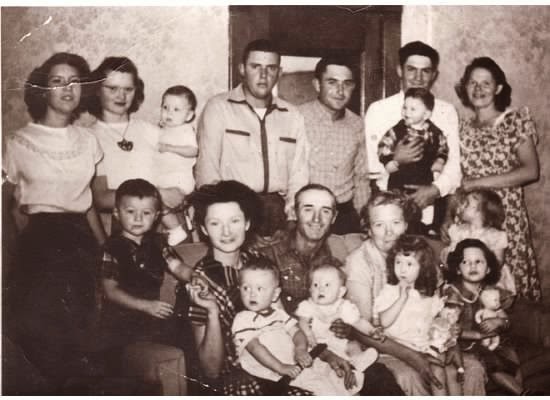
My sister Lila was home for a visit. My brother was home from Korea and the family wanted a picture. The next day, Lola
( top row far left) would be taken to the hospital and diagnosed with Polio.

I don’t know when I learned all of these details. Somewhere along the way, I’m sure my mother shared them with me to help me understand why Lola needed extra care and why she couldn’t do all the things other grown ups could. Why she couldn’t live by herself or drive a car or get a job. Why things that seemed easy and effortless to me were harder for her. Back then we used the word handicapped. Today we would say disabled, a term I have only recently learned the disabled community prefers to special needs. It’s interesting to me that so often terms that start out as a straightforward definition become loaded and stigmatized until they are avoided altogether and replaced with something new until later reclaimed by the community. 

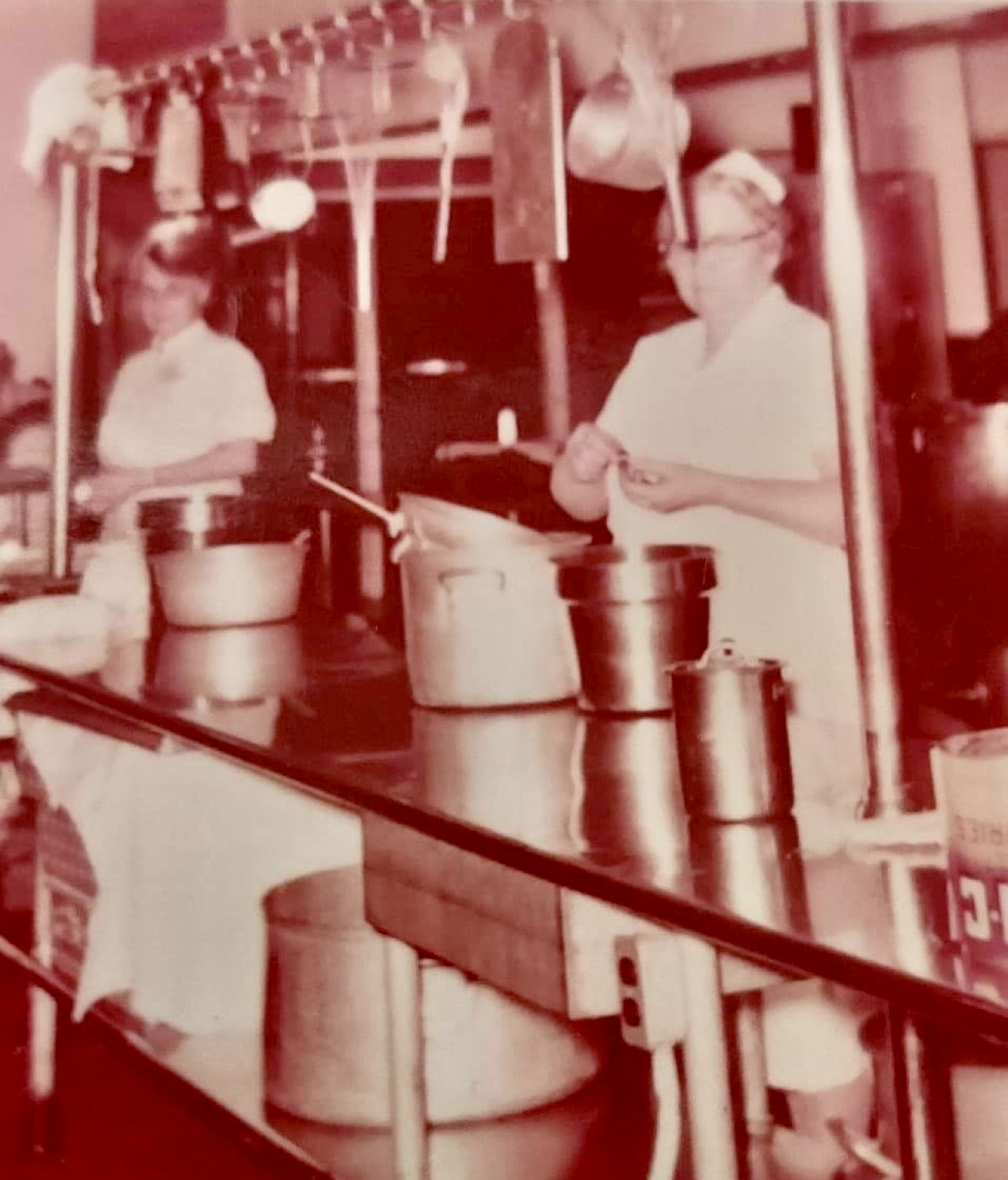
In 1954, after my father’s death, my mother moved with Lola and me to Pueblo where she could find work to support us while being near Lila. After the first year or so we bought a two bedroom house near the hospital where Mom had procured a job as a cook. My mother and Lola shared one bedroom and I had the other to myself. It never once occurred to me why this was the arrangement, and I never thought to ask. But now I wonder – how did that feel to a 22 year old woman to be sharing a room with her mother?  But I never remember her complaining – though I’m sure if the tables had been turned, I would have raised all kinds of hell.  

This picture had to be taken shortly after we moved to Pueblo. We all have that dear-in-the-headlights look.

I remember there was a period of time when my sister had an unofficial job. She was a companion for a lady in a wheelchair and she would go to her house and fix her lunch and hang out with her so the woman, whose name was Esther, didn’t have to be alone all day. And sometimes from time to time I would go with her and we would put together puzzles and Esther let me use her typewriter and I felt so grown up. Did I ever tell my sister that?  Did I ever tell her I appreciated that she let me do that?  I don’t think I did.

Later she worked at the Goodwill. She seemed happy there. Maybe she felt like it was a real job and she was doing real work. She got a paycheck and money of her own and she made friends. I don’t know how long she worked there or why it ended. My guess is that the seizures made it difficult and my mother was anxious about it. I never asked her and we never talked about it.

The truth is, I don’t really remember talking to her much at all. As I got a little older I think I  felt like we didn’t have much in common.  I had my friends and my life  and her life was so . . .  different than mine. I couldn’t relate to her and I didn’t try and that’s on me.  

I have very little memory of what anyone got me for a wedding present except this:  Lola gave me a little Correlle teapot. She knew I liked tea. I have no idea how she knew that except she clearly paid more attention to me than I did to her. When I got married and moved out, I know that was a hard time for her – not because she missed ME really, but I think she felt like she wanted her own place and she wanted her own life, too, And she didn’t want to live with her mother forever.  My mom knew her daughter could never live on her own and she would not put her in a “home” as she had seen others do with their “handicapped” children. But Lola persisted. 

I don’t know it for a fact but I am guessing that it was Lila who persuaded my mother that Lola needed something different and that she deserved to live as independently as she possibly could. I’m sure there were also hard conversations where Lila made my mother come to grips with the fact that Mom would not always be around to take care of her daughter. . .  and then what?  So Lila started looking and they found a place in Colorado Springs – only 30 minutes away from Pueblo – where Lola could live in a little apartment but there were people there to look in and help when needed. And if the time ever came – which it did – that she needed more care, she could move into another wing where more supervision and care would be provided. It was the right call and even I knew she was happy in this place, surrounded by friends and activities she could be a part of. Lila and her family often visited, and she lived out her days in this way to the age of 60 – well loved and well cared for.

Out of all my siblings, Lola is the only one I ever shared a home with. I should have known her better than any of the others. But I didn’t. I simply didn’t take the time or make the effort to learn about her and her life. And I am the poorer for it. My mother used to say to me, “I don’t understand how she stays so happy and so positive with everything she’s had to deal with in her in life, but she does.” I wish I had asked her about her life and her stories and her memories. I wish I had made the effort to see the world through her lens. I wish I had included her more. I wish I had taken her for a ride in my new car when I came home with my driver’s license. I wish I had asked her to be part of my wedding. I wish after I moved out of state, I had sent her pictures of my babies and called her on her birthday. I wish I had been a better sister and a better human.

Because what I know now as a grandmother of some awesome kids with disabilities is that I am the poorer for not having shared more of life with my disabled sister. She had so much to teach me. And I had so much to learn.

My beautiful, auburn haired, brown eyed sister would be 90 years old today.  Happy Birthday, Sister! 
my mother, my siblings, and me – one of the few photos of all of us
After I moved to Maryland, my mother and Lila brought Lola to visit. She got to fly on an airplane and visit the capital – an adventure she throughly enjoyed!

They Didn’t Even See Us

or “the day my mother and my 16 year old self went shopping for a new car.”

I was raised by a single mother. In the 1950’s. In the days when June Cleaver and Father Knows Best came into our living rooms on black and white televisions. But my mother. . . well, my mother was not June Cleaver.  

She was born in 1903. At 17 she became a teacher in a one room school house in a farming community in Nebraska. She married a farmer when she was 20 years old and became a mother at 21. In the next 10 years, she had four more children, one of whom was mentally and physically disabled. Every day she cooked a mid day dinner for the hired field hands – on  a wood stove – in a house with no running water and no electricity. She drove a tractor at harvest time, planted and cultivated a HUGE garden every summer and canned the produce to get them through the winter months, She baked bread, corn bread, and biscuits to go with the butter and jelly she made. She milked cows, raised chickens, churned butter and when the Great Depression threatened their lively hood and very existence, she cleaned houses to pay the doctor. My mother was fierce.

 When My father died in a car accident in 1954, leaving my mother with a four year old daughter, a 21 year old daughter with disabilities, and a farm, she sold the farm and she and my sister and I  moved to what must have seemed to her a different planet. We left the plains of Nebraska for the mountains of Colorado. Country living outside a small town for a city where she could find work. We left everything that was familiar and loved for a place which was strange and unknown. She traded the life of a farm wife for the life of a single parent so she could provide for her family. But like i said, my mother was fierce.

We rented a small, one bedroom apartment and she cleaned houses until she could get established and find a more permanent, better paying job with benefits. We lived frugally and my mother saved until she could make a down payment on a house that was within walking distance of the hospital where she had secured a job as a cook (all those years of cooking for farm hands paid off!) Our home needed to be within walking distance of her job because, of all the things my mother could and would do, driving a car was not one of them. When we needed to go to any place that was not within walking distance, we took the bus. A neighbor who lived across the street took us grocery shopping with her every week so we didn’t have to to lug our groceries home on the bus. God bless Annie Brooks.

 I remember when I was in grade school and my sister Minnie would visit from Nebraska with her daughter who is a year younger than me. At least once during the visit we would go “downtown” to go shopping. My niece Shirley always begged to take the bus, which to her was part of the adventure in the city. I begged to take the car because I was sick of the bus: walking to the bus stop, waiting for the next bus, transferring to another bus, and then walking the three or four blocks to the final destination from the drop off spot only to do it all over again at the end of the day. But she was the guest so we took the bus. I’m sure the only reason I didn’t spoil the day for everybody by being sullen and grumpy was because my sister promised that after we got home she would drive us to Baskin Robbins for ice cream. Which was a real treat since the bus didn’t go to Baskin Robbins!

The day I turned sixteen my mother enrolled me in Drivers Ed,  and the day after I got my license we took the bus down to Santa Fe Avenue which is where the big car dealerships were located. Lest you think I had the coolest mom in the world who would buy her sixteen year old a brand new car for her birthday, let me be clear. This was about providing transportation for my mother; the car would belong to her. I would drive her to the grocery store, to the doctor,  and any other errands that she needed to run. In return, I would be allowed to drive it to school and back. 

So she had done her research, knew exactly what she was looking for (I never knew what her criteria was but she clearly did), moved money out of her savings account into her checking account and with her checkbook in her pocketbook, we walked into a dealership where she was going to pay cash for a brand new car. So here we stood: a 63 year old woman who had worked the late shift the day before and looked it and a kid in her mini skirt and white go-go boots. We were quite the pair.

A group of men in plaid sports jackets stood to one side of the showroom, chatting and drinking coffee. A man and his pregnant wife were flanked by one of the jacketed salesmen as they eyed their prospective new car and discussed the ins and outs, pros and cons of the latest and greatest station wagon. The overly-friendly, extremely attentive salesman assured them that this beauty had just been on the floor a couple of days and would be gone by Monday if they didn’t act now. Wouldn’t they like to take it for a test drive?

My mother and I walked around the showroom and looked at some of the cars. I sat behind the wheel in one of them and imagined me and my friends cruising Main and hanging out at the Freeze. My mother stood there, watching the men laughing and drinking coffee. Finally she said to me, “Come on, let’s go!”  “But wait, we haven’t bought a car yet!  Why are we leaving?” I complained as I trailed after her. We walked out the door and down the street toward another dealership. “What’s wrong with you?” I snapped at my mother. “Let’s go back in and just tell them we want to buy a car.”  My mother stopped walking and turned to me. “If we had walked in there with a man, there would have been a salesman at our side before we got both feet in the door, ready to help us. But they didn’t even see us. We’ll take our money to the next dealership down the street.”  And we did. By this time my mom had spent twelve years feeling unseen as a single woman. And she wasn’t having it. 

What she didn’t say to me that day, but what I now hear in that memory is: “You may just be an old woman or a  young girl, but that doesn’t mean you don’t matter. You have worth and value. As a woman, as a human, you matter.  You are enough.” 

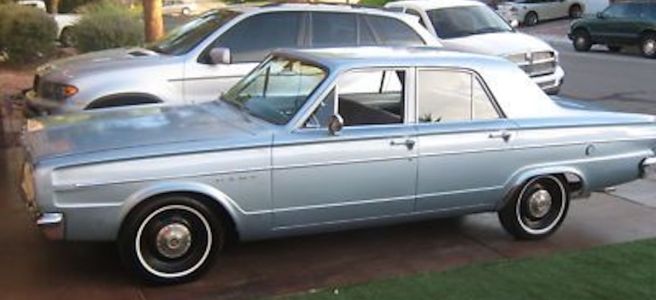
And if you’re wondering – we did buy a car that day. It was a blue and white four door Dodge Dart with a V-8 engine. The sticker price was $2400 which in today’s dollars would be about $21,000.  Gas was 30 cents a gallon. And while I would have rather have had a Mustang, I spent many happy hours running around in that car with my friends, hanging out at the Freeze and yes, taking my mother to run errands.  

I would have rather had a Mustang. . . but still. . .

June Cleaver had nothing on my mom.  

Look at that Baby!

It is a story she told often around this time of year. She had gone to church that morning, come home and fixed Sunday dinner. She didn’t feel all that great but was sure it couldn’t be labor and even if it was, it would be many, many hours before she would give birth. She knew this for a fact because her first one had taken hours if not days of excruciating pain, and this was not that. And so she did the dishes, straightened the kitchen, and dismissed the growing-ever-more-regular twinges in her belly. Until she finally agreed that they could go to the hospital just to check things out and make sure everything was okay

By 5:00 that evening she was sitting cross-legged on her bed reading the Sunday funnies, eating a snack and chatting happily and excitedly with her husband. She had just delivered her second son!  Perhaps she credited her doctor with the ease of this delivery which is why she chose the doctor’s last name as her baby’s middle name.  In any event, the delivery was perfect; the baby was perfect. Or so they told her. This all happened in 1950 – in the days when babies were whisked away to the nursery as soon as the cord was cut to be attended by “professionals” and once they were cleaned and scrubbed and dressed, then and only then, would the parents be allowed to look at them through the nursery window.

b54ad-photo2b1

And so she hopped out of bed (she always said it this way –  “hopped out of bed”) and walked down the hall to the nursery. There was another mother standing at the window admiring all of the freshly scrubbed and swaddled babies and they stood there together recounting their recent birth stories, one contraction at a time. And then mid-sentence, one particular baby caught her eye. “Oh look!” she said to the other mother. “Look over there at that one. Isn’t that just the ugliest baby you ever saw!?! Don’t you feel sorry for his mother?!!”  It was only then that she saw the name taped to the bassinet.  “Baby Boy Abbott”.

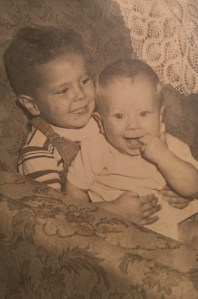
My mother-in-law loved to tell this story about her second born son:  Paul Rowan Abbott. And then she would laugh at herself and add “And he turned out to be the cutest baby anyone ever did see!”

And so today, on his birthday (a birthday he shares with Elvis and claims is the best gift his mother ever gave him), it seems only appropriate to tell the story again. And to honor this woman who  birthed and raised the man I love to the moon and back.

She had eight children, a multitude of grandchildren, took in every stray (including me) who came along and loved them all fiercely. She loved her fur coat, her jewelry, her Denver Broncos, her red dresses, her coffee with cream  and her husband of over 60 years. She was an opinionated and outspoken woman and I loved her for it. Having grown up in abject poverty herself, she was generous to a fault. A pastor’s wife for over 20 years, she understood and appreciated my life better than most people ever could. I knew from early on that she liked me at least as much if not more than she liked her son and that I would always have an ally in her. She proved this to be true until the day she died.

She taught me to make chicken and noodles the way she did (don’t waste time rolling the noodles paper thin) and how to welcome the stranger. She taught me to celebrate or grieve with a good chocolate pie. She taught me that life is both amazingly wonderful and also filled with disappointments and heartache and that there are no guarantees. And she taught me that the only way through it is to love with abandon and pray to Jesus.

Though we disagreed about many things – the proper amount of sage to put in stuffing, the merits of sweet tea, the need to cook beef until  it looked and tasted like charcoal – the one thing we always agreed on was that that baby in the nursery window turned out pretty darn good.  And I have always thought that she had a lot to do with that.

Thank you, Judy. And Happy Birthday, Baby!

Lila’s Last Campaign

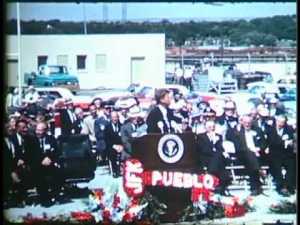
On a hot August day in 1962, my sister loaded up me and her five kids in her station wagon and took us to the District 60 Stadium in Pueblo, Colorado, to hear President John Kennedy speak. I have no idea what his speech was about and the PA system made it impossible to understand his words even if I had been interested, which I wasn’t.  I was twelve years old and would rather be at the pool, but afterwards we got to stop at the A&W Drive-In  and get root beer floats. . . so that was pretty cool.

I’m not sure what her motivation was. Maybe she wanted us to be able to tell our kids that we had been there the day the President of the United States came to our city. Maybe it was because she was looking for something to do with six kids on a hot summer day. Maybe she was inspired by this young, handsome, charismatic president.  Or maybe she believed that citizens should be active in their government and engage in the process and she was always one to teach by example.  Whatever her reasons, I do remember the day and the event and the fact that we were there.  

Fast forward 21 years. Now she is on the front lines of local politics: organizing volunteers to help a candidate get elected to the Pueblo City Council. He is young and passionate and wanting to make a difference in his community and she is convinced he has the wherewithal to govern and help the city so she throws herself into the campaign and learns a lot in the process. Her candidate did not win but he went on to serve his community through his law practice, his election to the Pueblo Water Board, and supporting and working to get other worthy candidates elected to public office, always recruiting the best organizer and recruiter he knew to join in the fight – that woman who had dragged him, his siblings and me to see a president on a hot summer day. A woman whom he called Mom and I called Lila.

Over the years, Lila was a force to be reckoned with. She was an expert at organizing and recruiting volunteers and putting them to work, ensuring that things ran smoothly. She was adept at managing call lists. She and her son worked to elect a governor and when a woman she knew, respected and trusted ran for County Commissioner, Lila and two other women managed a campaign which got her candidate elected.

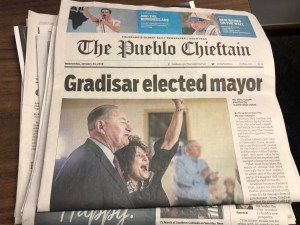
Fast forward 46 years. The family gathers from near and far – aunts and uncles and cousins and nieces and nephews and children and grandchildren and great grandchildren – to celebrate the historic election and inauguration of Pueblo’s first mayor in over 60 years – Nicholas Gradisar. How happy she would be to know Pueblo is in such good hands. And we say to one another, “Wouldn’t she have loved to see this?!”

But that formidable campaign operative whose first foray into politics was to campaign for her son’s election to city council so many years ago has been gone for exactly six years. And though she didn’t live long enough to see him take the oath of office as mayor of this city she knew and loved and invested in, her spirit hangs in the air and seems to hover over all of it.  

But if Lila is gone, she has left in her stead some pretty good replacements. All of Nick’s siblings have rallied to the cause.  They campaign, they mobilize, they show up and do their part to get their brother elected. His sister Kay in particular seems to channel her mother and has the same bulldog tenacity when it comes to getting it done.  

Kay, still working the phones on inauguration day.
the siblings

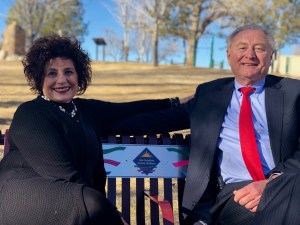
After the swearing in, we have lunch and then walk down the River Walk to sit on the bench which was donated in her name to the city of Pueblo and offers a respite for walkers out for a stroll or for exercise. We take pictures and share her stories and say, “Wouldn’t she have loved this day?” 

Mr. Mayor and the First Lady of Pueblo
Family gathers from Colorado, Nebraska, Wyoming, and Maryland.

Really, the only thing that would have made that day better is if we had been able to cap it off at the A&W Drive-In and toast this day and her with root beer floats.  So here’s to you, Lila.  Ya done good!

Cheers!

Where I Come From

Over the course of my lifetime, I have lived in six states and twenty two houses (not counting various summer lodgings and a brief stint in a ‘59 Ford panel truck), and I  expect that I have at least one more move in me before I land at my final resting place. Sometimes I sort of feel unanchored by my lack of roots or the fact that there is no one place that I think of as “home”.

There is the first house we lived in together as newlyweds and college sophomores. The one with the slanting living room ceiling that went from seven feet at one end to five feet at the other end and where we wore out our Simon and Garfunkle albums on our new hi-fi. Where we fought and forgave and learned to be married.

There is the house where we hung a giant crystal chandelier in the entry way of our our upstairs apartment and drug the table out of the kitchen when we had guests so we could dine under its brilliance.

There is the house with the pine cone wallpaper that shows up in the kids earliest memories. . .  except they all put the room in different houses. But it keeps showing up which makes me think it was ugly enough to leave an indelible impression.

There is the house we rented because it had a living room big enough that we could hold church services there and we shared it with three single women who lived in the basement. It had a little room upstairs lined with windows which is where our first “school room” was and I taught several of my children to read. It’s where I cross stitched the dozens of Christmas tree ornaments with the names for Jesus that still hang on our tree.

There is the house that had an indoor swimming pool where we taught the two year old to swim.  A sauna that she called “the warmer” and a fireplace that didn’t draw so that all of our clothes smelled like  Eckridge Farm smoked sausage.

There is the first house that we bought instead of rented. We were forty years old with six kids and a dog. And now we were homeowners. We lived there for fourteen years, longer than anyplace else we had ever lived. It was a palace to us with a big yard and a deck and a strawberry patch. The walls of the living room were painted a country-blue which was in vogue at the time and I loved it. It had a fireplace and three full baths and five bedrooms. It was in the family room of that house where a little team of people gathered to pray about starting a new church. Before long we turned one of those bedrooms into the “church office” and it  was in that living room with the blue walls that we folded church bulletins every Saturday night and had Women’s Breakfasts every month.  It was in that house that Cedarbrook Community Church was born.

There is the two bedroom house where I grew up – the home of my childhood memories.  There was a rocking chair in the corner of the living room where I did my homework, watched the black and white television with rabbit ears, talked to my friends on the phone, and dreamed the daydreams that young girls dream.

There is the house where we live now – just the two of us.  The one where we asked the builder to take out any walls in the downstairs living area that were not load bearing so as to accommodate the table made to order by Amish furniture makers. The table that would stretch across the whole length of the room and where we could sit with friends and family over a meal and recount the stories that bind us together. The house where we added bay windows and skylights because the more light the better and where, though we had no idea what we were doing, we somehow managed to create this magical secret garden of a backyard.

And yet . . .

Last summer we made a trip to Nebraska to see my family.  It’s where I’m from: this land of wheat fields and sand hills. Of windmills and wildflowers. Of farmland and cattle ranches. It’s where I was born, but I feel no real kinship to this land. I have no memories of it as a child and no real  understanding of this way of life or how it matters to the rest of my family. But as I grow older there is a longing to connect with this past and this place.

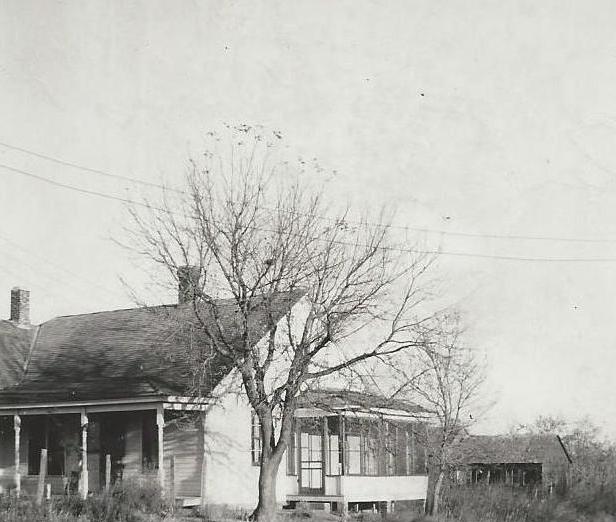
I have heard the stories – mostly from my mother when she was living. The stories of how my parents were farmers who had a dream of owning their own place, but it never seemed to work out for them.  Just when they thought they had  saved enough to make it happen the drought would come, or the flood, or the depression, or the war, or . . .  But then when their family was grown (all but the late-comer who was only two and named Sharon) they saw a way. Outside a little town called Wolbach, they bought a farm. This Nebraska farmland had been home to them all their lives, and now they owned a piece of it. My oldest brother Don and his family moved in with us and together, he and my dad worked the farm and when my brother Irvin returned from Korea, he joined them.  It was the family business, this love and care of the land.

When my father died two years later and my mother had to sell the farm, we moved to southern Colorado where I had a sister who thought she could get Mom work to support us. I have no memories of a life before the dessert of southern Colorado and the wild, rugged beauty of the Rocky Mountains that surrounded us. I couldn’t relate when my mother talked about the wheat that looked like copper pennies when it was ripe for harvest.  How the fields were green as far as the eye could see when the crops came up in the spring. How the corn fields marked the passage of the growing season with their changing tassels waving in the summer breezes. And how she could see it all from her kitchen window of that farm house.

She told me once that when she visited my sister in Colorado for the first time (it might have been her first trip out of state) as the bus pulled into Pueblo with its steel mill and monochromatic landscape she said out loud to herself, “Why would anybody want to live in this God-forsaken land?”  By the time I can remember, my mother had made her peace with living in the place that God had forsaken,  though I don’t think she ever stopped missing “home”.

There is no place for me that is like that. I liked some of the places we lived. . .  others not so much.  I have fond memories of some of them, but truth be told sometimes I get mixed up whether such-and-such happened in Kansas or in Illinois or if it was the house on First Street or the one on Columbia Street. It sort of all runs together.

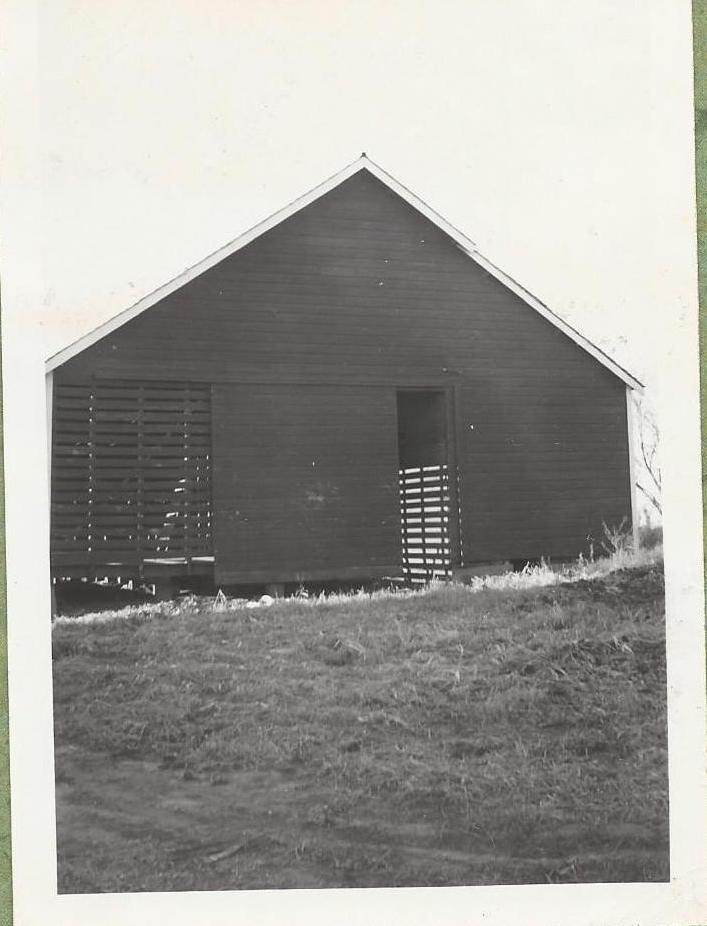
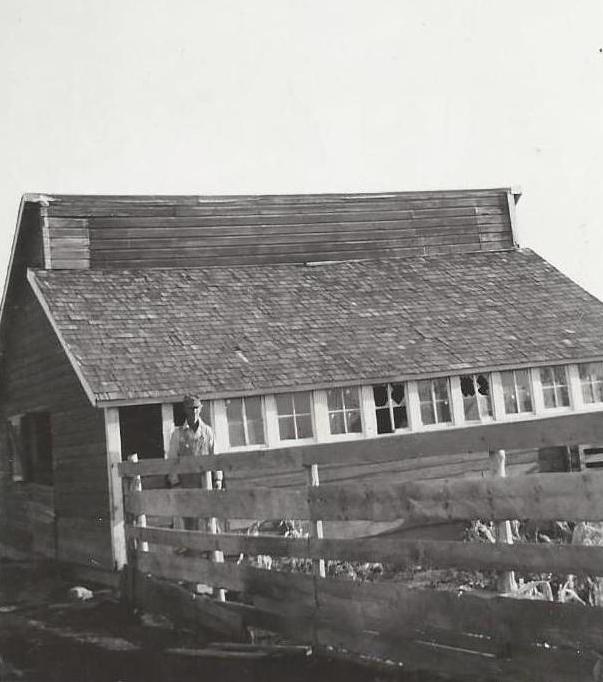
So last summer when we were in Nebraska I asked my brother if he could take me to Wolbach and find the farmhouse. The house was gone, he told me. Had been for a long while.  And he didn’t know if he could remember exactly where the land was . . .  but he would try.  And so we set off on our quest. Getting to Wolbach was easy. . .  it is a booming metropolis of 283 people. But now what?  We started down one road, but it had been washed out by the spring rains and anyway, he thought maybe we should have turned the other direction back up the way. We rode a while longer and came to a farm where a man in overalls stood out in the yard next to the fence, wondering at the strangers in his neck of the woods. We stopped and Irvin explained our mission – “We’re lookin’ for the place that was Ray Fletcher’s back in the early 50’s. I think it was bought by . . . .  and then by. . . .  and then I’m not sure who they sold it to. “Well, what you’re gonna wanna do is go back out this road and go about two miles and then. . . “ and so we made our way down some “roads” that were more like gullies until my brother said, “This. This is it. The house sat back there in that grove of trees.  It’s been torn down now,  but there’s still some of the barn standing. It was right  back there.”

I stood there a long time. Remembering the stories from my mother. . .  like the one about how the goose chased me and I caught my leg in the fence gate which left a good sized scar that I carry with me to this day. Or how my dad would go into town every Saturday and bring back a little brown paper bag with candy in it and would sit at the table in that kitchen and divide it between me and Jolene. And I called back Jolene’s stories about our time in that house. Almost exactly a year older than me, she is Don’s oldest daughter, the one who moved into the farmhouse with us and the keeper of the memories of the adventures she and I shared there. Like the time we escaped from a charging bull by climbing into the corn crib and throwing ears of corn out to him to scare him away, holding him at bay until we were rescued. Okay, so maybe the bull wasn’t raging but rather ambling and maybe he was ambivalent about our efforts to engage him and maybe we were in no real danger. But what a story! This was the corncrib where we had our “playhouse” – where we made mud pies and played away the hours which is what childhood is for. No matter how hard I try, I have no memories of these children or of this place.

In the Celtic tradition, a “thin pace” is the place where the veil that separates heaven and earth is nearly transparent. A place where, for a moment, the spiritual world and the natural world intersect. That day last summer, as I stood on a road, looking over the fence into a grove of trees where you could just barely make out the the ruins of a barn, this was a thin place for me, and if I listened hard I could almost hear the echoes of their voices –  those two little girls in the corncrib, trying to shoo away a bull who had meandered into their story. I can see through that veil the ghost of a woman, staring back at me from her kitchen window. She has the hint of a smile and I recognize my own face in hers . . . the features startling in their similarity.  It is my mother, welcoming me home.

farm 2
       A THIN PLACE

He Was the First . . .

This image has an empty alt attribute; its file name is img_7740.jpg

by Paul Abbott

“Not only had my brother disappeared, but–and bear with me here–a part of my very being had gone with him. Stories about us could, from them on, be told from only one perspective. Memories could be told but not shared.”
John Corey Whaley – Where Things Come Back

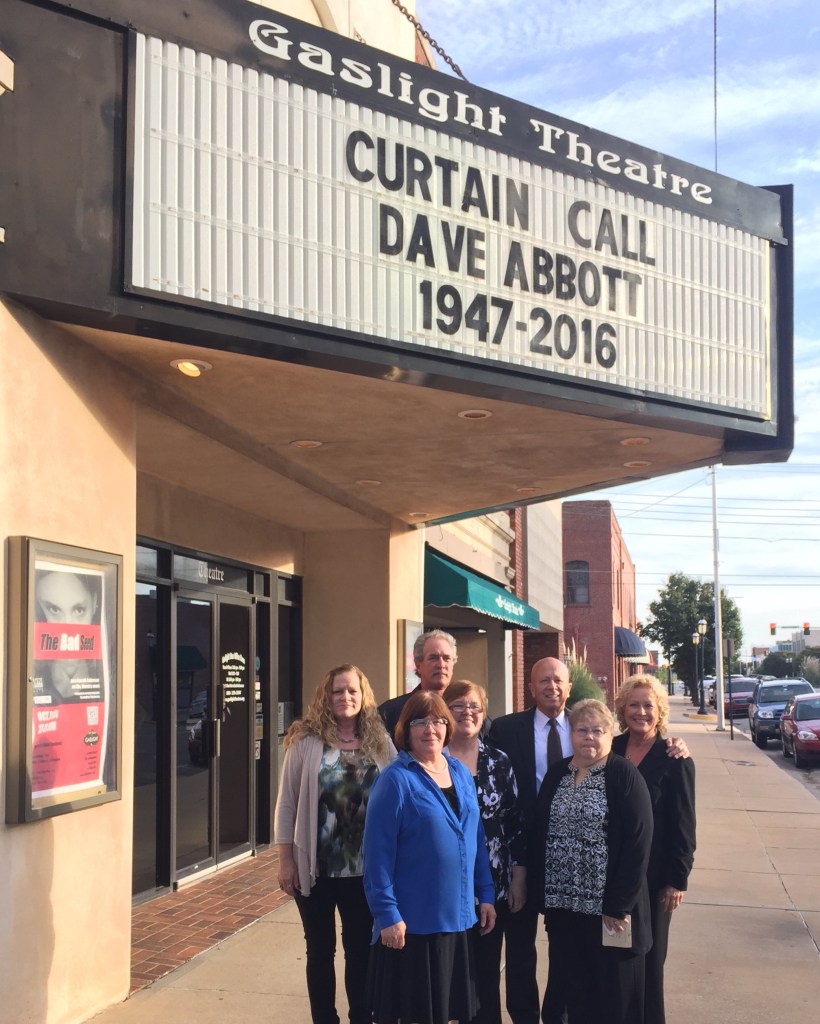
On Monday, October 3, 2016, we lost Paul’s older brother David in his short, but hard fought battle with cancer. The following is the eulogy Paul delivered at his memorial service. Now the stories about them can only be told – not shared.  And we are coming to grips with that loss.

All the world really was a stage for my brother and, at least in our backyard, neither Errol Flynn’s Captain Blood nor Fess Parker’s Davy Crockett could hold a candle to David Abbott. I know. I was there. I was his first audience and, for a time, his best supporting actor.

David was the firstborn in a cast of siblings that eventually grew to nine. Our little clan grew up in the fifties and early sixties, doing all the kid things every kid did back then. Through it all, David was the producer, director and always the star of the show. If he didn’t want to play,  then no one wanted to play. It just wasn’t the same without him.

Our dad was a pastor as was our grandfather before him, so life revolved around church. It was sort of the family business. The first stage David ever performed on was at a small, country church. As much as anything in his childhood, it was the church that molded and marked him and made him who he was.

The life of the theatre that was David’s passion as a man may seem far removed from the church-centered life of his childhood, but church and theatre share a common thread. Both are about the power of story. Done well, both tell stories that remind us why we are here, that tell us our lives have meaning and purpose, stories that anticipate days like this day.
David was really smart, so smart he taught himself to read. Before he spent a day in school, he could read the Sunday funnies or the minutiae on the back of a can of string beans. He was always the smartest guy in the room. He always knew the answer, knew the right way to do things, and never hesitated to share this with his siblings. He was, after all, the director and he didn’t just run the show, he ran our lives.

His direction for me often employed the word idiot. He may not have always actually said it, but even when he didn’t you could hear it in his voice. When I was delighted at the prospect of a trip to see Santa, he enlightened me, how could the guy possibly get to every house in one night?  He’s a fake . . . you idiot. Around maybe eleven or so, I was trying to sort out the mysteries of sex, but just couldn’t imagine: mom and dad?  Doing the dishes one night – we two always did the supper dishes, he washed, I dried, always – I tentatively expressed my dismay at the thought of mom and dad and sex to the one guy I knew I could trust to set me straight. Where do you think this house full of kids came from? You idiot. At sixteen, David gave me my first driving lesson in our faded green ’53 Chevy.  As I swerved perilously close to a neighbor’s mailbox, Left! Left! You idiot! Watch where you’re going.
As the firstborn, the leader of our troupe, David was always first: first to lose a tooth or learn to ride a bike, first to get a driver’s license and go on a date, first to kiss a girl, first to go to college, get married, have a child. And now the first to leave the stage. It won’t be the same without him. We who share his name and his blood won’t be the same without him.  Our grief is the price we pay for love, and make no mistake, we did love.

If he were here to direct me now, I think he’d say, Enough. You’ve said enough, little brother.  You can sit down now.

enhance
img_7755
img_7981

A Real Cowboy

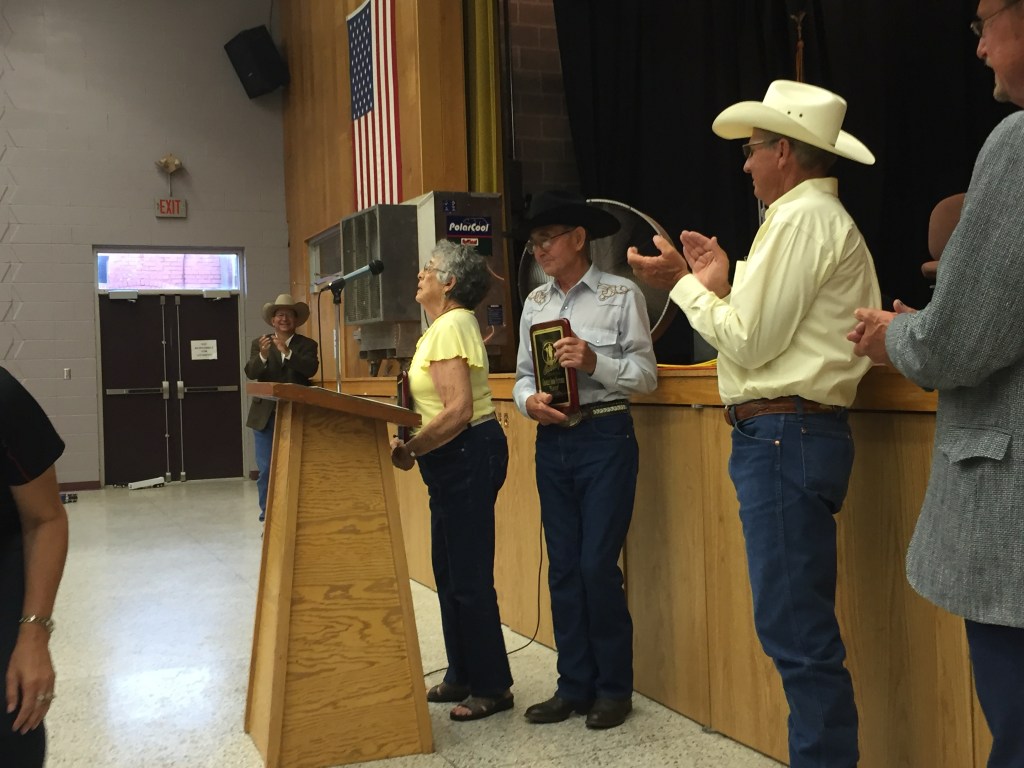
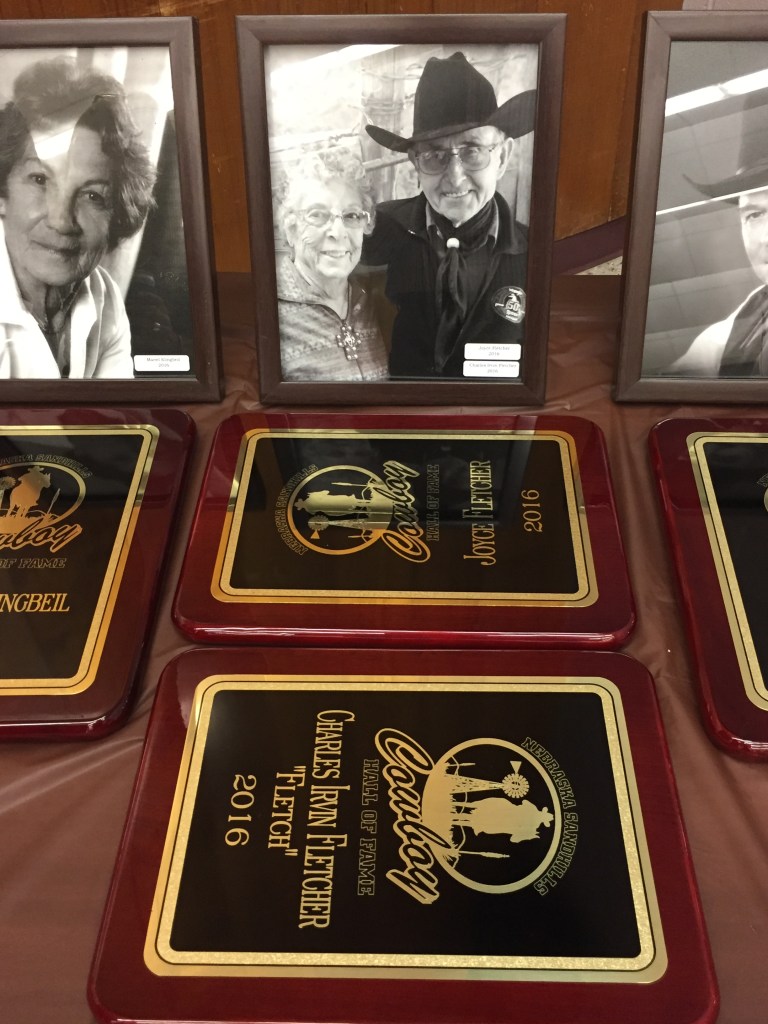
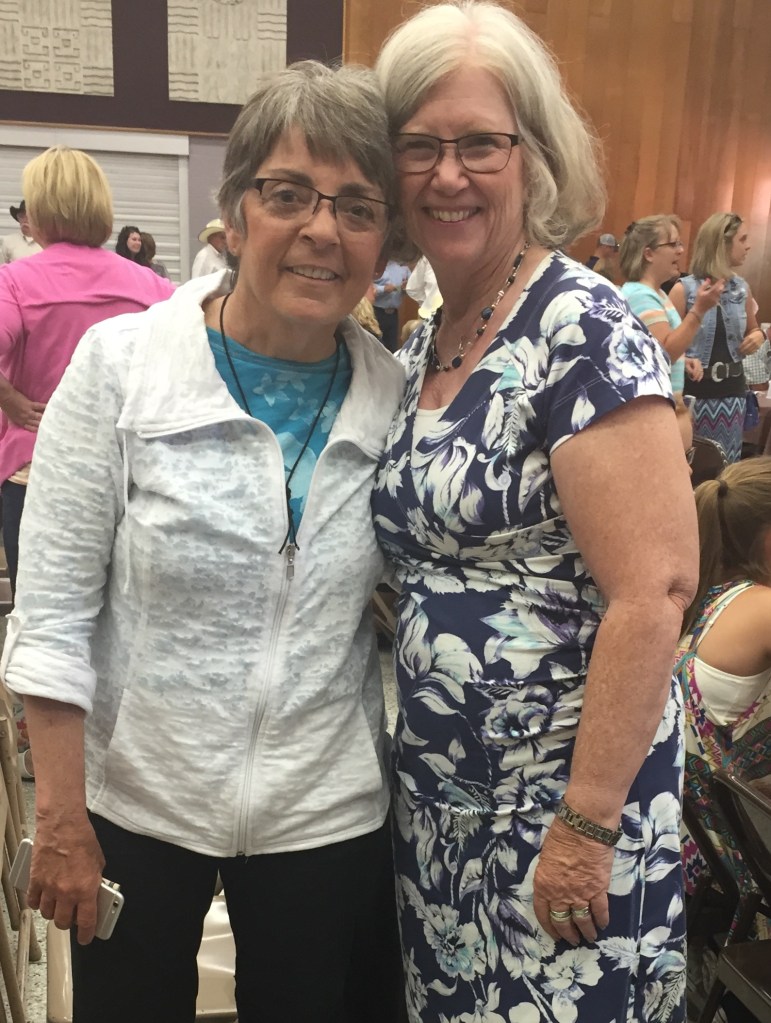
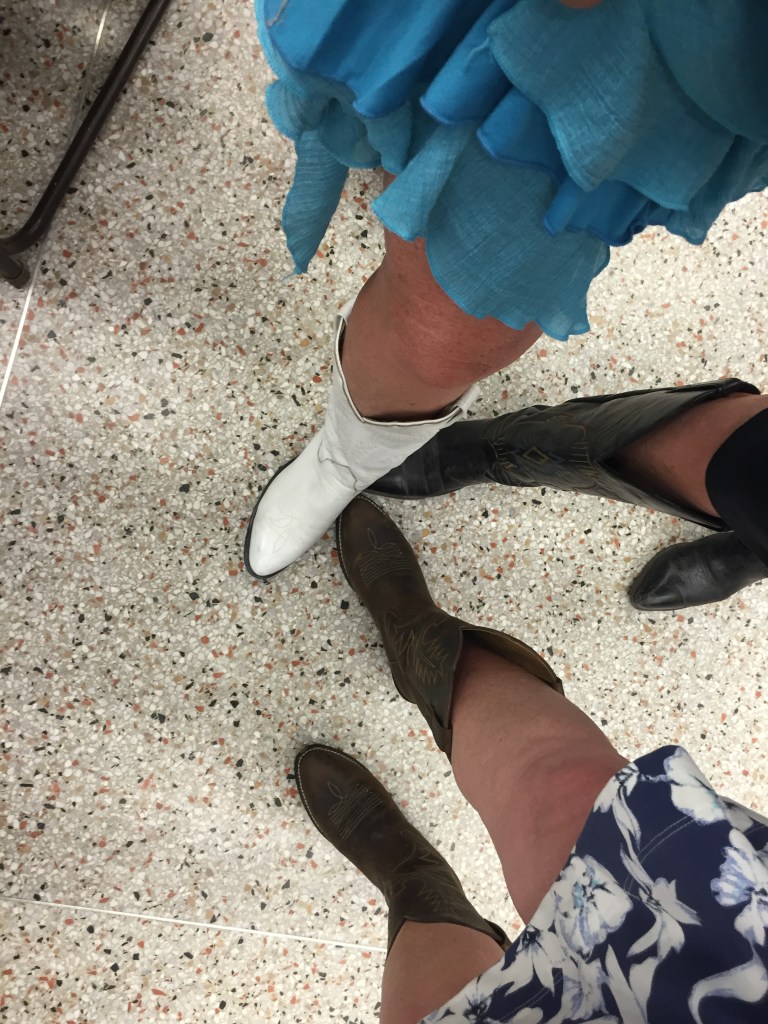
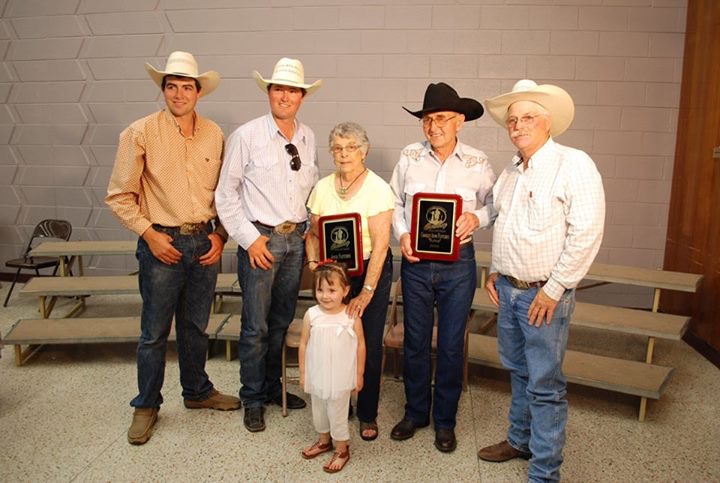
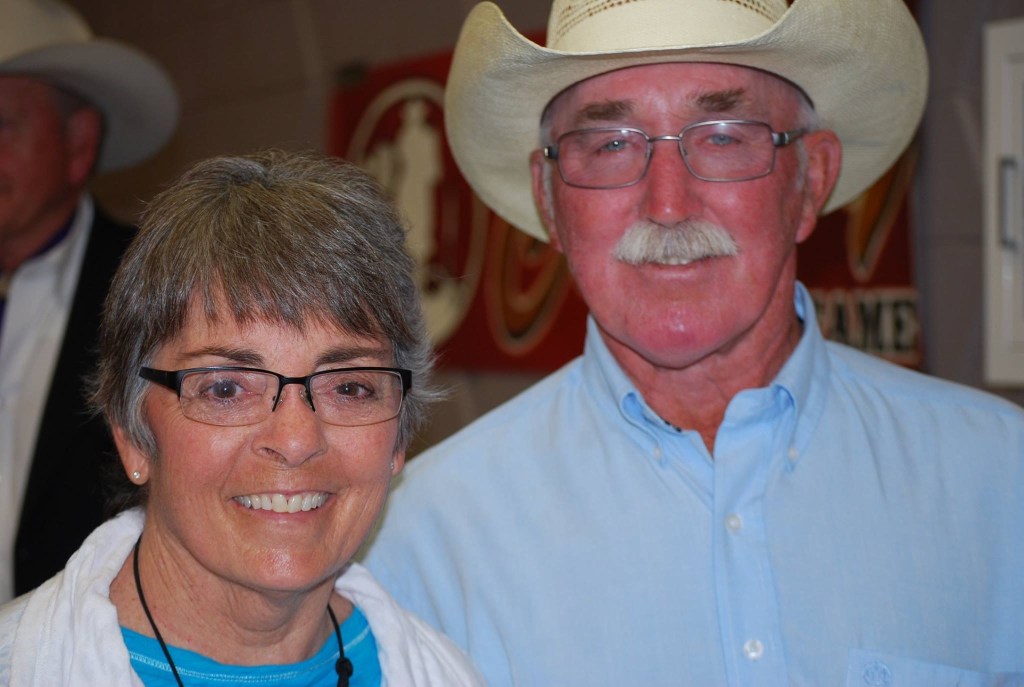
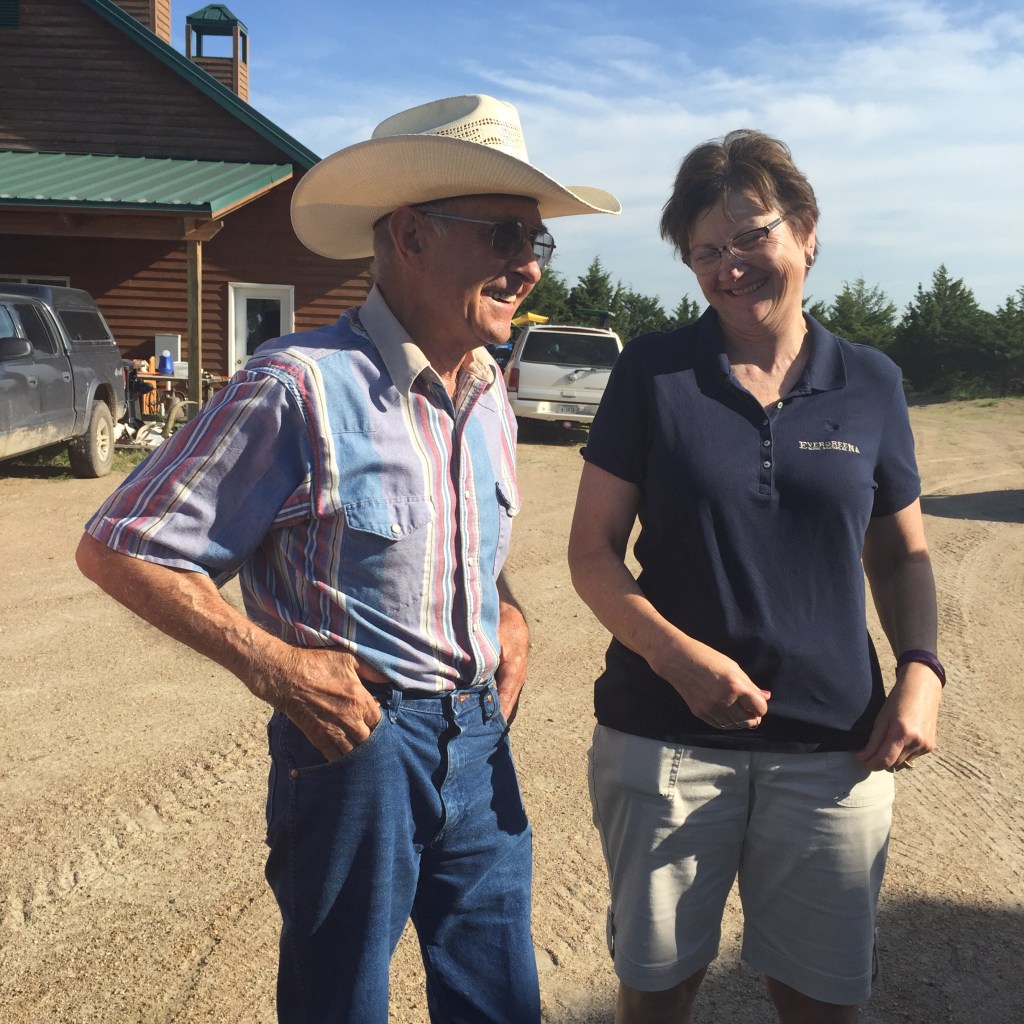
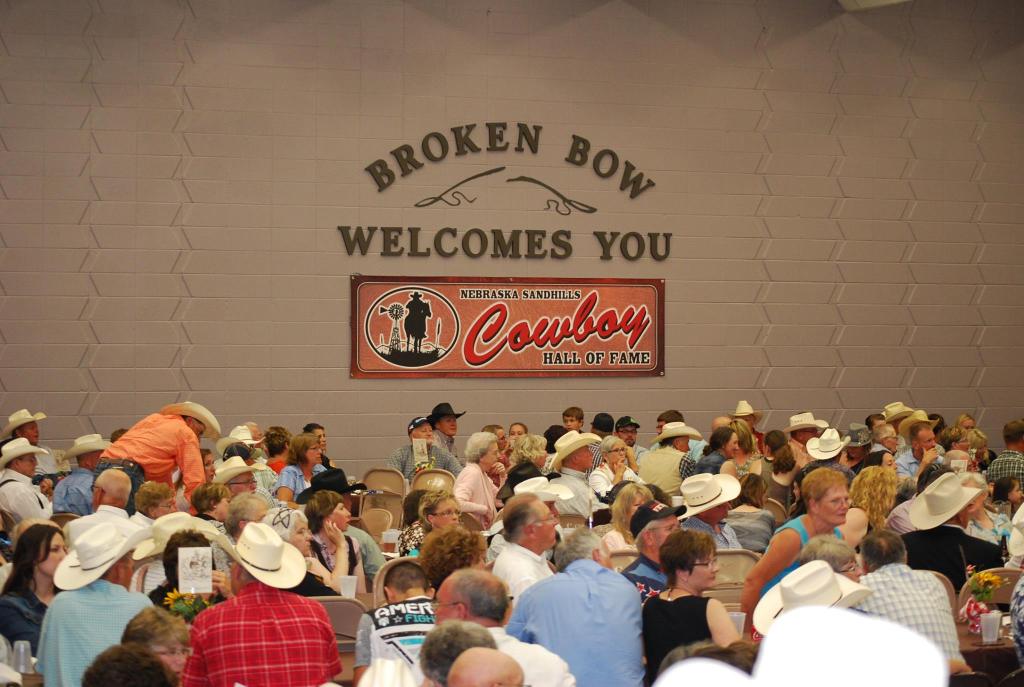
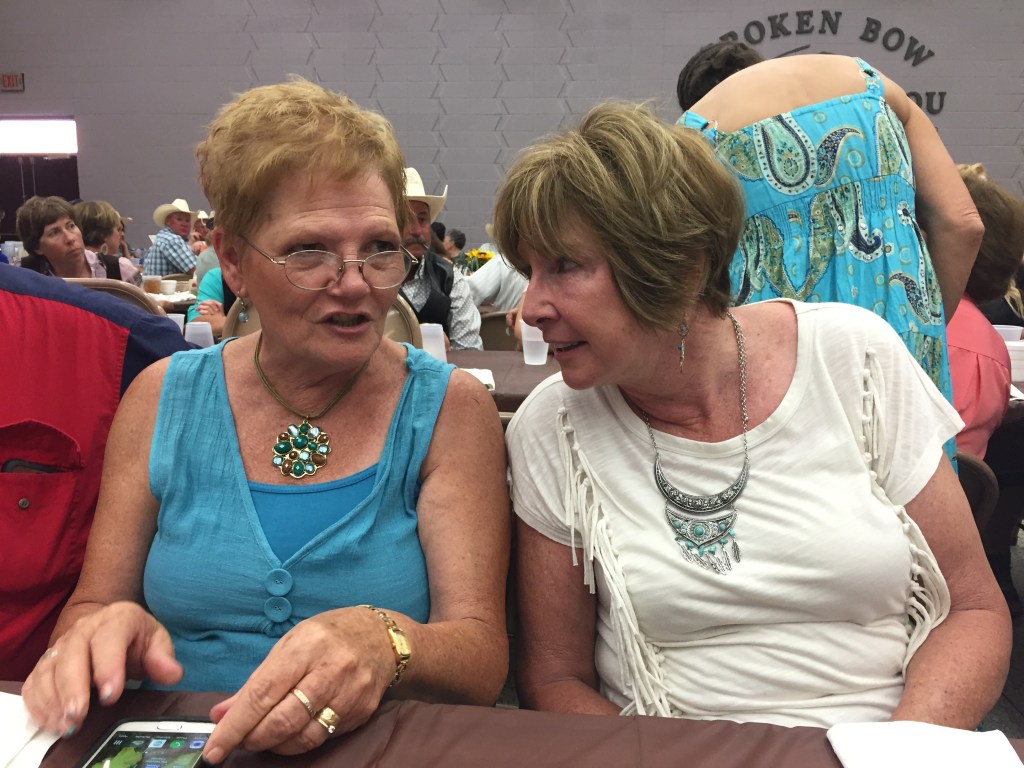
We gathered from several states and varied walks of life. We came by car and by plane and by the grace of God. For one magical and memorable weekend, we left behind jobs and kids and grandkids and the lives we had built apart from this place.  We came to bear witness, to congratulate, and to be a part of it. But mostly we came to celebrate.  My brother Irvin and his wife Joyce were being inducted into the Nebraska Sandhills Cowboy Hall of Fame and so we came.

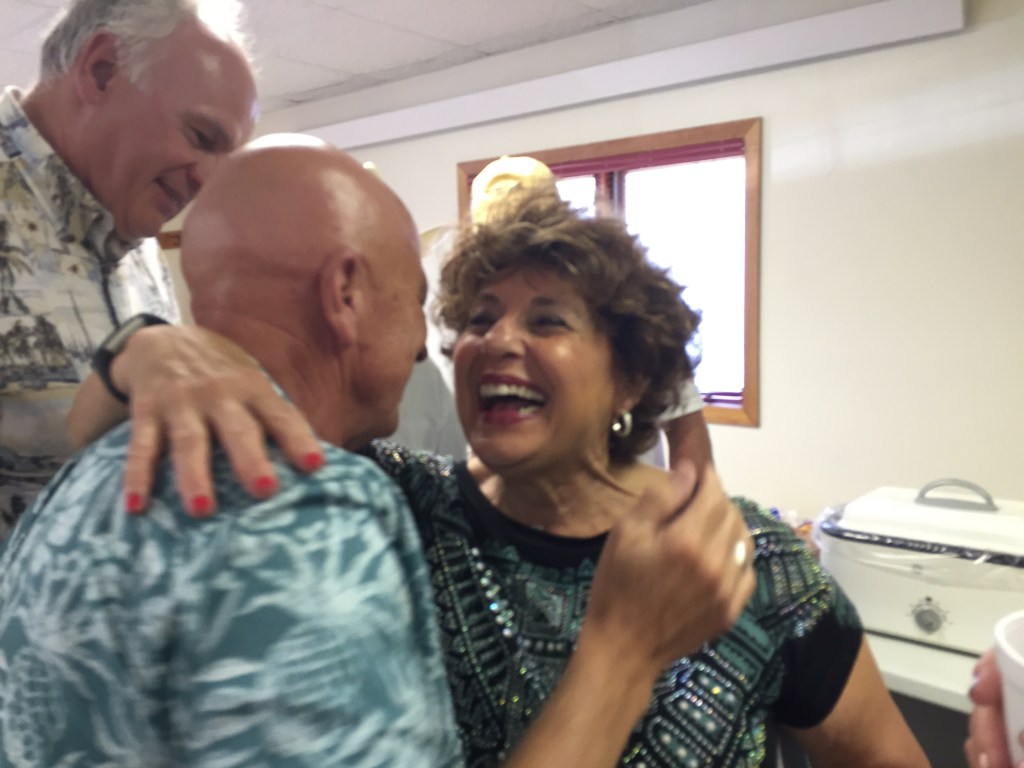
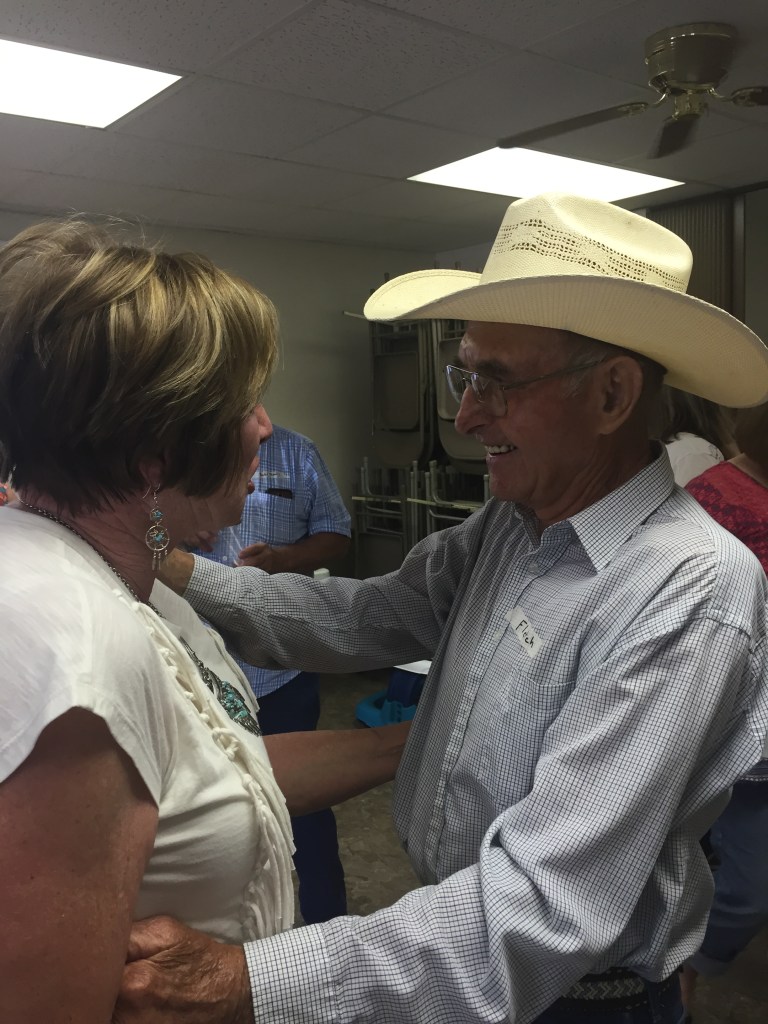
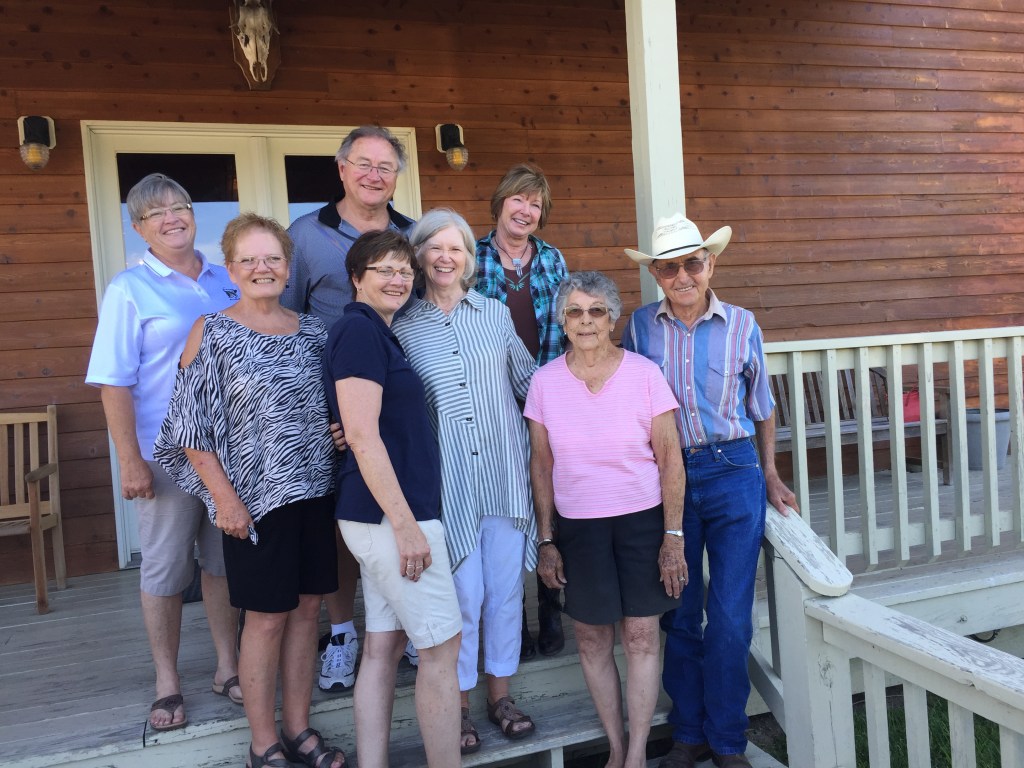
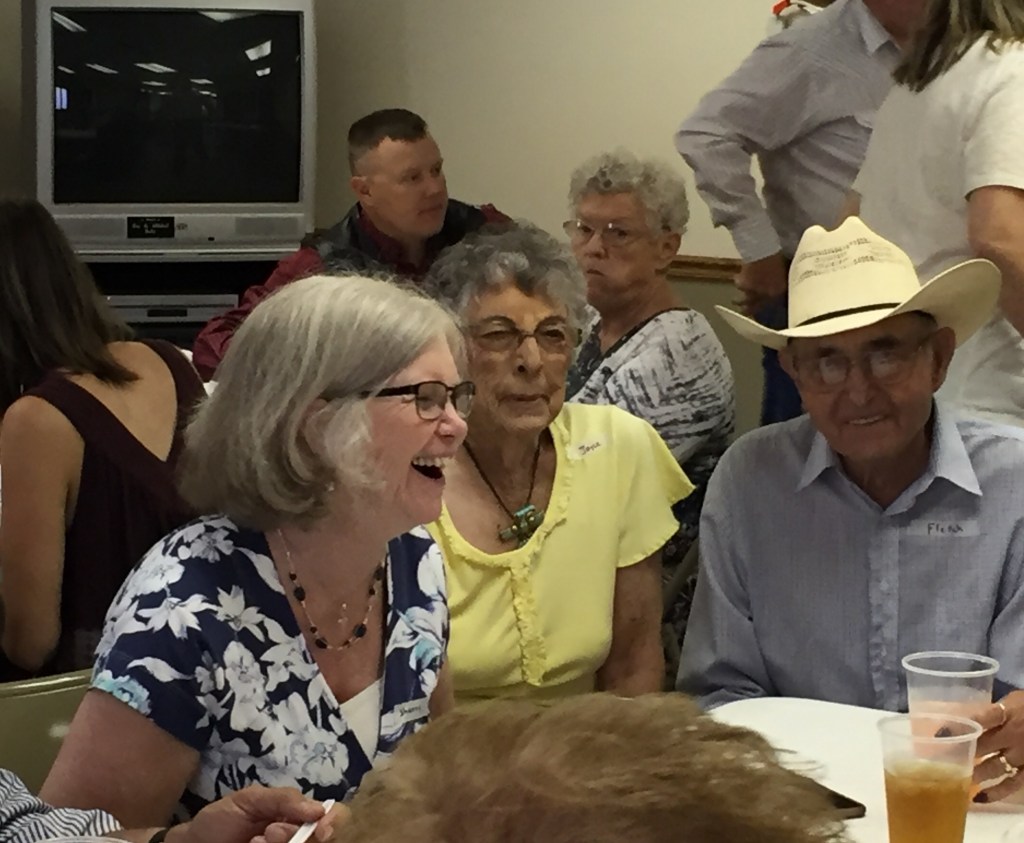
His daughters rented the community center for the day  in the little town of Taylor: a place where family could gather before the craziness of the main event that evening. A place where we could eat the lunch they provided, take pictures, catch up and “visit” – which really means “to tell stories.”

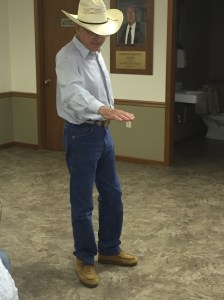
He stood up and announced “I have a story I want to tell.”  The room went silent.

And he began to spin the tale which went something like this:

IMG_2597
And they were lined up down the sidewalk – all of them about this high.

When my buddy and I were on the rodeo circuit, one of our favorite places to rodeo was Pueblo, (Colorado) because we could always count on the accommodations at the Bed & Breakfast there – better known as my sister Lila’s basement. We  rolled in there after a rodeo one night in the wee hours of the morning, kicked off our boots, threw down our hats, and collapsed on the bed. Later that morning we saw these little faces peering in the basement window, staring at us with eyes opened wide. And then we heard the voice:  “Just step on over here and take a look at two real cowboys. You can see them, their boots, their spurs and their hats.  And it will only cost you a nickel.” Nick and Ray (Lila’s sons who were about 4 and 5) were selling tickets to see “a real cowboy” and the line went down the block.

And then he finished with this:  So when I heard Nick was coming to town this weekend, I made sure my blinds were closed.

I learned three things from that moment:  (1) My nephew Nick’s entrepreneurial  bent began much, much younger than I realized. (2) I come from a long line of storytellers. (3) Even a quiet man, when given a chance and a good story, will stand in front of a group of people and talk.

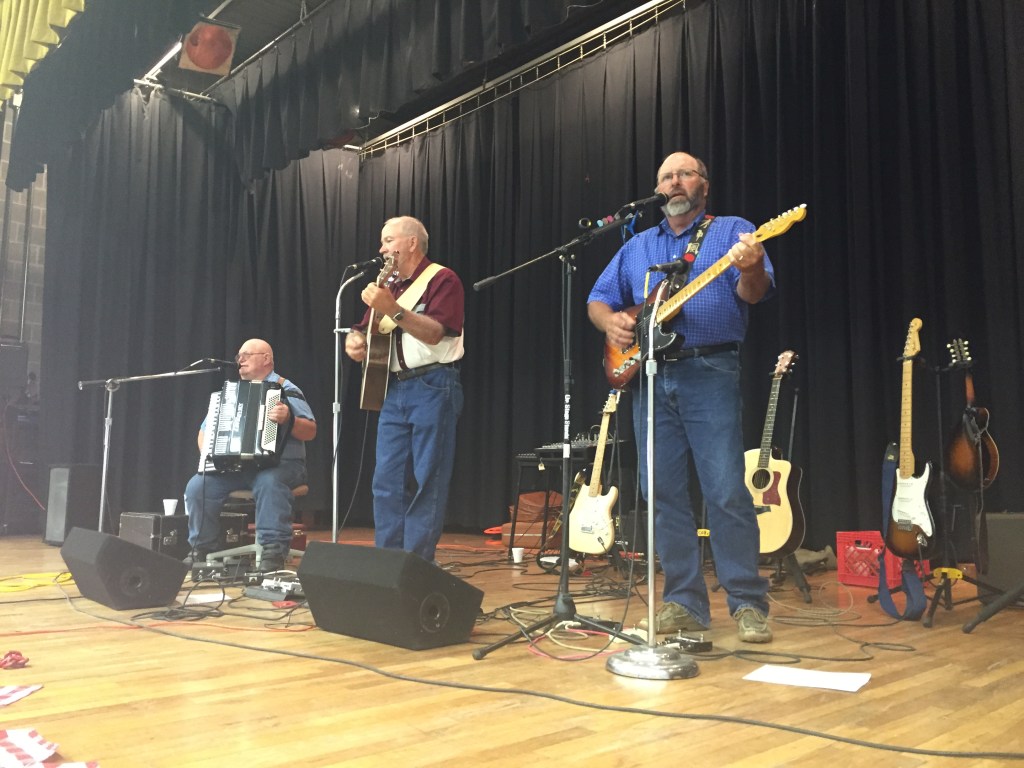
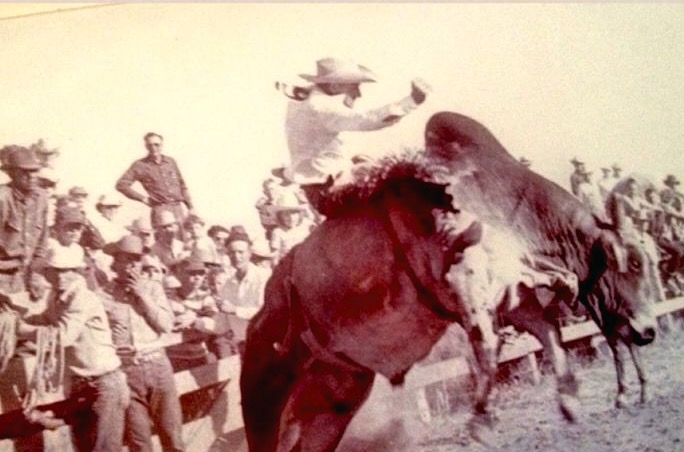
And through the day and into the evening we watched and we listened and we learned about their lives and their contributions which earned them this honor. The Nebraska Sandhills Cowboy Hall of Fame recognizes those who have made extraordinary contributions to the Western Lifestyle or horse culture in the Nebraska Sandhills in the areas of competition, business, rodeo, ranching, western arts, and western entertainment.  My brother was a rancher and bull rider, an artist who braids leather into everything from bullwhips to jewelry and a mentor to young rodeo competitors. He is a lover of the Sandhills and its way of life. And his wife was there with him in every one of his endeavors. She tells us, “I’m not a cowboy.  I just found one.”  But he couldn’t have done any of it without her.

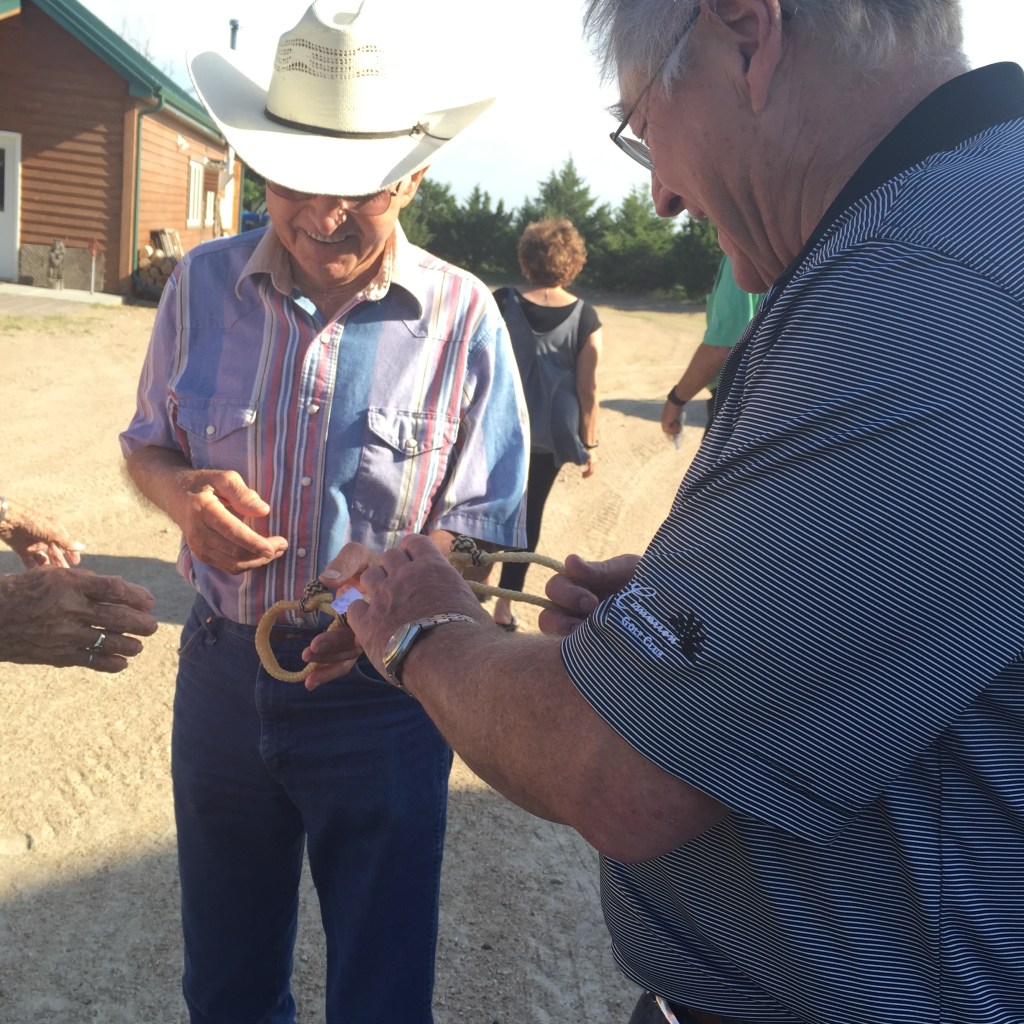
We go to the dinner and the auction and the induction. We complain about the heat but notice that we are the “city folks” and none of the cowboys  in their wranglers and their boots and long-sleeved shirts and hats seem to be the least bothered by it – they never worked in air-conditioned offices where you have to wrap yourself in blankets to stay warm in the middle of the summer. (Maybe I should have been a rancher after all).  Nick bids on the  rawhide braided hobbles Irvin has made and donated to the fund-raiser auction but they go for over $1300 and he decides it’s too rich for his blood so he lets them go. Besides, he can always just buy another pair from his uncle and pay the $100 asking price. (sidebar:  the next morning several of  the family gathered for breakfast before we go our separate ways. Irvin arrived with a pair of the hobbles for Nick.  He had crossed out the $100 on the price tag and replaced it with this: “One day only: $1300”)

When they call Irvin and Joyce’s name we all stand to clap and cheer and whistle and the rest of the room stands with us. When you live and work and serve in the same community for 88 years, people know you.  Together this couple is well known and well loved and tonight they are well-honored.

IMG_2745
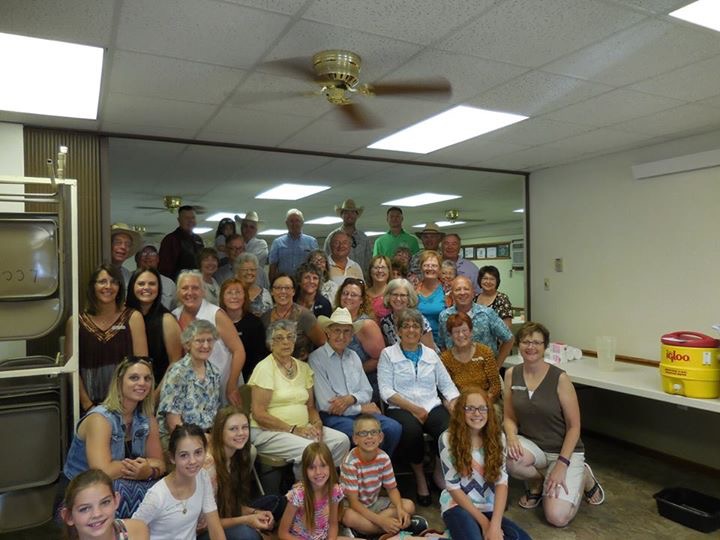
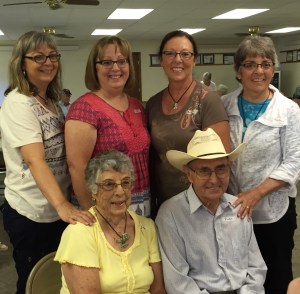
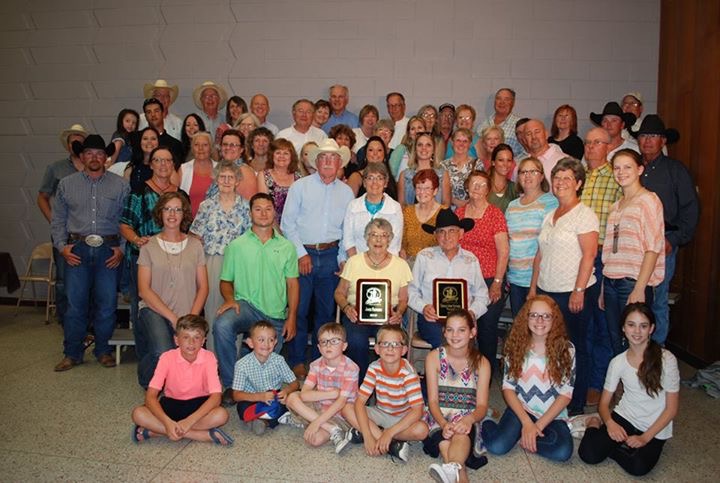
Of all the inductees, they definitely had the most people assembled for their group photo  This is some of the Fletchers and Lindermans (Joyce’s family) who cheered and whistled and celebrate their accomplishment.

Of my parents’ six children, only Irvin and I are left.  He was the third born and I am the youngest – a whole two decades younger than he. The siblings who shared his childhood, his stories, and his memories – they are gone. But if you knew what to look for, you could find them gathered around the tables: in the face of the one who looks exactly like her mother, and the one who laughs, just like her mother, and in the voice of  the one who could say, “I remember my dad telling me about the time you and he. . .”  And I was there. I do not share his memories, but I do share his stories, as did we all.  Because in one way or another, all of us who gathered for him:  me (his sibling);  Nick and Kay and Mary Jean and Jolene and Shirley (the children of his siblings); Raeleen, Bobbie, Pat, and Cindy (his daughters ; his grandchildren and his great-grandchildren – we all come from this place and these people. And it was so good to be there. . .  together.

In 1954 it only cost a nickel to see a real cowboy; our tickets  for this event cost us $20 a piece. For that twenty dollars  we got to see a whole room full of cowboys. And more. We heard a lifetime of stories. We laughed and we cried, we talked and we listened, and we remembered again that this collection of people from so many different places and so many different ways of life – we remembered again that we are family. And at the end of it all, we knew that there would never again be a time together quite like this one.

IMG_0829
Once a cowboy – always a cowboy. Here he is, riding in the “Old Timer’s Rodeo” at 45+ years of age. Who does that??!!