Where Were the Adults?

We came of age in the chaos of the 60s, lived through the incredibly bad fashion of the 70s,  and spent our childhood smack dab in the middle of the 50s. The decade of poodle skirts, roller skates you wore over your shoes and tightened with a key, of drinking Kool-aide out of brightly colored aluminum  cups on hot summer afternoons and playing kick-the-can with the neighbor kids till the street lights came on, telling us it was time to go home.  

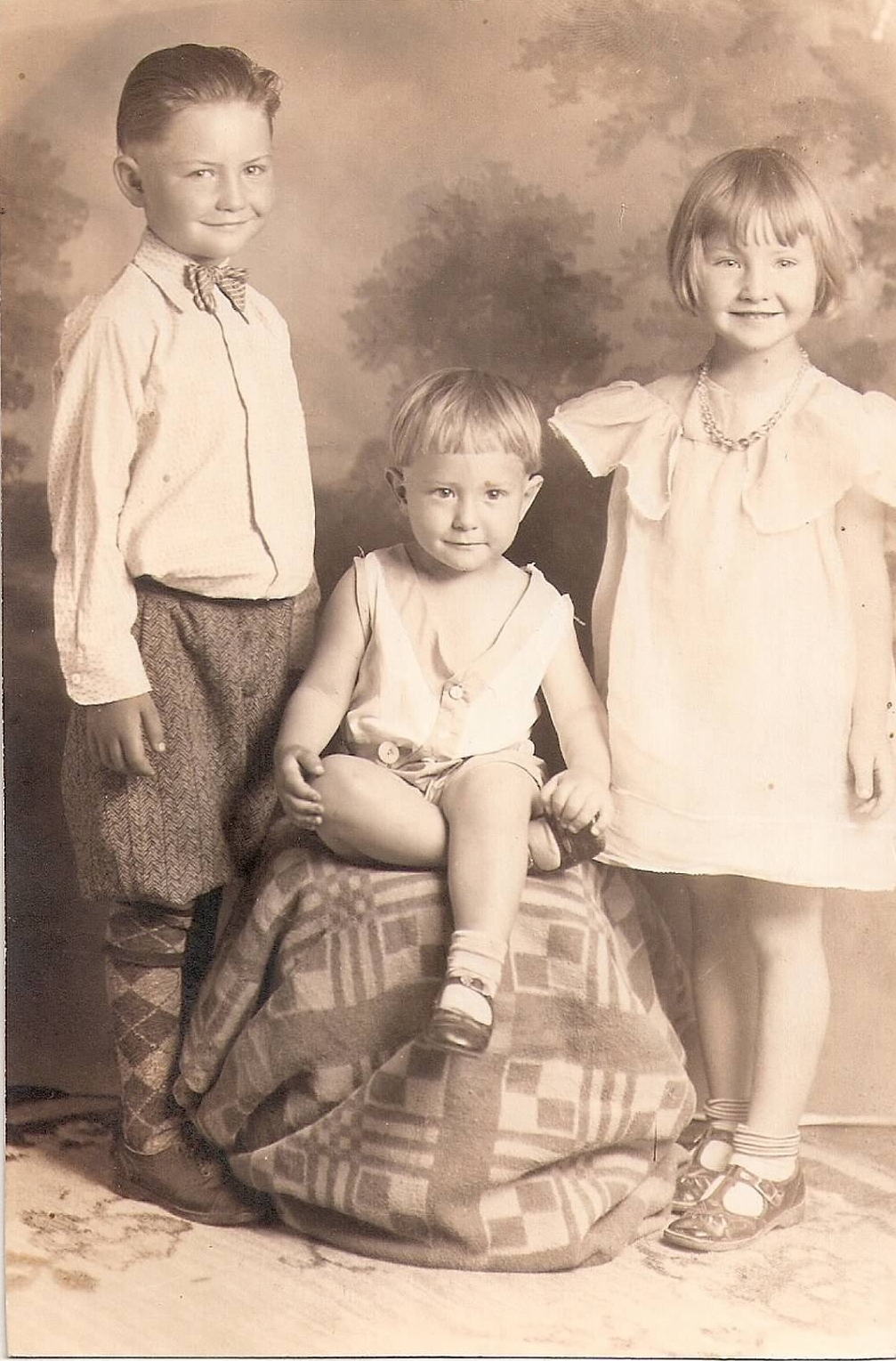
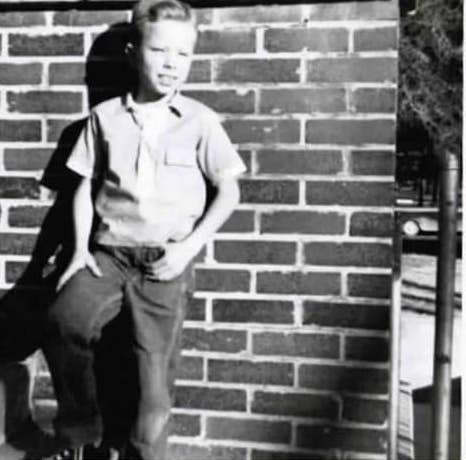
Paul’s childhood is filled with stories that could have come right out of Sandlot or The Christmas Story. The cast of characters may change from story to story depending on who their neighbors were at the time, how many of his siblings had entered the picture by then, or whether they lived in the small town of Boone, Colorado, or had moved into the big city of Pueblo. But the starring roles, at least in the early years, are always reserved for him and his brother David, three years his senior. 

As a consumer and a recorder of the stories, rather than a participant in them, I am always struck with the same question. Where were the adults? At least in his telling of them and I think in his memory of them – they were simply non-players. Charles Schulz, commenting on the lack of adults in his Peanut’s comic strip once said, “Adults have been left out because they would intrude in a world where they could only be uncomfortable.” He believed they would ruin the magic of the strip and were simply not needed. “Adults bring everything back to reality. And it just spoils it.” And that about sums it up.

So here are some of their stories. Keep in mind it was a different time, a different life and a different world. 

The One About Starting a Business

All it would take, they decided, was a good idea, a little hard work, and a business plan. And so they collected gourds, dug up small cactus from the prairie and planted them in the hollowed out gourds. They put the finished products in a wagon and pulled it around the tiny town of Boone, knocking on doors and selling them for a dime a piece. After putting in a hard day’s work, they counted up their spoils and divided up the money. What to do when you are six years old and you have money burning a hole in your pocket? Well, you strike out for the hardware store (which happened to be the only store in town) to spend your profits. “What did you buy?”  I ask him.  “A ball of twine and a roll of electrical tape.” Oh, the possibilities. . . 
The One About the Bow and Arrow

It was Christmas of 1959. Excitement had reached a fever pitch as the four siblings dreamed about what they might find under the tree for them on Christmas morning. Maybe, he hoped, it would be a telescope – one that would let him see into the heavens and discover what lay beyond.  

A few years earlier he had hoped and prayed for a shiny red bicycle that would carry him to new, unexplored places he could only dream of. But as Christmas drew nearer his parents had explained that Dad had been out of work, money was tight, and Christmas would be smaller than usual. “IF there is a bike, it would only be one. To share.” Still, he had dared to hope. Maybe there would be a bike and maybe David would actually share it. But on that Christmas morning, under the tree, there had been not one but TWO brand new red bicycles (put on layaway months before and paid off little by little through the month of December.)  And in that moment he knew, beyond a shadow of a doubt, that there was a God in heaven. It would not be until many years later, as a young father himself with a limited budget and four young children of his own, that he would come to understand and appreciate his parents for their sacrifice.  

So this year, as the anticipation became almost unbearable, he knew that whatever was under the tree for him would surely be grand, and he went to bed with visions of the Sears’s and Roebuck Christmas Catalogue dancing in his head.

When thirteen year old David opened his Single Shot 22 Caliber Rifle the next morning, the younger brother could scarcely breathe. This surpassed all of his grandest expectations! What a  score!! And what a grown up present. This proved that they weren’t just little kids anymore. Then it was his turn. “I should have known,” he has told me.  “It didn’t have the right feel or weight to it.” But he refused to believe that whatever David got, he would not also get. However when the wrapping was undone, what he held in his hands was a toy bow and arrow. The kind with the suction cups on the arrows. It wasn’t a 22 Rifle, it wasn’t a real bow and arrow, it wasn’t a grown up present. It was a TOY. He could not hide his disappointment. “Did you try?”  I’ve asked him. “I doubt it.” “But seriously, do you think it would have been a good idea to give a rifle to a nine year old kid?”  It seems that wasn’t the point.

Later that afternoon he trudged up the stairs to his room to practice his archery skills – by then determined to make the most of a bad situation. And that’s when he shot the arrow (with the suction cup on its tip) and broke his bedroom window, missing the target on the tripod completely. With a TOY! Could Christmas get any worse? Every time he tells this story I remind him that the broken window is proof that his parents made the right choice. 

The One About Shooting Your Eye Out  

Perhaps in an effort to salvage his reputation, the next Christmas Santa left a Red Ryder BB gun under the tree. All was forgiven as the two brothers and neighbor boys set out for an afternoon of target shooting. The target was the metal numbers on a telephone pole and they paced off a respectable distance and drew a line in the dirt. “Stand here,” they told him. He missed the first shot and the second and the third. So they moved him closer to the target. He missed again. And again. They moved him closer to the target. Same result. They moved him a fourth time. This time he hit the target . . .  right on the metal identification plate. The BB ricocheted off the plate and came back to hit the shooter right above his eyebrow. Blood streamed down his face, but he had hit the target! He still wears the scar proudly to this day.  

And in the “You Can’t Make This Stuff Up” category.

By 1960 David was a teenager and had outgrown the shenanigans of younger boys. But not to worry. The family had moved to a house on the edge of the prairie where two boys lived down the street. The adventures were just beginning!

The One About Building a Raft

On a hot summer afternoon, the boys (ages, 9,10, and 11) began brainstorming about a way to cool off. “Hey, let’s build a raft and float down the river!” one of them said. And so that is what the wannabe Huck Finns set out to do. They scrounged some scrap lumber, some nails, a couple of hammers and for all I know some gray tape and Elmer’s glue. But in the end they settled for a single piece of ply wood, having run short of supplies and resources. And so Terry and Tommy and Paul drug the “raft” two miles from the building site to the river – a half a mile of that being along Interstate 25. . .  walking along the right side of the highway . . . with the traffic. When they reached the river and found a place to launch the raft, they put it in the water and climbed on. It sunk. They tried again. And again. Finally they abandoned the raft, watched it float  down the river without them and settled for skinny dipping in the Fountain River. 

They were now faced with the two mile hike home. But as luck would have it, they were trudging along the side of the highway when they noticed something being tossed out the window of a big Cadillac as it sped by them. When they went to investigate, they could not believe their good luck. The treasure was a half smoked cigar, still lit. And so the boys sauntered along, taking turns puffing on their stogie, returning home a little green and only only a bit worse for wear. 

The One About Riding the Rails:   

Train tacks ran across the prairie and it was’t unusual to see men sitting in a boxcar with their legs dangling over the edge. They would ride from town to town this way as a means of getting from one place to another without buying a ticket. And so one fine summer day, the boys hopped a freight train, sat with their legs dangling over the edge of the box car and fancied themselves living the life of a hobo. And maybe they thought to themselves, “This is the life!” at least for their two-block train ride.  

The One About Building a Bomb:

Before the days of the internet, learning something new was was more a “trial and error” kind of thing. It must have been sometime around the 4th of July because they had found some firecrackers. From someplace else they found some shot gun shells. (Again, one might ask, where were the adults??)  All they needed now was some gasoline and “hey. . .  we could make a bomb!!” So they took the supplies, headed out to the prairie with an empty coffee can and found a little cave dug into the sand where they could “safely” create the explosion. One of them had matches (of course) so they lit the gasoline and then ran for cover to watch it blow up. But for whatever reason – the gasoline had soaked the firecrackers and they never ignited, the shotgun shells were duds, or God in heaven took pity on three stupid boys – the gasoline burned itself out, there was no explosion, and they lived to go on to other adventures and grew to be old men with great stories.

So where were the adults? God only knows. Paul’s just glad that his parents aren’t around to read this. It could only make them uncomfortable .

No girls allowed (That would be their sister Beth under the box).

The Maker and the Keeper of My Memories

Lila and the boys

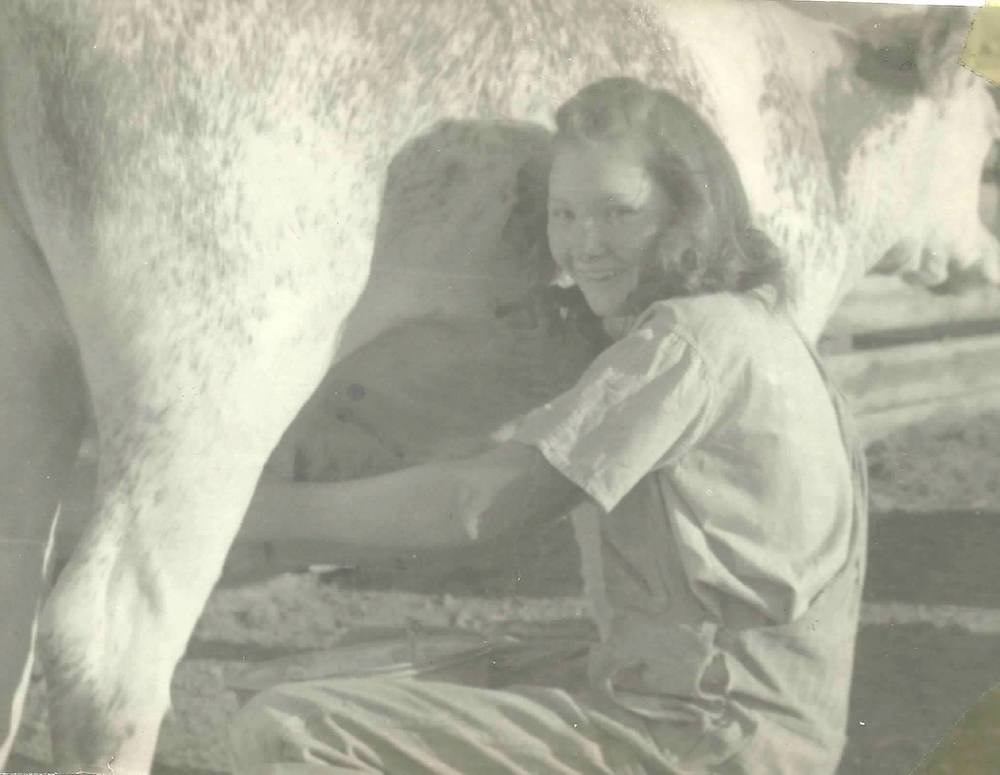
I, Lila Rae Fletcher Gradisar, was born Nov. 21, 1926, on a farm in Hayes County Nebraska about 6 miles east of Wauneta. I was the first daughter and second child of six children of Hazel Barnes Fletcher and Ray Fletcher. I was born at home . . .  in a very small house having a room which was used for kitchen, dining room and living room and two bedrooms. My earliest memories are of taking our Sat. night bath in a wash tub in front of the kitchen stove. The water of course had to be pumped by hand and carried inside and heated on the stove.”

Thus begins one of my sister Lila’s accounts of her childhood and our family history. When she died in 2013 at the age of 86, we discovered pages and pages of her writings in a trunk in her house. Many were handwritten in Big Chief tablets, some were typed on a typewriter, all contained details of a life and a family that would otherwise have been lost. It was after I returned home from that trip that I started to record and preserve these and other stories that might some day be of interest to my children and grandchildren. 

She wrote of what it was like to be a child, growing up during the Great Depression. Of the struggles my parents had when they lost the farm and struggled to feed their family. Of her first day of school in the one room school house and how she cried when the school burned down over Christmas vacation because now how would she ever learn to read? Of what it did to my family when my brother Don was missing in action in World War II. Of the fear and uncertainty they lived with during the Polio Epidemic. And she wrote of my father’s last days and words before his death in 1954 after a car accident left him paralyzed and lying in a hospital for sixteen days while she and my sister and mother sat by his side. All of this gives me insight into where I come from. And I am in her debt.

My memories of her come much later than any of these stories.

After my father’s death, my mother and sister Lola and I moved to Pueblo, Colorado, where Lila lived with her husband and family and worked as a nurse. Lila’s original plan had been to move to Denver after her high school graduation to attend nursing school, but she delayed this by a year to support her parents as they waited on news about my brother. However, when Don returned home from the War, she was off to live her dream. By the time we arrived, she was well established in her career.

The day after she finished nursing school, she married Tony – the tall, good looking guy she had met on a blind date the year before. The tall part was important to her since she was tall herself. And even after age had put a few pounds on him and grayed her once auburn hair, she always called him Slim and he called her Red. They were married 52 years.

Tony’s parents were first generation Americans who immigrated from Yugoslavia, whose first language was not English, who ate foods the Fletcher clan had never heard of (It was from her mother-in-law that Lila learned to make the Potica that has been a part of every holiday gathering I can remember) and they were Catholic. But whatever conversations came before, by the time Lila decided to marry her tall, good looking guy, my parents had made their peace with it.  

In a letter to my mother explaining her engagement she wrote:

“I was just thinking the other day how disappointing kids must be to their folks. You work like heck for years to get your kids through school, then instead of getting a job and supporting themselves for awhile they get some crazy idea like going to school for three more years.You think now after this is over they can really make something of themselves etc. so as a last straw they get married the day after they finish. Gee this all could be so much different. You could refuse to speak to me and make a big fuss about it. I want you to know how much I appreciate you being so swell about it …

Much later Mom told her, “I’m glad you and Tony are of the same religion and are raising your kids in the church. I wish we could have done that.” My mother was a Methodist and Dad was Church of Christ, but apparently “church” was not something they did together as a family. By embracing her husband’s rich Eastern European culture and faith, she brought together their two backgrounds and her children were better for it, as were we all.

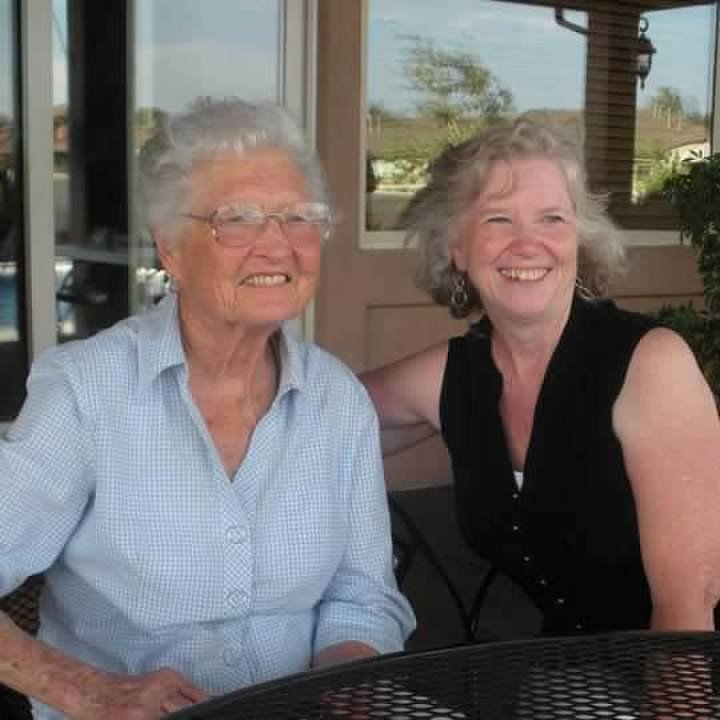
In Lila’s writings I see the woman I came to know much later in her story:  tenacious yet gracious; determined yet flexible; deeply committed to family and also to her career and her community; selfless yet understanding of the need to take care of herself; and a life-long learner. 

Like the little girl who cried when her school burned down, she never lost her love of learning.

In her retirement, she traveled with senior groups to places all over the world, staying in “elder hostels”. She joined a women’s investment group and learned the stock market. When her aging joints complained about her continued participation in the Senior Running Club, she contacted the local Agency on Aging to ask why Pueblo didn’t have a program for Senior Walkers. “Because no one has started it.” And so of course the Senior Challenge Walkers was born. She believed that the camaraderie and friendships were as important as the exercise “and of course, the nice breakfasts”. When she was no longer able to be a part of the walking part, she still met club members for breakfast after their walks.

My sister never learned to swim – if I remember correctly she had a terrible fear of the water, perhaps stemming back to being thrown into the lake by our brothers to “teach her to swim”. But in her 40’s she was determined to learn, so she signed up for the beginners adult swimming class at the local pool. After one four week session she had made very little progress. The end of the second session found her no further along. She registered for the third session. When the instructor saw her walk in he sighed. “Lady, you don’t need a swimming instructor, you need a psychiatrist!” But learn to swim she did – at least enough to feel comfortable in the pool with her grandkids.

She started attending her first Bible study in her 70’s.

When her son moved to Washington state and started having children, she researched how to stay connected to grandchildren who live far away. How do you even do that kind of research before the internet?! But she was the most connected grandmother I ever knew.

She took a course through the county (one of many she did over the years) about recording your memories and this is when she began writing the papers that we later found in the trunk.

I remember one year showing up at her house for a Thanksgiving or Christmas dinner. Up to this point holidays had always meant that the women spent the day in the kitchen cooking and cleaning up, the men spent the day in the family room watching sports or napping, and the kids did whatever they chose. This year Lila was standing at the door with a bowl of folded up papers, with a task written on each one : set the table, bring the chairs up from the basement, clear the table, wash the pots and pans, load the dishwasher, put away the leftovers, sweep the floor. . . and so it went. And nobody got by her without taking a paper. She just woke up one day and decided – this is crazy! Things have got to change. And so she changed them.

Like I said – a life long learner.

Lila had five kids, one a year older than me. We grew up together and though we lived on opposite sides of town and attended different schools, we spent a lot of time together. All my childhood Christmases and Thanksgiving were spent at their house. She would often stop on her way home from work on a Friday and take me to her house for the weekend where I would have playmates. Any “vacations” I took as a child were with them – usually to Nebraska to visit family but once we went to a cabin up in the mountains for a week. One summer the boys worked really hard selling  magazine subscriptions  to earn their way to a summer camp. But when it came time to go, they backed out so my niece Kay and I got a free week at sleep away camp.  I’m not sure we really liked it all that much but when we got home we were quick to tell the boys how great it was! 

She got me my first job the year before I started ninth grade – nannying for a friend of hers with five kids under the age of six. She helped me make craft kits and games to play with the kids to keep them entertained. I would stay at Lila’s during the week and she would take me to my job and pick me up and then take me home on the weekend. I don’t know if I ever worked harder at a job in my life. But with my earnings I bought myself a new dress that my mother would never have bought for me because it was so expensive and wore it  to my first day of Junior High and I could not have been more proud.  

When my nineteen year old, newly engaged self announced that I was getting married, my sister Minnie came from Nebraska and she and Lila jumped into the wedding planning – I’m sure to spare my my mother. “Where is the wedding going to be?” they asked. I explained we would be married at the church Paul and I were attending. “How big is it?” Plenty big. “How many guests? Hmmmm, maybe 100. 150 tops. (I think 200 showed up) “Where will the reception be?” The church basement. And this is where the sisters exchanged worried glances and suggested we go take a look. The church basement had a few small Sunday School rooms around the perimeter of a small “Fellowship Hall” that fit maybe 50 people. Minnie said, “Oh, Sherry, this won’t work. Let’s look for a reception venue somewhere nearby.” No. We’ll do it here. There were other suggestions made and I vetoed them all. Then Lila said, “Sharon, we cannot have the reception here. This is not an option.” To which I said, “Fine. We can have it at your house.” And that’s how it came to pass that Lila spent the summer of 1969 repainting, re-carpeting, and redecorating her house. A house, by the way that was NO where big enough to accommodate the guests. If it had not been a beautiful September evening where all the people congregated and mingled outside, I have no idea what would have happened. God bless her. And I’m sorry.

Her legacy

I asked one of her daughters what she thought her mom would name as her greatest accomplishment. “I think she’d say it was raising kids who all like each other and became friends. And her bond with her grandchildren. ” I would agree. I love that every Sunday her kids, even to this day, get together for breakfast. I could wish for no better legacy.

Someone once said to me, “When I watched her with Nick. I was sure he was her favorite. But then I watched her with Ray, and I thought – no he’s the favorite. Until I saw her with Kay or Greg or Mary Jean. And finally I realized – they were ALL her favorite.” I hope somebody will say that about me someday.

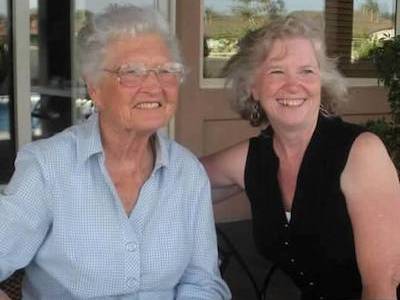
She was the keeper (and the maker) of my memories. She told me stories of our family before I was a part of it:  the events that shaped my parents into the people they became and who my father was before he died and my mother before she grew old. She told me stories so that I would know who my siblings were as children and she included me in her own tribe of five, making a place for me and trying to help me find an identity in a family where my siblings were the age of my friend’s parents and my nieces and nephews were more like cousins.

By watching her I learned that it’s not okay to settle. That you have to fight for the life that you want whether it means leaving your small town and striking out for the big city to become a nurse, being a working mom before it was in vogue, or learning to swim and ski after you retire. She taught me that you do the right thing – even when it’s hard or inconvenient: caring for an aging mother, a handicapped sister, a grandchild in need  of a fresh start. She taught me  to embrace tradition and welcome new adventures.

She was the nurse who helped my mother birth me into this world and one who knew my story from the beginning.  And now it is left to finish the story without her.

Lila’s Last Campaign

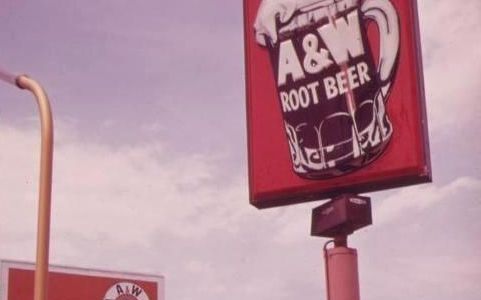
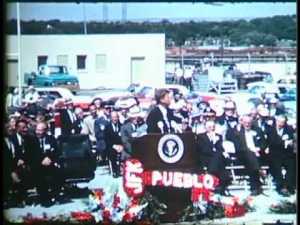
On a hot August day in 1962, my sister loaded up me and her five kids in her station wagon and took us to the District 60 Stadium in Pueblo, Colorado, to hear President John Kennedy speak. I have no idea what his speech was about and the PA system made it impossible to understand his words even if I had been interested, which I wasn’t.  I was twelve years old and would rather be at the pool, but afterwards we got to stop at the A&W Drive-In  and get root beer floats. . . so that was pretty cool.

I’m not sure what her motivation was. Maybe she wanted us to be able to tell our kids that we had been there the day the President of the United States came to our city. Maybe it was because she was looking for something to do with six kids on a hot summer day. Maybe she was inspired by this young, handsome, charismatic president.  Or maybe she believed that citizens should be active in their government and engage in the process and she was always one to teach by example.  Whatever her reasons, I do remember the day and the event and the fact that we were there.  

Fast forward 21 years. Now she is on the front lines of local politics: organizing volunteers to help a candidate get elected to the Pueblo City Council. He is young and passionate and wanting to make a difference in his community and she is convinced he has the wherewithal to govern and help the city so she throws herself into the campaign and learns a lot in the process. Her candidate did not win but he went on to serve his community through his law practice, his election to the Pueblo Water Board, and supporting and working to get other worthy candidates elected to public office, always recruiting the best organizer and recruiter he knew to join in the fight – that woman who had dragged him, his siblings and me to see a president on a hot summer day. A woman whom he called Mom and I called Lila.

Over the years, Lila was a force to be reckoned with. She was an expert at organizing and recruiting volunteers and putting them to work, ensuring that things ran smoothly. She was adept at managing call lists. She and her son worked to elect a governor and when a woman she knew, respected and trusted ran for County Commissioner, Lila and two other women managed a campaign which got her candidate elected.

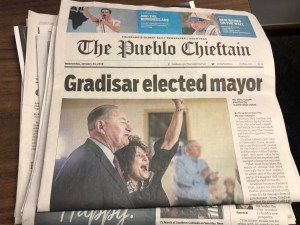
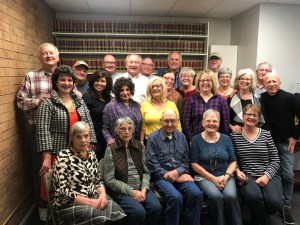
Fast forward 46 years. The family gathers from near and far – aunts and uncles and cousins and nieces and nephews and children and grandchildren and great grandchildren – to celebrate the historic election and inauguration of Pueblo’s first mayor in over 60 years – Nicholas Gradisar. How happy she would be to know Pueblo is in such good hands. And we say to one another, “Wouldn’t she have loved to see this?!”

But that formidable campaign operative whose first foray into politics was to campaign for her son’s election to city council so many years ago has been gone for exactly six years. And though she didn’t live long enough to see him take the oath of office as mayor of this city she knew and loved and invested in, her spirit hangs in the air and seems to hover over all of it.  

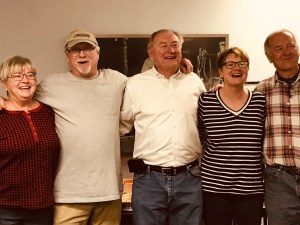
But if Lila is gone, she has left in her stead some pretty good replacements. All of Nick’s siblings have rallied to the cause.  They campaign, they mobilize, they show up and do their part to get their brother elected. His sister Kay in particular seems to channel her mother and has the same bulldog tenacity when it comes to getting it done.  

Kay, still working the phones on inauguration day.
the siblings

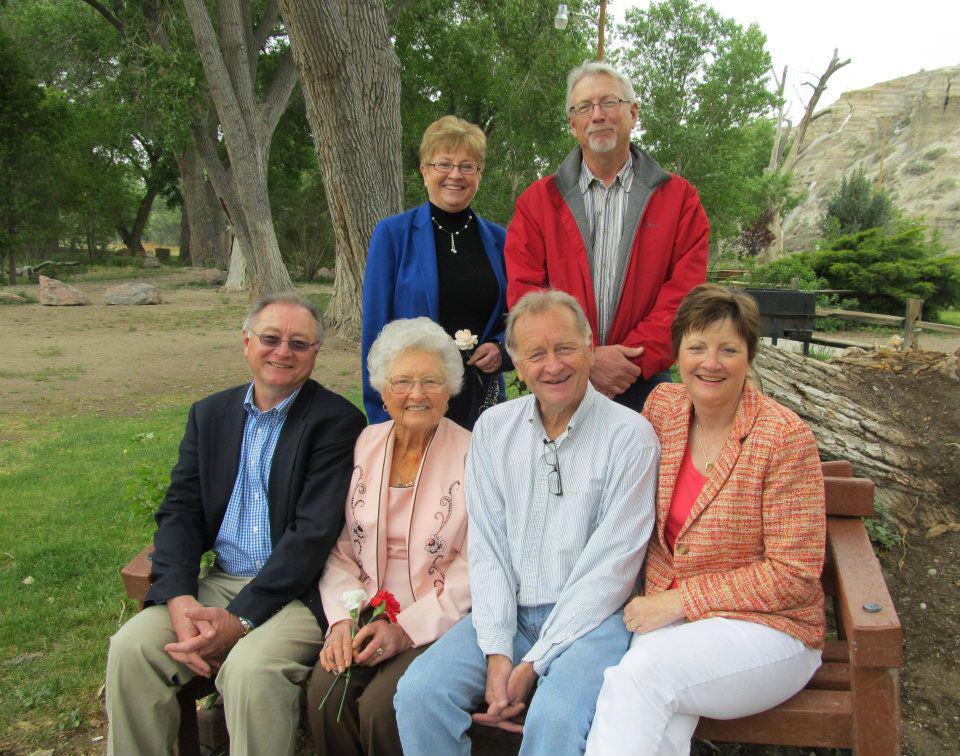
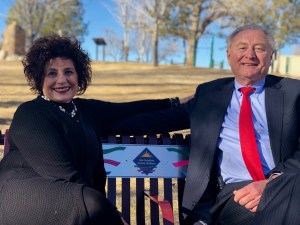
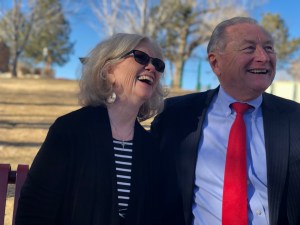
After the swearing in, we have lunch and then walk down the River Walk to sit on the bench which was donated in her name to the city of Pueblo and offers a respite for walkers out for a stroll or for exercise. We take pictures and share her stories and say, “Wouldn’t she have loved this day?” 

Mr. Mayor and the First Lady of Pueblo
Family gathers from Colorado, Nebraska, Wyoming, and Maryland.

Really, the only thing that would have made that day better is if we had been able to cap it off at the A&W Drive-In and toast this day and her with root beer floats.  So here’s to you, Lila.  Ya done good!

Cheers!

Where I Come From

Over the course of my lifetime, I have lived in six states and twenty two houses (not counting various summer lodgings and a brief stint in a ‘59 Ford panel truck), and I  expect that I have at least one more move in me before I land at my final resting place. Sometimes I sort of feel unanchored by my lack of roots or the fact that there is no one place that I think of as “home”.

There is the first house we lived in together as newlyweds and college sophomores. The one with the slanting living room ceiling that went from seven feet at one end to five feet at the other end and where we wore out our Simon and Garfunkle albums on our new hi-fi. Where we fought and forgave and learned to be married.

There is the house where we hung a giant crystal chandelier in the entry way of our our upstairs apartment and drug the table out of the kitchen when we had guests so we could dine under its brilliance.

There is the house with the pine cone wallpaper that shows up in the kids earliest memories. . .  except they all put the room in different houses. But it keeps showing up which makes me think it was ugly enough to leave an indelible impression.

There is the house we rented because it had a living room big enough that we could hold church services there and we shared it with three single women who lived in the basement. It had a little room upstairs lined with windows which is where our first “school room” was and I taught several of my children to read. It’s where I cross stitched the dozens of Christmas tree ornaments with the names for Jesus that still hang on our tree.

There is the house that had an indoor swimming pool where we taught the two year old to swim.  A sauna that she called “the warmer” and a fireplace that didn’t draw so that all of our clothes smelled like  Eckridge Farm smoked sausage.

There is the first house that we bought instead of rented. We were forty years old with six kids and a dog. And now we were homeowners. We lived there for fourteen years, longer than anyplace else we had ever lived. It was a palace to us with a big yard and a deck and a strawberry patch. The walls of the living room were painted a country-blue which was in vogue at the time and I loved it. It had a fireplace and three full baths and five bedrooms. It was in the family room of that house where a little team of people gathered to pray about starting a new church. Before long we turned one of those bedrooms into the “church office” and it  was in that living room with the blue walls that we folded church bulletins every Saturday night and had Women’s Breakfasts every month.  It was in that house that Cedarbrook Community Church was born.

There is the two bedroom house where I grew up – the home of my childhood memories.  There was a rocking chair in the corner of the living room where I did my homework, watched the black and white television with rabbit ears, talked to my friends on the phone, and dreamed the daydreams that young girls dream.

There is the house where we live now – just the two of us.  The one where we asked the builder to take out any walls in the downstairs living area that were not load bearing so as to accommodate the table made to order by Amish furniture makers. The table that would stretch across the whole length of the room and where we could sit with friends and family over a meal and recount the stories that bind us together. The house where we added bay windows and skylights because the more light the better and where, though we had no idea what we were doing, we somehow managed to create this magical secret garden of a backyard.

And yet . . .

Last summer we made a trip to Nebraska to see my family.  It’s where I’m from: this land of wheat fields and sand hills. Of windmills and wildflowers. Of farmland and cattle ranches. It’s where I was born, but I feel no real kinship to this land. I have no memories of it as a child and no real  understanding of this way of life or how it matters to the rest of my family. But as I grow older there is a longing to connect with this past and this place.

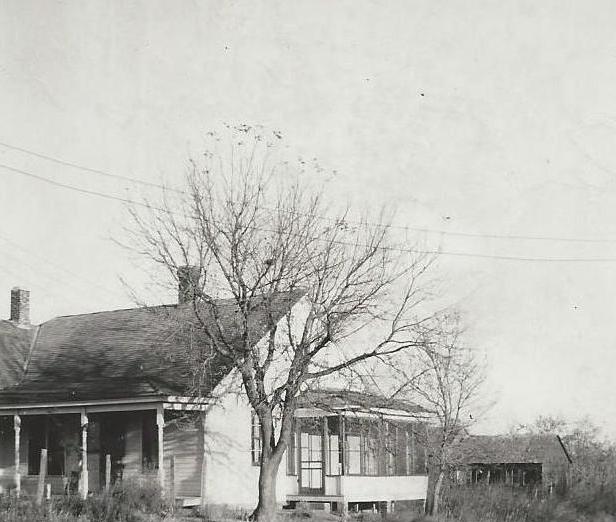
I have heard the stories – mostly from my mother when she was living. The stories of how my parents were farmers who had a dream of owning their own place, but it never seemed to work out for them.  Just when they thought they had  saved enough to make it happen the drought would come, or the flood, or the depression, or the war, or . . .  But then when their family was grown (all but the late-comer who was only two and named Sharon) they saw a way. Outside a little town called Wolbach, they bought a farm. This Nebraska farmland had been home to them all their lives, and now they owned a piece of it. My oldest brother Don and his family moved in with us and together, he and my dad worked the farm and when my brother Irvin returned from Korea, he joined them.  It was the family business, this love and care of the land.

When my father died two years later and my mother had to sell the farm, we moved to southern Colorado where I had a sister who thought she could get Mom work to support us. I have no memories of a life before the dessert of southern Colorado and the wild, rugged beauty of the Rocky Mountains that surrounded us. I couldn’t relate when my mother talked about the wheat that looked like copper pennies when it was ripe for harvest.  How the fields were green as far as the eye could see when the crops came up in the spring. How the corn fields marked the passage of the growing season with their changing tassels waving in the summer breezes. And how she could see it all from her kitchen window of that farm house.

She told me once that when she visited my sister in Colorado for the first time (it might have been her first trip out of state) as the bus pulled into Pueblo with its steel mill and monochromatic landscape she said out loud to herself, “Why would anybody want to live in this God-forsaken land?”  By the time I can remember, my mother had made her peace with living in the place that God had forsaken,  though I don’t think she ever stopped missing “home”.

There is no place for me that is like that. I liked some of the places we lived. . .  others not so much.  I have fond memories of some of them, but truth be told sometimes I get mixed up whether such-and-such happened in Kansas or in Illinois or if it was the house on First Street or the one on Columbia Street. It sort of all runs together.

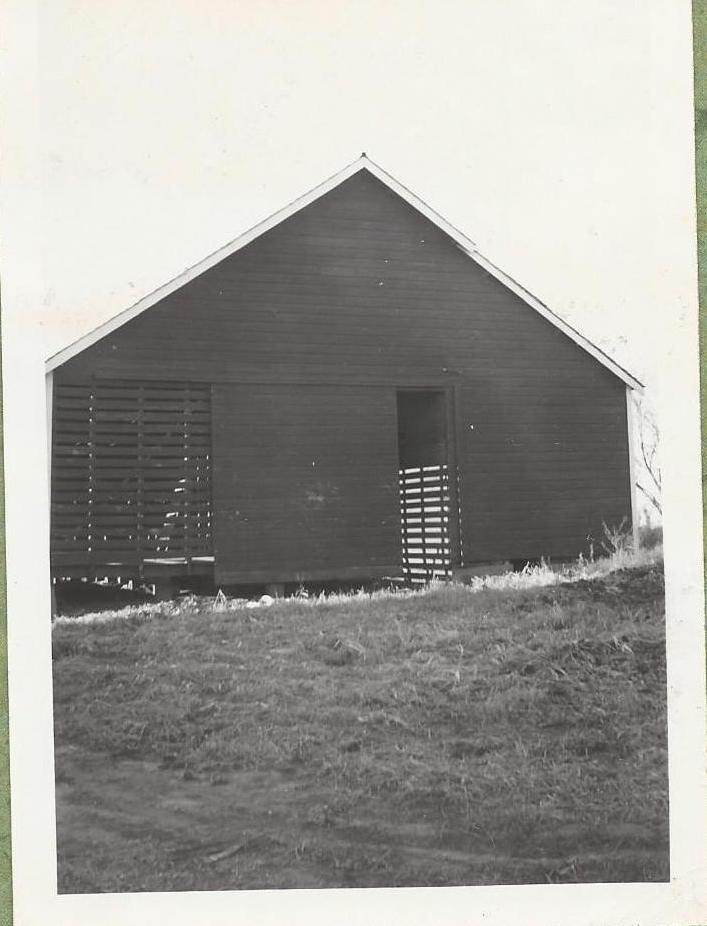
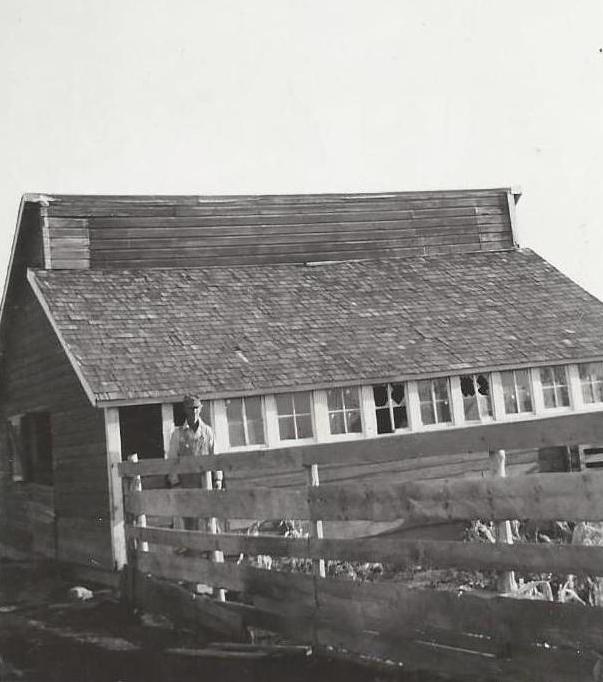
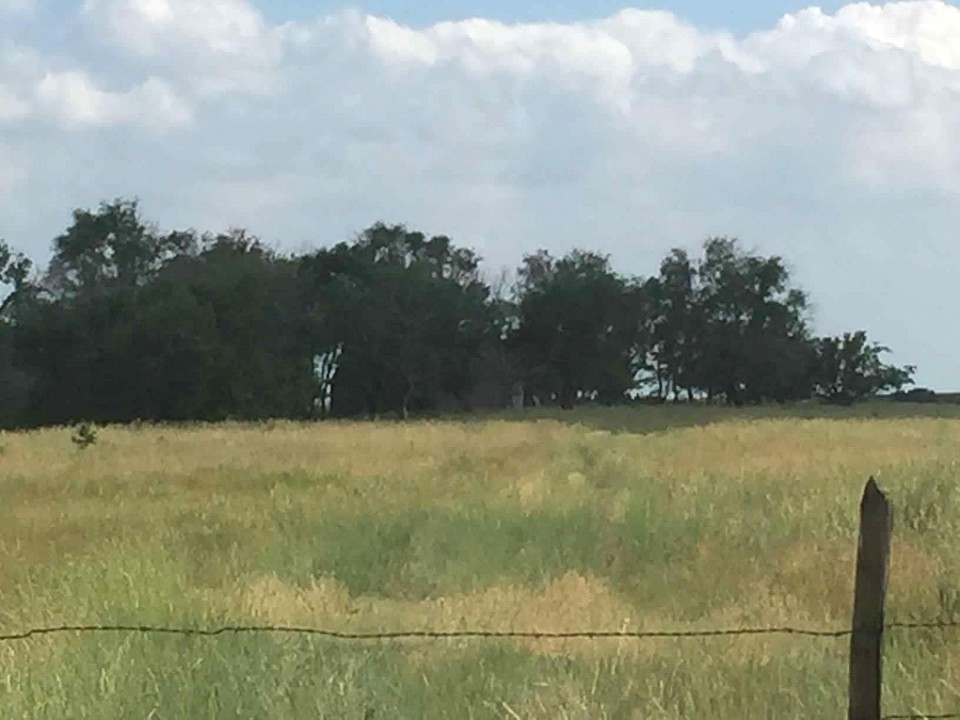
So last summer when we were in Nebraska I asked my brother if he could take me to Wolbach and find the farmhouse. The house was gone, he told me. Had been for a long while.  And he didn’t know if he could remember exactly where the land was . . .  but he would try.  And so we set off on our quest. Getting to Wolbach was easy. . .  it is a booming metropolis of 283 people. But now what?  We started down one road, but it had been washed out by the spring rains and anyway, he thought maybe we should have turned the other direction back up the way. We rode a while longer and came to a farm where a man in overalls stood out in the yard next to the fence, wondering at the strangers in his neck of the woods. We stopped and Irvin explained our mission – “We’re lookin’ for the place that was Ray Fletcher’s back in the early 50’s. I think it was bought by . . . .  and then by. . . .  and then I’m not sure who they sold it to. “Well, what you’re gonna wanna do is go back out this road and go about two miles and then. . . “ and so we made our way down some “roads” that were more like gullies until my brother said, “This. This is it. The house sat back there in that grove of trees.  It’s been torn down now,  but there’s still some of the barn standing. It was right  back there.”

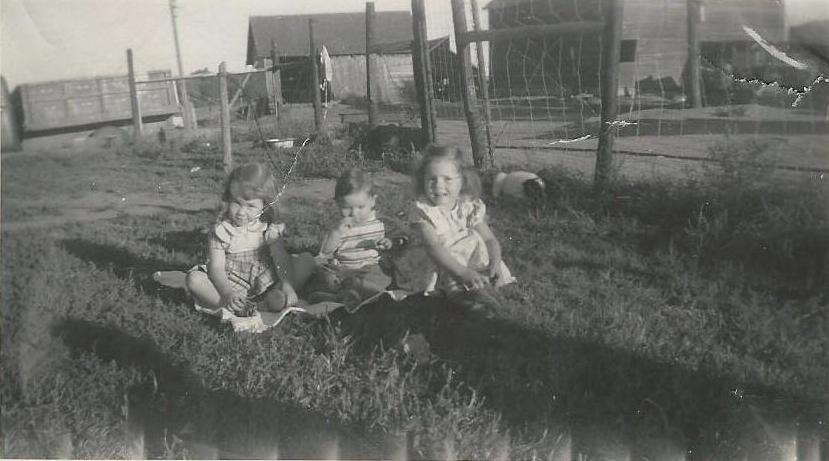
I stood there a long time. Remembering the stories from my mother. . .  like the one about how the goose chased me and I caught my leg in the fence gate which left a good sized scar that I carry with me to this day. Or how my dad would go into town every Saturday and bring back a little brown paper bag with candy in it and would sit at the table in that kitchen and divide it between me and Jolene. And I called back Jolene’s stories about our time in that house. Almost exactly a year older than me, she is Don’s oldest daughter, the one who moved into the farmhouse with us and the keeper of the memories of the adventures she and I shared there. Like the time we escaped from a charging bull by climbing into the corn crib and throwing ears of corn out to him to scare him away, holding him at bay until we were rescued. Okay, so maybe the bull wasn’t raging but rather ambling and maybe he was ambivalent about our efforts to engage him and maybe we were in no real danger. But what a story! This was the corncrib where we had our “playhouse” – where we made mud pies and played away the hours which is what childhood is for. No matter how hard I try, I have no memories of these children or of this place.

In the Celtic tradition, a “thin pace” is the place where the veil that separates heaven and earth is nearly transparent. A place where, for a moment, the spiritual world and the natural world intersect. That day last summer, as I stood on a road, looking over the fence into a grove of trees where you could just barely make out the the ruins of a barn, this was a thin place for me, and if I listened hard I could almost hear the echoes of their voices –  those two little girls in the corncrib, trying to shoo away a bull who had meandered into their story. I can see through that veil the ghost of a woman, staring back at me from her kitchen window. She has the hint of a smile and I recognize my own face in hers . . . the features startling in their similarity.  It is my mother, welcoming me home.

farm 2
       A THIN PLACE