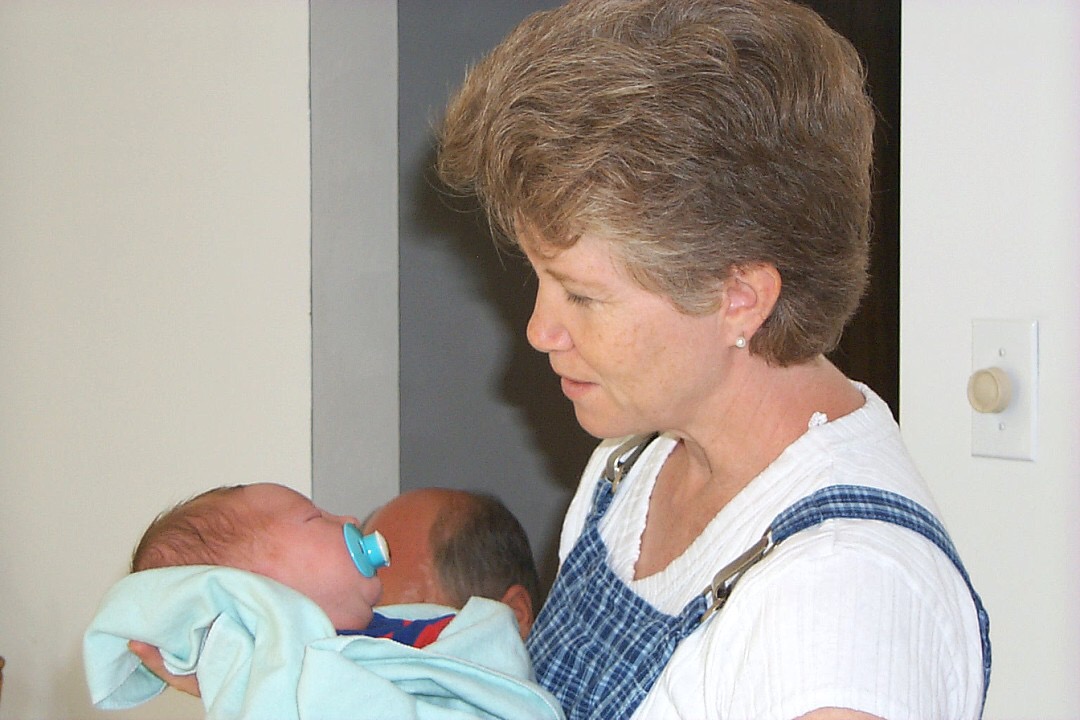
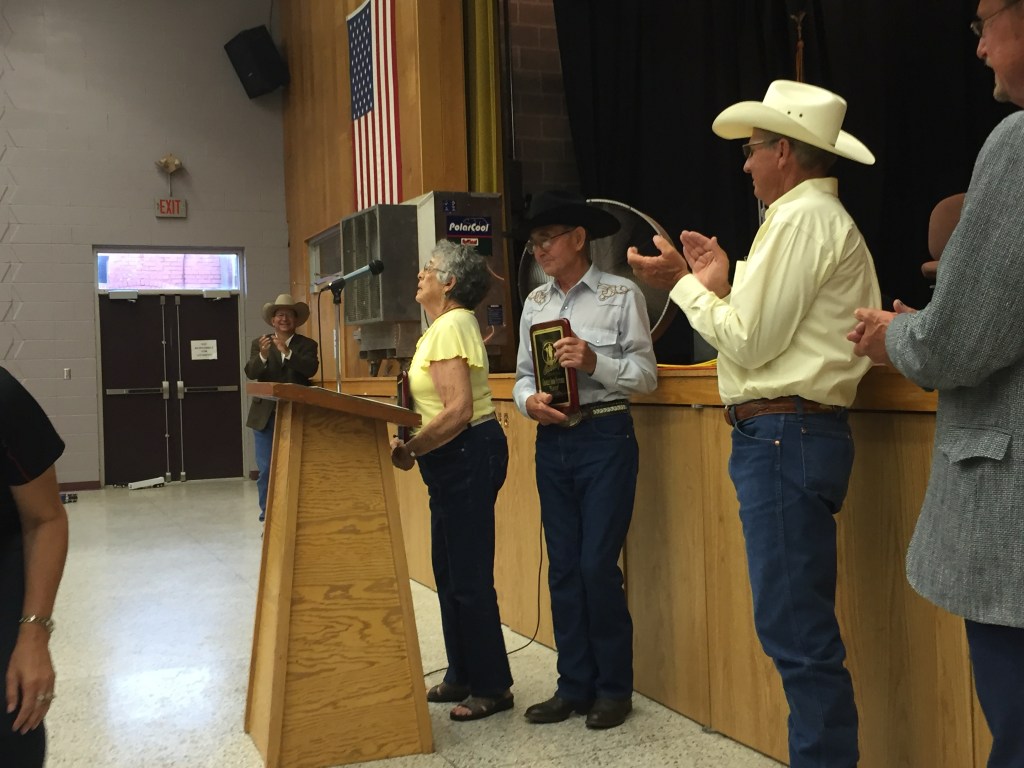
We gathered from several states and varied walks of life. We came by car and by plane and by the grace of God. For one magical and memorable weekend, we left behind jobs and kids and grandkids and the lives we had built apart from this place. We came to bear witness, to congratulate, and to be a part of it. But mostly we came to celebrate. My brother Irvin and his wife Joyce were being inducted into the Nebraska Sandhills Cowboy Hall of Fame and so we came.
His daughters rented the community center for the day in the little town of Taylor: a place where family could gather before the craziness of the main event that evening. A place where we could eat the lunch they provided, take pictures, catch up and “visit” – which really means “to tell stories.”
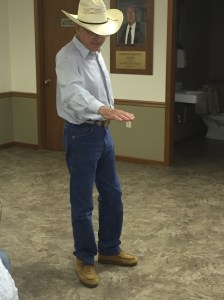
He stood up and announced “I have a story I want to tell.” The room went silent.
And he began to spin the tale which went something like this:
And they were lined up down the sidewalk – all of them about this high.
When my buddy and I were on the rodeo circuit, one of our favorite places to rodeo was Pueblo, (Colorado) because we could always count on the accommodations at the Bed & Breakfast there – better known as my sister Lila’s basement. We rolled in there after a rodeo one night in the wee hours of the morning, kicked off our boots, threw down our hats, and collapsed on the bed. Later that morning we saw these little faces peering in the basement window, staring at us with eyes opened wide. And then we heard the voice: “Just step on over here and take a look at two real cowboys. You can see them, their boots, their spurs and their hats. And it will only cost you a nickel.” Nick and Ray (Lila’s sons who were about 4 and 5) were selling tickets to see “a real cowboy” and the line went down the block.
And then he finished with this: So when I heard Nick was coming to town this weekend, I made sure my blinds were closed.
I learned three things from that moment: (1) My nephew Nick’s entrepreneurial bent began much, much younger than I realized. (2) I come from a long line of storytellers. (3) Even a quiet man, when given a chance and a good story, will stand in front of a group of people and talk.
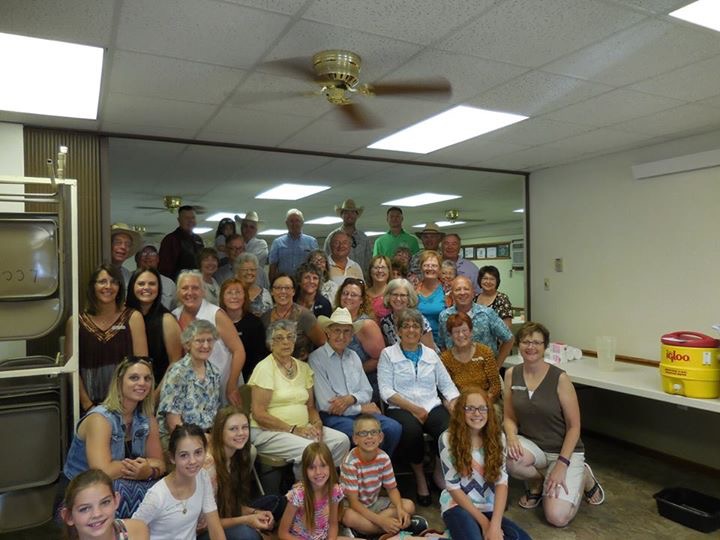
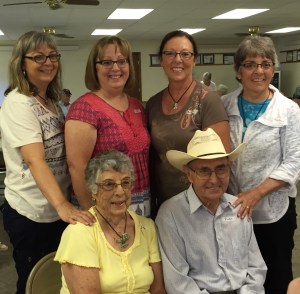
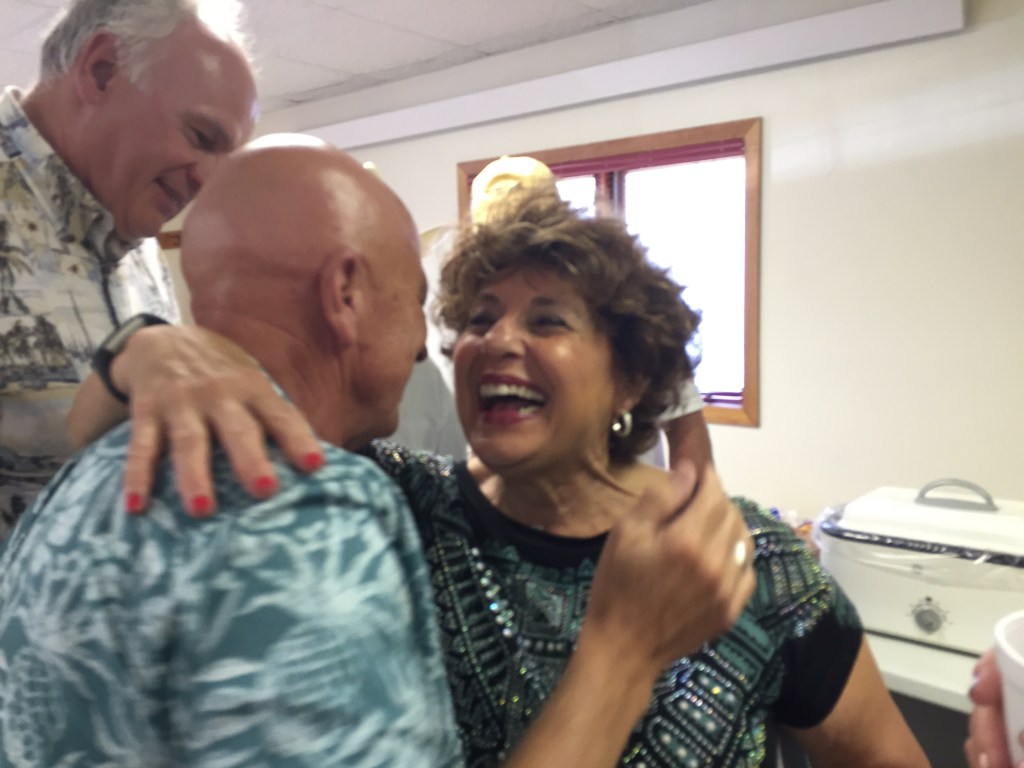
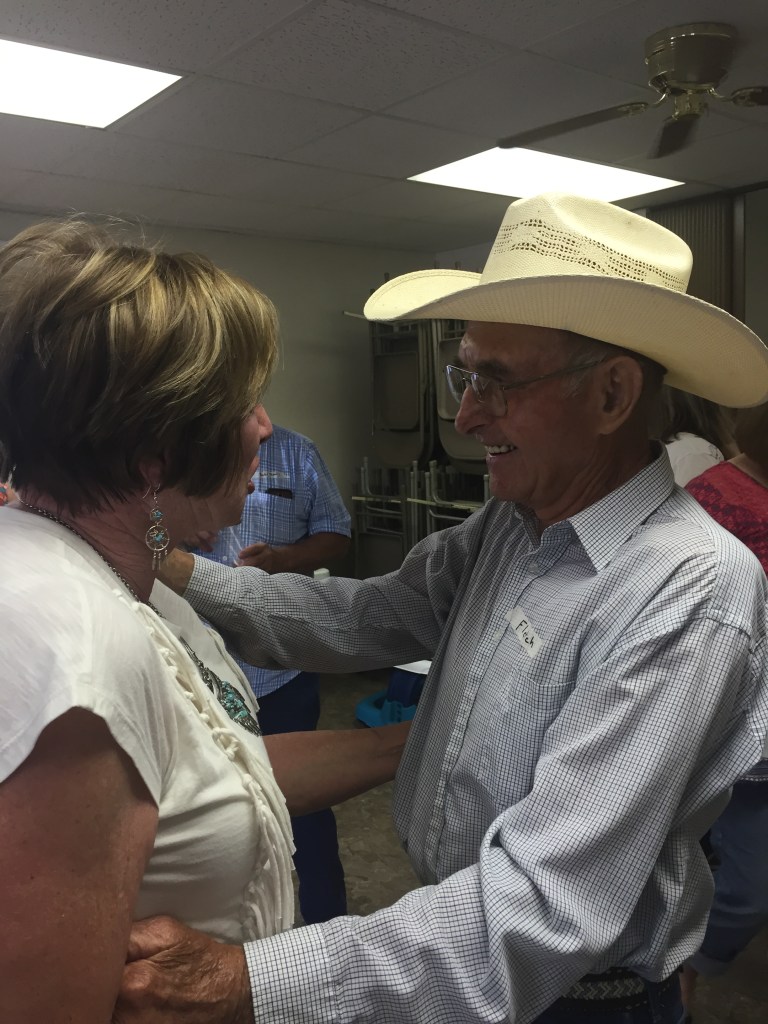
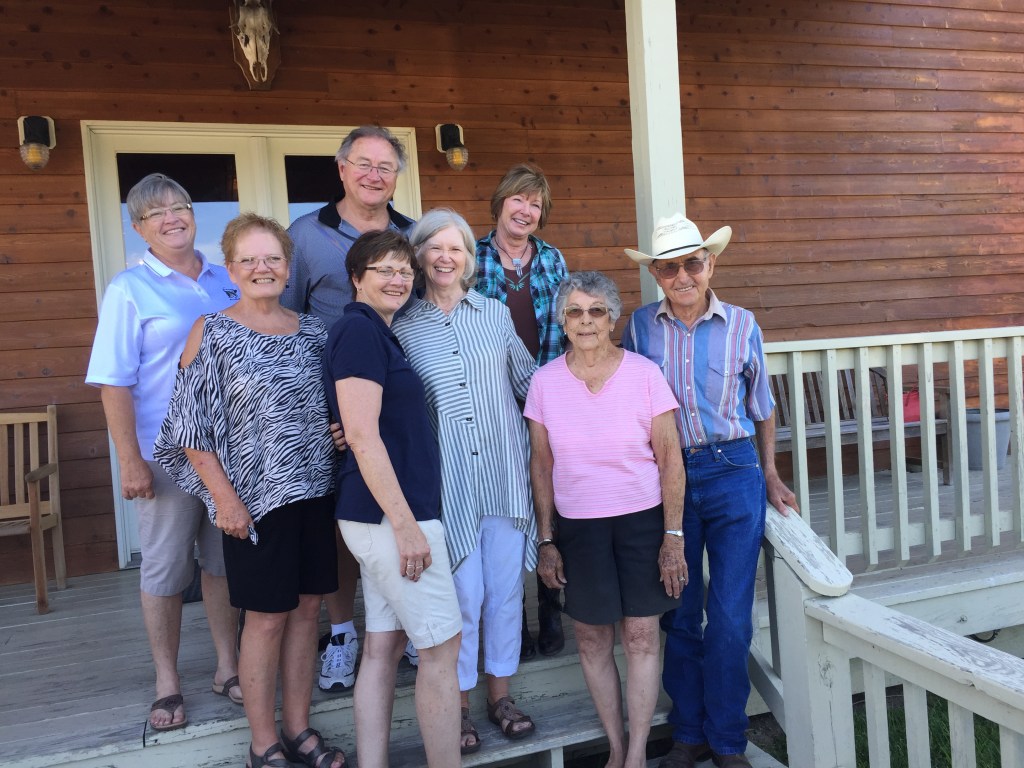
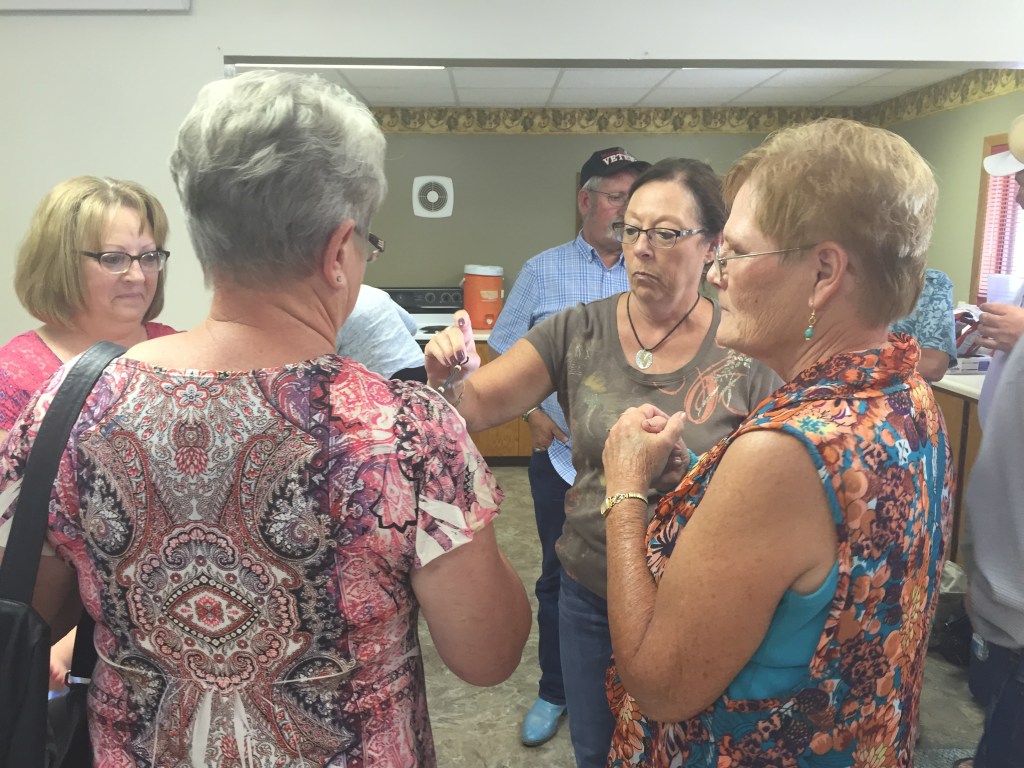
The meet and greet for family at the Community CenterFrom several states and many walks of life – but all familyIrvin and his girlsfamiiy through love if not through blood
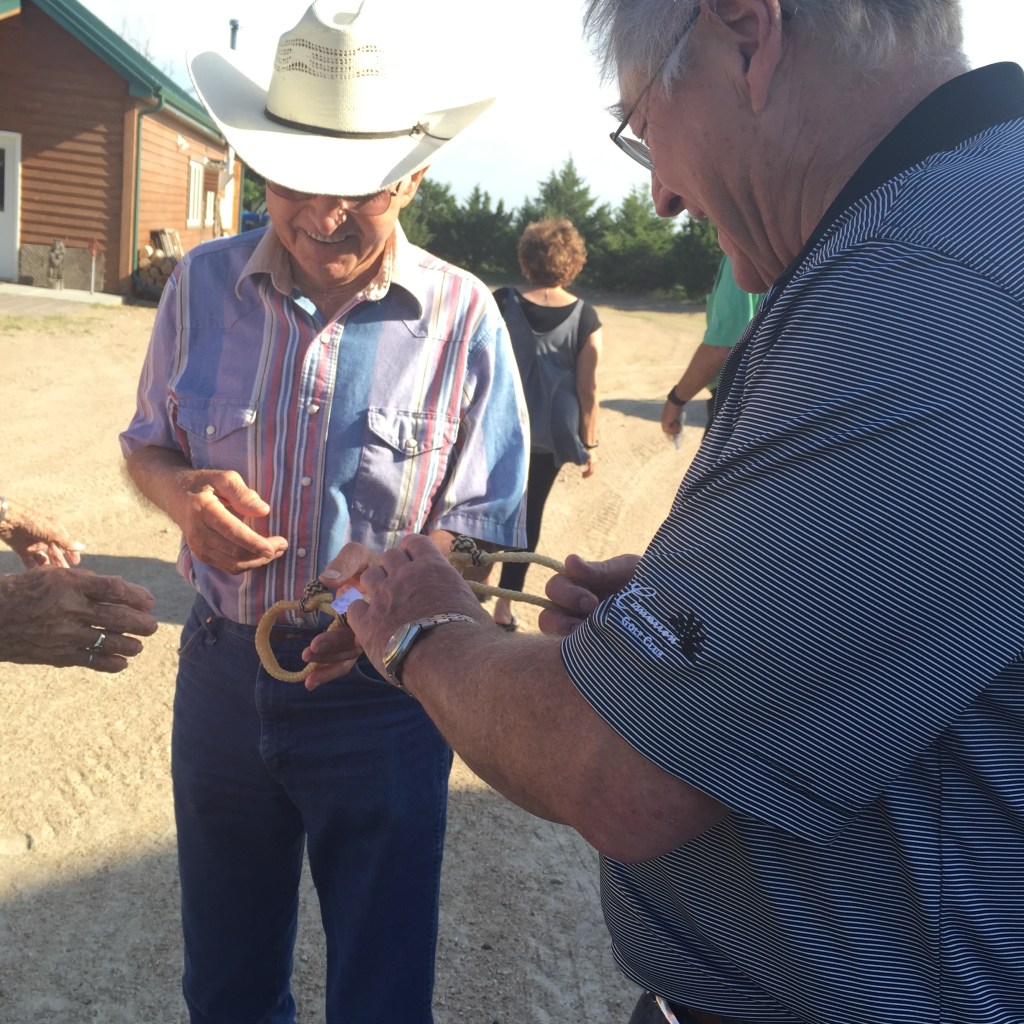
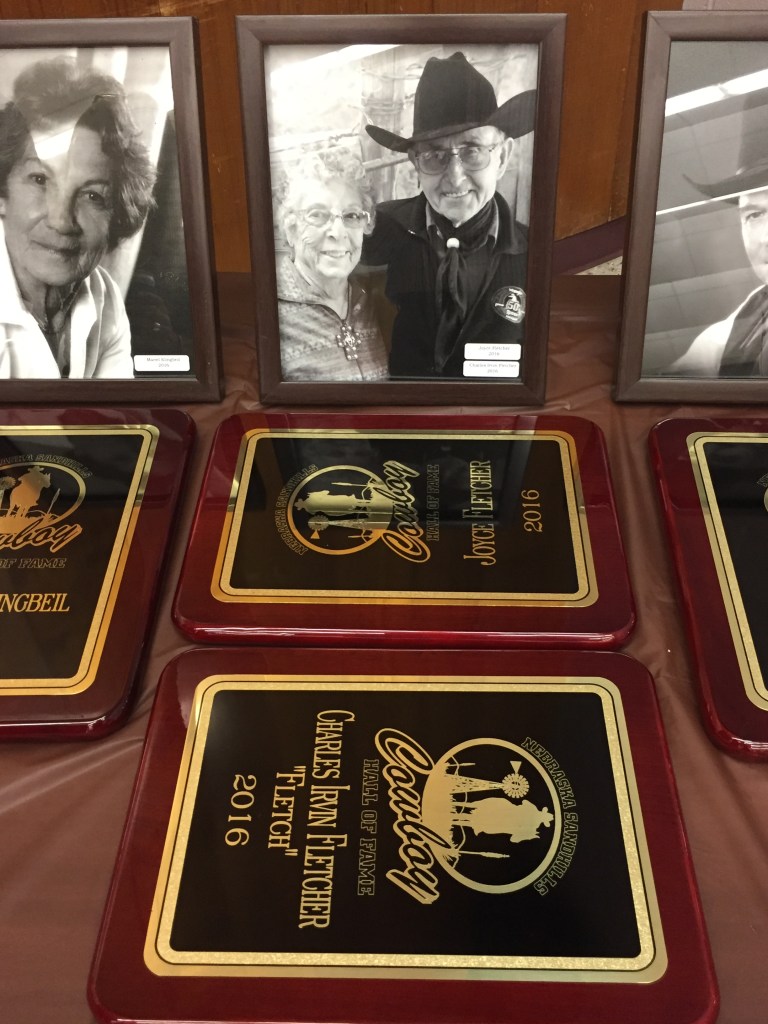
And through the day and into the evening we watched and we listened and we learned about their lives and their contributions which earned them this honor. The Nebraska Sandhills Cowboy Hall of Fame recognizes those who have made extraordinary contributions to the Western Lifestyle or horse culture in the Nebraska Sandhills in the areas of competition, business, rodeo, ranching, western arts, and western entertainment. My brother was a rancher and bull rider, an artist who braids leather into everything from bullwhips to jewelry and a mentor to young rodeo competitors. He is a lover of the Sandhills and its way of life. And his wife was there with him in every one of his endeavors. She tells us, “I’m not a cowboy. I just found one.” But he couldn’t have done any of it without her.
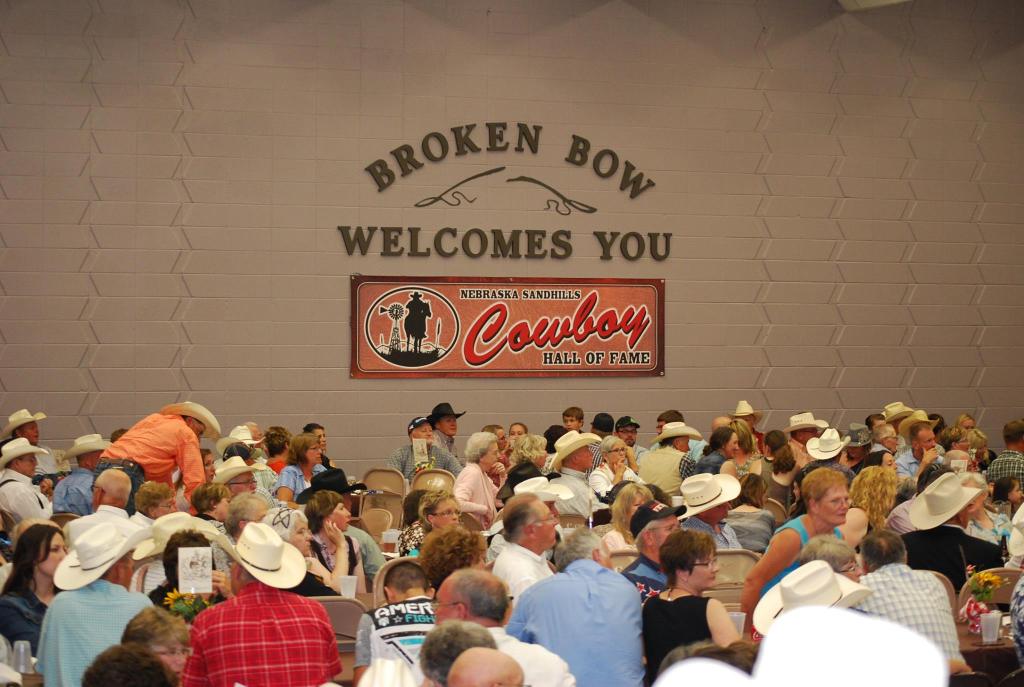
We go to the dinner and the auction and the induction. We complain about the heat but notice that we are the “city folks” and none of the cowboys in their wranglers and their boots and long-sleeved shirts and hats seem to be the least bothered by it – they never worked in air-conditioned offices where you have to wrap yourself in blankets to stay warm in the middle of the summer. (Maybe I should have been a rancher after all). Nick bids on the rawhide braided hobbles Irvin has made and donated to the fund-raiser auction but they go for over $1300 and he decides it’s too rich for his blood so he lets them go. Besides, he can always just buy another pair from his uncle and pay the $100 asking price. (sidebar: the next morning several of the family gathered for breakfast before we go our separate ways. Irvin arrived with a pair of the hobbles for Nick. He had crossed out the $100 on the price tag and replaced it with this: “One day only: $1300”)
SOLD! to the little lady down front!Should have bought ’em before he became famous.
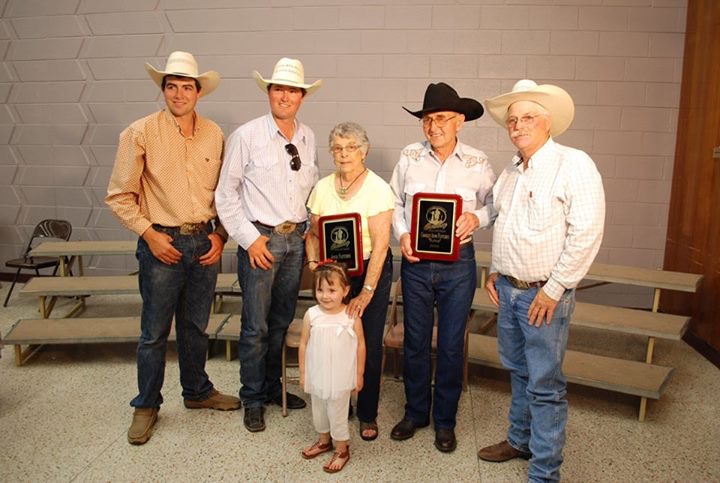
When they call Irvin and Joyce’s name we all stand to clap and cheer and whistle and the rest of the room stands with us. When you live and work and serve in the same community for 88 years, people know you. Together this couple is well known and well loved and tonight they are well-honored.
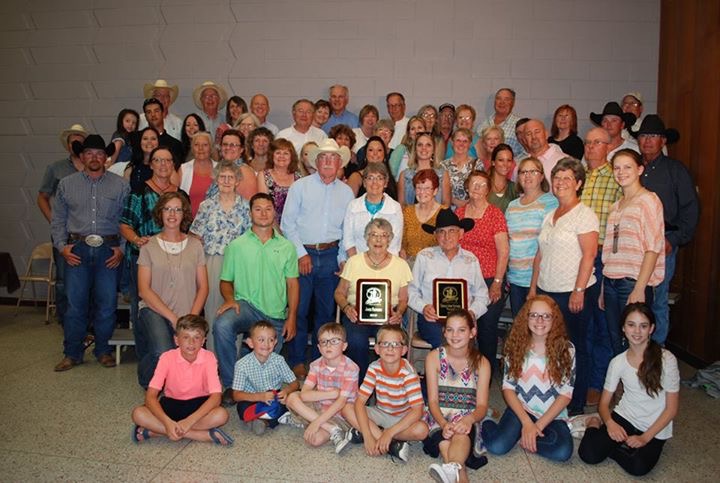
Of all the inductees, they definitely had the most people assembled for their group photo This is some of the Fletchers and Lindermans (Joyce’s family) who cheered and whistled and celebrate their accomplishment.
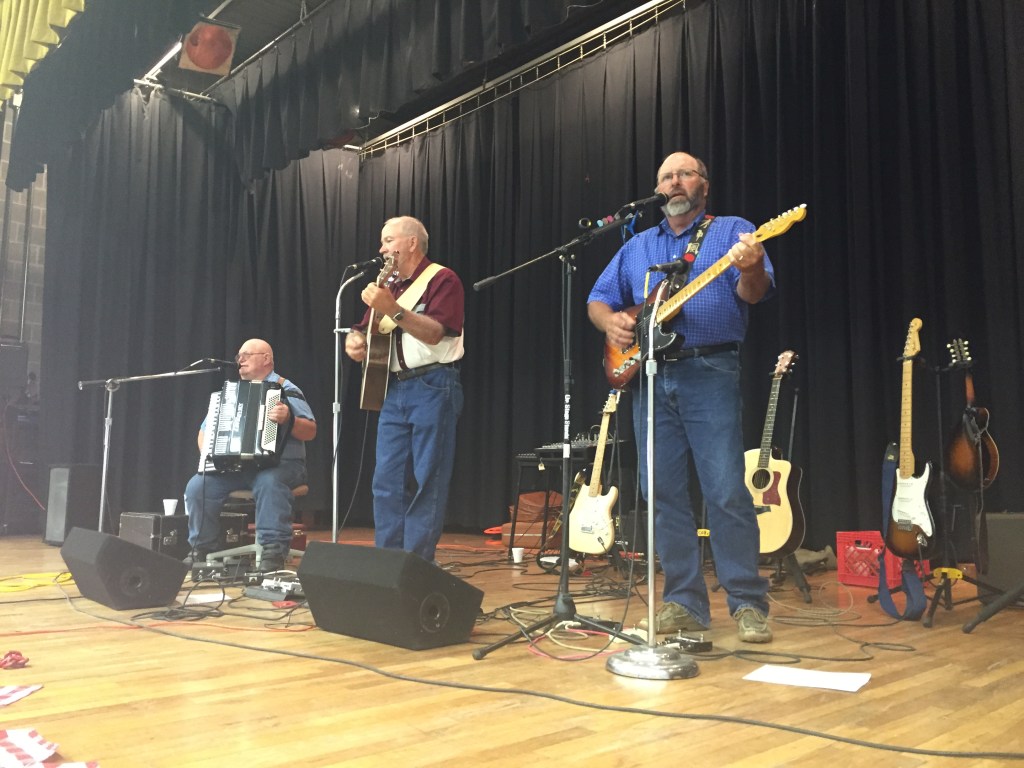
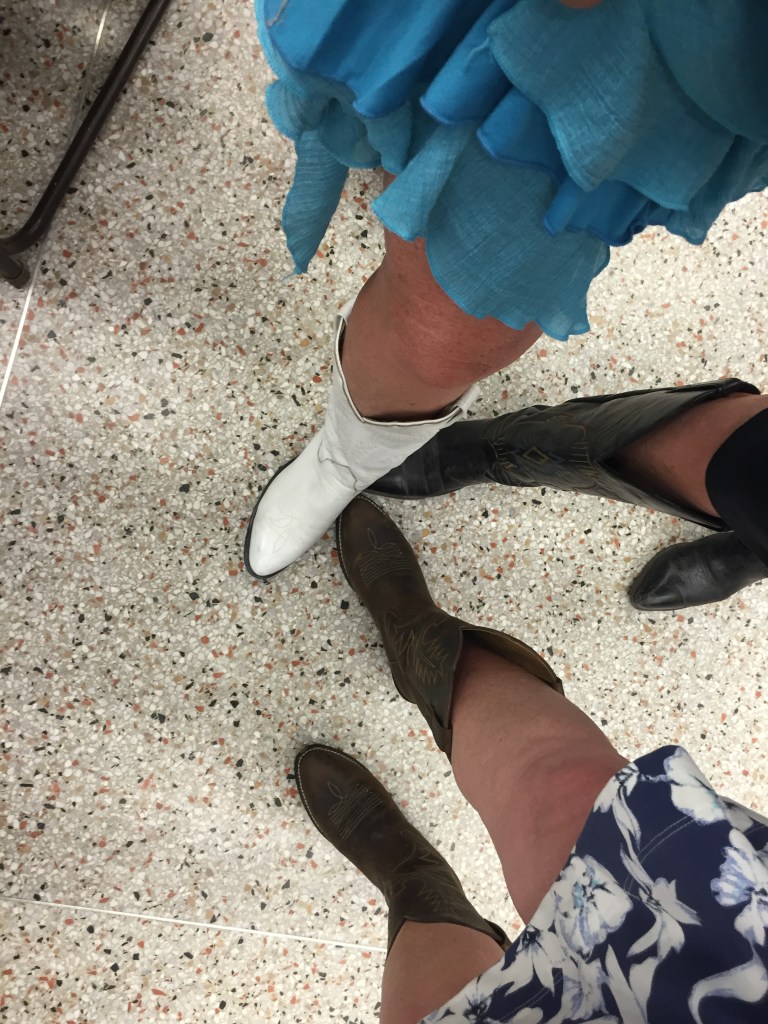
And what’s a cowboy gathering without some Country Western Music?What else would one wear to this occasion?A young cowboy with his mentor.
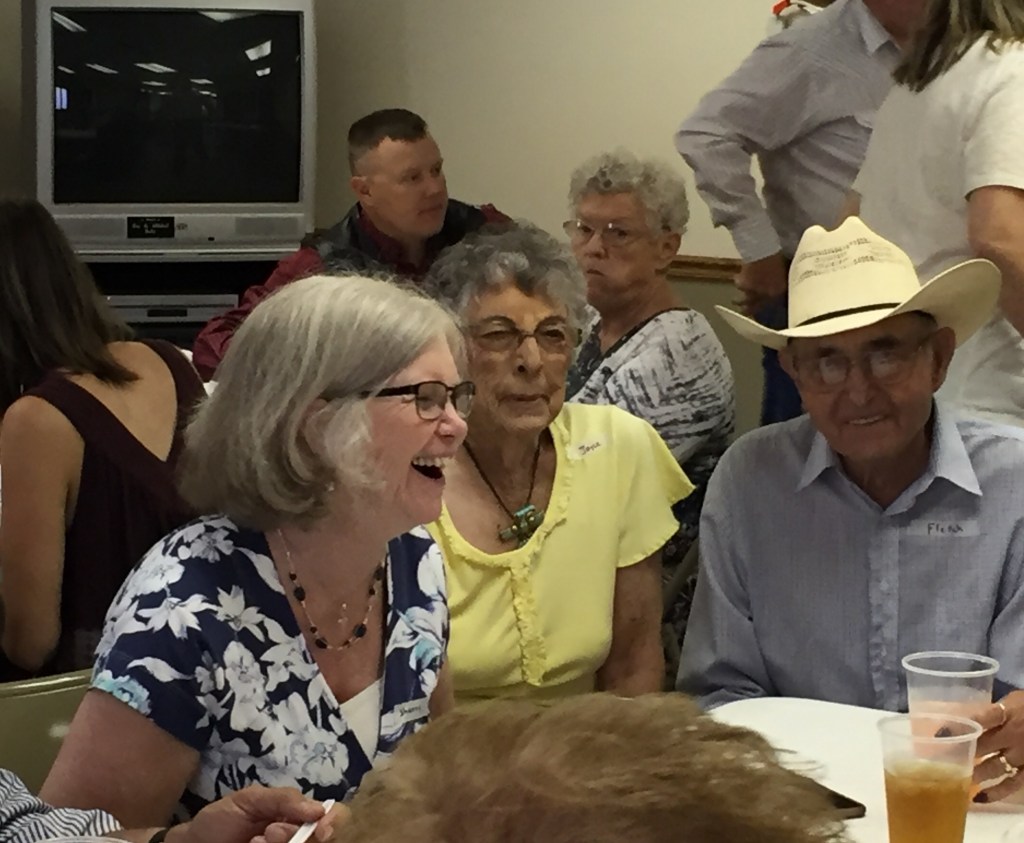
Of my parents’ six children, only Irvin and I are left. He was the third born and I am the youngest – a whole two decades younger than he. The siblings who shared his childhood, his stories, and his memories – they are gone. But if you knew what to look for, you could find them gathered around the tables: in the face of the one who looks exactly like her mother, and the one who laughs, just like her mother, and in the voice of the one who could say, “I remember my dad telling me about the time you and he. . .” And I was there. I do not share his memories, but I do share his stories, as did we all. Because in one way or another, all of us who gathered for him: me (his sibling); Nick and Kay and Mary Jean and Jolene and Shirley (the children of his siblings); Raeleen, Bobbie, Pat, and Cindy (his daughters ; his grandchildren and his great-grandchildren – we all come from this place and these people. And it was so good to be there. . . together.
In 1954 it only cost a nickel to see a real cowboy; our tickets for this event cost us $20 a piece. For that twenty dollars we got to see a whole room full of cowboys. And more. We heard a lifetime of stories. We laughed and we cried, we talked and we listened, and we remembered again that this collection of people from so many different places and so many different ways of life – we remembered again that we are family. And at the end of it all, we knew that there would never again be a time together quite like this one.
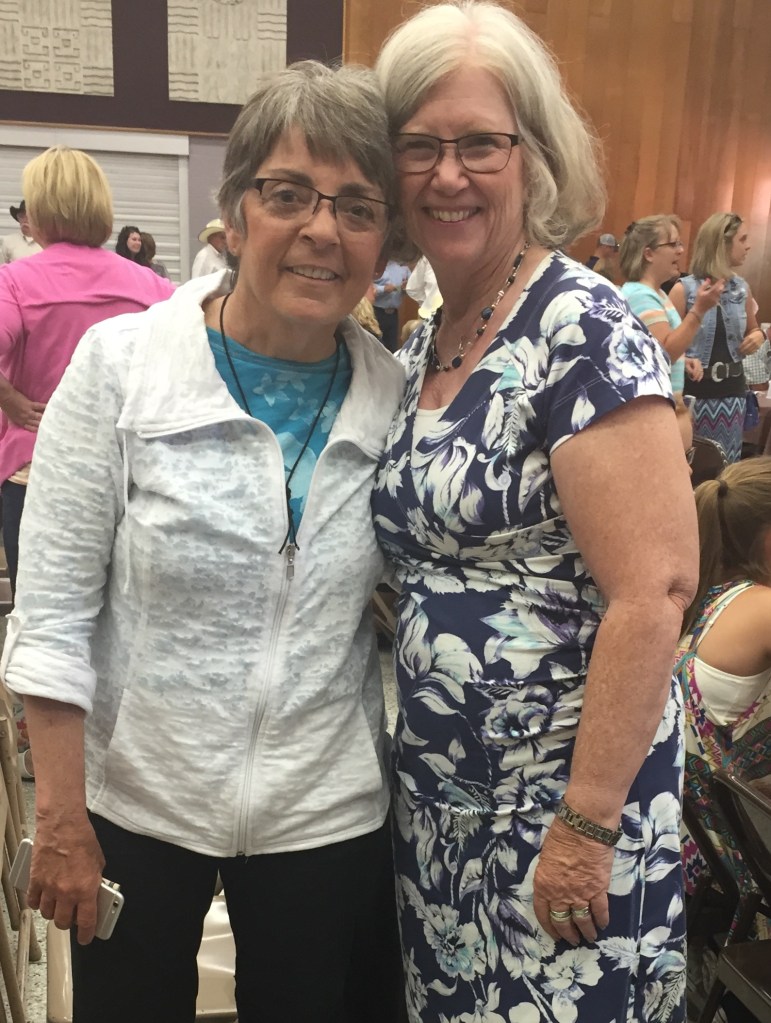
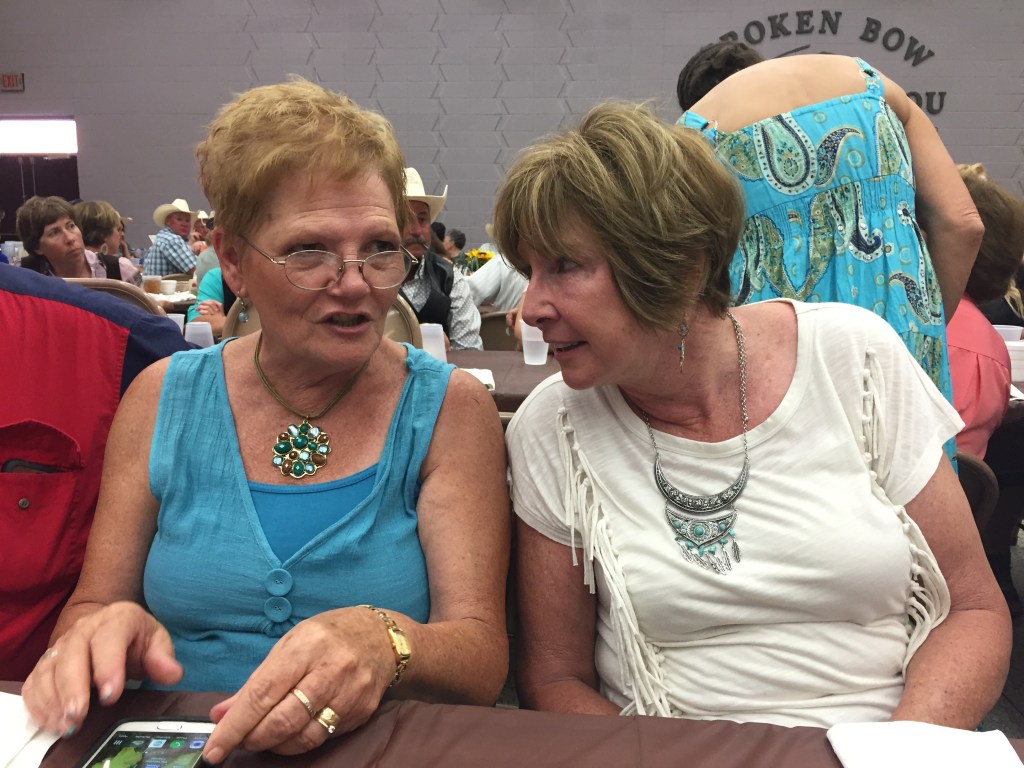
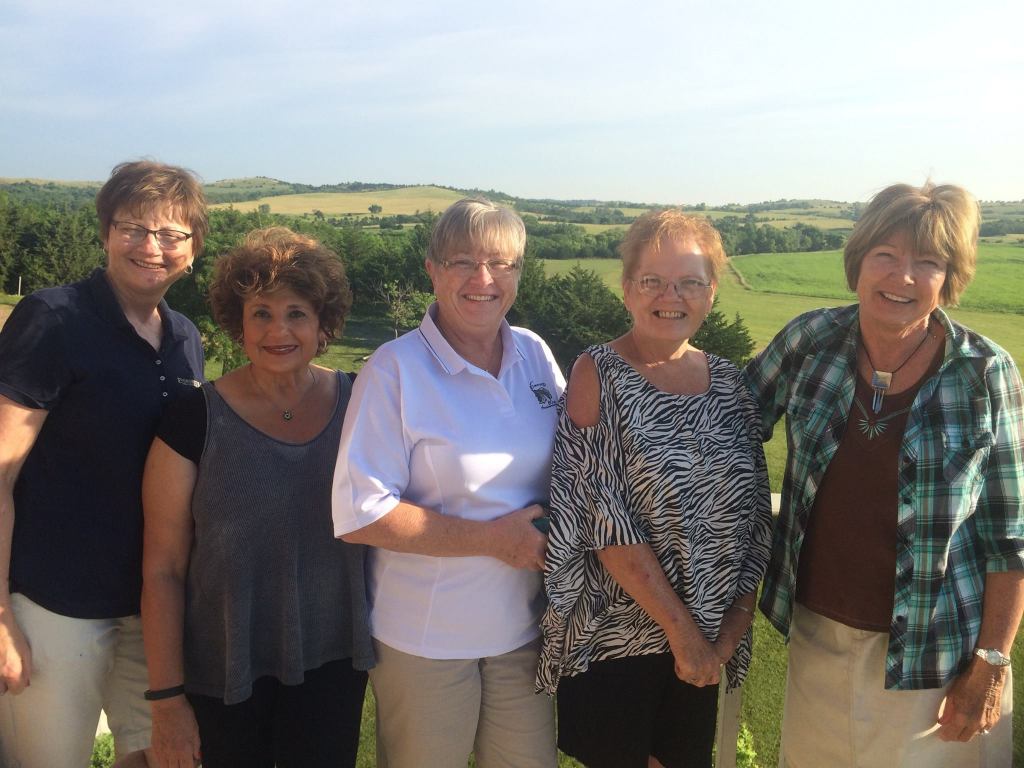
Raeleen and Tom. . . she was his first ranch hand. Cousins plus one (the one being the aunt in the middle)Who let the open toes in?
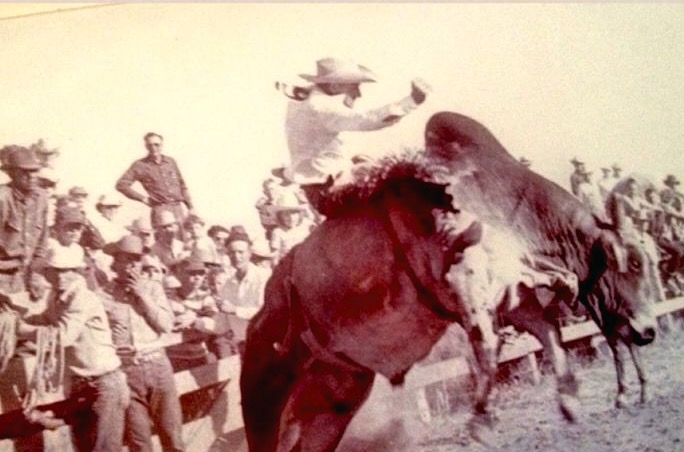
Once a cowboy – always a cowboy. Here he is, riding in the “Old Timer’s Rodeo” at 45+ years of age. Who does that??!!
They had moved to California early in the summer and we made a trip to visit them. He took us on a tour of their “very own” house – which was really base housing which meant that it was the government’s “very own” house, but he didn’t know that. “And this is our very own kitchen. And this is our very own living room. And this is the brothers’ very own room. And this is our very own. . . what is this, Mom?” A fuse box. “And this is our very own fuse box. ” So excited he was!
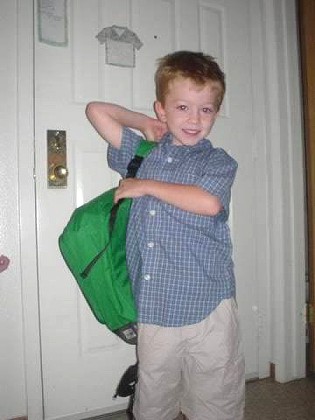
We took them school shopping to get back packs and school supplies. He had his eye on a hiking pack that would have weighed down his Marine of a father – but maybe he recognized it as something like what his dad took with him to work every day when he went into the field. Whatever the reason, he would not be dissuaded. We showed him other ones that were more appropriate for the first day of kindergarten. “Oh, look Jackson! This one has Spider Man on it!” I offered. No, thank you. “How about this one with all of the cool cars on it?” No, thank you. Finally his mother said, “Jackson, Nana and the Colonel are not going to buy that back pack. Choose another one.” He was fighting tears as he tried to readjust his expectations. And as any grandmother will tell you, I would have laid down the 200 bucks for that sucker in a heart beat. Yet, somehow I knew this would not bode well for either him or me in the long run. I tried to distract him with a more acceptable choice. “Oh WOW, Jackson. Look!! This one is perfect AND it even has a place for a water bottle.” Maybe that would make it feel more like a “real” backpack to him, I reasoned. He turned, studied me like I was speaking gibberish and then said to me in the most patient tone he could muster, “Nana, that’s just crazy talk.” And that’s how that phrase entered the family lexicon.
But no, that can’t be right – it wasn’t just last year, was it? No matter how unbelievable it seems, it was twelve years ago, and though I can still see that little boy so clearly in my mind’s eye, now he is seventeen and grown to be a man and graduating high school. How can this be true?
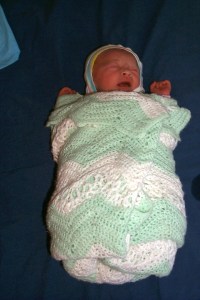
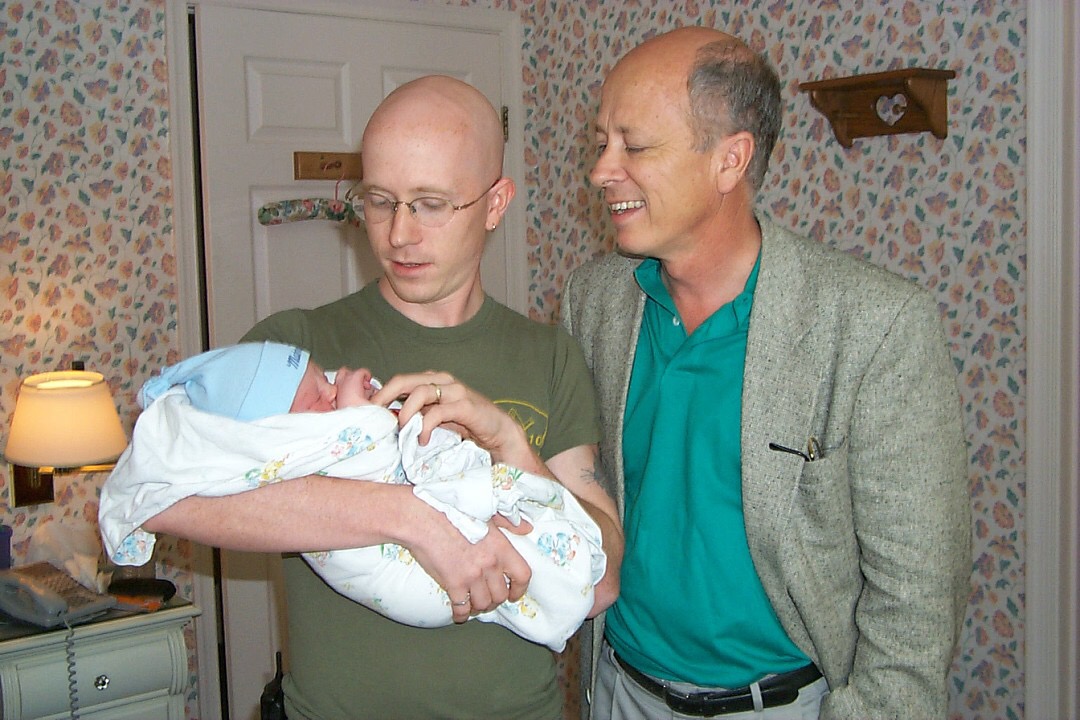
He is the first born of my firstborn – the one who made me a grandmother. The first one to call us Nana & the Colonel. He came to us new and tiny and amazingly sweet. And now he is old(er), and taller than any of us (by a long shot), and still amazingly sweet. He came into a family of untested grandparents and aunts and uncles and parents and we wrapped him in the blanket that his great-grandmother Fletch made for his dad and swallowed him up in our tribe and he was the first.
We were in the waiting room of the Maternity Center when he was born and held him in our welcoming arms when he was only minutes old. From that moment on we were smitten. I forgave my son nearly every transgression and bone-headed thing he ever did for giving me this moment (I later rekindled the grudge, but another story for another day). Later that evening, some of the family went to the house to welcome him home. I was holding him when he spit the pacifier out onto the floor.
We all froze. We were in unknown waters here. No longer the parents, but now the grandparents, we waited for our cue. What was the protocol? Should we pick it up and take it to the kitchen to wash it? Sterilize it? Throw it in the trash and open a new one? I know what I did when it was my babies. . . but those rules no longer applied – this was uncharted territory and I was more than a little uncertain. It was no longer my call. His mother reached down and picked it up off the floor, brushed it against her shirt, checked it for any visible dog hair or other debris, and put in back in his mouth. We all breathed a sigh of relief – this was going to be just fine! And I must say a huge THANK YOU to our daughter-in-law and son for making our first foray into grandparenting so easy. They were beyond generous with all of their sons and patient with our mistakes and I know not everyone is so lucky.
I knew from my own mother some of the ground rules of being a grandmother:
No matter how much you would do it differently yourself, keep your mouth shut and let their parents figure it out themselves. You had your chance at parenting – this is not a do-over for you.
It’s not about presents – it’s about presence. Be present in their lives as much as you can.
It’s not a competition or a zero sum game. Your grandkids need as many people to love them as possible in as many ways as possible. That means that you have to share.
Bake pies. Bake cookies. Bake bread. Bake.
And now he is no longer little but still the first. I’m not sure when it happened, this transition from the little boy to the man, but I remember the day when I thought to myself – it’s happening and there will be no turning back. They were home for a visit – maybe over Christmas. His uncles (whom he adored and always wanted to hang with) were making plans to play a new game – late into the night, after the children were in bed. “You should stay and play with us J!” they offered. But the “littles” were all sent to bed, and his parents sent him up with them. Eventually he made his way back down the stairs and made his appeal – “They invited me to play with them. I’d really like to. Please? Can I?” And so he sat at the table with them that night, laughing and scheming and playing a game with the men. And he fit. He belonged at that table. And I knew. . . something had shifted.
This week he graduates high school and it is both an ending and a beginning.
The end of childhood . . . and the beginning of learning to be a grandmother to an adult and what that will look like. And all I can think of to say is “That’s just crazy talk”.
It was over Thanksgiving break when he wanted to go ring shopping. And so we all tagged along: his dad, his mother, two of his sisters, and two little nieces. Because when you’re the baby of the family, nobody thinks you can do anything without lots of help and advice (and supervision). “We’d like to look at engagement rings,” we told the sales clerk. After we all agreed that yes, this was the one and money was exchanged, we celebrated by going out to lunch. Once home we put the ring safely away until he would need it for the proposal in April “Because,” his dad insisted “you cannot keep this in your dorm room.” Sometimes you just feel the need to state the obvious.
And so the plan was made and we settled in to wait. He came home for Christmas and we got the ring out and looked at it again and talked about what exciting times lay ahead. He returned to school and we all felt good that there was a plan and everything was working according to the plan and that April would be here before we knew it.
But then the plan changed. “I’m thinking I am going to propose on Valentine’s Day. Could you bring the ring down this weekend?” What happened to April?? Valentine’s Day was on Monday.
And herein lies the problem: this was the winter of 2010 – “Snowmageddon” as it came to be known. The third of four monster snowstorms to hit the east coast that year came on Monday and Tuesday, Feb. 9th and 10th. We would be buried in a mountain of snow. The roads would be terrible. This was a disaster waiting to happen. I said no. But because his dad is a romantic at heart and because he is always up for an adventure, he said, “Oh the roads will be cleared on Wednesday and we’ll drive down on Thursday and back on Friday. Sure.”
The next problem to be solved: though the main roads may or may not be cleared on Wednesday, our cul-de-sac certainly would not. Paul thought we could shovel the driveway and once out on the street we might just be able to drive through the foot of snow on the road. Plan B: maybe we could shovel our street enough to get the car out to the main road. Seriously? But here’s the really cool part about a snowstorm – people who are pretty much strangers the rest of the year come together and pull together and become neighbors. So when they saw what we were doing and we told them why we had to get out, they all took up the challenge and with one little snow blower that the woman on the corner owned and the rest of us armed with snow shovels and a spirit of romance and adventure, we shoveled out our street to the main road and we were free! The Black Gate is Open
We stopped in Frederick to pick up Tabi because of course schools were closed and would be for the rest of the week and since she would be trapped in her classroom of first graders well into the summer to pay for all these snow days, why not join this party of adventure to deliver the ring to her baby brother who so badly wanted to pull off his Valentine Proposal? And besides, it’s hard to have a fellowship of the ring – with only two people. And Three is Company.
The next obstacle: Journey to a Crossroads. We exited the interstate highway to travel along the state highway and so far so good. But then we saw the police cars blocking the road ahead. “Is there no way through?” we asked the officer. “No, the snow has drifted and we have to close off the road.” (The Black Gate is Closed) How long before it might reopen? No idea. We explained our mission. We were the Ring Bearers and we must make it to Mordor Lynchurg – the fate of the proposal was in our hands. And for whatever reason (adventure, romanticism, boredom) one of those kind police officers stepped up. “Follow me, I’ll get you around this and back to the highway.” said Officer Strider. Okay, that wasn’t really his name but it could have been. Which is how the Fellowship of the Ring found itself with a police escort across the backroads of Maryland into Virginia until we were once again able to travel the highway.
We sent texts along the way to friends back home who knew of our secret mission. “The Ring Goes South”. The reply comes back “Keep it secret. Keep it safe.” “If Sharon starts calling the ring ‘my precious’, abort. ABORT!!” And so it went for four hours.
We did make it to Virginia that day. We went to Joy’s house and Fletch and Emily met us there for a visit. (A Long-expected Party). I chatted with Emily while Paul and Fletcher headed to the back room (Many Meetings). I asked if they had plans for Valentine’s Day. She wasn’t sure if he had made a plan yet. A Conspiracy Unmaskedwould happen soon enough.
We all went to dinner that night and chatted about the storm and how this would be one we would all remember and tell stories about for years to come. Amen to that.
The next morning we were Homeward Bound to await the telling of the rest of the story.
This is not my story. I’m not even a minor character in the story and in fact I wouldn’t be born until six years after the events recounted here. But it is a story that belongs to my family and shaped all of them who then, in turn, shaped me. Parts of it I learned from my mother – it was so a part of her and marked her in a way that I’m sure not even she realized. Parts of it I learned from other family members who lived through it and parts of it from those who came later – the ones who would ask the questions and record the answers.
My mother would say that it began on Dec. 7, 1941. The day that Japan attacked Pearl Harbor.
My brother is 16 years old, a farm boy from Nebraska. “I’m going to join the navy!” he announces with the passion and bravado and I-dare-you-to-stop-me attitude that only a 16 year old boy can pull off. My parents refuse to sign for him. “You will stay in school,” my mother insists (a decision she would second guess before it was all over). If Uncle Sam still needs you after graduation, then so be it.”
After graduation, the letter comes. He is needed, the draft letter explains. And so, just like that, Don Fletcher is drafted into the Greatest Generation – one month after his nineteenth birthday.
By early December, he is in France and headed into the Ardennes Forrest with the 106th Infantry Division assigned to the 423rd Infantry Regiment. Within days they will be engaged in what would later come to be known as the Battle of the Bulge – the largest and bloodiest battle of World War II.
They are told to expect the Germans to throw a few artillery shells, they will fire a few back. No shots have been fired in the past six weeks. This will be a minor skirmish, not a big deal. Early in the morning of December 16th, the artillery shelling begins. It goes all day and all night and on the morning of the 17th, the Germans come for them. It has begun to snow and the skies are overcast, grounding the Allies superior air power. On December 18th, Don is wounded in the arm and trades his M-1 rifle for a 45 semi-automatic because he cannot fire a rifle with one hand. They are going into their third day with no sleep, no food, and the only ammunition they have is what they are taking off the dead. They are surrounded by German troops and cut off from the Allies. At 2:00 p.m. on December 19th word comes down: destroy all personal identification except for their dog tags and prepare to surrender. Two hours later the white flags are raised, and my brother officially becomes a prisoner of war.
The telegram was sent to the Post Master in the small town of Wauneta because there was no phone at my parents’ farm. He brought it to the high school where my brother Irvin and sister Lila were in class and they carried the news home to their parents: Donald E. Fletcher was Missing In Action. And just like that – everything changed. Christmas came and went – unheeded and uncelebrated. My mother’s auburn hair turned gray and tears became her constant companion. My dad got quieter and worked harder; my sister Lila (a year younger than Don) put her plans for nursing school on hold, and life came to a standstill.
When the German soldiers divide their prisoners into the wounded and the non-wounded, Don is taken to a field hospital – a barn with hay on the floor and sheets over the hay. One stall is designated for surgery where they operate on the German casualties during the day and the prisoners at night by lantern light. After his surgery, Don is moved to the “hospital” which is a nearby school the Germans have commandeered. On Christmas Eve some children come through the halls, singing Christmas carols in German, but Don recognizes the tunes and is re-oriented in time. A nurse arrives with a Christmas meal, a big dishpan filled with fried potatoes, and dishes out a meager portion. It is the best meal he will have in captivity.
When he is considered sufficiently recovered to be moved, he is taken to a POW camp across the border into Germany. A German soldier tells him that if he arrives at the camp with his watch and his class ring, they will be taken from him. “Where would you hide them if you were me?” he asks and is advised to slit the lining of his boot and place them there, which he does. They become to him a promise of home.
Conditions at the camp are dismal and the prisoners are starving. They are fed twice a day – at midday they receive a half a potato in some broth and at night a piece of black bread, sometimes with molasses on it. In the beginning, the bread seems inedible to them, but eventually it takes on the feeling of a treat – almost like cake. He and his buddies pass the time by talking about food: they name every kind of candy bar they can think of and then eventually begin to make up names for their own imagined concoctions. They talk about recipes and reminisce about their favorite meals. They think about food. They talk about food. They dream about food. They are literally dying for food.
At home, friends and neighbors tried to prepare my parents for the worst. It is unlikely, they said, that Don is still alive. So many in the neighboring communities had lost sons, brothers, and husbands. “The sooner you accept it, the sooner you can start to heal,” they advised. “You can’t live with this day after day after day.” My mother prayed, she put one foot in front of the other, she sent her children to school, she waited and she cried. And then the dreams began. Don was standing at the foot of her bed and in his hand was piece of black bread, dripping with molasses. He was smiling. After the dreams started, no one could convince her to think of her son as dead. She didn’t argue with them and she didn’t tell them about her dreams, but she clung to them like life itself.
The Allies begin to push in and the Germans move their prisoners to another camp, deeper into Germany. They are still wearing the same clothes they wore the day they were captured and are covered in lice. Conditions will only deteriorate from here. They have even less to eat – but once a day, there is the black bread.
The prisoners assume the Allies are closing in again because they are loaded onto cattle trucks so closely packed they can’t sit or turn around and trucked further in, then unloaded and forced to walk to the next camp – Bad Orb, it is called. Somebody in camp writes a song to the tune of the Battle Hymn of the Republic and they sing it every morning: We’re living on black bread and a beverage they call tea// We’ll keep right on singing till Patton sets us free// Come get us Georgie Patton//Come get us Georgie Patton//so we can all go rambling home. (I can’t, for the life of me, make those words fit into that tune, but it’s not my story so I will tell it the way it came to me.) The guards don’t like it, but they don’t make them stop either and so they sing.
The last week of March the prisoners and their guards begin to hear artillery shelling nearby and then small arms fire and speculate as to its significance. The gunfire grows louder and in the middle of the night on April 1, the Germans abandon the camp. On April 2, 1945, Allied Forces knock down the gates of Stalag 9B at Bad Orb and liberate 6,000 Allied prisoners. My brother is one of the 3,364 Americans freed that day- it is his 106th day in captivity. Behind the tanks comes the Red Cross, bearing gifts of donuts to the emaciated prisoners. Later they hear stories of freed prisoners eating so many donuts that they die. Nobody knows if it’s true. Not even taking time to get their names or their serial numbers, they put them on planes to France and from there my brother boards a ship to America. He is headed home. He weighs 90 pounds; no one will recognize him as the 180 pound, athletic young man who left the farm thirteen months ago.
On May 3 the Postmaster General came to the bank where my sister was working to deliver a telegram. “The Chief of staff directs me to inform you your son Donald E. Fletcher, private first class, is being returned to the United States within the near future and will be given an opportunity to communicate with you upon arrival.” Ulio, the Adjunct General. Lila took the message home to the farm – to deliver this unbelievable and unexpected good news to the heartsick mother and the grieving father. Many years later my sister wrote of that day, “That was a joyous occasion of course and I was so glad to be able to let them know. Seemed like the emotional reaction to that great event was subdued.” Maybe some hurts and griefs are so deep that they never completely heal. Or maybe they just refused to let their hearts believe what their eyes had not yet seen.
As Don makes his way home by plane, by ship, by train and finally by bus, he grows more and more anxious to talk to his family. When the troop train he is riding stops in Kansas City, he gets off and finds a phone. Because the folks don’t have a phone at the farm, he places a call to our Aunt Myrtle who lives in Wauneta. “I’m sorry,” the operator tells him. “That number has been disconnected.” “Then can you just let me talk to the operator in Wauneta?” he begs of her. Finally she connects him. “This is Don Fletcher,” he says to the man he knew in a different lifetime. “Can you get word to my folks?” he wants to know. “Tell them I’m on my way home. I made it and I’m on my home.” It is VE Day. The day that the German troops in Europe finally laid down their arms. “I’ll tell them, Don. I’ll let them know.”
Finally, he is on a bus, headed for Wauneta. His plan is to go to the high school and get his car from our brother Irvin who has been driving it back and forth to school. He goes to the principal’s office. “Irvin’s not in school today,” the principal says. “Well then, I guess I’ll just walk home.” But the secretary tells him that she will drive him herself. News in a small community travels fast. This is in the days of the “party lines” where you can hear your neighbor’s conversation with her sister-in-law’s cousin when you pick up the phone. Someone has heard someone say that someone has told them that someone heard it with his own ears that there is a Prisoner of War from Wauneta who has made it back and he is in town. The folks’ neighbor, Shorty Lambert, hears the rumor and drives to the farm, “I bet it’s Don!” he told them. “Don is home!!!” My dad says they had heard that he is on his way but aren’t sure when he might be arriving. “GET IN THE CAR!! I’ll take you to him!” And that is when the secretary pulled up in the yard. The missing was no longer missing – the lost was found. Later Don would say, “And that was a happy day.” I can’t even imagine.
Don gets ninety days leave and spends them eating and fishing. Someone complains later that summer that they have caught nothing in the local fishing hole. “Well,” comes the answer, “what do you expect? Fletcher was home for the summer and he fished 110 out of 90 days. He pretty much cleaned that place out.” My mother’s cooking and the therapy of that fishing hole gradually begin to calm if not eliminate the nightmares. He would live with them to some degree or another for the rest of his life. The War had exacted a tremendous toll on him and on our family as was true for so many, many others, but the world was safe and free. We would forever owe a debt of gratitude to those who made it so.
By the time I came into the picture in 1950, war was once again on the horizon. In two more years, the country would ask my parents for their second son and the nightmare would begin again. Instead of Europe it would be Korea, instead of Fascism it would be Communism, instead of Don it would be Irvin, but the heartache, the worry, and the burden would be the same.
Epilogue:
Two years ago, I heard, for the first time, this part of the story.
In 1972 Don and his wife bought a motel in Cambridge, Nebraska. They catered primarily to hunters who would come for the season and spend a week or two. A man named Milton came that first year with his son and some friends. They came back year after year and Milton and Don became friends. One evening, after a day of hunting and some drinks, the talk turned to days gone by and to the war and though my brother rarely talked of his experiences during that time, Milton began to share his story. He had been assigned to the 7th Army and was with the troops who liberated a POW camp near Frankfurt, Germany, on April 2, 1945. The name of the Camp was Bad Orb. Two men whose stories intertwine in an eerie combination of fate or providence and now find themselves these many years later, fast and true friends. Sometimes truth is stranger than fiction.
Yesterday I heard this story for the first time:
For many, many years Don never spoke of his time in the War or his experiences there. He married, had a family, tended his huge vegetable garden, caught fish, and worked hard to support his family. When his oldest daughter Jolene was 12 or 13, a movie about the Battle of the Bulge came on the television. “Sit down,” he said. “We will watch this, now.” And then he told them. Most of it.
My mother said that the son who came back from the war was not the one who left – that somehow a part of who he was died there. How could it have been otherwise? And the 40 year old woman who sent her first born off to war was not the same one who welcomed him home from a Prisoner of War Camp. I never knew the first woman – part of her had died, too, somewhere in those 106 days. My mother could never tolerate the song I’m Dreaming of a White Christmas, and any time it would come on the radio or she would hear it in a store, her reaction was strong and almost visceral. I asked her once why she hated it so. “The year Don was missing, they played it over and over and over until I thought I would go crazy. I hated that song. I hated that they played it on the radio. I hated that other people liked it. I still get sick when I hear it.” Enough said.
And now my son is a Marine. My mother had been gone for seventeen years, and I never missed her more than I did during the months in 2006/2007 when Sean was deployed to Iraq. I stopped watching the news, reading the newspaper, or watching any movie that had anything to do with any war at any time. I sent care packages and wrote letters and waited for mail and prayed that no one in a uniform would show up at my door (today’s version of the telegram). Often I would wake in the night, crying for my mother. “How do I do this? How did you do this? How did you survive?” I wanted – I needed – to ask her. But knowing my mother the way I do, I could almost hear her voice, “What choice did I have? What choice, do you have, Sharon? You do what you have to do. You put one foot in front of the other; you put meals on the table; you pray; when you need to, you cry; and if you’re lucky and God knows it’s the only way you will make it through, maybe He will send you a dream.”
This is a war story and a love story. A story of suffering and of hope. A story about family and about friendship. A story about survival and about hanging on. A story about sacrifice. And so perhaps, in the end, this is my story. Maybe it is a story that belongs to us all: to those who pay the price of service and those who are indebted to them.
The way the story was told me to me was that my father would come in from farming his fields at night and while my mother would finish up supper and get it on the table, he would take me on his lap and together we would find the rhythm of the old rocking chair and enjoy one another’s company. And then one day he didn’t. I was four years old when he died in a car accident. I have no memory of him or those evenings in that rocking chair. But I have always wondered if something in me remembers and if that is why for as long as I can remember, I have had a desperate and almost compulsive need to rock.
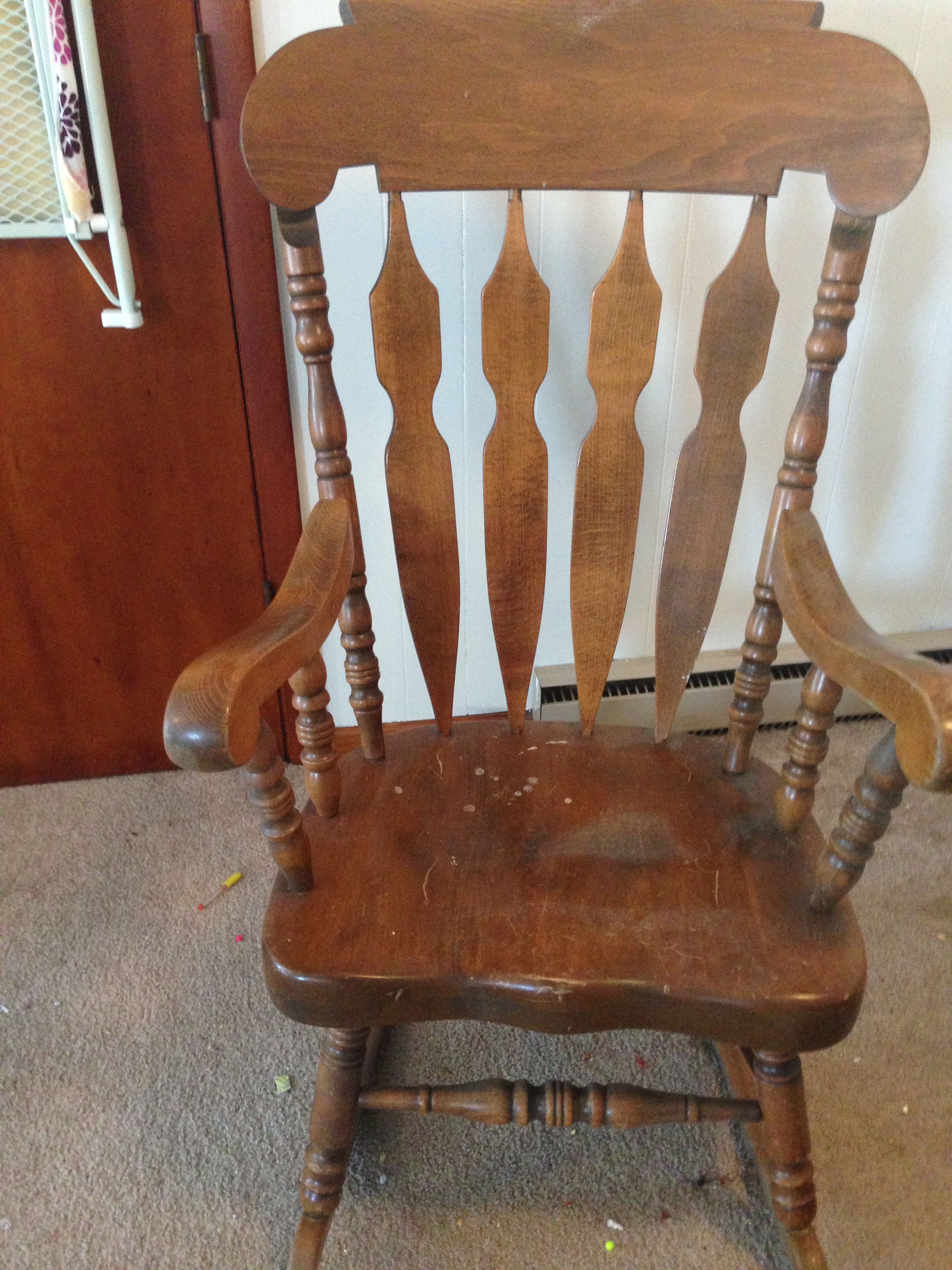
Soon after his death, my mother sold most of our things and she and I moved off the farm, away from everything familiar that felt like home to either of us. She needed work and so we moved to another city, another state and another life. Our new “home” was a three room apartment – the best we could do while she got settled and found work. The story goes, though I have no memory to validate it, that I would sit for hours at a time, rocking back and forth and banging my head against the back of the couch which was against the wall – irritating the neighbor whose apartment shared the wall. It seems some people have a very low tolerance for objects flying off shelves and pictures that won’t stay put on the walls. So my brother Irvin, who had come to help us settle in, said to my mother – “if you’re going to live here, the child needs a rocking chair” and went to a thrift shop and got me one.
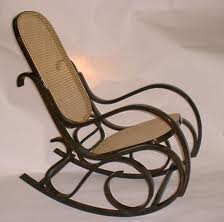
I wish I had kept track of the rockers we have owned over the years. But I have no idea how many there have been, where most of them came from (thrift stores and maybe even a dumpster or two) or even what some them looked like. But I can tell you what happened to each one of them. I. Wore. Them .Out.
The first one I really remember was an orange, upholstered rocker. I think maybe my mother bought it new after we moved into our “real” house because the other one was literally falling apart and she assumed this one would be sturdier. Growing up, I watched TV from that chair, I read book after book in that chair, I did homework in that chair, some nights I put myself to sleep in that chair and sometimes I rocked myself awake when I crawled out of bed for school. I rocked when I was sad and when I was happy and when I was trying to sort out life. Sometimes I just rocked and did nothing at all, which perhaps was the best use of all. But eventually I broke it. It was what was called a platform rocker and what we learned soon after we bought it, which might have been good to figure out before we parted with our money, was that it is actually possible to break the chair off the platform. So every time one my brothers would come to visit, he would somehow jerry-rig it up and it would be good to go. . . for a while. But then it would break again. Did I not understand, they wanted to know, that rocking was never intended to be an athletic activity? My mother actually ended up giving me that chair to take with me when Paul and I moved to Lawrence, Kansas. I’m sure she was glad to be rid of it and I was delighted.
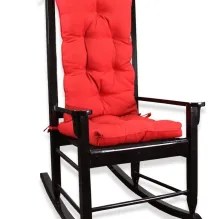
When I graduated from high school, my sister Minnie took me shopping for my graduation present. And I don’t remember whether it was her idea or mine, but we came home with a rocking chair. A black Boston rocker with red cushions. I had that chair for 25 years and moved it to 14 different homes. We replaced the cushions several times and when we couldn’t afford new ones we reupholstered the old ones – once with fabric from an old crushed velvet stage curtain that a local high high school was throwing away. I think everything in our house was covered with that stuff and if I’d known how to sew I would have made myself a dress of it (think Scarlett O’hara in Gone With the Wind). Even when I had other rockers scavenged from one place or another, I held on to that Boston Rocker until it finally just came unglued. I rocked all six of my babies in that chair and if there was ever one thing that made a new house seem like home, it was this.
I remember when the Montgomery Wards in Champaign, Illinois, was selling big oak rockers for $50 a piece. We bought two of them, figuring they would last forever. I loved them and while I could certainly rock my way across a room in them, they were never really that comfortable.
And there were others along the way. Collected from yard sales and other people’s junk piles, they fed my need. Eventually I learned that it is really more convenient to have a rocker in every room of the house (no, there is not a rocking chair in my bathroom, but then again, if we enlarged the bath.
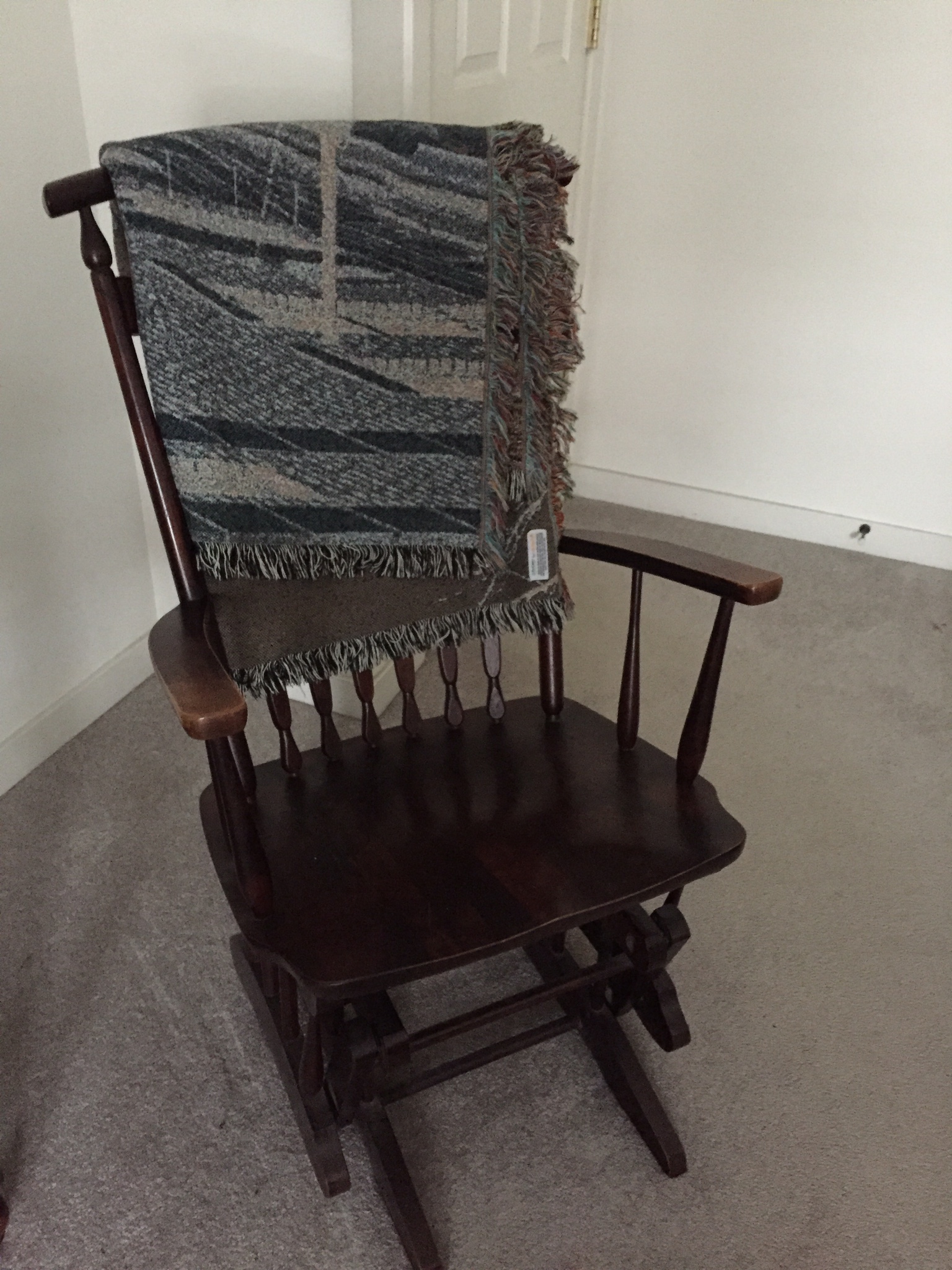
I think it was about 1992 that I discovered the Cadillac of the industry: the Glider! Paul bought me one for Christmas that year and I was hooked. Rocking had never been so easy . . . so smooth. . . so effortless. . . so quiet. . . so “glide-y”. Rocking in one of these babies was the ultimate ride. And then the reality. While what I really wantedwas a Cadillac, what I needed was a jeep. It turns out gliders could be pretty fragile and not intended for the well-trained and competitive rocker.
When we built the new house in 2002, we bought a really well-made, sturdy, and expensive glider. Made to last a lifetime (or so they said). But over the years, it got squeakier and squeakier and much less glide-y and then it began to thunk each time it moved. Paul tried to repair it but to no avail, and no amount of WD40 would silence it. It seems I was just chewing up the mechanism. He complained that he couldn’t hear the television over the noise of the rocker and I had to admit, it was time to trade it in. But that chair rocked lots of grandbabies and provided hundreds of hours of nurturing to my soul.
This last fall we set out to replace the rocker. We spent whole days visiting furniture stores and test-rocking chairs. “What are you looking for?” Paul wanted to know. “I’m not sure. But I’ll know it when I see it.” And then one day we walked into a store and there it was. The one. It is a chair-and-a-half in size. It is overstuffed and comfortable and not a recliner (I really don’t like recliners). It’s a glider but with an exposed mechanism that can be repaired. We turned it upside down on the sales floor and looked at it from every angle until Paul was convinced it could be fixed when it broke. We kicked the tires and picked out the upholstery and signed the papers and then waited for the delivery date. When it arrived, Paul knew before we even unwrapped the plastic that we had a problem. It was the right size, the right upholstery, the right everything except the most important thing -it wasn’t a rocker. “Why would you even bother to make a chair like this that didn’t rock?” I demanded of the company. They made another one and long story short – I now have a rocking chair that I can sleep in if I want and that I can snuggle up with a grandbaby (or two) and that fills that need somewhere deep inside of me. Life is good.
I don’t know where that need in me comes from: but I do know that it’s as real as my need for the light and warmth of the sun, the sound of the surf breaking against the shore, the beauty of creation and the assurance that I am known by the Creator. Maybe it comes from a memory stored out of sight of the conscious mind; the memory of a little girl sitting in her father’s lap waiting for supper and enjoying his company.
As Paul says every week at the end of his sermon and before the blessing, “We never know what the next seven days will bring.”
Today marks a hundred days since my first surgery for what should have been a routine hip replacement. In the grand scheme of things, not really all that long. Never-the-less, I have counted them down and looked forward to today since March 16 with both anticipation and anxiety. “It looks good,” my surgeon said at today’s appointment.” And so today I can move forwards (or backwards depending on your perspective) to my normal life. But so I don’t forget, I wanted to record the story and my take-away.
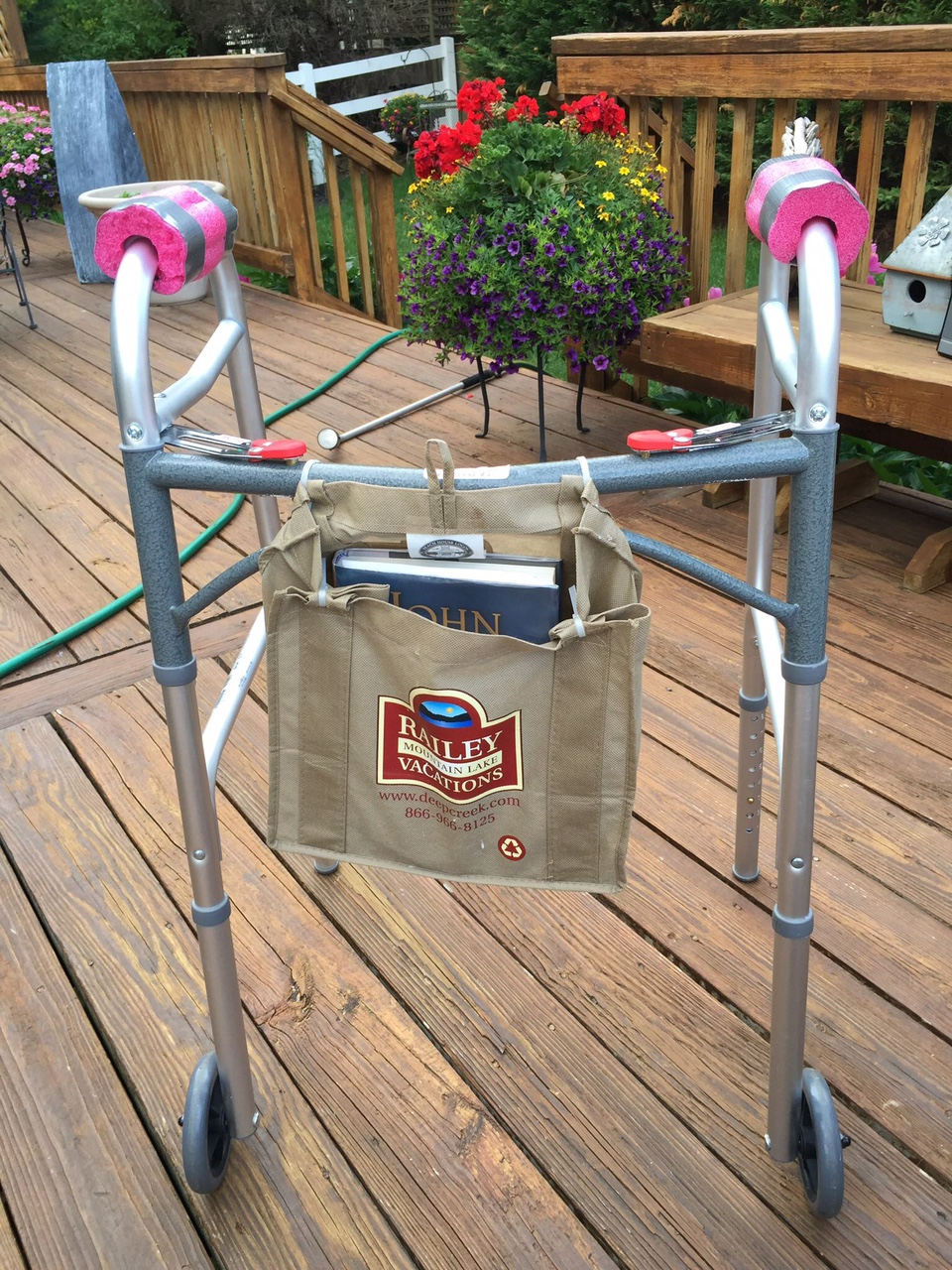
The first surgery went well, the physical therapist and everyone else marveled at how well I was doing, how I was ahead of schedule in the rehab, and I was on way back to my old life – minus the hip pain that had plagued me for years. All was well. Until it wasn’t. A few days before my six weeks check up with the surgeon where I fully expected her to discharge me, I noticed a pain in my thigh. I mentioned it to her during my appointment, almost as an afterthought. Her brow furrowed, her smile faded and she asked me dozens of questions and then, “We need to xray.” That xray revealed what she feared – the bone was not growing in around the stem that went down into my femur and the stem had shifted. In all of her years of surgery and out of the hundreds of patients she had treated, she had had only two cases where this had happened. I was the third. That appointment was on May 6th. By the 7th I was in serious pain and by the 11th I was back in surgery to replace the stem. We had to start over, only this time I would have to stay off the leg for six weeks, using either a walker or a wheelchair.
We never know what the next seven (or one hundred) days will bring. For me it has brought countless acts of kindness.
Visits, cards, care packages, texts, emails, FaceTime and phone calls from my family, always reminding me that I was loved, thought of, and cared for.
Offerings of well wishes left on our doorstep: a basket of muffins, a meal, balloons, flowers, home-made gingersnaps.
Old friends who brought quiche and fresh fruit on a Wednesday morning and stayed to visit.
A 20 year old girl and former student who came to sit me with me one afternoon so that Paul could go to work.
Work colleagues who stepped in at a moment’s notice to cover for me.
Chocolate covered strawberries.
People who sent gift cards to restaurants or showed up with Chinese food for lunch.
A friend who made me a necklace and sent it with a card which read– “Nothing says ‘Happy New Hip’ like jewelry.”
The anonymous Amazon shopper who sent me books through the mail.
Two sisters who showed up with a chocolate chess pie.
The flowers which showed up on just the right day.
A daughter who used some of her precious days off work to come and stay with me after both surgeries.
The texts and cards and messages that made me feel connected and cared for.
Nurses who cared for me so well both in the hospital and at home.
A physical therapist who came to my house three times a week and prayed for me more often than that.
And of course, always, always, always there was Paul: my companion, my chauffer, my meal provider (no, he didn’t cook – though under supervision he learned to make a mean egg salad sandwich ), my courier, my house cleaner, my gardener, my launderer, my encourager, my wheelchair pusher, my “whatever you need, I am here for you.” These 100 days have been a reminder that vows matter. “For better or worse, “ he promised. “ In sickness and in health.” But to do it with such grace and kindness and generosity. . .
But perhaps most unexpected and because of that the most lovely were the kindnesses of strangers. The old man who insists I take his place on the bench as we wait to get seated in a restaurant. The teenage boy with baggy shorts looking up from his phone to see me inching my way toward a door and turns back to open it for me or the seven year old girl who lets go of her mother’s hand to do the same. Everywhere I went, whether with the walker or the wheelchair, it seemed to me that people were quick to notice that I was struggling and offered their assistance cheerfully, eagerly, and with compassion not pity. Some people credit Philo of Alexandria, others say it was someone else, but whoever said it, we all need to tattoo it on our forehead: “Be kind. Everyone you meet is fighting a great battle.” My battle in the last three months has not been great – it has been an inconvenience and I want to make this point clearly and loudly. I cannot begin to understand the battle that the physically disabled face in their battle to live, work, and function in an environment where everything is a challenge. Nor can I begin to understand the life of those living with terminal, chronic or debilitating illness or pain. I certainly don’t understand what it is like to fear for my health or safety or dignity because of the color of my skin. These are truly “great battles”. And the truth is, like most of us, I don’t know how to help or what to say to those who live on these battle fronts. But this is my point – my “battle” was visible to those around me and, without exception, their response was kindness. And it makes me want to treat everyone I meet like that (even if it’s just giving up a seat or opening a door or bringing muffins) because I don’t know what battle they’re fighting that is not so visible. But I can be sure that just because they’re not using a walker doesn’t mean they don’t need help – or kindness.
He loomed large in our story. A sort of bigger than life character. And in the telling and the retelling of it, he has become really sort of a legend. At one time or another we all had a love/hate relationship with him. He could be frustrating beyond belief and loveable as the day is long. He was quirky – which is to put it kindly. In truth he was eccentric bordering on neurotic. He was, on more than one occasion, an illustration in Paul’s sermons. Perhaps the most memorable was when he used him to unpack the mystery of the trinity. You sort of had to be there for that one.
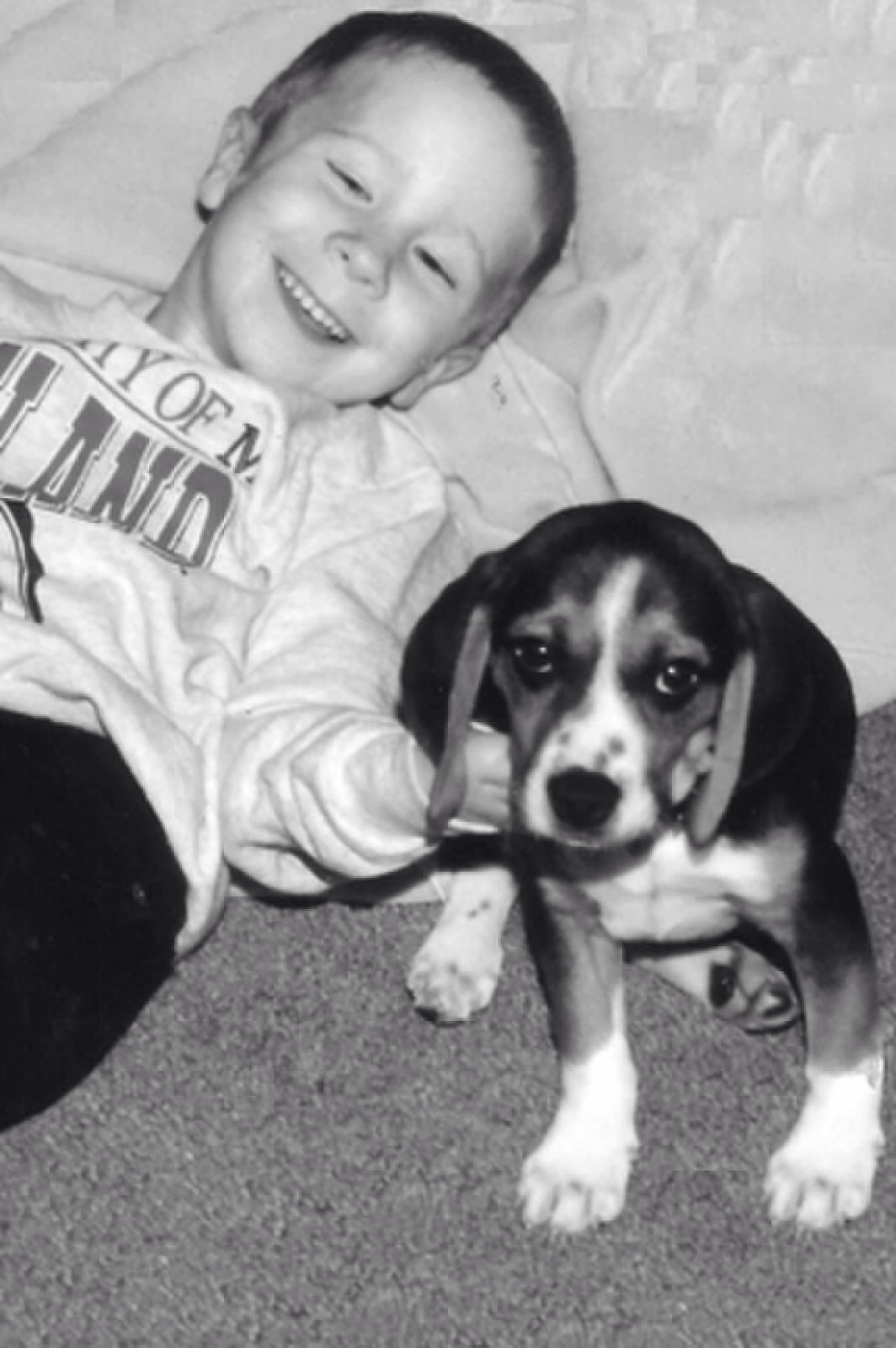
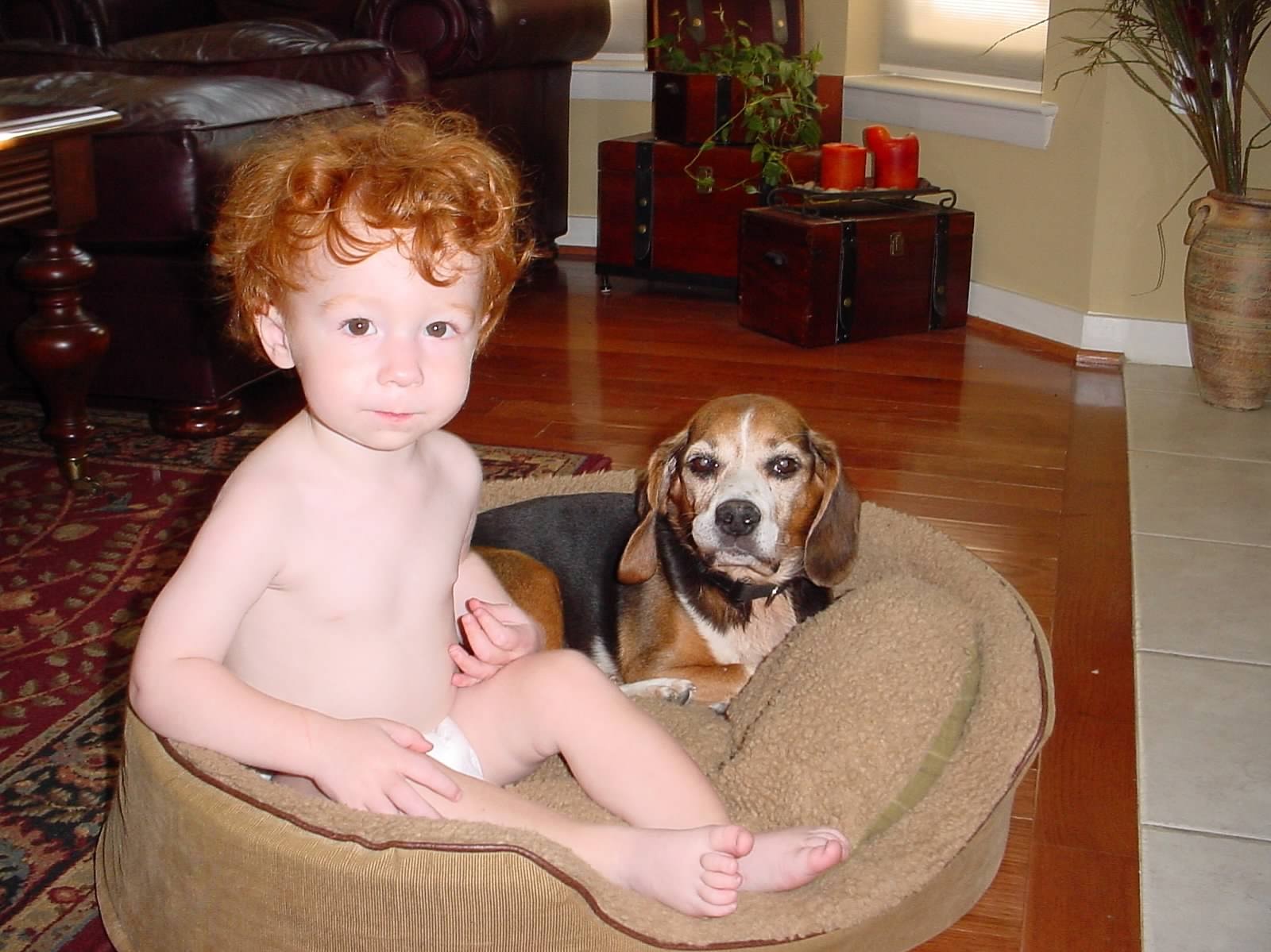
He lived in our home for over 13 years. When he died I wrote a eulogy of sorts for him which I sent to all the kids – because it’s important to remember our stories. This past weekend when Fletcher was home with his babies, we told Murdoch stories and laughed and grieved a little that Ezra had missed out on the adventures. And it made me think that I should put the eulogy here – so that it will be here for the littles and for the rest of us. . . as though we could forget.
Remembering Murdoch
Remember when we said, “We should get Fletcher a dog for Christmas”, and somebody said, “I’ve heard Beagles are good with kids” and Faith said, “Somebody at Roy Rogers said that they follow their nose right out of the yard and wherever that journey takes them – other than that they’re great”. If we had only known.
Remember when we went to the farm to pick him out and they said, “Beagles are really pack dogs – they are truly happiest when they are surrounded by the pack”? (if we had only known) and we debated about getting two of them, partly because they were just so darned cute?
Remember when we brought him home on Christmas Eve and put him in the bathroom and on Christmas morning, he cried and cried because he wanted to join the party and Sean kept turning up the music? And after all the presents were opened, we said, “Wait! There’s one more for Fletcher”, and we brought him out in the box with the bow on it. And we took off the lid and the look on Fletcher’s face was pure joy and somebody said “Beagles are hunting dogs” and Fletcher said, “I always wanted a hunting dog!”. Remember how that same Christmas Fletch got a pair of Dalmation slippers and Murdoch loved them and wanted to chew them and Fletch would dance up and down to get away and that made Murdoch go after them even more?
Remember when Murdoch would take off on one of his adventures and we would all disperse and go searching the neighborhood and finally find him blocks away with no earthly idea where he was but clearly having made lots of friends along the way?
Remember when the neighbor came leading him home with a hotdog?
Remember one Halloween when some neighbor kids came to the door and Murdoch was standing at the top of the stairs (how he loved Halloween and all the visitors that came to see HIM) and one little kid said “Well, hello, Murdoch, we haven’t seen you for a long time” ? Was there anyone in the neighborhood who didn’t know and love him?
Remember the freezing cold Feburary night when we couldn’t find him and he was missing for an entire night and we were sure he had frozen somewhere? And the next day we called the pound and they said, “Oh yes, your neighbor has him and called in to stay he was with them.” And we went to get him and they wanted to keep him because he was so sweet and they had let him sleep in the bed with them that night?
Remember when he went visiting his friend Paisely, the little bull dog around Peanut Mill, and dug under the fence and helped her to escape and then brought her home INTO THE HOUSE and they played chase around the living room? And then we took Paisley home and explained that she had just shown up at our front door and the people said, “I don’t understand it – she has never done this before”?
Remember when we would try to take him for walks around Peanut Mill and he would dig in his paws and REFUSE to walk – brave soul that he was.
Remember when he opened the refrigerator door when we were gone and pulled out the cucumber and celery to get to the two pounds of raw hamburger in the back of the fridge and then drug it out on the back deck and ate the whole thing?
Remember when he ate a five pound bag of potatoes that were in the utility room and then chewed up the insulation in the walls?
Remember when Fletch had the dream that Murdoch was dressed up in a business suit and glasses and walked on his hind legs and carried a briefcase?
Remember how when he was feeling neglected he would parade through the house with a shirt (preferably one of Fletch’s) in his mouth and then bury it under the deck?
Remember when he couldn’t find a shirt of Fletch’s and raided the laundry basket instead and Blu said, “Whoah! There goes the dog with the Rev’s underwear!!”?
Remember how much he loved going to the Smith’s to stay with Pepper at his “country home”? And the time we went to pick him up to bring him home and he hid under the picnic table and didn’t want to leave? And after he went home, Pepper would go to the edge of the woods and bark for him?
Remember how Jackson used to call him Murdog?
Remember how Faith always gave him a sweater for Christmas and how much he always seemed to like wearing it?
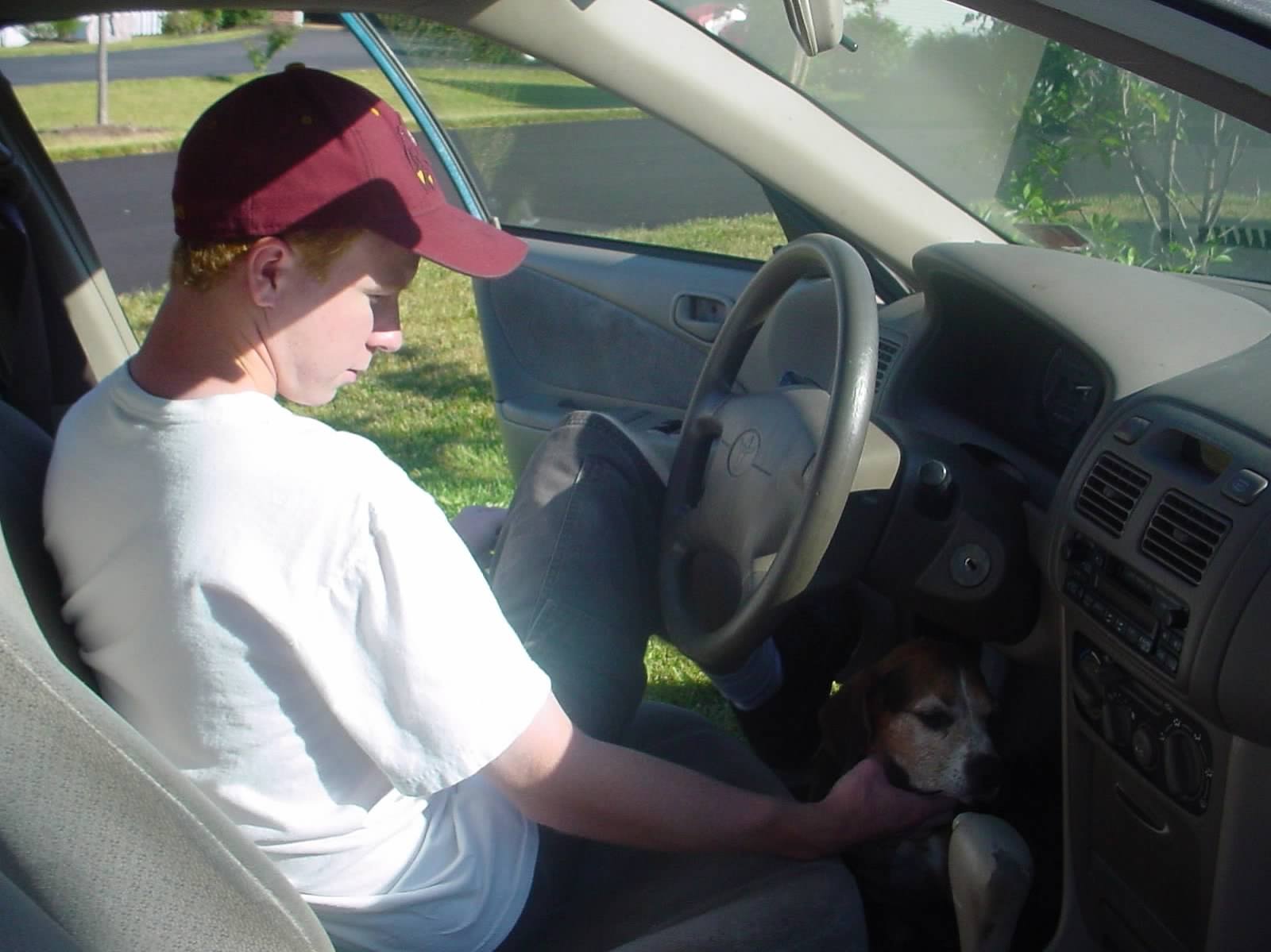
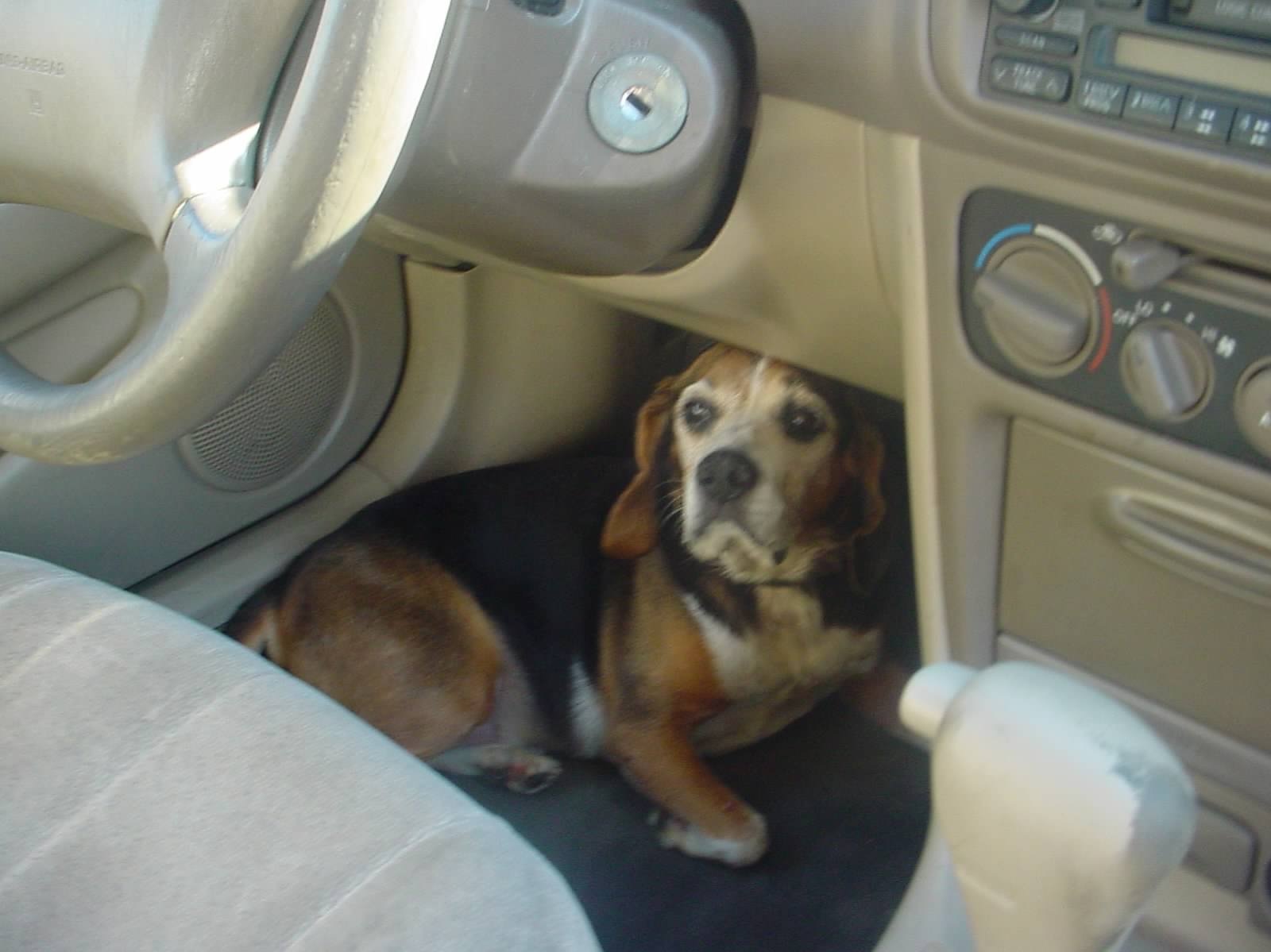
Remember how when Fletch left for college, Murdoch got in the front seat of the car and hid under the steering wheel and wouldn’t get out?
Remember how even after he was going deaf – he could still detect when it was Dad’s “snack time” by the sound of the box of crackers being opened and would show up for his share?
Remember how when last year a Beagle won the Best in Show and Leo called so excited to say that he had seen Murdoch on TV?
Remember how when kids would come home after being away for awhile Murdoch would bark and bark, scolding them for having left the pack for so long?
Remember the role he played in our story?
Enough memories and stories to last a life time.
And so this afternoon, we wrapped him in one of Fletch’s old shirts and buried him in the backyard. It is enough. And it isn’t.
What you have to understand first is that though Raeleen and I are related by blood (I am her aunt but only five years older than she), we really knew each other hardly at all. She was a country girl from Nebraska and I grew up in a city in Colorado. The oldest daughter of a brother 21 years older than I, we had spent a few Christmases together in our childhood though she was designated as one of the “little kids” and I was part of the “older crowd” – those nieces and nephews that were a little older or maybe a year or two younger. Other than that – our paths had not crossed at all. I knew about her, of course; when my mother was alive she kept me updated on the comings and goings of all the family but that was about it. As we grew to adulthood we bumped into each other from time to time – at my mother’s funeral, my sister’s funeral and a few other times when family circumstances brought us together. . . but the truth is, we really only knew about each other.
How then, you might ask, did I, as a woman in my 60’s, end up sneaking out of the house in the middle of the night to stand on a country road in central Nebraska under a start-studded sky waiting for my accomplice in an adventure which would lead us deep into a pasture with no-trespassing signs posted all over? This story is the answer to that question.
Raeleen is a physical therapist – and a very good one I might add. She has a thriving practice in a small town in Nebraska. People come to her from neighboring towns and even from out of state to experience her healing touch. My sister credited her with keeping her out of surgery and a wheelchair when everyone else had pretty much given up hope. And so, as the arthritis in my hip got worse and the pain from it began to impact my ability to function, I reached out to her. “Give me four weeks and I can help,” she promised. Of course, since I didn’t have four weeks to give, I wrote it off. My hip got worse. “Three weeks,” I said in my best negotiator voice. “I’ll see what I can do,” she promised. But as the time got closer, I began to get cold feet. I had too much to do, I couldn’t be gone from home for three weeks, and of course the real issue was “what in the world would I do THERE for all that time?” No WiFi, I wasn’t even sure I would have good cell phone coverage, no place to go and nothing to do. “I’m not going,” I told Paul. “It’s a bad idea.” But he was convinced that I should go. For no other reason, he said, than to spend the time with my 85 year old brother. When would I get a chance to do that again? “ It will be restful,” he said. “Take some good books, listen to music, spend time with God, and who knows? You might even have some adventures.” Plus – maybe she could help my hip.
And so I packed two suitcases one of which was overweight and cost me $75 (one would have been more than enough because as it turns out, you don’t really need that much in Nebraska) said good-bye to my home and to civilization and headed off to the hinter land.
I stayed with my brother and sister-in-law at their place outside the town of Taylor (population 190). We quickly established a routine. Every morning, either my brother Irvin or his wife Joyce would drive me the 20+ miles from their house outside of Taylor to Raeleen’s office in Burwell (population 2,210). My hosts had been forewarned that I would need to be driven to and from treatment because, as my husband told my brother “there is no way on God’s green earth that you want to turn her lose in one of your vehicles if you ever want to see it again. She can’t find her way around the block when she has street signs.” So off we would go every morning after breakfast. Raleen had an empty office in her building in which I set up shop and I was able to work (the office had Wi-Fi after all and lucky for me somebody knew the password) so I could actually communicate with my office back home via email.
Then, twice a day my niece would come to get me and put me on her table and work me over. And for an hour as she pushed and pulled, evaluated and stretched, rotated and chiseled, we would talk. We learned each other’s stories and how our lives had intersected the other’s in ways we had not known. We shared family history and filled in gaps in one another’s memory. She told me things about my mother that I had never known and I saw her through the eyes of a granddaughter rather than a daughter and I envied Raeleen the years that she had spent with my mother after I moved away and she moved closer to her. We talked about God and how we had each come to faith. We talked about our kids. We talked about being kids. We talked about books and movies and life. We talked about the joys and trials of small town life and what it was like to be a pastor’s wife in suburban Maryland. Daily I grew in my respect and admiration for this woman who was both salt and light in her community like no one I had ever seen. We talked about our failures and our journeys and in the telling and in the hearing we discovered in the other a kindred spirit and our “other best friend” – because we each already had best friends and of course would not want to replace them – we were just adding on. And then, at the end of the day, Cindy, (Raeleen’s sister and “office manager”) would give me a ride back to the Corner Stop (a gas station with a table in one corner where my brother often met his buddies for coffee in the afternoon) and I would ride the rest of the way home with Irvin and sometimes we would talk and sometimes we would just be and it was one of the best times of all. Joyce would have dinner ready for us and we would eat at 6:00 and then watch some kind of sports or bull riding competitions on TV until 9:00 when they would go to bed and I would go to my room and read. And the next day, we would do it over again.
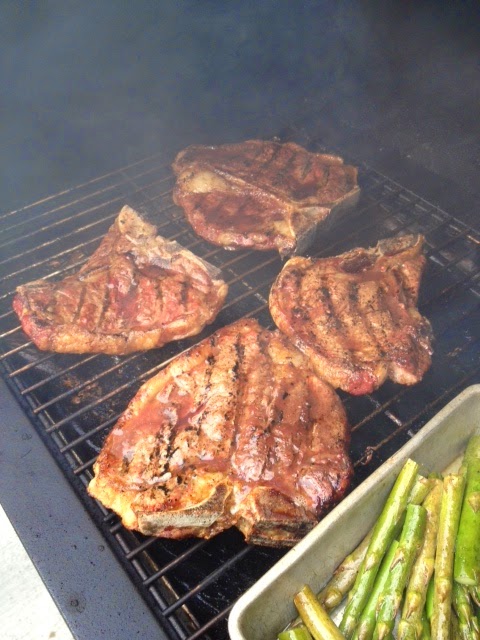
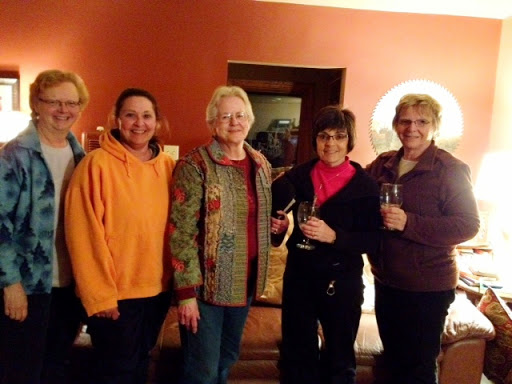
But on Wednesday nights I would go home with Raeleen so that I could go to her Wednesday night “Bible study” with her. This consists of a group of ladies who get together, drink ginger tea which is how they came to be known as “the ginger ladies”, share their week and their lives with one another and sometimes study the Bible. And on those nights her husband Tom would cook for us. He is a rancher who raises his own cattle, raises the crops he feeds them, fattens them and then sells them. And so their freezer is filled with little bites of heaven – the best beef you will ever taste any time anywhere and the best argument I know not to be a vegetarian. I’m not sure I will ever buy another super-market steak again – I would rather just do without.
The Ginger Ladies
And then sometimes we would wake up before the sun, get in the car, and drive out into the pasture and sit in the dark and wait for the sunrise. Sitting in the dark, I learned to recognize the “night sounds” – the sound that insects make in the dark before the dawn. “Listen!” Raeleen instructed. And then it grew absolutely quiet. No sound at all. Then one bird. And another. And another. And soon the air was filled with their song – as if it were they who were waking the sun. And then came the first shafts of light and color, the sun would peek over the horizon and the day had begun. It was magical.
I was there for three Sundays: Palm Sunday, Easter Sunday, and the one after. The first two I went to the little Methodist Church in Taylor with Irvin and Joyce. We went to the “before service coffee time” and sat at the table and I learned where the best fishing had been the week before and we talked of the drought and how desperate they were for rain and whether it would snow again this season. It did. On Palm Sunday we marched around the sanctuary waving our palm branches as we sang a hymn and the children and the old men and young mothers all joined in the hosannas. On Easter we went to a sunrise service out on somebody’s ranch at sunrise and sang some hymns and a boy played the cello and we watched the sunrise and drank coffee and ate coffee cake and I loved knowing that all over the world on this day Christians would be celebrating the resurrection in one way or another and that we were a part of that.
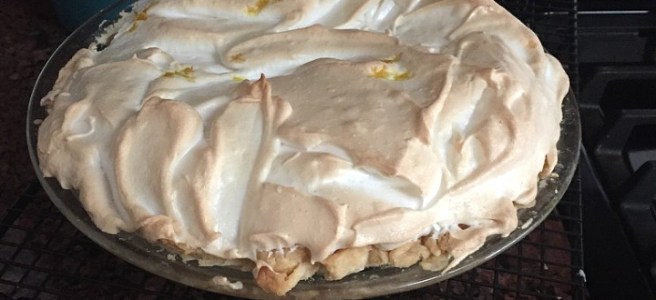
I met other characters in the story. Cody: the son of my brother’s neighbor who was an award winning bull rider and now works on a local ranch. One day Raeleen and I found my mother’s recipe for lemon meringue pie in an old recipe box she had given to her granddaughter before she died. Raeleen loves lemon meringue pie and so I said I would make one for her.
Before leaving town, we stopped at the grocery store to buy the ingredients. When I went to bake the pies I realized I had neglected to buy cornstarch. At home this would have been no problem – just run back to the Food Lion and pick it up. Out here in the back country – not so easy. Joyce and I were debating what to do. Irvin said – call the neighbor and I can get in the pickup and drive over and get it (next-door has a different meaning where they come from). And so we did. And they did. And Cody was heading out to go do some branding and would drop it off. Which is how I came to have my forgotten grocery item delivered to me by a cowboy in his hat and boots who came in and sat down and had a piece of banana bread with us before being on his way.
Food Lion is sooooo overrated.
I met Carol: one of Raleen’s best friends who is the post-master in a little town where she ministers to and prays for everyone who comes in to collect their mail. Who has an amazing gift of hospitality and opens her home to the ginger-ladies each week and her stable to some city slicker who wants a photo-op on a horse. And who loves her community to Jesus each and every day
I met Dennis: a retired teacher who went into ministry in his retirement and now pastors my brother’s little church as well as another church in the next town over and goes between them every Sunday, making a long day for him and a blessing for those whom he serves.
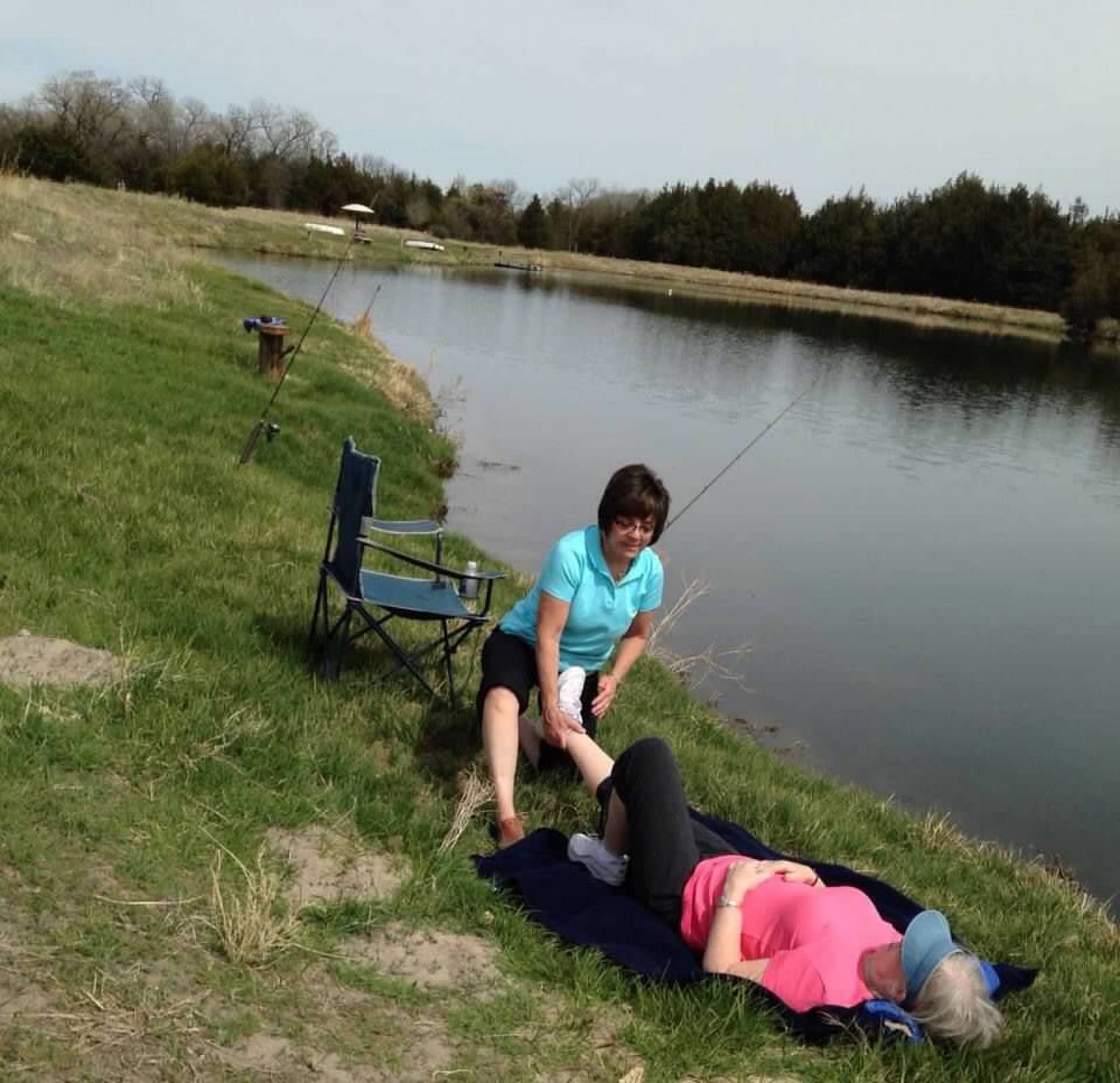
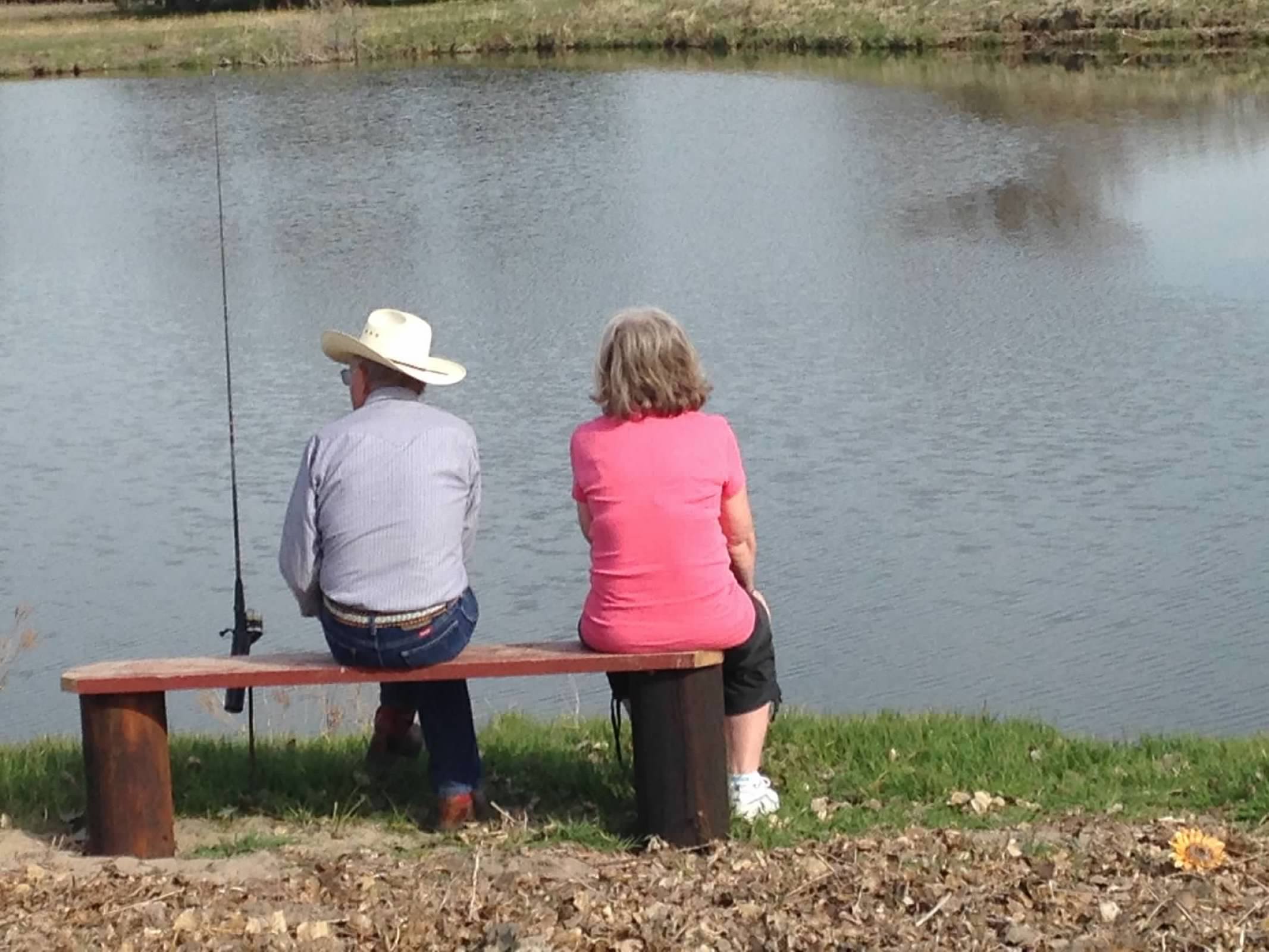
I met Dan, a friend of Irvin’s who opened his private fishing pond to us one afternoon and evening so that I could go fishing with Irvin without a license – and stayed and had a picnic dinner with us down by the pond and how we didn’t catch any fish but I got to have physical therapy by the lake and really – how often does that happen where I come from?
And then there was the time my cell phone rang in the middle of the night. The sound that actually woke me was the pounding of my heart against the wall of my chest because my body had already registered what my mind was struggling to hear as I swam toward consciousness – this could not be good news. But it was Raeleen: HAVE YOU SEEN THE STARS??!!!!! I had mentioned to her a few days before that you could never really see the stars at home because of all the lights. “What time is it?” was the only answer I could muster. But I did as I was instructed and went out into the yard and gazed at the heavens. And then I cried for the sheer beauty of it. My phone rang again, “Get dressed! I’m on my way. We’re going star-gazing!!!” I knew it would take her 40 minutes to get there so I went in the house, got dressed and left a note explaining my whereabouts. Then I locked the door behind me and tiptoed out into the night. I walked out to the road so that the headlights wouldn’t wake my brother and his wife. Was I concerned about their sleep or about getting busted sneaking out? Hmmmmm….
.She arrived with two travel mugs – coffee for her and tea for me, blankets, and away we went. We drove through a gate into a pasture off the beaten path – the headlights shown on a no trespassing sign but she didn’t seem too worried. I assumed she knew the property owner so I wasn’t worried either. And there we sat and watched the stars, tried to pick out constellations, and marveled at the beauty and mystery of it all. Shortly before dawn, one bird began to sing. And then another and another. Raeleen named them for me by their songs and there was not one she didn’t know. Then came one from the darkness that was deep and low. I heard it over and over again. What bird is that? I wanted to know. “That” she laughed, “is a coughing cow”. I still had so much to learn! As the stars faded and the sky colored with the coming dawn, we basked in the beauty and sat surrounded by cows and birds and windmills and grasses and flowers. And more “No trespassing” signs. Whose property is this? I asked her. “I have no idea,” came her reply.
Those three weeks changed my life. They gave me time. Time to move slowly with the rhythm of the season and the land. Time to visit with characters in the story and learn from them a different way of life than my own. Time to sit in a rocking chair and watch my brother braid the leather harnesses and headstalls that are nothing if not a work of art. Time to plot how to catch the varmint that was digging up the garden and set the traps and marvel every morning how the trap was sprung, the bait was gone but so was the varmint. To bake lemon pies and go fishing and eat homemade biscuits and gravy at the fundraiser for the high school. Time to read and to talk and to listen. To watch the sun come up and go down and star-gaze and enjoy conversation over a good steak. Time to fall in love with the land where I was born. To hear the stories of my family and my heritage and to learn what it looks like to love and to serve God in ways I never knew and to learn from this truly amazing and remarkable woman who is related to me by blood and now by love. Oh, and my hip is better, too. Thanks for asking.
I even love the “Dog Days of Summer”. You know – those hot, sticky, muggy, days that hit Maryland around July. Don’t hate me. I just love them. I love drinking gallons of iced tea, sitting under the ceiling fan, going barefoot, pulling my hair up in a not-so-neat pile to get it off my neck, eating cucumber salad for breakfast, lunch and dinner. I love going outside at 10 o’clock at night and being hit with a blast of hot air. I love all of it. And I don’t know why. Being a red head, I was never one of those girls who could “lay out” as a summer activity. You know – spread your towel out in the back yard or on the concrete beside the swimming pool, slather on the baby oil, put on the shades and bake your way to beautiful, golden skin. Oh, not that I didn’t try. I would go through all the steps – only to end up with a hideous looking sunburn that left me in so much pain and misery that I wanted to die (that’s the teen drama speaking). And when the pain subsided I was left with peeling skin and freckles – the bane of my life. I remember once reading in a beauty magazine that you could bleach them out with lemon juice. Not true. Anyway, as a kid and teenager, summer was fraught with peril and danger and I never considered it my friend.
But somewhere along the way, that changed. Now I sit in the shade and read my book and listen to the insects and the birds and it feeds my soul. I don’t like air conditioning. I almost refuse to eat at a restaurant in the summer that doesn’t have outdoor seating because I hate to bundle up in a sweater and hurry through my meal because I’m freezing. I like the heat. (In the interest of full disclosure, we do cool the house down at night to sleep. But the first thing I do in the morning is warm it up.)
This week has been unusually hot. And though the evenings are the way I like them, hot and humid, the day after day of near 100 degree temps with high humidity can wear a little thin – even for me. And they take me back to the summer of 1976.
It was August and we lived in Kansas in an apartment that was on the second and third floor of an old house. I was nine months pregnant and had a four year old and two year old. Our apartment had no air conditioning. None. I stripped the kids down to their underwear, put on a tent that I called a sundress, and wondered to myself if I had really died and gone to hell because surely this is what hell must feel like. Did I mention I was nine months pregnant? And we had no air conditioning? We did find an ancient window unit in the basement that the last tenant had discarded and we (and by we I mean Paul) hauled it upstairs and installed it in the living room window. We plugged it in, prayed, held our breath, and hit the on switch. The sound that came from that machine sounded like a tribe of banshees each using a jack -hammer to break up concrete. The kids – who had been playing out in the yard (in their underwear)- came running up the stairs “Daddy, Daddy, make it stop!” We only knew that’s what they were saying by the look of terror in their eyes and reading their lips – we certainly couldn’t hear them over the racket. The best relief to be found was to stand in front of the open refrigerator. Which I did. Often. Everyday the weatherman talked about the record breaking heat and I prayed that relief would come soon. Paul went to work every day, drove by the bank with the thermometer that confirmed what he already knew – he would return home that evening to a bowl of cereal; sweaty, cranky kids; and a wife who had seen better days. But the baby came in the middle of August (we named her Faith, maybe because of the faith it took to believe we would both survive those days), finally the heat broke, and life went on. I’m sure it was sometime after the memories of that summer had faded a little (a lot) that my love affair with summer began.
I have been reminded of that summer because now, in the heat of these days and nights, as I wait for the birth of my granddaughter who is due the first of August. I understand how miserable the wait is for my daughter Joy and how if feels like it will never end. But it does.
As for me, I will pour myself another glass of tea or buy a 5 cent glass of lemonade from a budding young entrepreneur, turn the ceiling fan on high (okay – and maybe I’ll turn on the air conditioning just a little) and soak up these dog days of summer.
And many thanks to my second “August baby” (yes, I did it again) Sarah for the use of her photos which always tell a story.
In our family, Super Bowl Sunday was never about the football… unless the Bears or later the Skins were playing… and really, how often does that happen in one’s lifetime??
No. Super Bowl Sunday was always about the food. The snacks. All the stuff you got to eat on that day on any other day would have been considered indulgent and gluttonous. On this day, everything was allowable.
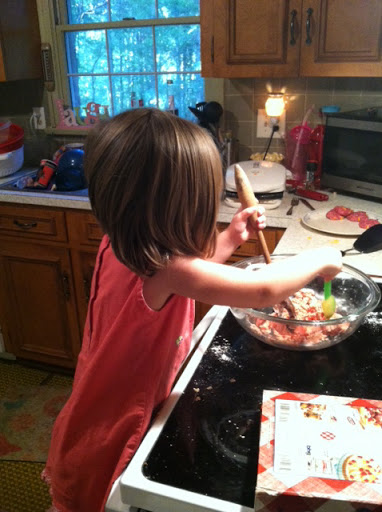
I think it must have been about 1987. I can’t remember if we had friends coming or it was just family – either way it would be a party and I had been cooking (junk) food for days. That afternoon I was finishing up the Chex Party Mix (this was before you bought it in a bag and actually made it from scratch). Joy was “helping” me. We mixed the three different kinds of Chex cereals, the peanuts and then poured the buttery mixture over it and put it in the oven. The M&M’s would be added later. So messy, so fun!! She was at the “helping” stage most children go through at about three or four and she was relishing the role. I remember Fletcher one Thanksgiving when he was about the same age wanting to help. He pulled a chair over to the kitchen sink where I was preparing the turkey to put in the oven. He watched for a while before he put voice to the question, “What is that?” “THIS,” I proclaimed proudly of the 20 pound foul sprawled in my sink, “is the turkey!!” “It looks like some kind of dead animal,” he said with mild alarm in his three year old voice. Well, when you put it that way. . . but I digress.
Joy was helping me with the Chex Mix for the Super Bowl party and carrying on a running dialogue – mostly with herself.“I just love the Super Bowl. I have always loved the Super Bowl. I think Super Bowl parties are the best parties ever. Don’t you love the Super Bowl? When can we have the snacks? What time will the Super Bowl start? How much longer is that? Is this YOUR favorite party? Don’t you just love Chex Mix? Can I have some Chex Mix now? Well, how much longer till the Super Bowl starts? Shall I ask the kids if they are ready for the Super Bowl? Can I fix my bowl of Chex Mix now and just hold it till it’s time for the Super Bowl to start? What shall I wear to the Super Bowl? What are you going to wear to the Super Bowl? How much longer, now?” And so it went…. for most of the afternoon. She was so excited for it all to begin. The other kids begged me to make her stop, but she was not to be shushed “She doesn’t even LIKE to watch football!” they complained. “She hates Sunday afternoons when that’s all we do. Why is this so different?” Who knew?
Finally it was time. She spread out her blanket on the floor. She brought pillows from her bed. She put on her “special party pajamas”. She brought in her favorite doll to enjoy the festivities. She straightened her blanket. She fluffed her pillows. And she oh-so-carefully carried her bowl of Chex Mix into the living room and sat on her blanket. We turned on the television. The announcers were talking, the fans were screaming, aaaand the kick-off. Joy was shocked – almost beyond words. She jumped to her little feet, whipped around with her hands on her hips and in the most accusing and disparaging tone I have ever heard in a three year old she said to me, “THIS LOOKS JUST LIKE FOOTBALL!!”
Whatever she had thought a Super Bowl party meant, never in her wildest dreams did she imagine that it was about football.

























 because our stories matter