Jesus People – part 2

Cedarbrook Community Church was birthed on March 12, 1989. We were thirty nine years old. Our years of campus ministry had taught us some things, but we still had a lot to learn about starting and growing a church in a community setting.

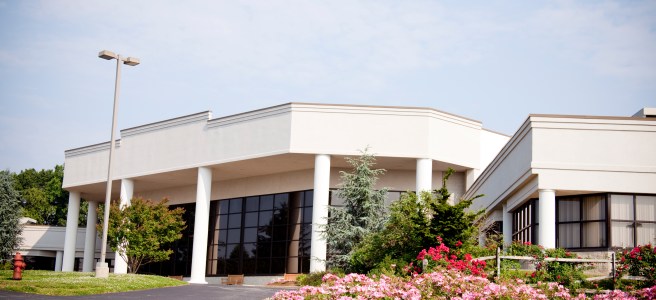
We started with 40 people (if you counted the kids) and met in movie theaters, community theaters, and high schools until we moved into our permanent home in 2001. This place we started and built and grew has seen a myriad of changes over the years and gone through countless revisions and iterations. What started as a “seeker targeted” church grew into a faith community that was more about worship and serving the needy and we learned from our more liturgical brothers and sisters the value of incorporating some of their practices into our worship. From the original 40 we grew to a community of hundreds and hundreds of people. Yet the parade of people who call Cedarbrook home never stands still – it is always moving, always changing. If I’m honest, sometimes that’s hard. So much coming and leaving.

Somebody once told me that loving a church is like hugging a parade. I think that pretty much sums it up. At any given moment, the church is simply a snapshot in time; the next frame could feature a largely different cast of characters with a new plot line. 

But there are many who marched in the parade for a little or a long while who left their mark and hold a special place in our hearts and we are grateful for them all. 

To name just a few: 

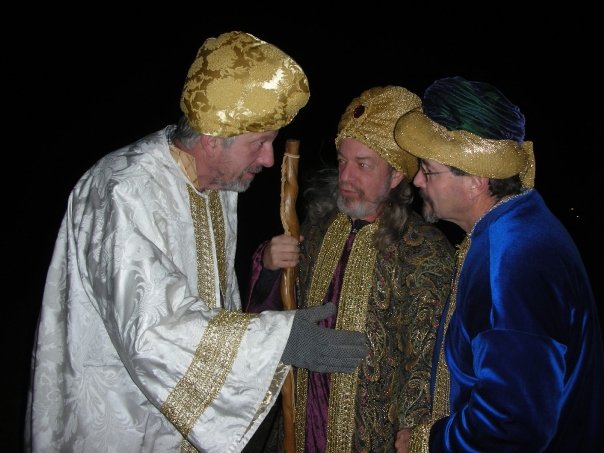
There is Reuben who was a wiseman in our first children’s Christmas pageant.  Maybe five years old, he came striding up the aisle with his crown and his fake beard, carrying his mother’s bath salts – his gift for the Christ child – as though it were indeed the most precious of all gifts. With his flair for storytelling and creativity, he grew up to be our Children’s Pastor and developed a Children’s Ministry that was, by far, one of the most inviting things about Cedarbrook.  

There is Leonard Cave, a world renowned artist who asked if he could carve a cross for the front of the auditorium. “A cross should be disruptive,” he said.  “But not too disruptive.”  What a gift that sculpture is to our community, inviting us into worship week after week.

There is Iris, an amazingly gifted vocalist, who came to us in the early days and invited us into a true and authentic worship experience that taught us what to look for in others who would come later to fill that roll.  

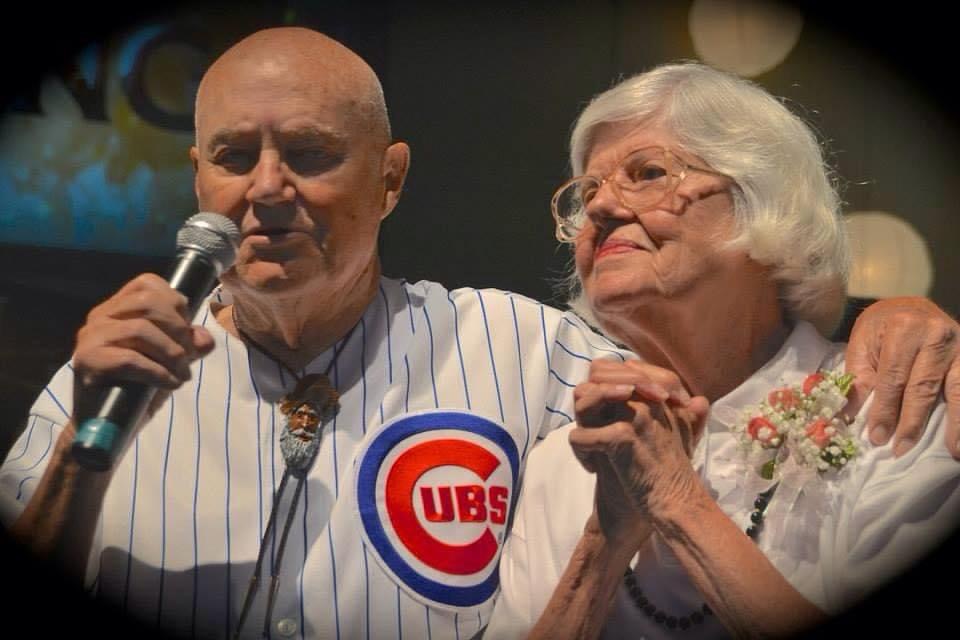
There is Chris Christensen and Gloria who grandparented the church and taught us all what it meant to be the hands and feet of Jesus.  

There is Joe Loconte, who was the driving force behind an active and vital singles group in the early days of the church and who grew up to be a prolific author and apologist for the faith.

There is Joe Mehailescu who brought his sense of design and his eye for beauty to making Cedarbrook’s home an inviting and welcoming space – whether it was the Montgomery Playhouse strewn with garland on Christmas Eve or choosing the wall colors and bathroom tiles for the new building.  

There is Anne Barker who mothered the staff and really the whole church in her role as the first church administrator. 

There is the Drama team who in the early days provided live dramas to illustrate the message.  Who brought us the infamous Cave Man sketch with its wardrobe malfunction and Vivian the homeless woman in “Stolen Jesus”.  

There is Daren Hull, our first youth pastor, who thought he was Batman, who loved our teens well, and who brought fun and adventure to the staff.

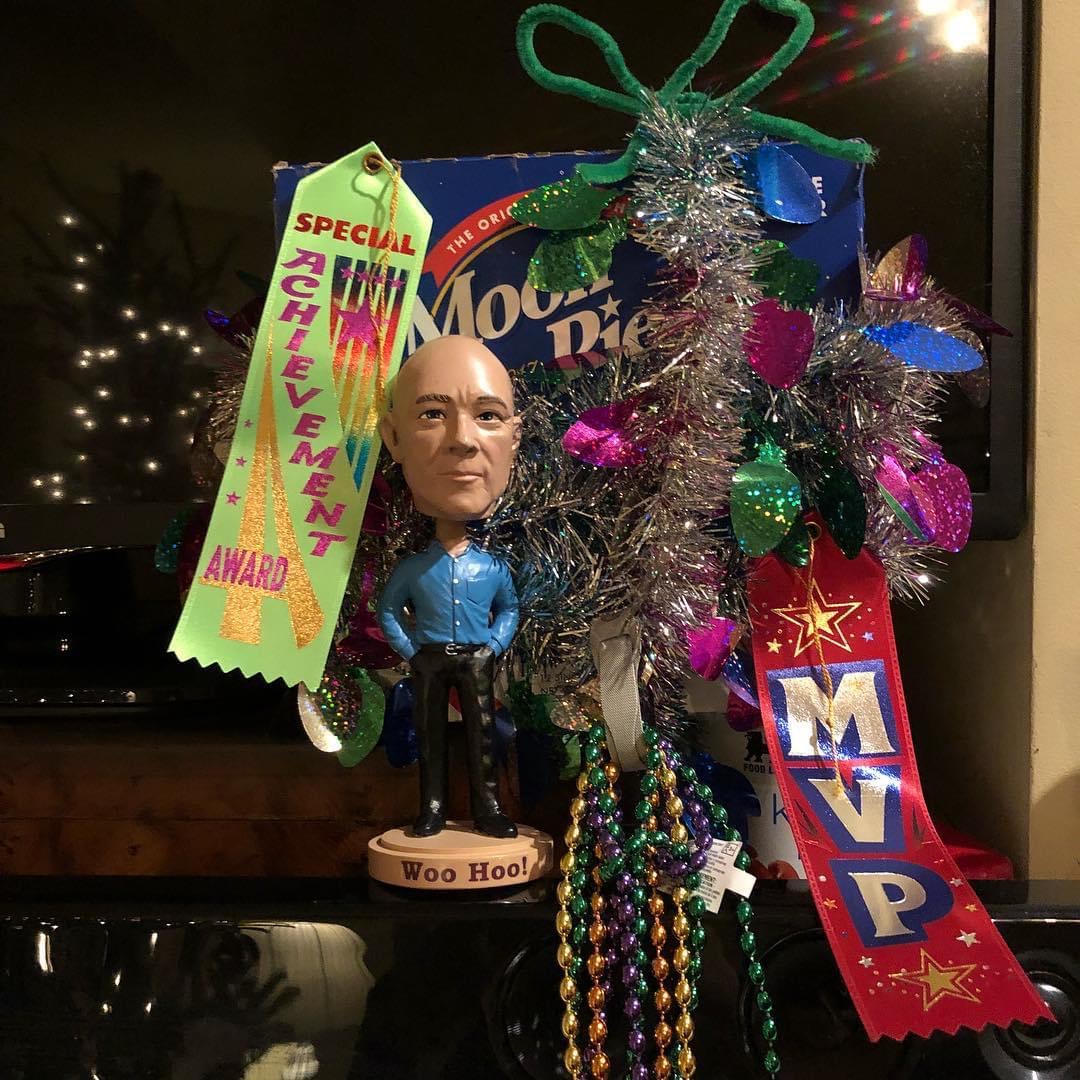
There is the Woo-hoo Award, chosen each year by the Star Chamber and awarded to a staff member as a way to roast him or her at the annual Christmas party where we packed  everybody into our living room and ate chili and cinnamon rolls.  

There is Ken Jackson who walked through the doors on that first March morning and has become, as much as anyone else, the face of Cedarbrook. Call him an Associate Pastor, the Spiritual  Formation Pastor, the Small Groups Guy, he wears all the hats. The wisdom, grace, and insight he brings to the church and the pastoral staff has been invaluable in all of the renditions of the parade. 

There is Silent Night by candlelight where it was so dark you could’t see who was in the parade.  But it was beautiful.

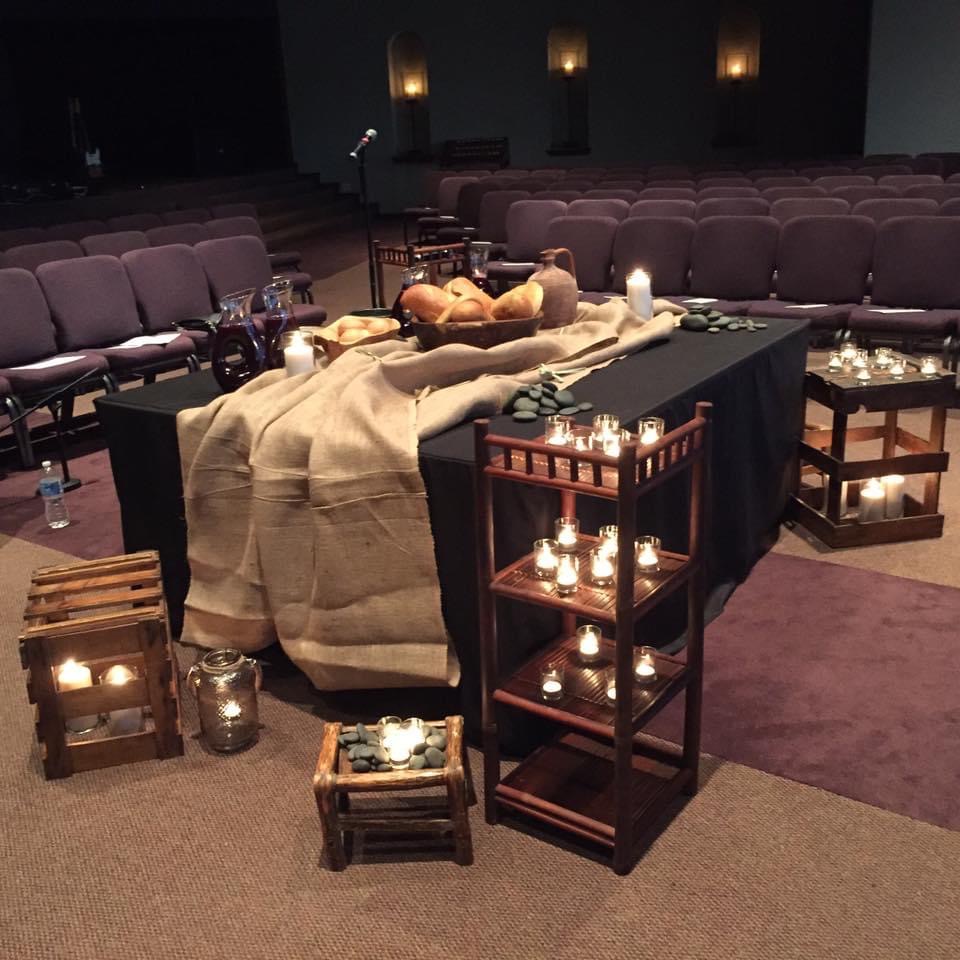
There is the Good Friday Service where we came to the Table to remember and to share the bread and the cup and to sit in silence on this holy night. 

There is Chris Dorr who helped us create “Night in Bethlehem”, a living nativity where for years we created the village of Bethlehem with 70+ characters in costume who interacted with our guests as the beggar or the rabbi or the wood carver or the women drawing water from the well or Roman soldiers on horseback.There were sheep and goats and donkeys and llamas. And a manger down the hill which held Mary and Joseph and the baby.  

 There are the ones from that original 40 who still call Cedarbrook home and the ones who moved here shortly after to join the team:  the Chins, Sarah Marusich and Bruce, the Ervins, the Pattons, the Smiths, Molly Mercado Jackson, Jan and Marna. The ones with the institutional memory of who we were and who we are becoming.  

And there are our children. The ones who folded the bulletins, set up the chairs, tore down the chairs, the first ones to arrive to any given meeting and the last ones to leave, who set up the first computer network in the building, served in the nursery and on committees and bore witness to all the joys and sorrows along the way. I’d like to think that all those years and experiences had something to do with the remarkable people they grew up to be:  sacrificial, caring, kind and servant hearted. 


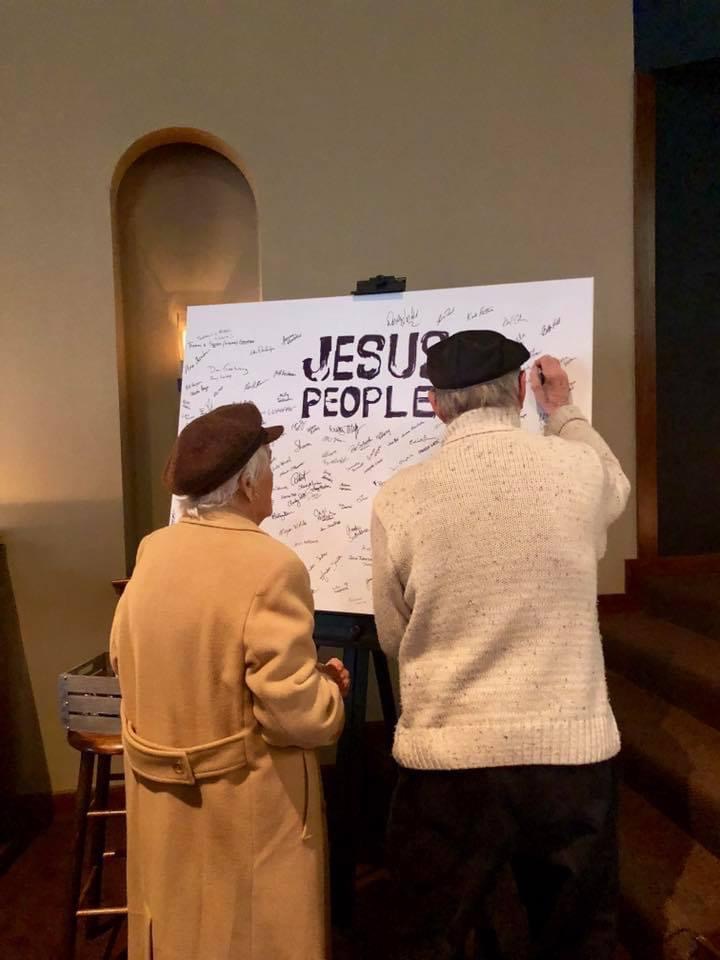
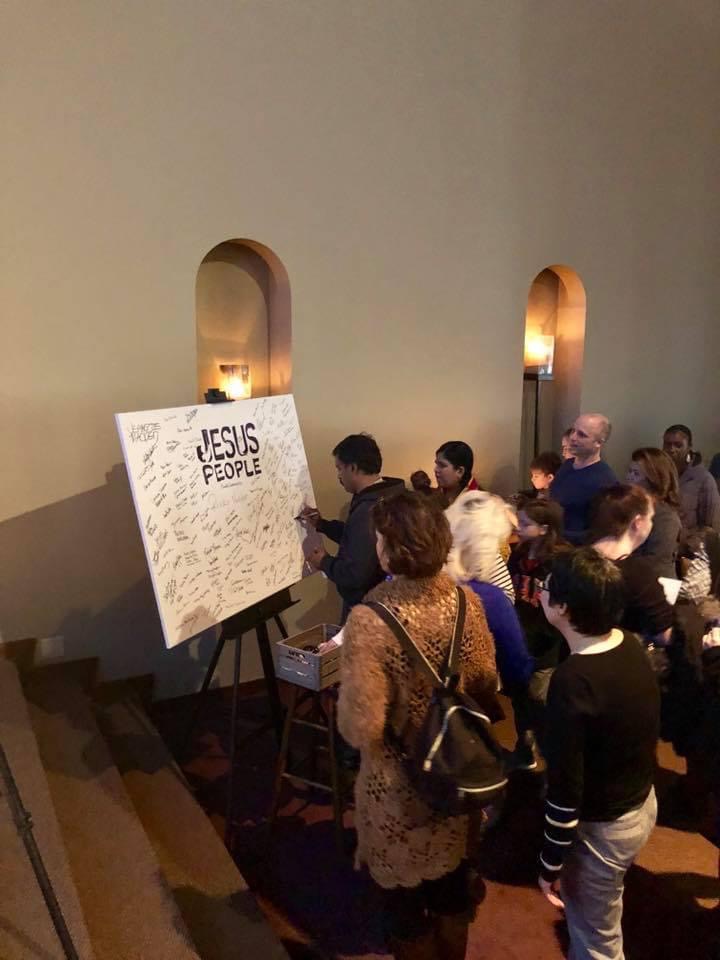
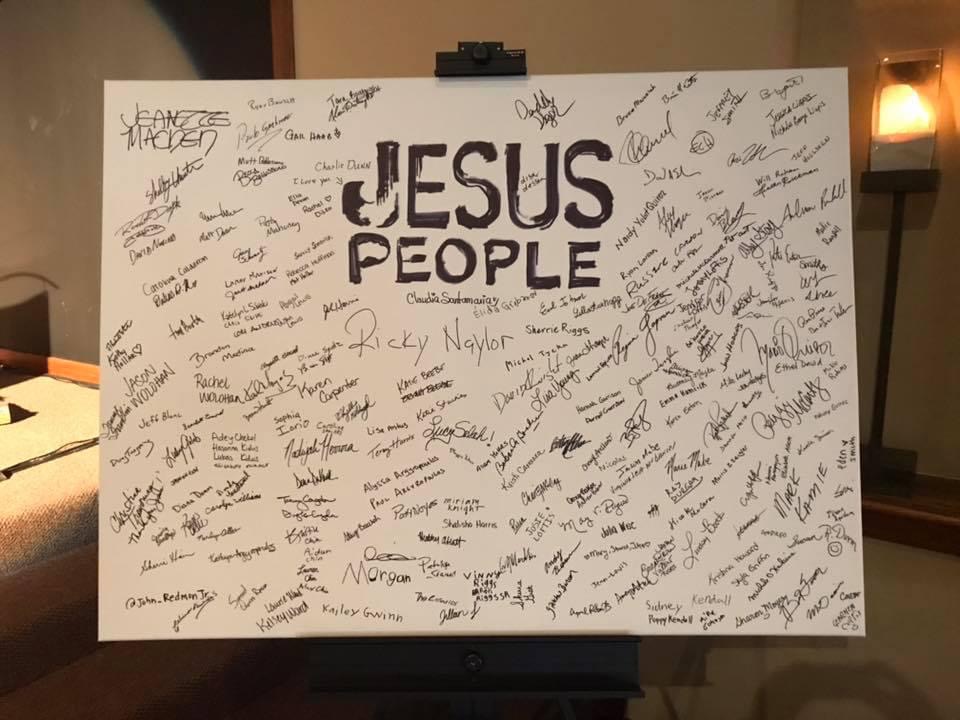
Church can be the source of our greatest wounding and our greatest joy. I would say over the the last 35 years, for us it has been both, and I know many others can say the same. Would I choose to do it over again?  I think so. Perhaps, after all, it is not a choice we made but a call we answered. In the end, what we have wanted for the past five decades is to be Jesus People. That looks a little different now than it did in 1970, the church we started looks different today than it did in 1989. But then again, so do we.

Jesus People – part I

Our story cannot be told without including that which, for better or worse, marked our family perhaps more than any other single factor. For over 50 years, our lives were immersed in ministry. To quote Hyman Roth from The Godfather, “This is the business we’ve chosen.”

In June of 1970, nine months after we were married, we threw in our lot with what would later become known as the Jesus Movement or the Jesus People. Not identified with any particular church or denomination, the movement attracted people like ourselves:  young, idealistic, hungering for an authentic community and encounter with God and His people. How a  conservative Baptist and a converted Methodist came to identify with these hippie Christians is a story which can can be found in  “It was 1970” should you care to start at the beginning.  http://atomic-temporary-85149277.wpcomstaging.com/2016/09/10/it-was-1970/

The early years of our ministry were spent on college campuses – primarily Kansas University in Lawrence, Kansas, and The University of Illinois in Champaign, Illinois. We rented houses (with big living rooms for meeting space) near campus in order to be accessible to students. Though you wouldn’t call what we did communal living, often we had single women living with us and others in the church lived in houses and apartments within walking distance. Many of our meals were eaten together as we tried to live out the example of the early church as we understood it from the book of Acts. “They committed themselves to the teaching of the apostles, the life together, the common meal, and the prayers. . . and all the believers lived in a wonderful harmony, holding everything in common.  They sold whatever they owned and pooled their resources so that each person’s need was met.”

Potter’s Pond

These were the years of dumpster diving (our kids loved when their friends, who were actually college kids, would take them for a morning of cruising the alleys behind sororities and fraternities on move-out day to gather treasures that had been left behind), grinding wheat to make our bread, and Sunday afternoon church in South Park followed by a picnic and volleyball. They were the days of bundling up the kids and sledding down the Ohio Street hill on cafeteria trays, of having money show up in our mailbox on a day when we weren’t sure how the rent would get paid that month. Of God providing the perfect part time job as a bus driver at a workshop for mentally disabled adults which, besides putting food on the table for our family and others, opened up a world of rich and rewarding experiences for our family. Of finding a bright, shiny red tricycle on the front porch the morning of our daughter’s fourth birthday (an answer to her prayers) with a note that read:  To Tabi – From Jesus. These were the years of sharing Jesus with a college student, baptizing her in Potter’s Pond and seeing her life change before your very eyes. Of Campus Easter Sunrise Services held sometimes in the snow and sometimes in the dark (that would be the year we miscalculated the time the sun would rise). Of street preaching on the quad in the middle of campus and presenting a logical reason for faith to students who stopped to listen and stayed to learn more and later grew to be followers of Jesus.

the U of I quad – where Paul earned his street preaching chops
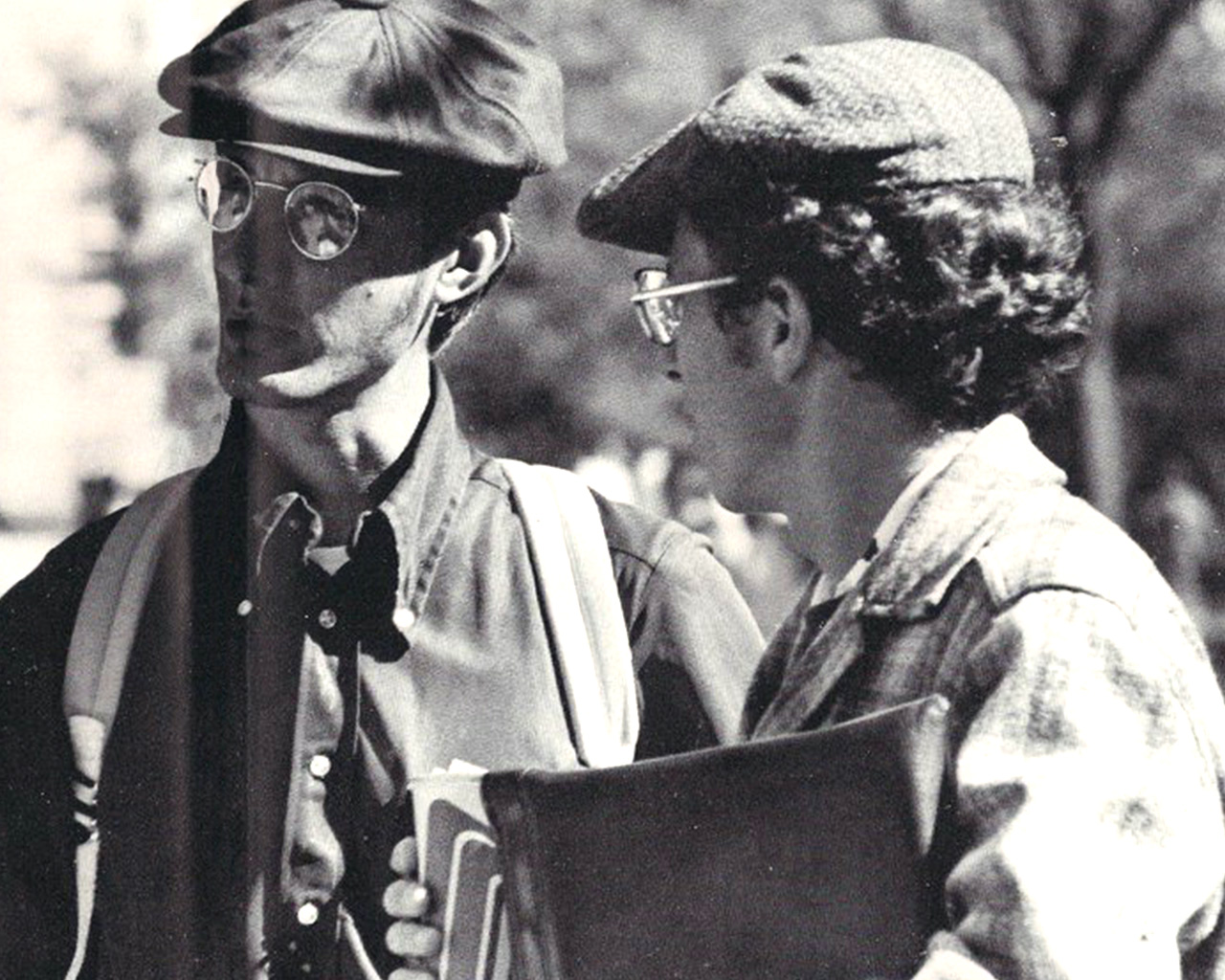
this picture appeared in the KU yearbook – the street preachers who were a common site on the campus

These were the years of the miracles. On an August weekend in 1974, the two young children of a single woman in our little church in Lawrence were taken by their biological father to India in violation of the custody agreement. He used the children as leverage to get the mother to come to India and reconcile with him. She was advised that she would have no legal rights or recourse should she comply. For two years she withstood his demands while she and the little fellowship of believers prayed, asking God for a miracle. In the fall of that year, the calls began to come from Canada rather than India. They contacted the Royal Canadian Mounted Police who tried their best to locate and recover the children with the limited information available. They recorded the calls (with a device purchased from Radio Shack)  and kept a log of each and every call and where it had originated (which would later come in handy). The calls were now coming from Switzerland, Wales, Scotland and then finally from London where it seemed the children and their father had settled. Don, one of the men in the church decided he would go to London to find the children and bring them back – even though he had no idea where to start looking. But his first stop was Scotland Yard who said they didn’t have the resources to search for a needle in a haystack, but they deputized him (what?”!) and he set off to find the children. Knowing the father was an avid reader, Don began visiting libraries and discovered that one had issued a library card to the man he sought. Calling in his back up, he and a member of Scotland Yard went to the address and 36 hours after being deputized, he was face to face with the children. Locating the children was the first miracle, getting them home was the second. Because the children were now residing in England, the English courts had jurisdiction and did not recognize the custody ruling of the Kanas courts. They would hold their own hearing. Two leaders of the church accompanied the mother to London to testify before the court. After two years and many prayers, the children were returned to their mother. Thanks be to God.

Do not be afraid, for I am with you; I will bring your children from the east and gather you from the west.  I will say to the north, ‘Give them up!’ and to the south, ‘Do not hold them back. ’Bring my sons from afar and my daughters from the ends of the earth— everyone who is called by my name,  whom I created for my glory, whom I formed and made‘ “. Isaiah 43:5-7

I wonder now, where did the money come from for lawyers and solicitors, and airplane fares and hotel rooms?  I have no idea.  But these were the days of miracles.

The Ohio Street House

Yet there were challenges. One of the nicer houses we lived in was a house that had been purchased and renovated back to its original state. It was a grand, three story home with oak floors and beautiful wood trim throughout. A man purchased the house with a plan to fix it up and flip it. The problem was that it was smack dab in the middle of the student slum district and nobody wanted to buy such a nice house in that neighborhood. So he rented it out to us and some single guys and let us turn it into two apartments, putting a kitchen in upstairs. The house was marvelous, but with three littles, the neighbors were . . .  questionable. The house next door was filled with probably 20 or so college students though the “student” part of that is questionable. Mostly they partied. Long and hard and well into the night. Doing lots of drugs, making lots of noise and creating no end of chaos and disruption. Five year old Sean, introduced himself to one of the tenants one day. “My name’s Sean.  What’s your name.”  Paco, he replied, trying to break through the haze of his drug-induced confusion.  But Sean wasn’t familiar with the word Paco and so he dubbed him, “Taco”  which then caught on with all of his buddies and you could hear them yelling through the house’s open widows  – HEY TACO!!  which always brought me a small sense of satisfaction.  

Finally, I had had it. I wasn’t sleeping, the kids weren’t sleeping and it was non-stop partying. It was too much. Then came the raid. One night I awoke to helicopters overhead shining their bright lights into my bedroom window. I looked out the window to see people streaming out of the house next door, running and scurrying into the alley, into the street, anywhere to escape.  I heard them yelling – MAN GET OUT NOW. THERE ARE PIGS EVERYWHERE!!” It was the final straw. I shook Paul awake yelling at him, ” Now they have PIGS living over there in that house.”  To which Paul said, “I don’t think they’re referring to livestock. I think they mean the cops.”  Gotcha.

But the hardest part, of course, was that “and all the believers lived in a wonderful harmony” part. I’m not sure what the Apostle Luke thought when he penned those words but perhaps it was more aspirational than actual. Maybe a goal to strive for. Living together is hard.  But even in the hard, out of those days came friends who became family and I would not trade them for all the hard.  

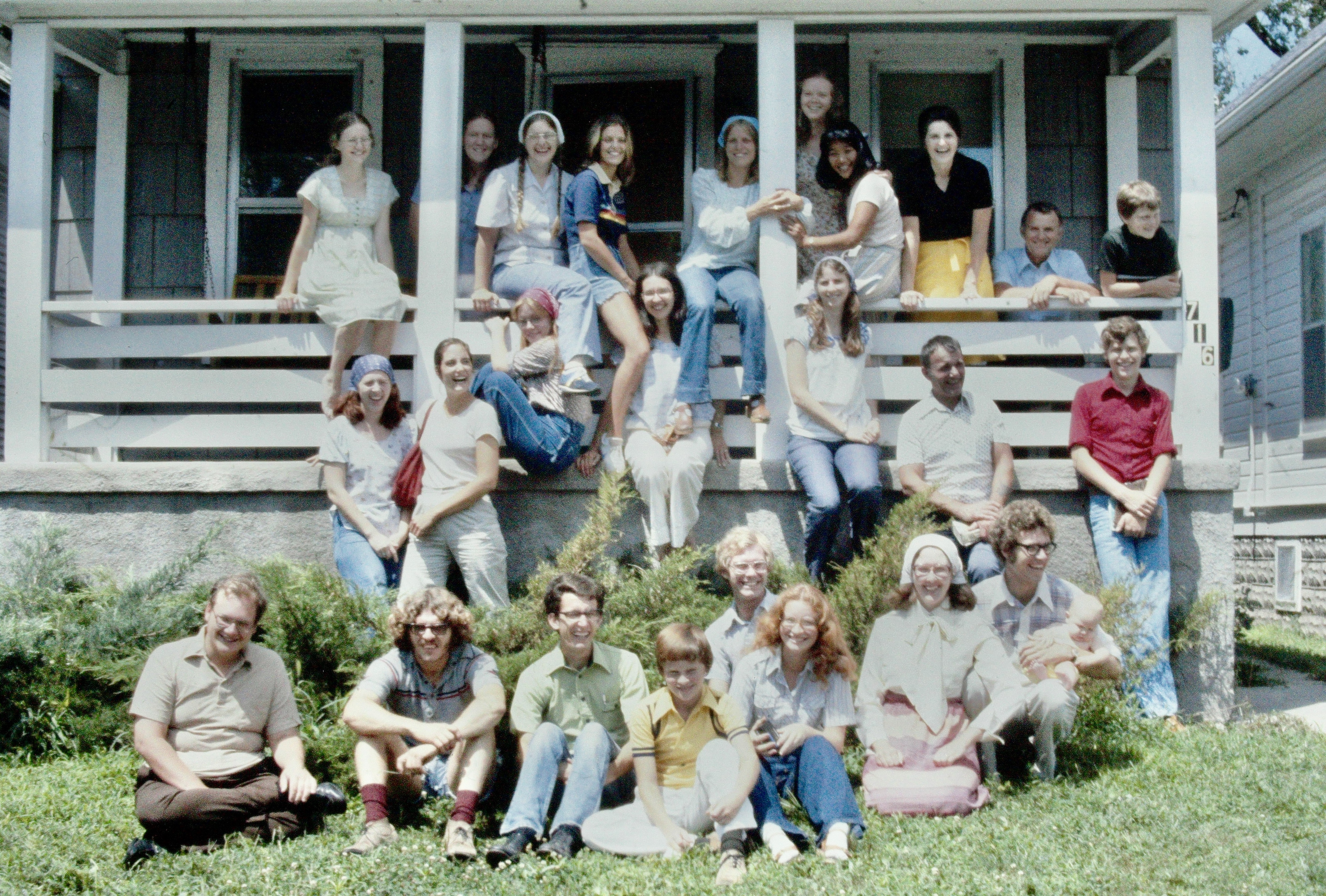
The church In Lawrence in the summer of 1979
The team that moved to Champaigne, Illinois, in 1979 to start a new church on the University of Illinois campus.

An article that ran in the local Lawrence paper, explained us this way: You have to love the last sentence 🙂

 “Strange as it may seem, one of the newest groups to hit the K.U. campuses is a model of the oldest Christian church in history – that of the apostles and new converts recored in Acts 2.  Composed of students, married couples, and traveling singer-evangelists, this group calls itself a church, but acts more like an overgrown family, with all its members deeply attached to one another and to God. . .  They eat together, engage in mutual prayers and studies of Scripture, and each Sunday afternoon they hold an informal communion service which they call “breaking bread,”  . . . [in] a living room arranged as a meeting place for meals and study sessions . . 20 to 60 young people gather several tims a day, dressed in the current uniform of the young – bell bottomed jeans and sweatshirts. Although obviously products of the Jet Age, these young people are distinguishable from their contemporaries by being clean, well-mannered and industrious.”

These were the early years of our ministry – when we were young and idealistic and believed that all things were possible. When what we wanted to be were Jesus People. We learned a lot, but we still had a lot to learn. Those lessons would come in the next chapter.  

This is Where I leave You

Ministry has always been a part of our story. A big part. For the last 33 years it has been the ministry of Cedarbrook. As this chapter comes to a close, there are two stories that should be told.

We met Johnnie Benton the day we walked into a Classical Rhetoric class at Southern Colorado State College in 1969. We were both speech majors and this was a required course.

Dr. Benton was sarcastic, cynical, outspoken and disapproving of most things – particularly anything religious. He mocked, challenged, scoffed at and belittled anything having to do with faith. He was a self-proclaimed apostate and had renounced not just the fundamentalism of his youth but all things associated with the church, declaring that all preachers were hypocrites, charlatans, or just too stupid to realize that what they were preaching could not possibly be true. But in his eyes, their most egregious sin was that he found them to be terrible communicators. So you can imagine his disgust and his dismay when he discovered that one of his favorite students iin the speech department was planning on going into ministry.

“You’re too smart for this,” he told Paul. “You’re an analytical thinker with a good mind and the ability to see both sides of an argument. What the hell are you thinking?”

But the student could not be dissuaded. So finally Dr. Benton said, “Okay, then. If you’re going to do this, then you’re going to be good at it.” And he set out to make this student not just a passable public speaker, but a really good one. And while the professor would not have been anybody’s choice to mentor a future pastor when it came to theology or building strong character, I would argue that there was no one better to mentor him in writing and delivering a sermon. He gave him the toughest of assignments and graded him mercilessly. When he detected even a hint of BS or trump-ta-tra, he called it out. His first response in critiquing a speech was to ask with a smirk, “”So what?” Meaning – why should I, the listener, care about what you just said? How does this relate to me? He taught that it is the listener, not the speaker, who is the most important person in communication and it’s the job of the speaker to find and make the connection. I sometimes think of Johnnie Benton when people say to Paul on any given Sunday morning, “I felt like you were talking just to me.” And I know of course, that it’s the work of the Holy Spirit, but I also think maybe that mean ole’ cuss of a professor played a part in it as well.

And then there was Mr. Chmel, the high school drama director. I did theatre in high school – it was one of my things. I even started out as a theatre major in college. I liked being somebody else – creating a character that was nothing like me and living inside that person for a while and bringing her to life. Paul did NOT do theatre. For a good reason. He could not act. Not even a little. But in our senior year, Mr. Chmel was short of males for the play he had selected and he asked Paul to take a role. Paul told him, ” I can’t act.” But you’d only have like three lines.” Nope. He was not interested. So Mr. Chmel told me to ask him. “If you ask him, he’ll do it.” I don’t think so, I said. He can’t act. But I asked. “It could be fun to be in one play together before we graduate – we could go to rehearsals together and the cast party. It’ll be fun. ” He grudgingly agreed. Poor Mr. Chmel. He probably spent more time with Paul working on those few lines than he did with the rest of the cast put together. At the cast party he said to me, “You were right. He can’t act.”

I say all that to say this: with Paul, what you saw is what you got. It wasn’t a show. It wasn’t an act. He wasn’t playing the role. He never pretended to be someone he’s not to build a bigger church. He doesn’t even know how to do that – it just isn’t in him. He is the same person at home that he was when he stood before the church. He treats the servers at McDonalds the same way he treated you when you talked to him in the lobby after the service. In this day of “The Celebrity Pastor” and all the heartache and grief and shame that has brought to the Church, Paul was simply who he was. You may not like who he was and you may have wanted a pastor who was more extroverted, more charismatic, or just more. But he didn’t know how to play that role. God knows he isn’t perfect and there are a myriad of things he would do differently if he could go back. But he wasn’t acting – he brought his true and authentic self – for better or worse.

Paul, thank you for bringing me with you on this adventure of a lifetime. For all of our starts and stops, all the things that we got wrong and those times we succeeded in spite of ourselves and only by the grace of God, we have been partners through it all. I am forever grateful. And for the record, I think over the years you have preached a handful of sermons that would have made Johnnie Benton proud.

“There is a difference between curing and healing, and I believe the church is called to the slow and difficult work of healing. We are called to enter into one another’s pain, anoint it as holy, and stick around no matter the outcome.” Rachel Held Evans

This is the work we are here for.