Jesus People – part I

Our story cannot be told without including that which, for better or worse, marked our family perhaps more than any other single factor. For over 50 years, our lives were immersed in ministry. To quote Hyman Roth from The Godfather, “This is the business we’ve chosen.”

In June of 1970, nine months after we were married, we threw in our lot with what would later become known as the Jesus Movement or the Jesus People. Not identified with any particular church or denomination, the movement attracted people like ourselves:  young, idealistic, hungering for an authentic community and encounter with God and His people. How a  conservative Baptist and a converted Methodist came to identify with these hippie Christians is a story which can can be found in  “It was 1970” should you care to start at the beginning.  http://atomic-temporary-85149277.wpcomstaging.com/2016/09/10/it-was-1970/

The early years of our ministry were spent on college campuses – primarily Kansas University in Lawrence, Kansas, and The University of Illinois in Champaign, Illinois. We rented houses (with big living rooms for meeting space) near campus in order to be accessible to students. Though you wouldn’t call what we did communal living, often we had single women living with us and others in the church lived in houses and apartments within walking distance. Many of our meals were eaten together as we tried to live out the example of the early church as we understood it from the book of Acts. “They committed themselves to the teaching of the apostles, the life together, the common meal, and the prayers. . . and all the believers lived in a wonderful harmony, holding everything in common.  They sold whatever they owned and pooled their resources so that each person’s need was met.”

Potter’s Pond

These were the years of dumpster diving (our kids loved when their friends, who were actually college kids, would take them for a morning of cruising the alleys behind sororities and fraternities on move-out day to gather treasures that had been left behind), grinding wheat to make our bread, and Sunday afternoon church in South Park followed by a picnic and volleyball. They were the days of bundling up the kids and sledding down the Ohio Street hill on cafeteria trays, of having money show up in our mailbox on a day when we weren’t sure how the rent would get paid that month. Of God providing the perfect part time job as a bus driver at a workshop for mentally disabled adults which, besides putting food on the table for our family and others, opened up a world of rich and rewarding experiences for our family. Of finding a bright, shiny red tricycle on the front porch the morning of our daughter’s fourth birthday (an answer to her prayers) with a note that read:  To Tabi – From Jesus. These were the years of sharing Jesus with a college student, baptizing her in Potter’s Pond and seeing her life change before your very eyes. Of Campus Easter Sunrise Services held sometimes in the snow and sometimes in the dark (that would be the year we miscalculated the time the sun would rise). Of street preaching on the quad in the middle of campus and presenting a logical reason for faith to students who stopped to listen and stayed to learn more and later grew to be followers of Jesus.

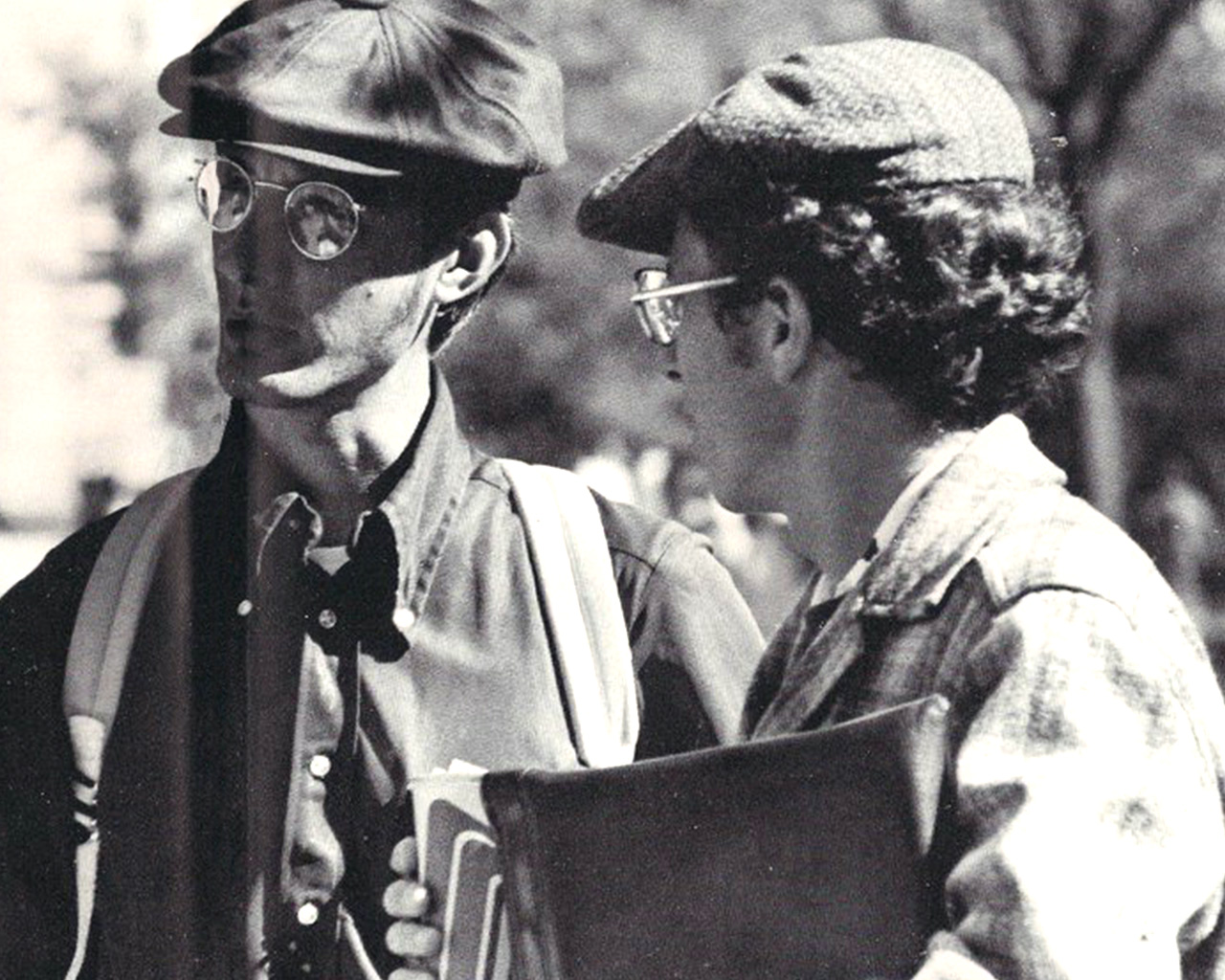
the U of I quad – where Paul earned his street preaching chops
this picture appeared in the KU yearbook – the street preachers who were a common site on the campus

These were the years of the miracles. On an August weekend in 1974, the two young children of a single woman in our little church in Lawrence were taken by their biological father to India in violation of the custody agreement. He used the children as leverage to get the mother to come to India and reconcile with him. She was advised that she would have no legal rights or recourse should she comply. For two years she withstood his demands while she and the little fellowship of believers prayed, asking God for a miracle. In the fall of that year, the calls began to come from Canada rather than India. They contacted the Royal Canadian Mounted Police who tried their best to locate and recover the children with the limited information available. They recorded the calls (with a device purchased from Radio Shack)  and kept a log of each and every call and where it had originated (which would later come in handy). The calls were now coming from Switzerland, Wales, Scotland and then finally from London where it seemed the children and their father had settled. Don, one of the men in the church decided he would go to London to find the children and bring them back – even though he had no idea where to start looking. But his first stop was Scotland Yard who said they didn’t have the resources to search for a needle in a haystack, but they deputized him (what?”!) and he set off to find the children. Knowing the father was an avid reader, Don began visiting libraries and discovered that one had issued a library card to the man he sought. Calling in his back up, he and a member of Scotland Yard went to the address and 36 hours after being deputized, he was face to face with the children. Locating the children was the first miracle, getting them home was the second. Because the children were now residing in England, the English courts had jurisdiction and did not recognize the custody ruling of the Kanas courts. They would hold their own hearing. Two leaders of the church accompanied the mother to London to testify before the court. After two years and many prayers, the children were returned to their mother. Thanks be to God.

Do not be afraid, for I am with you; I will bring your children from the east and gather you from the west.  I will say to the north, ‘Give them up!’ and to the south, ‘Do not hold them back. ’Bring my sons from afar and my daughters from the ends of the earth— everyone who is called by my name,  whom I created for my glory, whom I formed and made‘ “. Isaiah 43:5-7

I wonder now, where did the money come from for lawyers and solicitors, and airplane fares and hotel rooms?  I have no idea.  But these were the days of miracles.

The Ohio Street House

Yet there were challenges. One of the nicer houses we lived in was a house that had been purchased and renovated back to its original state. It was a grand, three story home with oak floors and beautiful wood trim throughout. A man purchased the house with a plan to fix it up and flip it. The problem was that it was smack dab in the middle of the student slum district and nobody wanted to buy such a nice house in that neighborhood. So he rented it out to us and some single guys and let us turn it into two apartments, putting a kitchen in upstairs. The house was marvelous, but with three littles, the neighbors were . . .  questionable. The house next door was filled with probably 20 or so college students though the “student” part of that is questionable. Mostly they partied. Long and hard and well into the night. Doing lots of drugs, making lots of noise and creating no end of chaos and disruption. Five year old Sean, introduced himself to one of the tenants one day. “My name’s Sean.  What’s your name.”  Paco, he replied, trying to break through the haze of his drug-induced confusion.  But Sean wasn’t familiar with the word Paco and so he dubbed him, “Taco”  which then caught on with all of his buddies and you could hear them yelling through the house’s open widows  – HEY TACO!!  which always brought me a small sense of satisfaction.  

Finally, I had had it. I wasn’t sleeping, the kids weren’t sleeping and it was non-stop partying. It was too much. Then came the raid. One night I awoke to helicopters overhead shining their bright lights into my bedroom window. I looked out the window to see people streaming out of the house next door, running and scurrying into the alley, into the street, anywhere to escape.  I heard them yelling – MAN GET OUT NOW. THERE ARE PIGS EVERYWHERE!!” It was the final straw. I shook Paul awake yelling at him, ” Now they have PIGS living over there in that house.”  To which Paul said, “I don’t think they’re referring to livestock. I think they mean the cops.”  Gotcha.

But the hardest part, of course, was that “and all the believers lived in a wonderful harmony” part. I’m not sure what the Apostle Luke thought when he penned those words but perhaps it was more aspirational than actual. Maybe a goal to strive for. Living together is hard.  But even in the hard, out of those days came friends who became family and I would not trade them for all the hard.  

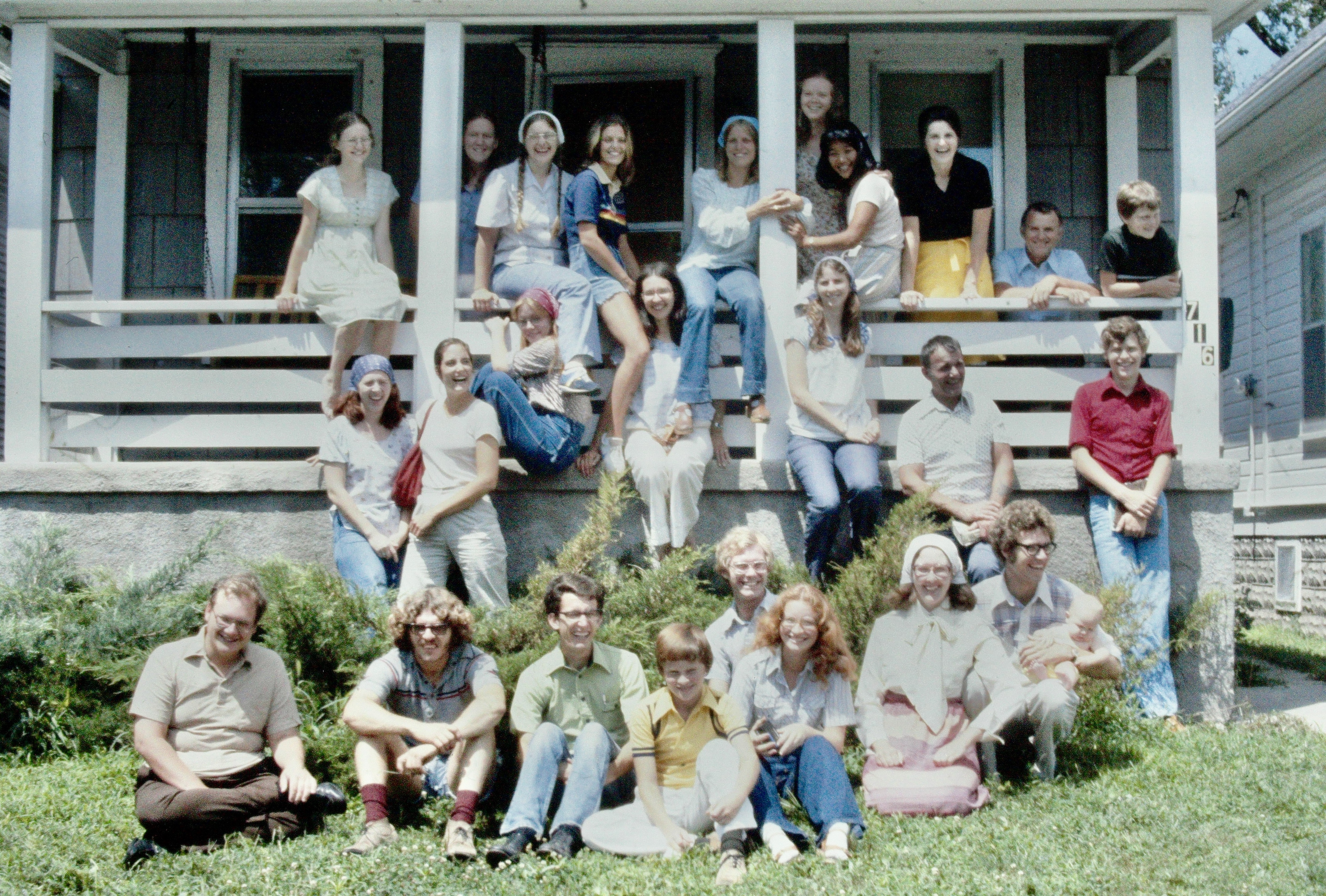
The church In Lawrence in the summer of 1979
The team that moved to Champaigne, Illinois, in 1979 to start a new church on the University of Illinois campus.

An article that ran in the local Lawrence paper, explained us this way: You have to love the last sentence 🙂

 “Strange as it may seem, one of the newest groups to hit the K.U. campuses is a model of the oldest Christian church in history – that of the apostles and new converts recored in Acts 2.  Composed of students, married couples, and traveling singer-evangelists, this group calls itself a church, but acts more like an overgrown family, with all its members deeply attached to one another and to God. . .  They eat together, engage in mutual prayers and studies of Scripture, and each Sunday afternoon they hold an informal communion service which they call “breaking bread,”  . . . [in] a living room arranged as a meeting place for meals and study sessions . . 20 to 60 young people gather several tims a day, dressed in the current uniform of the young – bell bottomed jeans and sweatshirts. Although obviously products of the Jet Age, these young people are distinguishable from their contemporaries by being clean, well-mannered and industrious.”

These were the early years of our ministry – when we were young and idealistic and believed that all things were possible. When what we wanted to be were Jesus People. We learned a lot, but we still had a lot to learn. Those lessons would come in the next chapter.  

This is Where I leave You

Ministry has always been a part of our story. A big part. For the last 33 years it has been the ministry of Cedarbrook. As this chapter comes to a close, there are two stories that should be told.

We met Johnnie Benton the day we walked into a Classical Rhetoric class at Southern Colorado State College in 1969. We were both speech majors and this was a required course.

Dr. Benton was sarcastic, cynical, outspoken and disapproving of most things – particularly anything religious. He mocked, challenged, scoffed at and belittled anything having to do with faith. He was a self-proclaimed apostate and had renounced not just the fundamentalism of his youth but all things associated with the church, declaring that all preachers were hypocrites, charlatans, or just too stupid to realize that what they were preaching could not possibly be true. But in his eyes, their most egregious sin was that he found them to be terrible communicators. So you can imagine his disgust and his dismay when he discovered that one of his favorite students iin the speech department was planning on going into ministry.

“You’re too smart for this,” he told Paul. “You’re an analytical thinker with a good mind and the ability to see both sides of an argument. What the hell are you thinking?”

But the student could not be dissuaded. So finally Dr. Benton said, “Okay, then. If you’re going to do this, then you’re going to be good at it.” And he set out to make this student not just a passable public speaker, but a really good one. And while the professor would not have been anybody’s choice to mentor a future pastor when it came to theology or building strong character, I would argue that there was no one better to mentor him in writing and delivering a sermon. He gave him the toughest of assignments and graded him mercilessly. When he detected even a hint of BS or trump-ta-tra, he called it out. His first response in critiquing a speech was to ask with a smirk, “”So what?” Meaning – why should I, the listener, care about what you just said? How does this relate to me? He taught that it is the listener, not the speaker, who is the most important person in communication and it’s the job of the speaker to find and make the connection. I sometimes think of Johnnie Benton when people say to Paul on any given Sunday morning, “I felt like you were talking just to me.” And I know of course, that it’s the work of the Holy Spirit, but I also think maybe that mean ole’ cuss of a professor played a part in it as well.

And then there was Mr. Chmel, the high school drama director. I did theatre in high school – it was one of my things. I even started out as a theatre major in college. I liked being somebody else – creating a character that was nothing like me and living inside that person for a while and bringing her to life. Paul did NOT do theatre. For a good reason. He could not act. Not even a little. But in our senior year, Mr. Chmel was short of males for the play he had selected and he asked Paul to take a role. Paul told him, ” I can’t act.” But you’d only have like three lines.” Nope. He was not interested. So Mr. Chmel told me to ask him. “If you ask him, he’ll do it.” I don’t think so, I said. He can’t act. But I asked. “It could be fun to be in one play together before we graduate – we could go to rehearsals together and the cast party. It’ll be fun. ” He grudgingly agreed. Poor Mr. Chmel. He probably spent more time with Paul working on those few lines than he did with the rest of the cast put together. At the cast party he said to me, “You were right. He can’t act.”

I say all that to say this: with Paul, what you saw is what you got. It wasn’t a show. It wasn’t an act. He wasn’t playing the role. He never pretended to be someone he’s not to build a bigger church. He doesn’t even know how to do that – it just isn’t in him. He is the same person at home that he was when he stood before the church. He treats the servers at McDonalds the same way he treated you when you talked to him in the lobby after the service. In this day of “The Celebrity Pastor” and all the heartache and grief and shame that has brought to the Church, Paul was simply who he was. You may not like who he was and you may have wanted a pastor who was more extroverted, more charismatic, or just more. But he didn’t know how to play that role. God knows he isn’t perfect and there are a myriad of things he would do differently if he could go back. But he wasn’t acting – he brought his true and authentic self – for better or worse.

Paul, thank you for bringing me with you on this adventure of a lifetime. For all of our starts and stops, all the things that we got wrong and those times we succeeded in spite of ourselves and only by the grace of God, we have been partners through it all. I am forever grateful. And for the record, I think over the years you have preached a handful of sermons that would have made Johnnie Benton proud.

“There is a difference between curing and healing, and I believe the church is called to the slow and difficult work of healing. We are called to enter into one another’s pain, anoint it as holy, and stick around no matter the outcome.” Rachel Held Evans

This is the work we are here for.

Because Every One of These is a Story

things I am done with:
1. rudeness in the guise of “speaking the truth”
2. apologizing for my kids
3. crying over real or perceived slights
4. thinking that it’s all my fault
5. trying to find the lesson in the hard thing
6. saving stuff because “I might need it someday”
7. rehearsing conversations in my head that I’m never really going to have

things i will hold on to for a little while longer:
1. the hope that some things can be restored
2. the recipe card for lemon meringue pie in my mother’s handwriting
3. the longing to make a difference
4. iced tea and ceiling fans on a hot summer’s night
5. faith
6. memories of the good times
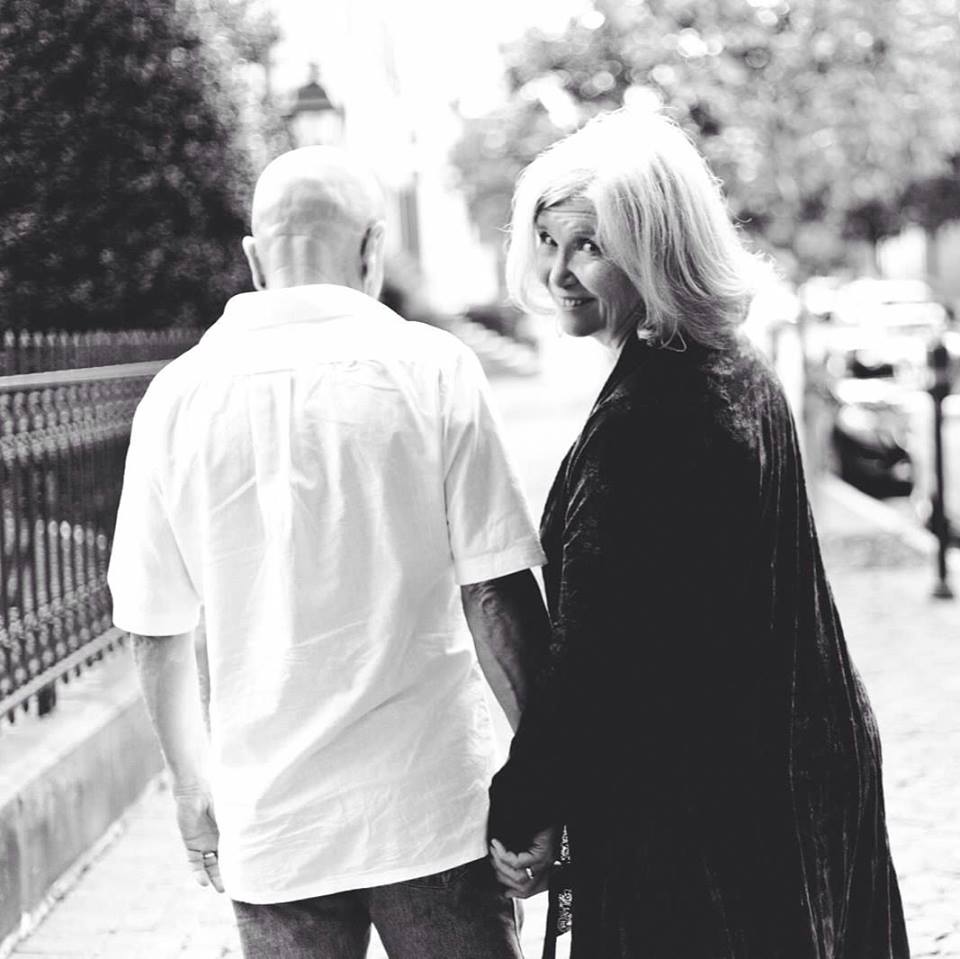
7. the hand I have held for 50 years

10933854_10152912805531311_7419932013669994440_n

It Was 1970. . .

It was the summer of 1970. A crazy and turbulent time to be twenty years old in America. The Viet Nam War was escalating and the returning body bags were on public display every evening during the 6:00 news. April brought the death of four Kent State students and nine others were wounded during a protest against that war. The Beatles broke up and  Richard Nixon was in the White House and so what was to became of us we wondered. Throw into the mix the Jesus Movement which began in the late 60s in California  and swept  across the continent. And for all of us who were young and idealistic and wanting to make a difference,  we wondered – what does that look like?

Paul and I had just finished our sophomore year in college. In one of our classes we had connected with a couple of Christians who told us about an “evangelistic tour” they were planning through the southwest over the summer where they were going to share the gospel on various university campuses and would we like to come? They were radical, passionate and fiercely committed to following Jesus. So we signed on, if somewhat skeptically.

“We’re gonna all travel on a bus, stay in churches who have opened their doors and spread the love of Jesus,” they said. “We’ve got it all planned out.”

Sort of.

One guy said, “We’re all meeting up to get on the bus in Colorado Springs (which was about 30 minutes from where we lived) so we can swing by and pick you up on our way south.”  Great!  Except eight hours later, still no bus – which should have been a clue. Eventually the guy drove down to Pueblo, picked us up in his car, and took us back to Colorado Springs where the rest were still waiting.

We got to the designated meeting spot (somebody’s parents’ house our ride explained) and there were people mingling about:  some sitting on the floor singing while a guy played a guitar, some reading their Bibles. Some laying out snacks on a table. We saw a rather large group huddled in a group behind a grand piano. We asked what they were doing. “Praying.”  Oh.  What are they praying for? “A bus.”

A BUS!!. Really?? We don’t have a bus??!!!?  Granted no one had ever SAID we would be met by a uniformed driver standing next to a chartered bus, but still. . . .

It was the first of many wrong  assumptions we had made.

After many more hours an old yellow school bus with Ignatius Loyola School District No. 11 written on the side pulled up in front of the house. You will understand when I say that I did not join in the chorus of “Hallelujah-praise-the-Lord”s when I saw that the inside of the bus was completely empty save for the exhaust system which lay in pieces on its floor.

“Okay – everybody spread out your sleeping bag and we’ll pack the luggage (we were each allowed one small bag) in the back against the door and as soon as it’s dark we’ll head out.”

As soon as it’s dark?

“Well, the bus overheats during the day so we’ll travel at night when its cooler.”

Gotcha. So when the temperature dropped and the sun went behind the mountains, all fifty of us hopped on (except for the guys who had to push it to get it started). The starter didn’t work which proved to be a bit problematic every time we stalled at a red light and a designated team would jump off, wait for the light to turn green, push us till the engine turned over and re-board. We loaded up the one car that we were bringing, and we were off.

Our first stop was to be Las Cruces, New Mexico. And eventually we got there – after a six hour breakdown in the desert. But one of the guys who knew something about cars – sort of – patched us up and got us going again. That morning somebody passed around a bag of peanut butter sandwiches and one of donut holes with the instructions:  “Take one half a sandwich and one donut hole.” The other half, we would find out later, was for lunch.

When we got to Las Cruces we went to a park and a couple of people left in the “follow car”.  Where are they going? we asked.  “To go find a church for us to stay in.”

Gotcha. Another part of the “plan” we had misunderstood.  We didn’t actually have churches lined up – we would just show up and see what turned up.

But here’s the thing:  we went to five different cities that summer and though we spent some long days in parks, we never slept in one. By nightfall a church would open its doors and let us sleep in their Sunday School rooms and gymnasiums, cook in their kitchens, eat in their fellowship halls. I have no recollection  where we took showers. Maybe we didn’t. I do remember once washing my hair in a gas station bathroom.

We talked to people about Jesus on campuses, in the parks, on the streets, and then, if they were interested in talking more, we invited them back to the church where we ate hamburger gravy over toast (it was like hitting the lottery if you found a piece of hamburger in your gravy) and sometimes they just hopped on the bus with us and went to the next town. We slept on floors and took turns taking each other’s clothes to the laundromat or grocery shopping or cooking or cleaning. We held all night prayer vigils and opened our hearts to a broken world. It was 1970.

In the same way that the country was in a time of upheaval – so was the church. We were  learning to throw off our old ways and take the message to the people and to love them where they were. We were learning to welcome the stranger and see what unites us instead of what divides us. We were learning what it means to live in community and what Jesus meant when he said, “If anyone wishes to come after me, he must deny himself, and take up his cross daily and follow me.”  Or maybe it wasn’t the church who needed to learn those things – maybe it was just us.  And that summer was where it started.

In hindsight, that summer was ill-conceived, ineffective and unorganized. We suffered from a lack of leadership and maturity and understanding and training. We wanted so desperately to make a difference to a broken world that we were unteachable and over-confident and sometimes did more harm than good.  But for Paul and me, it was a turning point and maybe God just protected us from the bad stuff – knowing we would grow up and grow out of the worst of it.

As the summer drew to a close, we prepared to go back to our real lives – back to school and jobs and we pondered how it would all look in light of the summer.

But the truth was we were spent. We were the only married couple who had traveled this adventure and we had been married less than a year. A little frayed around the edges, we went for a walk to get some alone time (community is great and all that but still. . .).

At the beginning of the summer we were told that everybody was just pooling all their money into one big pot and we would have all things in common. Those who had more money would give more and those who had less would give less and everybody would have what they needed. Communal living in the truest sense of the word. We put some money in but, because we weren’t as spiritual as the rest, we also kept some in reserve so we could slip away once in a while – to go get ice cream and regroup.  (I always had a sneaking suspicion that everybody else did the same thing). Maybe that’s where our conviction came from that there always needs to “ice cream money” in the family budget.

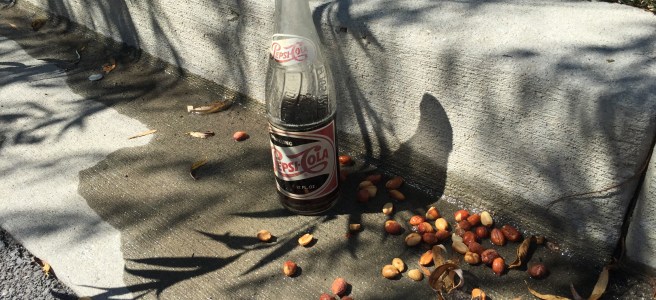
But on this night we were down to a $1.38 – literally. We bought a bottle of Pepsi and a bag of Beer Nuts at a gas station and there was no change. We had no money. None. It felt a little vulnerable and a little scary and very sacrificial. And then I dropped the bag of Beer Nuts in the gutter and they spilled out and I just stood there and cried. I had sacrificed everything for Jesus and now this!  Okay – maybe a bit of an overreaction.

We did return home – back to our “real” lives where we now had to learn how to grow into our passion, our zeal, our desire to make the world better. And we had a lot of growing up to do. We made a lot of mistakes, figured out how much we still didn’t know and how far we still had to go. And we learned what real sacrifice looks like – as opposed to sleeping on the floor and beer nuts in the gutter.

Over the next forty six years, (with a lot of help and love from a host of others, but that’s another story for another day) we would start three churches and open our home and our lives to hundreds upon hundreds of people. We would raise our children in the student slums of university towns so that we could be a part of the community we were reaching.  We would welcome strangers who turned into family – some of whom “hopped on the bus” with us and went to the next town – and together we would work to build His kingdom.

I sometimes wonder if we would have gotten to the same place we are now if it were not for the summer of 1970. If this is where God was leading us all along and that was only one of many roads that would have brought us here. I think maybe that’s true, but I don’t know. I do know the world had gone crazy and we wanted to make a difference. But maybe, in the end, it was us that needed to be different.img_7358