You Have a Great Past Just Ahead of You

If you were part of the “second family”,  summer vacation to you meant the beach:  sand and sea and the smell and taste of salt on your skin. It’s boogie boards and sunscreen and the sound of seagulls and the sting of jelly fish and buying the tee shirt with a beagle in the hammock and  going for ice cream on the sound. But if you were one of “the four” and you grew up in the land-locked midwest and it was 1980 something, summer vacation was a whole other thing. It was camping in the rain, little cereal boxes of your favorite cereals (except for the Raisin Bran which nobody wanted), trips to the ER for stitches and ear infections, and Silver Dollar City.

The first family vacation we ever took that was not to visit grandparents came about from a conversation with Paul’s brother David who insisted that the perfect vacation spot was hidden away deep in the Ozarks in an out-of-the-way spot known as Branson, Missouri. Today, of course, Branson is a destination in and of itself which draws thousands upon thousands of visitors each year to its music shows. But this was before all that. This was about a little theme park where you rode the trolley from the parking lot to the gate not because it was too far too walk but because it was one of the few “rides” the park offered and you listened to the patter of the “tour guide” who explained that you were about to step back in time – 100 years to be exact. “Welcome to Silver Dollar City – where you’ll find  a great past just ahead of you!” he promised as we stepped off the trolley and into some of the best memories we would make as a family.

386232ef4962e4a940ab744ff4ce3ac1

The first time we went was sometime in the early 80s; there is some disagreement among us as to the exact year so we’ll just call it 1980something. We sent away for the brochures and when they arrived in the mail (Seriously. That’s how we did things before the internet.), we sat down on family nights and poured over them:  planning our itinerary, studying the maps and highlighting the best route from Illinois to Missouri, making a budget, writing the lists of all the things to do and take and ready before our big adventure. How many weeks (months) did we do this?

Because we had no money, we knew hotel rooms and restaurant meals were out of the question. But not to worry – for a fraction of the cost we could buy a brand new tent (I think we already had some sleeping bags we had collected along the way) and thanks to our trusty brochures we found the Blue Mountain Campground nearby (with a swimming pool and laundry facilities!) where we could pitch our tent. We could afford tickets to Silver Dollar City for a day and half and the rest of the time we would vacation at the campground:  swimming and collecting wood for the fire we would build to cook our meals and toast marshmallows for the s’mores. What could possibly go wrong you ask. Let me count the ways.

1.   Before using a tent for the first time it would behoove. . .  (okay – cross that off my bucket list – I have always wanted to use that word in a sentence). . . it would behoove you to set it up at home to make sure (a) all the necessary pieces are present and accounted for and (b) you actually know how said pieces fit together.

2.  It rains in the Ozarks. A lot. Not all tents are waterproof.  Soaking wet sleeping bags require a heavy duty dryer which can only be found at a laundromat. Also, a strong storm can blow down a tent altogether.

Early one morning, after a night where no one had slept due to the soaking wet tent, the soaking wet sleeping bags, and the all round soaking wet, miserable conditions, the owners of the campground took pity on us. Chad was outside our tent – yelling.  “Faye says for y’all to come on up to the house for pancakes and get those babies in outa’ this rain!!”  Thank God for Chad and Faye and  Ozark hospitality!

3.  Camp playgrounds are all fun and games until someone parachutes out of a swing, lands in the gravel, and slices open her hand which will require a trip to the emergency room for stitches, taking up an entire afternoon of vacation. In years to come we would battle strep throat, ear infections and stomach flu – so much so that it seemed it wasn’t vacation if somebody didn’t get hurt or sick.

4.  It is best not to allow a three year old to jump into the deep end of the swimming pool holding a beach ball as a flotation device. This can go south pretty quickly.

5.  It turns out young children are more enamored with playing in the fire and cooking over the fire than they are with eating the food cooked in said fire. They’re not so much about the char the fire leaves on the hotdogs or the crunch of aluminum-foil-wrapped- potatoes cooked in the coals which never seemed to get done. But they did absolutely love the little individual boxes of cereal that they could open up, pour in the milk and eat right out of the box.

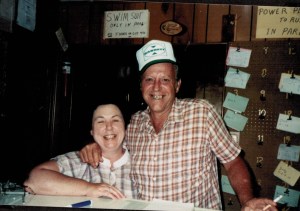
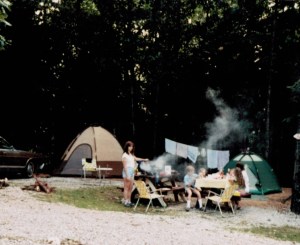
The tent – before it blew down in the rainstorm
Chad and Faye – God bless ’em
Ozark hospitality

And yet, for all of that, we returned to the Blue Mountain Campground again and again, year after year.
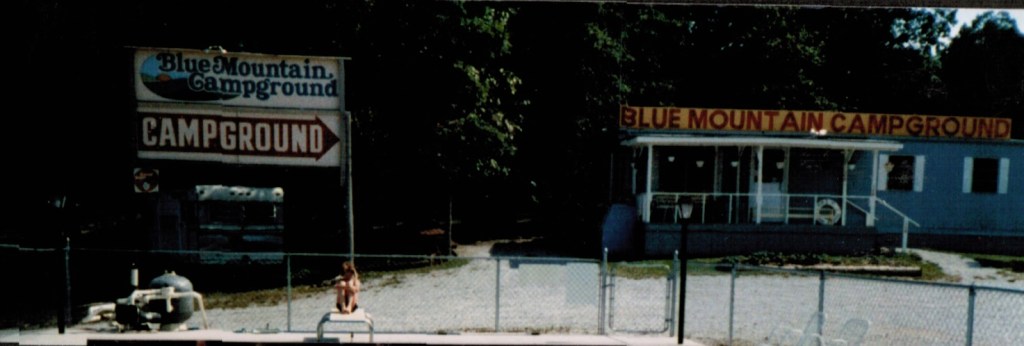
Blue Mountain Campground
The campsite
Train robbers
The train robbery

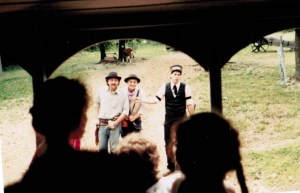
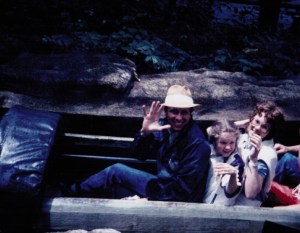
And to Silver Dollar City.  After the first year we figured out that for not too much more money, we could buy a season pass and then go to the park every day for our five days of vacation. We rode the train with its steam powered engine and never grew tired of the train robbers who entertained the passengers with their scripted and improvised lines.

55
Paul in the saloon show

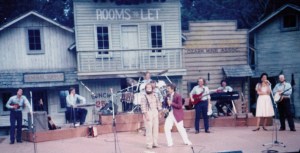
We were regulars at the Silver Dollar Saloon where the singing bartenders served rootbeer in frosty mugs and peanuts in the shell. The saloon girls put on their show and hauled a sucker up from the audience to mock and ridicule him and so of course the kids figured out which chair they always chose to pull their victim from and convinced Dad to sit in the chair at least once a season. In the middle of the show Carrie Nation and her Suffragettes marched in to break up the riffraff and it took the Sheriff to restore order. The girls bought garters and when they got home they practiced the Can-Can and sang “Why do they call us wild women, wild women, wild women?  Why do they call us wild women when we’re just as tame as can be“.  Rosie was the main saloon girl and one day on our way to the park from the campground we stopped at a convenience store to pick something up and there was Rosie – buying a loaf of bread!  Day made!

Scan 28
Singing bartenders
Scan 18
Good times at the Silver Dollar City Saloon.

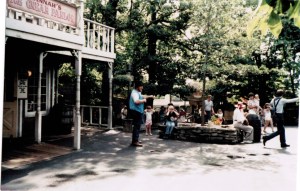
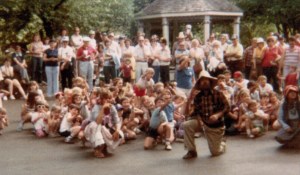
The street theatre actors recognized the kids from year to year and incorporated them into their acts. They were on a first name basis with the Sheriff and the Deputy, with the Hatfields and McCoys. With the Rainmaker and the Undertaker who wandered the streets with his measuring tape. They loved the Story Teller and knew what time she would be at her spot to tell stories and choose them to be a part of them. They knew the musicians and where they performed and what time to catch them during the day. They knew the lady who ran the general store and the basket maker and the blacksmith.
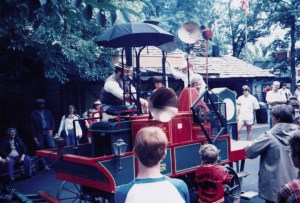
rainmaker
The Rainmaker
scan-30-copy.jpg
The Storyteller
street theatre
More street theatre
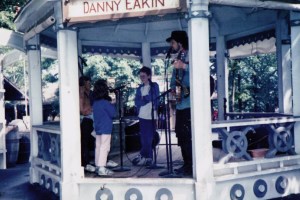
Performing with Danny Eakin

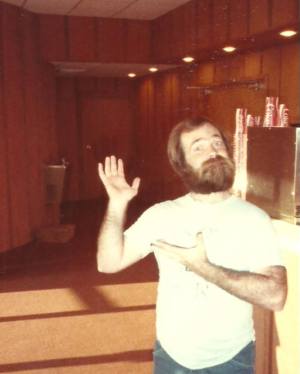
And then there was Mercy.  He was the star of Silver Dollar City.  He seemed to be everywhere:  interacting with the guests, heckling and teasing and aggravating and everyone loved him. He knew our kids by name and if we missed a year he would ask them where they had been. Eventually they got to know the actor behind the character. His name was Jack McDowell and they invited him to lunch and he told them about Silver Dollar City behind the scenes. We exchanged Christmas cards and kept up with him and his career for many years.
12642961_1121398154561726_7387714377258334224_n
Mercy
Mercy on the street.
Scan 33 copy
He was the star

There were a only a  few rides:  the American Plunge which was a log flume ride and left your stomach at the top of the summit before plunging you down the to the bottom and the Lost River of the Ozarks inner tube ride that guaranteed a good dousing under the waterfall. There was a ball pit and a playground  and a carousel, but mostly it was about the community:  the musicians around every corner and the street theatre which was both predictable and spontaneous, the craftsman and the artisans. It was about the funnel cakes and the frozen lemonade and the penny candy at the general store. As the kids got a little older we would let them roam the park on their own and meet back periodically to check in at a designated spot (it was a different time and a different place). One day I was walking through the park alone and I turned a corner to find the baritone from the barbershop quartet all alone in an isolated spot singing “How Great Thou Art”.   His eyes were closed, his arms lifted to the sky and it struck me that he was not performing, he was worshiping.  This was  a private moment, not a public one.  I tried to slip away unnoticed so as to not interrupt him when he opened his eyes and saw me. He blushed a little.  “I’m on my break,” he said.  “I just needed to recharge.”  For years I would recall that scene when I needed to recharge.
american plunge
The American Plunge
Scan 10
Lost River of the Ozarks

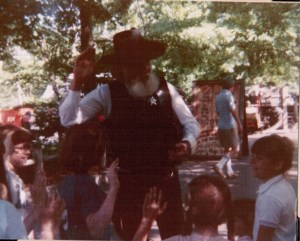
Every day at the park started with the sheriff deputizing all the kids with sheriff badges and then lining them up to stand at attention as the flag was raised. The day ended with the lowering and the folding of the flag.
Scan 33 copy 2
The Sheriff deputizes the kids every morning. . . with a badge.
Scan 31 copy 2

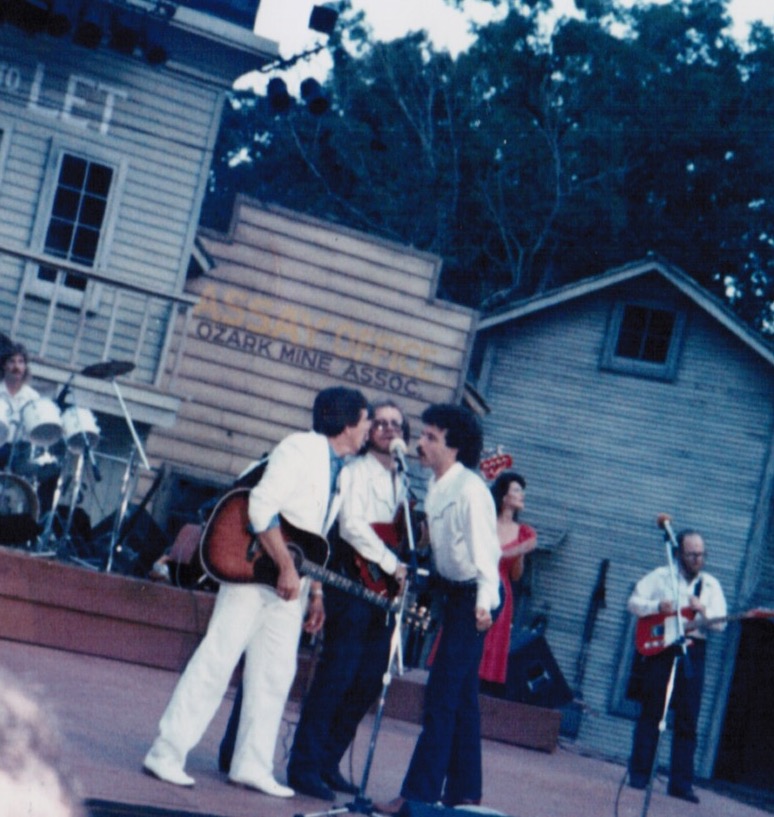
In the evening we headed to Echo Hollow, the big amphitheater, for the Silver Dollar City Jubilee: an evening of Bluegrass music and comedy with Mercy as the warm up act. They might  change the show from year to year but the performers were always the same – and once again they recognized us and greeted us like old friends. And then it was back to the campground where, if we were lucky, the tent and sleeping bags would be dry and we could light a fire and Dad would pull out his harmonica and we would unwind from the the day so we could  get up in the morning, eat little boxes of cereal and head back to do it all over again.
Scan 31
Silver Dollar City Jubileee
Scan 31 copy
Echo Hollow

Scan 10 copy 2

I don’t know how many times we went on this vacation. Five maybe?  Six? I know we went back a couple of times after Joy was born. She danced in the streets to the music, she plummeted down the American Plunge tucked in between us and rode the Lost River of the Ozarks, squealing with delight as the water fall dumped water over our heads. She rode the carousel and ate the funnel cakes and slept in the tent. But I think it was after that that we moved east and the story shifted.

Joy dancing
Joy dancing to the music

We made one trip with all of eight of us. In was in 1989. Fletcher was a year old, Joy was five and the others were . . .  older. But it wasn’t the same. Some of the old, familiar faces were gone, others had taken their place who didn’t know us from the next guy and there some new, added  “attractions”.  Still, it was enough the same that we could say, “Oh!  And remember this?!” But you could tell that change was afoot.
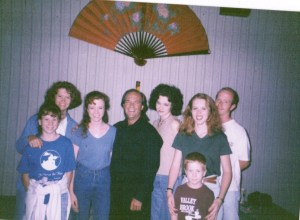
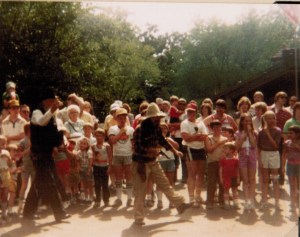
The last trip – 1995. And that’s Jack McDowell in the middle.

In the summer of 1995 we were making a trip to Colorado for Paul’s parent’s 50th wedding anniversary. Somehow somebody suggested, “What if we went through Branson and spent a day at Silver Dollar City?  But maybe we sleep in a cabin.”  And so we did. We wanted Fletcher to see it, to experience it, but afterwards we all sort of wished we hadn’t done it. The magic was gone.  It was more like a conventional theme park – more about the plethora of  rides which had been added  over the years and less about the craftsmen and the music and the street theatre. Less personal somehow and more crowded. We did look up Jack McDowell. who was working someplace else by then and had lunch with him.  But he had moved on too, and we all mourned the loss of the place where we had met and spent so many happy hours. We stopped by the Blue Mountain Camp Ground just to see if it was still there.  It was.  Chad had died some time ago and Faye was away when we stopped, but when we went in the office, there on the bulletin board was a picture of two year old Joy.

Joy reminds me that in 1999, Paul and I and she and Fletch stopped again when we were traveling west to see family. Oddly enough, I have absolutely no memories of it.  Maybe it was just too different and I didn’t want to remember it that way.

One of the kids said once, “Don’t you wish you could go back to Silver Dollar City for the first time?”  And that sort of captures it. It was magical. Pure and utter magic. But it’s sort of like Camelot or Brigadoon. It’s been almost 40 years since that first time and now it’s gone and there’s no way to get back to what it was no matter how much you might wish otherwise. And maybe that’s where the magic lies. The place – as we knew it –  is gone.  The children – as we knew them – are gone.  But the stories.  They are alive and well and welcome us back again and again.

Scan 33 copy 3

Where I Come From

Over the course of my lifetime, I have lived in six states and twenty two houses (not counting various summer lodgings and a brief stint in a ‘59 Ford panel truck), and I  expect that I have at least one more move in me before I land at my final resting place. Sometimes I sort of feel unanchored by my lack of roots or the fact that there is no one place that I think of as “home”.

There is the first house we lived in together as newlyweds and college sophomores. The one with the slanting living room ceiling that went from seven feet at one end to five feet at the other end and where we wore out our Simon and Garfunkle albums on our new hi-fi. Where we fought and forgave and learned to be married.

There is the house where we hung a giant crystal chandelier in the entry way of our our upstairs apartment and drug the table out of the kitchen when we had guests so we could dine under its brilliance.

There is the house with the pine cone wallpaper that shows up in the kids earliest memories. . .  except they all put the room in different houses. But it keeps showing up which makes me think it was ugly enough to leave an indelible impression.

There is the house we rented because it had a living room big enough that we could hold church services there and we shared it with three single women who lived in the basement. It had a little room upstairs lined with windows which is where our first “school room” was and I taught several of my children to read. It’s where I cross stitched the dozens of Christmas tree ornaments with the names for Jesus that still hang on our tree.

There is the house that had an indoor swimming pool where we taught the two year old to swim.  A sauna that she called “the warmer” and a fireplace that didn’t draw so that all of our clothes smelled like  Eckridge Farm smoked sausage.

There is the first house that we bought instead of rented. We were forty years old with six kids and a dog. And now we were homeowners. We lived there for fourteen years, longer than anyplace else we had ever lived. It was a palace to us with a big yard and a deck and a strawberry patch. The walls of the living room were painted a country-blue which was in vogue at the time and I loved it. It had a fireplace and three full baths and five bedrooms. It was in the family room of that house where a little team of people gathered to pray about starting a new church. Before long we turned one of those bedrooms into the “church office” and it  was in that living room with the blue walls that we folded church bulletins every Saturday night and had Women’s Breakfasts every month.  It was in that house that Cedarbrook Community Church was born.

There is the two bedroom house where I grew up – the home of my childhood memories.  There was a rocking chair in the corner of the living room where I did my homework, watched the black and white television with rabbit ears, talked to my friends on the phone, and dreamed the daydreams that young girls dream.

There is the house where we live now – just the two of us.  The one where we asked the builder to take out any walls in the downstairs living area that were not load bearing so as to accommodate the table made to order by Amish furniture makers. The table that would stretch across the whole length of the room and where we could sit with friends and family over a meal and recount the stories that bind us together. The house where we added bay windows and skylights because the more light the better and where, though we had no idea what we were doing, we somehow managed to create this magical secret garden of a backyard.

And yet . . .

Last summer we made a trip to Nebraska to see my family.  It’s where I’m from: this land of wheat fields and sand hills. Of windmills and wildflowers. Of farmland and cattle ranches. It’s where I was born, but I feel no real kinship to this land. I have no memories of it as a child and no real  understanding of this way of life or how it matters to the rest of my family. But as I grow older there is a longing to connect with this past and this place.

I have heard the stories – mostly from my mother when she was living. The stories of how my parents were farmers who had a dream of owning their own place, but it never seemed to work out for them.  Just when they thought they had  saved enough to make it happen the drought would come, or the flood, or the depression, or the war, or . . .  But then when their family was grown (all but the late-comer who was only two and named Sharon) they saw a way. Outside a little town called Wolbach, they bought a farm. This Nebraska farmland had been home to them all their lives, and now they owned a piece of it. My oldest brother Don and his family moved in with us and together, he and my dad worked the farm and when my brother Irvin returned from Korea, he joined them.  It was the family business, this love and care of the land.

When my father died two years later and my mother had to sell the farm, we moved to southern Colorado where I had a sister who thought she could get Mom work to support us. I have no memories of a life before the dessert of southern Colorado and the wild, rugged beauty of the Rocky Mountains that surrounded us. I couldn’t relate when my mother talked about the wheat that looked like copper pennies when it was ripe for harvest.  How the fields were green as far as the eye could see when the crops came up in the spring. How the corn fields marked the passage of the growing season with their changing tassels waving in the summer breezes. And how she could see it all from her kitchen window of that farm house.

She told me once that when she visited my sister in Colorado for the first time (it might have been her first trip out of state) as the bus pulled into Pueblo with its steel mill and monochromatic landscape she said out loud to herself, “Why would anybody want to live in this God-forsaken land?”  By the time I can remember, my mother had made her peace with living in the place that God had forsaken,  though I don’t think she ever stopped missing “home”.

There is no place for me that is like that. I liked some of the places we lived. . .  others not so much.  I have fond memories of some of them, but truth be told sometimes I get mixed up whether such-and-such happened in Kansas or in Illinois or if it was the house on First Street or the one on Columbia Street. It sort of all runs together.

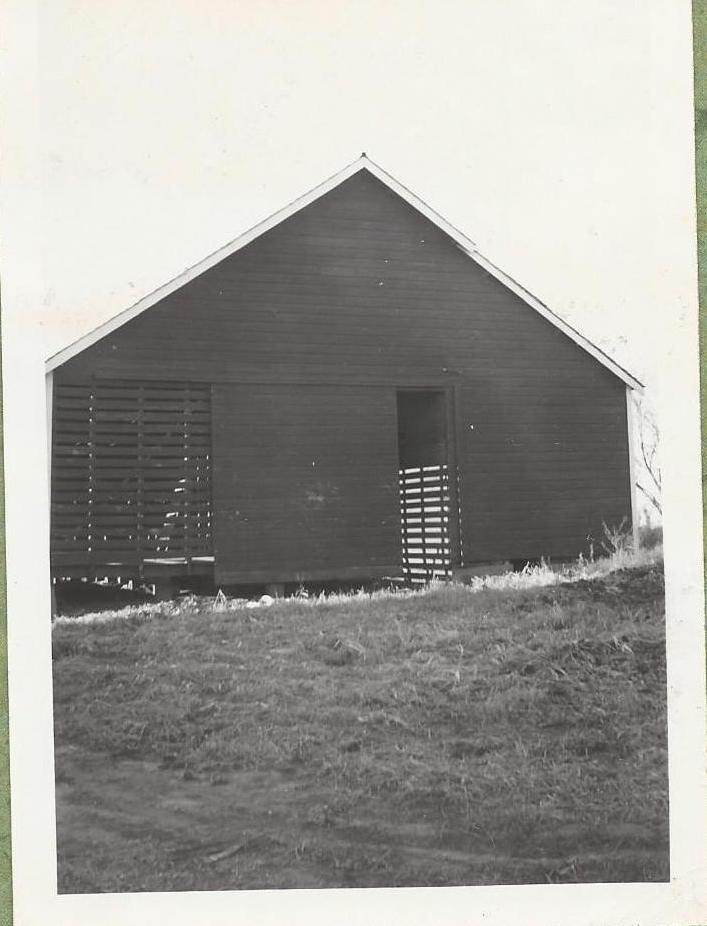
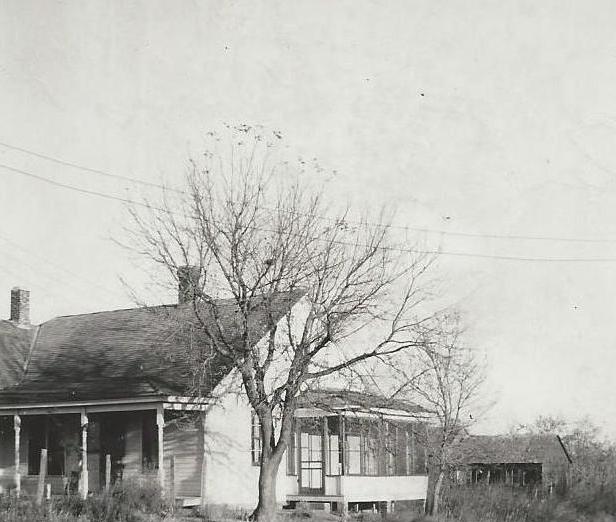
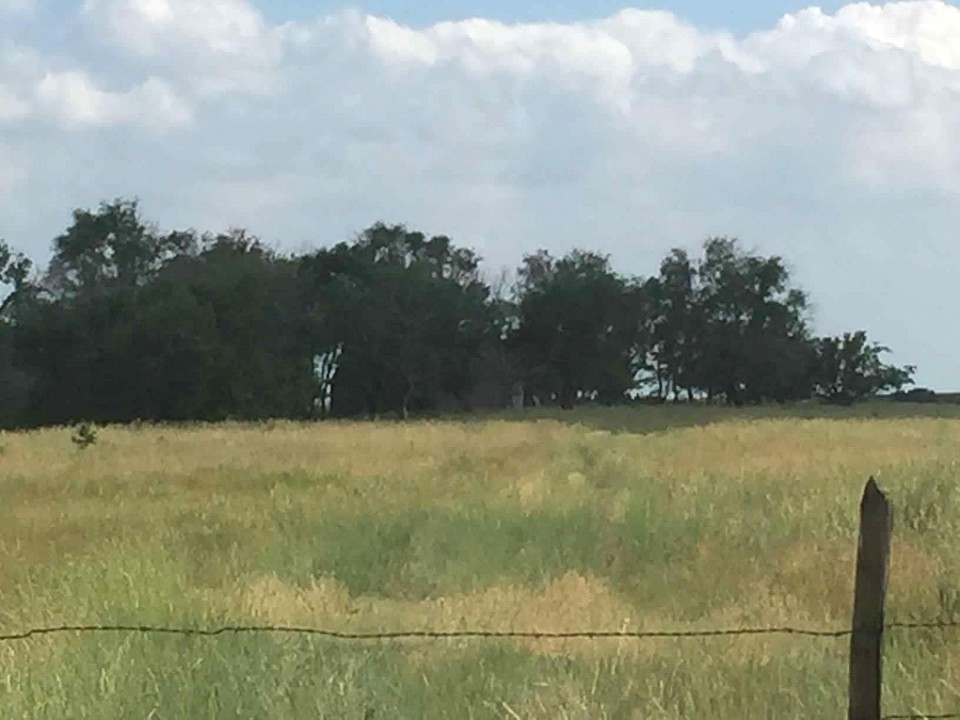
So last summer when we were in Nebraska I asked my brother if he could take me to Wolbach and find the farmhouse. The house was gone, he told me. Had been for a long while.  And he didn’t know if he could remember exactly where the land was . . .  but he would try.  And so we set off on our quest. Getting to Wolbach was easy. . .  it is a booming metropolis of 283 people. But now what?  We started down one road, but it had been washed out by the spring rains and anyway, he thought maybe we should have turned the other direction back up the way. We rode a while longer and came to a farm where a man in overalls stood out in the yard next to the fence, wondering at the strangers in his neck of the woods. We stopped and Irvin explained our mission – “We’re lookin’ for the place that was Ray Fletcher’s back in the early 50’s. I think it was bought by . . . .  and then by. . . .  and then I’m not sure who they sold it to. “Well, what you’re gonna wanna do is go back out this road and go about two miles and then. . . “ and so we made our way down some “roads” that were more like gullies until my brother said, “This. This is it. The house sat back there in that grove of trees.  It’s been torn down now,  but there’s still some of the barn standing. It was right  back there.”

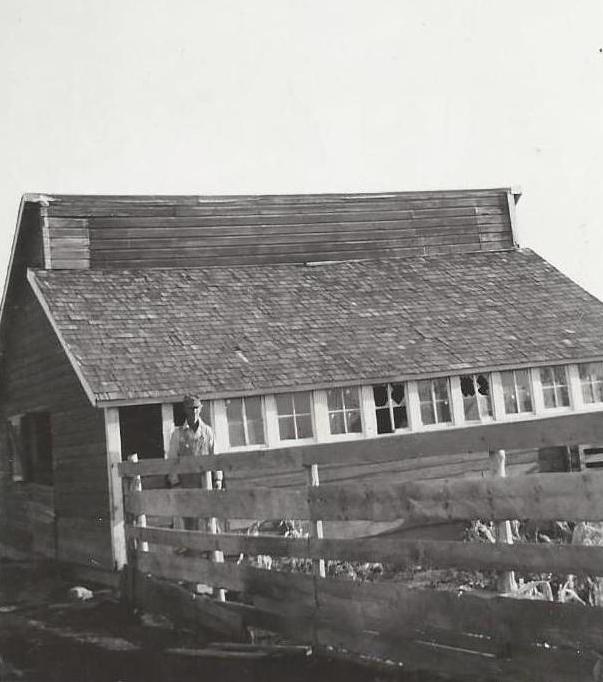
I stood there a long time. Remembering the stories from my mother. . .  like the one about how the goose chased me and I caught my leg in the fence gate which left a good sized scar that I carry with me to this day. Or how my dad would go into town every Saturday and bring back a little brown paper bag with candy in it and would sit at the table in that kitchen and divide it between me and Jolene. And I called back Jolene’s stories about our time in that house. Almost exactly a year older than me, she is Don’s oldest daughter, the one who moved into the farmhouse with us and the keeper of the memories of the adventures she and I shared there. Like the time we escaped from a charging bull by climbing into the corn crib and throwing ears of corn out to him to scare him away, holding him at bay until we were rescued. Okay, so maybe the bull wasn’t raging but rather ambling and maybe he was ambivalent about our efforts to engage him and maybe we were in no real danger. But what a story! This was the corncrib where we had our “playhouse” – where we made mud pies and played away the hours which is what childhood is for. No matter how hard I try, I have no memories of these children or of this place.

In the Celtic tradition, a “thin pace” is the place where the veil that separates heaven and earth is nearly transparent. A place where, for a moment, the spiritual world and the natural world intersect. That day last summer, as I stood on a road, looking over the fence into a grove of trees where you could just barely make out the the ruins of a barn, this was a thin place for me, and if I listened hard I could almost hear the echoes of their voices –  those two little girls in the corncrib, trying to shoo away a bull who had meandered into their story. I can see through that veil the ghost of a woman, staring back at me from her kitchen window. She has the hint of a smile and I recognize my own face in hers . . . the features startling in their similarity.  It is my mother, welcoming me home.

farm 2
       A THIN PLACE

An Ordinary Life Lived in an Extraordinary Way

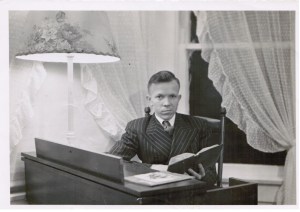
He was one of the gentlest souls I have ever known. It saddens me to say I don’t think I ever had a real conversation with him – one where we talked about meaningful things. But in retrospect what I think is that to him – it all had meaning. He entered into the “ordinary moments” in such a way that he recognized before the rest of us that looking back, we would name some of these as among the truly extraordinary experiences that would shape and define us for the rest of our lives.

I was lucky enough to be friends with his son. And when you were friends with one member of the family, you sort of became friends with the whole family. I liked the noisiness of their house; the chaos of lots of people and the constant party that seemed to always be in progress and the fact that when I arrived at dinner time they just pulled up another chair and seemed genuinely delighted that there was one more to crowd around their already crowded table. And when they all bowed their heads (a cue I picked up on pretty quickly) he would lead us in a prayer of thanksgiving – and I never in all the years I knew him found him to be anything other than grateful and thankful for all that God had given to him – even in the hard times.

Pretty quickly, I became one of their tribe and would spend the night in the girls’ dormitory – a big room which had been created by closing in the carport and finishing it off as a bedroom for the five girls. In the morning the boys would rise early to deliver their paper routes and then we would all gather around the kitchen table for the breakfast that he had prepared – usually bacon and eggs and cinnamon toast. Lots of cinnamon toast (how that toast got divided is a whole story in and of itself) and while everyone was being seated he would go to their room and wake his wife and she would come to the table in her red robe (probably one he had given her the previous Christmas) and they would kiss and then he would pull her chair out for her and she would take her seat at the table. I asked my friends about it once and they just shrugged and said, “I don’t know. That’s just the way it’s always been.”

They were busy eyeing the cinnamon toast, but I was captivated by this ritual and though I witnessed it many, many times over the years, it never lost its effect. That ritual said it all. He adored her. There is no other word for it. He put her first. Always. It spoke of his genuine, pure, and unabashed love for her and every time I saw it there was something in my heart that ached and I hoped to God that someday I would find somebody who would love me like this man loved his wife.

On his son’s 16th birthday, a group of friends decided to show up at the house and take the birthday boy out to pizza. We all piled into somebody’s car and the bunch of us headed over. When we got there, the birthday boy was out collecting from his paper route customers and no, nobody knew when he would be back. “Well, tell him we stopped by,” we said and being the good friends that we were, we headed out to celebrate his birthday without him. When he got home his dad told him that we had been there and immediately noted the acute disappointment in his son’s face. “Where do you suppose they have gone?” his dad asked. “Oh, I don’t know. It could be one of half a dozen places.” And then his dad, who was tired and probably just returning from work himself said to his son, “Well, let’s go see if we can find them.” So he drove him around until he found us and left him there with us to celebrate. I don’t know why I remember this moment so clearly all these years later except that it spoke to me so profoundly of this father’s sensitivity to the feelings and longings of his son. And having celebrated my own children’s 16th birthdays, I look in the rear view mirror and wonder if maybe he had hoped that they might have a family celebration when he got home from work or he would at least be able to have some cake and ice-cream with this boy-growing-into-a-man. But if he did, he never said as much. To spend his evening driving around town looking for a bunch of kids wasn’t a big thing – except to his son.

dad 7 me

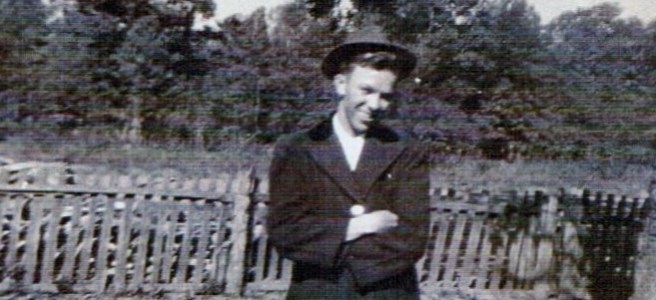
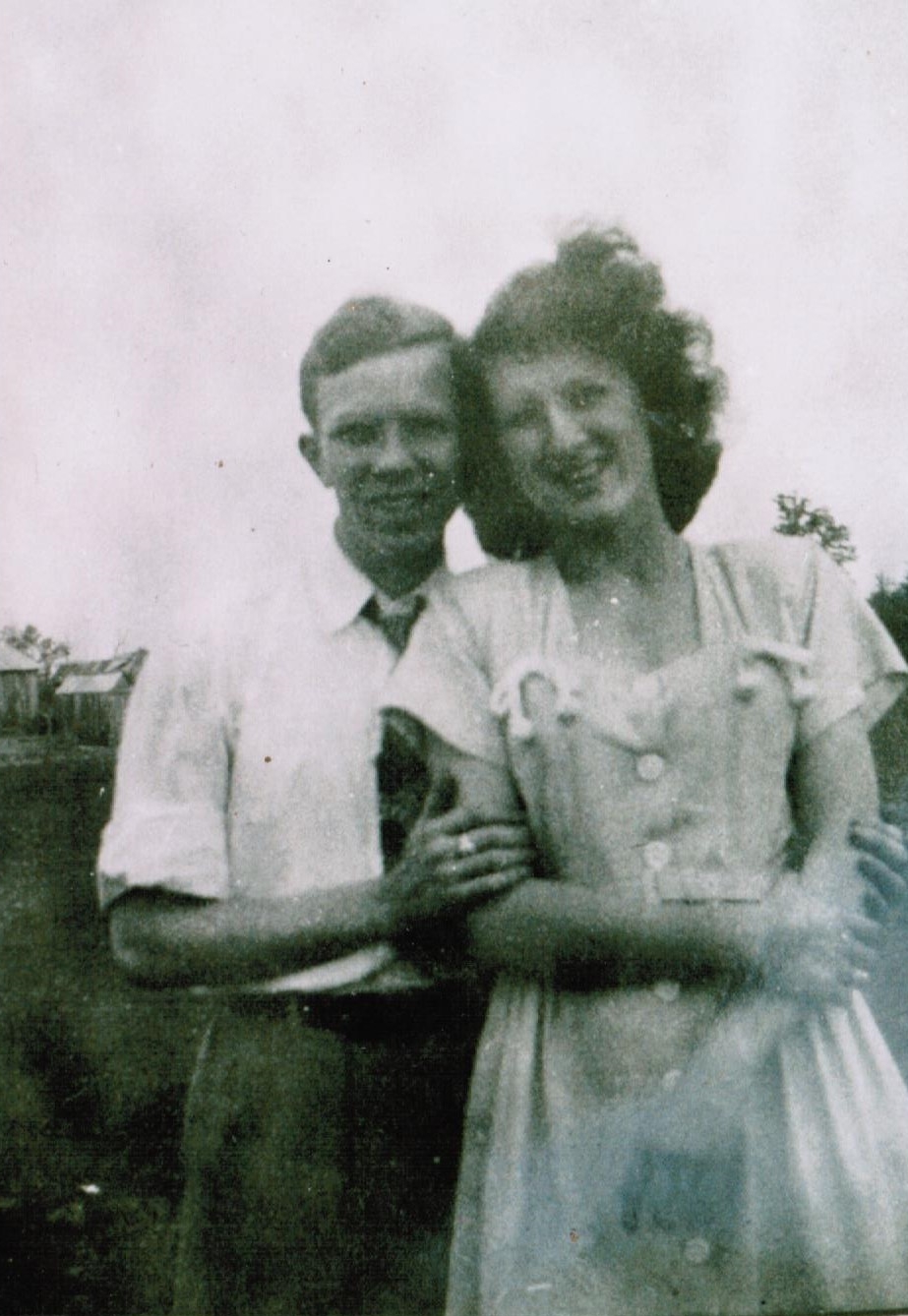
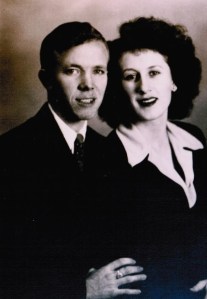
When I married into the family, I came to understand that though Paul’s mom was the life of the party and the one who seemed to take care of us all, it was his dad who was the foundation of the tribe. He cared for her like a queen and she reigned over the kingdom well. She was his beloved and in that she had everything she needed. Theirs was a love story for the ages and it changed them both. It changed me. This is the man who baptized me into the faith and then officiated at our wedding. Over the years, many of them before I knew him, he pastored and cared for God’s people. He loved them the only way he knew how – like Christ loved the church.

He died in an accident in February of 2001. His last words were to his wife: I love you. It could have been no other way. A few short months later, his wife was hospitalized and died the next day – on their 56th wedding anniversary. She simply did not know how to be here without him.

Image (52)

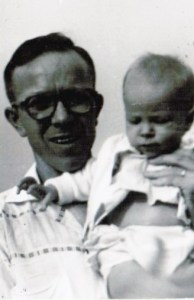
The other thing that must be said about this gentle man is that I never saw a baby who did not love him. He was like a magnet and I watched him quiet many a fussy baby who would not be comforted even by their mother (my own included). It was not unusual for him to slip into the bedroom where we were sleeping on our visits home and take the baby downstairs with him to play and cuddle and love – giving us some much welcomed rest. His grandchildren loved him fiercely. When our youngest, Fletcher, was little and figuring out the language and the family relationships, he christened Paul’s parents “Gee-paw and Gee-paw” and it’s what they stayed for a long time. When he grew older, Gee-paw would call most Sunday afternoons to talk football with him after a Redskins or a Broncos game. And Fletcher loved it. I loved him for doing it.

Today is his birthday; he would be 92 years old. And if he were here I would call him to wish him a Happy Birthday and to tell him, “Dad, you done good! Your boy turned out okay. Actually he’s a lot like you. He loves me oh-so-well and the only thing you could have done better was to teach him to cook. Thank you.”

Image (43)
David Abbott with his son, Paul
Image (44)
Image (46)
the baby whisperer

From the Big Chief Tablet

When they were going through her papers, Lila’s kids found Big Chief tablets, spiral notebooks, and loose pages of paper containing  notes and stories about her childhood. What a treasure!  Many of these read like a chapter of Little House on the Prairie and though they are stories about a time and place of which I have no memory, when I read them I feel connected – this is where I come from.  One of the stories is called “My Happiest Memory.”

MY HAPPIEST MEMORY – by Lila Gradisar

Sadness and deprivation precede my happiest memory.

At the age of 10, I understood very little of what it meant to be in the midst of the great depression. I did understand however that whatever this “thing” was, it had changed our family’s life tremendously.

The draught with the accompanying dark dust bowl days had forced my Dad to have a farm sale and move the family to town. We lived in a rented house at the edge of Palisade, Nebraska. The house had three bedrooms, a kitchen and a living room.

“No luck today”,  my dad would say as he returned from looking for work all day in early December.

Unemployment was not acceptable to this energetic farmer. As jobs were available, he worked on WPA some, but even that hadn’t been available lately.  Most of his unemployed time was spent with his brother, my Uncle Bill, in finding trees to cut down and saw up to keep our wood pile high.

My mother spent most of her days working for the only Dr. in town and his wife:  She cleaned their house and in return brought home a little cash and medical treatment for our family.

Christmas was approaching and naïve as we were, we children were making our wish lists and the younger ones were getting ready for Santa’s arrival. The more excited we became the quieter and more worried our parents became.  “Can we get our Christmas tree tomorrow?” I asked one evening as we were all gathered in the kitchen. A silence followed which was so long I thought both parents had gone deaf and hadn’t heard me. Finally with tears in her eyes and a trembling voice my mother replied, “Things are different this year. Dad doesn’t have a job. We have no money and we won’t be getting a tree. There also is no money for presents.”  We all sat quietly trying to understand what this meant.  My dad said, “Next year will be better.”  I went to bed thinking, “Next year is a long way off.”

Two days before Christmas, I was sitting at the window watching for my mother to walk up the road from work as I did each evening. To my surprise a car drove up. Few people we knew had a car.  All five kids ran out the door to greet whoever it might be. My mother got out the passenger side and Mrs. Kauer out the driver side. In the back seat with its branches sticking out through the window was a Christmas tree. The car was piled full of presents and boxes of groceries.  Mrs. Kauer said, “Come help us unload the car.”  I couldn’t believe it. All this was for us. We children jumped with glee, shrieked and chattered as we carried all the things into the middle of the kitchen floor. Mrs. Kauer was gone in a flash as soon as the car was empty, leaving my Mother to explain. Mrs. Kauer had begun to quiz my Mother about our family’s Christmas plans and finally my mother had confessed that due to the circumstances, we didn’t have many plans. Much to Mother’s surprise, the kind lady she worked for had taken it upon herself to change the plan. And change it she did. Mother was all smiles.

Finally it was time to put up the tree! The excitement was electrifying. We began to rapidly open up all the boxes. “Real electric Christmas lights” I yelled and I opened a box. This was indeed a first. There were balls and tinsel to put on the tree. The tree was decorated and Dad plugged in the lights. We stood in awe – mouths agape. It was the most beautiful Christmas tree I had ever seen. Everyone had a brightly wrapped package which was placed under the tree before Mother scooted us off to bed way past our bed time. When I awakened on Christmas Eve morning the house was already filled with the wonderful aroma of my mother’s baking. She had been up before daybreak preparing our favorite holiday foods. In the boxes of groceries she had found everything to make a feast.  We helped her bake sugar cookies; she made a batch of fudge and divinity and pumpkin pies. Again the excitement lasted all day. On Christmas Eve, Dad again started the fire in the living room. We turned the tree lights on and sat around the fire before finally going to bed.

On Christmas morning at 4:00 a.m. the fist child was awake asking “When can we get up?”  Dad said, “Not until I build a fire and it gets warm. Go back to sleep for awhile.”  My sisters and I giggled and squirmed and there was no more sleep. Dad gave the signal and all five of us were up. Such a clatter.  As I held my present trying to guess what was in it, my heart was pounding.  I received the most wonderful brown wool pants which gave me Christmas warmth every day as I walked to school.  After the excitement of opening the presents, Mother fixed breakfast. We played in the living room all day.  Mother made Christmas dinner with turkey and all the trimmings. As we gathered around that Christmas dinner table, we thanked God for those who were willing to share with us.

In my memory I can still feel the warmth of the fire and the glow of the Christmas tree lights as we sat in the living room that Christmas night dozing off in our childhood contentment – making it my happiest memory.