You Have a Great Past Just Ahead of You

If you were part of the “second family”,  summer vacation to you meant the beach:  sand and sea and the smell and taste of salt on your skin. It’s boogie boards and sunscreen and the sound of seagulls and the sting of jelly fish and buying the tee shirt with a beagle in the hammock and  going for ice cream on the sound. But if you were one of “the four” and you grew up in the land-locked midwest and it was 1980 something, summer vacation was a whole other thing. It was camping in the rain, little cereal boxes of your favorite cereals (except for the Raisin Bran which nobody wanted), trips to the ER for stitches and ear infections, and Silver Dollar City.

The first family vacation we ever took that was not to visit grandparents came about from a conversation with Paul’s brother David who insisted that the perfect vacation spot was hidden away deep in the Ozarks in an out-of-the-way spot known as Branson, Missouri. Today, of course, Branson is a destination in and of itself which draws thousands upon thousands of visitors each year to its music shows. But this was before all that. This was about a little theme park where you rode the trolley from the parking lot to the gate not because it was too far too walk but because it was one of the few “rides” the park offered and you listened to the patter of the “tour guide” who explained that you were about to step back in time – 100 years to be exact. “Welcome to Silver Dollar City – where you’ll find  a great past just ahead of you!” he promised as we stepped off the trolley and into some of the best memories we would make as a family.

386232ef4962e4a940ab744ff4ce3ac1

The first time we went was sometime in the early 80s; there is some disagreement among us as to the exact year so we’ll just call it 1980something. We sent away for the brochures and when they arrived in the mail (Seriously. That’s how we did things before the internet.), we sat down on family nights and poured over them:  planning our itinerary, studying the maps and highlighting the best route from Illinois to Missouri, making a budget, writing the lists of all the things to do and take and ready before our big adventure. How many weeks (months) did we do this?

Because we had no money, we knew hotel rooms and restaurant meals were out of the question. But not to worry – for a fraction of the cost we could buy a brand new tent (I think we already had some sleeping bags we had collected along the way) and thanks to our trusty brochures we found the Blue Mountain Campground nearby (with a swimming pool and laundry facilities!) where we could pitch our tent. We could afford tickets to Silver Dollar City for a day and half and the rest of the time we would vacation at the campground:  swimming and collecting wood for the fire we would build to cook our meals and toast marshmallows for the s’mores. What could possibly go wrong you ask. Let me count the ways.

1.   Before using a tent for the first time it would behoove. . .  (okay – cross that off my bucket list – I have always wanted to use that word in a sentence). . . it would behoove you to set it up at home to make sure (a) all the necessary pieces are present and accounted for and (b) you actually know how said pieces fit together.

2.  It rains in the Ozarks. A lot. Not all tents are waterproof.  Soaking wet sleeping bags require a heavy duty dryer which can only be found at a laundromat. Also, a strong storm can blow down a tent altogether.

Early one morning, after a night where no one had slept due to the soaking wet tent, the soaking wet sleeping bags, and the all round soaking wet, miserable conditions, the owners of the campground took pity on us. Chad was outside our tent – yelling.  “Faye says for y’all to come on up to the house for pancakes and get those babies in outa’ this rain!!”  Thank God for Chad and Faye and  Ozark hospitality!

3.  Camp playgrounds are all fun and games until someone parachutes out of a swing, lands in the gravel, and slices open her hand which will require a trip to the emergency room for stitches, taking up an entire afternoon of vacation. In years to come we would battle strep throat, ear infections and stomach flu – so much so that it seemed it wasn’t vacation if somebody didn’t get hurt or sick.

4.  It is best not to allow a three year old to jump into the deep end of the swimming pool holding a beach ball as a flotation device. This can go south pretty quickly.

5.  It turns out young children are more enamored with playing in the fire and cooking over the fire than they are with eating the food cooked in said fire. They’re not so much about the char the fire leaves on the hotdogs or the crunch of aluminum-foil-wrapped- potatoes cooked in the coals which never seemed to get done. But they did absolutely love the little individual boxes of cereal that they could open up, pour in the milk and eat right out of the box.

The tent – before it blew down in the rainstorm
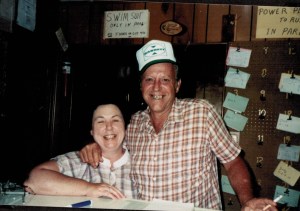
Chad and Faye – God bless ’em
Ozark hospitality

And yet, for all of that, we returned to the Blue Mountain Campground again and again, year after year.
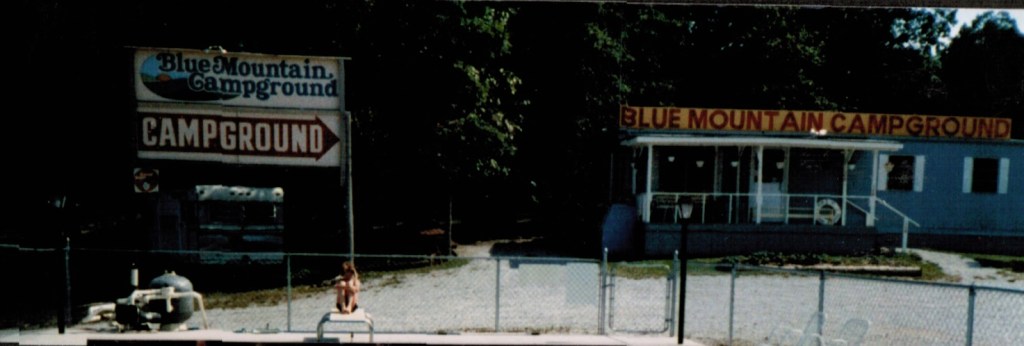
Blue Mountain Campground
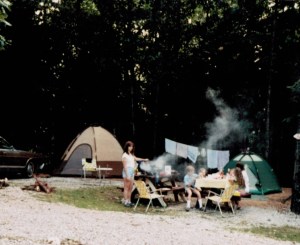
The campsite
Train robbers
The train robbery

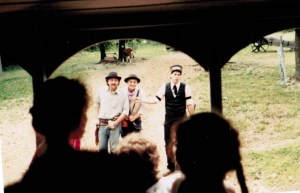
And to Silver Dollar City.  After the first year we figured out that for not too much more money, we could buy a season pass and then go to the park every day for our five days of vacation. We rode the train with its steam powered engine and never grew tired of the train robbers who entertained the passengers with their scripted and improvised lines.

55
Paul in the saloon show

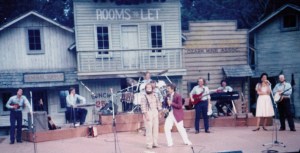
We were regulars at the Silver Dollar Saloon where the singing bartenders served rootbeer in frosty mugs and peanuts in the shell. The saloon girls put on their show and hauled a sucker up from the audience to mock and ridicule him and so of course the kids figured out which chair they always chose to pull their victim from and convinced Dad to sit in the chair at least once a season. In the middle of the show Carrie Nation and her Suffragettes marched in to break up the riffraff and it took the Sheriff to restore order. The girls bought garters and when they got home they practiced the Can-Can and sang “Why do they call us wild women, wild women, wild women?  Why do they call us wild women when we’re just as tame as can be“.  Rosie was the main saloon girl and one day on our way to the park from the campground we stopped at a convenience store to pick something up and there was Rosie – buying a loaf of bread!  Day made!

Scan 28
Singing bartenders
Scan 18
Good times at the Silver Dollar City Saloon.

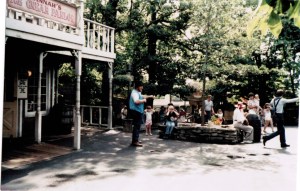
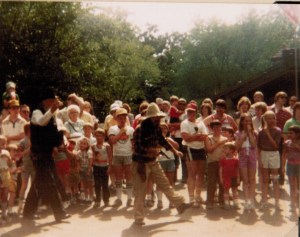
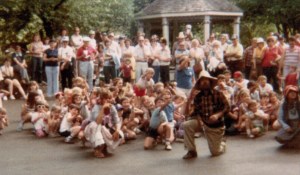
The street theatre actors recognized the kids from year to year and incorporated them into their acts. They were on a first name basis with the Sheriff and the Deputy, with the Hatfields and McCoys. With the Rainmaker and the Undertaker who wandered the streets with his measuring tape. They loved the Story Teller and knew what time she would be at her spot to tell stories and choose them to be a part of them. They knew the musicians and where they performed and what time to catch them during the day. They knew the lady who ran the general store and the basket maker and the blacksmith.
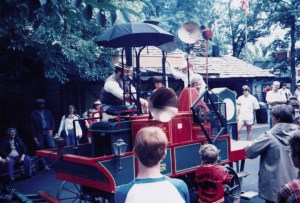
rainmaker
The Rainmaker
scan-30-copy.jpg
The Storyteller
street theatre
More street theatre
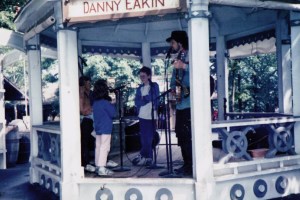
Performing with Danny Eakin

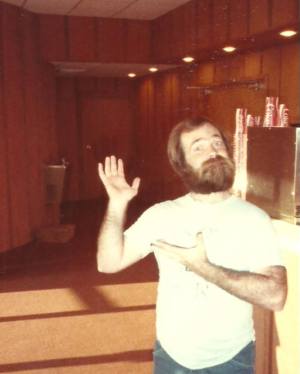
And then there was Mercy.  He was the star of Silver Dollar City.  He seemed to be everywhere:  interacting with the guests, heckling and teasing and aggravating and everyone loved him. He knew our kids by name and if we missed a year he would ask them where they had been. Eventually they got to know the actor behind the character. His name was Jack McDowell and they invited him to lunch and he told them about Silver Dollar City behind the scenes. We exchanged Christmas cards and kept up with him and his career for many years.
12642961_1121398154561726_7387714377258334224_n
Mercy
Mercy on the street.
Scan 33 copy
He was the star

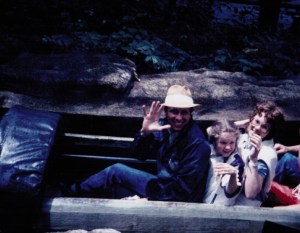
There were a only a  few rides:  the American Plunge which was a log flume ride and left your stomach at the top of the summit before plunging you down the to the bottom and the Lost River of the Ozarks inner tube ride that guaranteed a good dousing under the waterfall. There was a ball pit and a playground  and a carousel, but mostly it was about the community:  the musicians around every corner and the street theatre which was both predictable and spontaneous, the craftsman and the artisans. It was about the funnel cakes and the frozen lemonade and the penny candy at the general store. As the kids got a little older we would let them roam the park on their own and meet back periodically to check in at a designated spot (it was a different time and a different place). One day I was walking through the park alone and I turned a corner to find the baritone from the barbershop quartet all alone in an isolated spot singing “How Great Thou Art”.   His eyes were closed, his arms lifted to the sky and it struck me that he was not performing, he was worshiping.  This was  a private moment, not a public one.  I tried to slip away unnoticed so as to not interrupt him when he opened his eyes and saw me. He blushed a little.  “I’m on my break,” he said.  “I just needed to recharge.”  For years I would recall that scene when I needed to recharge.
american plunge
The American Plunge
Scan 10
Lost River of the Ozarks

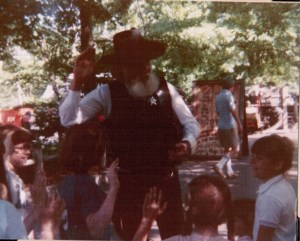
Every day at the park started with the sheriff deputizing all the kids with sheriff badges and then lining them up to stand at attention as the flag was raised. The day ended with the lowering and the folding of the flag.
Scan 33 copy 2
The Sheriff deputizes the kids every morning. . . with a badge.
Scan 31 copy 2

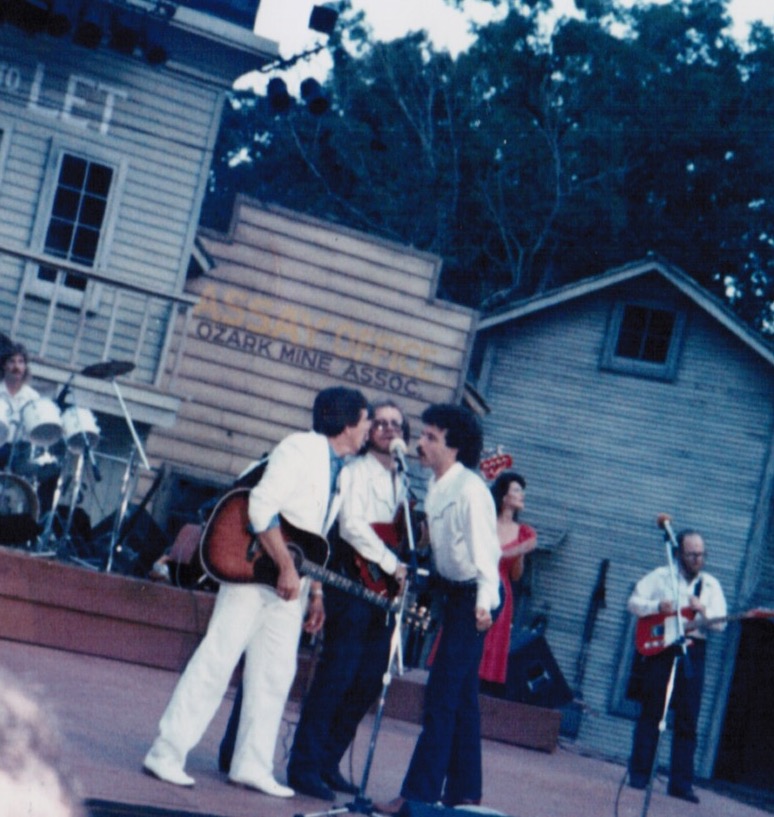
In the evening we headed to Echo Hollow, the big amphitheater, for the Silver Dollar City Jubilee: an evening of Bluegrass music and comedy with Mercy as the warm up act. They might  change the show from year to year but the performers were always the same – and once again they recognized us and greeted us like old friends. And then it was back to the campground where, if we were lucky, the tent and sleeping bags would be dry and we could light a fire and Dad would pull out his harmonica and we would unwind from the the day so we could  get up in the morning, eat little boxes of cereal and head back to do it all over again.
Scan 31
Silver Dollar City Jubileee
Scan 31 copy
Echo Hollow

Scan 10 copy 2

I don’t know how many times we went on this vacation. Five maybe?  Six? I know we went back a couple of times after Joy was born. She danced in the streets to the music, she plummeted down the American Plunge tucked in between us and rode the Lost River of the Ozarks, squealing with delight as the water fall dumped water over our heads. She rode the carousel and ate the funnel cakes and slept in the tent. But I think it was after that that we moved east and the story shifted.

Joy dancing
Joy dancing to the music

We made one trip with all of eight of us. In was in 1989. Fletcher was a year old, Joy was five and the others were . . .  older. But it wasn’t the same. Some of the old, familiar faces were gone, others had taken their place who didn’t know us from the next guy and there some new, added  “attractions”.  Still, it was enough the same that we could say, “Oh!  And remember this?!” But you could tell that change was afoot.
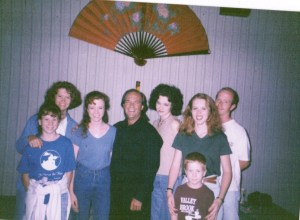
The last trip – 1995. And that’s Jack McDowell in the middle.

In the summer of 1995 we were making a trip to Colorado for Paul’s parent’s 50th wedding anniversary. Somehow somebody suggested, “What if we went through Branson and spent a day at Silver Dollar City?  But maybe we sleep in a cabin.”  And so we did. We wanted Fletcher to see it, to experience it, but afterwards we all sort of wished we hadn’t done it. The magic was gone.  It was more like a conventional theme park – more about the plethora of  rides which had been added  over the years and less about the craftsmen and the music and the street theatre. Less personal somehow and more crowded. We did look up Jack McDowell. who was working someplace else by then and had lunch with him.  But he had moved on too, and we all mourned the loss of the place where we had met and spent so many happy hours. We stopped by the Blue Mountain Camp Ground just to see if it was still there.  It was.  Chad had died some time ago and Faye was away when we stopped, but when we went in the office, there on the bulletin board was a picture of two year old Joy.

Joy reminds me that in 1999, Paul and I and she and Fletch stopped again when we were traveling west to see family. Oddly enough, I have absolutely no memories of it.  Maybe it was just too different and I didn’t want to remember it that way.

One of the kids said once, “Don’t you wish you could go back to Silver Dollar City for the first time?”  And that sort of captures it. It was magical. Pure and utter magic. But it’s sort of like Camelot or Brigadoon. It’s been almost 40 years since that first time and now it’s gone and there’s no way to get back to what it was no matter how much you might wish otherwise. And maybe that’s where the magic lies. The place – as we knew it –  is gone.  The children – as we knew them – are gone.  But the stories.  They are alive and well and welcome us back again and again.

Scan 33 copy 3

Where I Come From

Over the course of my lifetime, I have lived in six states and twenty two houses (not counting various summer lodgings and a brief stint in a ‘59 Ford panel truck), and I  expect that I have at least one more move in me before I land at my final resting place. Sometimes I sort of feel unanchored by my lack of roots or the fact that there is no one place that I think of as “home”.

There is the first house we lived in together as newlyweds and college sophomores. The one with the slanting living room ceiling that went from seven feet at one end to five feet at the other end and where we wore out our Simon and Garfunkle albums on our new hi-fi. Where we fought and forgave and learned to be married.

There is the house where we hung a giant crystal chandelier in the entry way of our our upstairs apartment and drug the table out of the kitchen when we had guests so we could dine under its brilliance.

There is the house with the pine cone wallpaper that shows up in the kids earliest memories. . .  except they all put the room in different houses. But it keeps showing up which makes me think it was ugly enough to leave an indelible impression.

There is the house we rented because it had a living room big enough that we could hold church services there and we shared it with three single women who lived in the basement. It had a little room upstairs lined with windows which is where our first “school room” was and I taught several of my children to read. It’s where I cross stitched the dozens of Christmas tree ornaments with the names for Jesus that still hang on our tree.

There is the house that had an indoor swimming pool where we taught the two year old to swim.  A sauna that she called “the warmer” and a fireplace that didn’t draw so that all of our clothes smelled like  Eckridge Farm smoked sausage.

There is the first house that we bought instead of rented. We were forty years old with six kids and a dog. And now we were homeowners. We lived there for fourteen years, longer than anyplace else we had ever lived. It was a palace to us with a big yard and a deck and a strawberry patch. The walls of the living room were painted a country-blue which was in vogue at the time and I loved it. It had a fireplace and three full baths and five bedrooms. It was in the family room of that house where a little team of people gathered to pray about starting a new church. Before long we turned one of those bedrooms into the “church office” and it  was in that living room with the blue walls that we folded church bulletins every Saturday night and had Women’s Breakfasts every month.  It was in that house that Cedarbrook Community Church was born.

There is the two bedroom house where I grew up – the home of my childhood memories.  There was a rocking chair in the corner of the living room where I did my homework, watched the black and white television with rabbit ears, talked to my friends on the phone, and dreamed the daydreams that young girls dream.

There is the house where we live now – just the two of us.  The one where we asked the builder to take out any walls in the downstairs living area that were not load bearing so as to accommodate the table made to order by Amish furniture makers. The table that would stretch across the whole length of the room and where we could sit with friends and family over a meal and recount the stories that bind us together. The house where we added bay windows and skylights because the more light the better and where, though we had no idea what we were doing, we somehow managed to create this magical secret garden of a backyard.

And yet . . .

Last summer we made a trip to Nebraska to see my family.  It’s where I’m from: this land of wheat fields and sand hills. Of windmills and wildflowers. Of farmland and cattle ranches. It’s where I was born, but I feel no real kinship to this land. I have no memories of it as a child and no real  understanding of this way of life or how it matters to the rest of my family. But as I grow older there is a longing to connect with this past and this place.

I have heard the stories – mostly from my mother when she was living. The stories of how my parents were farmers who had a dream of owning their own place, but it never seemed to work out for them.  Just when they thought they had  saved enough to make it happen the drought would come, or the flood, or the depression, or the war, or . . .  But then when their family was grown (all but the late-comer who was only two and named Sharon) they saw a way. Outside a little town called Wolbach, they bought a farm. This Nebraska farmland had been home to them all their lives, and now they owned a piece of it. My oldest brother Don and his family moved in with us and together, he and my dad worked the farm and when my brother Irvin returned from Korea, he joined them.  It was the family business, this love and care of the land.

When my father died two years later and my mother had to sell the farm, we moved to southern Colorado where I had a sister who thought she could get Mom work to support us. I have no memories of a life before the dessert of southern Colorado and the wild, rugged beauty of the Rocky Mountains that surrounded us. I couldn’t relate when my mother talked about the wheat that looked like copper pennies when it was ripe for harvest.  How the fields were green as far as the eye could see when the crops came up in the spring. How the corn fields marked the passage of the growing season with their changing tassels waving in the summer breezes. And how she could see it all from her kitchen window of that farm house.

She told me once that when she visited my sister in Colorado for the first time (it might have been her first trip out of state) as the bus pulled into Pueblo with its steel mill and monochromatic landscape she said out loud to herself, “Why would anybody want to live in this God-forsaken land?”  By the time I can remember, my mother had made her peace with living in the place that God had forsaken,  though I don’t think she ever stopped missing “home”.

There is no place for me that is like that. I liked some of the places we lived. . .  others not so much.  I have fond memories of some of them, but truth be told sometimes I get mixed up whether such-and-such happened in Kansas or in Illinois or if it was the house on First Street or the one on Columbia Street. It sort of all runs together.

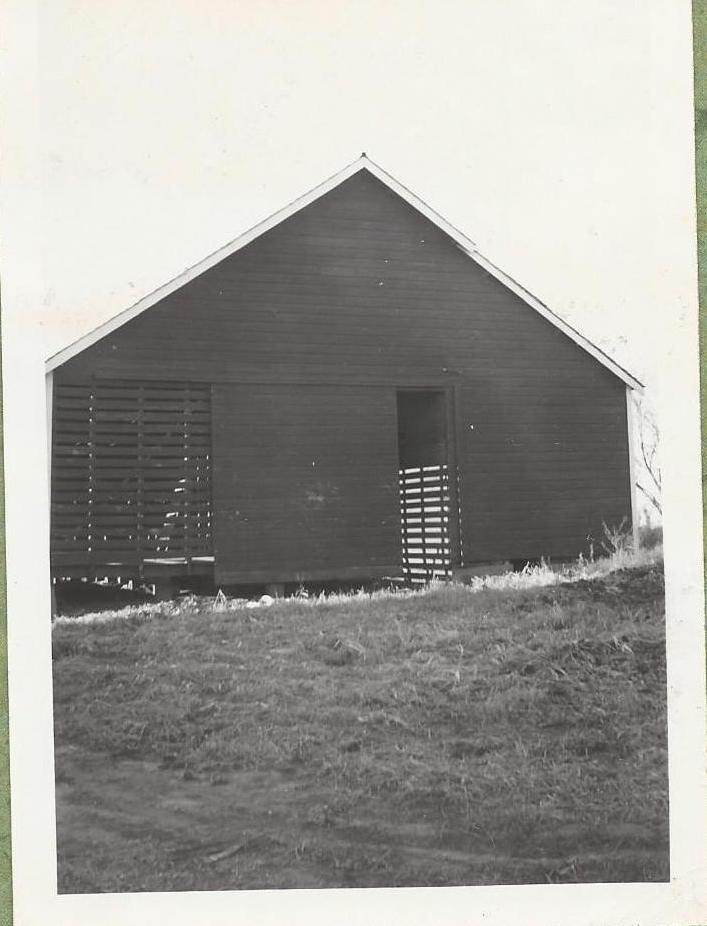
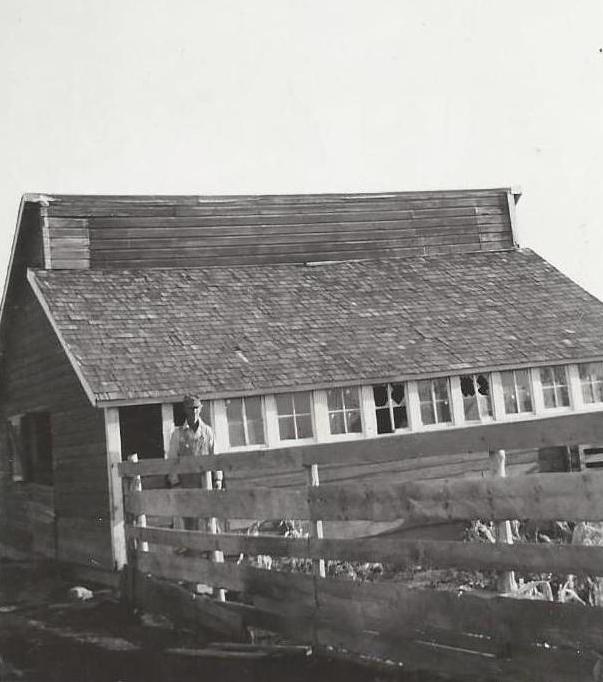
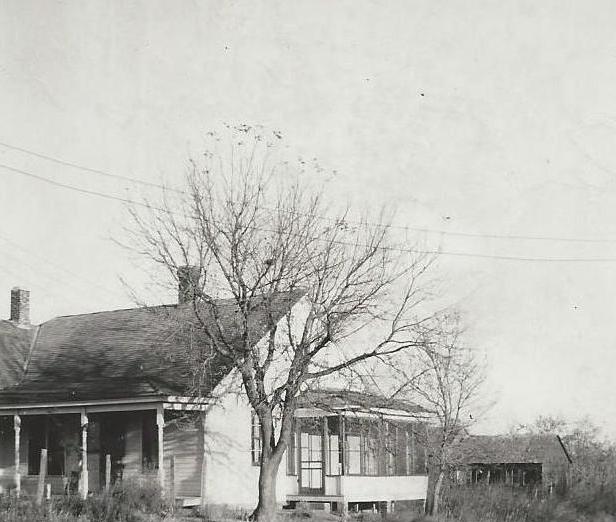
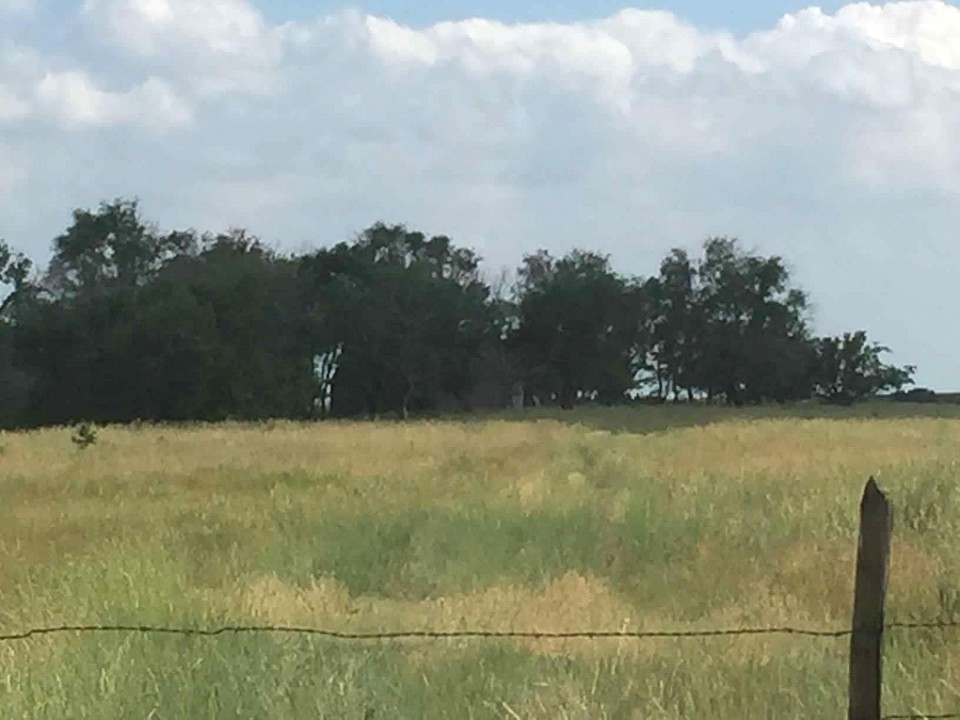
So last summer when we were in Nebraska I asked my brother if he could take me to Wolbach and find the farmhouse. The house was gone, he told me. Had been for a long while.  And he didn’t know if he could remember exactly where the land was . . .  but he would try.  And so we set off on our quest. Getting to Wolbach was easy. . .  it is a booming metropolis of 283 people. But now what?  We started down one road, but it had been washed out by the spring rains and anyway, he thought maybe we should have turned the other direction back up the way. We rode a while longer and came to a farm where a man in overalls stood out in the yard next to the fence, wondering at the strangers in his neck of the woods. We stopped and Irvin explained our mission – “We’re lookin’ for the place that was Ray Fletcher’s back in the early 50’s. I think it was bought by . . . .  and then by. . . .  and then I’m not sure who they sold it to. “Well, what you’re gonna wanna do is go back out this road and go about two miles and then. . . “ and so we made our way down some “roads” that were more like gullies until my brother said, “This. This is it. The house sat back there in that grove of trees.  It’s been torn down now,  but there’s still some of the barn standing. It was right  back there.”

I stood there a long time. Remembering the stories from my mother. . .  like the one about how the goose chased me and I caught my leg in the fence gate which left a good sized scar that I carry with me to this day. Or how my dad would go into town every Saturday and bring back a little brown paper bag with candy in it and would sit at the table in that kitchen and divide it between me and Jolene. And I called back Jolene’s stories about our time in that house. Almost exactly a year older than me, she is Don’s oldest daughter, the one who moved into the farmhouse with us and the keeper of the memories of the adventures she and I shared there. Like the time we escaped from a charging bull by climbing into the corn crib and throwing ears of corn out to him to scare him away, holding him at bay until we were rescued. Okay, so maybe the bull wasn’t raging but rather ambling and maybe he was ambivalent about our efforts to engage him and maybe we were in no real danger. But what a story! This was the corncrib where we had our “playhouse” – where we made mud pies and played away the hours which is what childhood is for. No matter how hard I try, I have no memories of these children or of this place.

In the Celtic tradition, a “thin pace” is the place where the veil that separates heaven and earth is nearly transparent. A place where, for a moment, the spiritual world and the natural world intersect. That day last summer, as I stood on a road, looking over the fence into a grove of trees where you could just barely make out the the ruins of a barn, this was a thin place for me, and if I listened hard I could almost hear the echoes of their voices –  those two little girls in the corncrib, trying to shoo away a bull who had meandered into their story. I can see through that veil the ghost of a woman, staring back at me from her kitchen window. She has the hint of a smile and I recognize my own face in hers . . . the features startling in their similarity.  It is my mother, welcoming me home.

farm 2
       A THIN PLACE

Because Every One of These is a Story

things I am done with:
1. rudeness in the guise of “speaking the truth”
2. apologizing for my kids
3. crying over real or perceived slights
4. thinking that it’s all my fault
5. trying to find the lesson in the hard thing
6. saving stuff because “I might need it someday”
7. rehearsing conversations in my head that I’m never really going to have

things i will hold on to for a little while longer:
1. the hope that some things can be restored
2. the recipe card for lemon meringue pie in my mother’s handwriting
3. the longing to make a difference
4. iced tea and ceiling fans on a hot summer’s night
5. faith
6. memories of the good times
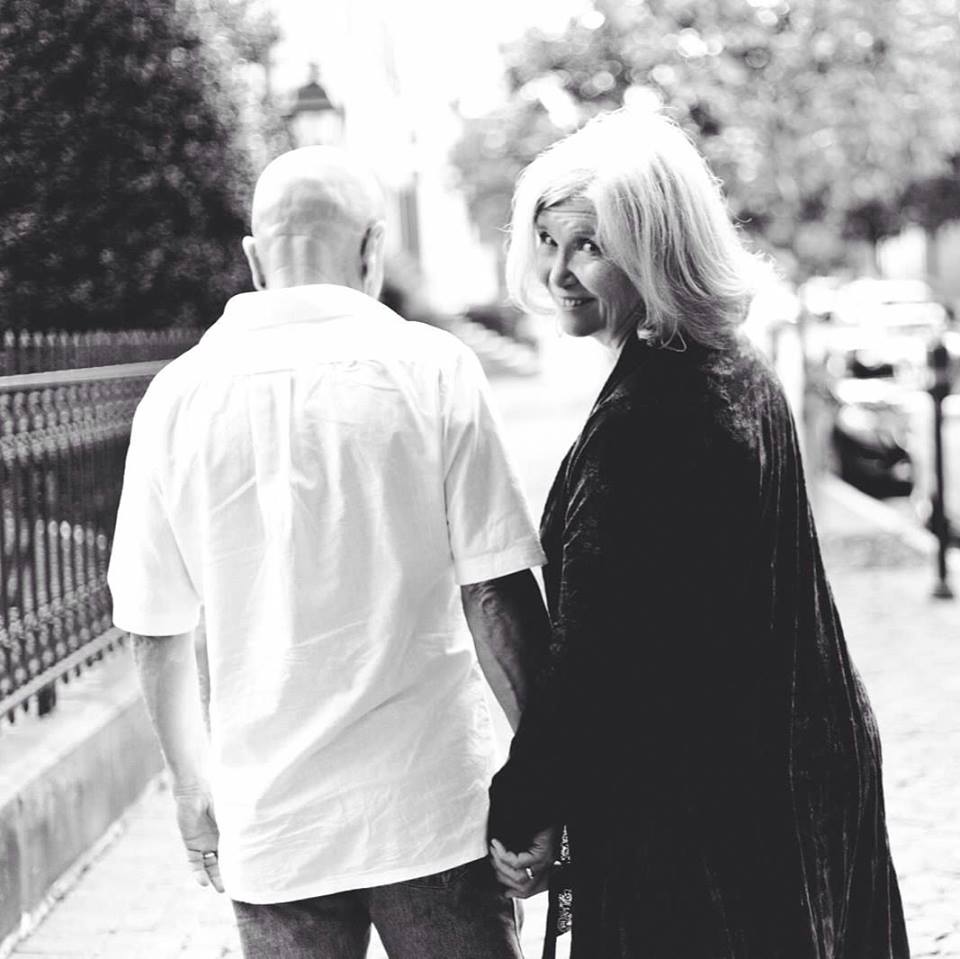
7. the hand I have held for 50 years

10933854_10152912805531311_7419932013669994440_n

Traditions: Where the Stories Live

I am seven. Or ten. Or thirteen. And all of the years in between and the ones that will come after. There she sits in a chair in the middle of the kitchen with the yellow bowl in her lap and a fork in her hand and she is beating the egg whites. She whips them until they are stiff and stand up in peaks. I asked her once if I could help and she let me try it, but I quickly tired of the task and gave it back to her. Did we not have an electric mixer? Or even a hand cranked egg beater?  I think maybe we did.But this task she chooses to do by hand. Because that is the way she has always done it and for reasons only God (and she) know, it is the way it should be done. When they are stiff enough to suit her she will mix them with the cooked sugar and syrup mixture and beat it some more and after a long and arduous process, the end result will be a Christmas candy that was a tradition in my family. Divinity. Too sweet for my taste,  I didn’t like it then and I don’t like it now. But I loved sitting in that warm kitchen on a winter night, hypnotized by the rhythmic beating of the eggs and my mother’s voice telling me stories of my family and my history.

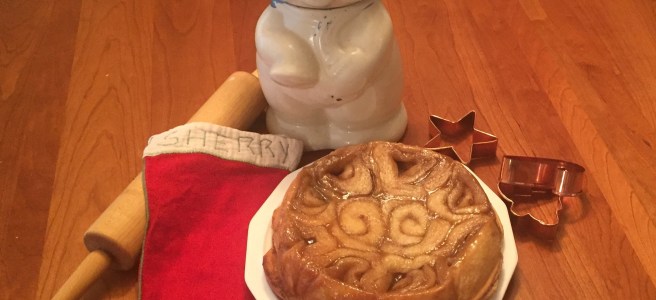
I learned about the year that she and my sisters spent a whole day making this time-consuming, labor-intensive treat only to have my brothers come in from their farm chores and devour the whole day’s worth of work. Now they would be required to spend  another entire Saturday with a fork and bowl of eggs. And so, as they sat there on their kitchen chairs, taking out their frustration on the egg whites in front of them, my sisters hatched a plan. They would hide the fruit of their labor someplace where the boys couldn’t find it and bring it out only on Christmas Day. They knew the perfect hiding place – the elephant cookie jar that sat atop the pie cupboard. As the story goes, the boys looked high and low for that divinity but apparently never thought to look for candy in a cookie jar. Which I always thought didn’t speak too highly of my brothers’ intelligence or scouting abilities . . . but what do I know? At any rate my sisters were delighted with themselves and so every year after they made the divinity under my mother’s careful supervision, sneaked it into the cookie jar, and there it lived until they produced the treat for the family on Christmas Day. When my mother died and we were dividing up her things, my sister Minnie said the only thing she really wanted was that cookie jar – to remind her.

I learned about the war years when sugar was rationed and so there was no candy-making and really no Christmas once word came of my brother: missing in action. Her voice grows quieter and she seems further away and finally there is only the sound of the whirring fork against the sides of the glass bowl, turning the egg whites into divinity.

Some traditions I took with me from my childhood and incorporated them into  our own family’s celebrations.  Divinity was not one of them.

Some of our holiday traditions came from Paul’s family: chili and cinnamon rolls on Christmas Eve. Long after the rest of his family had moved on to other menus, we held fast.  And now most,  if not all,  of our children celebrate Christmas Eve with chili and cinnamon rolls.

img_8908
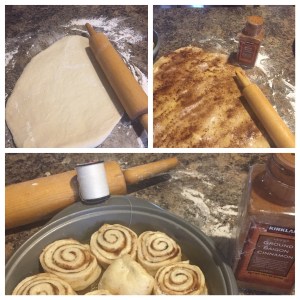
I inherited my mother’s rolling pin and her secret for cutting cinnamon rolls – use thread instead of a knife.

Some traditions we stumbled upon ourselves. The movie on Christmas Eve afternoon was birthed from a need to keep little people distracted and occupied through the long day before Christmas. Taking four little ones to see Cinderella in a real movie theatre and sitting in the front row and watching the three year old talk back to the characters and interact with the story on the screen is one of my  favorite Christmas memories. As the step sister assures the prince that it is indeed her slipper, the heroine’s young  advocate in the front row jumps to her feet: “She’s lying!!! She’s lying!!! It’s Cinderbrella’s”  and the whole audience cheered.

The Advent Calendar grew out of the need to bring structure to the growing list of all the Advent activities as we counted down the days. Who knew what secret delight one would find on the piece of paper with a 20 written on it or a 12 or a 15?  Maybe it will say “today we decorate the tree” and it turns the whole day into an event. Or maybe it is “go Christmas shopping” and you load up in the car and go to the discount store and find some awesome treasure for every member of the family – if you are the youngest you will be directed to the rolls of  Lifesavers that come in a box that looks like a book because that’s what the youngest always gives to the siblings. When you find “wrap Christmas presents” on the slip of paper, you head off to your own corner with your bag of treasures, a roll of paper, some scissors and a whole roll of tape all to yourself. Of course not every day was something big – sometimes it was the “filler” – the standby for when Mom & Dad hadn’t had time or foresight to plan an activity or come up with something creative: “get a candy cane off the tree”. Oooohhhhhh nooooooooo. And yet. As one of them explained many years later as an adult – “You do know, right, that NONE of the six of us liked peppermint?”  But because it was in the Advent Calendar that made it special enough that you took your candy cane, ate it, pretended it was a good thing, and hoped tomorrow would bring something better. And sometimes it did.  Like the little Snoopy notepads with little pencils in a little bag.  Jackpot!

1017171_10151949126111311_2088027134_n

It’s a little sad the day you realize that some of the traditions you initiated for your young family when you were doing campus ministry no longer work. In those days, all the busyness and craziness came to a screeching halt the week before Christmas as students finished their last exam and  left for home and you were left with that most precious of all commodities: time. But then those days give way to a healthy and thriving community church with three Christmas Eve Services and there is no time for Christmas Eve movies or chili and cinnamon rolls. But you adapt. You replace a movie with a breakfast at Waffle House and leave a $100 tip for your waitress who one year is a single mom and hasn’t been able to buy a Christmas present yet for her daughter and you offer a little prayer of gratitude for the opportunity to be a part of this. One year your waiter is named Jack and you learn that he is working on Christmas Eve because he wants to make as much as he can so that he can really party it up on New Year’s Eve and with a sinking feeling you realize where your tip money is going to go, but it leads to a new tradition of toasting Jack at every family gathering. You move the chili and cinnamon rolls to Christmas Day (and alleviate the need to fix a big Christmas dinner that nobody wants to eat anyway – a win/win) and you pass along your Advent Calendar to a young family who is glad for the excitement and anticipation it brings to their home. And life goes on. New traditions are born as old ones die off. . .  but the stories. The stories live forever – if they are told – and they bind us both to those who came before and those who will come after

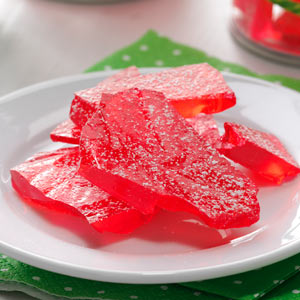
Because here’s the thing. I don’t make divinity. I make (or more accurately made) cinnamon hard candy – the hotter the better. This, too, came from my childhood.  And now my daughter makes it and when she brings it we all eat it and say to each other – “it tastes like Christmas”.  She makes “Skyline Chili” for her family on Christmas Eve because that is her husband’s tradition. . .  and so it goes.

exps13214_ck133085b06_18_1b
I remember that we bought the cinnamon oil at Potter’s Drug Store. They kept it behind the counter and you had to ask the pharmacist to get it for you which gave the whole process some level of intrigue  – like we were using some sort of contraband ingredient.

But the stories live on and are passed on and they matter. The traditions can change and  adapt and evolve. It’s the stories that ground us and remind us who we are, where we come from, and why we’re here. That’s why I keep the elephant cookie jar  (which eventually found its way to my kitchen) on top of my cabinet.  I don’t hide divinity in it. . . actually I don’t use it all.  But as the keeper of its story, I feel a responsibility to care for it and the memories that live there.

img_8915

It Was 1970. . .

It was the summer of 1970. A crazy and turbulent time to be twenty years old in America. The Viet Nam War was escalating and the returning body bags were on public display every evening during the 6:00 news. April brought the death of four Kent State students and nine others were wounded during a protest against that war. The Beatles broke up and  Richard Nixon was in the White House and so what was to became of us we wondered. Throw into the mix the Jesus Movement which began in the late 60s in California  and swept  across the continent. And for all of us who were young and idealistic and wanting to make a difference,  we wondered – what does that look like?

Paul and I had just finished our sophomore year in college. In one of our classes we had connected with a couple of Christians who told us about an “evangelistic tour” they were planning through the southwest over the summer where they were going to share the gospel on various university campuses and would we like to come? They were radical, passionate and fiercely committed to following Jesus. So we signed on, if somewhat skeptically.

“We’re gonna all travel on a bus, stay in churches who have opened their doors and spread the love of Jesus,” they said. “We’ve got it all planned out.”

Sort of.

One guy said, “We’re all meeting up to get on the bus in Colorado Springs (which was about 30 minutes from where we lived) so we can swing by and pick you up on our way south.”  Great!  Except eight hours later, still no bus – which should have been a clue. Eventually the guy drove down to Pueblo, picked us up in his car, and took us back to Colorado Springs where the rest were still waiting.

We got to the designated meeting spot (somebody’s parents’ house our ride explained) and there were people mingling about:  some sitting on the floor singing while a guy played a guitar, some reading their Bibles. Some laying out snacks on a table. We saw a rather large group huddled in a group behind a grand piano. We asked what they were doing. “Praying.”  Oh.  What are they praying for? “A bus.”

A BUS!!. Really?? We don’t have a bus??!!!?  Granted no one had ever SAID we would be met by a uniformed driver standing next to a chartered bus, but still. . . .

It was the first of many wrong  assumptions we had made.

After many more hours an old yellow school bus with Ignatius Loyola School District No. 11 written on the side pulled up in front of the house. You will understand when I say that I did not join in the chorus of “Hallelujah-praise-the-Lord”s when I saw that the inside of the bus was completely empty save for the exhaust system which lay in pieces on its floor.

“Okay – everybody spread out your sleeping bag and we’ll pack the luggage (we were each allowed one small bag) in the back against the door and as soon as it’s dark we’ll head out.”

As soon as it’s dark?

“Well, the bus overheats during the day so we’ll travel at night when its cooler.”

Gotcha. So when the temperature dropped and the sun went behind the mountains, all fifty of us hopped on (except for the guys who had to push it to get it started). The starter didn’t work which proved to be a bit problematic every time we stalled at a red light and a designated team would jump off, wait for the light to turn green, push us till the engine turned over and re-board. We loaded up the one car that we were bringing, and we were off.

Our first stop was to be Las Cruces, New Mexico. And eventually we got there – after a six hour breakdown in the desert. But one of the guys who knew something about cars – sort of – patched us up and got us going again. That morning somebody passed around a bag of peanut butter sandwiches and one of donut holes with the instructions:  “Take one half a sandwich and one donut hole.” The other half, we would find out later, was for lunch.
When we got to Las Cruces we went to a park and a couple of people left in the “follow car”.  Where are they going? we asked.  “To go find a church for us to stay in.”

Gotcha. Another part of the “plan” we had misunderstood.  We didn’t actually have churches lined up – we would just show up and see what turned up.

But here’s the thing:  we went to five different cities that summer and though we spent some long days in parks, we never slept in one. By nightfall a church would open its doors and let us sleep in their Sunday School rooms and gymnasiums, cook in their kitchens, eat in their fellowship halls. I have no recollection  where we took showers. Maybe we didn’t. I do remember once washing my hair in a gas station bathroom.

We talked to people about Jesus on campuses, in the parks, on the streets, and then, if they were interested in talking more, we invited them back to the church where we ate hamburger gravy over toast (it was like hitting the lottery if you found a piece of hamburger in your gravy) and sometimes they just hopped on the bus with us and went to the next town. We slept on floors and took turns taking each other’s clothes to the laundromat or grocery shopping or cooking or cleaning. We held all night prayer vigils and opened our hearts to a broken world. It was 1970.

In the same way that the country was in a time of upheaval – so was the church. We were  learning to throw off our old ways and take the message to the people and to love them where they were. We were learning to welcome the stranger and see what unites us instead of what divides us. We were learning what it means to live in community and what Jesus meant when he said, “If anyone wishes to come after me, he must deny himself, and take up his cross daily and follow me.”  Or maybe it wasn’t the church who needed to learn those things – maybe it was just us.  And that summer was where it started.

In hindsight, that summer was ill-conceived, ineffective and unorganized. We suffered from a lack of leadership and maturity and understanding and training. We wanted so desperately to make a difference to a broken world that we were unteachable and over-confident and sometimes did more harm than good.  But for Paul and me, it was a turning point and maybe God just protected us from the bad stuff – knowing we would grow up and grow out of the worst of it.

As the summer drew to a close, we prepared to go back to our real lives – back to school and jobs and we pondered how it would all look in light of the summer.

But the truth was we were spent. We were the only married couple who had traveled this adventure and we had been married less than a year. A little frayed around the edges, we went for a walk to get some alone time (community is great and all that but still. . .).

At the beginning of the summer we were told that everybody was just pooling all their money into one big pot and we would have all things in common. Those who had more money would give more and those who had less would give less and everybody would have what they needed. Communal living in the truest sense of the word. We put some money in but, because we weren’t as spiritual as the rest, we also kept some in reserve so we could slip away once in a while – to go get ice cream and regroup.  (I always had a sneaking suspicion that everybody else did the same thing). Maybe that’s where our conviction came from that there always needs to “ice cream money” in the family budget.

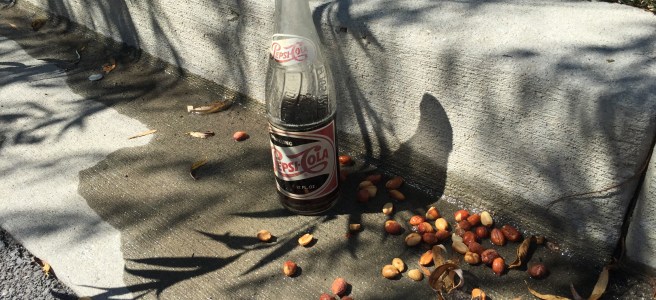
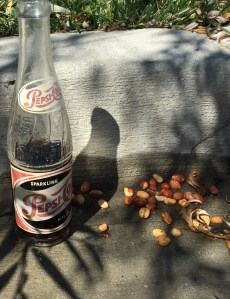
But on this night we were down to a $1.38 – literally. We bought a bottle of Pepsi and a bag of Beer Nuts at a gas station and there was no change. We had no money. None. It felt a little vulnerable and a little scary and very sacrificial. And then I dropped the bag of Beer Nuts in the gutter and they spilled out and I just stood there and cried. I had sacrificed everything for Jesus and now this!  Okay – maybe a bit of an overreaction.

We did return home – back to our “real” lives where we now had to learn how to grow into our passion, our zeal, our desire to make the world better. And we had a lot of growing up to do. We made a lot of mistakes, figured out how much we still didn’t know and how far we still had to go. And we learned what real sacrifice looks like – as opposed to sleeping on the floor and beer nuts in the gutter.

Over the next forty six years, (with a lot of help and love from a host of others, but that’s another story for another day) we would start three churches and open our home and our lives to hundreds upon hundreds of people. We would raise our children in the student slums of university towns so that we could be a part of the community we were reaching.  We would welcome strangers who turned into family – some of whom “hopped on the bus” with us and went to the next town – and together we would work to build His kingdom.

I sometimes wonder if we would have gotten to the same place we are now if it were not for the summer of 1970. If this is where God was leading us all along and that was only one of many roads that would have brought us here. I think maybe that’s true, but I don’t know. I do know the world had gone crazy and we wanted to make a difference. But maybe, in the end, it was us that needed to be different.img_7358

A Real Cowboy

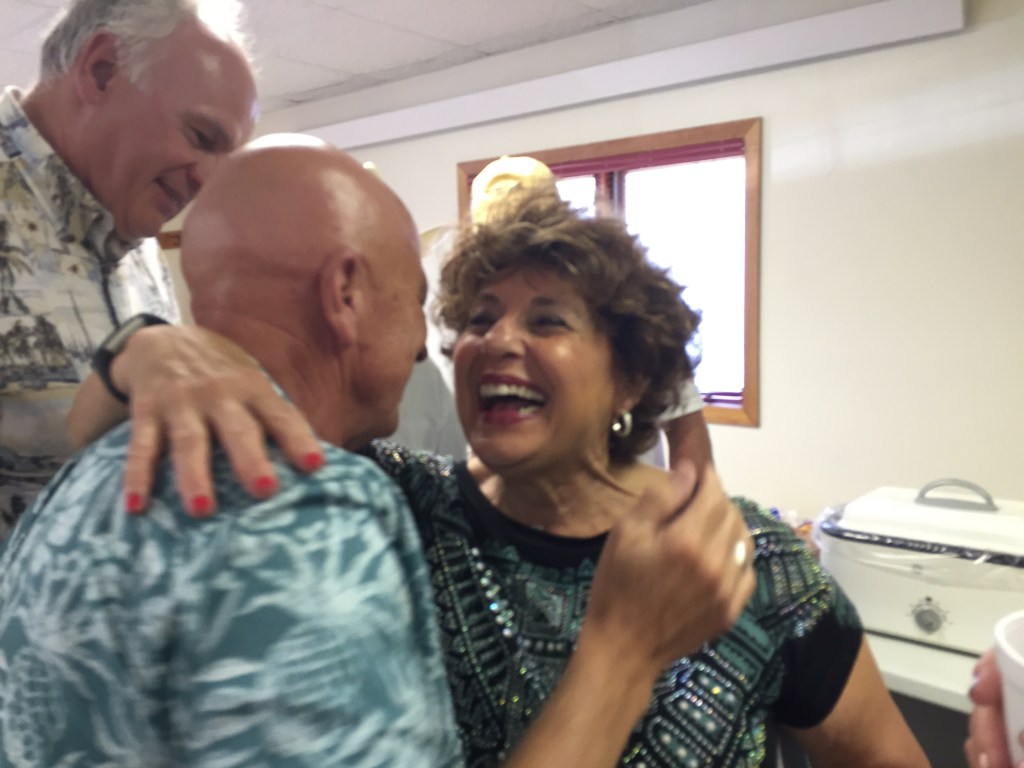
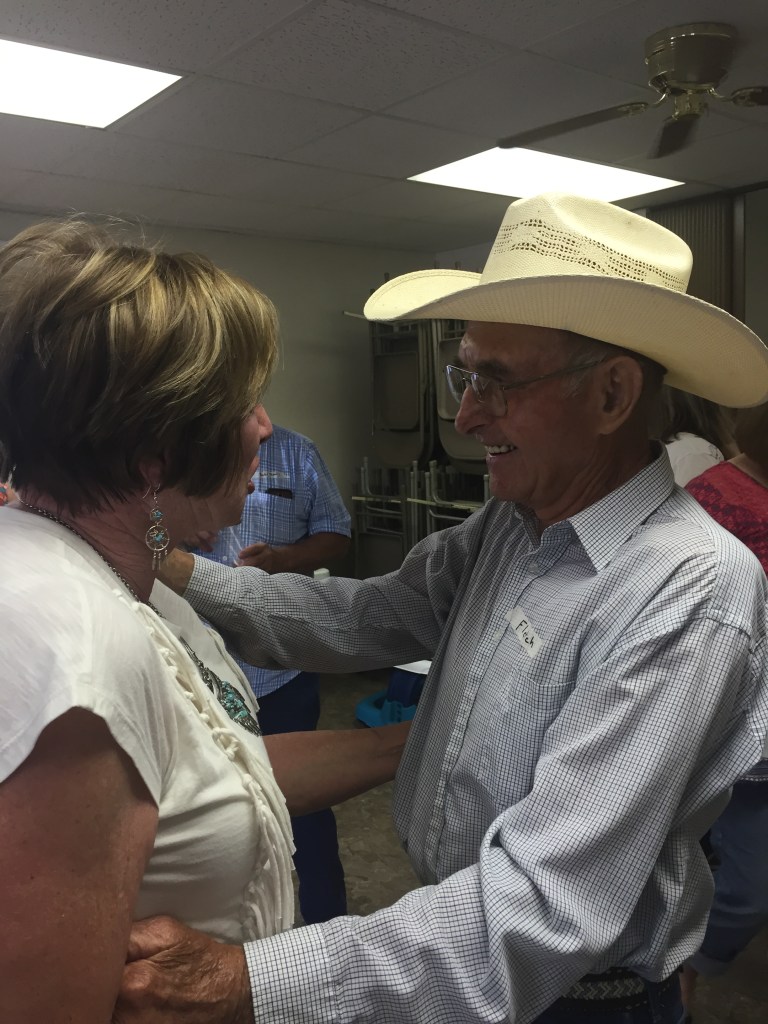
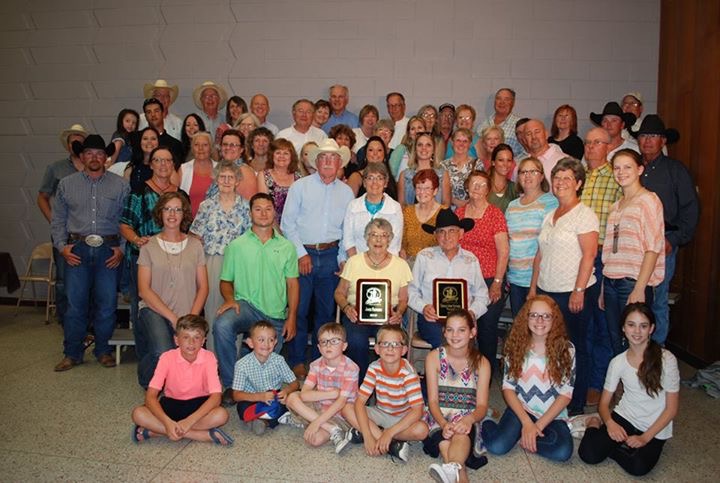
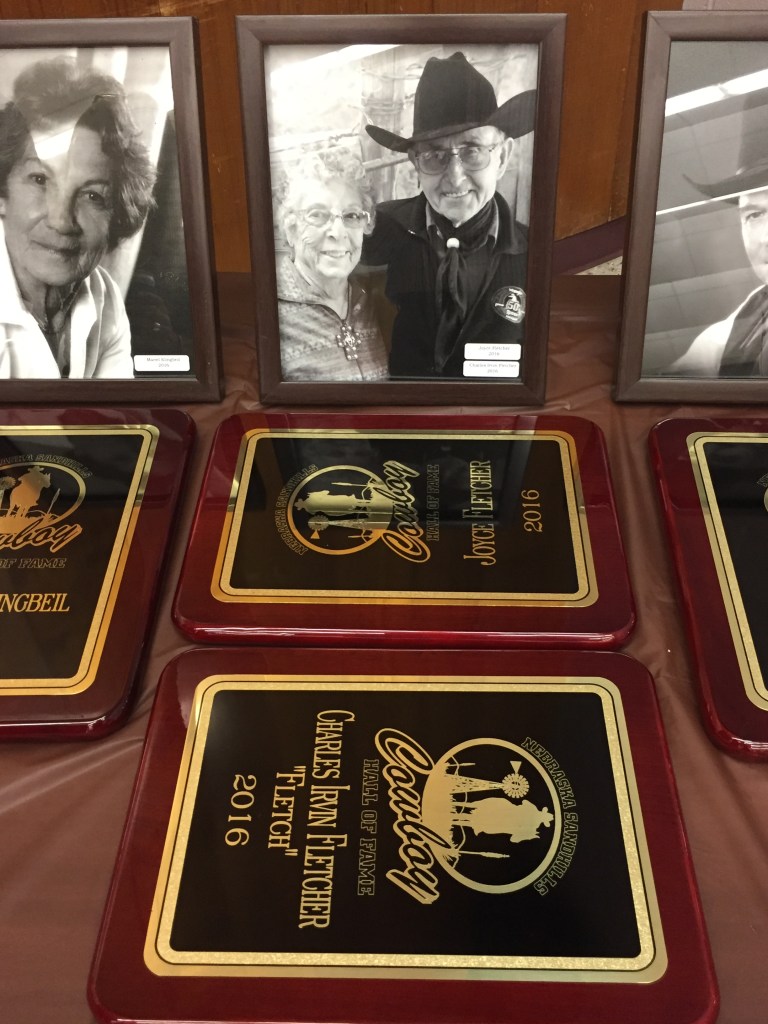
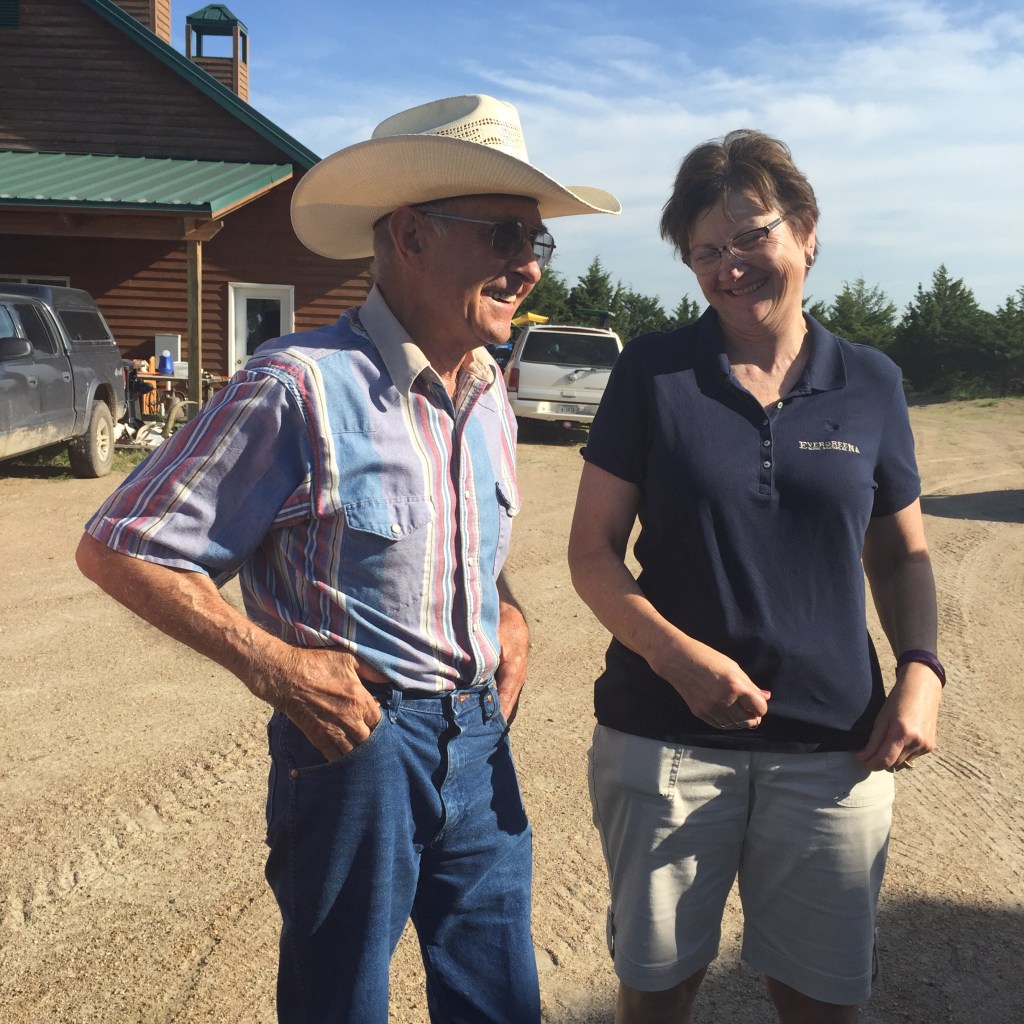
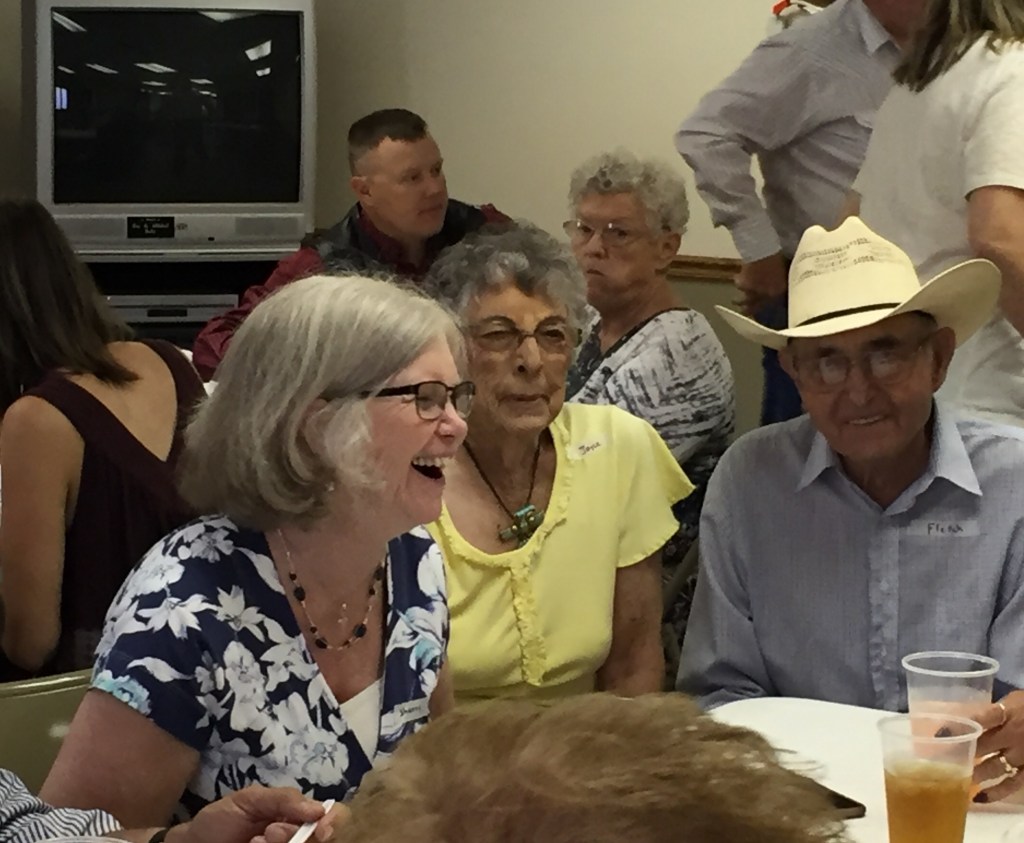
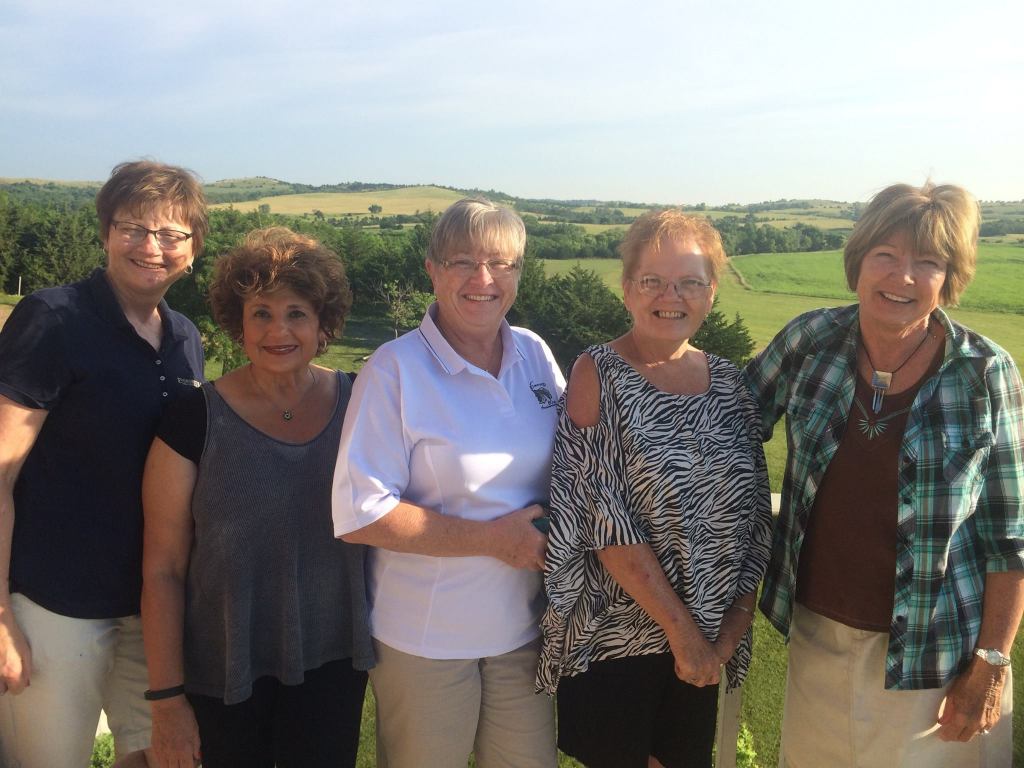
We gathered from several states and varied walks of life. We came by car and by plane and by the grace of God. For one magical and memorable weekend, we left behind jobs and kids and grandkids and the lives we had built apart from this place.  We came to bear witness, to congratulate, and to be a part of it. But mostly we came to celebrate.  My brother Irvin and his wife Joyce were being inducted into the Nebraska Sandhills Cowboy Hall of Fame and so we came.

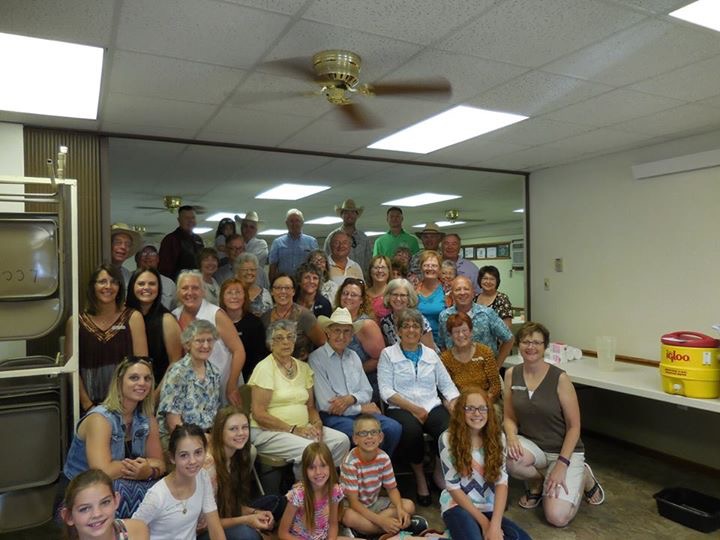
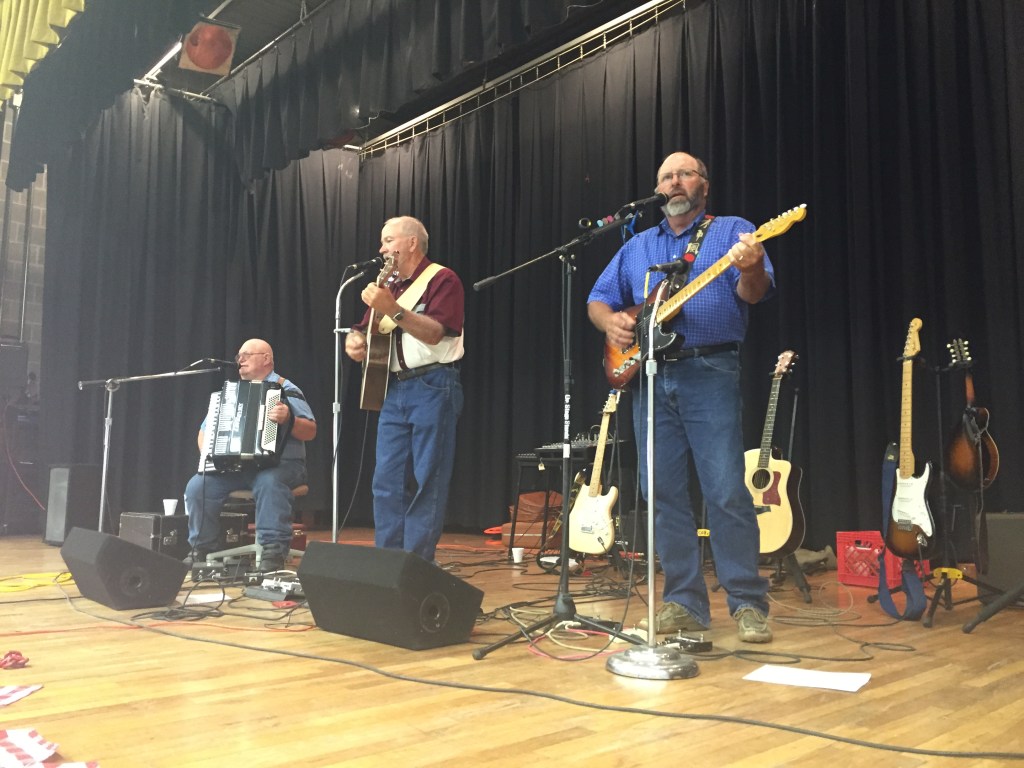
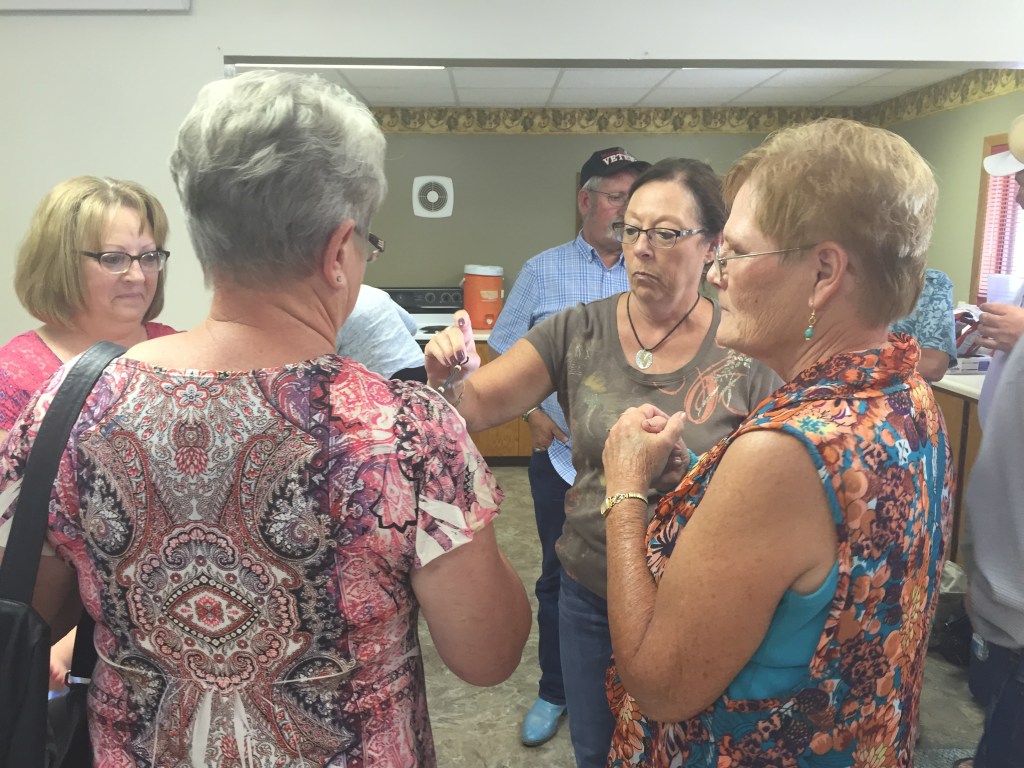
His daughters rented the community center for the day  in the little town of Taylor: a place where family could gather before the craziness of the main event that evening. A place where we could eat the lunch they provided, take pictures, catch up and “visit” – which really means “to tell stories.”

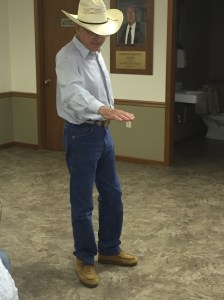
He stood up and announced “I have a story I want to tell.”  The room went silent.

And he began to spin the tale which went something like this:

IMG_2597
And they were lined up down the sidewalk – all of them about this high.

When my buddy and I were on the rodeo circuit, one of our favorite places to rodeo was Pueblo, (Colorado) because we could always count on the accommodations at the Bed & Breakfast there – better known as my sister Lila’s basement. We  rolled in there after a rodeo one night in the wee hours of the morning, kicked off our boots, threw down our hats, and collapsed on the bed. Later that morning we saw these little faces peering in the basement window, staring at us with eyes opened wide. And then we heard the voice:  “Just step on over here and take a look at two real cowboys. You can see them, their boots, their spurs and their hats.  And it will only cost you a nickel.” Nick and Ray (Lila’s sons who were about 4 and 5) were selling tickets to see “a real cowboy” and the line went down the block.

And then he finished with this:  So when I heard Nick was coming to town this weekend, I made sure my blinds were closed.

I learned three things from that moment:  (1) My nephew Nick’s entrepreneurial  bent began much, much younger than I realized. (2) I come from a long line of storytellers. (3) Even a quiet man, when given a chance and a good story, will stand in front of a group of people and talk.

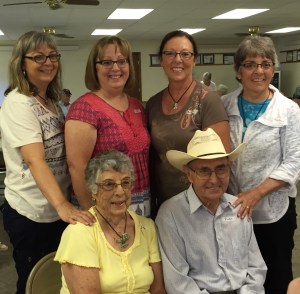
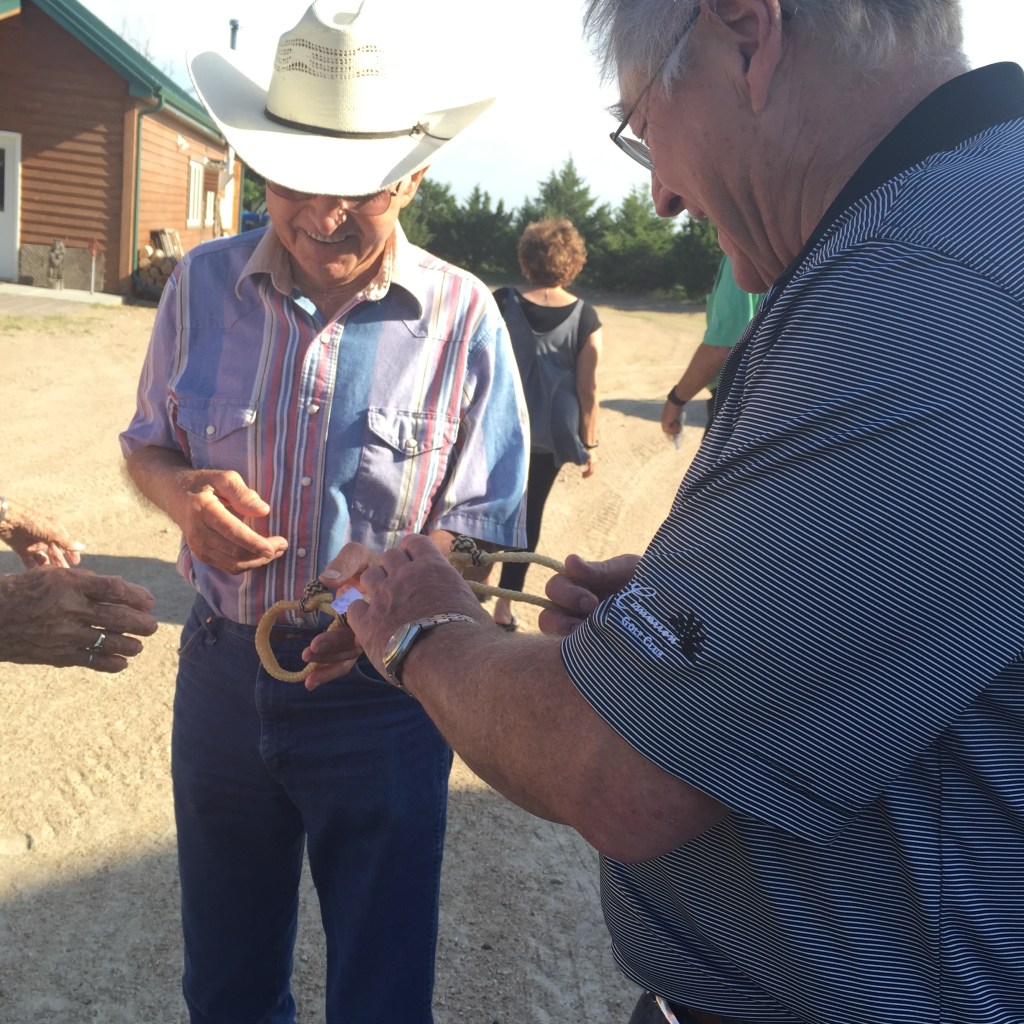
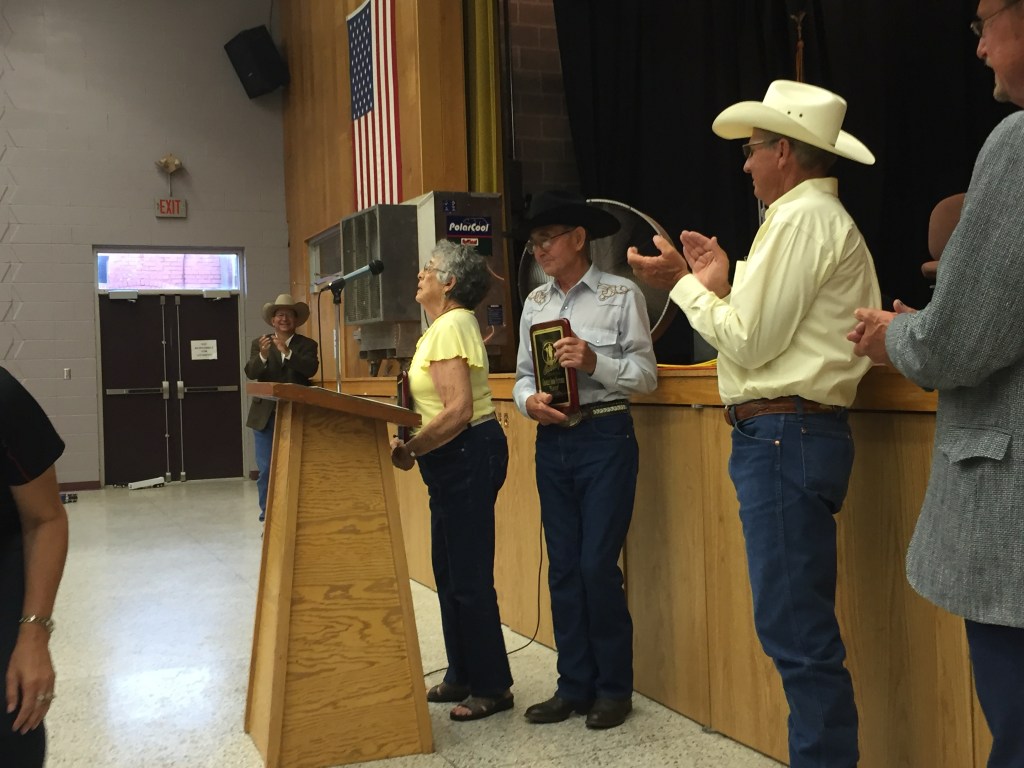
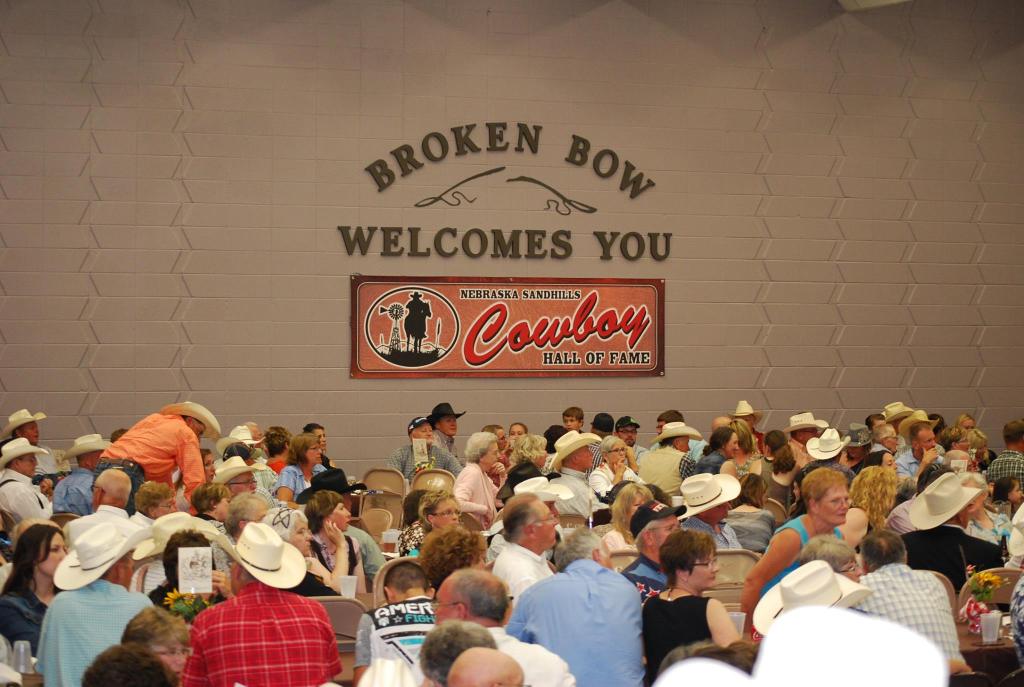
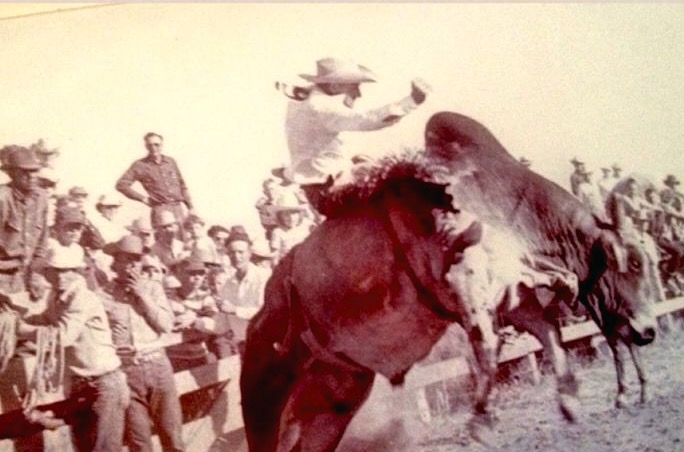
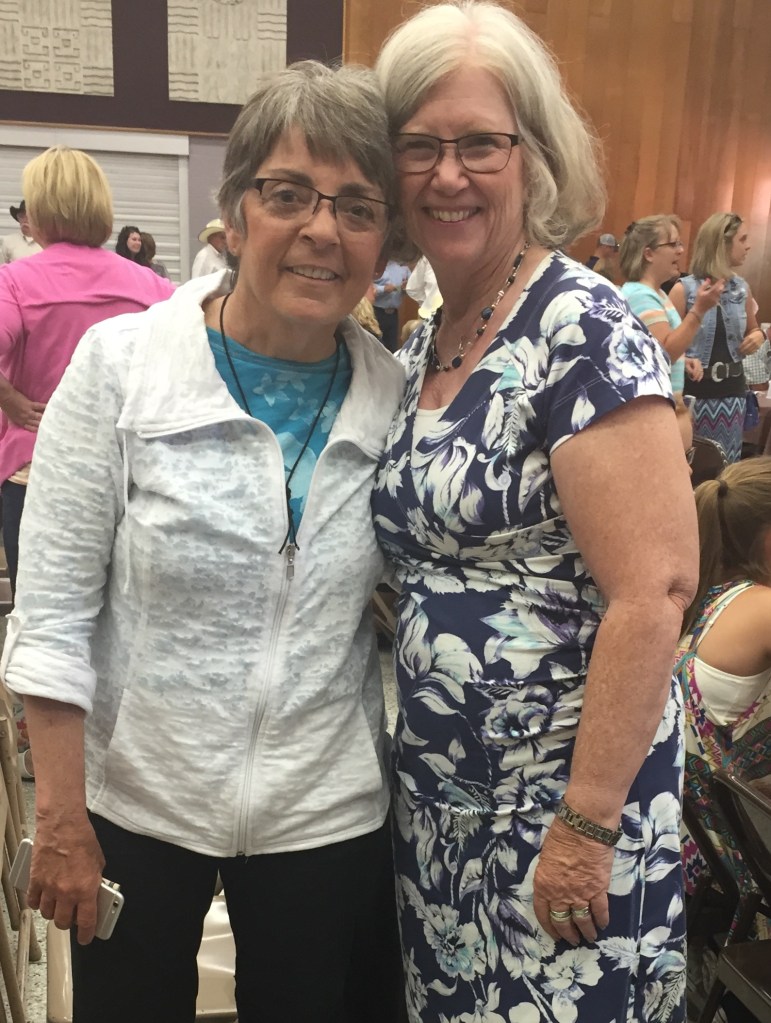
And through the day and into the evening we watched and we listened and we learned about their lives and their contributions which earned them this honor. The Nebraska Sandhills Cowboy Hall of Fame recognizes those who have made extraordinary contributions to the Western Lifestyle or horse culture in the Nebraska Sandhills in the areas of competition, business, rodeo, ranching, western arts, and western entertainment.  My brother was a rancher and bull rider, an artist who braids leather into everything from bullwhips to jewelry and a mentor to young rodeo competitors. He is a lover of the Sandhills and its way of life. And his wife was there with him in every one of his endeavors. She tells us, “I’m not a cowboy.  I just found one.”  But he couldn’t have done any of it without her.

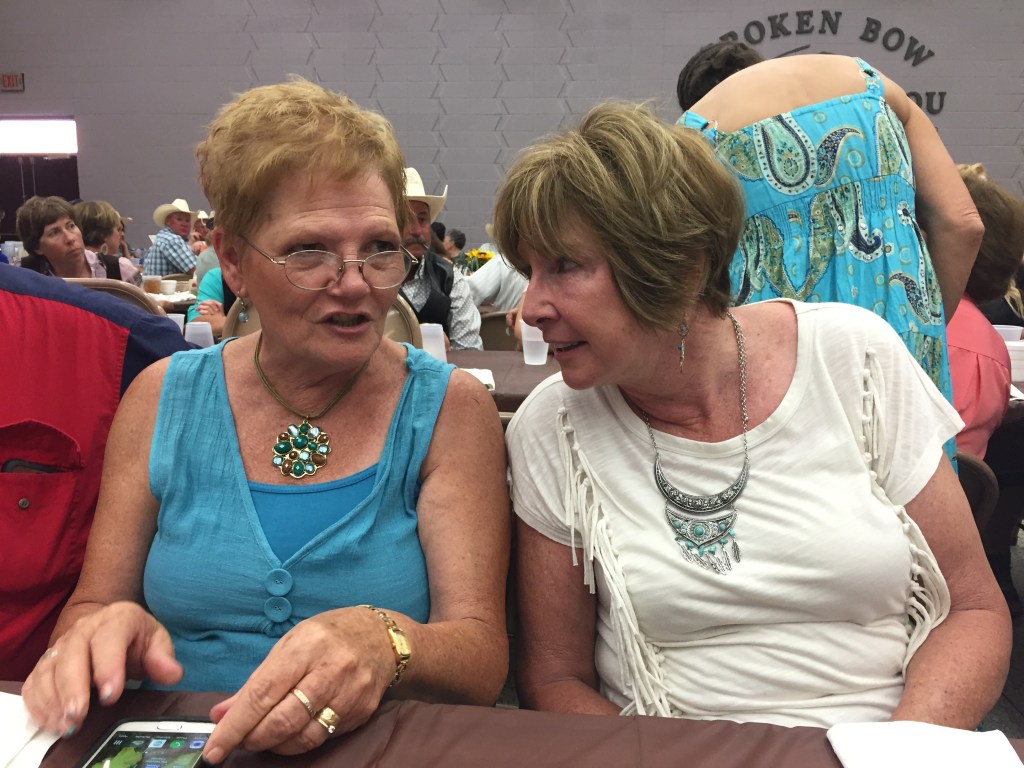
We go to the dinner and the auction and the induction. We complain about the heat but notice that we are the “city folks” and none of the cowboys  in their wranglers and their boots and long-sleeved shirts and hats seem to be the least bothered by it – they never worked in air-conditioned offices where you have to wrap yourself in blankets to stay warm in the middle of the summer. (Maybe I should have been a rancher after all).  Nick bids on the  rawhide braided hobbles Irvin has made and donated to the fund-raiser auction but they go for over $1300 and he decides it’s too rich for his blood so he lets them go. Besides, he can always just buy another pair from his uncle and pay the $100 asking price. (sidebar:  the next morning several of  the family gathered for breakfast before we go our separate ways. Irvin arrived with a pair of the hobbles for Nick.  He had crossed out the $100 on the price tag and replaced it with this: “One day only: $1300”)

When they call Irvin and Joyce’s name we all stand to clap and cheer and whistle and the rest of the room stands with us. When you live and work and serve in the same community for 88 years, people know you.  Together this couple is well known and well loved and tonight they are well-honored.

IMG_2745
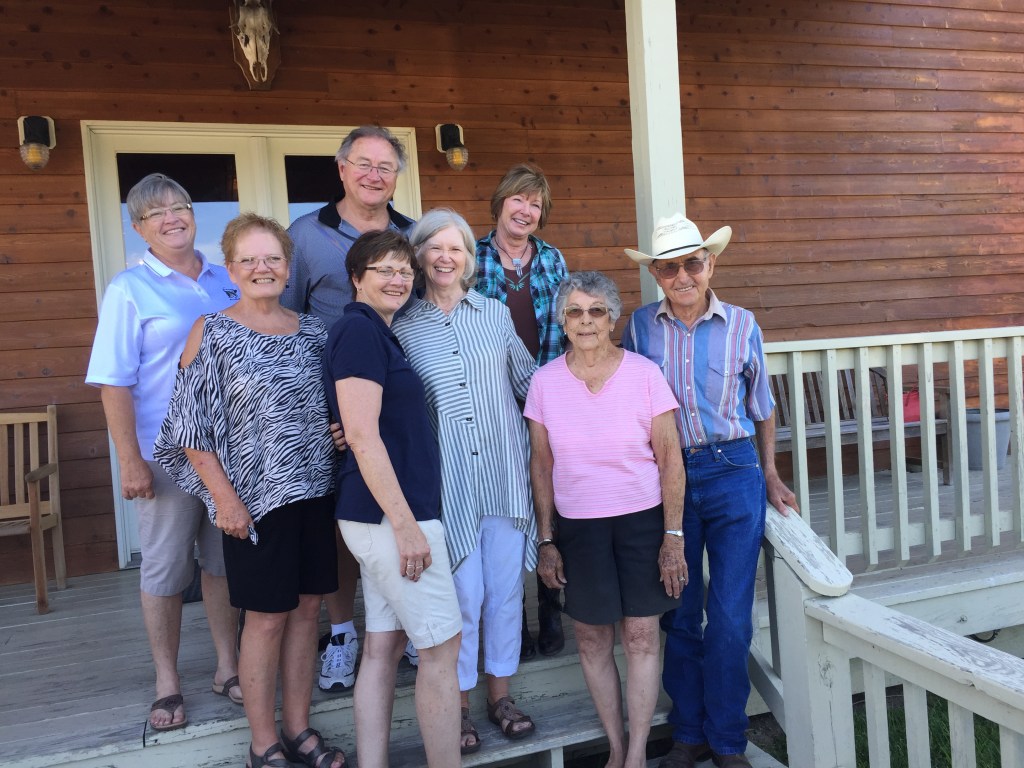
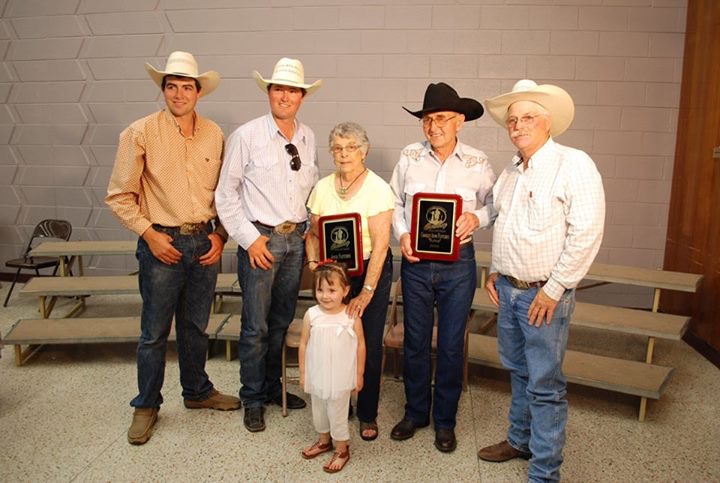
Of all the inductees, they definitely had the most people assembled for their group photo  This is some of the Fletchers and Lindermans (Joyce’s family) who cheered and whistled and celebrate their accomplishment.

Of my parents’ six children, only Irvin and I are left.  He was the third born and I am the youngest – a whole two decades younger than he. The siblings who shared his childhood, his stories, and his memories – they are gone. But if you knew what to look for, you could find them gathered around the tables: in the face of the one who looks exactly like her mother, and the one who laughs, just like her mother, and in the voice of  the one who could say, “I remember my dad telling me about the time you and he. . .”  And I was there. I do not share his memories, but I do share his stories, as did we all.  Because in one way or another, all of us who gathered for him:  me (his sibling);  Nick and Kay and Mary Jean and Jolene and Shirley (the children of his siblings); Raeleen, Bobbie, Pat, and Cindy (his daughters ; his grandchildren and his great-grandchildren – we all come from this place and these people. And it was so good to be there. . .  together.

In 1954 it only cost a nickel to see a real cowboy; our tickets  for this event cost us $20 a piece. For that twenty dollars  we got to see a whole room full of cowboys. And more. We heard a lifetime of stories. We laughed and we cried, we talked and we listened, and we remembered again that this collection of people from so many different places and so many different ways of life – we remembered again that we are family. And at the end of it all, we knew that there would never again be a time together quite like this one.

IMG_0829
Once a cowboy – always a cowboy. Here he is, riding in the “Old Timer’s Rodeo” at 45+ years of age. Who does that??!!

 That’s Just Crazy Talk.

So last year he started kindergarten.

They had moved to California early in the summer and we made a trip to visit them. He took us on a tour of their “very own”  house – which was really base housing which meant that it was the government’s “very own” house,  but he didn’t know that.  “And this is our very own kitchen.  And this is our very own living room. And this is the brothers’ very own room.  And this is our very own. . .  what is this, Mom?” A fuse box.  “And this is our very own fuse box. ” So excited he was!

enhance

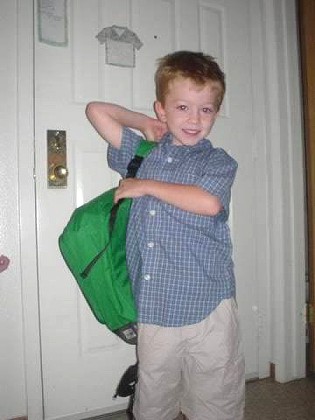
We took them school shopping to get back packs and school supplies. He had his eye on a hiking pack that would have weighed down his Marine of a father – but maybe he recognized it as something like what his dad took with him to work every day when he went into the field. Whatever the reason, he would not be dissuaded. We showed him other ones that were more appropriate for the first day of kindergarten. “Oh, look Jackson!  This one has Spider Man on it!”  I offered. No, thank you. “How about this one with all of the cool cars on it?”  No, thank you.  Finally his mother said, “Jackson, Nana and the Colonel are not going to buy that back pack. Choose another one.”  He was fighting tears as he tried to readjust his expectations. And as any grandmother will tell you, I would have laid down the 200 bucks for that sucker in a heart beat. Yet, somehow I knew this would not bode well for either him or me in the long run. I tried to distract him with a more acceptable choice. “Oh WOW, Jackson.  Look!!  This one is perfect AND it even has a place for a water bottle.”  Maybe that would make it feel more like a “real” backpack to him, I reasoned. He turned, studied me like I was speaking gibberish and then said to me in the most patient tone he could muster, “Nana, that’s just crazy talk.”  And that’s how that phrase entered the family lexicon.

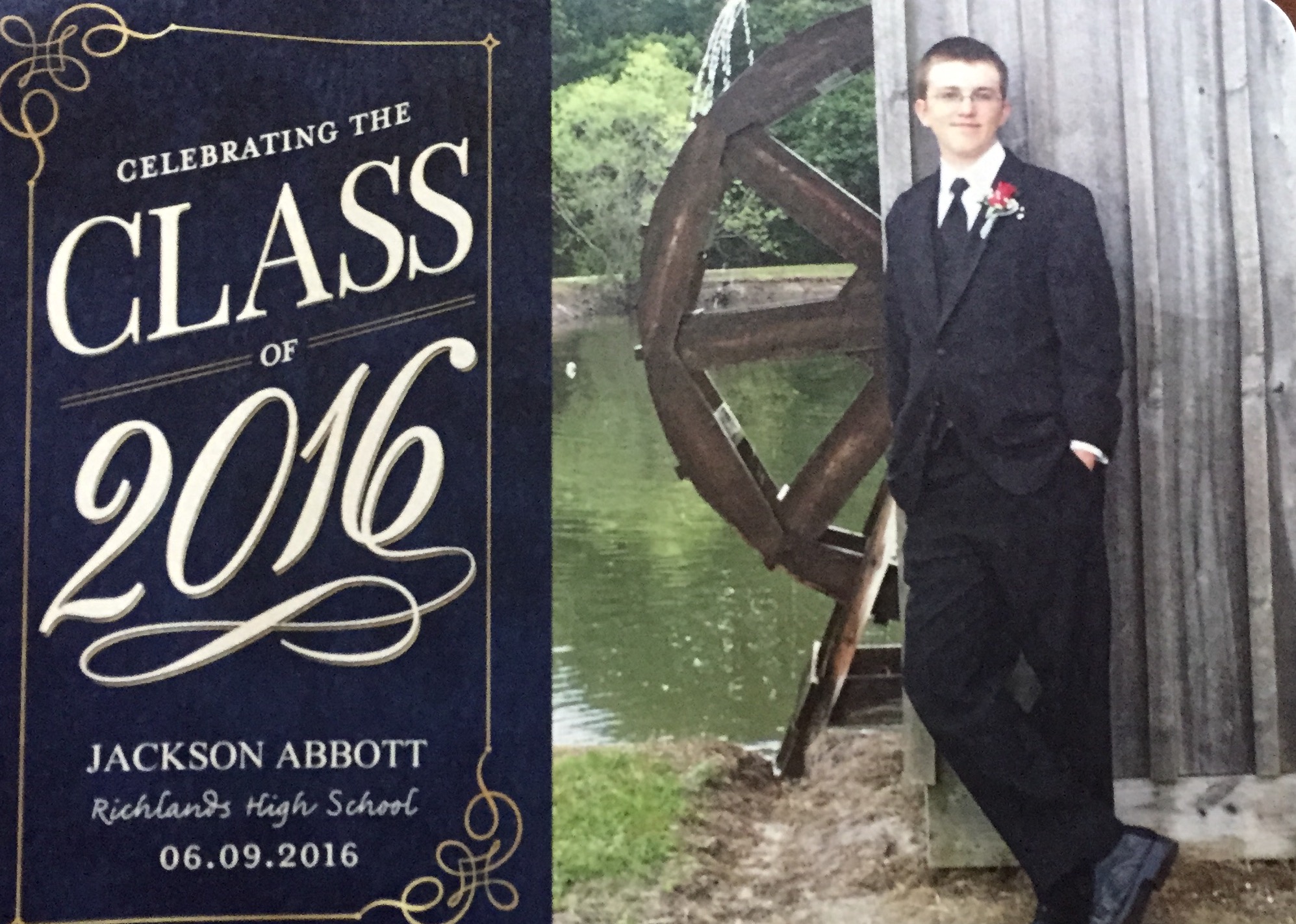
But no, that can’t be right –  it wasn’t just last year, was it?   No matter how unbelievable it seems, it was twelve years ago, and  though I can still see that little boy so clearly in my mind’s eye, now he is seventeen and grown to be a man and graduating high school.  How can this be true?

enhance

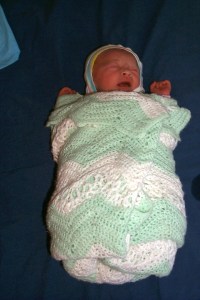
He is the first born of my firstborn – the one who made me a grandmother.  The first one to call us Nana & the Colonel. He came to us new and tiny and amazingly sweet.  And now he is old(er), and taller than any of us (by a long shot), and still amazingly sweet. He came into a family of untested grandparents and aunts and uncles and parents and we wrapped him in the blanket that his great-grandmother Fletch made for his dad and swallowed him up in our tribe and he was the first.  

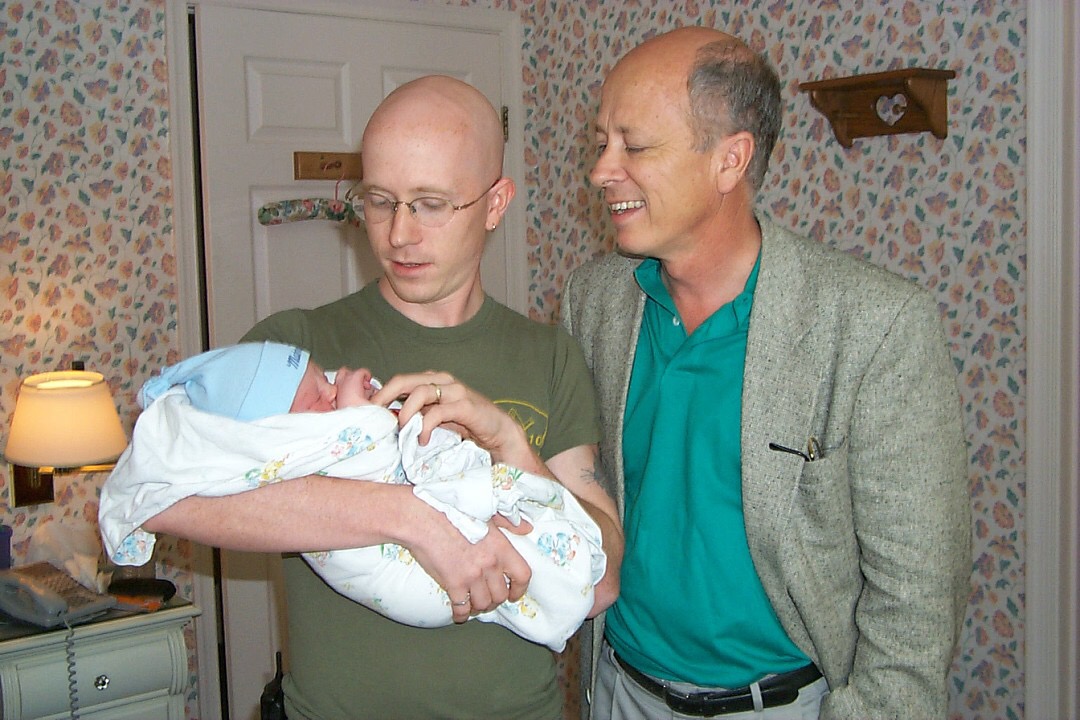
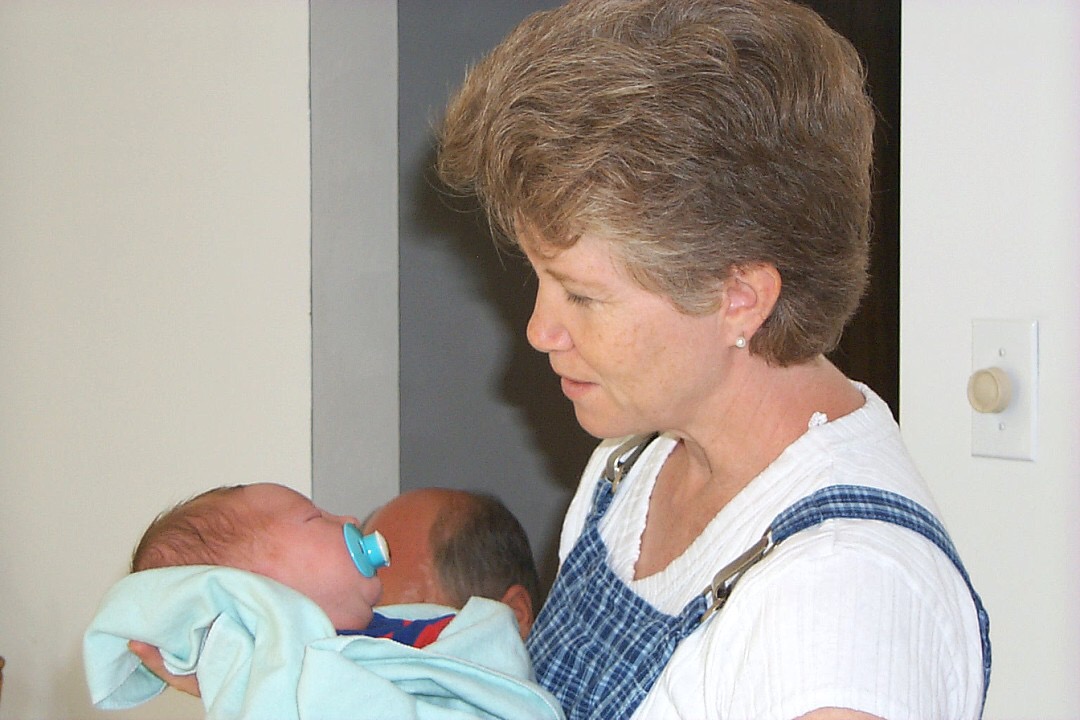
We were in the waiting room of the Maternity Center when he was born and held him in our welcoming arms when he was only minutes old. From that moment on we were smitten.  I forgave my son  nearly every transgression and bone-headed thing he ever did for giving me this moment (I later rekindled the grudge, but another story for another day). Later that evening, some of the family went to the house to welcome him home. I was holding him when he spit the pacifier out onto the floor.

We all froze. We were in unknown waters here. No longer the parents, but now the grandparents, we waited for our cue. What was the protocol?  Should we pick it up and take it to the kitchen to wash it?  Sterilize it? Throw it in the trash and open a new one?  I know what I did  when it was my babies. . .  but those rules no longer applied – this was uncharted territory and I was more than a little uncertain. It was no longer my call. His mother reached down and picked it up off the floor, brushed it against her shirt, checked it for any visible dog hair or other debris, and put in back in his mouth. We all breathed a sigh of relief – this was going to be just fine!  And I must say a huge THANK YOU to our daughter-in-law and son for making our first foray into grandparenting so easy. They were beyond generous with all of their sons and patient with our mistakes and I know not everyone is so lucky.
fullsizeoutput_4062


I knew from my  own mother some of the ground rules of being a grandmother:

  1. No matter how much you would do it differently yourself, keep your mouth shut and let their parents figure it out themselves.  You had your chance at parenting – this is not a do-over for you.
  2.  It’s not about presents – it’s about presence. Be present in their lives as much as you can.
  3. It’s not a competition or a zero sum game. Your grandkids need as many people to love them as possible in as many ways as possible. That means that you have to share.
  4. Bake pies. Bake cookies. Bake bread. Bake.

And now he is no longer little but still the first. I’m not sure when it happened, this transition from the little boy to the man, but I remember the day  when I thought to myself – it’s happening and there will be no turning back. They were home for a visit – maybe over Christmas. His uncles (whom he adored and always wanted to hang with) were making plans to play a new game – late into the night, after the children were in bed. “You should stay and play with us J!” they offered. But the “littles” were all sent to bed, and his parents sent him up with them. Eventually he made his way back down the stairs and made his appeal – “They invited me to play with them. I’d really like to. Please? Can I?” And so he sat at the table with them that night, laughing and scheming and playing a game with the men. And he fit.  He belonged at that table. And I knew. . . something had shifted.

This week he graduates high school and it is both an ending and a beginning.

The end of  childhood . . . and the beginning of learning to be a grandmother to an adult and what that will look like. And all I can think of to say  is “That’s just crazy talk”.

13151467_10206898044596689_3907823973730064873_n
enhance
IMG_2019

An Ordinary Life Lived in an Extraordinary Way

He was one of the gentlest souls I have ever known. It saddens me to say I don’t think I ever had a real conversation with him – one where we talked about meaningful things. But in retrospect what I think is that to him – it all had meaning. He entered into the “ordinary moments” in such a way that he recognized before the rest of us that looking back, we would name some of these as among the truly extraordinary experiences that would shape and define us for the rest of our lives.

I was lucky enough to be friends with his son. And when you were friends with one member of the family, you sort of became friends with the whole family. I liked the noisiness of their house; the chaos of lots of people and the constant party that seemed to always be in progress and the fact that when I arrived at dinner time they just pulled up another chair and seemed genuinely delighted that there was one more to crowd around their already crowded table. And when they all bowed their heads (a cue I picked up on pretty quickly) he would lead us in a prayer of thanksgiving – and I never in all the years I knew him found him to be anything other than grateful and thankful for all that God had given to him – even in the hard times.

Pretty quickly, I became one of their tribe and would spend the night in the girls’ dormitory – a big room which had been created by closing in the carport and finishing it off as a bedroom for the five girls. In the morning the boys would rise early to deliver their paper routes and then we would all gather around the kitchen table for the breakfast that he had prepared – usually bacon and eggs and cinnamon toast. Lots of cinnamon toast (how that toast got divided is a whole story in and of itself) and while everyone was being seated he would go to their room and wake his wife and she would come to the table in her red robe (probably one he had given her the previous Christmas) and they would kiss and then he would pull her chair out for her and she would take her seat at the table. I asked my friends about it once and they just shrugged and said, “I don’t know. That’s just the way it’s always been.”

They were busy eyeing the cinnamon toast, but I was captivated by this ritual and though I witnessed it many, many times over the years, it never lost its effect. That ritual said it all. He adored her. There is no other word for it. He put her first. Always. It spoke of his genuine, pure, and unabashed love for her and every time I saw it there was something in my heart that ached and I hoped to God that someday I would find somebody who would love me like this man loved his wife.

On his son’s 16th birthday, a group of friends decided to show up at the house and take the birthday boy out to pizza. We all piled into somebody’s car and the bunch of us headed over. When we got there, the birthday boy was out collecting from his paper route customers and no, nobody knew when he would be back. “Well, tell him we stopped by,” we said and being the good friends that we were, we headed out to celebrate his birthday without him. When he got home his dad told him that we had been there and immediately noted the acute disappointment in his son’s face. “Where do you suppose they have gone?” his dad asked. “Oh, I don’t know. It could be one of half a dozen places.” And then his dad, who was tired and probably just returning from work himself said to his son, “Well, let’s go see if we can find them.” So he drove him around until he found us and left him there with us to celebrate. I don’t know why I remember this moment so clearly all these years later except that it spoke to me so profoundly of this father’s sensitivity to the feelings and longings of his son. And having celebrated my own children’s 16th birthdays, I look in the rear view mirror and wonder if maybe he had hoped that they might have a family celebration when he got home from work or he would at least be able to have some cake and ice-cream with this boy-growing-into-a-man. But if he did, he never said as much. To spend his evening driving around town looking for a bunch of kids wasn’t a big thing – except to his son.

dad 7 me

When I married into the family, I came to understand that though Paul’s mom was the life of the party and the one who seemed to take care of us all, it was his dad who was the foundation of the tribe. He cared for her like a queen and she reigned over the kingdom well. She was his beloved and in that she had everything she needed. Theirs was a love story for the ages and it changed them both. It changed me. This is the man who baptized me into the faith and then officiated at our wedding. Over the years, many of them before I knew him, he pastored and cared for God’s people. He loved them the only way he knew how – like Christ loved the church.

He died in an accident in February of 2001. His last words were to his wife: I love you. It could have been no other way. A few short months later, his wife was hospitalized and died the next day – on their 56th wedding anniversary. She simply did not know how to be here without him.

Image (52)

The other thing that must be said about this gentle man is that I never saw a baby who did not love him. He was like a magnet and I watched him quiet many a fussy baby who would not be comforted even by their mother (my own included). It was not unusual for him to slip into the bedroom where we were sleeping on our visits home and take the baby downstairs with him to play and cuddle and love – giving us some much welcomed rest. His grandchildren loved him fiercely. When our youngest, Fletcher, was little and figuring out the language and the family relationships, he christened Paul’s parents “Gee-paw and Gee-paw” and it’s what they stayed for a long time. When he grew older, Gee-paw would call most Sunday afternoons to talk football with him after a Redskins or a Broncos game. And Fletcher loved it. I loved him for doing it.

Today is his birthday; he would be 92 years old. And if he were here I would call him to wish him a Happy Birthday and to tell him, “Dad, you done good! Your boy turned out okay. Actually he’s a lot like you. He loves me oh-so-well and the only thing you could have done better was to teach him to cook. Thank you.”

Image (43)
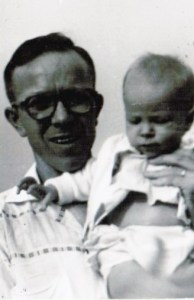
David Abbott with his son, Paul
Image (44)
Image (46)
the baby whisperer

The Ring Goes South – and Other Lord of the Rings Chapter Titles

It was over Thanksgiving break when he wanted to go ring shopping. And so we all tagged along: his dad, his mother, two of his sisters, and two little nieces. Because when you’re the baby of the family, nobody thinks you can do anything without lots of help and advice (and supervision). “We’d like to look at engagement rings,” we told the sales clerk. After we all agreed that yes, this was the one and money was exchanged, we celebrated by going out to lunch. Once home we put the ring safely away until he would need it for the proposal in April “Because,” his dad insisted “you cannot keep this in your dorm room.” Sometimes you just feel the need to state the obvious.

And so the plan was made and we settled in to wait. He came home for Christmas and we got the ring out and looked at it again and talked about what exciting times lay ahead. He returned to school and we all felt good that there was a plan and everything was working according to the plan and that April would be here before we knew it.

But then the plan changed. “I’m thinking I am going to propose on Valentine’s Day. Could you bring the ring down this weekend?” What happened to April?? Valentine’s Day was on Monday.

And herein lies the problem: this was the winter of 2010 – “Snowmageddon” as it came to be known. The third of four monster snowstorms to hit the east coast that year came on Monday and Tuesday, Feb. 9th and 10th.  We would be buried in a mountain of snow. The roads would be terrible. This was a disaster waiting to happen. I said no. But because his dad is a romantic at heart and because he is always up for an adventure, he said, “Oh the roads will be cleared on Wednesday and we’ll drive down on Thursday and back on Friday.  Sure.”

The next problem to be solved: though the main roads may or may not be cleared on Wednesday, our cul-de-sac certainly would not. Paul thought we could shovel the driveway and once out on the street we might just be able to drive through the foot of snow on the road. Plan B: maybe we could shovel our street enough to get the car out to the main road. Seriously?  But here’s the really cool part about a snowstorm – people who are pretty much strangers the rest of the year come together and pull together and become neighbors. So when they saw what we were doing and we told them why we had to get out, they all took up the challenge and with one little snow blower that the woman on the corner owned and the rest of us armed with snow shovels and a spirit of romance and adventure, we shoveled out our street to the main road and we were free! The Black Gate is Open

IMG_9823

We stopped in Frederick to pick up Tabi because of course schools were closed and would be for the rest of the week and since she would be trapped in her classroom of first graders well into the summer to pay for all these snow days, why not join this party of adventure to deliver the ring to her baby brother who so badly wanted to pull off his Valentine Proposal? And besides, it’s hard to have a fellowship of the ring – with only two people. And Three is Company.

The next obstacle: Journey to a Crossroads. We exited the interstate highway to travel along the state highway and so far so good. But then we saw the police cars blocking the road ahead. “Is there no way through?” we asked the officer. “No, the snow has drifted and we have to close off the road.” (The Black Gate is Closed)  How long before it might reopen? No idea. We explained our mission. We were the Ring Bearers and we must make it to Mordor Lynchurg – the fate of the proposal was in our hands. And for whatever reason (adventure, romanticism, boredom) one of those kind police officers stepped up. “Follow me, I’ll get you around this and back to the highway.” said Officer Strider.  Okay, that wasn’t really his name but it could have been.  Which is how the Fellowship of the Ring found itself with a police escort across the backroads of Maryland into Virginia until we were once again able to travel the highway.

We sent texts along the way to friends back home who knew of our secret mission. The Ring Goes South”.  The reply comes back “Keep it secret. Keep it safe.” “If Sharon starts calling the ring ‘my precious’, abort. ABORT!!” And so it went for four hours.

We did make it to Virginia that day. We went to Joy’s house and Fletch and Emily met us there for a visit. (A Long-expected Party). I chatted with Emily while Paul and Fletcher headed to the back room (Many Meetings). I asked if they had plans for Valentine’s Day. She wasn’t sure if he had made a plan yet. A Conspiracy Unmasked would happen soon enough.

We all went to dinner that night and chatted about the storm and how this would be one we would all remember and tell stories about for years to come. Amen to that.

The next morning we were Homeward Bound to await the telling of the rest of the story.

18777_685644656008_1150538_n


What My Mother Taught Me

527753_10150927243851311_1130070861_n

My mother was born on January 7, 1904. I’ll save you the math. She would be 112 years old today.

In 1904 the average life expectancy was 47. There were only 8,000 cars in the U.S., and only 144 miles of paved roads. The maximum speed limit in most cities was 10 mph. Only 14 percent of the homes in the U.S. had a bathtub and only 8 percent of the homes had a telephone. The average wage in the U.S. was 22 cents an hour and the average U.S. worker made between $200 and $400 per year. Ninety percent of all U.S. physicians had no college education. Marijuana, heroin, and morphine were all available over the counter at corner drugstores. One pharmacist sold it with this endorsement: “Heroin clears the complexion, gives buoyancy to the mind, regulates the stomach and bowels, and is, in fact, a perfect guardian of health.” A different world and a different time, right?

Image-1
Hazel and her sisters

Her father was a trapper and a true pioneer. He built the family home himself, a large house on the edge of town to accommodate his three sons and four daughters. He traveled to the city to buy clothes for his daughters, coming home with the latest fashion and the correct sizes. What kind of pioneer does that? I never knew my Grandpa Barnes – my loss.

Mom graduated from high school at 18 and went to the State Teacher’s College, got a teaching certificate and taught in a one room school house before she married my dad. In 1923 she was a college educated woman with a career – ahead of her time in many ways.

Whether shaped by temperament, by personality or by life events, she was a strong woman – one of the strongest I have ever known. She lived through two World Wars, raised five children in the Great Depression, cooked for a never-ending string of farm hands, cleaned houses and sold eggs, nursed her family through small pox, scarlet fever, whooping cough and polio, sent two sons to war and bore a sixth child at the age of 47. She became a widow at the age of 51, left the farm and started over with two dependants, a four year old daughter and a 21 year old  disabled daughter. Once again, ahead of her time, she was a single working mom in the 1950’s.

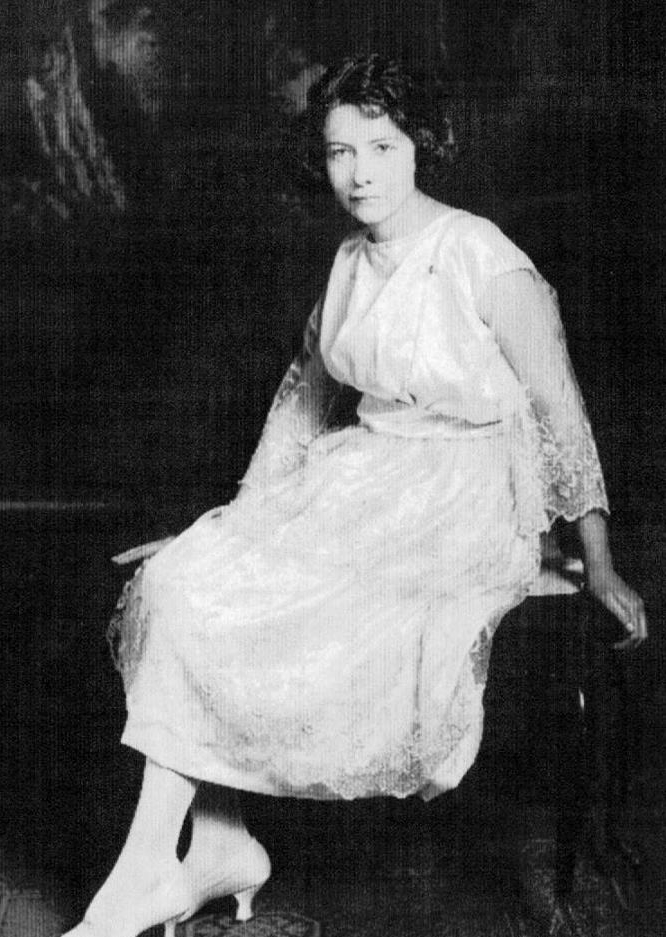
I never knew the fashionably dressed teenage flapper or the  auburn haired school teacher or the young farm wife or the woman who washed out her children’s clothes at night so they could wear them to school again the next day. The woman I knew had white hair and walked to the hospital every day where she worked as a cook. Once a month we took the bus downtown where she would deposit her paycheck in the bank, and we would eat fried shrimp and drink chocolate malts at the Woolworth’s lunch counter on Main Street. My mother never learned to drive a car. On my sixteenth birthday I got my driver’s license and we took the bus to the car dealership where she paid cash for a brand new 1966 Dodge Dart. I became her transportation to work, to the grocery store, to the doctor’s office. She was a terrible side seat driver (a habit I either learned or inherited from her), gasping at every stop or start or at the sight of another car. I didn’t like driving then and I don’t like it now.

She was an exceptionally practical and pragmatic woman. Probably because life had made her so. In her 80’s when she began to fail, she called my sister one day to take her to the funeral home. My sister assumed a friend of hers had died and she wanted to go to pay her respects. Not so. My mother was there to browse. She wanted to pick out her casket, plan her funeral and pay for it.

“I really like the lavender one. Do you think it’s too flashy?”

“I don’t know, Mom. Do whatever you want. I’m really not up for this.”

“Lila, you can do this with me now or you can do it by yourself when I’m gone. Those are your choices. The choice you do not have is to not do it.”

When they sat down with the funeral director to make the final decisions, Mom learned that to have her body moved to Nebraska to be buried next to my Dad would cost more than she was willing to pay. She turned to Lila “You and Tony can just put me in the back of the station wagon and take me there and save the money.”

My sister drew the line. Under no circumstances would she transport her mother’s body anywhere.

 “Fine,” my mother huffed. “I’ll just rent a casket, have the funeral here, they can cremate my body and you can take the ashes to Nebraska!”

“Fine!”

“But you make sure they put me in that lavender casket. I’m not going to pay for it and have them cheat me out of it afterwards.” My sister always thought she won that round. I’m not so sure.

She sat Paul down and told him what she wanted from him. She wanted him to preach. She told him the verses she wanted him to use. She wanted him to sing. She  told him the songs she wanted. “I’m really not comfortable with all of this, Hazel. It sort of turns it into the Paul Abbott show and…”

“But it’s really not about you, is it?” she said.  “It’s my funeral so I get to say how it will be.” And that’s how it was.

In the last decade of her life she moved into a small apartment in a retirement home. It was an adjustment for her but she figured it out. When she’d been there a couple of weeks I called her to check on her. “How do you like it?” I asked. “Well,” she said, “it’s not bad. It’s just that there are a lot of old people here.” She spent her days baking for the old people and checking up on them.

My mother taught me many things. She taught me how to make pie, how to stretch a grocery budget and how to bake bread. She taught me that life isn’t fair but I could be. She taught me that sometimes you do what you have to do even when you don’t feel like it. And she taught me this: “When you are young, you have to practice being the kind of person you want to be when you are old.”  When she was old sick and dying, she was gracious and grateful and appreciative. I’m still practicing.

I loved my mother. I didn’t always understand her or the world she had come from, but I know for a fact that she was a strong and remarkable woman. I hope that I am just a little like her.

So maybe today I’ll l have a chocolate malt and offer a toast to a woman who was a pioneer in her own right and one who was ahead of her time.  To you, Mom, and Happy Birthday!

148239_10151320773006311_701757437_n