From Family Room to Zoom Room and the 30 Years In Between

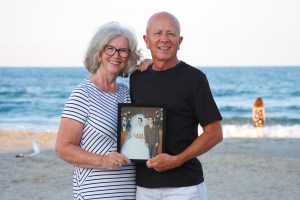
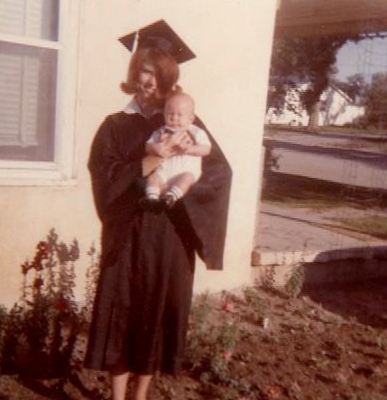
I graduated from college in the spring of 1972 with a degree in Speech Communication and a teaching certificate that qualified me to teach grades 9-12.  I chose this route largely because of the impact my high school speech teacher and coach, Mr. Ham, had on me.

 I also graduated college with a four month old son on my hip. 

So because I wanted to be at home with him, my teaching was limited to substituting in the high schools around town now and then. In 1979, now with three littles in our home, we decided to try out homeschooling – an educational option not widely recognized or accepted at that time. And so, from then until my youngest graduated in 2006, I was a full time teacher – teaching everything from pre-k to high school algebra – admittedly I was better at some subjects than others. 

But then in the fall of 1991, I was asked to teach a Speech Class for some homeschooling kids ages 12 and up. The only thing I really remember about it is that it was in somebody’s family room in their basement and we did a Reader’s Theatre unit. I think there might have been four kids in the class – when they all came. Maybe somebody else taught a Biology Class and someone else a Spanish Class, but no two at the same time because we were using the same room. We met on Thursday afternoons. And that was the beginning.

But what began as a fledgling little experiment grew and we needed more space. So we found a church willing to rent to us, other gifted and committed teachers joined the staff – teaching everything from Watercolor to Chemistry to Yearbook to Physics – and at its peak we were offering dozens of courses (both Academic and Elective) and hundreds of kids traipsed through First Alliance Church every Thursday. It became a place of learning, of character building, of community. And I began to anchor my week for nine months of the year around Thursday. Because “Thursday Classes”.

 Over the years my course load rotated and shifted:  I taught junior high and senior high Speech, two different Improv Classes, Drama, Composition, Storytelling, Jr. High Language Arts. I remember the days of Dessert Theatre and Improv Hour in the gym at First Alliance which eventually gave way to Occassion For the Arts  in the auditorium with the Improv, Storytelling and Choir all performing. The red ink of Composition Class which I understand still causes nightmares for some who have gone on to write their Masters Thesis. The nervous and jittery attempts at the first speech of  the year which grew into confident and convincing persuasive speeches by the end of the year. The “Mr. Tumnus Tea” – always the highlight for the 7th and 8th graders who read The, Lion, the Witch and the Wardrobe with me in Language Arts. And the awkwardness of the first day of Improv which gave way to hilarity and true entertainment as the year progressed.

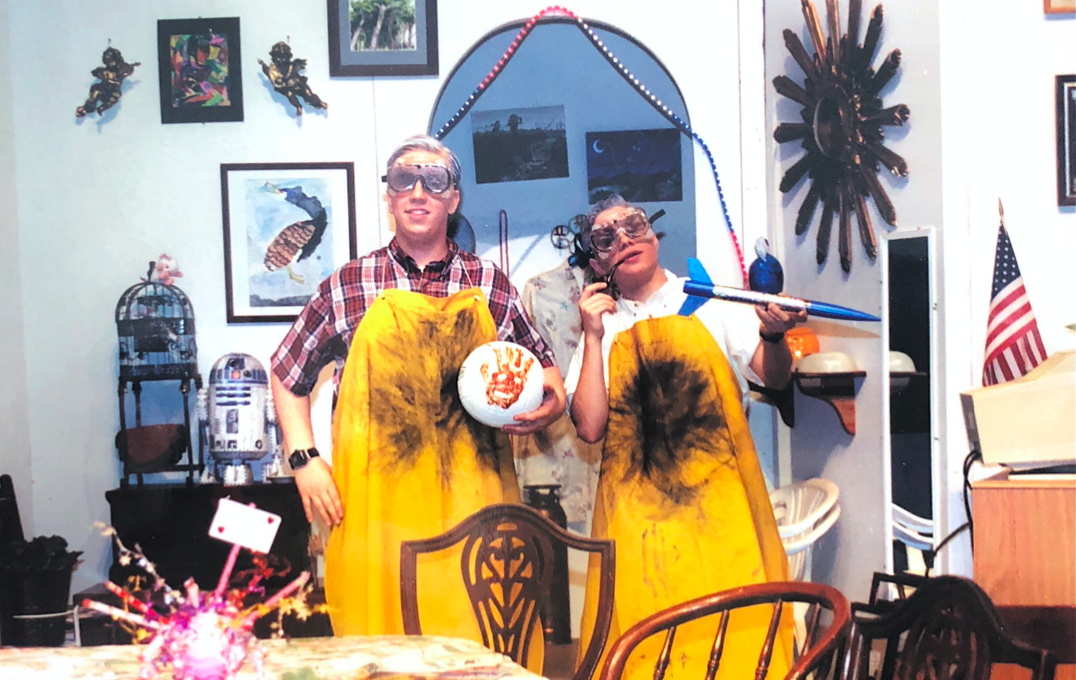
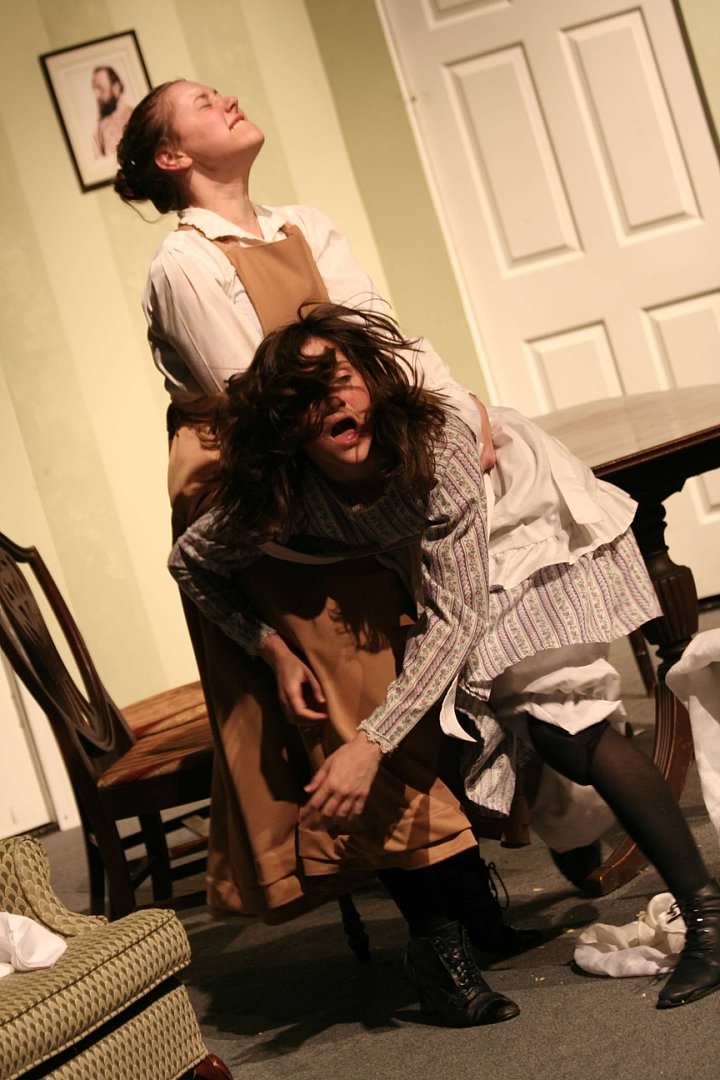
And then of course there was the MainStage Play. For twenty years we met for two hours on Thursday mornings and then hundreds of hours after classes ended in April. Tech week at Smith Theatre at Howard Community College and Olney Theatre, and then finally some pretty spectacular performances starring some very talented and committed students. It was magical. Watching a high school boy transform into an old man so convincing that even I forgot he was acting. Or a sighted girl covered with bruises from her head to her toes as she thrashed about the set – falling, and getting up and falling again – as she so believably told the story of a blind and deaf girl named Helen Keller and her teacher Annie Sullivan. The con man who was so convincing that the five year old boy in the cast really believed he could play the trumpet in a boys’ band. Working through the emotions and backgrounds of twelve jurors confronting their own prejudice and biases. The grueling hours we spent exploring these characters together and bringing them to life. It’s where my mind went during the week when I wasn’t in class:  what if we tried this?  what if she said that line more like this? what if we changed the blocking in that scene? what can I do to make that character more three dimensional? – and sometimes all the what ifs kept me awake late into the night. But in the end it was always the kids who made it work – they always found the way.  And on opening night I sat in the audience and wept (even if it was a comedy) for the sheer beauty of it all.
What I loved most about Thursday Classes though was the community. Sometimes I would duck into the Study Hall between classes ostensibly to grab a Diet Coke from the snack bar or give a quick hug to Bonnie the Study Hall monitor who became my confidant and my friend, but really I loved listening to the hum of it: the chatter from the senior table where they laughed easily at the inside jokes and counted down the days until they were done. I loved watching the group playing chess at another table, quietly studying the board and anticipating their next move; the groups of two or three huddled on the floor, notebooks opened, cramming for their biology exam later in the day, I loved it all. I loved watching students walking down the hall, arms around each other, making plans for the weekend not realizing that their older selves would look back on these days as some of the best of their lives. I loved watching them execute their “senior prank” even when I was the brunt of it – which was often. I loved seeing a group huddled around one of their own, hands on his shoulders as they prayed over him for a sick parent or some other sorrow. And it will be this, more than anything else, that I will miss.
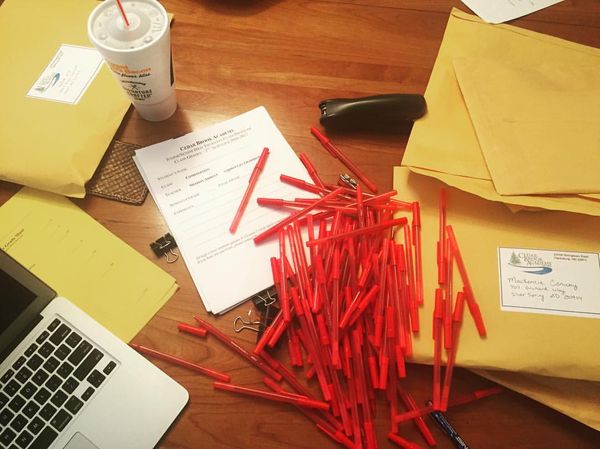
Because today it ends.  

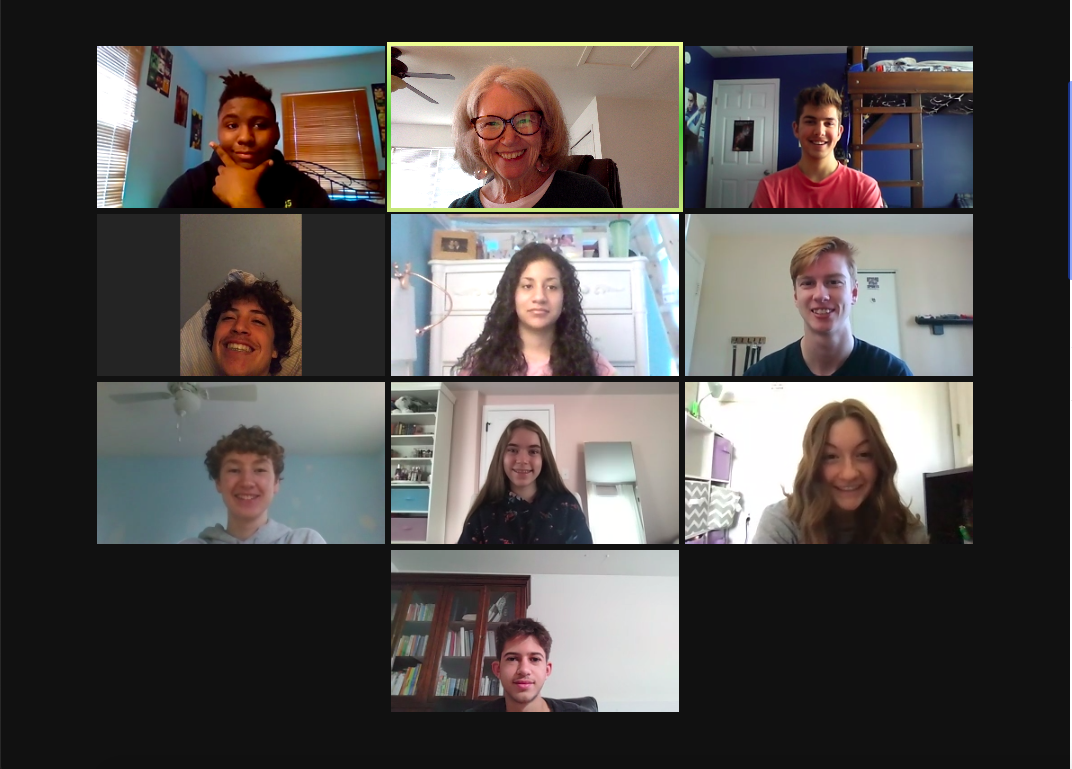
I have known for four years that this week would be the last day for CBA Thursday Classes. We made that call early so that we could work towards ending the Academy well. So I had time to think about what we might do on the last day. Maybe we would decorate the building with pictures of years past, maybe we would hang banners outside, maybe we would bring in donuts, maybe we would cancel classes and have a big party, maybe we would bring in alumni to share in the day and to say good-bye.  Never in my mind’s eye did I imagine that it would end in a Zoom Room with each one isolated in their own little box on their computer screen with no hugs, no real contact, and nobody in the room with me to share this landmark. Who could have imagined this ending? But Covid.

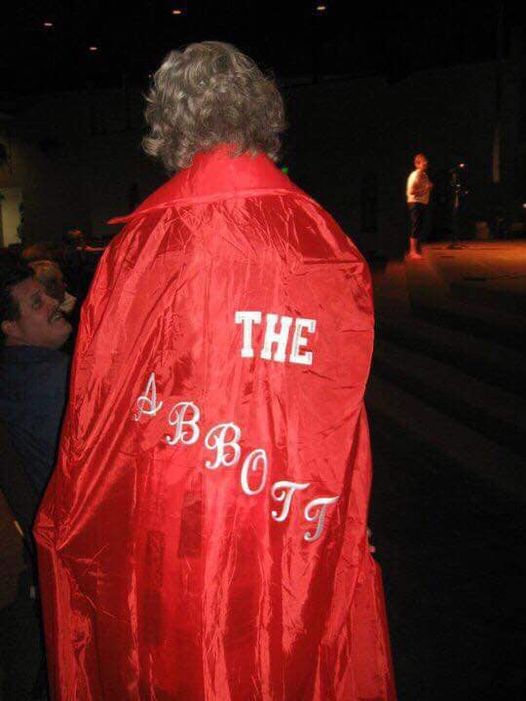
To any VBA/CBA students who might one day read this, I want you to know that you are a part of the some of the best days of my life (okay – maybe some of the “not so best” days as well but we’ll save that for another day ). Thank you for being a part of the experiment that was Thursday Classes and for making them work. Thank you for your patience and your good will when I was trying to figure it out and especially for the times I got it wrong. Thank you for your generosity of spirit when I didn’t get what you were trying to say – or you felt not seen. Perhaps the most well quoted line about my tenure at CBA came from a student in her Yearbook Senior Quote – “Mrs. Abbott is sort of like God. You really love her. But you don’t want to make her mad.” JM

I remember one day years ago when I said in perhaps a too loud voice to the students who were milling about in the gym. “I don’t know where you people are supposed to be but it isn’t here. You should either be in class or in study hall. So leave!” As they were scurrying off I heard one of my daughter’s friends say to her, “I’m sure glad she’s not my mother.” My daughter replied not so much to defend me but more in a yeah, she’s weird way, “Yeah, she’s not really like that so much at home.” So yes, I know there were days, but I would not trade one of them.
There were other things that made CBA what it was, but Thursday Classes helped to make it a thing. There are many who think, and I count myself among them, that those hours between 9:00 a.m. – 5:00 p.m. on any given Thursday were the best hours of the week.

But on this last day of CBA Thursday Classes here’s what I want to say:  thank you to the students who stuck it out to the end – even on Zoom!!  You amaze me! 

Thank you to the ones who came before who taught me how to be a better teacher and a better human being and have provided enough memories and stories to last me a lifetime. Thank you to all the other teachers and the staff who helped to build this amazing community. Thank you to the parents who supported and encouraged us over the years. Thank you to my own kids who got drug along every Thursday before they were even old enough to be in classes and thanks be to God for an incredible 30 years. 

It was quite a ride.
Piglet and Pooh

“We’ll be friends forever, won’t we, Pooh?” asked Piglet?  “Even longer,” Pooh answered.

And that’s what I thought. That the friends I was investing in along the way – the people I shared my life with, raised my kids with, started churches with, ate all the meals with, shared my highs and my lows with, grieved with, celebrated with and shared the foxhole with – that we would be friends for even longer than forever.

But what I learned somewhere along the way is that not all friendships are meant to be Pooh and Piglet.  

I’m not sure where I first encountered it, but at some point  I was introduced to this idea:   there are friends for a reason, friends for a season and friends for a lifetime. And what I now know that I did not always know is that you don’t know who your life-time friends are until you get to the end of your life and see, not who comes to your funeral, but who sits the death-watch with your family. But there’s the thing, hopefully there will be many, many of your friends for a reason and friends for a season who come to the funeral to tell that part of  your story and celebrate your life. They all count.  

Friends for a reason. Friends for a season. Friends for a lifetime. Though those words may not shake your world – they sort of did mine. Because as we all know, friends come and go from our lives. The BFF from grade school who always played with you at recess and who decided with you what you should wear to school the next day so you could be twinsies. The one from middle school who you had sleepovers with every weekend and talked to on the phone every day when you got home from school. The one from high school who you told about all your crushes and wrote in your yearbook the same thing that you wrote in hers –  that you would be friends forever. The one who was a bridesmaid at your wedding and you at hers and you shared the joys and challenges of early married life. The one who had kids the same age as yours and you bonded over potty training and teething. The one you called when your teenager didn’t come home and you had no idea what to do. All of them. The BFFs who were closer than family for a time, who you invited into the deepest and darkest part of your life, who shared in all the big moments and the small ones, who got into the rat hole of life with you, as Anne Lamott says, and is out there walking around  in the world with a matching Winnie the Pooh and Piglet tattoo on her shoulder. (Well, okay maybe not that last one :).   

But then one day, or more likely over lots of days, sometimes for no discernible reason, the friendship cools or falls apart, or maybe life just moves on and gets in the way or maybe you have a falling out and each go your own way. And you realize, these were NOT lifetime friends as you had supposed – but only friends for a reason or for a season. But now that reason has been fulfilled or the season has passed. So what does that say about the friendship:  Was it real?  Was it authentic?  Did it matter?

And what I want to say now is YES.  They all counted.

I would say most of my friendships started as “friends for a reason”.  We went to school together. We worked together. We were on a team together to start a church. We were in a small group together.  Our kids played together. We had shared interests.  And in that reason, we found common cause and affinity.  Sometimes, once the reason was past, the friendship wasn’t the same. Life moved on and demanded our attention and we made other friends “for a reason”.  But some of those relationships evolved into “friends for a season”.  Our kids grew up and maybe apart, but we stayed connected and our relationship deepened to be about more than what we had in common. The project we were both working on was completed, but our friendship outgrew the project and we did other things together. The small group ended but we continued to get together for tea and  to share our lives. And so, while the reason no longer existed, our friendship transitioned. And some of those “friends for a season” lasted for years before they ran their course – before that season was over and we drifted apart and away. However, some of them have grown and deepened and matured and maybe we will be friends for a lifetime – but we don’t know that yet because we haven’t come to the end of the story. But here’s what I do know – all of these friendships were real and they all mattered and they all helped me become the person I am today.

I think it must be said that not all friendships end well. One or both parties come away wounded, scarred and bloody. But this I believe. . .  even those friendships can serve a purpose. I also know this: sometimes they are restored and redeemed. Not always. . .  but sometimes.  Understanding that not all friendships are going to be “friends for a lifetime” has relieved me of the burden of trying to make them so. And that is not to say that I haven’t grieved some of those friendships that didn’t survive the reason or the season, but it has helped me to celebrate them for what they were – not for what they weren’t. 

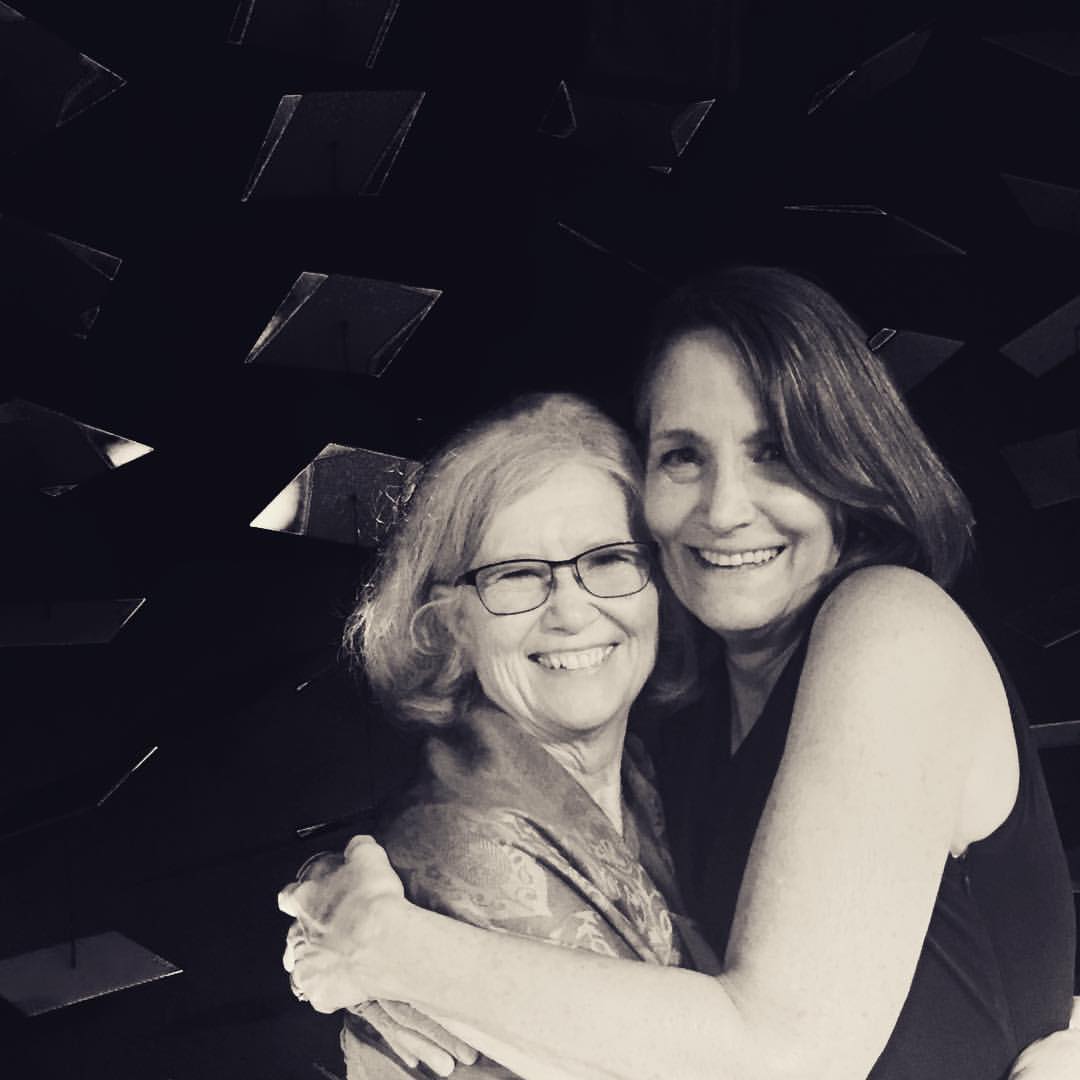
I have been blessed to have many friends over my 71 years, a handful of them perhaps will last a lifetime (if you’re reading this, I hope you know who you are). Let me tell you about two of them.

I think it was 1976 when I first got to know Amy Oliver at the University of Kansas I was a young mother of two –  soon to be three. She was a college coed who came to a Bible Study with her boyfriend and indicated that she was interested in getting together to talk more about spiritual things. We went for coffee, talked some about Jesus, some about our lives and we began to get to know one another. Before we parted, I asked her if she’d like to pray with me. She prayed first, saying something like, “Thank you, God for this beautiful afternoon. . . “.  “Amen”, I said quietly, agreeing  with her. But apparently it was loud enough that she heard and she stopped abruptly, saying nothing more. So I picked it up and continued the prayer. It would not be till years later that she would tell me, “when you said, ‘amen’, I thought that meant my turn had ended and  my prayer was over.”  Nice job, Sharon.

But even after I so rudely interrupted her prayer, we continued to build our friendship. She went on to graduate from college and began her teaching career. She was our son’s kindergarten teacher and when after a few years, we decided to homeschool, she became my resident elementary school consultant, calming my fears and assuring me that all kids wrote their ‘b’s” and “d’s” backwards from time to time.  

It was Amy who left a bright, shiny red tricycle on our front porch for our three year old’s birthday with the note that said, “to Tabi from Jesus” and built the faith of a little girl who had prayed and prayed for just such a gift and whose parents had no idea where they would get the money to buy it. Again, it wouldn’t be until decades later – when I was looking through Tabi’s baby book and recognized the writing on the card as Amy’s – that I understood the role she had played. It would not be the last time she was the hands and feet of Jesus to families who needed Him to show up.

In 1979, she would be on a church-planting team with us to Champaign, Illinois. She taught school in the day time and held Bible studies in the dorms in the evenings. We cooked countless meals for  hungry college students – she taught me to make hopple-kopple (a dish with fried potatoes, eggs, and cheese) – and it was our go-to dinner for drop-in guests, of which there were many.  She took my kids to the corner convenience store for “comfort candy” when I was in desperate need of a break and kept a limitless supply of red-hots with her that she doled out to outstretched little hands. To my older four she was like a really cool older sister. One season gave way to another and the seasons changed, but the friendship grew.

In 1986, we were ready for a new adventure. Our family was moving to the suburbs of DC and, long story short, Amy and a few others moved with us. We were more spread out here, it was harder to see each other as often and life was just faster and different. When she brought a young man over to meet the family, suffice it to say that my daughters were less than welcoming and more than a little protective, perhaps seeing him as competition for the affection and attention she had showered on them for so many years. It was a new season and it remained to be seen where  the friendship would land.  

Then, in 1989 we embarked on yet another church plant – this time in upper Montgomery County Maryland and once again, Amy joined the team – this time along with her new husband Kirk. For awhile the relationship was rife with adjustment, misunderstanding and disappointment, and yet we powered through it – talking, forgiving, letting go, holding on, and talking and forgiving some more. Amy is one of the most loyal people I know and she will fight hard to stay connected and committed to the people she loves. I have a lot to learn from her and I credit her for getting us through this season.   

When her first child was born, I got to be the one to give her her first bath. Amy taught my son in his first year of school and encouraged and supported a new and inexperienced homeschool mom, and I now I got to come along side this veteran educator and watch her own children flourish under her tutelage as she taught them at home. When I directed her teenagers in high school plays, it was like seeing their mother all over again at that age:  artsy, creative and so ready for fun and adventure! This season brought us another gift:  her youngest was born in the same year as my oldest grandson (the son of her former kindergarten student) and they became fast friends until the Marine Corps moved them away from each other which was as sad a day as I have ever seen.

And now in this season we find ourselves with gray hair and grown children (that kindergartner is almost 50 years old and she is invited to his wife’s 40th birthday getaway) and shared heartaches. We have grieved with one another over the death of parents and friends, have commiserated with the other in the hard places, and celebrated in the spaces of jubilee. She knows what year we moved where and what year my fourth daughter was born and the year we got our Beagle and what the house number was on First Street and my third grandson’s middle name. Because her brain has an unlimited capacity to remember such things, while mine . . . . well, not so much. But more important, she remembers our stories.  She reminds me of who I was, and who I am and when I forget, she reminds me of who I want to be.

And then there’s Peggy. Back in ’86 when we moved to Maryland, it was Paul and I and the kids, Amy, Marna, and Joe.  We were coming from a small church where everybody knew everybody into a big church where we knew a handful of people, and as I said,  even our little team was dispersed and scattered. It felt like I was starting over because I was starting over and to say I was overwhelmed is putting it mildly. Everyone here was so busy and lived so far away from each each other compared to our small church in the mid-west and the church was so big. And though they were friendly and welcoming, I felt alone. For the first time ever, Paul went to work at an office with a couple dozen other leaders (instead of his “in home” office where he had always worked) so even he wasn’t as available. But a guy named Dave Smith, who also worked in the office, had offered to help us move in and I think the first Sunday I went to church, his wife came up to me and said, “Hi, I’m Peggy Smith.” And that was the beginning.

Dave was the director of the home-schooling academy sponsored by the church. He and Peggy homeschooled their children as did we:  the reason the friendship began. We spent time together around the kids – their oldest Andy was the age of our fourth-born, Sarah. Our oldest daughter Tabitha started to baby-sit for them and the youngest of their tribe at the time gave her the name that would stick for years “the Batha”. Our youngest and their youngest were born only days apart and over the years became more like cousins or siblings:  scrapping, making up, fighting, playing, defending, attacking. I remember one day going to pick Fletch up from Sunday School and Peggy had him and Ellen outside preaching to the two four year olds who had been squabbling about something during class:  “You two are just going to have to figure this out because neither of you is going anywhere and chances are you’re going to be together for a lot more years – so you’re gonna have to to learn to get along. You’re family. Now both of you say you’re sorry so we can go get lunch.”

By 1989, when we were ready to plant Cedarbrook Church, Dave and Peggy and their family were one of the handful of people (along with Kirk and Amy) who said, sign me up – we’re in! So another reason was born and bled into the next season and we were all busy with the starting of a new church and all of the challenges  and work and fun and stories that came with that.

And then came the cancer. When the youngest were only babies, Dave was diagnosed with a rare kind of leukemia and the prognosis was not good and this brought us to a new reason for the friendship.  We cried together, we prayed together, and it got very real very fast. Cancer has a way of stripping away the masks we wear and the games we play and breaks us down to the real us. And this is where we found ourselves in the season of cancer:  vulnerable and raw and broken.

Then, after the cancer was gone and life had returned to its normal chaos, Dave said to Paul, “I’m looking for somebody to head up the high school program for the Academy. Might Sharon be interested?” And Paul said,” I don’t think so.” And of course, he was completely wrong – I was interested and I did want the job and that carried my friendship with Peggy, who oversaw the elementary program, into the next season. We would be working together and in the years to come there would be countless staff meetings, and graduations, and promotion nights, and Thursday Classes and so much, much more. 

In 1992, the first year I worked for the Academy, the Main Stage play was born when another mom came to me and said, “let’s help the kids put on a play”  and I said. “Count me out” . . .  but of course, that’s exactly what we did.  For the next 20 years.

The problem in that first year was I knew we had enough girls to fill out the cast but I was lacking in the boy department. So I said to Peggy, who had four sons, “Tell your boys they need to audition.”  She said they didn’t want to be in the play and I said, “You’re their mother; you can make them”,  so she signed them up for an audition time. When their time came and no Smith boys appeared I called Peggy.  “Where are they?”  “Well, “she said, “they’re hiding down in the woods and I can’t get them to come out.”  What kind of mother are you? I asked her.  What kind of friend are you?! But I forgave her.  

I forgave her mainly because I needed her to paint a backdrop of the Swiss Alps (did I mention she is an artist to her core?). The boys thought they might like to help with that. And then they agreed that they would serve on the stage crew when performance week came around and by the cast party, they had been bitten by the bug and would henceforth be an integral part of the Academy theatre productions and they became some of the best actors I ever worked with.   

For the next 20 years, Peggy was the set designer and builder for  some of the most professional, beautiful sets of any high school production anywhere.  For twenty years we worked together: creating, building a team, and telling stories.  It was both a reason for and a season of our friendship. And I loved it.

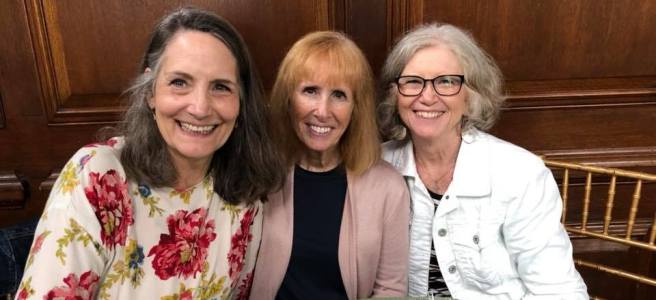
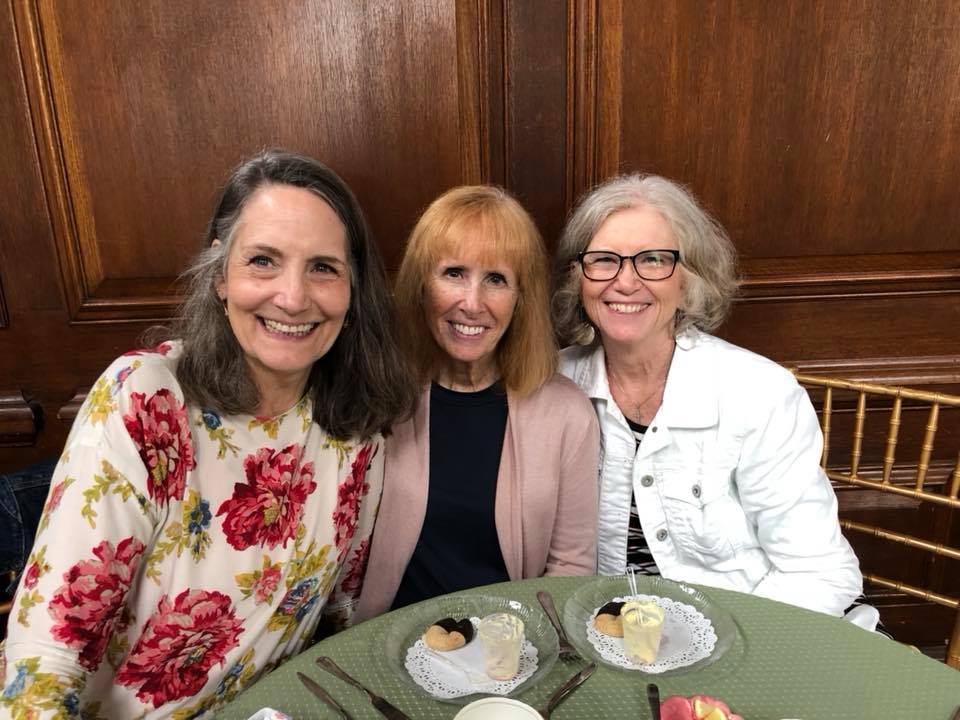
The story is too long to tell (this is already longer than I intended) but at some point along the way, Amy, Peggy, and I became a unit of friendship. It wasn’t Peggy and Sharon or Sharon and Amy or Peggy and Amy, it was Peggy and Amy and Sharon. And we celebrated birthdays and Christmases, weddings and anniversaries and we continue to get together as often as we can for tea and just catching up. We share our lives. We share the hard parts, the funny parts, the ugly parts and the beautiful parts. We carry for one another what is too difficult to carry alone and we tell the stories of our past and dream of our futures. We recount the reasons, the seasons and at least up to this point are living out the lifetime part of our friendship. And who knows?  Maybe there is a Pooh and Piglet tattoo somewhere in our future.  

P.S.  If you have read to the end of this ((I know it’s long!) and are feeling sad because maybe you can’t name any “life-time friends,” this is for you:  That friend with whom you are building a relationship  because you have discovered a commonality – invest in it. That friend who is with you in this season of your life but may not travel with you into the next one – make the most of it.  Because, in the end, they all count!  

Look at that Baby!

It is a story she told often around this time of year. She had gone to church that morning, come home and fixed Sunday dinner. She didn’t feel all that great but was sure it couldn’t be labor and even if it was, it would be many, many hours before she would give birth. She knew this for a fact because her first one had taken hours if not days of excruciating pain, and this was not that. And so she did the dishes, straightened the kitchen, and dismissed the growing-ever-more-regular twinges in her belly. Until she finally agreed that they could go to the hospital just to check things out and make sure everything was okay

By 5:00 that evening she was sitting cross-legged on her bed reading the Sunday funnies, eating a snack and chatting happily and excitedly with her husband. She had just delivered her second son!  Perhaps she credited her doctor with the ease of this delivery which is why she chose the doctor’s last name as her baby’s middle name.  In any event, the delivery was perfect; the baby was perfect. Or so they told her. This all happened in 1950 – in the days when babies were whisked away to the nursery as soon as the cord was cut to be attended by “professionals” and once they were cleaned and scrubbed and dressed, then and only then, would the parents be allowed to look at them through the nursery window.

b54ad-photo2b1

And so she hopped out of bed (she always said it this way –  “hopped out of bed”) and walked down the hall to the nursery. There was another mother standing at the window admiring all of the freshly scrubbed and swaddled babies and they stood there together recounting their recent birth stories, one contraction at a time. And then mid-sentence, one particular baby caught her eye. “Oh look!” she said to the other mother. “Look over there at that one. Isn’t that just the ugliest baby you ever saw!?! Don’t you feel sorry for his mother?!!”  It was only then that she saw the name taped to the bassinet.  “Baby Boy Abbott”.

My mother-in-law loved to tell this story about her second born son:  Paul Rowan Abbott. And then she would laugh at herself and add “And he turned out to be the cutest baby anyone ever did see!”

And so today, on his birthday (a birthday he shares with Elvis and claims is the best gift his mother ever gave him), it seems only appropriate to tell the story again. And to honor this woman who  birthed and raised the man I love to the moon and back.

She had eight children, a multitude of grandchildren, took in every stray (including me) who came along and loved them all fiercely. She loved her fur coat, her jewelry, her Denver Broncos, her red dresses, her coffee with cream  and her husband of over 60 years. She was an opinionated and outspoken woman and I loved her for it. Having grown up in abject poverty herself, she was generous to a fault. A pastor’s wife for over 20 years, she understood and appreciated my life better than most people ever could. I knew from early on that she liked me at least as much if not more than she liked her son and that I would always have an ally in her. She proved this to be true until the day she died.

She taught me to make chicken and noodles the way she did (don’t waste time rolling the noodles paper thin) and how to welcome the stranger. She taught me to celebrate or grieve with a good chocolate pie. She taught me that life is both amazingly wonderful and also filled with disappointments and heartache and that there are no guarantees. And she taught me that the only way through it is to love with abandon and pray to Jesus.

Though we disagreed about many things – the proper amount of sage to put in stuffing, the merits of sweet tea, the need to cook beef until  it looked and tasted like charcoal – the one thing we always agreed on was that that baby in the nursery window turned out pretty darn good.  And I have always thought that she had a lot to do with that.

Thank you, Judy. And Happy Birthday, Baby!

(Home)School Days

“Let’s try it for a year,'” we said. And so, in 1979, when our oldest was seven and we moved to a new house in a new town, it seemed a good time to give it a try. We set up a school room in a tiny sunroom off one of the upstairs bedrooms complete with little school desks  and bookshelves full of just-out-of-the-box curriculum and in that room, flooded with sunlight, we began our homeschooling journey.  A journey filled with small victories and major breakthroughs, with tears of frustration (from both students and teacher), with forgiveness and grace and hours and hours and hours spent reading and learning and living. For the next twenty seven years, in one form or another, we would be a homeschooling family. We only had a “designated school room” for those first couple of years – after that school happened at the dining room table, under the dining room table, the living room floor, on Mom’s bed and for one glorious month one spring – at the beach. We always took it one year at a time, one child at a time. Sometimes we had one in public school, sometimes we had one in private school, but always there was somebody sitting at the dining room table with books and pencils and paper. And snacks.

For twenty seven long years. . .  

. . . it was the best of times

  • The  day she went from sounding out each letter to reading a word and then a sentence.  “THIS IS GREAT!! I CAN READ AND LISTEN AT THE SAME TIME”  
  • Watching the caterpillars spin their chrysalis and hatch into butterflies
  • Unpacking the books each fall and buying new school supplies and starting a new year with high hopes and expectations
  • Going for slushies on the last day of school and packing away the school books
  • The day I realized the four year old had picked up the letters of the alphabet and their sounds by listening to me teach them to her brother and figured out how to put them together into words – basically teaching herself to read
  • Wednesday mornings, when Paul would take the morning off and teach school and I could go for a walk or a cup of tea or sit in my room in silence and read a book of my own choosing. . . or sleep
  • Fixing cinnamon toast on homemade whole wheat bread for lunch on a cold winter day
  • Reading the entire Chronicles of Narnia Series every time we had an eight year old – and loving the way no matter how many times they had heard it, they listened as though it was the first time
  • Watching the toddler frantically collect all of his toys for the morning and throw them into the playpen before he climbed in to entertain himself while school was in session
  • Hearing the words from my mother’s mouth “Okay, maybe homeschooling wasn’t a TERRIBLE idea.” 
  • Organizing and helping them perform their “Christmas Programs” which they performed for me, their dad, and anybody else we could bribe with homemade cookies to come and watch them

. . .  and it was the worst of times

  • Drilling math facts again and again and again and again
  • Trying to explain why someday they would be glad they had taken algebra (I don’t think the day ever came)
  • Finding the whole week’s Language Arts workbook pages had been left undone because “I couldn’t find a pencil”
  • Coming to grips with the fact that there are two kinds of people in the world:  those who can spell and those who can’t.  And I had some of each
  • Knowing that there were no sick days or personal days in my contract
  • Repeatedly being asked:  don’t you think they will be socially awkward? (like asking a complete stranger this question about her children doesn’t make you socially awkward)
  • The days I really was afraid I was ruining them (and there were many)

In those early days in the little school room on First Street in a midwestern college town,  homeschooling was not yet mainstream. There were no co-ops, no classes, no field trips with other homeschoolers. You didn’t even know of anybody else who was crazy enough to try this weird approach to education, To homeschool your kids, you  had to hide them during the day lest you be discovered by Child Protective Services. And so for the first two years, we diligently kept them inside during school hours, hidden away from anyplace where they would be asked for the name of their school, and lived in fear of being found out. But after we had a couple of years under our belt, we were done with such nonsense. We wanted to put them in scouting and the programs offered by the local library and other activities and we were done hiding. So we loaded up all of their work, all of their school books, all of my lesson plans, and every other scrap of paper we could find and made an appointment to meet with the superintendent of schools and explained that we wanted to homeschool our children and thought we could do at least as good a job as the public school. After a two hour meeting, he agreed and gave us a signed document stating that our children were legally allowed to be taught at home.  

The next day they were playing at the park across from the neighborhood school and were approached by a teacher. What were their names?  What was their address? Their phone number? Where did they go to school? And just like that, when the pressure was on, they gave it all up. Names, ages, phone number, address and I’m sure they would have surrendered their social security numbers if they had known them. The next day the truant officer knocked on my door (Yes, really.  A truant officer!).  We produced the document and were never bothered again. Our children became a novelty at the library where they became favorites of the librarians who would pull their favorite books for them before each week’s visit and then talk to them about what they were reading.

Those were the Pioneer Days of homeschooling and while we got a lot wrong, I think we got some things right.  Maybe the thing I am most proud of is that still today all six of them can get lost in a good book and that they are all critical thinkers.

Am I glad I did it? Yes, I am. Would I do it again? I’m not sure.

Eventually, the Pioneer Days gave way to the Settler Days of homeschooling; the movement became more visible and more acceptable  More and more people were jumping on the bandwagon and they were looking for help. By 1991 we had graduated two from homeschooling, one was enrolled in public school and we had three still at home:  a freshman, a 5th grader and a first grader. In that year I went to work for a homeschooling umbrella school to start a high school program for them. I took the job to build a community for my own kids – one that my older ones had lacked growing up.  

I had no idea what the next 28 years would hold. But that’s another story for another day.

Looking Back on 50 Years

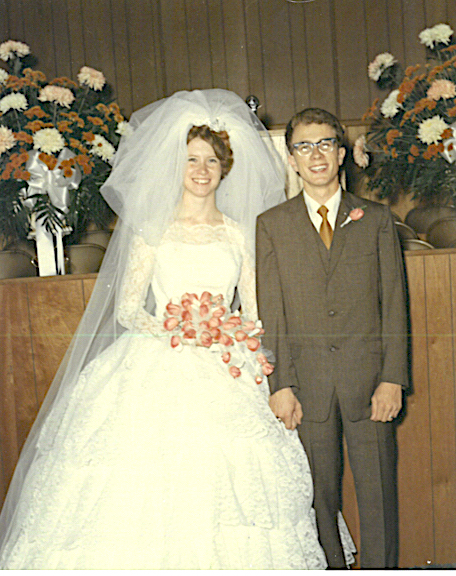
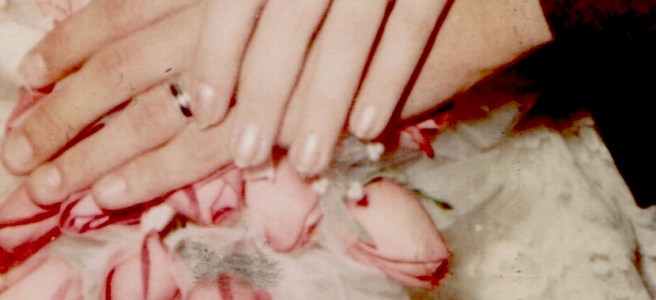
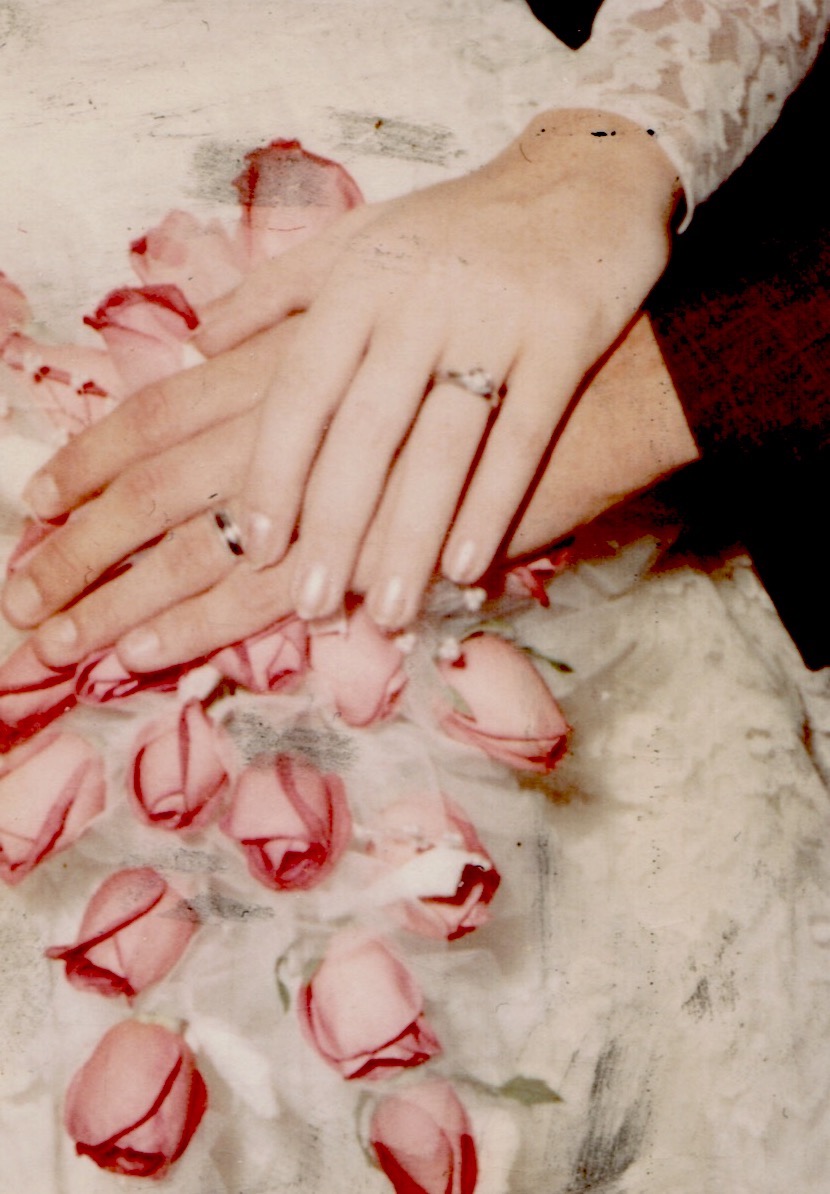
On September 5, 1969, these two kids stood looking out over their future. So, today, looking back over 50 years, what have I learned? 

1. Marriage is hard. It’s easier if you’re married to a good person.

2. Sometimes an argument isn’t worth winning. 

3. Pie makes everything better.

4. The first 47 years of parenting are the hardest.

5. The only way this works is if you take turns taking care of each other.

6. It takes two people to make a great marriage, but one person can pretty much trash it without any help. 

7. If you wait till everyone is happy to be happy, you will never be happy.

8. An introvert and an extrovert can make a good life together. 

9. The empty nest can be a beautiful thing. 

10. You live many lifetimes in half a century.

11. No matter how hard you pray, some things will not turn out the way you had hoped they would.

12. No matter how little you did to deserve it, some things will turn out better than you ever imagined they could.

13. You can, and will, fall in love many times in 50 years; if you’re lucky, it will be with the same person.

14. Just when you think there are no more surprises to be be had…. SURPRISE!!

15. An obsessive/compulsive personality and a “where are my shoes?” personality can live under the same roof . . . most of the time.

16. Called or uncalled, God is present.

With This Ring. . .

When Paul proposed in January of 1969, he did it without an engagement ring.  That is another story and one that is told in the story called The Proposal. But this is a different story.  

The day after we graduated from high school, Paul got in a car and drove to Denver where his Dad had moved earlier in the year for a job. He got a job in the same bakery where his dad worked and eventually would land a second job at the Leaning Tower of Pizza (yup, that was really the name of it). The rest of the family stayed in Pueblo to finish out the school year and over the summer, they would all relocate. I stayed in Pueblo for my job. We wrote letters back and forth every day and I penned mine on stationary that I had purchased with some of my graduation money – a box filled with bright neon orange and green and yellow sheets and matching envelopes. He used a yellow legal pad with white envelopes (once a debater, always a debater). They were love letters of sorts and also a daily journal of what we had done that day and whatever it is that eighteen year olds write to one another when they are falling in love. I wish I still had them.

I say all that to say that even after working two jobs all summer and putting in lots and lots of hours because he had nothing else to do really, at the end of the summer he had no money to show for his efforts. Not because he spent it all on himself, but because his family was struggling financially trying to get moved and established in Denver, and Paul signed over his paycheck to them every week. That, with what his dad was bringing home, kept the wolf from the door until they could get on their feet.  

He returned to Pueblo at the end of the summer to start school at the local college where we both had full scholarships and got a job at Sears selling paint to pay for gas to get back and forth to class from the home of a family friend who boarded him for free.  

In December he returned to Denver to spend the holidays with his family and when he came back for the second semester we got engaged.and set the wedding for September.  And yes, I know., We were too young, we were too poor, we were too stupid, we were too. . . . But that’s the way the story goes.

I think it must have been sometime in the spring, maybe over Spring Break, we went to Denver to visit his family. His mother wanted to go to the mall, and usually when Judy made a plan, it was going to happen. So we were walking through the mall, window shopping and visiting and at some point we ended up at the Sear’s jewelry counter. His mother stopped to look – she loved jewelry! I think I wandered off in a different direction to look at sweaters or some such thing and she called me back. She was pointing at engagement rings. “So when you get a ring, what kind do you like?” I hadn’t really thought about it. “Well. . . I like white gold,” I offered. “But what STYLE do you like?” I wasn’t sure what to say. “Do you like that one?” Not really, though I could’t really give her a reason. “What about that one?” Uuummmm. . . it’s okay. “That one?” No. “How about that one?” Yeah. I do sort of like that. She got the sales clerk’s attention, “Can we try that one on?” I put it on my finger. “What do you think?” she wanted to know. I thought it was pretty. “Okay, we’ll take it,” she told the clerk. And just like that, I had picked out my engagement ring. Had I known we were actually going to buy a ring that day, I’m not sure it’s what I would have chosen. But I did like it well enough. Looking back, I know we went to the mall that day to get a ring, and when Judy makes a plan . . .

Over the years, I wore it and the plain matching wedding band without really giving it much thought or notice. I wore it when I kneaded bread and when I bathed babies. When I washed dishes and when I folded laundry. When I slammed the door after a fight about who knows what and when I caressed his face and said, “I’m sorry “. When I taught my little ones to hold a pencil and when I walked down the street holding hands with the one who had put it on my finger at the altar. I wore it when I wiped away tears from little faces and from my own and when I served up ice cream floats to college students as we sat on the front porch on hot summer nights.

And then one day, about 20 years later, I looked down at my hand and the diamond was missing from the ring. It was not a big diamond, but now there seemed to be a huge gaping hole where the stone should have been. I had no idea how long it had been missing or when or where I lost it. I only knew it was gone, and I was devastated. All of a sudden the ring that had not mattered, mattered so much. Money was tight and while Paul wanted to get the stone replaced, I insisted that we should just get plain bands and wait on a diamond . . . so that’s what we did. For twenty years, we wore plain gold bands and I told myself it was way more practical anyway. Paul continued to wear his original band on his right hand and sometimes people would ask him why he wore two wedding rings. “This one is from my first marriage,” he would say. I wore my mother’s engagement ring and wedding band on my right hand which is another story for another day called The Fellowship of the Ring but also worth reading.

And then on September 5, 2009, on our 40th wedding anniversary, Paul had a gift for me. He put a black velvet ring box in my hand. I thought maybe he had bought me an anniversary band. When I opened it, there was my ring. With a new stone in it. And yes, I cried.  He was explaining he had wanted to replace it with a bigger diamond but it would need a new setting to do that and that would have been more expensive. And that he was sorry the diamond was so small, and he wished it were bigger and maybe he should have just gotten a new ring altogether. How could I explain to him everything this ring meant to me after 40 years?  

That this ring told the story of not just his love and his care for me, but for his parents and how he had spent all his summer wages to help them. That I had learned that a man who would care for his parents like that would care for his wife and sacrifice for her which he had done over and over and over again. It told the story of my mother-in-law and her generosity and her love and care for me. It told the story of our marriage: that it had never been built on money or expensive things but on love and commitment and our promise to one another. That ring, which had cost $160 in 1969, held so many stories. It was irreplacable. No, I did not want a different ring.

And now, as our 50th anniversary approaches (but how can we have been married 50 years??!!), Paul made a plan – he is his mother’s son. He wanted to put a bigger, better stone in the ring.  “Because,” he said, “fifty years is a really big deal.”.  I agreed. Fifty years is a big deal.  But only if they could put it in the original setting and make it work. So we took it to a jeweler who helped us to choose the right stone and will repair the crack in the band and give it back better than new. And now this will become part of the story as well.  

Side bar:  A couple of years ago, I had a minor surgery which required general anesthesia. Following the doctor’s directions, I removed all my jewelry and left it on my dresser before I went to the hospital. I got all the typical warnings and instructions before I returned home:  don’t drive, don’t operate heavy machinery, don’t sign any documents or make any major decisions, don’t use the stove. etc.  When we returned home, Paul deposited me on the couch, and went across the street to get me a salad. He was gone maybe 15 minutes. During that time I saw my jewelry on the dresser and decided it needed to be cleaned ( I have NEVER cleaned my jewelry before in my life) so I took it all to the bathroom, plugged and filled the sink, slathered it with jewelry cleaner, washed it all off, dried it off, drained the sink, and put it back on – earrings, necklace, bracelet, etc.  A few minutes later I noticed I was not wearing my wedding ring. I retraced by steps, looked all over the counter, and decided it must have been in the sink when I drained the water. About this time, Paul returned home.  “We have a small problem,” and I explained the situation.  “But all we need to do is take apart the pipe under the sink, and there it will be. Easy peasie.” The problem was, it wasn’t in the pipe. I could feel the panic rising. Paul said maybe he could disconnect the pipe in the basement and find it that way.  Nope.  Full blown panic was setting in. I was in tears and could not be comforted. Paul sat on the bathroom bench next to me: “It’s okay.  It’s just a ring. We can get another ring. It’s just a symbol. We are the real thing. And we still have each other. That’s the important thing.”  By now I was wailing.  “NO!!  THE IMPORTANT THING IS THAT WE FIND THAT RING!  I HAVE  HAD THAT RING FOR ALMOST 50 YEARS AND IT’S IRREPLACEABLE!”  Okay, so maybe the hysteria was coming from the drugs still in my system. . .  but still. . . 

I could hear Paul in the living room calling plumbers, It was after 5:00 so it was hard to get anybody to answer. but he was trying. To calm myself, I stood up and began aimlessly moving things around the bathroom counter. And there, carefully tucked under the soap dish where I had obviously put it for safe keeping but had no memory of doing so, was my ring.  That which had been lost was found and now I cried uncontrollable happy tears (didn’t Jesus tell a story something like this?). 

Like a marriage of 50 years

Two lessons to learn from this chapter of the story: (1) Always follow your doctor’s instructions after anesthesia, though in my defense nobody said anything about not cleaning your jewelry and (2) The worth of an object is not always measured by monetary value but by the stories we attach to it. Some things are irreplaceable.

Lila’s Last Campaign

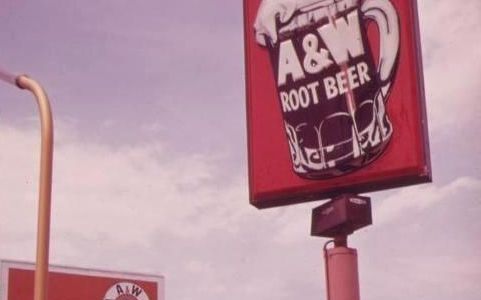
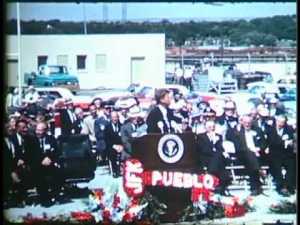
On a hot August day in 1962, my sister loaded up me and her five kids in her station wagon and took us to the District 60 Stadium in Pueblo, Colorado, to hear President John Kennedy speak. I have no idea what his speech was about and the PA system made it impossible to understand his words even if I had been interested, which I wasn’t.  I was twelve years old and would rather be at the pool, but afterwards we got to stop at the A&W Drive-In  and get root beer floats. . . so that was pretty cool.

I’m not sure what her motivation was. Maybe she wanted us to be able to tell our kids that we had been there the day the President of the United States came to our city. Maybe it was because she was looking for something to do with six kids on a hot summer day. Maybe she was inspired by this young, handsome, charismatic president.  Or maybe she believed that citizens should be active in their government and engage in the process and she was always one to teach by example.  Whatever her reasons, I do remember the day and the event and the fact that we were there.  

Fast forward 21 years. Now she is on the front lines of local politics: organizing volunteers to help a candidate get elected to the Pueblo City Council. He is young and passionate and wanting to make a difference in his community and she is convinced he has the wherewithal to govern and help the city so she throws herself into the campaign and learns a lot in the process. Her candidate did not win but he went on to serve his community through his law practice, his election to the Pueblo Water Board, and supporting and working to get other worthy candidates elected to public office, always recruiting the best organizer and recruiter he knew to join in the fight – that woman who had dragged him, his siblings and me to see a president on a hot summer day. A woman whom he called Mom and I called Lila.

Over the years, Lila was a force to be reckoned with. She was an expert at organizing and recruiting volunteers and putting them to work, ensuring that things ran smoothly. She was adept at managing call lists. She and her son worked to elect a governor and when a woman she knew, respected and trusted ran for County Commissioner, Lila and two other women managed a campaign which got her candidate elected.

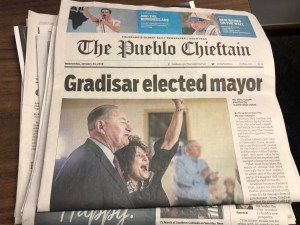
Fast forward 46 years. The family gathers from near and far – aunts and uncles and cousins and nieces and nephews and children and grandchildren and great grandchildren – to celebrate the historic election and inauguration of Pueblo’s first mayor in over 60 years – Nicholas Gradisar. How happy she would be to know Pueblo is in such good hands. And we say to one another, “Wouldn’t she have loved to see this?!”

But that formidable campaign operative whose first foray into politics was to campaign for her son’s election to city council so many years ago has been gone for exactly six years. And though she didn’t live long enough to see him take the oath of office as mayor of this city she knew and loved and invested in, her spirit hangs in the air and seems to hover over all of it.  

But if Lila is gone, she has left in her stead some pretty good replacements. All of Nick’s siblings have rallied to the cause.  They campaign, they mobilize, they show up and do their part to get their brother elected. His sister Kay in particular seems to channel her mother and has the same bulldog tenacity when it comes to getting it done.  

Kay, still working the phones on inauguration day.
the siblings

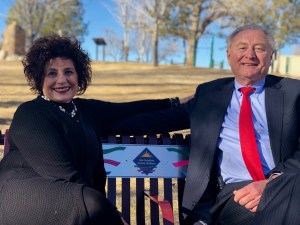
After the swearing in, we have lunch and then walk down the River Walk to sit on the bench which was donated in her name to the city of Pueblo and offers a respite for walkers out for a stroll or for exercise. We take pictures and share her stories and say, “Wouldn’t she have loved this day?” 

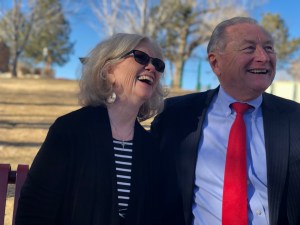
Mr. Mayor and the First Lady of Pueblo
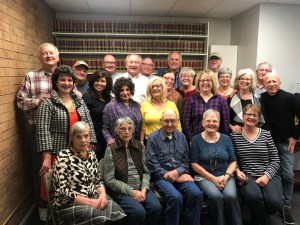
Family gathers from Colorado, Nebraska, Wyoming, and Maryland.

Really, the only thing that would have made that day better is if we had been able to cap it off at the A&W Drive-In and toast this day and her with root beer floats.  So here’s to you, Lila.  Ya done good!

Cheers!

Who Killed Santa Claus?

The intersection of story and memory and perception is a funny thing.  It isn’t just the details of the narrative but how we perceived it at the time – in other words it’s not just what happened but how did our five year old self understand what was happening  – that’s where the story lives.

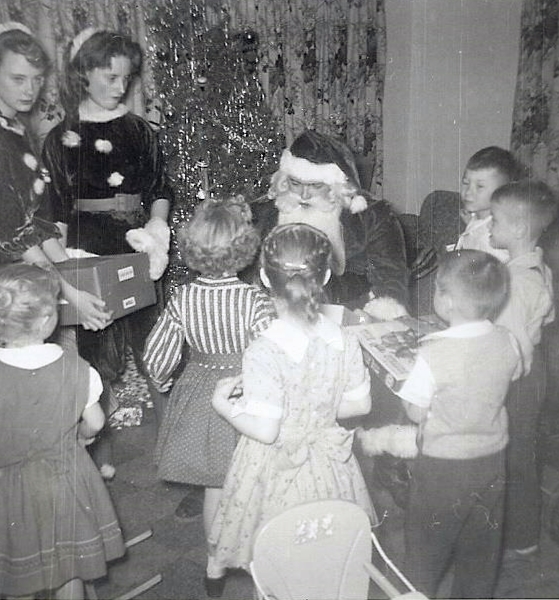
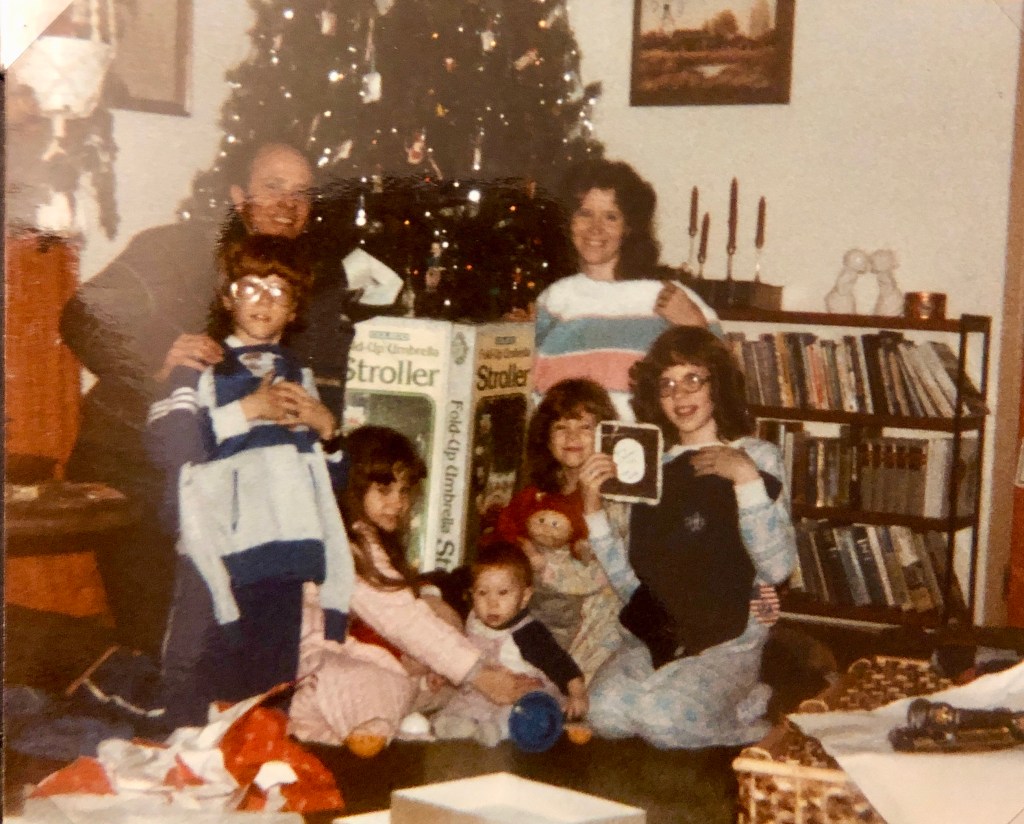
Santa  visited our house every Christmas Eve with his elves and pack of presents. That’s me in the pony tail with my back to the camera.

Our kids will tell you that we didn’t “do Santa Claus” for religious reasons. In fact, the truth is nothing so noble. Paul and I were both raised on the fat man in the red suit who brought toys to good boys and girls. As parents, we didn’t do Santa Claus because we couldn’t afford many presents and I wanted the credit for giving them the cool gift. There, I’ve said it out loud and now you know what a truly selfish and awful person I really am. I wasn’t going to let Santa swoop in at the last minute to give them that thing I had scrimped and saved and stood in the blocks-long line to get the day it went on sale. The jolly old man had made not one sacrifice to obtain this year’s must-have toy, and he certainly was not going to get to play the hero in my stead. 

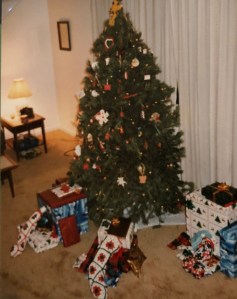
Our kids each got three gifts from us – I think because that’s the way it was in Paul’s family. We tried to get them one thing they really wanted, and then the other two were something small:  a book, a craft, something to go with their toy (an outfit for the new doll, etc.) or maybe new pajamas or slippers (One year I sewed nightgowns and robes for all the girls.  Don’t ask – I have no idea why I thought that was a good idea. This is the same year that Sean found the scraps of fabric on my bedroom floor and was convinced I was making them a Punch & Judy puppet show. Who knows where that came from ??!!)   These gifts were purchased, wrapped and hidden away until Christmas morning. 

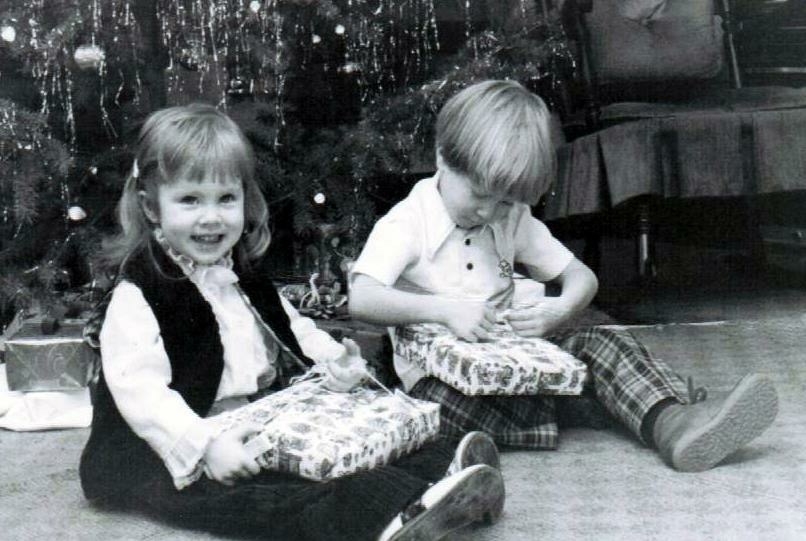
The little gifts they made or bought for one another and for us were carefully selected and fussed over (was this really what she would like or maybe it was that or maybe something else all together??), then wrapped with care and lots of tape and placed under the tree to be poked and prodded and arranged and rearranged all through the weeks leading up to Christmas (and sometimes re-wrapped). 

Until Christmas morning.

After they are asleep – or all in bed with a promise of physical harm should they exit their bedroom before morning – Paul and I bring out our oh-so-carefully-chosen and hopefully something-they-will-love offerings.  Gifts are always arranged in piles according to the giver so that the emphasis will be on “what you are giving” instead of “what you are getting”. Everything you are giving to someone else is placed in a stack at your spot with your stocking – hand crocheted  by Grandma Fletch – and then we wait for the morning. 

fullsizeoutput_552b

No one is allowed to leave their bedroom until you hear the music – Manheim Steamroller’s Deck the Halls – blasting loudly enough to wake the dead.  Of course, they are all awake, or maybe had never gone to sleep, but they dutifully wait for their cue. The music calls to them and here they come, scrambling down the stairs or up the stairs depending on where their bedroom is, running to find their stocking and their pile of gifts to give and eyeing the stack in front of Mom & Dad.  Those will be the last ones distributed.  

67d390aa3636d7dbee1952c5f1a1593c

We start with the youngest who gets to choose in which order he or she wishes to bestow what everyone already knows will be a Life Saver Storybook. I no longer remember how this tradition began, but early on it was the mandated gift that the youngest among them gives to the older siblings. With much fan-fare, everyone oooohs and awwwwwws over it as though it is the biggest surprise of the season and one which they cannot possibly live without. 

Gifts are opened one at a time since this allows for time to admire and exclaim over each one and we all compliment the giver on his or her good taste. One by one, we ceremoniously present our gifts  to one another and everyone watches as each one is opened. This takes awhile and has the added benefit of alleviating the frenzied ripping of paper that inevitably leads to mass confusion and chaos and cuts down on the number of times we will need to dig through the trash looking for a lost doll shoe, Lego piece or other sundry tiny items. Plus it stretches out the festivities and makes more of a party, which in our family is always a good thing.  

And that was Christmas morning.   

I don’t know if our kids missed not “doing Santa”.  The truth is I never asked them.  I realized pretty early on though that we needed to have “the talk” if we didn’t  want our friends and neighbors to hate us and our kids. “Some people like to pretend that Santa Clause is real,” we explained, “and that he is the one who brings their children presents and so you can help them by not saying anything that would make them out to be a liar.” I mean, we didn’t say it exactly like that, but we had to coach them up a little to keep the peace.

And then there was the year that one of our Sunday School teachers at church killed Santa Claus. He wanted to teach a lesson about the real Saint Nicholas and how the “Santa Claus” of today grew out of the myths and legends (danger Will Robinson!!) around this real man who lived in the third century.  And while I’m sure he meant well (you can probably see already how fraught with peril this plan was), he somehow failed to see the landmine he was about to trip over. So somewhere in his lesson about this kind and generous patron saint of children, he comes to the place in the story where Saint Nichols  dies. Now to a small child, who only vaguely understands anything you have said up to this point but who thinks you are telling him that Santa Clause and Saint Nicholas are one and the same, this is, of course, alarming.  “Santa Claus died?” asks a small voice in the front row.

At this point, any thinking person would have abandoned his ill-conceived lesson and just gone straight to the craft tables, but he soldiers on. Another little voice, with a hint of a quiver, asks “How did he die?” And then the mother of all landmines: “He was martyred,” says the teacher.  KABOOM!!  While most sources say Saint Nicholas was persecuted for this faith, I can’t find anybody who says he was martyred, but given this was before the internet, maybe this teacher didn’t have access to good research or maybe he just thought it made for a better story.

At any rate, that’s what the teacher said. Now there is a full-blown panic rising from the masses as one child jumps to his feet and yells  SANTA CLAUS WAS MURDERED??!!  (martyred or murdered – what’s the difference, really?) And it was at this moment that all hell broke loose and became known in the history of our church as “The Day Cedarbrook Killed Santa Claus.” Our son, who was about 10 and one of the older kids in the class, was standing in the back of the room with a friend who says to him, “Do you still believe in Santa Claus?”  Nope.  “Me neither. But I sure feel sorry for these kids.”

We fielded a deluge of calls from irate parents that week, letting us know how traumatized their children were as a result of the Sunday School lesson and that when it came time to explain the “Santa situation”, they had expected to be the ones to do it and they certainly would have handled it much differently, thank you very much.  

And though I didn’t say it, because I thought it might be too soon, I thought about telling them, “Yes, but just think, now you’ll get to take credit for all that stuff under the tree.”  

murdoch
No one was taking credit for this one but me!

Story telling vs “Visiting” – One in the Same.

When I was young, my mother and I visited Nebraska every couple of years. I no longer remember how we got there (my mother didn’t drive) but she would save up her vacation days and we would leave behind the mountains of Colorado for the farmlands of Nebraska and go to see my sister and two brothers and their families.  

I liked it because I got to play with my nieces and nephews – all around my age.  It was on one of these trips that I learned to ride a two-wheeler on Jolene’s brand new bike which she had won by selling the most subscriptions to the local small-town newspaper. I also drove a truck here for the first time (right into the ditch) – I think I was twelve and the only one among us who had not already spent a couple of years behind the wheel during harvest time. And of course I got to ride horses.  Such adventures for a girl from the city.

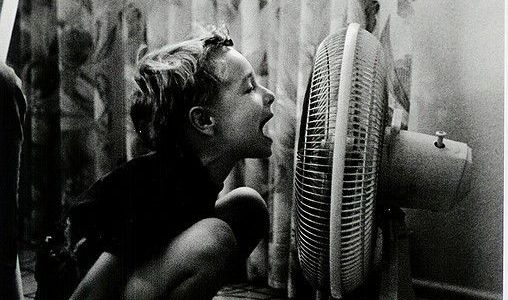
All in all it was a grand way to spend a summer vacation. Except on the day we would go “visiting”.  On this day I would accompany my mother to visit my aunts and uncles – the siblings of my parents – who were older than God and had no children who were not also old,  and in my “I am the center of the universe” way of thinking led very dull and uninteresting lives. We would go from house to house – small town to small town – and at each stop along the way the old people sat at the kitchen table or sometimes on the living room sofa drinking coffee or iced tea and I would sprawl on the floor in front the fan turned to high to move the hot summer air.  The whirring of the blades all but drowned out the hum of their voices, but I picked up little bits here and there.

“Where is Sonny now and what’s he doing?  And what about Margaret?”

“That hail storm really tore up Dean’s place. He ended up havin’ to reroof the barn.  Remember that storm out at Dad’s place that year and the Frenchman River rose and flooded everything out?”

“Did I tell you Lila Rae got a promotion at the hospital?  She’s doin’ real good.”

“How many head of cattle does Charles have out in the feed lot now? Hope cattle prices hold steady this year.”

“Myrtle was in the hospital last month.  They can’t seem to figure out what’s wrong.”

“Have you been out by the old Wise place?  It got resold again a couple years ago.  Remember when you and Ray moved out there?  What year was that?

And so it went. . .  

I dreaded these “visiting days”.  But now I understand. These days  gave life to my mother.  They were her stories and these were her people.  They connected her to her past – to a shared origin and a way of being.  I just didn’t appreciate it.  How could I?

But now I get it.  

This summer my nieces and nephews will gather together back in the heartland and we will spend a great deal of time “visiting”.  We will connect to our shared stories, our common heritage, and our past.  We are now the grandparents, the “old people” and our stories will call to mind the days of our childhood and our parents and the generations past.  And I will want to tell the younger generation – pay attention – these stories matter.  But I won’t. Because they are building their own stories – and maybe this gathering will be one of them.  And someday, though they won’t remember the particulars, they might remember the sound of the voices and the whir of the air conditioner.  One can hope.  

Daily Bread

“There are things you do because they feel right & they may make no sense & they may make no money & it may be the real reason we are here: to love each other & to eat each other’s cooking & say it was good.”

It is one of my favorite Story People stories. We have it framed and hanging on our “family wall” in our living room. I think it belongs there because food is a part of every family’s story whether we recognize it or not – or at least it is a part of our story.

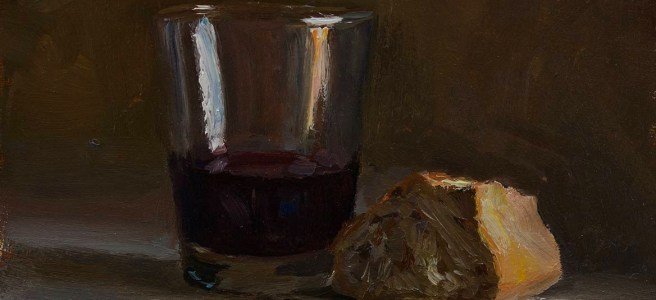
It’s the story behind Crescent Rolls and Chicken & Noodles. Canned Jellied Cranberry Sauce and Donuts. Chili and Cinnamon Rolls. Tuna Noodle Casserole and Vegetable Soup. Coconut Pie and Apple Pie made from orchard apples. Bread and Wine.

My mother was the best cook of anyone I have ever known. I, on the other hand, got married barely knowing how to boil water. Paul always thought it was a bait-and-switch:  he came to my house, ate my mother’s cooking and just assumed it was a genetic thing and this is what he could expect when we were eating out of our own kitchen. It was a hard adjustment for him – we ate out a lot and went to my mom’s house once a week for dinner. But slowly I began to take an interest and figured some things out.

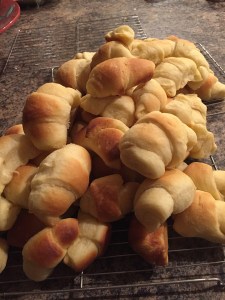
Crescent Rolls: On our first son’s first birthday, I wanted to do something special. So I opened my Better Homes and Gardens Cookbook  I had received from my niece as a wedding gift with the inscription that read:  “Dear Paul, good luck.  You’re going to need it.”  I found a recipe for Crescent Rolls. Perfect! How hard could this be. Turns out . . .  pretty hard.  It was a time-consuming recipe which took most of the day, but so worth it! Over the years I tweaked the recipe to my liking and they became a “must have” for holiday meals. The story is still told about the year that “one of us” set his alarm and rose at 5:00 a.m. on the day after Thanksgiving to eat all the leftover rolls before anyone else could get to them – in a big family one must learn to out-wit, out-play and out-last the competition. We’ve had some glitches along the way. There was the year I forgot to set the timer and burned the bottoms to a blackened charcoal on the Wednesday before Thanksgiving. So we cut the bottoms off, slathered them with butter and called it dinner that evening. Then I set to work on the next batch which took me late into the night. There were years the yeast didn’t rise because the milk was too hot or not hot enough and I had to start over. But if you come to our house on Thanksgiving or Christmas, you will get Crescent Rolls.

crescent rolls

Chicken-and-Noodles:  In those early years as I was expanding my repertoire I asked Paul, “What did your mother cook that you really loved.”  He fired back, “Home-made Chicken and Noodles!!”  So I made the long distance call to his mother to get the recipe and set out to wow him. I followed exactly the recipe my mother-in-law had copied from a newspaper column decades before. When it said, “Roll the dough very thin and cut into strips,” I labored with my rolling pin, stretching and rolling and pulling and rolling until the dough was indeed paper-thin. It was a labor of love, if a frustrating exercise, but I was determined to replicate his mother’s dish. I sat down to dinner ready to bask in his awe and admiration and gratitude.  “What is it?” He stared into his bowl of paper-thin, perfectly cut noodles swimming in broth. Are you kidding me?  It’s Chicken and Noodles!  “No”  NO??!!   “Well, it’s not my mother’s chicken and noodles.” So I got up from the table to make another call. “I followed the recipe exactly and he says I didn’t get it right?  What happened.?”  I could hear the commotion in the background as she was rushing to get dinner on the table for the six kids still at home. “Read the recipe back to me,” she said over the din of two kids arguing over whose turn it was to the set the table. When I came to the part about rolling the dough paper thin, she interrupted me. “Oh good grief, Sherry!  I never had time to mess with that nonsense. Just give it a few swipes of the rolling pin and call it good!” Okay then.  And so now my own family thinks if the the noodles are not thick and almost chewy with a thick broth and huge chunks of chicken – then it’s not really Chicken and Noodles. Following a recipe can be so over-rated.
Jellied Cranberry Sauce:  As I honed my skills in the kitchen I developed an attitude that “made- from-scratch-is-always-better” and so cranberry sauce should be made with fresh cranberries and a zested orange. Truth be told, nobody ever ate it but me, but that’s how I did it. Then our son-in-law joined the family and when we sat down to Thanksgiving dinner his first year he asked for the cranberry sauce.  It was passed around the table to him. Nope. He was looking for the jellied cranberry sauce that comes out of a can. Now, every year, he gets a whole can of it to himself, and I eat the other.  And everybody goes home happy.

dd 2

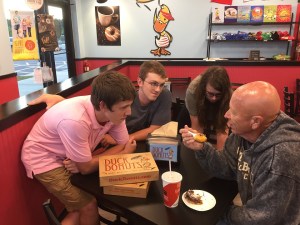
Donuts:  We were at the beach and Paul and I were headed out to the grocery store.  I called out “Does anybody need or want anything from the store?”  The four year old grandson never looked up from his Lego’s. “How ‘bout donuts!?” he yelled. And now, twelve years and eight grand-kids later, you haven’t been to Nana & Colonel’s until you’ve gone for donuts. The littles always love to hear how, when we were first married, Colonel was the guy who made the donuts at Dunkin’ Donuts and could eat all the donuts he wanted every night. I know, it’s not hard to impress them when they’re young.

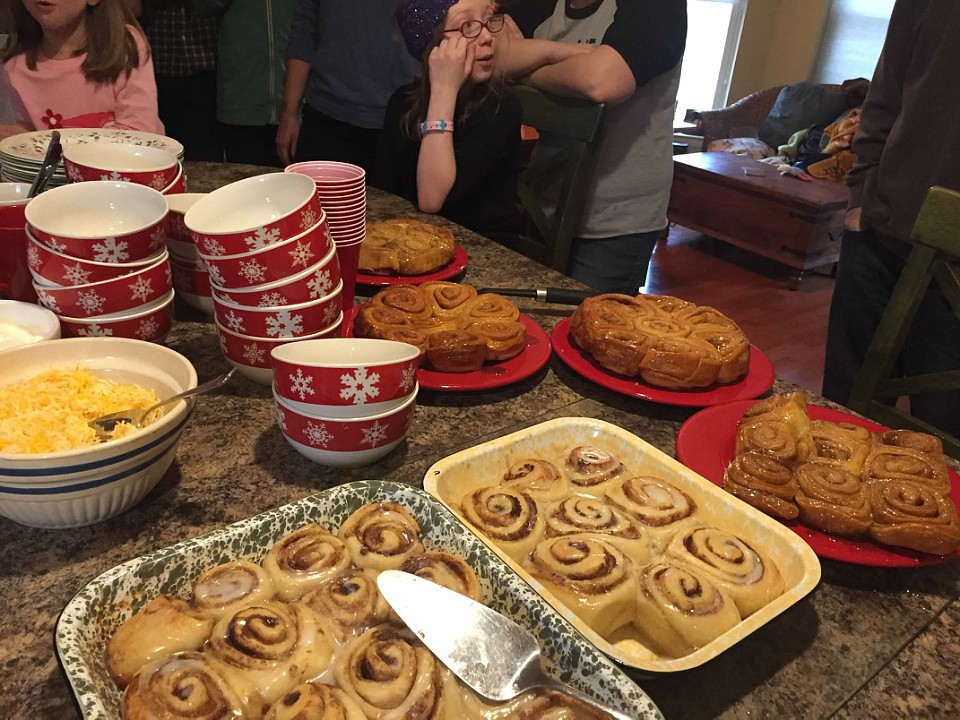
Chili and Cinnamon Rolls:  In both our families, the traditional Christmas Eve dinner was soup. At the Abbotts it was Chili.  At the Fletchers it was Chile and Potato Soup and Oyster Stew. At the Fletcher’s it was Cinnamon Rolls and Potica (a wonderful Slavic Sweet Bread introduced to our food culture by my brother-in-law’s family).  At the Abbotts it was Cinnamon Rolls and since I never mastered the art of Potica making, we stick to the Cinnamon Rolls. There was the year that I got distracted in the making and instead of dividing the dough into halves to make out the rolls I divided it into thirds and ended up making more, but much smaller rolls. I didn’t realize my mistake until one of the kids who was home for the holidays said, “It’s funny, when I was a kid these rolls seemed to be so big they filled your whole plate and now it seems like I could eat three of them,”  Yup, pretty much. The year our son was in Iraq we sent a can of Hormel Chili and a box of Honey Buns in his Christmas package.  In some way or another, I think most of the kids have carried on the tradition and live out the story.

234b6f7b-22c5-438e-862c-0de8c07e81d9_1.c0abf0f4a9caf497046c36c2be377847

Tuna Noodle Casserole and Vegetable Soup:  Like most families, in ours you got to pick the dinner menu on your birthday. When our youngest was little, his favorite meal was Tuna Noodle Casserole. Nobody else really liked it so we rarely had it, but on his birthday he got to choose. One year he was spending his birthday with some family friends because Paul and I had to be out of town. Peggy asked him what he wanted for dinner. Tuna Noodle Casserole – of course!  “Does your mom have a special recipe she uses?” Having five kids of her own she understood the risk of making something that was not like Mom’s.  “Yes, she does. It’s on the back of the box.”  And though her own kids gagged on it, she made Tuna Helper straight from the box and Fletcher was delighted.  Clearly by the sixth one I had abandoned the “made-from-scratch-is-always-better” ideology.  

Tabithas’s request was always Vegetable Beef Soup – preferably without the beef.  The other kids groaned – what kid really LIKES soup?  But that was what we had every March 4th. Even on the years that spring came early and we were eating soup with the air conditioning on. The one thing that redeemed her choice is that she always asked for Boston Cream Pie, and who doesn’t like that?

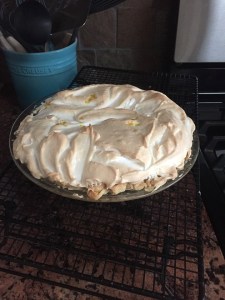
Pie:  We are a family of pie lovers. Favorites may vary from individual to individual but somewhere in our DNA is a “pie-lover” gene. My mother taught me to make pie crust. To her,  pie-making was an art form. I learned from her to treat the crust gently and carefully – don’t overwork it or the crust will be tough; use only as much water as you need to make the dough hold together and make sure the water is ice cold. She was a master craftsman.

When Fletcher wanted to bring a girl home from college to meet us I told him to find out what her favorite dessert was and I would make it for her. “It’s Coconut Pie”,  he told me. “Wow!  What are the odds?” I asked him. “You really do have a a lot in common!!”  And so every time she came for a visit we had Coconut Pie. It wasn’t until many years later at their rehearsal dinner I learned the truth. Emily’s mom wanted to know what the deal was with Coconut Pie. I explained I made it every time she came since it was her favorite dessert. “Actually, I don’t think she had ever had it before she came to your house.”  As I said – it’s in his genes.  He may also be a little manipulative.

pie 4

Paul’s mother made three chocolate cream pies every report card day.  That way if you got good grades you could celebrate. If you got bad grades, you had a way to drown your troubles. My mother made him chocolate pies every time we came for a visit and threatened if there was any left, she threatened never make another one for him. He always rose to the challenge.

312690_10150418300256311_870590329_n

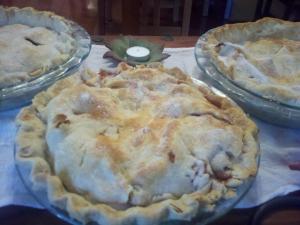
And then there were the Apple Pie Baking Marathons. When the older kids were little, every fall Grandma Fletch would come for a month-long visit. She cooked and baked and told stories and loved us well. One of our days we spent at a nearby orchard. We picked apples – bushels of apples – and returned home to roll up our sleeves and get ready for the days long process of pie baking. She set up an assembly line. Everybody had a job to do:  washing the apples, peeling and coring and slicing, combining  the sugar and cinnamon and then mixing it all together in a big bowl with the fruit. Grandma was always in charge of the pie crust. After several days we would have dozens of pies: baked, wrapped and ready for the freezer. All year long, anytime we wanted a special dessert, we could go to the ancient chest freezer in the garage and pull out a pie to stick in the oven and soon the house would be filled with the buttery, cinnamony, apple aroma that took us back to the way the house smelled on those days we worked side-by-side next to the Master Pie Baker herself and created all that deliciousness. For years after she was gone, we kept the ritual.  We went to the orchard on a crisp fall day, picked the apples, and formed our assembly line just as she had taught us to do. The year we stopped was the day it was time to go apple picking and there were still pies in the freezer. The family was shrinking and we no longer had the mouths to feed or the laborers.  But anytime I smell apple pie, I can still see us all in the kitchen with Hazel, each doing our job.  

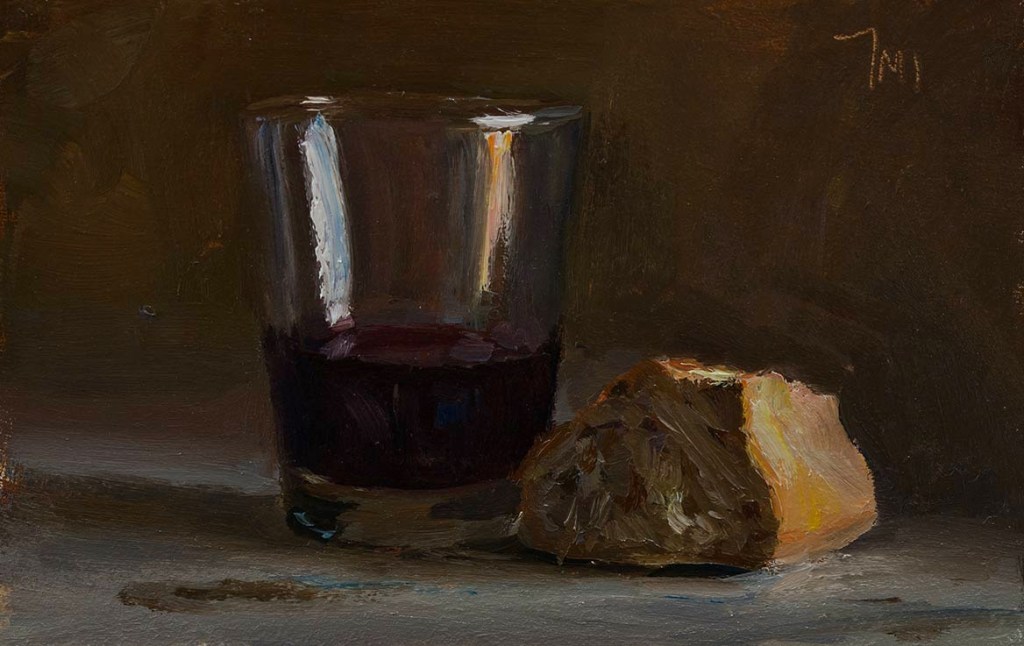
Bread and Wine: I have begun to feel that gathering at the table, sharing food and drink and sharing stories is a sacred experience.

When his followers asked him, “Teach us to pray”, Jesus included this:  Give us today our daily bread. Maybe this is about more than just nourishment for our physical bodies; maybe it is also about the table where we gather to tell our stories, nourish our souls and remember who we are.

I am struck by how many stories about Jesus are about the table. He goes to dinner parties with outsiders and undesirables, he performs his first miracle at a wedding feast, he provides a picnic for 5,000 people on a hillside, he cooks dinner for his friends on a beach, and 2,000 years later we are still telling those stories.

And then there is this: knowing he was going to die, he sat down around a table to share a meal with those who had shared his journey and would continue on without him. Because that’s what the family does in such a time. He washes their feet and cares for them with such love and affection. Around that table of special foods filled with such rich meaning, they remember and retell the story of the Jews miraculous exodus from Egypt and God’s faithfulness. But before the meal is over,  he will take the bread and the wine from that same table and use it to explain to them the hard truth of what is to come:  the bread is his body which will be broken for them and the wine is his blood which will be poured out to forgive the sins of many. They had no idea what it meant. Or what was to come.

But we do know. He left us this gift of symbol and remembrance and ritual. And time after time, we gather and remember and retell the story.  “As often as you  do this,” he said, “do it in remembrance of me.”  Jesus, too, knew the power of story, of remembering and of gathering around a table.

Perhaps, in the end, that is the real reason we are here.

FullSizeRender 34