Smitten

by Paul Abbott

November 30, 1959. My family has just moved to Pueblo, Colorado. I am excited, probably anxious, as I walk into Mrs. Bent’s fourth grade classroom. My new teacher looks around the room, rearranges a student or two to make room for me, then offers me a desk midway up the row closest to the door. I take my seat and there in the desk in front of mine sits a redheaded girl, curls spilling down her back. A few weeks later, I surreptitiously copy her phone number from the little ID tag on the book bag beside her desk because I am smitten with this redheaded girl. I never got the nerve to call . . . because what does a nine year old boy say to a girl on the phone?  

But it was the beginning.

Over the next ten years there would be other beginnings: debate team, a growing friendship, a realization that maybe we were more than just friends, dating, breaking up, falling in love, engagement and then on on September 5, 1969, still smitten, I married the redheaded girl. And I still remember that phone number.

Fifty years later, I am more than smitten, I am in awe. Through theatre programs, and storytelling classes and countless events, she has left an indelible mark on scores of young lives, and decades from now, when they recall the golden years of high school, “Mrs. Abbott” will remain a central character in their stories. “She was sort of like God,” one student said, “you really loved her, but you didn’t want to make her mad.”

With love and sacrifice – fierce sacrifices most will never see or know – she has played an integral part in planting three churches, touching hundreds upon hundreds of lives. It has been hard and costly; there are scars. And she’d do it all again.

With that same love and sacrifice, she cares for our family spread across three generations, four states and hundreds of miles, but closer than ever. She listens, for hours in any given week, to the minutiae and the momentous that make up our children’s and grandchildren’s lives. She celebrates them, sharing their joys and carrying their heartaches. She gives our children her time and attention and they take life from her.

And she has made me who I am. Her strength and passion for life have stretched and challenged me. Her words have dismantled my fears so many times they are all but gone. Her friendship has given me the grace to weather unnumbered storms. And the love through which she sees me (there’s a reason we say love is blind) has shaped me, shaped who I am and who I still strive to become. To say it is deep and unconditional is somehow not enough.

Fifty years later, I am still smitten with this redheaded girl.
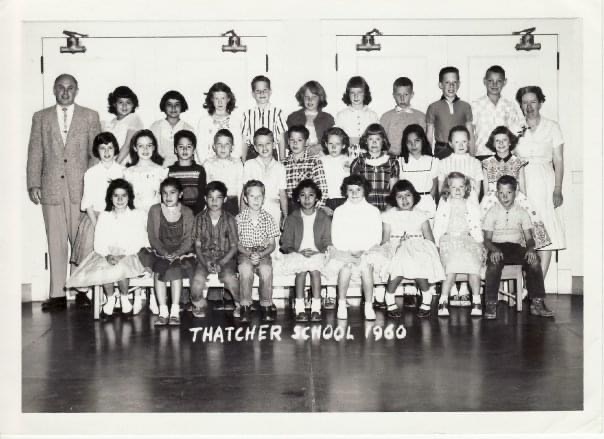
Mrs. Bent’s 4th grade class – where it began

He Was the First . . .

This image has an empty alt attribute; its file name is img_7740.jpg

by Paul Abbott

“Not only had my brother disappeared, but–and bear with me here–a part of my very being had gone with him. Stories about us could, from them on, be told from only one perspective. Memories could be told but not shared.”
John Corey Whaley – Where Things Come Back

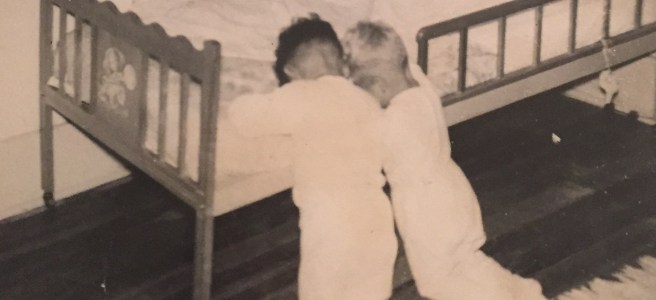
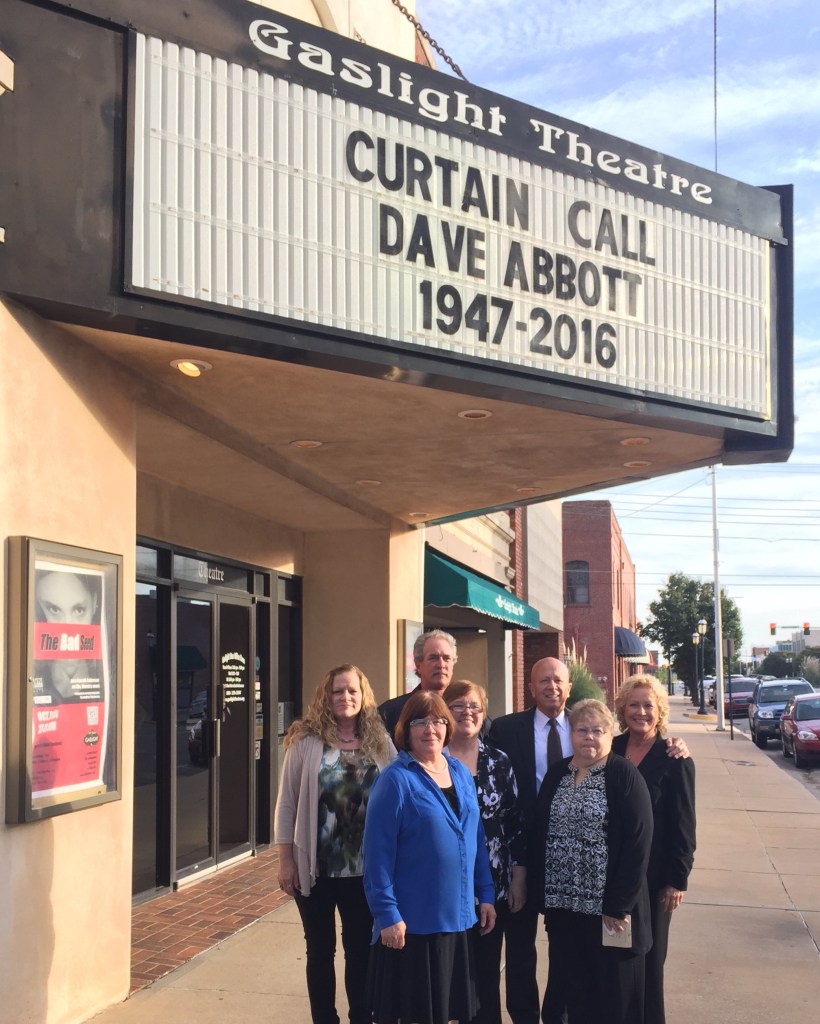
On Monday, October 3, 2016, we lost Paul’s older brother David in his short, but hard fought battle with cancer. The following is the eulogy Paul delivered at his memorial service. Now the stories about them can only be told – not shared.  And we are coming to grips with that loss.

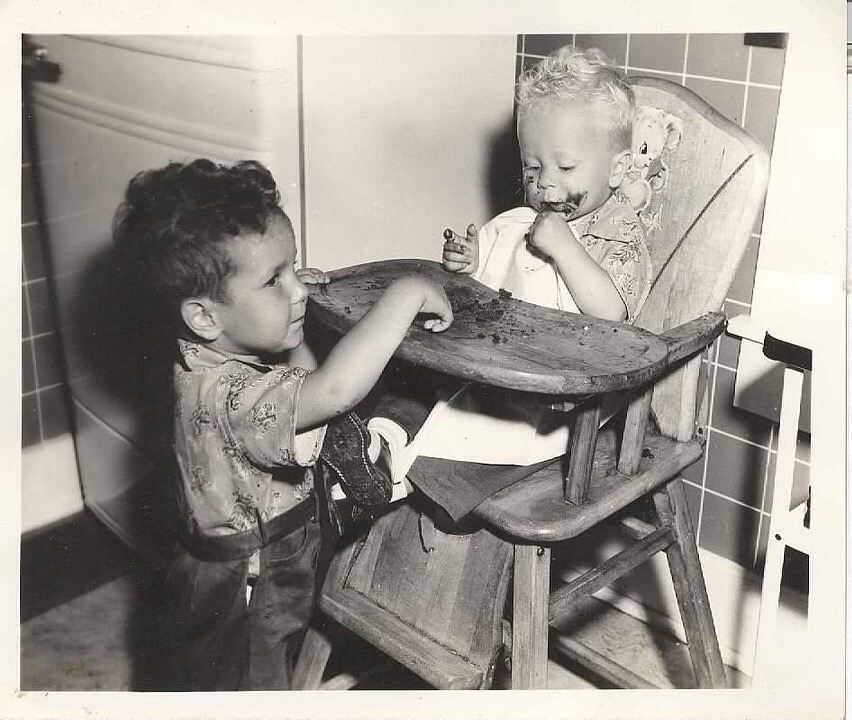
All the world really was a stage for my brother and, at least in our backyard, neither Errol Flynn’s Captain Blood nor Fess Parker’s Davy Crockett could hold a candle to David Abbott. I know. I was there. I was his first audience and, for a time, his best supporting actor.

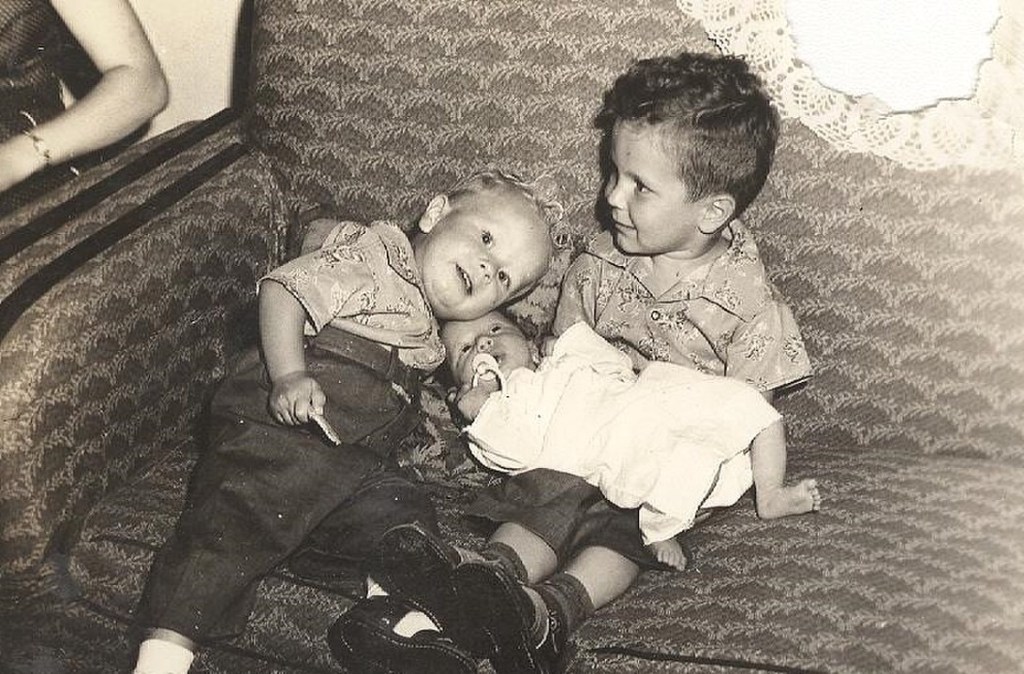
David was the firstborn in a cast of siblings that eventually grew to nine. Our little clan grew up in the fifties and early sixties, doing all the kid things every kid did back then. Through it all, David was the producer, director and always the star of the show. If he didn’t want to play,  then no one wanted to play. It just wasn’t the same without him.

Our dad was a pastor as was our grandfather before him, so life revolved around church. It was sort of the family business. The first stage David ever performed on was at a small, country church. As much as anything in his childhood, it was the church that molded and marked him and made him who he was.

The life of the theatre that was David’s passion as a man may seem far removed from the church-centered life of his childhood, but church and theatre share a common thread. Both are about the power of story. Done well, both tell stories that remind us why we are here, that tell us our lives have meaning and purpose, stories that anticipate days like this day.

David was really smart, so smart he taught himself to read. Before he spent a day in school, he could read the Sunday funnies or the minutiae on the back of a can of string beans. He was always the smartest guy in the room. He always knew the answer, knew the right way to do things, and never hesitated to share this with his siblings. He was, after all, the director and he didn’t just run the show, he ran our lives.

His direction for me often employed the word idiot. He may not have always actually said it, but even when he didn’t you could hear it in his voice. When I was delighted at the prospect of a trip to see Santa, he enlightened me, how could the guy possibly get to every house in one night?  He’s a fake . . . you idiot. Around maybe eleven or so, I was trying to sort out the mysteries of sex, but just couldn’t imagine: mom and dad?  Doing the dishes one night – we two always did the supper dishes, he washed, I dried, always – I tentatively expressed my dismay at the thought of mom and dad and sex to the one guy I knew I could trust to set me straight. Where do you think this house full of kids came from? You idiot. At sixteen, David gave me my first driving lesson in our faded green ’53 Chevy.  As I swerved perilously close to a neighbor’s mailbox, Left! Left! You idiot! Watch where you’re going.

As the firstborn, the leader of our troupe, David was always first: first to lose a tooth or learn to ride a bike, first to get a driver’s license and go on a date, first to kiss a girl, first to go to college, get married, have a child. And now the first to leave the stage. It won’t be the same without him. We who share his name and his blood won’t be the same without him.  Our grief is the price we pay for love, and make no mistake, we did love.

If he were here to direct me now, I think he’d say, Enough. You’ve said enough, little brother.  You can sit down now.

enhance
img_7755
img_7981